Do Cats Get Hot? A Complete Guide to Heatstroke Signs, Panting, and Summer Cooling
Cats really do feel the heat, and since they're not great at panting to cool down, their heatstroke risk is higher than you might think. This article teaches you how to spot danger signs, understand what panting with the tongue out means, and offers practical ways to keep your home cool.

Cats really do feel the heat—more than many owners realize. Their sweat glands are found almost exclusively on their paw pads, and they cool down mainly by grooming and seeking out shady spots. When the environment gets too hot with poor ventilation, heat damage or even heatstroke can build up all too easily.
So the answer to "do cats get hot?" is crystal clear: yes, they do, and the muggy heat of Taiwan's July and August is exactly the high-risk period. At our hotel, Cat Backyard, the thing we watch most closely in summer is every boarding cat's breathing and activity level. Below, we'll share our complete frontline observations and cooling methods with you.
Key takeaways
- Cats have sweat glands almost exclusively on their paw pads. They primarily cool down by licking their fur, seeking shade, and sweating through their paws. With limited cooling mechanisms, Taiwan's July and August are high-risk periods for heatstroke.
- Healthy cats rarely pant with their mouths open under normal circumstances. If a cat continues to breathe with its mouth open for more than a few minutes while resting, breathes rapidly, or its tongue and gums turn purple, white, or gray, it should be considered an emergency and require immediate veterinary attention.
- If you suspect your cat has heatstroke, immediately move it to a cool, well-ventilated space with air conditioning. Use room-temperature or slightly cool water to dampen its paw pads, abdomen, armpits, and inner ears. Use a fan to aid cooling and transport the cat to the vet while continuing to cool it. Never use ice water or ice packs for rapid cooling, as this can cause vasoconstriction, hinder heat dissipation, and potentially lead to shock.
- During summer, it is recommended to set the air conditioner to 26-28°C and use a circulation fan to ensure air movement. Avoid leaving cats in enclosed or sun-exposed rooms. Never leave a cat alone in a car, even with the windows open.
- It is not recommended to shave a cat's fur down to the skin. The coat provides insulation and sun protection. Excessive shaving can make them more susceptible to sunburn. For cats with thick fur, consider professional grooming to thin the coat appropriately, combined with frequent brushing and temperature control for heat dissipation.
Do Cats Feel the Heat? First Understand How They Cool Down
Many people assume cats pant to cool off like dogs do—but that's not the case. Under normal conditions, a healthy cat almost never pants with its mouth open. Cats dissipate heat mainly through:
- Sweating from their paw pads (a very small surface area, so limited efficiency)
- Grooming, using saliva evaporation to carry heat away
- Actively moving to a cooler spot to lie down
- Open-mouth breathing only in extreme cases
Because they have so few ways to shed heat, when the room temperature exceeds what they can handle, their body temperature can rise faster than you'd think. Pay special attention to these types of cats:
- Long-haired cats and breeds with thick, double coats (such as Ragdolls, Maine Coons, and Persians)
- Flat-faced, short-nosed breeds (Persians, Exotic Shorthairs), whose airways are naturally narrower
- Kittens, senior cats, overweight cats, and cats with heart, lung, or chronic conditions
If you have a long-haired cat at home, be extra mindful of coat volume and matting in summer. Moderate thinning and regular brushing can help with heat dissipation—for tips, see our article How to Care for a Long-Haired Cat: Daily Brushing, Handling Mats, and When to See a Groomer.
Is It Normal for a Cat to Pant with Its Tongue Out?
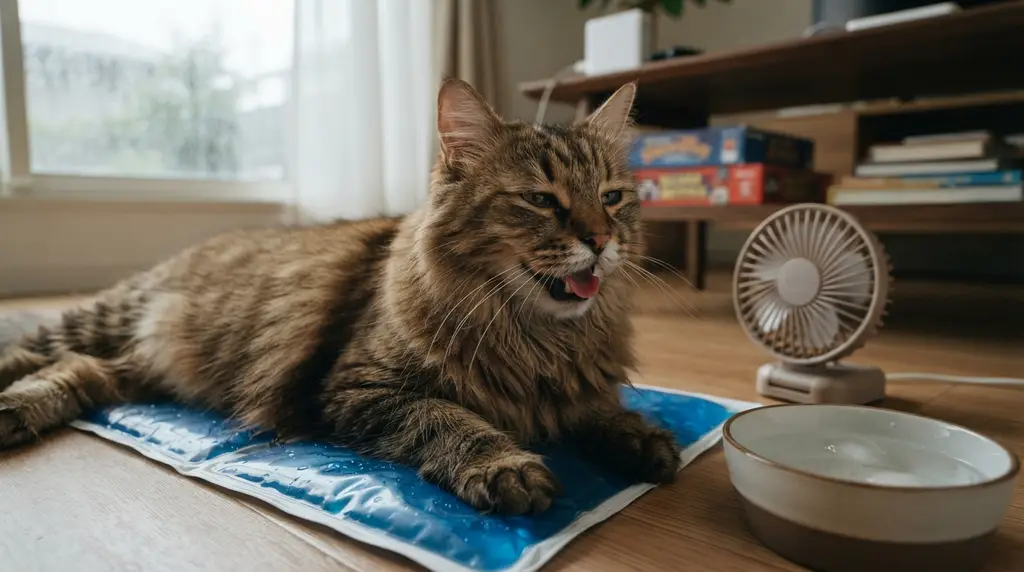
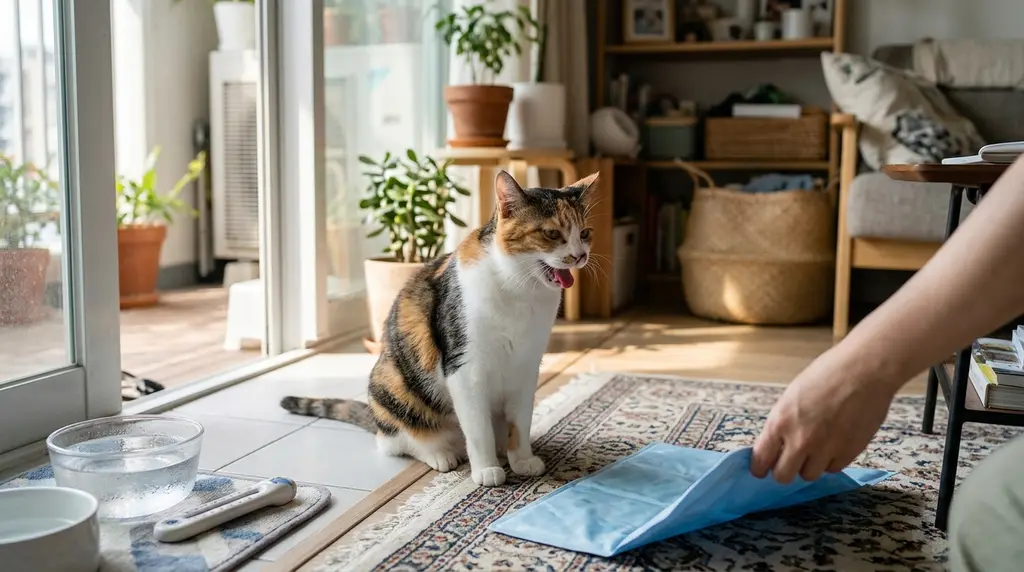
This is the warning sign most easily overlooked in summer. A cat panting with its tongue out and mouth open is, in most cases, not normal.
Situations That May Be Okay
- A few quick pants after vigorous play or chasing, recovering within a few minutes of rest
- Temporary panting from extreme stress, such as right after a car ride or a vet visit
- Brief panting during hot, muggy weather that stops quickly once the cat moves to a cool spot
Situations That Require Immediate Attention
If your cat is panting with its tongue out and any of the following apply, treat it as an emergency:
- Continuous open-mouth breathing for more than a few minutes with no exercise and no heat
- Rapid, shallow breathing with obvious labored heaving of the abdomen
- Tongue or gums turning purple, pale, or gray
- Accompanied by weakness, unsteady walking, drooling, or vomiting
These could indicate not just heat, but also heart or lung problems. If your cat continues to pant while at rest, seek veterinary care as soon as possible—don't wait and watch for too long.
What Are the Signs of Heatstroke in Cats?
Heatstroke (heat exhaustion) can be fatal. When handing over shifts at our hotel, we teach staff to check in this order:
Early warning signs:
- Lying flat with limbs spread out on cool surfaces like tile or bathroom floors
- Becoming noticeably lethargic, ignoring people, and losing appetite
- Starting to show mild open-mouth breathing
Moderate to severe signs (cool the cat down and seek treatment immediately):
- Persistent, rapid panting with tongue out
- Heavy drooling, with thick, sticky saliva
- Bright red or purple gums
- Vomiting or diarrhea
- Unsteady gait, seizures, collapse
- Loss of consciousness
Emergency Response When You Suspect Heatstroke
1. Immediately move the cat to a shady, well-ventilated, air-conditioned space
2. Use room-temperature or slightly cool water (not ice water) to dampen the paws, belly, armpits, and inner ears
3. Turn on a fan to speed up evaporative cooling
4. Offer a small amount of cool water, but do not force it down
5. Contact and head to the vet while cooling the cat down
A special reminder: do not plunge your cat into ice water or apply ice packs. Rapid cooling causes blood vessels to constrict, which actually hinders heat dissipation and can trigger shock. The goal is to lower the temperature "steadily and gently," and ultimately let the vet assess whether internal organs have been damaged.
Complete Summer Home Cooling Guide (Hands-On Version)
This is the core approach we use throughout the summer to keep cats comfortable, and you can do it at home too.
1. Control Room Temperature and Ventilation
- When you're out, don't leave your cat in a completely sealed room, especially west-facing rooms
- We recommend setting the air conditioning to 26–28°C, paired with a circulation fan to keep air moving
- When the AC is off, at least leave a window and door open for cross-ventilation, and draw blackout curtains to block the western sun
2. Create Cool Resting Spots
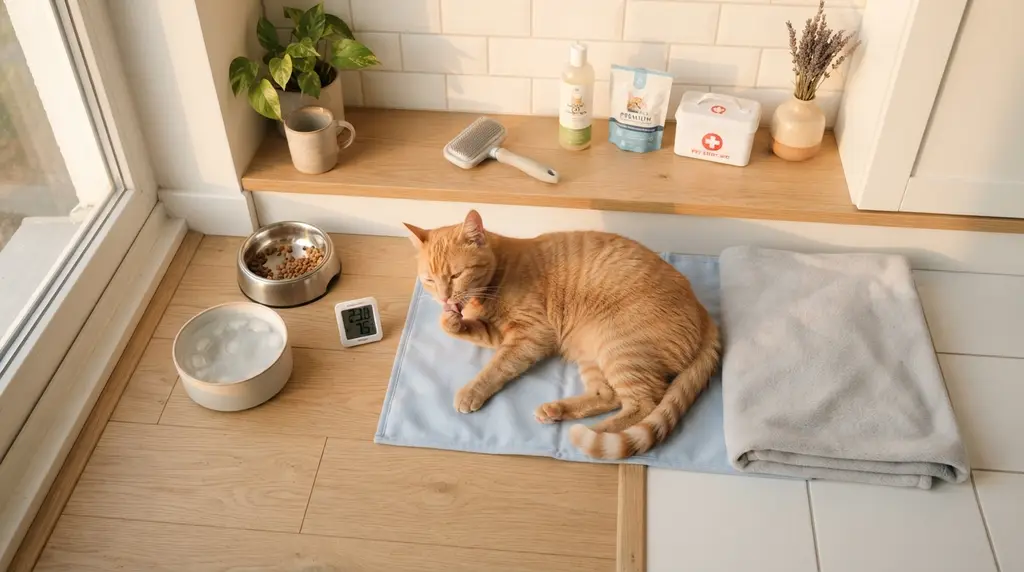
- Provide tile floors, aluminum cooling mats, and pet cooling pads for your cat to choose from
- Cats like high perches, but in summer lower spots are usually cooler, so set out a few cat beds for them to pick from
- Move scratching posts and cat beds out of direct sunlight
3. Make Sure They Stay Hydrated
Dehydration risk is highest in summer. Drinking plenty of water helps regulate body temperature and protects the kidneys:
- Place water bowls in several spots and use a flowing water fountain to encourage drinking
- Increase the proportion of wet food to boost hydration
- For how to balance water intake with dry and wet food, see How Much Should a Cat Eat Per Day? Key Points on Dry Food, Wet Food, and Water
4. Coat Management
Long-haired and thick-coated cats really do get hot trapped inside all that fur in summer. Regular brushing not only helps with heat dissipation but also reduces the amount of hair they lick and swallow, easing the trouble of hairballs. If the coat is too thick or already matted, consider professional grooming—but we don't recommend shaving down to the skin yourself. Over-shaving leaves the skin unprotected and prone to sunburn. We explain this more fully in How Often Should You Bathe a Cat? When to Trim Nails, Clean Ears, and See a Groomer, and you're welcome to book cat grooming at Cat Backyard for a professional assessment.
5. Avoid the Wrong Cooling Methods
- ❌ Don't give your cat ice cubes or ice cream (they irritate the stomach and may contain dangerous ingredients—further reading: What Cats Can't Eat)
- ❌ Don't lock your cat in the bathroom and splash cold water on it to cool it down
- ❌ Never leave your cat alone in a car, even with the windows open—just a few minutes can be fatal
What About Traveling or Going Out?
When you head off on a trip in summer, the biggest worry about leaving your cat home alone is a power outage or the AC shutting off, leaving the room stiflingly hot. Rather than worry, entrust your cat to a place with staff monitoring the environment. Our cat hotel at Cat Backyard keeps the temperature controlled around the clock, with staff observing each cat's breathing, appetite, and mood every day, so we can respond immediately if anything seems off. For preparing your first boarding stay, see What to Prepare for Your Cat's First Boarding Stay.
Frequently Asked Questions
Is it normal for a cat to pant with its tongue out?
In most cases, no. Aside from brief panting after vigorous play or intense stress, if a cat continues to breathe with its mouth open while at rest, breathes rapidly, or shows discolored gums, treat it as an emergency and seek veterinary care right away.
How do you give first aid for cat heatstroke?
First move the cat to a cool, well-ventilated, air-conditioned spot, dampen the paws, belly, and ears with room-temperature or slightly cool water, turn on a fan to speed up cooling, and head to the vet immediately. Never use ice water for rapid cooling or force water down.
What temperature should the AC be set to so cats are comfortable in summer?
We recommend 26–28°C, paired with a circulation fan to keep air moving. The key is to avoid a sealed, muggy space and direct western sun, and to make sure your cat can always move to a cool spot and access water.
Can you shave your cat's fur off in summer?
We don't recommend shaving down to the skin. A cat's coat also provides insulation and sun protection, so over-shaving actually increases the risk of sunburn and skin problems. For thick coats, ask a professional groomer to moderately thin the fur, and rely on regular brushing and temperature control for heat dissipation.
Can cats eat ice cubes or cold things to cool down?
Not recommended. Frozen treats can irritate the stomach, and human ice cream often contains ingredients harmful to cats. The right approach is to provide plenty of cool water, cooling mats, and good ventilation—not to let your cat eat ice.
This article was written by the Cat Backyard editorial team. The content offers general care advice; if your cat shows symptoms such as persistent panting or loss of consciousness, please seek veterinary care immediately.
CatGarden offers curated supplies, cat boarding, and grooming
Book services or shop online.