Do Cats Hiccup Normally? Distinguishing Between Eating Too Fast, Hairball Irritation, or Respiratory Disease Warnings
Most cat hiccups are caused by diaphragm spasms from eating too fast or hairball irritation, and they stop on their own within a short time. However, if hiccups are accompanied by an increased respiratory rate, abdominal breathing, or repeated gagging, respiratory and cardiopulmonary issues should be considered. This article teaches you how to determine whether to observe at home or seek veterinary care using three home-based indicators.
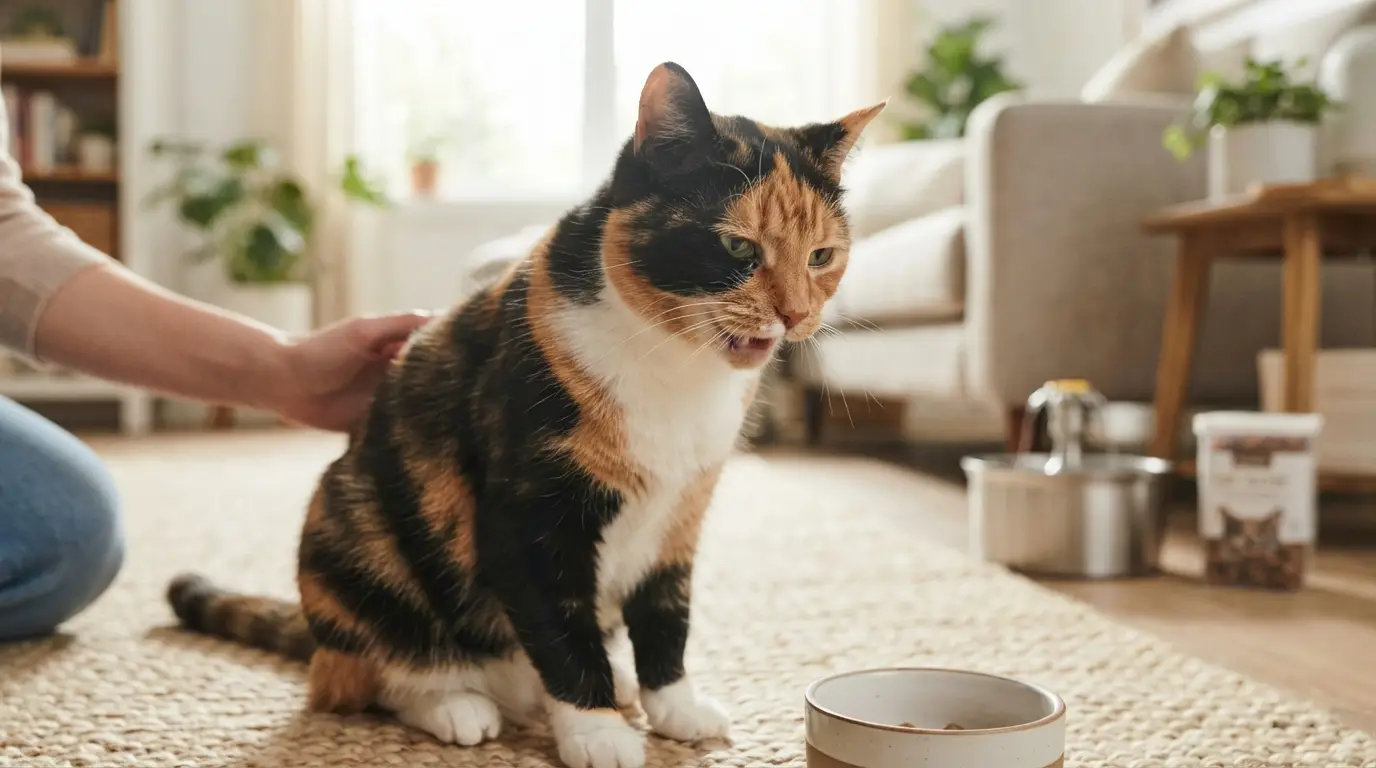
Cat hiccups are normal in most cases and are more common than owners might think. They are usually caused by temporary spasms of the diaphragm due to eating too fast, drinking too quickly, or irritation of the stomach by hairballs. These hiccups typically stop on their own within tens of seconds to a few minutes. What you should truly worry about is when "hiccups are accompanied by other symptoms"—such as faster, shallower breathing, breathing that uses the abdomen, repeated gagging and coughing, or decreased appetite. In such cases, it cannot be treated as a simple hiccup and requires investigation into respiratory, esophageal, and cardiopulmonary issues.
Key Takeaways
- Physiological cat hiccups usually occur 5 to 30 minutes after eating, lasting for tens of seconds to a few minutes per episode, and no more than 1-2 times a day. If the cat is still eating and playing normally, it falls within the scope of home observation.
- A normal resting or sleeping respiratory rate for cats is approximately 20-30 breaths per minute. If it consistently exceeds 40 breaths per minute while resting quietly, or if abdominal breathing (using the belly to breathe) is evident, it is an emergency-level warning sign.
- In kittens, hiccups are primarily caused by an immature diaphragm and nervous system regulation, combined with swallowing air while eating quickly. However, parasites (like roundworms) can also irritate the gastrointestinal tract, causing hiccups and vomiting. Kittens that have not completed deworming need to be evaluated for this.
- "Hiccups" can look very similar to "reverse sneezing, cat asthma coughing, or gagging up hairballs." Recording a 15-30 second video on your phone for the veterinarian is the most valuable piece of information during a clinic visit.
- If hiccups are accompanied by any of the following, seek veterinary attention the same day: open-mouth breathing, bluish or pale tongue or gums, continuous hiccups lasting over 1 hour, multiple episodes per day for more than 2-3 days, or accompanied by loss of appetite or weight loss.
What Do Cat Hiccups Actually Look Like? First, Confirm You're Actually Seeing Hiccups
The physiological mechanism of hiccups is involuntary diaphragm contractions accompanied by the temporary closure of the vocal cords, creating that short "hic" sound. Cat hiccups are usually much quieter than human ones; some cats have almost no sound, only showing a rhythmic twitching of the abdomen or chest.
The most common situation we encounter at our clinic is when an owner says, "My cat keeps hiccuping," but the video they show is actually something else. First, use the following comparison chart to confirm for yourself:
| What You See | What It Might Be | Key Features |
|---|---|---|
| Rhythmic abdominal twitching, almost fixed intervals, with a small "hic" sound | Hiccups (diaphragm spasm) | Regular rhythm, the cat appears unfazed |
| Neck extended forward, body lowered, emitting a dry "ack—" sound | Coughing / Cat Asthma | Often a series of coughs, followed by licking the lips |
| Abdomen forcefully contracting, as if trying to vomit but unable to | Gagging / Pre-vomiting | Obvious "preparing to vomit" posture and swallowing motions |
| Forceful inhalation, making a sound like a pig snort or snore | Reverse Sneezing | It's an inhalation, not an exhalation; often related to nasal irritation |
| Shallow, rapid breathing, noticeable abdominal movement, mouth slightly open | Difficulty Breathing | This is not hiccups; it's an emergency |
It's normal not to be able to distinguish. The differences in these cat behaviors can be just a few seconds apart. The most practical approach is to record a video: Zoom out slightly, capture the entire cat, record for 15-30 seconds, and play it directly for the veterinarian at the clinic. It's much more accurate than a verbal description.
What we use for this
CatGarden’s own products, shipped from Taiwan Pro Hairball Control PowderFrom CA$26.60 per boxFree shipping on multi-packs
Physiological Hiccups: 3 Most Common Causes That Don't Require Worry
1. Eating Too Fast, Swallowing Too Much Air
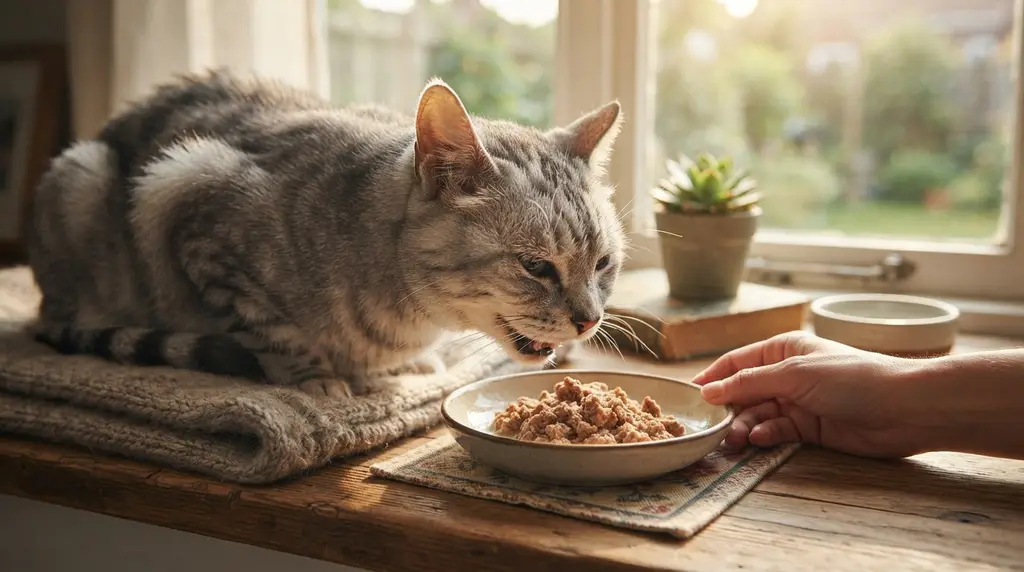
This is the number one cause. When cats eat ravenously, they can swallow air along with their food. When the stomach expands, it irritates the nearby diaphragm, leading to hiccups. The typical pattern is: hiccups start within 5-30 minutes after eating, last for a few minutes, and the cat is completely unbothered.
Cats prone to eating too fast often share these characteristics: competitive eating pressure in multi-cat households, being fed only once or twice a day, kibble pieces that are too small to be chewed properly, or rescue cats with a history of starvation.
2. Hairballs and Gastrointestinal Irritation
During shedding season, for long-haired cats, or for cats whose grooming frequency has decreased recently, accumulated hairballs in the stomach can cause a combination of "hiccups, gagging, and occasional vomiting of stringy hairballs." These hiccups often occur right after waking up or after grooming. They might also be accompanied by a slight decrease in appetite for a meal or two.
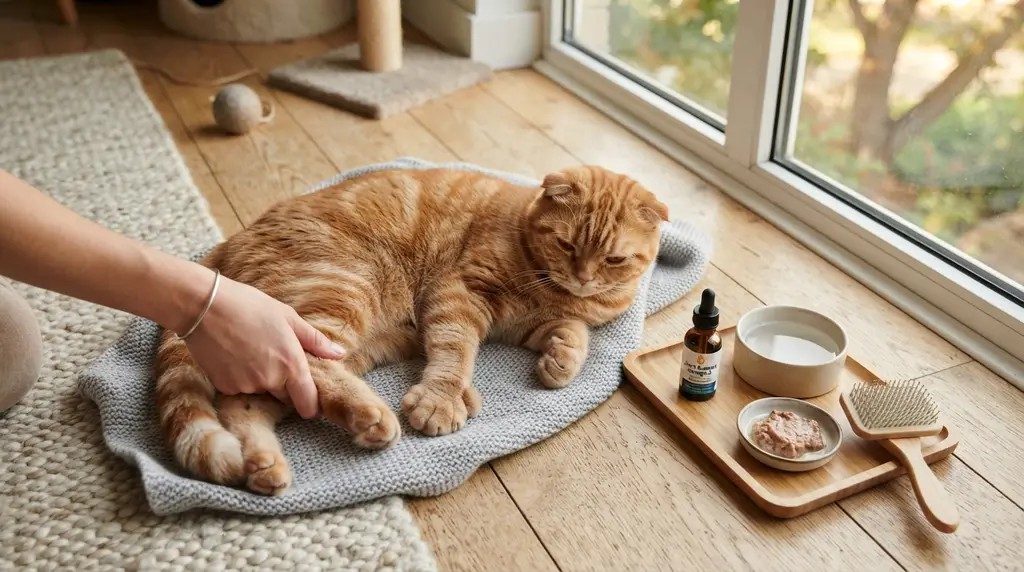
The approach to hiccups caused by hairballs is to "reduce the amount of hair entering the stomach," not to stop the hiccups: groom regularly (2-3 times a week for short-haired cats, daily for long-haired cats). During shedding season, you can supplement with dietary fiber like Pro Hairball Control Powder to help hairballs pass through feces. If the cat's coat is becoming matted and the undercoat is forming tangles, it's safer to have it professionally groomed than to try and comb it yourself. Consider booking a grooming appointment to remove shedding undercoat hair all at once.
3. Emotional Excitement, Overly Energetic Play, Drinking Water Too Quickly
Some cats hiccup after a vigorous chase with a feather wand or after gulping down a large amount of water. This is the same phenomenon as humans hiccuping after running: disrupted breathing patterns and overuse of the diaphragm. Hiccups of this type are usually the shortest, ending within a minute or two.
Causes of Hiccups in Kittens: Mostly Normal, But Two Things to Check
Kittens hiccup noticeably more frequently than adult cats, mainly because their diaphragm and related nerve regulation are not yet mature. Additionally, swallowing air while weaning or drinking from a bottle can easily trigger hiccups. For kittens aged three to four months, having one or two hiccups a day, each lasting a minute or two, is usually not a cause for concern as long as their eating, sleeping, and playing are normal.
However, there are two things to consider together with hiccups in kittens:
- Has deworming been completed thoroughly? Intestinal parasites like roundworms can irritate the gastrointestinal tract, causing hiccups, vomiting, a distended abdomen, yet the kitten remains thin. For kittens from the street or with unknown origins, a fecal examination and deworming should be done during their first veterinary check-up.
- Bowel movements: If hiccups are accompanied by soft stools or diarrhea, it's not just a matter of swallowing air. You can refer to the decision-making logic in Kitten Has Diarrhea But Is Active, Is It Normal? Observe 3 Indicators Before Deciding Whether to See a Vet for an assessment.
Kittens have lighter body weight and faster metabolism, making them far less tolerant of dehydration and hypoglycemia than adult cats. Therefore, "lethargy" is a more urgent sign in kittens than in adult cats.
Pathological Warning Signs: Suspect Respiratory and Cardiopulmonary Issues in These Situations
When "hiccups" are not isolated but occur alongside other symptoms, consider the following possibilities. These require veterinary examination (auscultation, X-rays, echocardiogram, blood tests) and cannot be determined at home:
- Feline Asthma / Chronic Bronchitis: This is most often mistaken for hiccups. The characteristic symptom is a series of coughs with the neck extended and body lowered. Episodes may be seasonal or triggered by environmental factors (incense, perfumes, secondhand smoke, dusty cat litter). If your home has noticeable cat litter dust, switching to a low-dust formula can help. For selection criteria, refer to Cat Litter Recommendations: How to Choose the Right Type? Pros and Cons of Mineral, Tofu, and Wood Litter.
- Heart Disease (e.g., Hypertrophic Cardiomyopathy) and Pulmonary Edema: Early stages of heart disease in cats are often asymptomatic. When rapid breathing, abdominal breathing, and decreased activity occur, the heart is often already struggling to compensate. The "hiccup-like twitches" in these cats are actually labored breathing.
- Upper Respiratory Tract Infections: Sneezing, nasal discharge, eye discharge, a hoarse voice, combined with occasional hiccups or reverse sneezing, are common in kittens and multi-cat environments.
- Esophageal / Cardia Issues, Foreign Body Ingestion: Repeated hiccups immediately after eating, or regurgitating undigested food in a cylindrical shape, suggest esophageal problems.
- Hyperthyroidism: In middle-aged to older cats, rapid heart rate, increased appetite with weight loss, and frequent panting and restlessness are typical signs. See The Complete Guide to Feline Hyperthyroidism (Cat Hyperthyroidism): Symptoms, Diagnosis, and Treatment for details.
- Diaphragmatic Hernia After Trauma: For cats with a history of falls or car accidents, if they experience prolonged breathing difficulties and frequent twitching afterward, an X-ray examination is essential.
3 Home Observation Indicators: Deciding Between "Wait and See" or "Go Today"
Indicator 1: Resting Respiratory Rate
This is the easiest and most valuable skill to learn. While your cat is sleeping or resting quietly, observe the rise and fall of its chest and abdomen. Count for 15 seconds and multiply by 4:
- 20-30 breaths/minute: Normal.
- 30-40 breaths/minute: Slightly elevated. Count again every 2-4 hours and record.
- Consistently over 40 breaths/minute, or noticeable abdominal effort and open-mouth breathing: Seek veterinary care immediately, do not wait until tomorrow.
Record this number in your phone's notes. Over time, it will establish your cat's baseline, allowing you to compare any abnormalities promptly.
Indicator 2: Hiccup Log
Record just three things: time of occurrence, interval since eating, and duration. Physiological hiccups typically appear "after meals, end within minutes, and occur at a stable frequency without worsening." Pathological hiccups are characterized by "no relation to meals, increasing frequency daily, and prolonged duration."
Indicator 3: Changes in Eating, Drinking, Urination, and Defecation
Hiccups themselves usually don't make a cat uncomfortable enough to stop eating. Therefore, if there's a decrease in appetite, hiding, weight loss, or reduced stool volume, the focus should be on the underlying problem, not the hiccups. In such cases, you can combine this assessment with Cat Not Eating, Drinking, or Sleeping All Day: Normal Lethargy or a Sign of Illness? Golden 24-Hour Observation and Vet Visit Decision Chart. If the cat also feels warm to the touch, has red ears, and appears visibly listless, it's advisable to check its temperature as well. Refer to What to Do If Your Cat Has a Fever? Normal Temperature, How to Measure It, and Danger Signs Explained for guidance.
What to Do About Cat Hiccups? Start by Modifying Eating Habits
If you determine the hiccups are related to eating too fast, these tips have been proven effective both in our clinic and in clients' homes, usually showing noticeable improvement within one to two weeks:
1. Portion Control: Divide the day's food into 3-4 smaller meals. Smaller portions naturally reduce air swallowing. For meal timing logic, refer to How Much Should a Senior Cat Eat Per Day? Calculating Portions, Wet Food Ratio, and Small, Frequent Meals for Older Cats; this logic also applies to adult cats.
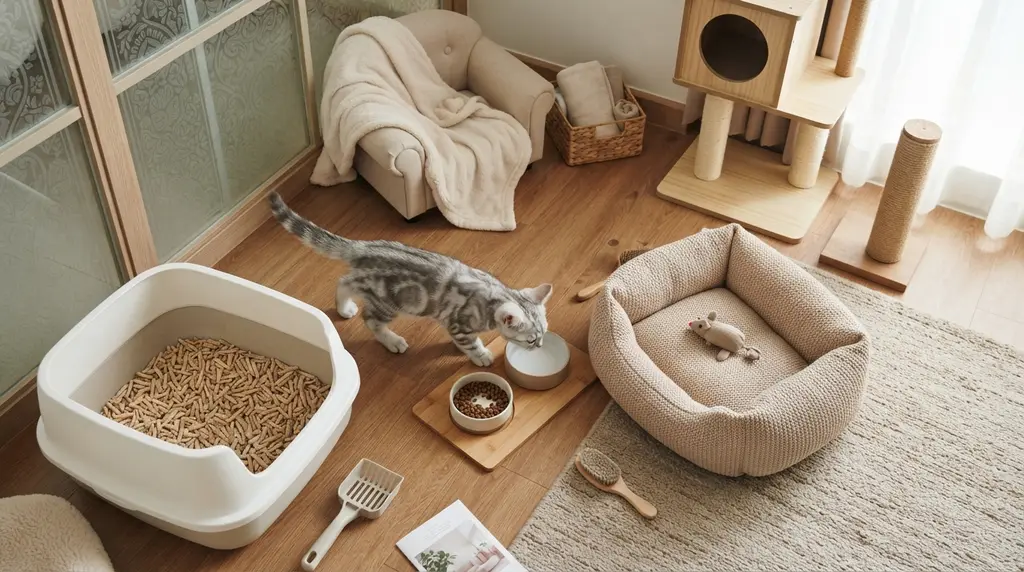
2. Slow Down Eating Speed: Use slow feeder bowls, puzzle feeders, or spread kibble thinly on a large, shallow plate so the cat cannot scoop up large mouthfuls.
3. Elevate the Bowl 8-12 cm: This allows for a more natural esophageal angle, reducing air swallowing. This is particularly effective for cats prone to post-meal hiccups and regurgitation of undigested food.
4. Separate Feeding in Multi-Cat Households: Increase the distance between cats so they cannot see each other, or stagger feeding times. Competitive eating pressure is the most commonly overlooked cause of "eating too fast."
5. Increase Moisture Content: Soften dry food with warm water or increase the proportion of wet food. Food clumps become larger and slower to swallow, which is also beneficial for urinary tract health.
6. Avoid Intense Play for 30 Minutes After Meals: Rushing into vigorous activity right after eating is a classic combination leading to post-meal hiccups and gagging.
Regarding practices like "patting the cat's back," "startling them to stop hiccups," or "forcing water," please refrain from doing so. A cat's esophagus and breathing rhythm are already unstable during hiccups. Forcing water carries a risk of aspiration, with minimal benefit. The correct approach is to remain calm, observe, and record the situation if necessary.
Our Clinic's Observation Notes
Cats in boarding often exhibit a higher incidence of post-meal hiccups on the first and second days of their stay. The reasons are almost always the same: stress from a new environment, coupled with not eating well the previous night, leading to ravenous eating upon seeing food. Our approach is simple: divide meals into smaller portions, offer only one-third at a time, and provide the next portion after a 20-minute interval. Most cats stop hiccuping by the first day.
Another common situation involves long-haired cats during shedding season: hiccups, gagging, and vomiting hairballs occur together. In such cases, we first intensify grooming and report the hairball situation to the owner, rather than waiting for them to vomit. For cats with sensitive stomachs or those prone to soft stools when changing environments, we also recommend supplementing with Probiotics a few days in advance to stabilize their gut health.
What truly prompts us to contact owners and veterinarians immediately is never the act of "hiccuping" itself, but rather an increased respiratory rate, abdominal breathing, and a drop in food intake by more than half. Your judgment criteria at home can be just as simple.
Frequently Asked Questions
My cat keeps hiccuping but has normal energy and appetite. Do I need to see a vet?
If each hiccup episode lasts only a few minutes, occurs 1-2 times a day, and is clearly linked to eating, you can try dietary adjustments and observe for 3-5 days. If it persists for over a week without improvement, or if the frequency increases, it's still recommended to bring them in for auscultation and examination.
Can I give my cat water or pat its back to help stop hiccups?
Not recommended. Forcing water carries a risk of aspiration into the respiratory tract, and patting the back or "startling" the cat has no proven effect. Physiological hiccups will stop on their own; your role is to maintain a quiet environment and record the situation.
How do I distinguish between hiccups and coughing from cat asthma?
Hiccups have a regular rhythm, are short and abrupt, and the cat's posture remains unchanged. During asthma coughing, the cat extends its neck, lowers its body, coughs repeatedly, and often licks its lips or swallows afterward. Recording a video for the veterinarian is the most reliable way to differentiate.
Is frequent hiccuping in kittens a problem?
Kittens hiccup more frequently than adult cats due to immature diaphragm and nerve regulation, as well as swallowing air while eating quickly during weaning. This is normal. However, if accompanied by abdominal distension, lack of weight gain, soft stools, or vomiting, please get a fecal examination and deworming assessment as soon as possible.
What symptoms accompanying hiccups require immediate emergency veterinary care?
Open-mouth breathing, bluish or pale tongue or gums, resting respiratory rate exceeding 40 breaths per minute, abdominal breathing with noticeable effort, continuous hiccups lasting over an hour without stopping, or complete loss of appetite and thirst should all warrant same-day veterinary attention.
This article provides principles for home observation and care and cannot replace veterinary diagnosis. If symptoms persist, worsen, or if the emergency signs mentioned above appear, please seek veterinary care promptly.
By CatGarden Editorial Team
CatGarden offers curated supplies, cat boarding, and grooming
Book services or shop online.