How Much Should a Senior Cat Eat Per Day? Calculating Portions, Wet Food Ratios, and Meal Frequency for Older Cats
Senior cats require approximately "70 × body weight^0.75 × 1.1–1.2" calories daily. For a 4kg senior cat, this is about 220–240 kcal. This article explains how to calculate portions based on weight, determine the number of cans and grams of dry food, and how to arrange wet food ratios and frequent small meals.
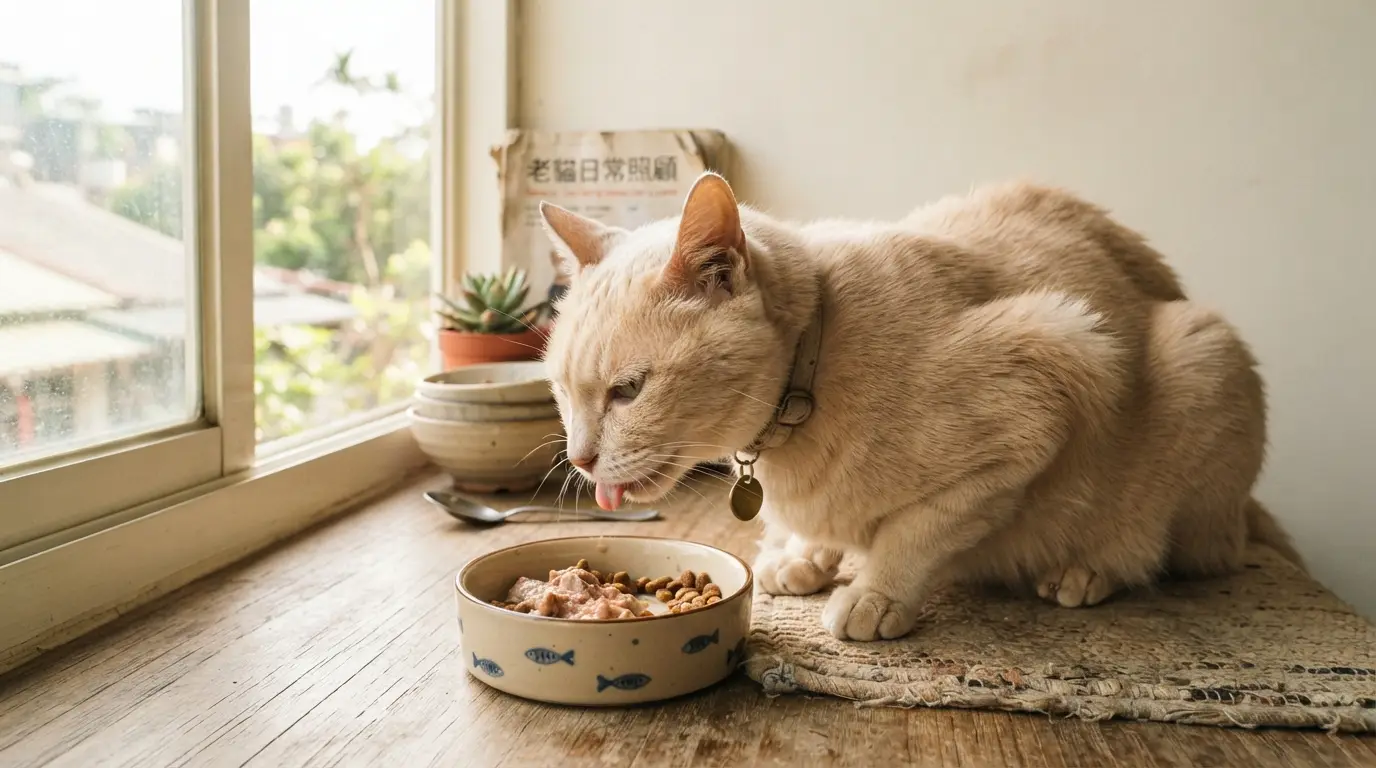
How much should a senior cat (7 years and older) eat per day? Here's a formula you can use directly: Daily Calories ≈ 70 × (body weight in kg)^0.75 × 1.1–1.2. For a 4kg senior cat with normal activity levels, this is about 220–240 kcal per day. In terms of food, if feeding only wet food (85g can ≈ 80 kcal), it's about 3 cans; if feeding only dry food (≈ 380 kcal/100g), it's about 60 grams, and it's recommended to divide this into 3–4 meals.
Key Takeaways
- The daily calorie formula for senior cats is 70 × (body weight in kg)^0.75 × 1.1–1.2; a 4kg senior cat needs about 220–240 kcal, and a 5kg cat needs about 260–280 kcal.
- Calculate senior cat food portions by "kcal," not "cups." Common adult dry food is about 380 kcal/100g, and main meal wet food cans are about 70–90 kcal/85g can.
- The recommended wet food ratio for senior cats is at least 50% of daily calories, and up to 70–100% if tolerated. Wet food contains about 75–80% water, while dry food has only about 10%.
- Senior cats are recommended to have 3–5 meals per day, with no more than 12 hours between meals. Include a meal before bedtime to reduce vomiting due to an empty stomach.
- Weigh your cat every 2–4 weeks. If the weight changes by more than 5% within a month (200g for a 4kg cat), adjust the portion size or consult a veterinarian.
When Does a Cat Become a "Senior Cat"?
The commonly used international classification is: 7–10 years old is mature/senior, and 11 years and older is geriatric. However, we've had 12-year-old cats still climbing cat trees at our facility, and 8-year-old cats losing muscle mass. Age is just a signal to start measuring weight quarterly; the actual portion size is determined by weight, body condition, and activity level.
Two common oversights in feeding senior cats:
1. After age 11, the digestibility of fat and protein decreases. This means younger cats absorb nutrients better than older cats, even with the same calorie intake. This is why many elderly cats "eat the same amount but gradually get thinner" – it's a normal physiological change, not because you're feeding too little.
2. The 7–10 year age range is actually the most prone to weight gain. Reduced activity levels combined with feeding adult portions can lead to gradual overweight issues. The focus during this stage is weight management, while after age 11, the focus shifts to "preventing weight loss."
How Much Should a Senior Cat Eat Per Day? Calculate Daily Calories in Two Steps
Step 1: Calculate Resting Energy Requirement (RER)
Formula: RER = 70 × (body weight in kg)^0.75
You don't need a scientific calculator; refer to the table below. It's important to use the ideal body weight, not the current weight. If your cat is significantly overweight, use the "target weight" for calculation to avoid overfeeding.
Step 2: Multiply by the Senior Cat Activity Factor
| Condition | Factor |
|---|---|
| Neutered, indoor, normally active senior cat | 1.1–1.2 |
| Noticeably overweight, needs to lose weight | 0.8–1.0 |
| Underweight, elderly with muscle loss, needs to gain weight | 1.4–1.6 |
| Metabolic diseases like hyperthyroidism (follow veterinarian's instructions) | 1.6 and above |
Senior Cat Daily Calorie Chart
| Ideal Body Weight | RER | Normal Senior Cat (×1.1–1.2) | Underweight/Needs to Gain (×1.4–1.6) |
|---|---|---|---|
| 2.5 kg | 139 kcal | 153–167 kcal | 195–222 kcal |
| 3 kg | 160 kcal | 176–192 kcal | 224–256 kcal |
| 3.5 kg | 179 kcal | 197–215 kcal | 251–286 kcal |
| 4 kg | 198 kcal | 218–238 kcal | 277–317 kcal |
| 4.5 kg | 216 kcal | 238–259 kcal | 302–346 kcal |
| 5 kg | 234 kcal | 257–281 kcal | 328–374 kcal |
| 6 kg | 268 kcal | 295–322 kcal | 375–429 kcal |
This number is a starting point, not an endpoint. After calculating, feed for 2–3 weeks, then weigh your cat and adjust the portion by 10% based on the weight trend – this is the correct way to use it.
How to Convert Senior Cat Food Portions to Grams and Cans
The most common mistake is "giving one and a half cups." Different foods have vastly different calorie densities (ranging from 330 to 450 kcal per 100g), so the same cup can vary by 30% in calories. Check the side of the packaging for "Metabolizable Energy ME: ___ kcal/100g or kcal/kg." For brands that don't list this, we usually contact them directly.
Three Steps for Conversion
1. Total daily calories (refer to the chart above).
2. Determine the calorie ratio of wet food to dry food.
3. Divide the total calories for each food type by its calorie density.
Example: 4kg Senior Cat, 230 kcal per day
| Feeding Method | Conversion |
|---|---|
| All Wet Food | 85g main meal can (≈ 80 kcal) → Approx. 2.9 cans, practically give 3 cans |
| Half Wet, Half Dry | Wet food 115 kcal ≈ 1.5 cans; Dry food 115 kcal ÷ 3.8 kcal/g ≈ 30 g |
| All Dry Food | 230 ÷ 3.8 ≈ 60 g |
Treats, hairball paste, and freeze-dried food should all be included. Our experience is that treats should not exceed 10% of the daily total calories (about 23 kcal for a 4kg senior cat, roughly 3–5 pieces of freeze-dried food). Exceeding this will displace the protein the main meal should provide. If you want to give fruit-based treats, be very mindful of the portion size. You can refer to Can Cats Eat Blueberries? Portion Guide, Common Allergic Reactions, and Proper Feeding for guidance. It's also recommended to first check which foods at home are completely off-limits. Save this article on What Foods Are Toxic to Cats? Common Household Dangers and Poisoning Signs immediately.
Don't Reduce Protein for Senior Cats Arbitrarily
There used to be a notion that "senior cats need low protein," but the current consensus is the opposite: healthy senior cats need more protein to combat muscle loss. It's recommended to provide at least 6–7 grams of protein per 100 kcal. Those who truly need protein restriction are cats diagnosed with kidney disease (IRIS stage 2 or later), specifically phosphorus and protein, and this should be determined by a veterinarian based on blood tests, not guesswork. To understand the causes of kidney disease, you can read Why Do Cats Get Kidney Disease? 4 Major Causes: Aging, Diet, Dehydration, and Genetics.
Senior Cat Wet Food Ratio: At Least Half, All Wet is Even Better
Why Senior Cats Need More Wet Food
- Significant Difference in Water Content: Wet food is about 75–80% water, while dry food is only about 10%. Cats need about 50 ml/kg of water per day (about 200ml for a 4kg cat). Cats eating only dry food can rarely compensate for this deficit through drinking.
- Senior cats' thirst response is naturally dulled, increasing the risk of dehydration, and chronic dehydration further burdens the kidneys.
- Low calorie density and large volume provide a greater sense of fullness for 7–10 year old cats that need weight management.
Practical Ratio Recommendations
| Situation | Recommended Wet Food Percentage of Daily Calories |
|---|---|
| General Senior Cat | 50% or more |
| Elderly, elevated kidney values, history of stones or lower urinary tract disease | 70–100% |
| Only fed dry food since kittenhood, extremely resistant to food changes | Start at 30%, then increase by 2% every 2 weeks |
We always recommend a slow transition to wet food: the first week, place a teaspoon of main meal wet food next to their dry food. The second week, replace 1/4 of the calories with wet food. In the third to fourth week, reach half. The biggest fear for senior cats isn't eating the wrong food, but not eating at all. Switching completely at once can easily lead to three days of refusal. When choosing wet food, look for two things: whether it's labeled "complete and balanced (main meal)," and the protein and phosphorus content per 100 kcal. For our elderly boarding cats, we most often use the Luxury Functional Cans which have a smooth texture that senior cats can easily lick and eat, even those with dental issues.
Three Small Actions to Increase Water Intake
1. Add 1–2 tablespoons of warm water to wet food and mix well (water temperature around 38–40°C, close to body temperature, is most enticing).
2. Switch to wide, shallow water bowls and place them in 2–3 locations, at least 1.5 meters away from the litter box.
3. Observe signs of dehydration: If the skin on the back of the neck, when gently pinched, doesn't spring back within 2 seconds, or if the gums and mucous membranes are dry and sticky. Refer to How to Check for Cat Dehydration? 3 Home Assessment Methods: Skin Turgor, Oral Mucous Membranes, and Water Intake.
How to Arrange Small, Frequent Meals for Senior Cats
Cats have small stomachs and are naturally designed to eat "10–20 small meals a day." Senior cats digest more slowly and are more prone to vomiting yellow bile due to prolonged fasting. Therefore, 3–5 meals a day are better than 2 meals.
A Possible Schedule for Working Owners (Example: 4kg, 230 kcal, half wet/half dry)
| Time | Meal | Calories |
|---|---|---|
| 07:00 Before Leaving | 1/2 can main meal wet food + warm water mixed | Approx. 40 kcal |
| 07:05 | 15g dry food in a puzzle feeder/slow feeder bowl | Approx. 57 kcal |
| 18:30 Upon Returning Home | 1 can main meal wet food | Approx. 80 kcal |
| 22:30 Before Bedtime | 15g dry food | Approx. 57 kcal |
Some practical principles:
- Try not to exceed 12 hours between meals, especially the bedtime meal, as this can significantly reduce morning vomiting of yellow bile.
- Wet food should not be left at room temperature for more than 1 hour (30 minutes recommended in Taiwan's summer). Put it away if not eaten to prevent the cat from learning that "food is always available."
- In multi-cat households, feed and measure portions separately; otherwise, you'll never know exactly how many grams the senior cat ate. In our facility, each cat has its own room and bowl, and we record how much they eat at each meal.
- Use automatic feeders only for dry food, not wet food. Setting the timer for 3 meals is better than 2.
- For cats that eat too quickly and vomit afterward, spread their dry food on a large plate or use a slow feeder bowl. This method is also effective for senior cats.
If you compare this to the feeding schedule for kittens, the logic is similar, but the direction is reversed. Kittens need "frequent feeding, chasing calories," while senior cats need "frequent feeding, quality control." For details, see How Many Meals a Day for Kittens? Feeding Frequency, Portions, and Transitioning by Age Stage.
How to Confirm the Portion Size is Correct: Look at These Three Indicators
1. Weight (Most Objective)
Use a kitchen scale and a carrier to weigh your cat every 2–4 weeks and record it on your phone. If the weight changes by more than 5% within a month, action is needed: for a 4kg cat, this is 200 grams. Senior cats can lose 300–500 grams without it being visibly apparent under their fur. By the time you notice "they feel all bone," they may have already lost over 10%.
2. Body Condition Score (BCS 1–9, ideal is 5)
- Gently feel the ribs with your palm flat: They should be like the knuckles on the back of your hand – palpable but not protruding.
- There should be a waistline when viewed from above and a tucked-up abdomen when viewed from the side.
- For elderly cats, pay special attention to the muscles along the spine and on the hind legs: If ribs are palpable but the spine protrudes and the hind legs are thin, it indicates muscle loss, requiring increased protein and calories, not just more food.
3. Stool and Demeanor
1–2 formed stools per day, which can be picked up whole and don't stick to the litter box, indicate good digestion. For cats with chronic soft stools or sensitive stomachs during food transitions, we add a little Specialty Probiotics to their wet food to help stabilize them during the transition.
Situations Where You Should Not Adjust Portions and Should See a Vet Immediately
- Good appetite, eating a lot but continuously losing weight: Rule out hyperthyroidism, diabetes, and intestinal diseases first.
- Complete refusal to eat for over 24 hours (especially for obese cats, who are at risk of hepatic lipidosis): Refer to Cat Not Eating, Drinking, or Sleeping All Day: Normal Lethargy or a Sign of Illness? The Critical 24-Hour Observation and Vet Visit Guide.
- Sudden increase in water intake and urine output (litter box clumps are noticeably larger and more frequent): Common early signs of kidney disease or diabetes.
- Shaking head, dropping food, or only licking the gravy mid-meal: Usually indicates dental pain, not pickiness.
- Repeated vomiting, bloody stools, or a weight loss of over 10% in a month: These are all levels that require immediate attention, not further observation.
For any of the above, seek veterinary care promptly if symptoms persist or worsen. Adjusting portions at home cannot replace blood and urine tests. For cats over 10 years old, we recommend at least one comprehensive annual health check-up (including blood tests, urine specific gravity, and blood pressure).
How to Handle Feeding for Senior Cats When Traveling
This is one of the most frequently asked practical questions. Senior cat portion charts require more precise adherence than those for younger cats. Therefore, when boarding your cat, be sure to clearly state three things: grams/fraction of a can per meal, feeding time, and if any medication or supplements need to be mixed in. We also ask owners to bring their cat's usual food. Changing environments and food simultaneously doubles the risk of food refusal. For information on duration and costs, refer to How to Arrange Cat Boarding for Overseas Trips? Duration Calculation, Cost Estimates, and Key Considerations for Pickup and Drop-off. For elderly cats requiring three meals a day and detailed feeding records, you are welcome to book boarding and note this in the remarks.
Frequently Asked Questions
Can Senior Cats Have Free-Choice Dry Food All Day?
Not recommended for cats aged 7–10. Free-choice feeding is the most common cause of obesity in this age group. For cats over 11 years old who are underweight and need to gain weight, "free-choice dry food + scheduled wet food" is an option, but you should still record how many grams are refilled daily to know the actual calorie intake.
Does a Senior Cat's Wet Food Ratio Have to Be 100%?
Not necessarily. As long as more than 50% of the daily total calories come from wet food, the water content is usually sufficient. For cats with kidney disease, urinary stones, or low water intake, pushing towards 70–100% is recommended, and choosing therapeutic or low-phosphorus formulas as advised by a veterinarian.
My Senior Cat Is Suddenly Getting Thin, Should I Feed More?
First, weigh your cat to confirm the percentage of weight loss and check their appetite. If the appetite is normal but they are losing weight, it's usually not a portion issue but a disease (hyperthyroidism, diabetes, kidney disease, intestinal malabsorption). See a vet for blood tests first. Once health is confirmed, use a factor of 1.4–1.6 to increase calories.
I Work and Can't Manage 5 Meals a Day, What's a Compromise?
3 meals (morning, evening, before bed) are sufficient for most senior cats. The key is not to skimp on the bedtime meal and to keep the interval between meals under 12 hours. During the day, you can use an automatic feeder for one portion of dry food or put dry food in a puzzle toy to extend feeding time.
Should Supplements Be Included in Calorie Counts?
Powdered and capsule forms usually have negligible calories. However, pastes, freeze-dried treats, and lickable treats should be counted, as these can easily exceed 10% of daily calories. If your cat is on a weight loss plan, switching lickable treats to small, portioned pieces of freeze-dried food will be much easier to manage. To compare different products, visit the Shop to view ingredient labels.
Article by the CatGarden Editorial Team
CatGarden offers curated supplies, cat boarding, and grooming
Book services or shop online.