How to Tell if Your Cat is Dehydrated: 3 Home Checks for Skin Elasticity, Oral Mucosa, and Water Intake

The three most practical home checks for cat dehydration: pinch the skin on the neck to see how quickly it snaps back, feel the gums for stickiness or dryness, and track daily water intake. This article includes a dehydration severity chart, proper rehydration methods, and warning signs that require immediate veterinary attention.
CatGarden Editorial TeamPublished 2026/08/14Updated 2026/10/06
cat dehydrationcat healthsummer carecat hydrationhome health check
How to Tell if Your Cat is Dehydrated: 3 Home Checks for Skin Elasticity, Oral Mucosa, and Water Intake

The quickest ways to check for cat dehydration at home involve three actions: pinching the skin between the shoulder blades to see how many seconds it takes to spring back, feeling the gums to check if they are moist or dry, and calculating how much water the cat actually drinks per day. If the skin takes longer than 2 seconds to return to normal, the gums feel dry, or the total daily water intake is significantly less than "40-60ml per kilogram of body weight" for an adult cat, dehydration should be suspected.

Dehydration itself isn't a disease but a consequence of various conditions such as heatstroke, gastroenteritis, kidney disease, fever, or loss of appetite. When we board cats at our facility during the summer, the most common abnormality we detect on the first day isn't a fever, but rather that they are "already a bit dehydrated upon arrival"—especially cats who have been stressed in a carrier for an hour or have been anxious all day without drinking. Here's the complete examination process we use daily.

Key Takeaways

  • Healthy cat skin, when pinched and released, should snap back completely within 1-2 seconds. A delay of 2-4 seconds indicates mild to moderate dehydration (around 5% fluid loss). More than 4 seconds without returning to normal signifies moderate to severe dehydration requiring veterinary attention.
  • Normal gums and inner lip mucosa are moist and pink; if they feel dry and sticky, or if capillary refill time (CRT) after pressing the gums exceeds 2 seconds, it indicates dehydration or poor circulation.
  • Adult cats require approximately 40-60ml of water per kilogram of body weight daily. A 4kg cat eating only dry food needs to drink about 160-240ml per day. Cats on wet food diets obtain 70-80% of their water from food, so drinking less from the bowl is normal.
  • Cats normally urinate 2-4 times a day. A sudden decrease in the number or size of urine clumps in the litter box is one of the earliest signs of dehydration.
  • Pale or white gums, sunken eyeballs, body temperature exceeding 39.5°C (103.1°F), persistent vomiting, or not eating or drinking for over 24 hours are critical signs that require immediate veterinary care, not home observation.

Why Cats Are Particularly Prone to Dehydration

Cats' ancestors originated from arid regions, and they have a naturally blunted thirst response compared to dogs. They are accustomed to obtaining moisture from their prey. Therefore, cats fed exclusively dry food are often in a state of "just enough hydration, with no reserve." If they encounter high temperatures, vomiting, diarrhea, fever, or simply feel unwell and lose their appetite, their body fluids can quickly become imbalanced.

There are three main reasons why summer poses a higher risk:

  • In high temperatures, cats dissipate heat through panting and sweating from their paw pads, increasing moisture loss through respiration.
  • Appetite often decreases in hot weather, leading to less water intake from canned food.
  • Hot and humid environments may cause cats to hide in closets or under beds, making them less likely to approach their water bowls.

We have compiled a comprehensive guide on preventing heatstroke, which you can read here: Do Cats Fear Heat? Signs of Heatstroke, Panting, and a Complete Guide to Summer Cooling. You can consider the dehydration checks in this article as the "self-assessment" section of that guide.

Check Method 1: Skin Elasticity Test (Skin Tenting)

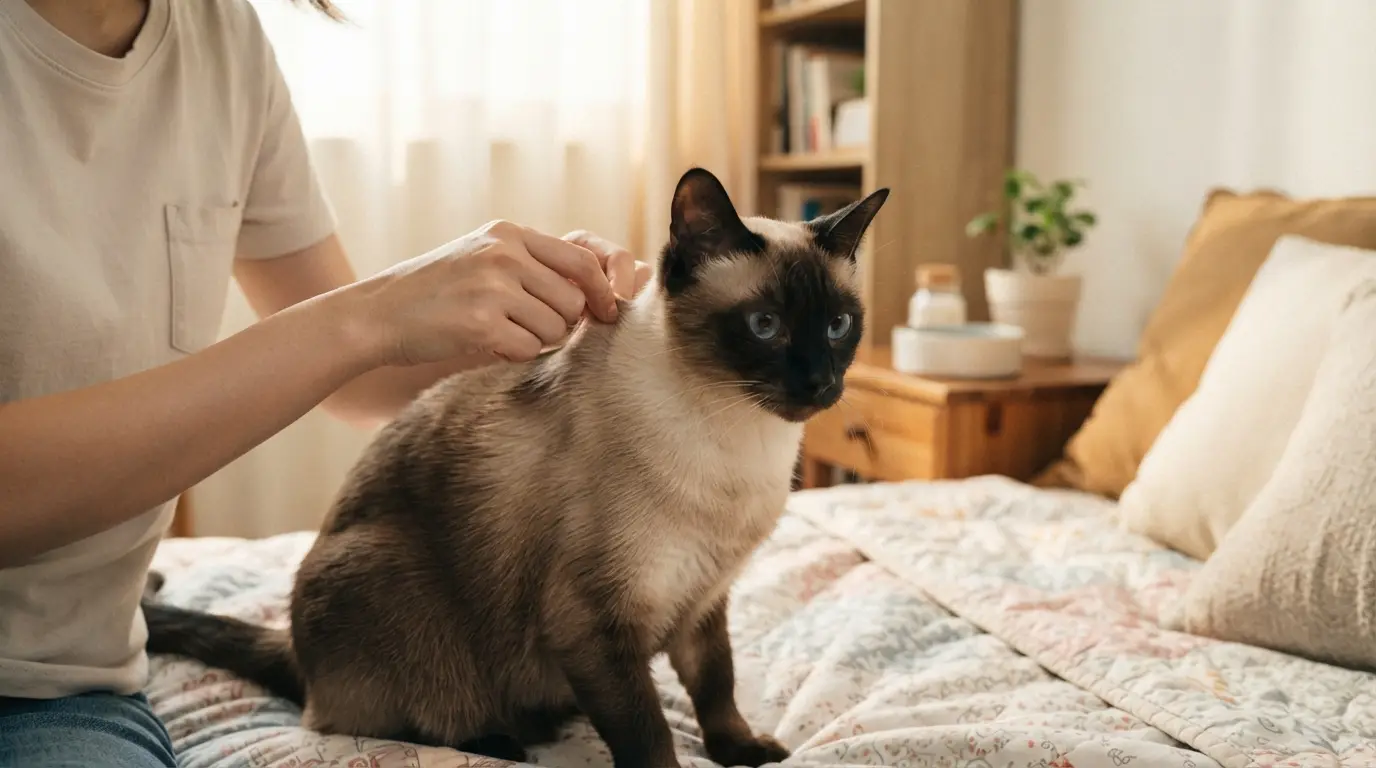
This is a technique veterinarians frequently use and is easy for owners to learn. The key is correct placement.

Correct Procedure

1. Have your cat stand or lie down in a relaxed state; do not perform the test while holding them in the air.

2. Locate the skin between the shoulder blades, towards the back of the neck. Gently pinch a small fold of skin (about 2-3 cm) between your thumb and index finger, lifting it like a tent.

3. Release the skin and start counting the seconds in your head.

Interpretation

Return TimeApproximate Meaning
Snaps back immediately within 1 secondNormal hydration status
Slowly flattens within 2-4 secondsMild to moderate dehydration (approx. 5% fluid loss). Begin active rehydration and monitor closely.
Takes longer than 4 seconds, or skin remains tentedModerate to severe dehydration (over 8% fluid loss). Seek veterinary care the same day.

Three Types of Cats for Whom This Test May Be Less Accurate

When performing admission health checks on cats at our facility, we adjust our interpretation of the skin test for three types of cats:

  • Overweight cats: Thick subcutaneous fat can make the skin snap back quickly even when dehydrated, leading to underestimation.
  • Elderly or underweight cats: Degeneration of subcutaneous elastic fibers naturally slows down the skin's return, potentially leading to overestimation (we've encountered 15-year-old cats whose skin normally takes 2 seconds to return).
  • Long-haired cats: Breeds like Himalayans or Persians with very thick fur can interfere with the tactile sensation. You need to part the fur to feel the skin.

Therefore, the most valuable approach is to perform this test when your cat is healthy to establish a baseline. Note their normal feel and timing; this is more accurate than relying on any standard.

Check Method 2: Oral Mucosa (Gum Moisture and Capillary Refill Time)

While the skin elasticity test can be influenced by body condition, the oral mucosa provides a better reflection of circulatory status and is our basis for deciding "whether to call the vet immediately."

How to Check

1. Gently hold your cat's head with one hand. With the other hand, use your thumb to gently lift the upper lip, exposing the gums on the outside of the upper teeth.

2. Observe the color: Normal gums are a healthy pink (like faint salmon flesh).

3. Gently press the gum with your finger for 1 second, then release. Observe how long it takes for the pink color to return – this is the capillary refill time (CRT).

4. Simultaneously, assess the moisture: Your finger should feel slightly moist when you remove it.

Key Interpretation Points

  • Moist and shiny + CRT of 1-2 seconds: Normal.
  • Sticky and dry, feeling like blotting paper: Dehydration. Thickened saliva is an early sign.
  • CRT exceeding 2 seconds: Poor perfusion. This usually indicates more than just mild dehydration.
  • Pale or grayish color: May indicate blood loss, shock, or severe circulatory problems. This is an emergency.
  • Brick red or dark red: Often seen in the early stages of heatstroke due to vasodilation.

For a more detailed interpretation of gum color, refer to our article What Are the Early Signs of Cat Heatstroke? Check Gum Color, Panting, and 3 Warning Signs for Veterinary Care. If your cat is also panting with their mouth open, consult Is Your Cat Panting with Their Mouth Open Due to Heat or Illness? Check Gum Color, Breathing Rate, and 3 Signs to See a Vet.

Check the Eyes Too

While you have the mouth open, take a look at the eyes. Noticeably sunken eyeballs and visible recession of the eyelids usually indicate dehydration of 8-10% or more. At this level, oral rehydration is insufficient; subcutaneous or intravenous fluids administered by a veterinarian are necessary.

Check Method 3: Water Intake and Urine Output (Most Easily Overlooked but Most Practical)

The first two methods are indicators that dehydration is already present. Water intake is the only indicator that can provide early warning.

How Much Should They Drink Daily?

Adult cats require approximately 40-60ml of total water per kilogram of body weight:

  • 3kg cat: approx. 120-180ml
  • 4kg cat: approx. 160-240ml
  • 6kg cat: approx. 240-360ml

Note that this is "total water," including water from food. Dry kibble contains only 8-10% water, while canned food is 70-80% water. Therefore:

  • Cats eating only dry food: Must obtain almost all their water from drinking. You should see a noticeable decrease in the water bowl.
  • Cats eating wet food: Eating two 80g cans of food per day already provides about 120ml of water. Drinking less from the bowl is normal; do not force them to drink more.

How to Measure Accurately Without Deceiving Yourself

The simplest practical method:

1. In the morning, use a measuring cup with markings or a kitchen scale to record the amount of water placed in the bowl (1ml ≈ 1g).

2. The next morning, at the same time, measure the remaining water.

3. The difference, minus evaporation (in summer with air conditioning, an open water bowl can lose about 10-20ml per day), is the actual amount consumed.

4. For multi-cat households, feed them separately or monitor continuously, as you'll only know the total amount consumed, not who drank it.

Warning signs can be viewed from two perspectives: drinking too little is a concern for dehydration. However, if a cat suddenly starts drinking more than 100ml per kilogram per day (over 400ml for a 4kg cat), this excessive thirst (polydipsia) is often associated with kidney disease, diabetes, or hyperthyroidism, and requires veterinary examination and blood tests.

Use the Litter Box as a Monitoring Station

We record the elimination of every boarding cat at our facility using the litter box. A healthy adult cat urinates 2-4 times a day, with relatively consistent urine clump sizes. Sudden changes such as:

  • The number of urine clumps decreasing from 3 to 1.
  • Urine clumps becoming noticeably smaller, darker in color, and more concentrated in odor.

These changes often reflect dehydration earlier than the skin elasticity test. For accurate tracking, ensure sufficient litter depth and that clumps form completely. You can find more information on this in our guide How Thick Should Cat Litter Be? Litter Types, Weekly Refills, and When to Fully Change the Box. Conversely, if a cat repeatedly enters the litter box but cannot urinate, especially male cats, this is a urinary blockage emergency; do not wait.

What to Do If Your Cat is Dehydrated: Dos and Don'ts at Home

What to Do

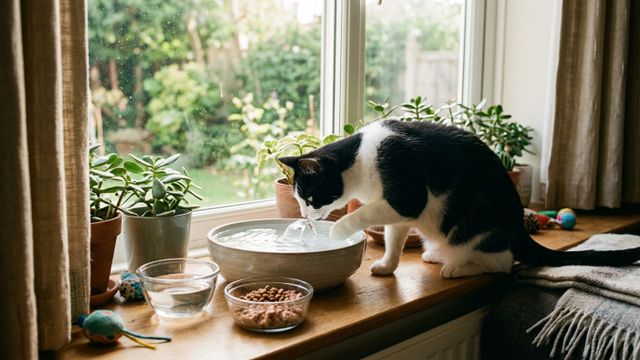
  • Make water more appealing: Increase the number of water bowls (recommend at least one more than the number of cats), use wide, shallow bowls to avoid whisker fatigue, place water bowls away from food and litter boxes, and change the water daily instead of just topping it up.
  • Use cool or slightly chilled water: Many cats are more receptive to cooler water in the summer. We add a couple of ice cubes to our water dispensers in the afternoon, and water consumption noticeably increases.
  • Rehydrate through food (most effective): Mix canned food with 30-50ml of warm water to create a soupy consistency; most cats will still eat it. To significantly increase water content, choose pâté-style canned foods with higher moisture content, like our Luxury Functional Cans, over those with large chunks of meat.
  • Encourage drinking in small, frequent amounts: Use a syringe (without a needle) to slowly administer 1-2ml along the side of the mouth, allowing the cat to swallow. Give only a few small sips at a time.

What Not to Do

  • Do not force-feed large amounts of water: Forcing water down can easily lead to aspiration into the trachea, causing aspiration pneumonia, which is much harder to treat than dehydration.
  • Do not give human sports drinks: The sugar and electrolyte balance is not suitable for cats and can worsen diarrhea.
  • Do not administer subcutaneous fluids at home without veterinary guidance: Unless a veterinarian has taught you how and provided the necessary supplies, there are risks associated with dosage and sterile technique.
  • Do not use milk as a water substitute: Most adult cats are lactose intolerant and may develop diarrhea, leading to further dehydration.

If dehydration is caused by vomiting or diarrhea, adjust the rehydration pace according to the recovery of the gastrointestinal system. Refer to our guide How Long Does Cat Gastroenteritis Take to Resolve? From Day 1 to Day 7, Feeding Recovery Order, and Warning Signs to See a Vet for feeding progression. If you need to assess your water bowls, litter boxes, and wet food setup, you can find suitable products in our Shop.

Seek Veterinary Care Immediately in These Situations; Do Not Observe at Home

  • Skin elasticity test takes longer than 4 seconds to return, or eyeballs are noticeably sunken.
  • Gums are pale, white, or purplish, or CRT exceeds 2 seconds.
  • No eating or drinking for over 24 hours (reduce to 12 hours for kittens and elderly cats).
  • Persistent vomiting or watery diarrhea lasting more than half a day.
  • Repeated attempts to urinate with no output, accompanied by pained vocalizations (especially dangerous for male cats).
  • Body temperature exceeding 39.5°C (103.1°F) or below 37.5°C (99.5°F), rapid breathing, staggering gait, or disorientation.

Moderate to severe dehydration cannot be corrected by oral rehydration alone and requires fluid therapy to restore fluid and electrolyte balance. If symptoms persist or worsen, seek veterinary care promptly; do not delay treatment by relying solely on home remedies.

Before and After Travel, Remember to Perform the Three Checks

When boarding cats during the summer, we always record their weight, gum condition, skin elasticity, and the time of their first urination on the day of arrival. The reason is simple: cats often do not drink water in unfamiliar environments for the first 24 hours. If they arrive already slightly dehydrated, they could develop problems the next day. Therefore, if you plan to travel, perform the three checks at home the day before departure to establish a baseline for us. This will be more helpful than anything else. When making boarding reservations, it's also recommended to inform us about your cat's usual drinking habits and preferred bowl types.

Frequently Asked Questions

What are the symptoms of cat dehydration?

Typical symptoms of cat dehydration include: slower skin elasticity return after pinching, dry and sticky gums and oral mucosa, lethargy and hiding, decreased appetite, fewer and smaller urine clumps, and sunken eyeballs. Mild dehydration often presents as vague signs like "a bit lazy" or "the water bowl hasn't been touched." Therefore, regular self-assessment using the three checks is more reliable than waiting for symptoms to appear.

What is the fastest way to rehydrate a dehydrated cat?

The most effective method is rehydration through food: mix canned food with 30-50ml of warm water to form a soupy consistency. This can replenish a significant amount of fluid in one meal. Simultaneously, increase the number and placement of water bowls, and if necessary, use a syringe to administer 1-2ml at a time along the side of the mouth. For moderate to severe dehydration, seek veterinary care for subcutaneous or intravenous fluids; do not force-feed at home.

How much water should a cat drink per day?

Adult cats require approximately 40-60ml of total water per kilogram of body weight daily. A 4kg cat needs about 160-240ml. This is the total water intake, including water from food. Cats eating canned food normally drink less from their bowls. Conversely, if a cat suddenly starts drinking more than 100ml per kilogram per day, suspect kidney disease or diabetes and seek veterinary examination.

Will a cat that only eats dry food definitely become dehydrated?

Not necessarily, but the risk is indeed higher because dry kibble contains only 8-10% water, requiring the cat to drink enough to compensate. It is recommended to provide multiple water sources, monitor water bowl consumption and litter box output regularly, or incorporate at least one wet food meal daily for long-term urinary and kidney health.

Is the skin elasticity test accurate for all cats?

Not entirely. Overweight cats may have their dehydration underestimated due to thick subcutaneous fat. Elderly and underweight cats naturally have poorer skin elasticity, which can lead to misinterpretation as dehydration. The most practical method is to perform the test when your cat is healthy to establish a baseline, and then combine it with assessments of gum moisture and water intake for a more accurate diagnosis.


Article by CatGarden Editorial Team

CatGarden offers curated supplies, cat boarding, and grooming

Book services or shop online.
Back

Blog

How to Tell if Your Cat is Dehydrated: 3 Home Checks for Skin Elasticity, Oral Mucosa, and Water Intake

CatGarden Editorial TeamPublished 2026/08/14Updated 2026/10/06
cat dehydrationcat healthsummer carecat hydrationhome health check
How to Tell if Your Cat is Dehydrated: 3 Home Checks for Skin Elasticity, Oral Mucosa, and Water Intake

The quickest ways to check for cat dehydration at home involve three actions: pinching the skin between the shoulder blades to see how many seconds it takes to spring back, feeling the gums to check if they are moist or dry, and calculating how much water the cat actually drinks per day. If the skin takes longer than 2 seconds to return to normal, the gums feel dry, or the total daily water intake is significantly less than "40-60ml per kilogram of body weight" for an adult cat, dehydration should be suspected.

Dehydration itself isn't a disease but a consequence of various conditions such as heatstroke, gastroenteritis, kidney disease, fever, or loss of appetite. When we board cats at our facility during the summer, the most common abnormality we detect on the first day isn't a fever, but rather that they are "already a bit dehydrated upon arrival"—especially cats who have been stressed in a carrier for an hour or have been anxious all day without drinking. Here's the complete examination process we use daily.

Key Takeaways

  • Healthy cat skin, when pinched and released, should snap back completely within 1-2 seconds. A delay of 2-4 seconds indicates mild to moderate dehydration (around 5% fluid loss). More than 4 seconds without returning to normal signifies moderate to severe dehydration requiring veterinary attention.
  • Normal gums and inner lip mucosa are moist and pink; if they feel dry and sticky, or if capillary refill time (CRT) after pressing the gums exceeds 2 seconds, it indicates dehydration or poor circulation.
  • Adult cats require approximately 40-60ml of water per kilogram of body weight daily. A 4kg cat eating only dry food needs to drink about 160-240ml per day. Cats on wet food diets obtain 70-80% of their water from food, so drinking less from the bowl is normal.
  • Cats normally urinate 2-4 times a day. A sudden decrease in the number or size of urine clumps in the litter box is one of the earliest signs of dehydration.
  • Pale or white gums, sunken eyeballs, body temperature exceeding 39.5°C (103.1°F), persistent vomiting, or not eating or drinking for over 24 hours are critical signs that require immediate veterinary care, not home observation.

Why Cats Are Particularly Prone to Dehydration

Cats' ancestors originated from arid regions, and they have a naturally blunted thirst response compared to dogs. They are accustomed to obtaining moisture from their prey. Therefore, cats fed exclusively dry food are often in a state of "just enough hydration, with no reserve." If they encounter high temperatures, vomiting, diarrhea, fever, or simply feel unwell and lose their appetite, their body fluids can quickly become imbalanced.

There are three main reasons why summer poses a higher risk:

  • In high temperatures, cats dissipate heat through panting and sweating from their paw pads, increasing moisture loss through respiration.
  • Appetite often decreases in hot weather, leading to less water intake from canned food.
  • Hot and humid environments may cause cats to hide in closets or under beds, making them less likely to approach their water bowls.

We have compiled a comprehensive guide on preventing heatstroke, which you can read here: Do Cats Fear Heat? Signs of Heatstroke, Panting, and a Complete Guide to Summer Cooling. You can consider the dehydration checks in this article as the "self-assessment" section of that guide.

Check Method 1: Skin Elasticity Test (Skin Tenting)

This is a technique veterinarians frequently use and is easy for owners to learn. The key is correct placement.

Correct Procedure

1. Have your cat stand or lie down in a relaxed state; do not perform the test while holding them in the air.

2. Locate the skin between the shoulder blades, towards the back of the neck. Gently pinch a small fold of skin (about 2-3 cm) between your thumb and index finger, lifting it like a tent.

3. Release the skin and start counting the seconds in your head.

Interpretation

Return TimeApproximate Meaning
Snaps back immediately within 1 secondNormal hydration status
Slowly flattens within 2-4 secondsMild to moderate dehydration (approx. 5% fluid loss). Begin active rehydration and monitor closely.
Takes longer than 4 seconds, or skin remains tentedModerate to severe dehydration (over 8% fluid loss). Seek veterinary care the same day.

Three Types of Cats for Whom This Test May Be Less Accurate

When performing admission health checks on cats at our facility, we adjust our interpretation of the skin test for three types of cats:

  • Overweight cats: Thick subcutaneous fat can make the skin snap back quickly even when dehydrated, leading to underestimation.
  • Elderly or underweight cats: Degeneration of subcutaneous elastic fibers naturally slows down the skin's return, potentially leading to overestimation (we've encountered 15-year-old cats whose skin normally takes 2 seconds to return).
  • Long-haired cats: Breeds like Himalayans or Persians with very thick fur can interfere with the tactile sensation. You need to part the fur to feel the skin.

Therefore, the most valuable approach is to perform this test when your cat is healthy to establish a baseline. Note their normal feel and timing; this is more accurate than relying on any standard.

Check Method 2: Oral Mucosa (Gum Moisture and Capillary Refill Time)

While the skin elasticity test can be influenced by body condition, the oral mucosa provides a better reflection of circulatory status and is our basis for deciding "whether to call the vet immediately."

How to Check

1. Gently hold your cat's head with one hand. With the other hand, use your thumb to gently lift the upper lip, exposing the gums on the outside of the upper teeth.

2. Observe the color: Normal gums are a healthy pink (like faint salmon flesh).

3. Gently press the gum with your finger for 1 second, then release. Observe how long it takes for the pink color to return – this is the capillary refill time (CRT).

4. Simultaneously, assess the moisture: Your finger should feel slightly moist when you remove it.

Key Interpretation Points

  • Moist and shiny + CRT of 1-2 seconds: Normal.
  • Sticky and dry, feeling like blotting paper: Dehydration. Thickened saliva is an early sign.
  • CRT exceeding 2 seconds: Poor perfusion. This usually indicates more than just mild dehydration.
  • Pale or grayish color: May indicate blood loss, shock, or severe circulatory problems. This is an emergency.
  • Brick red or dark red: Often seen in the early stages of heatstroke due to vasodilation.

For a more detailed interpretation of gum color, refer to our article What Are the Early Signs of Cat Heatstroke? Check Gum Color, Panting, and 3 Warning Signs for Veterinary Care. If your cat is also panting with their mouth open, consult Is Your Cat Panting with Their Mouth Open Due to Heat or Illness? Check Gum Color, Breathing Rate, and 3 Signs to See a Vet.

Check the Eyes Too

While you have the mouth open, take a look at the eyes. Noticeably sunken eyeballs and visible recession of the eyelids usually indicate dehydration of 8-10% or more. At this level, oral rehydration is insufficient; subcutaneous or intravenous fluids administered by a veterinarian are necessary.

Check Method 3: Water Intake and Urine Output (Most Easily Overlooked but Most Practical)

The first two methods are indicators that dehydration is already present. Water intake is the only indicator that can provide early warning.

How Much Should They Drink Daily?

Adult cats require approximately 40-60ml of total water per kilogram of body weight:

  • 3kg cat: approx. 120-180ml
  • 4kg cat: approx. 160-240ml
  • 6kg cat: approx. 240-360ml

Note that this is "total water," including water from food. Dry kibble contains only 8-10% water, while canned food is 70-80% water. Therefore:

  • Cats eating only dry food: Must obtain almost all their water from drinking. You should see a noticeable decrease in the water bowl.
  • Cats eating wet food: Eating two 80g cans of food per day already provides about 120ml of water. Drinking less from the bowl is normal; do not force them to drink more.

How to Measure Accurately Without Deceiving Yourself

The simplest practical method:

1. In the morning, use a measuring cup with markings or a kitchen scale to record the amount of water placed in the bowl (1ml ≈ 1g).

2. The next morning, at the same time, measure the remaining water.

3. The difference, minus evaporation (in summer with air conditioning, an open water bowl can lose about 10-20ml per day), is the actual amount consumed.

4. For multi-cat households, feed them separately or monitor continuously, as you'll only know the total amount consumed, not who drank it.

Warning signs can be viewed from two perspectives: drinking too little is a concern for dehydration. However, if a cat suddenly starts drinking more than 100ml per kilogram per day (over 400ml for a 4kg cat), this excessive thirst (polydipsia) is often associated with kidney disease, diabetes, or hyperthyroidism, and requires veterinary examination and blood tests.

Use the Litter Box as a Monitoring Station

We record the elimination of every boarding cat at our facility using the litter box. A healthy adult cat urinates 2-4 times a day, with relatively consistent urine clump sizes. Sudden changes such as:

  • The number of urine clumps decreasing from 3 to 1.
  • Urine clumps becoming noticeably smaller, darker in color, and more concentrated in odor.

These changes often reflect dehydration earlier than the skin elasticity test. For accurate tracking, ensure sufficient litter depth and that clumps form completely. You can find more information on this in our guide How Thick Should Cat Litter Be? Litter Types, Weekly Refills, and When to Fully Change the Box. Conversely, if a cat repeatedly enters the litter box but cannot urinate, especially male cats, this is a urinary blockage emergency; do not wait.

What to Do If Your Cat is Dehydrated: Dos and Don'ts at Home

What to Do

  • Make water more appealing: Increase the number of water bowls (recommend at least one more than the number of cats), use wide, shallow bowls to avoid whisker fatigue, place water bowls away from food and litter boxes, and change the water daily instead of just topping it up.
  • Use cool or slightly chilled water: Many cats are more receptive to cooler water in the summer. We add a couple of ice cubes to our water dispensers in the afternoon, and water consumption noticeably increases.
  • Rehydrate through food (most effective): Mix canned food with 30-50ml of warm water to create a soupy consistency; most cats will still eat it. To significantly increase water content, choose pâté-style canned foods with higher moisture content, like our Luxury Functional Cans, over those with large chunks of meat.
  • Encourage drinking in small, frequent amounts: Use a syringe (without a needle) to slowly administer 1-2ml along the side of the mouth, allowing the cat to swallow. Give only a few small sips at a time.

What Not to Do

  • Do not force-feed large amounts of water: Forcing water down can easily lead to aspiration into the trachea, causing aspiration pneumonia, which is much harder to treat than dehydration.
  • Do not give human sports drinks: The sugar and electrolyte balance is not suitable for cats and can worsen diarrhea.
  • Do not administer subcutaneous fluids at home without veterinary guidance: Unless a veterinarian has taught you how and provided the necessary supplies, there are risks associated with dosage and sterile technique.
  • Do not use milk as a water substitute: Most adult cats are lactose intolerant and may develop diarrhea, leading to further dehydration.

If dehydration is caused by vomiting or diarrhea, adjust the rehydration pace according to the recovery of the gastrointestinal system. Refer to our guide How Long Does Cat Gastroenteritis Take to Resolve? From Day 1 to Day 7, Feeding Recovery Order, and Warning Signs to See a Vet for feeding progression. If you need to assess your water bowls, litter boxes, and wet food setup, you can find suitable products in our Shop.

Seek Veterinary Care Immediately in These Situations; Do Not Observe at Home

  • Skin elasticity test takes longer than 4 seconds to return, or eyeballs are noticeably sunken.
  • Gums are pale, white, or purplish, or CRT exceeds 2 seconds.
  • No eating or drinking for over 24 hours (reduce to 12 hours for kittens and elderly cats).
  • Persistent vomiting or watery diarrhea lasting more than half a day.
  • Repeated attempts to urinate with no output, accompanied by pained vocalizations (especially dangerous for male cats).
  • Body temperature exceeding 39.5°C (103.1°F) or below 37.5°C (99.5°F), rapid breathing, staggering gait, or disorientation.

Moderate to severe dehydration cannot be corrected by oral rehydration alone and requires fluid therapy to restore fluid and electrolyte balance. If symptoms persist or worsen, seek veterinary care promptly; do not delay treatment by relying solely on home remedies.

Before and After Travel, Remember to Perform the Three Checks

When boarding cats during the summer, we always record their weight, gum condition, skin elasticity, and the time of their first urination on the day of arrival. The reason is simple: cats often do not drink water in unfamiliar environments for the first 24 hours. If they arrive already slightly dehydrated, they could develop problems the next day. Therefore, if you plan to travel, perform the three checks at home the day before departure to establish a baseline for us. This will be more helpful than anything else. When making boarding reservations, it's also recommended to inform us about your cat's usual drinking habits and preferred bowl types.

Frequently Asked Questions

What are the symptoms of cat dehydration?

Typical symptoms of cat dehydration include: slower skin elasticity return after pinching, dry and sticky gums and oral mucosa, lethargy and hiding, decreased appetite, fewer and smaller urine clumps, and sunken eyeballs. Mild dehydration often presents as vague signs like "a bit lazy" or "the water bowl hasn't been touched." Therefore, regular self-assessment using the three checks is more reliable than waiting for symptoms to appear.

What is the fastest way to rehydrate a dehydrated cat?

The most effective method is rehydration through food: mix canned food with 30-50ml of warm water to form a soupy consistency. This can replenish a significant amount of fluid in one meal. Simultaneously, increase the number and placement of water bowls, and if necessary, use a syringe to administer 1-2ml at a time along the side of the mouth. For moderate to severe dehydration, seek veterinary care for subcutaneous or intravenous fluids; do not force-feed at home.

How much water should a cat drink per day?

Adult cats require approximately 40-60ml of total water per kilogram of body weight daily. A 4kg cat needs about 160-240ml. This is the total water intake, including water from food. Cats eating canned food normally drink less from their bowls. Conversely, if a cat suddenly starts drinking more than 100ml per kilogram per day, suspect kidney disease or diabetes and seek veterinary examination.

Will a cat that only eats dry food definitely become dehydrated?

Not necessarily, but the risk is indeed higher because dry kibble contains only 8-10% water, requiring the cat to drink enough to compensate. It is recommended to provide multiple water sources, monitor water bowl consumption and litter box output regularly, or incorporate at least one wet food meal daily for long-term urinary and kidney health.

Is the skin elasticity test accurate for all cats?

Not entirely. Overweight cats may have their dehydration underestimated due to thick subcutaneous fat. Elderly and underweight cats naturally have poorer skin elasticity, which can lead to misinterpretation as dehydration. The most practical method is to perform the test when your cat is healthy to establish a baseline, and then combine it with assessments of gum moisture and water intake for a more accurate diagnosis.


Article by CatGarden Editorial Team

One email a month of cat-care tips

Hand-picked care, behavior and grooming tips once a month. Subscribe and we will send you our three most-read articles right away.

Keep reading