How to Cool Down Your Cat During a Typhoon Power Outage? Prepare a Backup Checklist and Understand Heatstroke Signs
The biggest worry during a typhoon power outage isn't the darkness, but the stifling heat. This article provides a 24-hour pre-outage backup checklist, effective cooling methods without air conditioning, and guidance on when to seek veterinary care based on gum color and breathing rate.
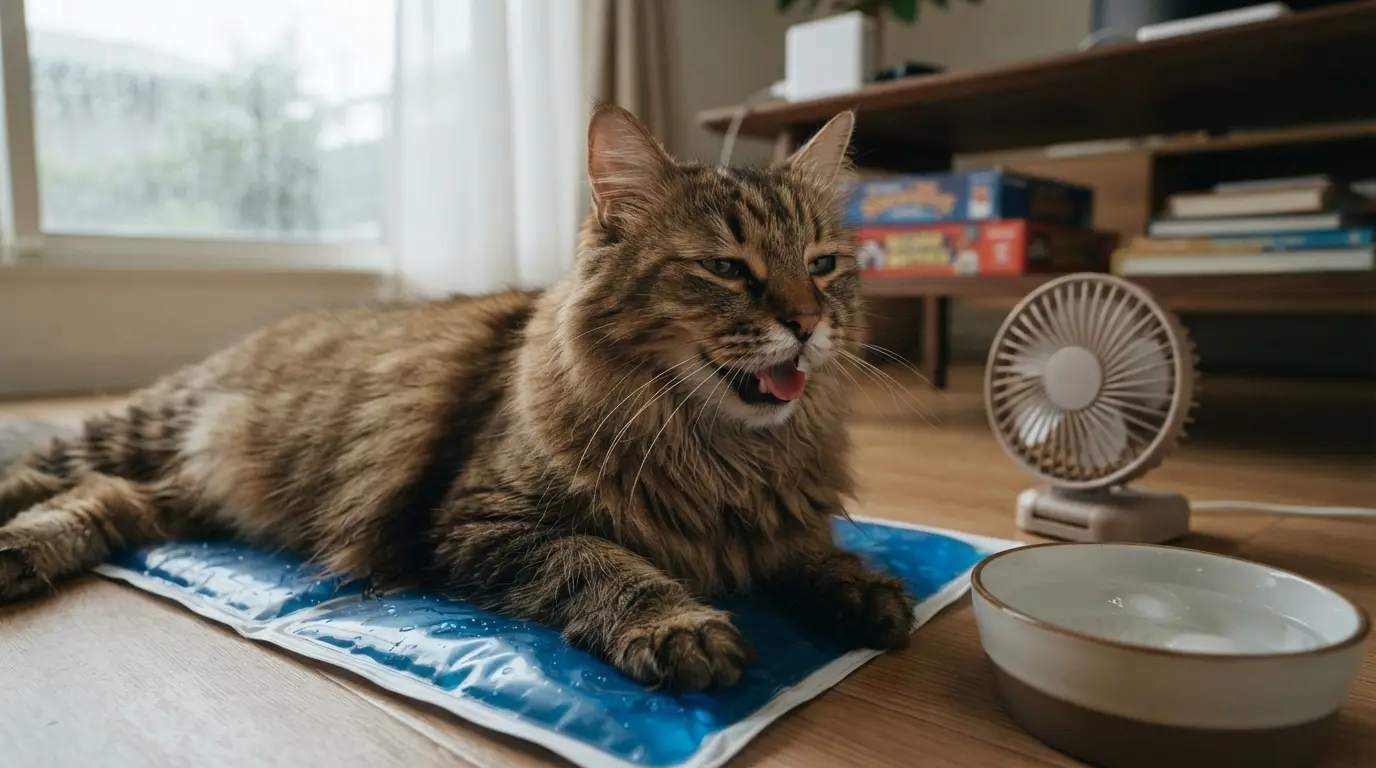
During a typhoon power outage, the three most effective ways to cool down your cat are: gather the cat in the coolest tiled or concrete floor area, use a slightly damp towel to wipe their paw pads, inner ears, and armpits/groin, and use a power bank to run a small fan to create airflow. Simultaneously, increase drinking stations to over three locations and add ice cubes to prolong coolness. If your cat starts panting with their mouth open and breathes over 40 times per minute, or their gums turn brick red or dark red, this is beyond just being "a little warm" – cool them down immediately and seek veterinary attention.
Every August and September during typhoon season, the most frequent emergency inquiries we receive are: "My power went out, and my cat is panting, what should I do?" In Taiwan's apartment buildings, once the air conditioning fails and windows cannot be fully opened due to strong winds, indoor temperatures can rise from 27°C to over 33°C within 30 minutes. Combined with near-saturated humidity, this creates the highest risk combination for feline heatstroke. Below is a comprehensive guide based on our experience managing our own cats through typhoons and conducting power outage drills for our boarding guests.
Key Takeaways
- Cats do not have sweat glands all over their bodies; they primarily sweat through their paw pads and dissipate heat by panting and through their ears. Their heat dissipation efficiency is far lower than humans'. Temperatures exceeding 30°C are already taxing for cats, and above 32°C poses a high risk.
- A cat's normal resting respiratory rate is about 20-30 breaths per minute. If it consistently exceeds 40 breaths per minute and they are panting with their mouth open, it should be considered abnormal, and cooling measures should begin.
- A healthy cat's gums are normally pale pink. If they turn brick red/dark red, it indicates overheating and compensatory circulation. Pale or purplish gums signify a critical emergency requiring immediate veterinary attention.
- For cooling, use room temperature to slightly cool water to wipe their limbs and abdomen. Do not use ice water immersion, force-feed water, or use alcohol. Rapid temperature drops can cause vasoconstriction, hindering heat dissipation.
- The day before the typhoon, complete these 7 tasks: pre-cool the room, prepare ice packs and ice cubes, set up more than 3 water bowls, prepare a power bank and small fan, place the carrier near the door, stock up on 3 days' worth of wet food and cat litter, and have the 24-hour emergency vet number readily available.
Why "Stifling Heat During Power Outages" is Particularly Dangerous for Cats
Unlike humans, cats cannot sweat all over their bodies. Their heat dissipation pathways are limited: a small amount of sweat from their paw pads, vasodilation in their ears and extremities to release heat, licking their fur for evaporative cooling, and as a last resort – panting. The first three methods are largely ineffective in the high humidity (over 85%) of a typhoon, as moisture cannot evaporate. This leaves panting as the primary option, and when a cat begins to pant continuously with their mouth open, it usually signifies they are on the verge of decompensation.
Compounding the problem are three simultaneous issues during a power outage:
1. Air conditioners, air purifiers, and circulation fans stop working, leading to stagnant indoor air.
2. Windows cannot be opened due to strong winds and potential flying debris, effectively trapping the cat in a mini-oven.
3. Owners may be unable to return home, leaving the cat alone and unmonitored for hours.
We measured it in our shop: in a 10 sq meter room with west-facing windows, with windows closed, the room temperature rose from 26.5°C to 32.8°C within 40 minutes after the air conditioner was turned off, with the perceived temperature being even higher. This is why typhoon cooling preparations must be completed "before the power goes out," not after. For a more comprehensive understanding of a cat's heat tolerance limits and summer cooling logic, you can read this article on Do Cats Fear Heat? Signs of Heatstroke, Panting, and a Complete Summer Cooling Guide and Do Cats Fear Heat? Understand Cat Heat Tolerance, Cooling Methods, and Indoor AC Temperatures in Taiwan.
24 Hours Before the Outage: Typhoon Cat Backup Checklist
1. Pre-cool the Room to a Lower Temperature
Before the typhoon makes landfall and while the power is still on, set the air conditioner in the room where your cat spends most of its time to 24-25°C and run it continuously for 2-3 hours. Close the curtains to block direct sunlight. The walls, floor, and furniture will store the cool air, slowing down the temperature rise in this room by 30-60 minutes after the power goes out, providing you with a buffer.
2. Ice Packs, Gel Packs, Frozen Water Bottles: Prepare All Three
- Fill your freezer with 600ml water bottles (leaving about 1/5 space for expansion): This is the cheapest and most long-lasting source of cold, and can also serve as backup drinking water if the water supply is cut off.
- Commercial ice packs/gel packs: Wrap them in a towel before placing them near your cat's bed or favorite resting spots. Never let your cat lie directly on an exposed ice pack. Prolonged contact can cause cold burns, and your cat might chew through the outer layer.
- Place ice packs on the outer edges of your cat's usual resting areas, allowing them to choose whether to approach. Forcing a cat to lie on a cold source is a common mistake; they will simply move away, rendering the effort useless.
Practical Tip: Do not repeatedly open and close the freezer after the power goes out. Take out the required amount of ice at once; a closed freezer can maintain low temperatures for 8-12 hours.
3. Increase Drinking Stations from 1 to 3 or More
This is one of the most cost-effective measures. After the power outage, electric water fountains stop working, and many cats drink less because "the water isn't flowing." Here's how:
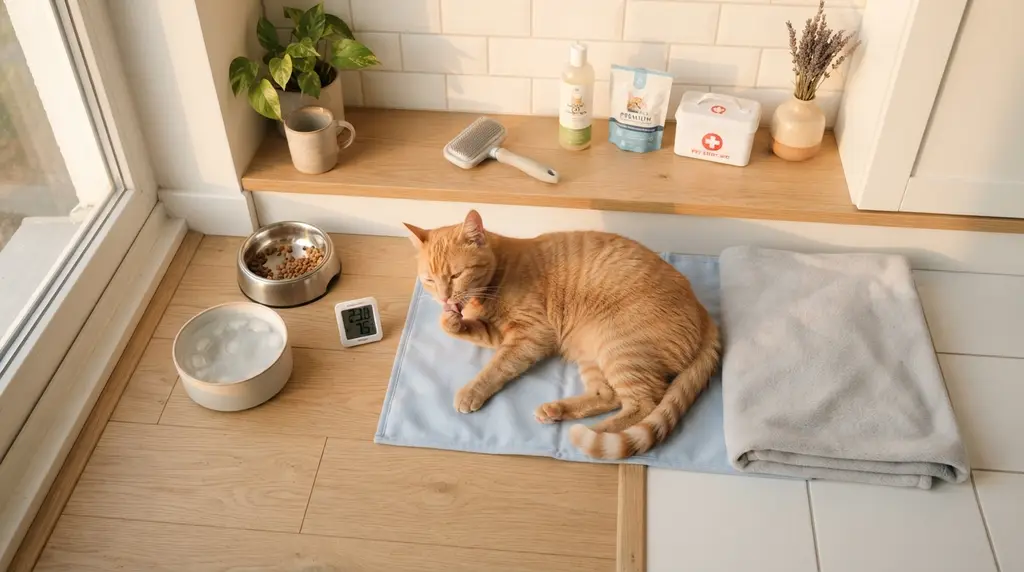
- Place a wide, shallow ceramic or stainless steel bowl in the living room, bedroom, and hallway, at least 1.5 meters away from the litter box.
- Add 2-3 ice cubes to each bowl. The melting ice will keep the water temperature around 20°C, which most cats find more acceptable than room temperature water.
- Prepare 3 days' worth of drinking water (approximately 200-250ml per cat per day, plus boiled water for backup).
- Supplementing with wet food is more effective than forcing your cat to drink. On the day of the outage, mix 1-2 tablespoons of warm water into their wet food to create a soupy consistency, adding 40-60ml of moisture per meal. For our boarding cats during hot weather, we use high-moisture content wet foods like Luxury Functional Cans mixed with water; this is much safer than a dry food diet.
For logic on choosing water bowls and fountains, refer to Cat Water Fountain Buying Guide: Consider Ease of Cleaning, Water Flow, and Cat Acceptance – backup bowls that work "without electricity" are the true insurance.
4. Power Bank + USB Small Fan: Creating Airflow is More Important Than Direct Cooling
Many people think fans are useless for cats because they don't sweat. In reality, airflow can remove the accumulated hot air around the cat and aid in heat dissipation through panting, with noticeable effects. Prepare:
- A power bank with a capacity of 20,000mAh or more (can power a 5W USB fan for about 15-20 hours).
- Do not aim the fan directly at the cat. Instead, angle it towards a wall or doorway to circulate the air. Direct blowing can cause faster moisture loss from the body surface of dehydrated cats.
- If you have two fans, position one to blow air into the room and the other near a window facing outwards to create a cross-breeze.
5. Clear Out "The Coolest Single Space"
After the power outage, don't let your cat roam freely throughout the house. Confine them to the coolest, best-ventilated area with a tiled or concrete floor, typically a hallway outside the bathroom or a north-facing room. Clear this area of clutter, turn off unnecessary lights (light bulbs are heat sources), and move water bowls, litter boxes, and cooling mats into this space.
Regarding bathrooms: while tiled floors are cool, they usually lack windows and have the worst ventilation. Ensure the door is left open by at least 10 cm; do not lock your cat in a sealed bathroom.
6. Place the Carrier by the Entrance, Pre-lined with a Pad
This step is for situations where the power outage lasts "over 3 hours and the room temperature cannot be lowered." Place the carrier by the door, line it with an absorbent pad, and put a wrapped ice pack inside. If evacuation is necessary, you can leave in 30 seconds – head to your car with the AC on, a friend's house with a generator, or a pet hotel with backup power. We receive urgent accommodation requests every typhoon season. If you live in an older apartment and must go to work, booking accommodation in advance is a safer option.
The technique for getting your cat into the carrier is also crucial; in a panic, they are most likely to escape and scratch. It's recommended to familiarize yourself with How to Hold a Cat Without Struggling: Learn Hip Support, Lifting Angle, and 3 Holding Methods They Dislike.
7. Other Easily Overlooked Essentials
- Stock up on cat litter and food for 5-7 days: Post-typhoon supply chain disruptions are common. Opened dry food can easily spoil in high humidity. For proper storage, see How Long Can Cat Food Be Stored After Opening? Taiwan Summer Humidity Control, Food Container Selection, and Spoilage Detection Guide.
- Ensure you have enough medication for chronically ill cats, and prepare a cooler bag for refrigerated medications (like insulin).
- Flashlight/headlamp: Avoid candles (risk of fire if knocked over by a cat).
- Write down the 24-hour emergency vet number on the refrigerator door. Conserve your phone's battery during an outage.
- Fully charge your mobile phone and take a clear photo of your cat (for use if they go missing).
During the Outage: Effective Cat Cooling Methods Without Air Conditioning
Effective Methods
1. Wipe extremities with a slightly damp towel: Use room temperature or slightly cool (not ice-cold) water to dampen a towel and wipe the paw pads, inner ears, armpits, groin, and lower abdomen. These areas have blood vessels close to the skin surface, offering the best heat dissipation. Repeat every 10-15 minutes. A Quick-Dry Pet Towel that absorbs water quickly and doesn't drip everywhere is very useful in these situations; we use the same ones in our grooming salon for cooling.
2. Cool the floor: Mop tiled floors with a slightly damp mop. Evaporation will draw heat away, and your cat will likely lie on it.
3. Cooling mats or marble slabs/cooling bricks: Place these next to your cat's usual resting spots, allowing them to choose.
4. Limit activity: Do not play with your cat during a power outage, and avoid large meals (digestion generates heat). Quiet, dim, and ventilated conditions are the best care.
5. Observe every 20-30 minutes: Check their breathing, gums, and whether they are hiding in unusual places.
What NOT to Do
- Do not immerse in ice water or apply ice packs directly to the skin: Rapid cooling causes peripheral vasoconstriction, trapping heat inside the body and potentially leading to shock.
- Do not force-feed water: Forcing water into a panting cat can easily lead to aspiration pneumonia. Provide a water bowl and let them drink voluntarily.
- Do not apply alcohol: Cats will lick it off, and alcohol is toxic to cats.
- Do not shave your cat on impulse: Shaving offers limited cooling benefits and can lead to sunburn and skin damage. For details, see Is Shaving Cats for Summer Cooling Effective? Consider Fur Insulation Principles, Sunburn, and Skin Risks Before Deciding. If you need to manage fur volume, seek professional grooming for partial trims before the typhoon season.
- Do not open windows fully for ventilation: The risk of flying debris and cats jumping out is higher during typhoons. Only open windows with screens securely in place and with safety nets.
Heatstroke Warning Signs: How to Judge When to Seek Veterinary Care Based on Gum Color and Breathing Rate
Without air conditioning, the two most reliable indicators you have are respiratory rate and gum color, neither of which requires special equipment.
How to Count Respiratory Rate
Let your cat rest (lying down or sleeping). Observe their chest and abdominal movements; count one rise and fall as one breath. Count for 15 seconds and multiply by 4.
| Breaths Per Minute | Interpretation |
|---|---|
| 15-30 | Normal resting range |
| 30-40 | Slightly elevated, begin cooling measures and continue monitoring |
| Over 40 and sustained for 10 minutes without decreasing | Abnormal, actively cool and prepare for veterinary visit |
| Over 60, open-mouth panting, neck extended | Critical emergency, seek immediate veterinary care |
Further Reading: Is Your Cat Panting with Their Tongue Out Due to Heat or Illness? Check Gum Color, Respiratory Rate, and 3 Emergency Signs, Is Cat Abdominal Breathing Normal? Check Breaths Per Minute, Force Location, and Emergency Signs.
How to Check Gum Color
Gently lift the upper lip and observe the gums above the canine teeth:
- Pale pink, returns to normal color within 1-2 seconds after pressing: Normal.
- Brick red, dark red: Blood vessels are maximally dilated; the body is desperately trying to dissipate heat. This indicates heatstroke is in progress.
- Pale, grayish-white, purplish: Circulatory collapse or hypoxia. Do not attempt further home treatment; go directly to the emergency room.
Three Stages of Warning Signs (Our Clinic's Classification)
1. Early Stage: Restless pacing, seeking cool tile floors, excessive grooming, mild open-mouth breathing, ears feeling hot. → Cooling and hydration; usually reversible.
2. Mid Stage: Persistent open-mouth panting, drooling, brick-red gums, wobbly gait, decreased responsiveness to calls, vomiting. → Begin cooling while en route to the vet.
3. Late Stage: Collapse, seizures, pale or purplish gums, loss of consciousness. → Time is critical; wrap extremities in a damp towel during transport, drive with AC blowing directly, and go straight to the emergency room.
For a more comprehensive staging guide, see What Are the Early Warning Signs of Cat Heatstroke? Check Gum Color, Panting, and Collapse in Three Stages – Every Second Counts.
Reference Body Temperature for Heatstroke: A cat's normal rectal temperature is around 38-39.2°C. Temperatures exceeding 39.5°C require attention, and temperatures above 40.5°C are considered heat exhaustion/heatstroke. If you have a pet thermometer at home, stop active cooling measures once the temperature drops to around 39.4°C to avoid hypothermia. Do not guess without a thermometer; rely on breathing and gum color.
These Cats Are at Higher Risk; Evacuate Early
- Brachycephalic cats (Persians, Himalayans, Exotic Shorthairs): Short nasal passages and poor panting efficiency make them our biggest concern every summer. For related characteristics, see What Are the Downsides of Chinchilla Cats? Tear Stains, Matting, Genetic Diseases, and Rearing Difficulty Explained.
- Kittens (<4 months), Senior cats (>10 years)
- Cats with obesity, heart disease, asthma, or chronic respiratory conditions
- Long-haired cats with dense double coats
For these categories of cats, if the power outage lasts longer than 1 hour and the room temperature reaches 31°C or higher, our recommendation is: do not tough it out; move them to an air-conditioned environment immediately.
How Long Should a Power Outage Last Before Considering "Evacuating with Your Cat"?
There is no standard answer, but you can use this set of thresholds:
- Room temperature ≥ 31°C and continuing to rise, OR
- Power outage has lasted over 2 hours, and restoration time is uncertain, OR
- The cat is already exhibiting persistent open-mouth panting
If any of these conditions are met, initiate evacuation. Priority order is: your car (with AC on; you must remain in the car) → a friend's house with power → a pet hotel or veterinary clinic with backup power. Before moving, wipe them down for cooling and place a wrapped ice pack in their carrier. If your cat is prone to motion sickness, refer to the principles in Do Cats Need to Fast Before Grooming? Feeding, Nail Trimming, and Motion Sickness Vomiting Risks on Grooming Day for feeding arrangements.
Before the typhoon season begins, we recommend printing the checklist above and posting it on your refrigerator. Stock up on anything you're missing while there's still no warning. You can also purchase necessary cat litter, wet food, and towels at the shop all at once. On the day of the actual power outage, you'll be grateful for the extra 20 minutes you spent preparing.
Frequently Asked Questions
Can I let my cat lie directly on ice packs or gel packs during a power outage?
Direct contact is not recommended. Wrap them in a thin towel and place them next to your cat's sleeping area, not underneath them, allowing your cat to choose whether to approach. Prolonged contact with bare ice packs can cause frostbite, and your cat might chew through the outer layer and ingest the contents.
Without air conditioning, are electric fans actually useful for cats?
Yes, they are useful, but the key is "creating airflow," not "blowing directly on the cat." Air circulation removes hot air around the cat and improves heat dissipation through panting. Direct blowing accelerates surface moisture loss, making dehydrated cats more uncomfortable. Angling the fan towards a wall or doorway is most effective.
My cat is panting with their mouth open during a power outage. Should I take them to the vet immediately?
Begin cooling measures and count their respiratory rate. If it remains above 40 breaths per minute for over 10 minutes without decreasing, accompanied by drooling, wobbly gait, or dark red gums, start cooling and head to the vet. Pale or purplish gums, or collapse, are critical emergencies; go directly to the emergency room and do not continue home treatment.
Should I trim or shave my cat's fur before a typhoon to help them cool down?
Do not shave your cat on impulse due to a power outage. A cat's fur provides insulation, so shaving offers limited cooling benefits and increases the risk of sunburn and skin problems. If long-haired cats truly need fur management, seek professional grooming for partial trims and thorough brushing before typhoon season to remove matted, hot fur clumps.
What should I do if my cat isn't drinking water during a power outage?
Do not force-feed water. Instead, use "food for hydration": add 1-2 tablespoons of warm water to wet food and mix into a soupy consistency, adding 40-60ml of moisture per meal. Also, increase drinking stations to over three locations and add ice cubes to each bowl to maintain coolness. Most cats are more receptive to cool water (around 20°C) than room temperature water.
> All diagnostic indicators in this article are for preliminary self-assessment only. Feline heatstroke can progress rapidly within 30 minutes. If symptoms persist or worsen, contact your veterinarian or a 24-hour emergency animal hospital immediately.
CatGarden Editorial Team
CatGarden offers curated supplies, cat boarding, and grooming
Book services or shop online.