Is Your Cat's Abdominal Breathing Normal? Check Respiratory Rate, Effort, and When to See a Vet
Abdominal breathing is normal when your cat is relaxed and resting. However, if their belly rises and falls vigorously, with rapid and forceful breaths, it could signal a heart or lung problem. Learn how to count your cat's breaths at home and identify warning signs.
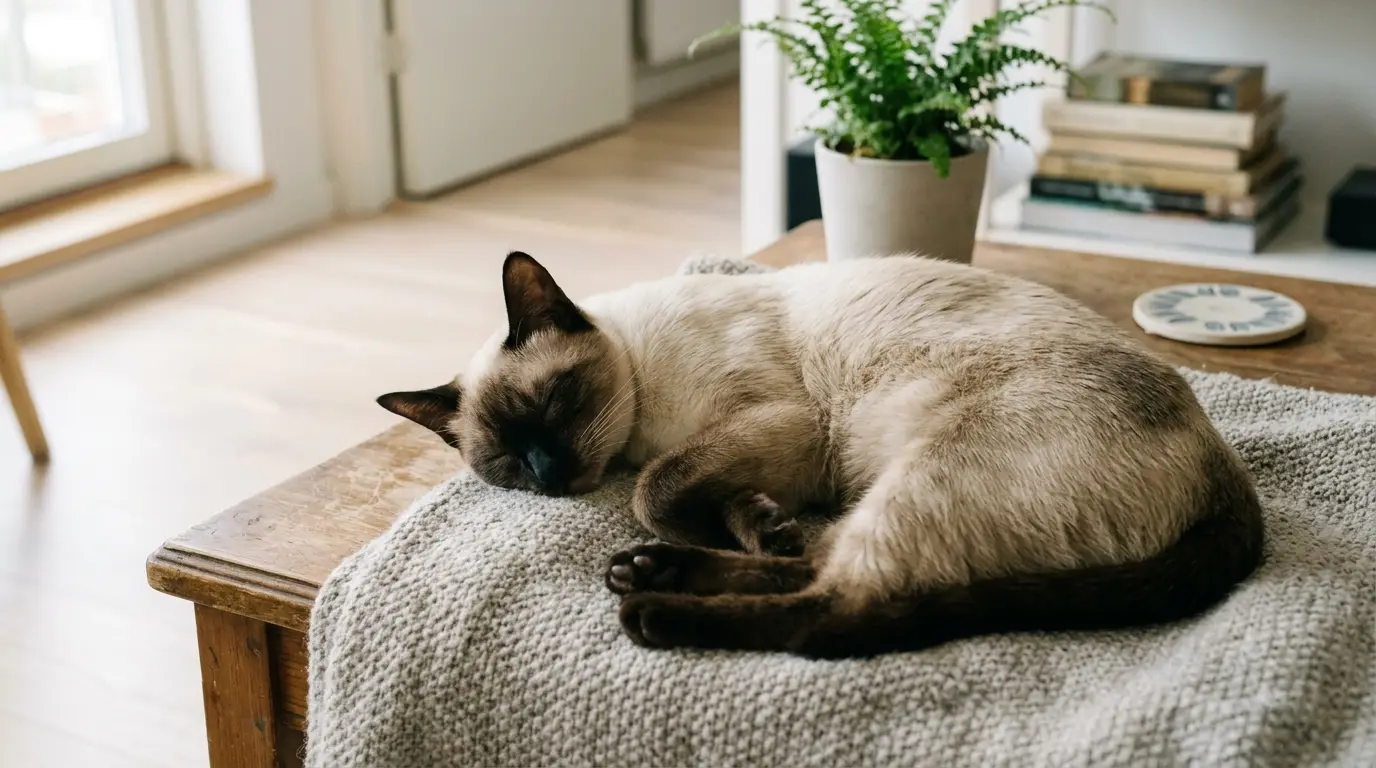
When your cat is relaxed and sleeping, their belly gently and smoothly rises and falls with each breath. This is normal abdominal breathing, and there's no need to worry. The real cause for concern is when their belly is still forcefully and rapidly contracting and expanding while they are in a "quiet resting" state, or even if they are breathing with their mouth open – this is when abdominal breathing shifts from normal to a warning sign.
The key isn't whether they use their belly to breathe, but rather the respiratory rate, the effort involved, and whether the cat is currently active. Here's how to tell at home.
Key Takeaways
- A cat's normal resting respiratory rate while sleeping is 15-30 breaths per minute. Over 30 warrants attention, and consistently over 40 breaths per minute in a quiet state requires immediate veterinary attention.
- Healthy cats breathe easily, with synchronized chest and abdominal movement and small amplitudes. Vigorous abdominal movement, noticeably "using their belly to breathe," indicates labored breathing and is a significant sign of cardiopulmonary issues.
- Open-mouth breathing, neck extension, or elbows splayed outwards are almost always abnormal in cats (except for brief panting after intense play) and are considered emergencies.
- To count breaths accurately, do so when your cat is deeply asleep or resting quietly. Count the number of rises and falls in 15 seconds and multiply by 4. Count one "rise and fall" as one breath.
- Pale or bluish tongue or gums are signs of severe oxygen deprivation. Act immediately and rush your cat to the vet.
Understanding Abdominal vs. Chest Breathing
Cats primarily use two sets of muscles for breathing: the diaphragm and the intercostal muscles.
- Chest Breathing: During inhalation, the ribs (chest cavity) expand noticeably, making it look like the "chest is moving."
- Abdominal Breathing: During inhalation, the diaphragm contracts downwards, pushing the abdomen outwards, making it look like the "belly is moving."
A healthy cat at rest actually uses both chest and abdomen together with slight, synchronized movements that are very small – you might need to watch closely to count them. When a cat is relaxed, lying on its side, and deeply asleep, its belly movement might appear more pronounced, which is perfectly normal as the body is completely relaxed.
What you should truly be concerned about is "compensatory abdominal breathing" – when the lungs or chest cavity have problems (like fluid or air accumulation), limiting chest expansion, the cat is forced to rely more heavily on its abdomen to "push" air out. In this case, you'll see the belly moving forcefully, rapidly, and with large amplitude; this is abnormal.
The One-Sentence Difference
> Gentle belly movement while sleeping relaxed = Normal; Forceful belly movement while resting awake = Cause for concern.
How to Accurately Count Your Cat's Respiratory Rate at Home
Respiratory rate is a practical home indicator of your cat's cardiopulmonary health, especially for cats with a history of heart disease. It's a number you should track daily. When we care for elderly or chronically ill cats boarding with us, we always record their "resting respiratory rate" in the handover log.
Correct Procedure:
1. Choose a time when your cat is deeply asleep or resting quietly (activity, just after eating, nervousness, or panting will skew the results).
2. Observe the rise and fall of the chest and abdomen; count one "rise and fall" as one breath.
3. Count the number of breaths over 15 seconds and multiply by 4 to get the breaths per minute.
4. For greater accuracy, you can count for a full 30 or 60 seconds.
Normal Ranges:
| State | Breaths Per Minute |
|---|---|
| Deep Sleep/Quiet Rest | 15-30 |
| Needs Monitoring | 30-40 |
| Seek Vet Care ASAP | Consistently over 40 |
> Quick Tip: Sleeping respiratory rate is a better reflection of the true condition than when awake. Veterinarians often use a Sleeping Respiratory Rate (SRR) below 30 as a safety benchmark for cats with heart disease.
If your cat has heart disease or has been advised by your vet to monitor their condition, it's recommended to also track their heart rate. You can refer to our articles How to Accurately Measure Your Cat's Heart Rate? Understand Normal Ranges Before Home Monitoring and How to Detect Cat Heart Disease Early? Learn to Count Breaths, Monitor Activity, and Recognize 5 Warning Signs at Home. Tracking breathing, heart rate, and activity together can be very helpful when consulting with your veterinarian.
What Does "Labored Breathing" Look Like? These Postures Are Warning Signs
Cats can't easily express discomfort, so signs of breathing difficulties are often hidden in their posture and subtle details. The following "effort points" and actions indicate they are breathing laboriously:
- Vigorous Abdominal Movement: The belly expands and contracts with large, rapid movements, as if forcefully pushing air out.
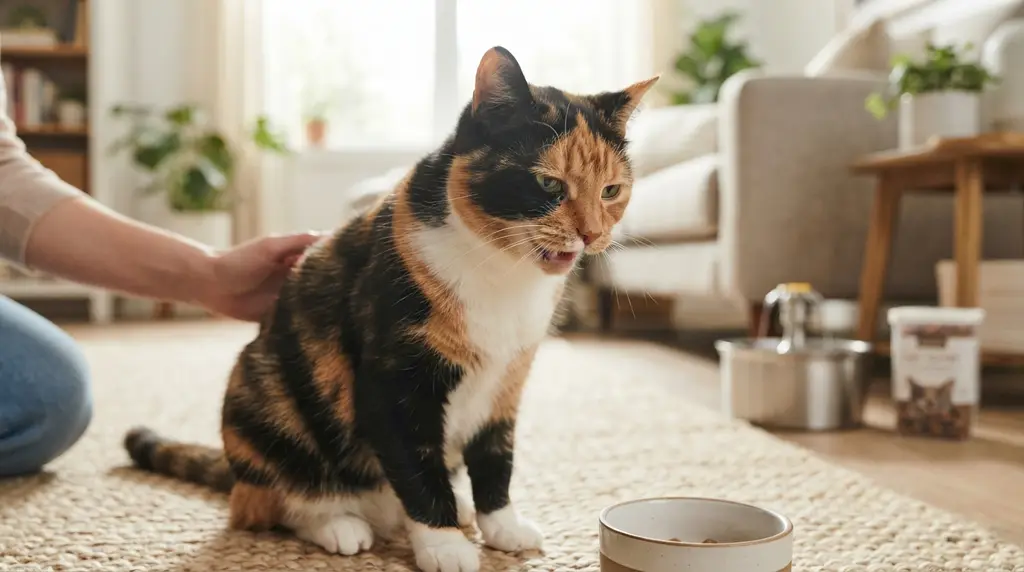
- Open-Mouth Breathing / Panting: Unlike dogs, cats don't pant to cool down. Except for brief panting after intense play or extreme heat, open-mouth breathing is almost always abnormal.
- Neck Extended, Head Tilted Down: This is their attempt to straighten the airway for easier air passage.
- Elbows Splayed Out, Sitting Upright and Unwilling to Lie Down: Lying down can compress their breathing, so they remain in a strained sitting position.
- Nostrils Flaring with Each Breath, or audible wheezing or purring sounds during breathing (not purring from contentment).
It's crucial to distinguish this from a cat's "loaf" position. If a cat is in a loaf position with its paws tucked under, a relaxed expression, and smooth breathing, it's a comfortable resting posture. However, if the neck is extended, elbows are splayed, they are squatting and unwilling to lie down, and breathing forcefully, it's an entirely different distress signal.
What Could Cause Rapid or Labored Breathing?
Rapid or labored breathing in cats can stem from various causes, ranging from mild to severe. Common reasons include:
1. Physiological (Usually Resolves on Its Own)
- Briefly increased rate after intense play or chasing.
- High environmental temperature, a precursor to heatstroke.
- Anxiety or fear (e.g., during car rides, vet visits, thunderstorms).
Be especially cautious of heatstroke in hot weather. If your cat starts panting with an open mouth and their gums change color, it's a danger sign. Refer to What are the Early Signs of Heatstroke in Cats? Look for Gum Color, Panting, and Collapse in Three Stages. Don't assume shaving your cat will help them cool down in summer; their heat dissipation mechanisms differ from humans.
2. Heart Problems
Hypertrophic Cardiomyopathy (HCM) is the most common heart disease in cats. It often has no symptoms in the early stages but can lead to pulmonary edema or pleural effusion as it progresses, causing rapid breathing and worsening abdominal breathing. This is why tracking your cat's respiratory rate at home is so important.
3. Respiratory Tract / Lung Problems
Asthma, pneumonia, bronchitis, or upper respiratory infections can all lead to labored breathing, wheezing, or coughing.
4. Pain or Fever
When cats feel unwell, their breathing rate often increases. Fever will elevate both breathing and heart rate. It's recommended to also understand What to Do if Your Cat Has a Fever? Normal Temperature, How to Measure, and Danger Signs Explained. If your cat also becomes More Reclusive, Aggressive, or Resists Being Touched, it could be an early sign of pain.
When Not to Wait and Observe: Seek Immediate Veterinary Care
If any of the following occur, it is recommended to seek veterinary care the same day or immediately. The last three points are considered emergencies:
- Resting respiratory rate consistently exceeding 40 breaths per minute while quiet.
- Open-mouth breathing or panting, not related to high temperatures or strenuous activity.
- Vigorous, labored abdominal movement, with neck extended and elbows splayed.
- Audible wheezing or coughing accompanying rapid breathing.
- Pale or bluish tongue or gums (indicating oxygen deprivation; time is critical).
- Difficulty breathing combined with weakness, lethargy, or sudden hind limb paralysis (could be a clot secondary to heart disease).
> Note: Respiratory issues can deteriorate rapidly. If you are unsure, it's better to go to the emergency vet than to wait at home. The information provided here is for general educational purposes and cannot replace a veterinarian's diagnosis. Seek immediate veterinary care if symptoms persist or worsen.
How to Establish a Baseline Respiratory Rate for Your Cat
Each cat's normal range can vary slightly. Knowing your cat's baseline numbers will help you recognize abnormalities.
- When your cat is healthy and sleeping deeply, count their resting respiratory rate a few times and record it in your phone's notes.
- For senior cats, those with a history of heart disease, or certain breeds (like Ragdolls or Maine Coons), it's recommended to record this weekly.
- Take a video of your cat breathing normally while relaxed and save it. This can be used for comparison if you notice changes and is helpful to show your vet.
If you have a cat with heart disease, this tracking method can be more systematic. We've outlined how to do this in How to Keep a Home Record for Cat Heart Disease? Track Breathing, Activity, and Appetite Changes. When leaving your cat at a boarding facility, be sure to provide these records and any medication instructions clearly. When we accept cats with chronic conditions for boarding at CatGarden, we request this baseline breathing and activity information from owners for daily comparison.
Frequently Asked Questions
My cat's belly moves constantly while sleeping. Is there a problem with their abdominal breathing?
In most cases, this is normal. When a cat is deeply relaxed and sleeping, diaphragm movement is more pronounced, and gentle, smooth belly movement is common. As long as the respiratory rate is within 30 breaths per minute and the movement isn't forceful, there's usually no cause for concern. If the movement is rapid and forceful, then it warrants attention.
What is a normal respiratory rate for a cat?
While sleeping or resting quietly, 15-30 breaths per minute is considered normal. A rate of 30-40 breaths per minute requires monitoring, and consistently over 40 breaths per minute in a quiet state warrants immediate veterinary attention. Count one "rise and fall" as one breath, and multiply the 15-second count by 4.
Is it normal for my cat to breathe with its mouth open or pant?
Cats do not pant to cool down like dogs. Except for brief panting after intense play or extreme heat, open-mouth breathing is almost always abnormal. It's commonly seen in cases of heatstroke, cardiopulmonary disease, or severe stress and is considered an emergency requiring immediate veterinary care.
My cat is breathing forcefully but shows no other symptoms. Can I just observe it?
If it's just after playing or a car ride, allow your cat to rest quietly and cool down. If they recover within a few minutes, it might be normal. However, if they continue to breathe forcefully while resting quietly, with vigorous abdominal movement, or if their gums are pale or bluish, do not wait to observe; seek veterinary care immediately.
How can I distinguish between panting due to stress and panting due to heart disease?
Panting caused by stress usually subsides within minutes after the stressor is removed. Panting due to heart disease is often persistent, occurs frequently during rest, and may be accompanied by decreased activity and appetite. A consistently high resting respiratory rate is a key indicator. It's recommended to seek veterinary examination for heart conditions.
This article was written by the CatGarden editorial team. The content is for general care and educational purposes only and cannot replace a veterinarian's diagnosis and treatment. If your cat experiences difficulty breathing or exhibits any of the warning signs mentioned above, please seek immediate veterinary care.
CatGarden offers curated supplies, cat boarding, and grooming
Book services or shop online.