How to Accurately Measure Your Cat's Heart Rate: Normal Ranges, Home Monitoring, and When to See a Vet
What is the normal heart rate for a cat? Before checking the numbers, it's crucial to understand your cat's state – resting, stressed, or after activity. For a healthy adult cat, a resting heart rate typically falls between 140 and 220 beats per minute.
Key takeaways
- A healthy adult cat's heart rate is commonly between 140 to 220 beats per minute when resting, relaxed, or drowsy. However, there's significant individual variation, so establishing your cat's normal baseline is most important.
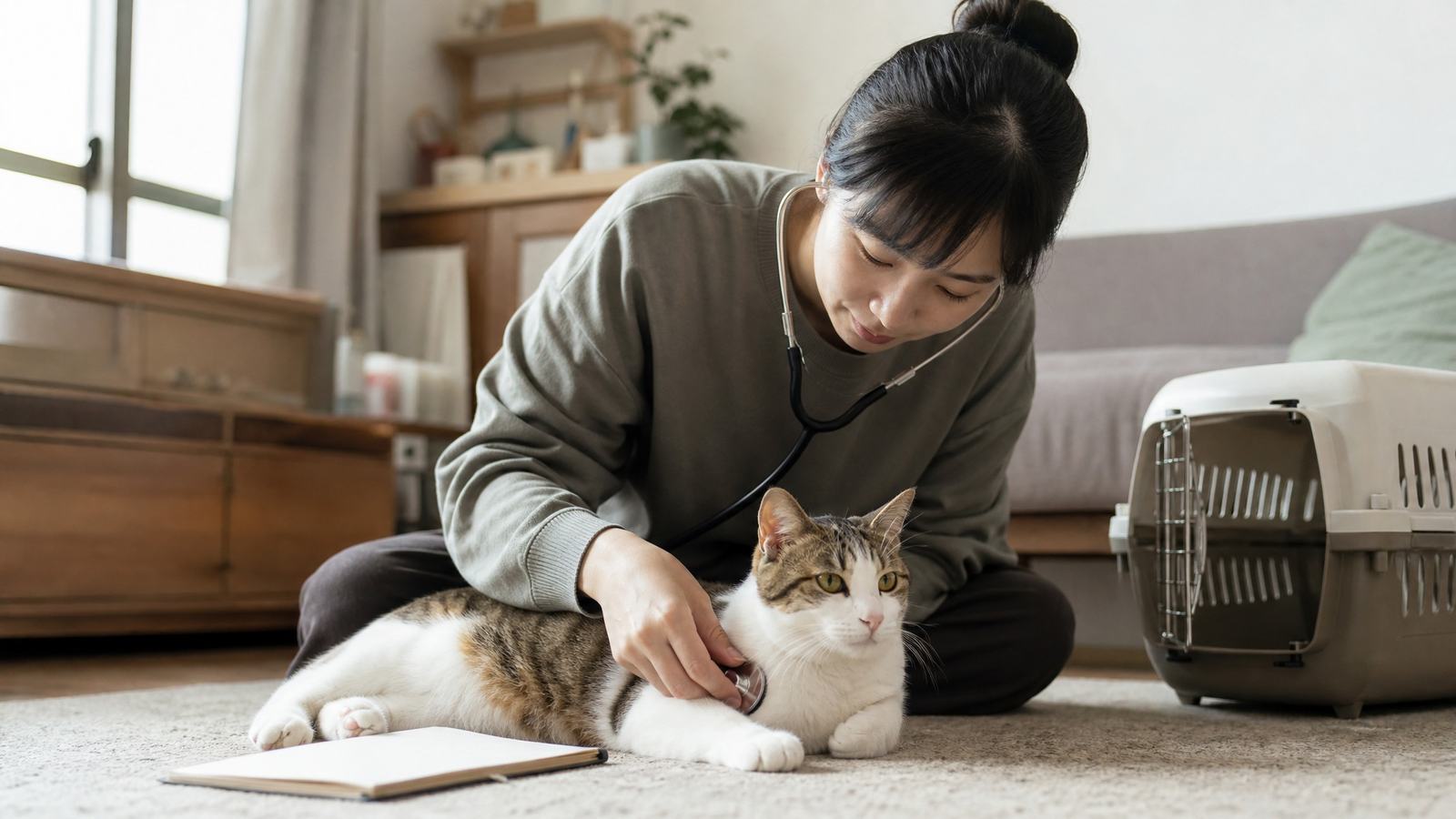
- The easiest way to measure your cat's heart rate at home is to gently place your hand on the left side of their chest, behind the elbow of the front leg, and count the beats for 15 seconds then multiply by 4, or count for 30 seconds and multiply by 2. Another location is the femoral artery on the inner thigh near the groin.
- After your cat has been active, wait 10 to 20 minutes for them to rest and stop moving before re-measuring. If the heart rate remains high after resting, or is consistently higher than normal for several days, it warrants attention and a vet visit.
- A fast heart rate doesn't automatically mean heart disease: Pain, fever, dehydration, anemia, hyperthyroidism, fear, recent exercise, or even hot and humid weather can cause an elevated heart rate.
- 5 critical signs requiring immediate veterinary attention are: open-mouth breathing or difficulty breathing, sudden hind leg weakness or pain, collapse or unresponsiveness, pale or bluish gums, and persistent lethargy with poor appetite and abnormal heart rate.
What is the Normal Heart Rate for a Cat? Differentiate Between Rest, Stress, and Activity
The first step to determining if your cat's heart rate is normal isn't to look at the numbers immediately, but to assess their current state. For a healthy adult cat at rest, relaxed, or dozing, the heart rate is commonly around 140 to 220 beats per minute. Some veterinary sources may define the resting range more narrowly, so establishing your own cat's baseline is most important. Kittens, cats who have just finished playing, had a bath, or traveled by car may have significantly faster heart rates. A single high reading doesn't necessarily mean illness, but it warrants further observation.
Many cats experience a racing heart at the veterinary clinic due to stress, which is why home monitoring is so valuable. Common urban living spaces can be stuffy, with high humidity in the summer. If your cat has just been sunbathing by the window, chasing a feather wand, or was startled by construction noise outside, readings may be inaccurate. It's recommended to measure when they are in a familiar place, just waking up but still very relaxed. Continuous recording over several days is more indicative of trends than a single reading.
Differences Between Rest, Stress, and Post-Activity
A cat's heart rate at rest is best for daily comparisons as there are fewer variables. During stress, the heart rate may increase for a short period, and breathing will also quicken. Common signs include ears pinned back, dilated pupils, and a desire to hide. After activity, wait 10 to 20 minutes for the cat to stop and rest before re-measuring. If the heart rate remains high even after resting, it requires more attention.
It's also important to note that a slow heart rate is not a minor issue either. If your cat's heart rate is significantly lower than usual, accompanied by weakness, collapse, unsteady gait, or poor responsiveness, contact your veterinarian immediately. Older cats, or those with a history of heart disease, thyroid, or kidney problems, require regular monitoring. Do not rely solely on online ranges to replace professional diagnosis.
How to Measure Your Cat's Heart Rate at Home: Chest, Femoral Artery, and Mobile Recording Methods
The simplest method is to gently place your hand on the cat's left side of the chest, behind the front leg's elbow, to feel the heartbeat. Do not press hard, and do not force measurement when the cat is struggling, as stress will affect the readings. You can count the heartbeats for 15 seconds and multiply by 4, or count for 30 seconds and multiply by 2. If you're not comfortable with the rhythm, take multiple readings the first time and average them.
Another method is to feel the femoral artery, located on the inner thigh near the groin. You can feel the pulse here, but it can be difficult for beginners to locate, and cats may not like their hind legs being touched. It's recommended to start with the chest and try the femoral artery once they are accustomed to it. During measurement, keeping your hands warm, moving slowly, and maintaining a quiet environment will usually lead to smoother results.
Mobile Recording is More Reliable Than Memory
After measuring your cat's heart rate, don't just keep it in your head. Use your phone's memo app, Google Sheets, or a pet health app. The key is to have consistent fields: Date, Time, Heart Rate, Respiration Rate, Appetite, Energy Level, Recent Activity, and Medications. If there are abnormal breathing patterns or unsteady gait, a short video can be more helpful to the veterinarian than text. Videos don't need to be long; 30 seconds to 1 minute is usually sufficient for reference.
If you have multiple cats at home, be sure to record them separately and not mix them in the same table. Each cat has different personality, age, weight, and health conditions, and thus different normal baselines. Especially for cats prone to nervousness, home data is often closer to their true state than readings taken at the clinic. This information will be very helpful during follow-up visits.
Does a Fast Heart Rate Mean Heart Disease? Consider Breathing, Energy, and Appetite Too
A fast cat heart rate doesn't automatically mean heart disease. Pain, fever, dehydration, anemia, hyperthyroidism, fear, recent exercise, or even a stuffy environment can cause an elevated heart rate. Taiwan's summers are hot and humid; if ventilation is poor and the cat is hiding in a stuffy corner, both heart rate and respiration may increase. In such cases, prioritize cooling the environment, providing clean drinking water, and observing for recovery.
What truly warrants concern is a "fast heart rate combined with other abnormalities." For example, rapid breathing, open-mouth breathing, decreased energy, loss of appetite, hiding, or sudden hind leg weakness are not simply explained by stress. Cats are good at enduring discomfort, and by the time symptoms are obvious, they may have been unwell for some time. Owner observation serves as a crucial first line of defense.
Record Respiration Rate Too
During home monitoring, it's recommended to also record the resting respiration rate when the cat is sleeping or quietly resting. Observe the rise and fall of the chest; count one rise and fall as one breath, count for 30 seconds and multiply by 2. If respiration is consistently fast at rest, or significantly increased compared to normal, consult your veterinarian. Especially for cats with a history of heart disease, changes in respiration are often more noticeable to owners than changes in heart rate.
Do not make judgments immediately after the cat has eaten, played, bathed, been frightened, or traveled by car. These situations can interfere with readings and cause unnecessary anxiety. A better approach is to choose a fixed time each day, such as before bed or when the cat is relaxed and lying down, for measurements. Long-term trends are more valuable than single high or low readings.
What Situations Require Immediate Veterinary Contact? 5 Red Flags Not to Delay
If your cat exhibits open-mouth breathing, obvious panting, or forceful abdominal breathing, do not observe at home for too long. Cats do not typically pant with their mouths open for cooling like dogs do; if they do so while at rest, it is usually a significant warning sign. In such cases, maintain a quiet environment, minimize handling, and contact a veterinary clinic immediately. If there is a 24-hour emergency clinic nearby, you can also call ahead to confirm if they can accept patients.
The second red flag is sudden hind leg weakness, dragging, vocalizing in pain, or cold paws. This could be related to blood clots or circulatory issues and requires immediate attention. The third is collapse, lethargy, or decreased responsiveness; regardless of whether the cat's heart rate is fast or slow, it is not advisable to wait. The fourth is pale or bluish gums or tongue, indicating potential issues with oxygenation or circulation.
5 Situations Not to Delay
- Open-mouth breathing or difficulty breathing: Panting, forceful abdominal breathing, or abnormal breathing sounds while at rest require prompt medical attention.
- Sudden hind leg weakness or pain: Dragging legs, inability to stand, or cold paws all require urgent evaluation.
- Collapse or lethargy: Even if recovery occurs within seconds, contact a veterinarian to investigate the cause.
- Pale or bluish gums: This could be related to circulation, hypoxia, or shock; do not wait for it to resolve on its own.
- Persistent lack of appetite, poor energy, and abnormal heart rate: If accompanied by vomiting, fever, dehydration, or hiding, seek veterinary care as soon as possible.
Before heading to the vet, if your cat can be moved safely, place them in a sturdy carrier to minimize further distress from being held and rushed. Do not administer human medications, nor force water or food. If your cat is having difficulty breathing, ensure good ventilation in the carrier and minimize stimulation. Upon arrival at the clinic, provide the veterinarian with your recorded heart rate, respiration, videos, and medication information.
What to Prepare for Home Monitoring? Daily Records, Carriers, and Veterinary Information Organization
Home monitoring doesn't require purchasing many gadgets; instead, focus on preparing essential tools. A mobile timer, memo app, weight records, a clean carrier, and familiar bedding can handle most daily observations. If recommended by your veterinarian, you might also consider a pet scale or home security camera to monitor sleep and breathing patterns. The key isn't expensive equipment, but consistent recording.
The carrier should be kept in the home regularly so your cat becomes familiar with it, rather than only bringing it out for vet visits. You can place their usual bedding, a blanket, or a few treats inside to reduce stress associated with the carrier. Many homes in Taiwan have limited space; choose carriers that are easy to access, clean, and have stable ventilation. In an emergency, a cat willing to enter the carrier can save valuable time.
Veterinary Visit Information Checklist
Before your appointment, organize key information: when the abnormality started, recorded cat heart rate, respiration rate, appetite and water intake, urination and defecation, and any recent changes in food or environment. If your cat is on medication, supplements, or flea treatment, take photos or bring the packaging. For videos, preserve the original audio, as breathing sounds, vocalizations, and gait can all provide clues. This information will help your veterinarian quickly identify the issue.
For cats with chronic conditions or older cats, it's advisable to keep all examination reports, blood test results, X-rays, or ultrasound findings in one place. You can use cloud folders for organization or scan paper documents into PDFs. When transferring care or in an emergency, complete records are more reliable than verbal descriptions. Spending a little extra time organizing now will reduce panic during emergencies.
FAQ
What is a normal cat heart rate per minute?
For a healthy adult cat at rest, the heart rate is commonly around 140 to 220 beats per minute, but this can vary between sources and individuals. Kittens, stress, post-activity, or hot weather can all cause a faster rate. It's recommended to measure consistently in a relaxed state to establish your cat's baseline. If readings are abnormal and accompanied by changes in energy, breathing, or appetite, contact your veterinarian.
My cat's heart rate is fast, but their eating and drinking are normal. Do I need to see a vet?
If it's just after playing, being startled, or in an unfamiliar environment, a temporary fast heart rate isn't necessarily a disease. You can let your cat rest quietly for 10 to 20 minutes and then re-measure. If the rate remains high after resting, or is consistently higher than usual for several days, it's recommended to schedule an examination. If accompanied by panting, open-mouth breathing, weakness, or loss of appetite, do not delay.
Can I use a smartwatch or mobile app to measure my cat's heart rate?
Most smartwatches are not stable for measuring cat heart rates, as their sensors are not designed for pets, and fur thickness and body size can affect results. Mobile apps that use sound or camera analysis can only serve as supplementary references. The most practical home method remains manual palpation of the chest or femoral artery, followed by using a timer for calculation. For more precise diagnosis, a veterinarian's examination using a stethoscope, ECG, or imaging is necessary.
What if my cat keeps moving when I try to measure their heart rate?
Don't force it, as stress will increase the heart rate and distort the numbers. Choose a time when they are relaxed after waking up, sunbathing, or curled up in a familiar spot. Gently place your hand on them for a few seconds before starting to count. You can also ask a family member to distract them with treats or gentle petting. If you truly cannot get a reading, filming a video of their resting breathing can provide the veterinarian with initial reference information.
For cats with a history of heart disease, how often should I record their vitals?
The frequency should be based on your veterinarian's recommendation, but generally, they will want regular recordings of resting respiration, and if necessary, heart rate, appetite, and energy levels. Do not stop medication or postpone follow-up visits simply because one day's readings are normal. If respiration quickens, activity decreases, appetite wanes, or they suddenly start hiding, contact the vet clinic early. Consistent monitoring is more beneficial than sporadic, intensive measurements.
Daily Care CTA
The true focus of home monitoring your cat's heart rate is to provide care in a familiar, stable, and low-stress environment. From easily accessible carriers, comfortable bedding, cooling supplies, and hydration solutions, to everyday cat products that facilitate recording and cleaning, all can make observation smoother and prepare you more calmly for veterinary visits. CatGarden offers a curated selection of cat products suitable for Taiwanese homes, helping you integrate health care into the small details of daily life.
Further Reading
- Does Your Cat Need Genetic Testing? Consider These Points Before Buying a Purebred or Adopting
- How to Detect Cat Heart Disease Early: Learn Home Respiration Counting, Activity Monitoring, and 5 Warning Signs
- Cat Suddenly Aggressive or Hiding? Don't Just Blame Temperament: It Could Be Early Signs of Pain or Illness
CatGarden offers curated supplies, cat boarding, and grooming
Book services or shop online.