How to Care for Your Cat After Discharge from the Vet: Monitor Appetite, Medication, and Follow-up Appointments First
What should you observe in the first 72 hours after your cat returns home from the vet? The first 72 hours after a cat is discharged from the vet are typically the most critical period for owners to observe carefully. This time doesn't necessarily indicate a worsening of the condition, but anesthesia, hospitalization stress, pain...
Key Takeaways
- The first 72 hours after your cat returns home from the vet are the most crucial for careful observation, as anesthesia, hospitalization stress, pain, medication reactions, or environmental changes can all affect your cat's behavior.
- When recording appetite, don't just write "ate" or "didn't eat." Note the type of food, quantity, time, and whether vomiting, drooling, or discomfort occurred afterward, to aid the veterinarian's diagnosis during follow-up visits.
- A common mistake owners make is stopping medication on their own once the cat seems recovered, or increasing the dose or extending the duration if the cat seems uncomfortable. These actions can affect treatment efficacy and even increase the burden on the liver and kidneys.
- If your cat exhibits rapid breathing, open-mouth breathing, persistent lethargy, disorientation, seizures, significant wound bleeding, or sudden inability to stand, contact your veterinarian immediately or seek emergency care. These situations are not suitable for prolonged home observation.
- Prescription diets are formulated for specific health needs and are not simply upgraded versions of regular food. If you still have your cat's usual dry food, wet food, or treats at home, it's not recommended to mix them without consulting your veterinarian first.
What to Observe in the First 72 Hours After Your Cat Returns Home from the Vet
The first 72 hours after your cat returns home from the vet are typically the most critical period for owners to observe carefully. This time doesn't necessarily indicate a worsening of the condition, but anesthesia, hospitalization stress, pain, medication reactions, or environmental changes can all make your cat behave differently than usual. When providing post-illness care for your cat, the focus isn't on constantly disturbing them, but rather on consistently recording their stable recovery.
It's recommended to initially place your cat in a quiet, well-ventilated small space where they won't be easily disturbed by other pets. Taiwan's summers are humid and hot, and recovering cats may be more sensitive to heat. Maintain a comfortable indoor temperature and avoid direct drafts from air conditioning. During observation, look at their energy levels, breathing, gait, wound condition, willingness to move, and whether they hide in a place where they can't be called out.
Don't Rush Back to the Original Routine
Many owners see their cat eating a little and walking a bit after returning home and assume they can resume normal activities. In reality, post-illness care after discharge requires giving the body time to adapt, especially after surgery, gastrointestinal issues, urinary problems, or hospitalization for chronic conditions. If the veterinarian has instructed you to limit jumping, use an Elizabethan collar, confine them to a cage for rest, or provide separate care, you should follow these instructions and not ease up prematurely just because your cat protests.
If you live in a small urban apartment, it's okay if the space isn't large; it can actually make observation easier. You can place water, food, a litter box, and a sleeping mat in the same area, but don't crowd them all together. Allowing your cat to take fewer steps to access basic needs generally reduces stress during recovery.
How to Effectively Record Appetite, Water Intake, and Elimination
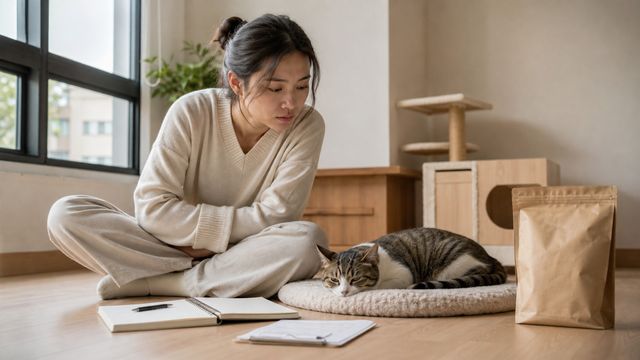
Appetite is an important indicator of your cat's recovery status, but don't just write "ate" or "didn't eat." More useful records include the type of food, quantity, time, and whether vomiting, drooling, or obvious discomfort occurred after eating. This information can help the veterinarian determine the treatment direction during follow-up visits and provide a basis for post-illness care.
Water intake also needs to be monitored, but it's not recommended to rely solely on visual estimation of how much the water bowl has decreased. You can use a fixed water bowl, refill it at the same time each day, or simply mark the water level changes. If your cat eats wet food, their water intake might appear lower, which isn't necessarily abnormal. However, if they completely stop drinking or eating, or their energy levels decline, you shouldn't just wait for the next follow-up appointment.
Record Frequency and State of Urination and Defecation
The litter box is a crucial observation point during recovery, especially for cats with urinary, kidney, gastrointestinal, or post-surgical issues. It's recommended to record the number of times they urinate daily, the size of the urine clumps, whether they frequently enter and exit the litter box, if their stool is formed, and if there's any blood or mucus. If you have multiple cats at home, it's best to temporarily separate their litter boxes during the recovery period to avoid confusion about which cat's elimination status is being observed.
In Taiwan's humid climate, litter box odor and bacterial growth can be more pronounced. During recovery, maintaining dryness and cleanliness is even more important. Don't reduce cleaning frequency to avoid inconvenience, as a dirty litter box might cause your cat to hold their urine or defecate elsewhere. For a recovering cat, a clean, low-stress toileting environment is also part of post-illness care.
Don't Mix Medications, Supplements, or Prescription Diets on Your Own
When your cat is discharged from the vet, they will usually be prescribed medications with instructions on the name, dosage, frequency, and duration of administration. A common mistake owners make is stopping medication on their own once the cat seems recovered, or increasing the dose or extending the duration if the cat seems uncomfortable. These actions can affect treatment efficacy and even increase the burden on the liver and kidneys.
If your cat is difficult to medicate, you can ask the clinic about alternative dosage forms, administration methods, or compatible foods. Do not mix multiple medications, supplements, nutritional pastes, and prescription diets together on your own, as some ingredients may interfere with absorption. When providing post-illness care, the more you want to support their recovery, the more you need to confirm suitability for their current condition first.
Transition Prescription Diets According to Veterinary Instructions
Prescription diets are not simply upgraded versions of regular food; they are formulated for specific health needs. Prescription diets for urinary, kidney, gastrointestinal, allergy, or weight management have different purposes and restrictions. If you still have your cat's usual dry food, wet food, or treats at home, it's not recommended to mix them without consulting your veterinarian first.
Some owners may try to entice cats with poor appetite after discharge to eat more with treats. Short-term appetite stimulation can sometimes be discussed, but if it becomes the primary source of calories, it can lead to an imbalanced nutritional ratio. A more stable approach is to record their actual food intake and then ask the veterinarian if a flavor change, feeding adjustment, or calorie supplementation is needed.
When Not to Wait for a Follow-up Appointment: Contact Your Veterinarian Immediately
Follow-up appointment dates are important, but not all situations are suitable for waiting until that day to address them. If your cat exhibits rapid breathing, open-mouth breathing, persistent lethargy, disorientation, seizures, significant wound bleeding, or sudden inability to stand, contact your veterinarian immediately or seek emergency care. These situations are not suitable for prolonged home observation.
Additionally, if your cat completely stops eating for longer than the veterinarian's acceptable timeframe, or if they experience persistent vomiting, diarrhea, or difficulty urinating, you should report it as soon as possible. This is especially true for male cats who frequently enter and exit the litter box, are unable to urinate, or vocalize abnormally, as this could indicate a urinary emergency. The core of post-illness cat care is to provide stable care within observable limits, but once those limits are exceeded, professional judgment is required.
Organize Key Information Before Contacting Your Veterinarian
When calling or messaging the clinic, it's recommended to have the discharge date, diagnosis, current medications, last meal and water intake time, urination and defecation status, and the onset time of any abnormal symptoms ready. If there are wounds, vomit, feces, or abnormal urine clumps, clear photos can be provided for reference. The more complete the information, the better the veterinarian can determine whether an immediate return visit is necessary or if home care adjustments can be made.
Don't search for medications or try folk remedies online yourself out of fear of disturbing the clinic. Online articles can help owners understand care points, but they cannot replace a veterinarian's judgment of an individual's condition. Any significant regression during the recovery period is more worthy of proactive confirmation than "waiting another day."
How to Prepare Post-Illness Care Supplies to Reduce Stress During Your Cat's Recovery
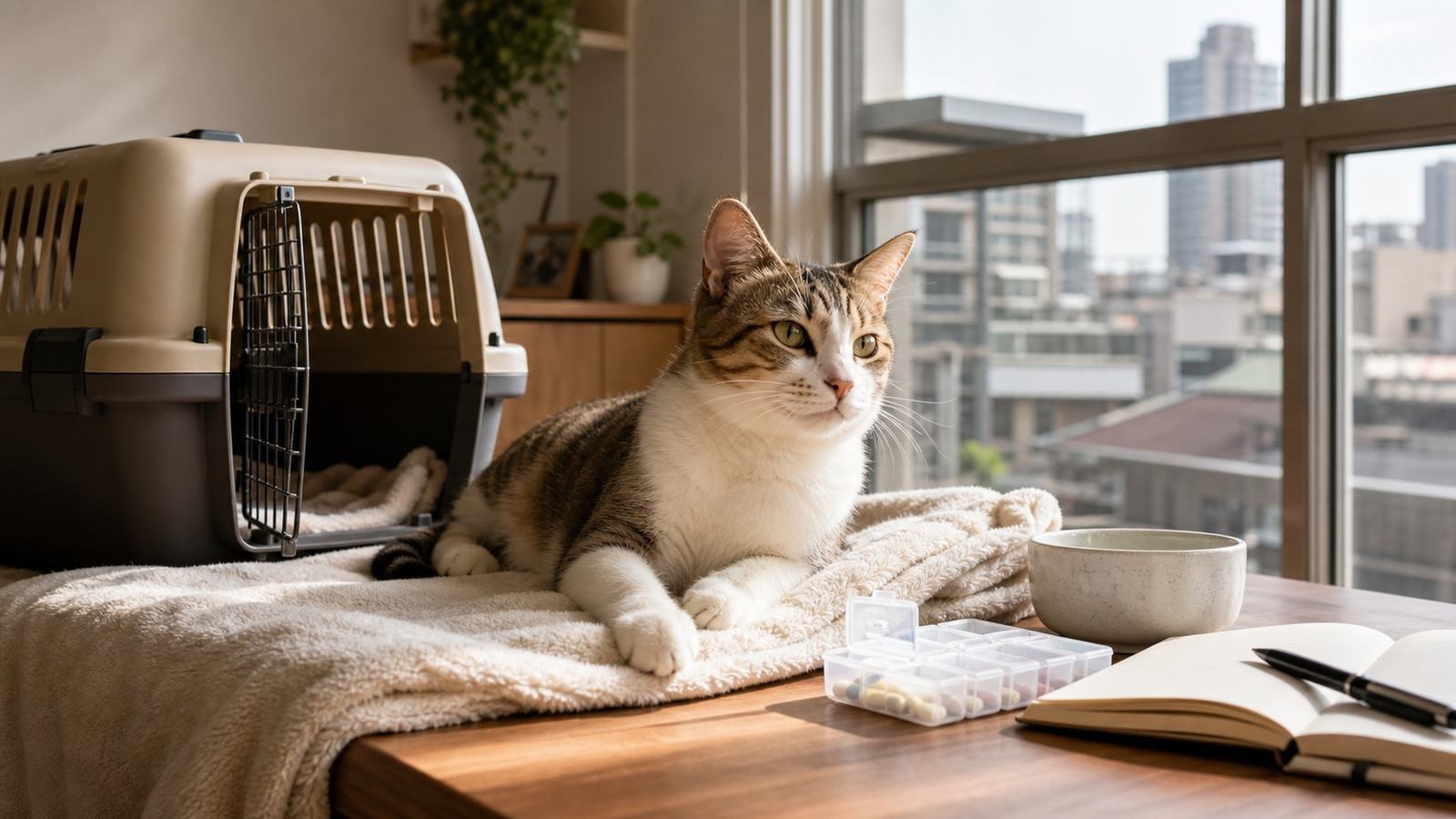
The purpose of preparing care supplies is not to buy many items at once, but to ensure your cat can get through the recovery period safely, quietly, and with minimal stress. Basic supplies may include an easily washable sleeping mat, a litter box with a low entrance, a clean water bowl, palatable main food, medication administration aids, and, if necessary, an Elizabethan collar or recovery suit. These can make post-illness care more manageable.
If your cat has mobility issues, consider switching to a litter box with a lower entrance to reduce strain on wounds or discomfort in joints when stepping over. Food and water bowls can also be placed in a location where your cat doesn't need to jump. The more stable the recovery environment, the more secure your cat will feel.
Prioritize Easy-to-Clean, Low-Irritation Supplies
Due to Taiwan's high humidity, sleeping mats, blankets, and litter boxes need attention for cleanliness and dryness. During recovery, it's not recommended to use cleaning agents, fragrances, or strong deodorizers with strong scents, as cats have sensitive olfactory senses and may be less inclined to eat or use the litter box. When choosing supplies, simple, washable, and stable materials are usually more practical than fancy ones.
If your cat needs to wear an Elizabethan collar for an extended period, observe if they can eat, drink, and use the litter box smoothly. Some bowls are too deep or positioned too close to a wall, making them difficult to use with a collar on. These small details may seem ordinary but directly impact the quality of life during recovery.
CTA: After your cat is discharged from the vet, what they truly need is stable, clean, and low-stress daily support. Follow your veterinarian's instructions to prepare appropriate main food, a litter box, a sleeping mat, food and water bowls, medication aids, and cleaning supplies to make the care process easier to execute. If you are currently preparing the recovery environment, you can also visit CatGarden to select cat supplies suitable for Taiwanese homes, covering daily eating and drinking, cleaning, and comfortable rest, helping your cat have a more peaceful day after returning home.
FAQ
Q1: How long after discharge can a cat go without eating before it's a cause for concern?
This depends on the cause of illness, age, and veterinarian's instructions. However, if the cat completely stops eating, their energy levels decline, or it's accompanied by vomiting, pain, or hiding, it's not advisable to wait. Record the last time they ate and the quantity, and contact your veterinarian promptly to confirm if a return visit is necessary.
Q2: Is it normal for a cat to hide a lot after being discharged from the vet?
Short-term hiding might be a stress response. However, if they cannot be called out, refuse to eat or drink, have abnormal breathing, or show obvious signs of pain, it's more than just fear. During recovery, provide a quiet space, but ensure you can still observe their basic condition.
Q3: Can I mix medication with wet food or treats?
Some medications can be given with food, while others are not suitable. Always follow the instructions from your veterinarian or the medication label. If your cat refuses to eat their main food because of this, it can make care more difficult. It's recommended to ask the clinic if there's an alternative way to administer the medication.
Q4: Do I need to weigh my cat daily for post-illness care?
For cats with chronic illnesses, post-surgery, gastrointestinal issues, or unstable appetites, weighing them daily or every few days can be very helpful. The key is to use the same scale, record at the same time, and provide the weight changes to your veterinarian for reference.
Further Reading
- What Are the Symptoms of Hypokalemia in Cats? Hind Leg Weakness and Inability to Lift the Neck – Don't Wait
- What to Do If Your Cat's Food Is Suspected to Have Issues: Keep Batch Numbers, Record Symptoms, and Ask Your Vet
- What to Do If Your Cat's Hind Legs Are Weak After Eating Kibble? Distinguish Between Thrombosis, Neurological Issues, and Emergency Signs
Common Questions
How long after discharge can a cat go without eating before it's a cause for concern?
This depends on the cause of illness, age, and veterinarian's instructions. However, if the cat completely stops eating, their energy levels decline, or it's accompanied by vomiting, pain, or hiding, it's not advisable to wait. Record the last time they ate and the quantity, and contact your veterinarian promptly to confirm if a return visit is necessary.
Is it normal for a cat to hide a lot after being discharged from the vet?
Short-term hiding might be a stress response. However, if they cannot be called out, refuse to eat or drink, have abnormal breathing, or show obvious signs of pain, it's more than just fear. During recovery, provide a quiet space, but ensure you can still observe their basic condition.
Can I mix medication with wet food or treats?
Some medications can be given with food, while others are not suitable. Always follow the instructions from your veterinarian or the medication label. If your cat refuses to eat their main food because of this, it can make care more difficult. It's recommended to ask the clinic if there's an alternative way to administer the medication.
Do I need to weigh my cat daily for post-illness care?
For cats with chronic illnesses, post-surgery, gastrointestinal issues, or unstable appetites, weighing them daily or every few days can be very helpful. The key is to use the same scale, record at the same time, and provide the weight changes to your veterinarian for reference.
When should I contact my veterinarian immediately instead of waiting for a follow-up appointment?
Contact your veterinarian immediately if your cat exhibits rapid breathing, open-mouth breathing, persistent lethargy, disorientation, seizures, significant wound bleeding, or sudden inability to stand. Additionally, if your cat completely stops eating for longer than the acceptable timeframe, experiences persistent vomiting or diarrhea, or has difficulty urinating, you should report it as soon as possible. This is especially true for male cats who frequently enter and exit the litter box, are unable to urinate, or vocalize abnormally, as this could indicate a urinary emergency.
CatGarden offers curated supplies, cat boarding, and grooming
Book services or shop online.