What to Do When Your Senior Cat Stops Eating? 5 Tips to Safely Boost Appetite for Elderly Cats
A senior cat's loss of appetite is usually not due to pickiness but rather dental pain, a dulled sense of smell, or underlying chronic conditions. This article provides a 24-hour assessment guide, weight tracking metrics, and five safe, at-home appetite-boosting techniques.
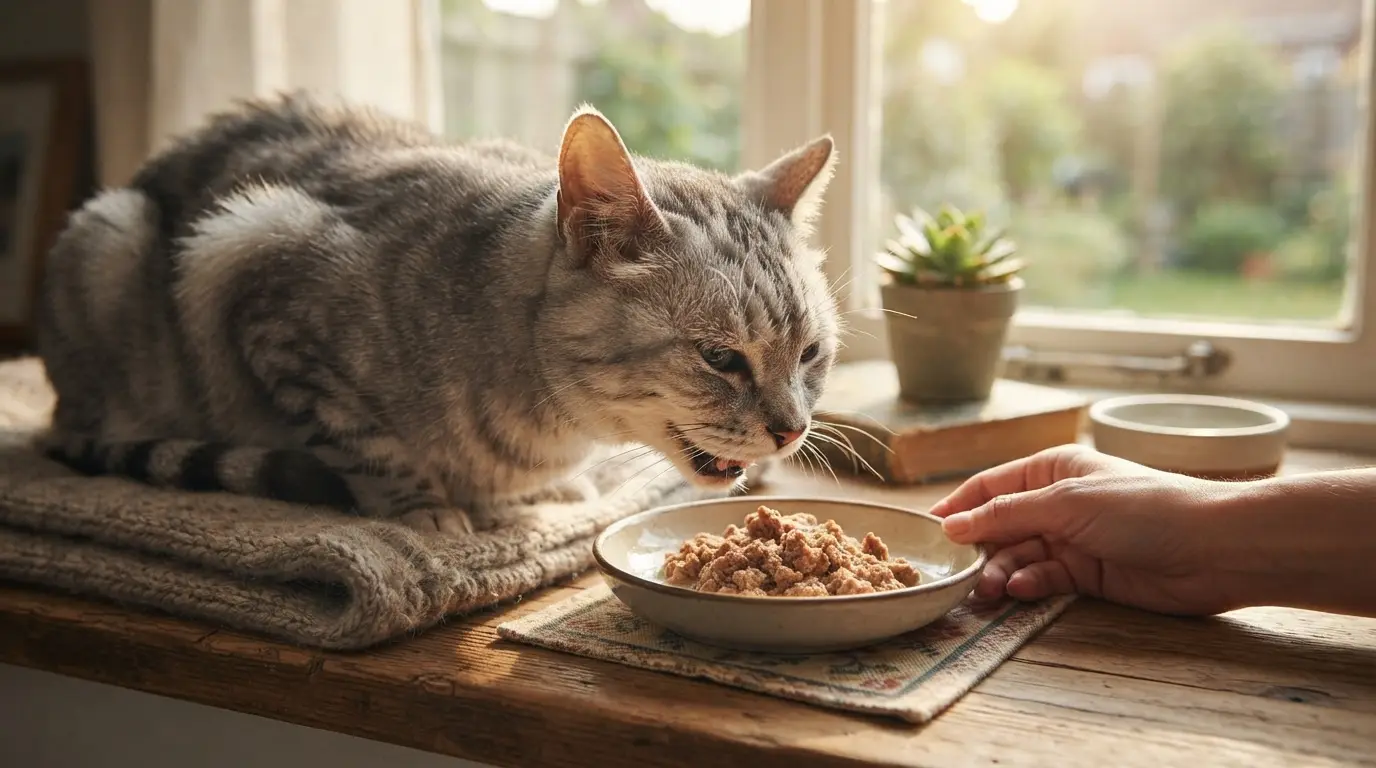
When a senior cat stops eating, do two things first: determine if they are "eating less than before" or "completely refusing food for over 24 hours." The latter is an emergency requiring immediate veterinary attention. If their appetite is gradually declining, the three most effective at-home adjustments are warming the food to near body temperature (around 38–40°C), changing the texture to a soft mash or paste, and switching to small, frequent meals 4–6 times a day. Over 90% of appetite loss in senior cats has a physiological cause—dental pain, a dulled sense of smell, kidney disease, or hyperthyroidism—it's not simply "they're old and naturally eat less." Therefore, while adjusting feeding methods, schedule blood tests and dental examinations.
Key Takeaways
- A cat that completely stops eating for over 24 hours needs veterinary care. Refusing food for 36–48 hours or more significantly increases the risk of hepatic lipidosis (fatty liver), especially in overweight cats.
- Warming food to 38–40°C (close to cat body temperature) significantly enhances aroma molecules, making it the most cost-effective appetite stimulant for senior cats with a diminished sense of smell.
- A significant proportion of cats over 7 years old have periodontal disease or tooth resorption. Many senior cats we see at the cattery who suddenly only eat wet food or walk away after a few bites are ultimately diagnosed with oral pain.
- Weight is the most honest indicator: a weight loss exceeding 5% in one month (e.g., 200 grams for a 4kg cat), regardless of their energy level, warrants blood and urine tests.
- "Rapid weight loss despite a good appetite" often points to hyperthyroidism or diabetes; "weight loss with poor appetite, increased thirst, and urination" should first raise suspicion of chronic kidney disease.
Step 1: Differentiate Between "Reduced Appetite" and "Complete Refusal to Eat"
These two situations require entirely different approaches.
- Reduced Appetite: The cat still eats, but consumes less than a third of their usual amount, takes a long time to eat, only licks the gravy and leaves the meat, or only eats a few bites after trying a new flavor. These cases usually allow for a few days to weeks of observation and adjustment, but concurrent investigation is still necessary.
- Complete Refusal to Eat (Anorexia): The cat won't touch even their favorite freeze-dried treats or pâté. Unlike dogs, cats have limited capacity to rely on fat reserves, and their liver's ability to metabolize fat is restricted. Starvation for even a day or two can lead to complications. At this point, "finding ways to make them eat" is not the priority; identifying the reason for refusal is.
If your cat is also hiding, inactive all day, and not drinking water, refer to the observation chart in this article: Cat Not Eating, Drinking, or Sleeping All Day: Normal Lethargy or a Sign of Illness?
5 Major Reasons for Senior Cat Anorexia, Investigate in This Order
1. Dental Issues and Oral Pain (Most Commonly Overlooked)
This is the most frequent reason we encounter at the cattery that owners often don't consider. The typical scenario is: the cat rushes over at the sound of a can opener, shows interest by licking the gravy, but then shakes its head, pushes the food out of the bowl, or runs away mid-meal after a "crunch" sound.
Clues to observe at home:
- Increased drooling, wet fur under the chin, or brown crusts around the mouth.
- Noticeably stronger bad breath (not fishy, but a foul, sour odor).
- Chewing on one side of the mouth, or only using front teeth to scrape food.
- Reduced grooming, matted fur (because licking is painful).
Tooth resorption (where the tooth is resorbed by the body, exposing sensitive dentin) is very common in senior cats, and it's often missed during a visual oral examination while the cat is awake. Diagnosis often requires anesthesia and X-rays. If your cat exhibits the above signs, don't rush to change their diet; see a dentist first.
2. Diminished Sense of Smell and Taste
Cats rely on their sense of smell to determine "if this is food." As they age, their olfactory epithelium degenerates. Combined with common chronic rhinitis or changes in nasal structure, food can simply smell "tasteless." These cats are often not hungry but lack the motivation to eat—warming or enhancing the aroma of their food often restores much of their appetite.
3. Chronic Diseases: Kidney Disease, Hyperthyroidism, Gastrointestinal Issues
The three main categories to rule out for declining appetite in senior cats are:
- Chronic Kidney Disease: Increased thirst and urination, larger clumps in the litter box, oral ulcers, and nausea leading to "sitting by the bowl but not eating." For a deeper understanding, see Why Do Cats Get Kidney Disease? Aging, Diet, Dehydration, and Genetics as 4 Major Causes.
- Hyperthyroidism: In the early stages, cats may "eat a lot but keep losing weight." In later stages, appetite can become erratic, accompanied by vomiting and irritability. See the Comprehensive Guide to Feline Hyperthyroidism: Symptoms, Diagnosis, and Treatment for detailed symptoms.
- Gastrointestinal/Pancreatic Issues: Accompanied by vomiting (especially bile on an empty stomach), soft stools, or constipation. Cross-reference with Why Does My Cat Vomit Yellow Liquid?.
4. Pain and Posture Issues
Arthritis is extremely common in cats over 10 years old. If the food bowl is on the floor, the cat has to bend its head and neck to eat. Pain in the spine or front legs can cause them to give up after a few bites. Elevating the bowl to about 10–15 cm off the ground, so the rim is level with the cat's chest, is why many senior cats start eating significantly more.
5. Environmental Stress and Routine Changes
Moving house, a new family member, a change in litter box location, or altered owner work schedules—senior cats adapt less readily than younger ones. If the feeding area is too close to the litter box or near a washing machine, it can also make sensitive senior cats refuse food.
What we use for this
CatGarden’s own products, shipped from Taiwan Pro ProbioticsFrom CA$26.60 per boxFree shipping on multi-packs
5 Safe Ways to Boost Your Senior Cat's Appetite (Our Cattery's Implementation Order)
Method 1: Warm and Enhance Aroma—Start Here, Lowest Cost
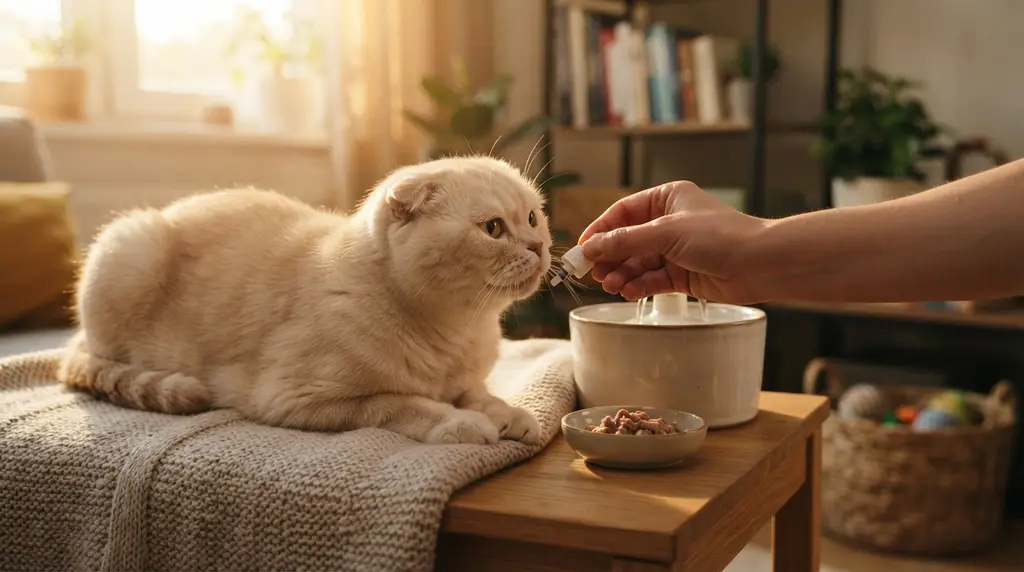
Gently warm wet food using a double boiler or microwave for 8–12 seconds. Stir thoroughly and test the temperature on the back of your hand; it should feel slightly warm, not hot (around 38–40°C). Important reminders:
- Microwaves can create hot spots, so always stir and test before serving. Scalding their mouth will worsen food refusal.
- Add a small spoonful of warm water (not hot) to create a gravy-like consistency; the aroma will diffuse better.
- Only warm the portion they will eat at one time. Refrigerate leftovers. Discard any food left at room temperature for over 30 minutes; senior cats' digestive systems cannot handle spoiled food.
Method 2: Change Texture, So They "Don't Need to Chew"
Cats with dental problems need no-chew food:
- Soak dry kibble in warm water at a 1:1 ratio for 10–15 minutes until it can be crushed with a fork, then mash into a paste.
- For pâté-style canned food, use a fork to break up meat chunks and mash the jelly-like parts into a paste.
- If your cat truly cannot chew chunks, switching to a pâté-textured food is more practical. At our cattery, we often use fine-textured, high-broth foods like Luxury Functional Cans as a base for senior cat meals. They mash easily into a paste and help with hydration.
Method 3: Small, Frequent Meals + Fixed Schedule
Senior cats can eat smaller portions at once. Feeding only twice a day can lead to insufficient calorie intake. Switching to 4–6 meals a day, with each meal being 20–40 grams, helps them accumulate their target calories. For calculating portion sizes and wet food ratios, you can directly use the formulas in this article: How Much Should a Senior Cat Eat Daily? Calculating Portions, Wet Food Ratios, and Small Meal Planning.
Method 4: Layer Aromas, But Don't Change the Main Food Daily
"Sprinkle" enticing flavors on top of their existing food, which is safer than changing the entire can:
- Crumble unflavored freeze-dried treats (chicken, salmon) and sprinkle on top.
- Drizzle gravy from a main food can over kibble.
- Pour a small spoonful of reconstituted cat milk powder.
Avoid changing their main food 3 times a week—senior cats have sensitive stomachs, and frequent changes can lead to soft stools, making them even less likely to eat. When changing food, mix gradually over 7–10 days.
Method 5: Create a "Senior-Friendly" Dining Environment
- Elevate the food bowl, use shallow, wide ceramic or stainless steel bowls (to avoid whisker fatigue).
- Place feeding spots away from litter boxes, washing machines, and noisy appliances.
- In multi-cat households, feed senior cats separately to avoid being rushed by younger cats.
- Some senior cats need company nearby, with gentle petting on their back, before they start eating. This is common at the cattery; don't feel like you're spoiling them.
"Appetite Stimulants" You Should NOT Use
- Seasoning with Human Food: Salt, soy sauce, onion and garlic powder, or bouillon cubes are all harmful. Alliums (onions, garlic) can cause red blood cell destruction in cats. See the full list in What Can't Cats Eat? Common Household Dangers and Signs of Poisoning.
- Long-Term Feeding of Plain Boiled Chicken Breast or Tuna Canned for Humans: This leads to nutritional imbalance. An improper calcium-phosphorus ratio is detrimental to senior cats' kidneys and bones. These can be used as "enticements" but not as a primary diet.
- Force-Feeding Yourself: Improper feeding posture can lead to aspiration into the respiratory tract, causing pneumonia. If assisted feeding is necessary, it must be assessed by a veterinarian. In severe cases, an esophageal feeding tube is safer and more comfortable for the cat.
- Buying Appetite Stimulants Yourself: Medications that stimulate appetite (like certain antidepressants or mirtazapine ointments) must be prescribed based on weight and kidney function. Incorrect dosages can cause agitation and rapid heart rate.
3 Numbers You MUST Track
1. Weight: Weigh your cat at the same time each week on the same scale, recording to one decimal place. A loss of over 5% in one month warrants a vet visit.
2. Actual Grams Consumed: Don't just assume they "ate enough." Weigh the amount served and the amount left at each meal to know if they're getting enough calories.
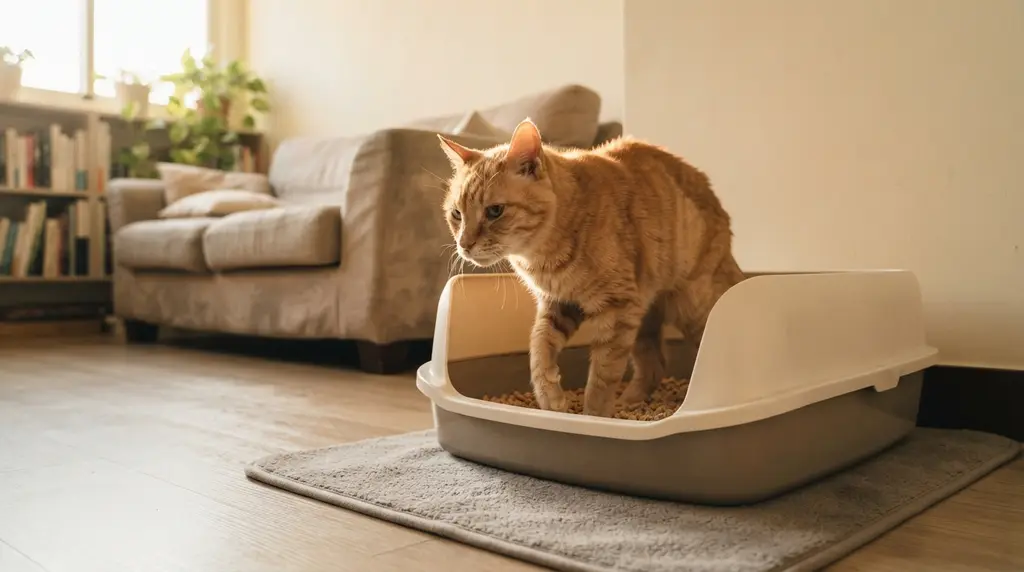
3. Water Intake and Litter Box Counts: Senior cats' kidney health often shows its first signs in the litter box. Using the same brand of cat litter makes comparison easier. Noticeable increases in the size or number of urine clumps require attention.
When to Seek Immediate Veterinary Care
- Complete refusal to eat for over 24 hours (the threshold is lower for kittens, diabetic cats, and overweight cats).
- Refusal to eat accompanied by vomiting, diarrhea, or dehydration (poor skin elasticity, dry gums).
- Rapid breathing, open-mouth breathing, hiding in a corner and not wanting to be touched.
- Yellowish mucous membranes (whites of the eyes, inside ears, gums turning yellow)—may indicate liver problems.
- Obvious oral bleeding, blood in saliva, or inability to close the mouth.
When visiting the vet, bring your weight and feeding records; this will greatly assist the veterinarian's diagnosis. Blood tests should at least include kidney and liver function tests, thyroid hormone (T4), and urine specific gravity.
How to Arrange Care for a Senior Cat with Appetite Issues When You're Away
Senior cats with fluctuating appetites are most vulnerable to "environmental changes plus no one monitoring their intake." If you must travel, provide the caregiver with a detailed list of their usual food, warming method, grams per meal, and preferred bowl. Request daily updates on their food intake. When we board senior cats at Banqiao Cat Hotel, we meticulously record the grams consumed and elimination status for each meal and proactively contact the owner if they eat less than half their portion for two consecutive meals. If you're still comparing care options, see this article for a practical comparison: Cat Boarding vs. Pet Sitting: Which is Better for Your Cat? Stress, Cost, and Emergency Considerations.
Frequently Asked Questions
My senior cat only eats wet food and refuses kibble. Should I correct this?
Usually, there's no need to "correct" it; instead, ask why. The most common reasons senior cats refuse dry food are dental pain or a diminished sense of smell. Forcing them to eat kibble will only further reduce their intake. As long as the main wet food is nutritionally complete, a long-term wet food diet is actually more beneficial for a senior cat's hydration.
Can I feed my senior cat pâté tubes to sustain them when they're not eating?
Short-term enticement is okay, but not long-term. Most treat pâté tubes lack sufficient calories and nutritional density to replace a main meal. It's best to use them as an "appetizer" by smearing a little on their main food to encourage licking, after which they can proceed to their meal.
My senior cat is losing weight but seems energetic. Can I just observe?
Observation alone is not recommended. Hyperthyroidism, diabetes, and intestinal lymphoma can all present in their early stages as "good energy, still eating, but continuously losing weight." A weight loss exceeding 5% in a month warrants blood tests. Early detection offers many more treatment options.
What's the best temperature to warm food? Can I use a microwave?
Warming food to near cat body temperature, around 38–40°C, best releases its aroma. You can use a microwave, but heat for short intervals (8–12 seconds), stir thoroughly, and test with the back of your hand to ensure it's not too hot, preventing oral burns from localized overheating.
How many meals a day should a senior cat eat?
Most senior cats benefit from 4–6 meals a day, with each meal being 20–40 grams. This helps them consume adequate calories compared to two large meals and reduces the risk of vomiting on an empty stomach. If you have long working hours, consider using a timed feeder to distribute meals throughout the day.
Appetite is the most sensitive dashboard for a senior cat's health. Instead of fixating on whether they're "picky," try implementing warming, softening, and small frequent meals first. Simultaneously, track their weight and food intake numerically—the real problem often reveals itself in these records. If symptoms persist, worsen, or they completely refuse food for over 24 hours, seek veterinary evaluation promptly. Do not rely on unproven remedies to delay care.
By: CatGarden Editorial Team
CatGarden offers curated supplies, cat boarding, and grooming
Book services or shop online.