Cat Boarding vs. In-Home Pet Sitting: Which is Better for Your Cat? A Complete Comparison of Stress, Costs, and Emergencies
For single cats, timid cats, or short trips, in-home care generally causes less stress. For multi-cat households, cats with chronic illnesses, or trips longer than 5 days, cat boarding offers superior care density and faster emergency response.
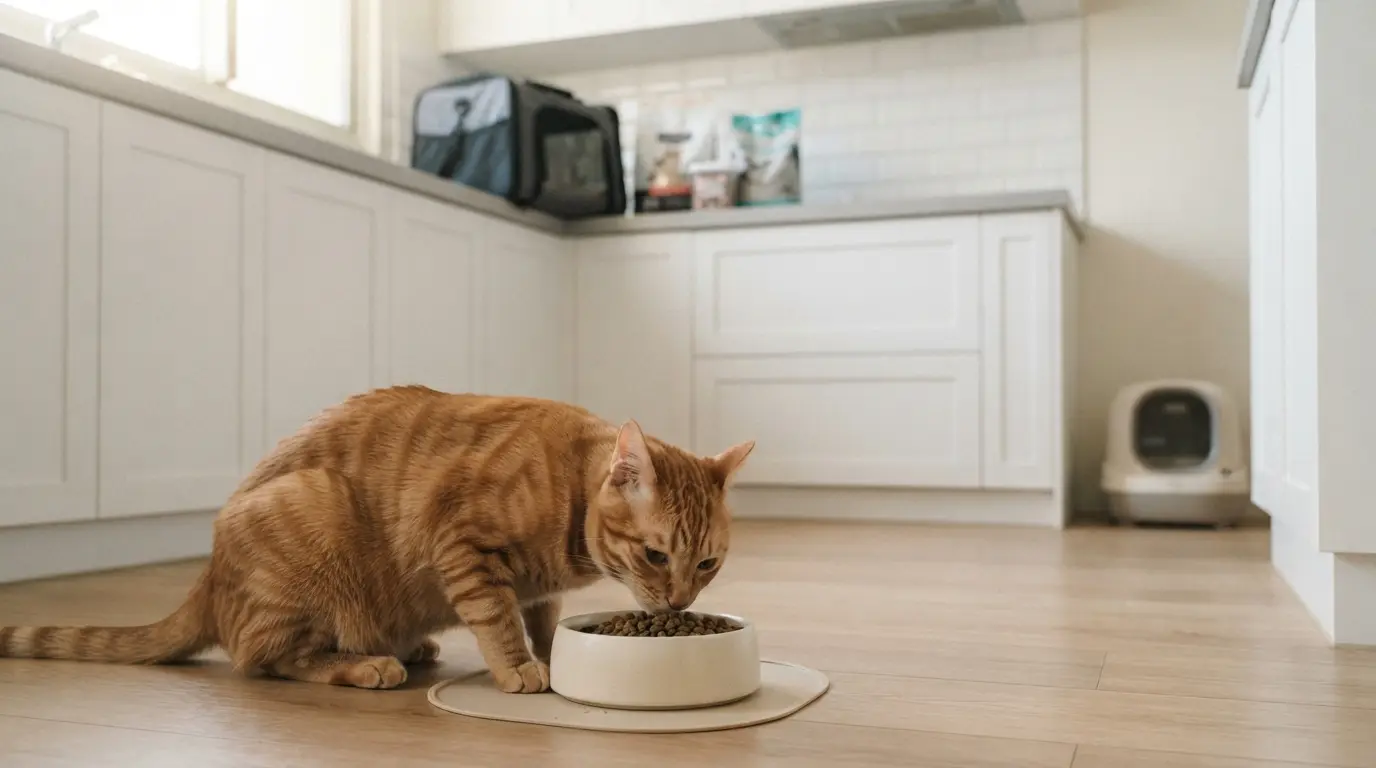
When you're going away, the quickest way to decide between cat boarding or in-home pet sitting is this: For short trips of 3-4 days with a single, timid, or shy cat, "in-home care" generally causes less overall stress. For trips over 5 days, multi-cat households, cats with chronic illnesses or elderly cats, or those needing daily observation of eating, drinking, and elimination, "cat boarding" offers significantly better care density and emergency response. It's not about which is "good" or "bad," but rather about matching "what your cat fears most" with "how many days you'll be away."
In the years we've operated our cat hotel in Banqiao, this is the question we most often get from owners a week before peak travel seasons. This article will compare the two options across three aspects: stress levels, costs, and emergency handling, concluding with a table to help you find the best fit.
Key Takeaways
- Short Trips (1-4 days) + Single Cat + Timid Cat: In-home care has the lowest environmental stress, as it avoids the stress of "carrier travel + environmental change."
- Long Trips (5+ days) or Multi-Cat Households, Cats with Chronic Illnesses: Cat boarding is superior. The key isn't space, but the "number of times they are seen daily," increasing from once to 8-12 times.
- Cost Comparison: In-home pet sitting in Taiwan typically costs NT$300-600 per visit (30-60 minutes), totaling NT$2,100-4,200 for 7 days with one visit per day. Cat boarding for a single cat is usually NT$350-600 per day, with discounts for additional cats often making multi-cat stays more economical overall.
- Emergencies: The biggest risk with in-home care is the potential delay of over 20 hours between discovery and veterinary care. For boarding facilities, this delay is typically within 1-3 hours.
- Peak Seasons (Lunar New Year, Qingming Festival, Dragon Boat Festival, Mid-Autumn Festival, Summer/Winter Holidays): It's recommended to book cat hotels 3-6 weeks in advance. In-home sitters are even more in demand, with popular sitters often fully booked 2 months prior for the Lunar New Year period.
I. Stress Levels: Cats Fear "Environmental Change" More Than "Strangers"
Cats are territorial animals, and their sources of stress generally rank as follows: Environmental change > Travel/Transport > Appearance of strangers > Changes in routine. This ranking dictates the perceived difference between the two options.
Stress Characteristics of In-Home Care
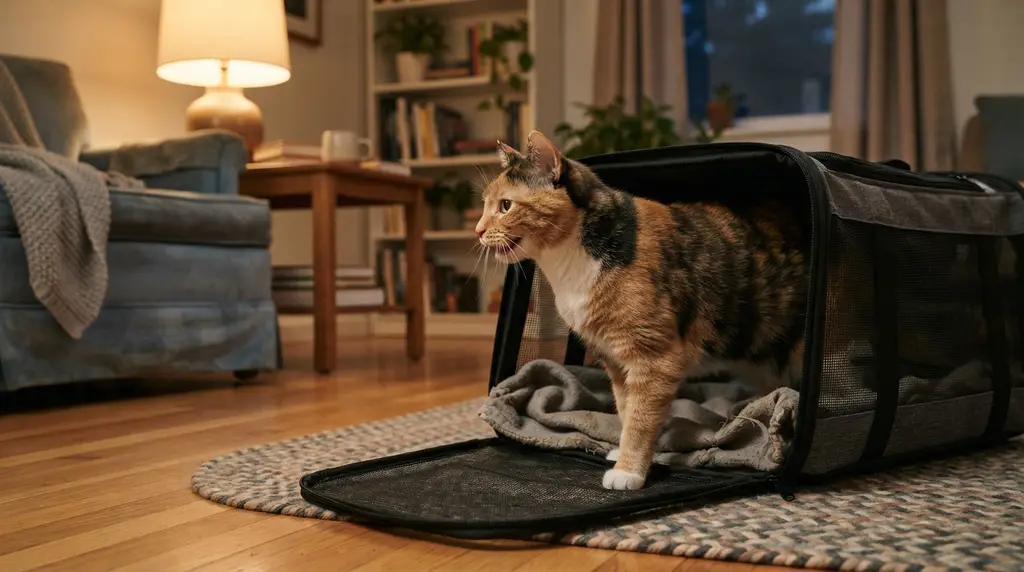
The advantage is clear: the cat doesn't need to go into a carrier, travel in a car, or get used to new scents. Their litter box, cat tree, sleeping spots, and familiar smells remain unchanged. For cats that "drool, pant, or cry hoarsely in the carrier or car," this factor is almost overwhelmingly beneficial.
However, in-home care has two underestimated stress points:
1. Solo Intrusion into Territory by a Stranger: Timid cats will hide under the bed for the entire duration. The sitter won't see the cat or be able to interact with them. It might seem like "nothing is wrong," but it's actually a gap in information.
2. Only 30-60 Minutes of Human Interaction Per Day: The remaining 23 hours are spent completely alone. For cats with separation anxiety (clingy cats that follow you even to the bathroom), this can be harder to endure than staying at a hotel. You can first check the judgment methods in What to Do About Cat Separation Anxiety? Home Adjustment Advice for Routine Changes After Back-to-School Season to determine if your cat is "afraid of people" or "afraid of being alone."
Stress Characteristics of Boarding
The stress of boarding is concentrated in the first 24-48 hours: environmental change, unfamiliar scents, and other cats nearby. Our actual observations at the facility show that about 70% of cats start eating normally and using the litter box by the second day of their stay, and begin exploring and seeking affection by the third day. About 20% need 3-4 days. Less than 10% are the "staying in a corner the whole time" type; for these cats, we actively recommend owners switch to in-home care next time.
The key point is: This stress is a one-time event and is observed, recorded, and managed. In contrast, the stress of in-home care is dispersed and invisible.
The methods we use at our facility to reduce stress in the first 48 hours are things you can directly check if the facility you choose offers:
- Ask the owner to bring used blankets or clothes (with the owner's scent), not brand new ones.
- Continue using the original brand of cat litter and food; do not switch food immediately (switching food + changing environment = double whammy for digestive upset).
- On the first day of stay, do not force interaction. Only clean the litter box, change water, and provide food, allowing the cat to decide when to come out.
- Block visual contact between rooms to prevent prolonged staring between cats.
- Maintain room temperature at 24-26°C and humidity at 50-60%, avoiding direct air conditioning.
Who Wins This Round?
| Cat Type | Lower Stress Option |
|---|---|
| Extremely afraid of carriers, cars | In-home care |
| Timid, shy, avoids people | In-home care (but accept information gaps) |
| Clingy, separation anxiety | Boarding |
| Curious, outgoing, well-socialized | Either, boarding is safer |
| Has stayed at a hotel and adapted well | Boarding (familiar environment = significantly reduced stress on repeat stays) |
II. Costs: Calculate "Total Price," Not "Per Day"
Cost of In-Home Cat Sitting
In Taipei and New Taipei City, the common price range for 2024-2025 is:
- 30-minute visit: NT$300-450
- 60-minute visit (includes playtime, basic cleaning): NT$450-600
- Two visits per day: NT$700-1,000
- Add-ons: NT$50-150 per additional cat, NT$100-200 for medication administration, NT$50-200 for cross-district travel fees, 20-50% surcharge during peak seasons.
For a 7-day trip, single cat, one visit per day: Approximately NT$2,100-4,200. If your cat needs medication or you have multiple cats, one visit per day might not be enough, and two visits could easily push the total over NT$6,000 for 7 days.
Cost of Cat Boarding
- Single cat, per day: NT$350-600 (depending on room size, private room, camera inclusion)
- Second cat sharing: Often a 7-8 fold discount or an additional NT$150-250
- Add-ons: Pick-up/drop-off NT$300-600 (one way), medication administration often free or with a small fee, bathing is extra.
For a 7-day trip, single cat: Approximately NT$2,450-4,200, similar to one in-home visit per day. However, the cost difference widens for two cats: an additional cat for in-home care might only add NT$100 per visit (NT$700 for 7 days), while boarding might add NT$250 per day (NT$1,750 for 7 days) – in this case, in-home care is cheaper. Conversely, if you need two visits per day, boarding becomes more economical again.
Practical Conclusion: Cost is not the primary decision factor; the two options are often within ±20% of each other. What truly impacts the total price is "how frequently your cat needs care." For a more detailed calculation of days and costs, refer to How to Arrange Cat Boarding for Overseas Trips? Days Calculation, Cost Estimates, and In-Home Pickup Details Explained.
Often Overlooked Hidden Costs
- In-Home: Entrusting your house keys/access codes to a stranger, prolonged use of electricity and water, cleaning and disinfection if the cat vomits unnoticed, potential losses if the cat escapes.
- Boarding: Cost of carriers and transport, vaccination and health records (most hotels require within-1-year FVRCP, some require deworming proof), potential adjustment period after returning home.
III. Emergency Handling: This is the Real Differentiator
Of the three aspects, the difference in this area is the most significant and least discussed.
Time Delay Risks with In-Home Care
Suppose the sitter visits at 6 PM daily, and the cat is fine when they leave. If the cat starts having difficulty urinating at 8 PM (e.g., urinary blockage in a male cat), and it's not discovered until 6 PM the next day, there's a 22-hour delay. Complete urinary blockage can lead to acute kidney injury or even be fatal within 24-48 hours. The same logic applies to: foreign body ingestion, gastrointestinal obstruction, asthma attacks, seizures, or falls from heights.
This isn't meant to scare you, but to illustrate: The safety of in-home care is highly dependent on "how prone your cat is to developing problems." A healthy 3-year-old adult cat has a very low risk; a male cat with a history of lower urinary tract disease, a cat with heart disease, an elderly cat over 10 years old, or a cat recovering from neutering or surgery presents a completely different level of risk.
Ways to Reduce Risk:
- Switch to two visits per day (morning and evening) to reduce the longest gap to within 12 hours.
- Ask the sitter to provide photos/videos at each visit, including litter box contents (litter clump size, presence of blood, number of stools).
- Install 1-2 cameras at home covering the litter box and water bowls.
- Sign a power of attorney in advance: authorize the sitter to take the cat directly to a designated vet in emergencies, and agree on a spending limit.
- Provide a spare key to a second emergency contact (a nearby friend or relative).
Advantages of Handling Emergencies at Boarding Facilities
The core value of a hotel isn't "pretty rooms," but observation density. We enter and exit rooms 8-12 times a day (cleaning litter, feeding, changing water, playing, checking in). How much they eat, daily stool output, and litter clump size are all recorded on charts. This means:
- A 50% drop in food intake is noticed the same day, not on the third day.
- The time from discovering soft stools, blood in urine, or vomiting to notifying the owner is typically within 1-3 hours.
- If veterinary care is needed, we can immediately take the cat to a partner hospital without waiting for the owner's reply from abroad (provided an emergency medical authorization was signed at check-in).
This is why we recommend boarding for cats with chronic illnesses. Cats with conditions like A Comprehensive Guide to Feline Hyperthyroidism (Cat Hyperthyroidism): Symptoms, Diagnosis, and Treatment require daily medication administration and monitoring of heart rate and appetite. In-home care with one visit per day makes it difficult to achieve "timely medication + continuous observation."
5 Questions to Ask Boarding Facilities
If you decide on boarding, ask these questions directly before booking (we are happy to answer them):
1. Is there staff on-site overnight? If not, what are the hours when the facility is unstaffed?
2. Which hospital is your partner clinic? Do they have 24-hour emergency services? How far is the drive?
3. What does the daily report include? Are there records of food intake and elimination?
4. Can you administer medications, injections (for diabetic cats), or subcutaneous fluids?
5. After how many missed meals will you notify me, and what actions will you take?
For information on room types, disinfection procedures, and cancellation policies, refer to New Taipei Cat Hotel Recommendations: How to Choose in Banqiao, Sanchong, Xinzhuang? Cost Estimates and 6 Key Selection Points. It includes a comprehensive checklist.
IV. Direct Matching: Which Option is Right for Your Cat
| Your Situation | Recommendation | Reason |
|---|---|---|
| 2-3 day domestic trip, single healthy adult cat | In-home (one visit/day) or friend/family help | Short duration, low risk, avoids travel stress |
| 4-7 days, single healthy adult cat | Either, depending on cat's personality | Shy cats: in-home; clingy cats: boarding |
| 8+ day long trip, international travel | Boarding | Risk accumulates over long periods, and in-home may not be cheaper overall |
| Multi-cat household (3+ cats) | In-home (cost-effective) or partial boarding | Multi-cat boarding is expensive; but if cats fight, they need separation |
| Elderly cat (10+ years), chronic illness, needs meds | Boarding | Observation density and speed of veterinary care are crucial |
| Kitten (under 4 months) | Depends on vaccination status; mostly boarding (choose carefully) | See Can Kittens Stay at a Boarding Facility? 3 Judgment Criteria: Age, Vaccine Immunity, and Separation Anxiety |
| Male cat with history of lower urinary tract issues (stones/blockage) | Boarding | Blockage is an emergency; cannot wait |
| Cat hides under the bed completely, avoids strangers | In-home, but definitely install cameras | Higher risk of not eating/drinking the whole time at boarding |
The logic for holiday arrangements can also be found in How to Arrange for Your Cat During the Mid-Autumn Festival Holiday? Home Care, In-Home Sitters, and Mid-Autumn Cat Boarding Options.
V. Regardless of Choice, Preparations Before Departure are Essential
Common Items (2-4 weeks in advance)
- Vaccinations: FVRCP within the last year (mandatory for most boarding facilities; recommended for in-home care even if not checked).
- Deworming: Complete external parasite treatment 1-2 weeks before departure.
- Medications: Portion out chronic illness medications, clearly labeling "X pills morning, Y pills evening, before/after meals."
- Do not switch food or litter in the week before departure. If you want to switch, wait until your cat has been home and stable for a week.
- Prepare 1.5-2 times the usual amount of cat litter and food to avoid running out.
Boarding Specifics
- Arrange a one-night trial stay (one month before peak season) to observe your cat's reaction.
- Bring old blankets/clothes; don't bring too many toys (cats are usually not interested in them in a new environment).
- Trim nails (to prevent scratching themselves or the enclosure when stressed). If unsure, refer to Cat Nail Clipper Recommendations: Tools for Scared Cats.
- For long-haired cats, consider scheduling a bath and grooming before check-in or upon check-out to avoid the hassle upon returning home.
In-Home Specifics
- Number of litter boxes = number of cats + 1. Replace litter before leaving to minimize overflow if a visit is missed; for long trips, we recommend an extra box with a highly absorbent and odor-controlling litter, like Odor Control Mineral Litter 3.0. It clumps quickly and controls odor effectively, making a significant difference during unsupervised periods.
- Place 2-3 extra water bowls in different locations so the cat isn't without water if one is tipped over.
- Secure electrical cords, plastic bags, hair ties, lilies, and other hazards; seal gaps in balcony and window screens.
- Leave an A4 sheet of paper at the entrance: cat's name, appearance, common hiding spots, veterinarian's phone number, your contact information, and emergency contact person.
If you are in the Banqiao, Xinzhuang, or Sanchong area and need a facility with overnight staff and detailed food/elimination records, feel free to visit and see the environment before deciding. You can also directly book a trial stay at our Banqiao cat hotel. We'd rather you discover a mismatch after a one-night trial than have your cat be uncomfortable for seven days during peak season.
Frequently Asked Questions
Which is less stressful for cats: boarding or in-home care?
For short trips (3-4 days) and cats afraid of carriers or strangers, in-home care is less stressful as it avoids travel and environmental changes. However, for trips over 5 days, boarding offers lower overall risk and loneliness due to 8-12 daily observations and interactions.
What is the approximate cost of in-home cat sitting?
In Taipei and New Taipei City, a 30-minute visit typically costs NT$300-450, a 60-minute visit NT$450-600, and two visits per day NT$700-1,000. Additional cats, medication administration, travel fees, and holiday surcharges usually add 20-50%.
For two cats going away, is boarding or in-home care more cost-effective?
In-home care is usually more economical for multiple cats, as the second cat often incurs only an additional NT$50-150 per visit. Boarding facilities typically charge NT$150-250 per day for the second cat. However, if the cats fight with each other, or if one requires medication, boarding or at least two in-home visits per day is recommended.
Is it normal for a cat to hide and refuse to eat after returning from boarding?
Hiding and a slight decrease in appetite within 12-24 hours of returning home are common signs of environmental readjustment. However, if the cat completely refuses to eat or drink for over 24 hours, experiences persistent vomiting, or has no urine or blood in their urine, seek veterinary care immediately. You can refer to the checklist in Cat Not Eating, Drinking, or Sleeping All Day: Normal Lethargy or Warning Sign of Illness? for guidance.
How far in advance should I book for travel peak seasons?
For Lunar New Year, Qingming Festival, Dragon Boat Festival, Mid-Autumn Festival, and summer/winter holidays, it's recommended to book cat hotels 3-6 weeks in advance. Popular facilities often fill up 2 months prior for the Lunar New Year. In-home sitter schedules are even tighter, as one sitter can only serve a limited number of families concurrently.
A final reminder: Regardless of your choice, ensure that emergency medical authorization and spending limits are clearly communicated before you leave. In a true emergency, the biggest delay is often not finding a vet, but "no one having the authority to sign consent forms." The observation indicators in this article can help you make an initial judgment, but if symptoms persist or worsen significantly, contact your veterinarian directly. Do not wait until you return home.
Article by the CatGarden Editorial Team
CatGarden offers curated supplies, cat boarding, and grooming
Book services or shop online.