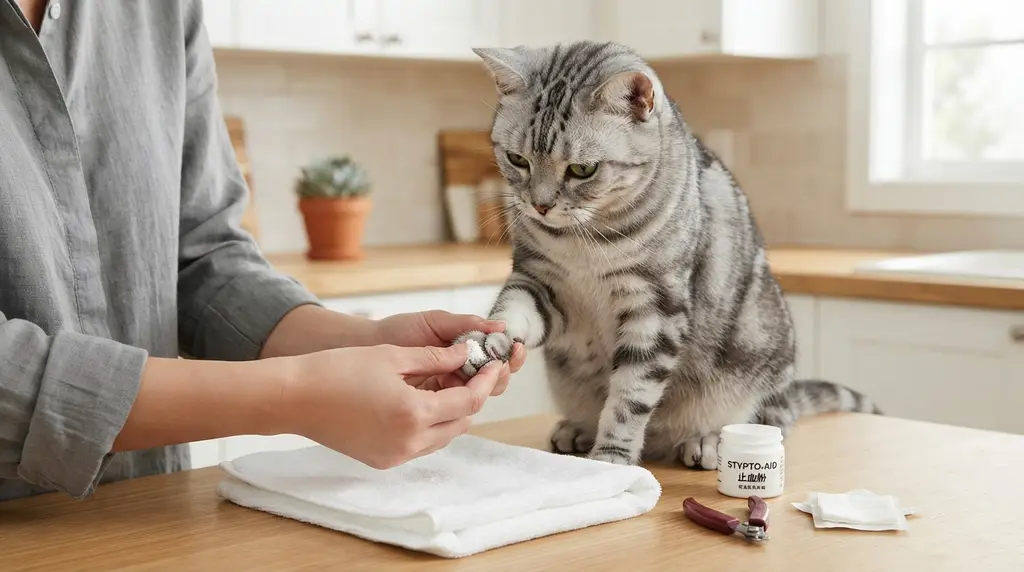
Cat Nail Trimming Tools Recommended: A List of Tools That Can Trim Even a Nail-Averse Cat's Claws in Seconds

For cats that hate nail trims, it's usually not the pain but the prolonged restraint they dislike. With the right tools and handling techniques, you can trim one paw in under 10 seconds. This article compares scissor-type, guillotine-type, and electric nail grinders, offering tool recommendations for sensitive cats.

CatGarden Editorial TeamPublished 2026/08/21Updated 2026/10/06
Cat nail clippersCat groomingCat careCat nail trimming tools
Cat Nail Trimming Tools Recommended: A List of Tools That Can Trim Even a Nail-Averse Cat's Claws in Seconds

For cats that hate nail trims, the top recommendation is the "curved-head scissor-type cat nail clipper" — its small blades offer clear visibility, and you can trim one claw at a time without holding the paw pad for too long. It's the tool we use most often at our facility for trimming thousands of cats' claws. The true "cat nail trimming miracle tool" isn't an expensive gadget, but rather a combination of "a comfortable scissor-type nail clipper + a thick towel to wrap the cat + trimming only 2-3 claws at a time." The tool is only half the solution; the other half is the handling technique and duration.

Key Takeaways

  • Cat nail clippers mainly fall into three categories: scissor-type (curved-head clippers), guillotine-type (or "chopper" style), and electric nail grinders; scissor-type clippers have the highest success rate for routine home grooming. Guillotine-type is better suited for older cats with thick nails, while electric grinders are mostly used for smoothing and rounding.
  • Trim about 2mm in front of the pink quick (the blood vessel and nerve), only cutting the transparent curved tip; for black nails where the quick is invisible, trim only the very tip, 1mm at a time, in small, frequent sessions.
  • For adult cats, trim front paws every 2-3 weeks and hind paws every 4-6 weeks; hind paws wear down faster and usually don't need trimming as frequently as the front.
  • The golden rule for sensitive cats is to keep each session under 30 seconds, trimming only 2-3 claws at a time. Completing the task over multiple sessions within a day is far more effective than forcing all eighteen claws in five minutes.
  • If the nails are already growing into the paw pads, the nail beds are red and swollen, or the cat cries out when pressure is applied, it's not a tool issue; seek veterinary care or consult a professional groomer immediately.

Why Do Cats Hate Nail Trims So Much? Understanding Their Resistance

When we check in cats at our facility, owners often say, "He bites, it must hurt." However, based on our observations, over 80% of cats resist not the pain itself, but these three factors:

1. Having their paws held and forced to extend: Cat paw pads are densely packed with nerves. Being held at the ankle and having their nails extended is a posture cats rarely experience naturally, triggering an immediate escape reflex.

2. Being restrained for more than a few tens of seconds: Most cats have a very short tolerance for being held down. If the first claw is trimmed smoothly but they start struggling by the fifth, it's usually not because it's suddenly painful, but because their patience has run out.

3. Sound and vibration: Cheap nail clippers have dull blades that create a "snap" sound and noticeable vibration transmitted to the toe bones when cutting. Electric grinders' motor noise is similar; if a cat isn't desensitized, the first exposure can create a lasting negative association.

This is why "the right tool" truly makes a difference: sharp blades that cut cleanly and minimize handling time lead to fewer negative memories for the cat, making the next trim less daunting. For a comprehensive guide on grooming and cleaning schedules, check out our series overview: How Often Should You Bathe Your Cat? Timing for Nail Trims, Ear Cleaning, and Professional Grooming.

What we use for this

CatGarden’s own products, shipped from Taiwan
See all products
Quick-Dry Pet TowelQuick-Dry Pet TowelFrom CA$49.35 per pieceFree shipping on multi-packs

A Complete Comparison of Three Types of Cat Nail Trimmers

1. Curved-Head Scissor-Type Nail Clippers (First Choice for Beginners and Sensitive Cats)

These resemble small scissors with curved, concave blades. Cat-specific models are typically 9-11 cm long.

  • Pros: The cutting area is completely visible during trimming, making it easy to see the quick. The small blades allow you to grip just the nail tip without needing to extend the entire toe. Each cut takes less than 2 seconds.
  • Cons: Dull blades can "crush" the nail instead of cutting it, causing pain. Inexpensive stainless steel models should be replaced every six months.
  • How to Choose: The blades should close completely with no gaps. The handles should have a non-slip grip. The inner diameter of the curve should be about 5-7mm for domestic cats; larger ones (for dogs) lack sufficient support.
  • Suitable for: Kittens, adult cats, sensitive cats that fear nail trims, and owners who need to operate with one hand.

2. Guillotine-Type Nail Clippers

The nail is inserted into a small hole, and the handle is pressed to cut with a sliding blade.

  • Pros: High cutting power, very effective for thick, hard, or aging, splitting nails (common in cats over 7 years old or those with polydactyly and thick claws). Provides a clean cut that resists splitting.
  • Cons: The nail must be inserted into the hole; incorrect angle can pinch the skin. The hole itself obstructs vision, making it harder to see the quick. The blade is a consumable part and will crush rather than cut when dull.
  • Suitable for: Middle-aged to senior cats with thick nails, and cats already accustomed to nail trims. Not recommended as an introductory tool for cats fearful of trims, as it requires longer restraint while inserting the nail into the hole.

3. Electric Nail Grinders (Rotary Grinders)

These use a rotating grinding wheel to shorten and round the nails.

  • Pros: It's impossible to cut too short, making it the safest method to avoid cutting the quick. The resulting nail is rounded, preventing snagging on sweaters, furniture, or your arms. For cats that "run at the sight of clippers," a completely different sensation can sometimes help them start fresh.
  • Cons: They produce noise and vibration, requiring desensitization. Grinding takes longer than clipping, about 10-20 seconds per nail. Be mindful of dust and heat; do not grind the same spot for more than 3 seconds continuously. For long-haired cats, be careful not to let fur get caught in the grinder; always push back the fur between the toes or hold it with your fingers before operating.
  • Suitable for: Cats that are not bothered by noise, cats with black nails where the quick is invisible, and for rounding off nails.
Tool TypeEase of UseTime Per ClawRisk of Cutting QuickBest Suited For
Scissor-Type (Curved)Low1-2 secondsMedium (visible quick, but one cut)Almost all domestic cats, sensitive cats
Guillotine-TypeMedium3-5 secondsMedium-High (obstructed view)Older cats with thick nails
Electric Nail GrinderMedium (needs desensitization)10-20 secondsLowBlack nails, rounding off nails

Can Human Nail Clippers Be Used?

They can be used in a pinch, but they are not ideal. Human flat-edge nail clippers have straight blades, while a cat's nail is an oval tube. Straight blades can easily split the nail lengthwise, causing it to snag on things or even crack down to the nail bed. If you must use human clippers, rotate the nail 90 degrees and cut from the side, top to bottom (following the nail's curve). This is safer than cutting side-to-side. For regular use, switch to cat-specific clippers.

Handling Techniques Are More Important Than Tools: Three Methods Used in Our Facility

1. Lap-Rest Method (Most Versatile)

Sit down with the cat on your lap, facing away from you (so the cat faces outwards). Slide one hand under the cat's armpit to gently support its front leg, and hold the clippers in the other hand. The key is that the cat's rear end is against your lap, and its hind legs are supported—a cat with dangling legs will always struggle.

2. Towel Wrap Method (For Cats That Swat)

Wrap the cat snugly from the shoulders down with a thick towel, exposing only one paw to be trimmed. Keep the other three paws tucked inside the towel. The trick here is that the towel must be thick enough to absorb the force of their struggles. We use large-sized Quick-Dry Pet Towels at our facility; the weight of the towel helps the cat settle down faster, and it's convenient for drying their paws afterward.

3. The Sleeping "Sneak Attack" (Most Painless, Surprisingly High Success Rate)

When the cat is deeply asleep, lying on its side with its paws naturally extended, gently press the center of its paw pad, and the nail will extend. Trim one claw, release, and give a gentle pat. Many of our long-term clients' cats have had all eighteen claws trimmed this way over five or six days by "stealing" moments when the cat is relaxed.

Things to Avoid: Grabbing the scruff of the neck to restrain, having two people force the cat down, or yelling at the cat. These actions will permanently link "nail trimming" with "restraint" in the cat's mind, causing them to hide even when you bring out the clippers.

How to Identify the Quick? What to Do If You Cut It

  • For clear nails: Look against the light. The pink part is the quick (containing blood vessels and nerves). Leave about 2mm of space in front of it before cutting, trimming only the sharp, curved tip.
  • For black nails: If you can't see the quick, don't guess. Instead, trim only the very tip, 1mm at a time, in small, frequent sessions. If you see a tiny dark dot on the cut surface (the cross-section of the nail bed), you are very close to the quick; stop immediately.
  • If you cut the quick and it bleeds: Apply direct pressure with a clean gauze pad for 2 minutes (don't keep lifting to check). You can also apply styptic powder or cornstarch/flour. Most bleeding stops within 3-5 minutes. If it continues bleeding after 5 minutes, or if the toe becomes red, swollen, and warm the next day, or the cat repeatedly licks the toe, seek veterinary attention.
  • Cats that have had their quick cut will remember it. For at least a week afterward, focus on practicing "touching the paws and giving treats" before attempting to trim again.

The "Tool + Calming" Formula for Fearful Cats

This is the sequence we recommend for clients to practice at home, which usually shows significant improvement within two to three weeks:

1. Week 1: Touch, Don't Trim. Twice a day, when the cat is relaxed, gently squeeze its paw pad, extend the nail, look at it, and immediately give a piece of their favorite freeze-dried treat. The entire process should not exceed 5 seconds.

2. Week 2: Introduce the Tools. Place the nail clippers in front of the cat, let them sniff, make a single "snip" sound with the empty clippers, and then give a treat. For electric grinders, turn it on and place it 1 meter away for 30 seconds.

3. Week 3: Trim One Claw and Stop. Finish trimming immediately and reward the cat. Don't get greedy and trim all eight claws just because "today is going well"—that one moment of greed is the start of failure.

4. Helpful Extras (Can be used throughout): 15 minutes before trimming, give a bit of Premium Catnip to help them relax (a small number of cats become more excited, so give it after trimming for them). You can also spray a pheromone spray onto the towel (wait 15 minutes for it to evaporate before use).

5. Environment: Choose the quietest corner of your home, turn off the TV, and avoid times immediately after meals or after the vacuum cleaner has been used.

If your cat typically hides under the bed or freezes when touched, it's advisable to first improve their overall comfort level with handling before attempting nail trims. The order matters: My Shy Cat Always Hides: 5 Stages and Timeline for Socializing a Fearful Cat.

Trimming Frequency and Indicators

  • Front Paws: Every 2-3 weeks. The indicator is simple: if you hear "click-clack" sounds on hard floors or if they snag your sweater, it's time to trim.
  • Hind Paws: Every 4-6 weeks. Hind paws naturally wear down from walking and are less likely to cause scratches.
  • Senior Cats (10+ years): Increase frequency to checking every 2 weeks. Senior cats have less activity, and their nail sheaths may not shed easily, causing them to grow thicker and curve inward. Ingrown nails causing infection are not uncommon in veterinary practice.
  • Cats with Polydactyly (Extra Toes): Extra toes don't touch the ground and wear down very little, making them easy to overlook. Always count them specifically during each trim.
  • Home Environment Matters: Cats with sturdy scratching posts and cat trees naturally wear down their front claws more, and their nail sheaths shed better. We've noticed at our facility that these cats' nails are generally easier to trim. For selection criteria, refer to How to Choose the Best Cat Tree: Height, Stability, and Cat Acceptance Guide.

When NOT to Trim at Home

  • The cat bites aggressively (not just a warning nip) or hides and refuses to eat for a whole day after trimming.
  • Nails are already growing into the paw pads, the nail beds are bleeding or have pus, or the cat cries out in pain when pressure is applied.
  • Cats with heart conditions, elderly and frail cats, or those recovering from surgery—excessive stress can be risky.
  • You yourself are trembling, have developed a phobia after accidentally cutting the quick once (cats can sense your nervousness, making the process worse).

In these situations, seeking professional help is faster and safer. We typically complete nail trims within 3-5 minutes and also check toe fur, paw pad condition, and ears. If needed, you can book a grooming appointment; if you're going away, we can trim their nails during their stay before they return home.

Frequently Asked Questions

How Often Should Cat Nail Clippers Be Replaced?

Scissor-type clippers should ideally be replaced every 6-12 months, or as soon as you notice they "crush the nail, cause splitting, or require extra force to cut." Dull blades are a common hidden reason why cats start resisting nail trims.

Can Electric Nail Grinders Hurt Cats?

Not if used correctly. However, grinding the same spot for more than 3 seconds continuously can generate heat, causing the cat to pull away. Use a rhythm of "touch for 1-2 seconds, release, then touch again." For long-haired cats, be sure to hold back the fur between the toes to prevent it from being caught in the grinder.

Do Nails Need to Be Trimmed Very Short?

No. The goal is simply to remove the "sharp hook" that snags things, leaving a rounded, blunt hook. Trimming too short can hit nerves and make it difficult for the cat to grip when climbing or jumping, potentially leading to falls.

Is It Normal for My Cat to Hide and Not Eat After a Nail Trim?

Hiding for 1-2 hours and then resuming normal eating is common. However, if the cat completely refuses to eat or drink for over 12 hours and appears lethargic, treat it as a health warning sign. Refer to Cat Not Eating, Drinking, or Sleeping All Day: Normal Lethargy or Warning Sign? Golden 24-Hour Observation and Vet Visit Guide.

Can Kittens Get Their Nails Trimmed?

Yes, and the earlier the better. Starting nail trimming practice (touching paws + trimming one claw) around 3-4 months old establishes habits that significantly impact the ease of nail trims throughout their life. Small, curved-head scissor-type clippers are sufficient; other tools are not necessary at this stage.


For more cleaning and care products we use in our facility, feel free to browse our shop.

This article was written by the CatGarden editorial team. The advice provided is based on experience from our cat hotel and grooming services and cannot replace veterinary diagnosis. If your cat's nails are ingrown, the nail beds are red and swollen or bleeding, or bleeding won't stop, please seek veterinary care immediately.

CatGarden offers curated supplies, cat boarding, and grooming

Book services or shop online.

Back

Blog

Cat Nail Trimming Tools Recommended: A List of Tools That Can Trim Even a Nail-Averse Cat's Claws in Seconds

CatGarden Editorial TeamPublished 2026/08/21Updated 2026/10/06
Cat nail clippersCat groomingCat careCat nail trimming tools
Cat Nail Trimming Tools Recommended: A List of Tools That Can Trim Even a Nail-Averse Cat's Claws in Seconds

For cats that hate nail trims, the top recommendation is the "curved-head scissor-type cat nail clipper" — its small blades offer clear visibility, and you can trim one claw at a time without holding the paw pad for too long. It's the tool we use most often at our facility for trimming thousands of cats' claws. The true "cat nail trimming miracle tool" isn't an expensive gadget, but rather a combination of "a comfortable scissor-type nail clipper + a thick towel to wrap the cat + trimming only 2-3 claws at a time." The tool is only half the solution; the other half is the handling technique and duration.

Key Takeaways

  • Cat nail clippers mainly fall into three categories: scissor-type (curved-head clippers), guillotine-type (or "chopper" style), and electric nail grinders; scissor-type clippers have the highest success rate for routine home grooming. Guillotine-type is better suited for older cats with thick nails, while electric grinders are mostly used for smoothing and rounding.
  • Trim about 2mm in front of the pink quick (the blood vessel and nerve), only cutting the transparent curved tip; for black nails where the quick is invisible, trim only the very tip, 1mm at a time, in small, frequent sessions.
  • For adult cats, trim front paws every 2-3 weeks and hind paws every 4-6 weeks; hind paws wear down faster and usually don't need trimming as frequently as the front.
  • The golden rule for sensitive cats is to keep each session under 30 seconds, trimming only 2-3 claws at a time. Completing the task over multiple sessions within a day is far more effective than forcing all eighteen claws in five minutes.
  • If the nails are already growing into the paw pads, the nail beds are red and swollen, or the cat cries out when pressure is applied, it's not a tool issue; seek veterinary care or consult a professional groomer immediately.

Why Do Cats Hate Nail Trims So Much? Understanding Their Resistance

When we check in cats at our facility, owners often say, "He bites, it must hurt." However, based on our observations, over 80% of cats resist not the pain itself, but these three factors:

1. Having their paws held and forced to extend: Cat paw pads are densely packed with nerves. Being held at the ankle and having their nails extended is a posture cats rarely experience naturally, triggering an immediate escape reflex.

2. Being restrained for more than a few tens of seconds: Most cats have a very short tolerance for being held down. If the first claw is trimmed smoothly but they start struggling by the fifth, it's usually not because it's suddenly painful, but because their patience has run out.

3. Sound and vibration: Cheap nail clippers have dull blades that create a "snap" sound and noticeable vibration transmitted to the toe bones when cutting. Electric grinders' motor noise is similar; if a cat isn't desensitized, the first exposure can create a lasting negative association.

This is why "the right tool" truly makes a difference: sharp blades that cut cleanly and minimize handling time lead to fewer negative memories for the cat, making the next trim less daunting. For a comprehensive guide on grooming and cleaning schedules, check out our series overview: How Often Should You Bathe Your Cat? Timing for Nail Trims, Ear Cleaning, and Professional Grooming.

What we use for this

CatGarden’s own products, shipped from Taiwan
See all products
Quick-Dry Pet TowelQuick-Dry Pet TowelFrom CA$49.35 per pieceFree shipping on multi-packs

A Complete Comparison of Three Types of Cat Nail Trimmers

1. Curved-Head Scissor-Type Nail Clippers (First Choice for Beginners and Sensitive Cats)

These resemble small scissors with curved, concave blades. Cat-specific models are typically 9-11 cm long.

  • Pros: The cutting area is completely visible during trimming, making it easy to see the quick. The small blades allow you to grip just the nail tip without needing to extend the entire toe. Each cut takes less than 2 seconds.
  • Cons: Dull blades can "crush" the nail instead of cutting it, causing pain. Inexpensive stainless steel models should be replaced every six months.
  • How to Choose: The blades should close completely with no gaps. The handles should have a non-slip grip. The inner diameter of the curve should be about 5-7mm for domestic cats; larger ones (for dogs) lack sufficient support.
  • Suitable for: Kittens, adult cats, sensitive cats that fear nail trims, and owners who need to operate with one hand.

2. Guillotine-Type Nail Clippers

The nail is inserted into a small hole, and the handle is pressed to cut with a sliding blade.

  • Pros: High cutting power, very effective for thick, hard, or aging, splitting nails (common in cats over 7 years old or those with polydactyly and thick claws). Provides a clean cut that resists splitting.
  • Cons: The nail must be inserted into the hole; incorrect angle can pinch the skin. The hole itself obstructs vision, making it harder to see the quick. The blade is a consumable part and will crush rather than cut when dull.
  • Suitable for: Middle-aged to senior cats with thick nails, and cats already accustomed to nail trims. Not recommended as an introductory tool for cats fearful of trims, as it requires longer restraint while inserting the nail into the hole.

3. Electric Nail Grinders (Rotary Grinders)

These use a rotating grinding wheel to shorten and round the nails.

  • Pros: It's impossible to cut too short, making it the safest method to avoid cutting the quick. The resulting nail is rounded, preventing snagging on sweaters, furniture, or your arms. For cats that "run at the sight of clippers," a completely different sensation can sometimes help them start fresh.
  • Cons: They produce noise and vibration, requiring desensitization. Grinding takes longer than clipping, about 10-20 seconds per nail. Be mindful of dust and heat; do not grind the same spot for more than 3 seconds continuously. For long-haired cats, be careful not to let fur get caught in the grinder; always push back the fur between the toes or hold it with your fingers before operating.
  • Suitable for: Cats that are not bothered by noise, cats with black nails where the quick is invisible, and for rounding off nails.
Tool TypeEase of UseTime Per ClawRisk of Cutting QuickBest Suited For
Scissor-Type (Curved)Low1-2 secondsMedium (visible quick, but one cut)Almost all domestic cats, sensitive cats
Guillotine-TypeMedium3-5 secondsMedium-High (obstructed view)Older cats with thick nails
Electric Nail GrinderMedium (needs desensitization)10-20 secondsLowBlack nails, rounding off nails

Can Human Nail Clippers Be Used?

They can be used in a pinch, but they are not ideal. Human flat-edge nail clippers have straight blades, while a cat's nail is an oval tube. Straight blades can easily split the nail lengthwise, causing it to snag on things or even crack down to the nail bed. If you must use human clippers, rotate the nail 90 degrees and cut from the side, top to bottom (following the nail's curve). This is safer than cutting side-to-side. For regular use, switch to cat-specific clippers.

Handling Techniques Are More Important Than Tools: Three Methods Used in Our Facility

1. Lap-Rest Method (Most Versatile)

Sit down with the cat on your lap, facing away from you (so the cat faces outwards). Slide one hand under the cat's armpit to gently support its front leg, and hold the clippers in the other hand. The key is that the cat's rear end is against your lap, and its hind legs are supported—a cat with dangling legs will always struggle.

2. Towel Wrap Method (For Cats That Swat)

Wrap the cat snugly from the shoulders down with a thick towel, exposing only one paw to be trimmed. Keep the other three paws tucked inside the towel. The trick here is that the towel must be thick enough to absorb the force of their struggles. We use large-sized Quick-Dry Pet Towels at our facility; the weight of the towel helps the cat settle down faster, and it's convenient for drying their paws afterward.

3. The Sleeping "Sneak Attack" (Most Painless, Surprisingly High Success Rate)

When the cat is deeply asleep, lying on its side with its paws naturally extended, gently press the center of its paw pad, and the nail will extend. Trim one claw, release, and give a gentle pat. Many of our long-term clients' cats have had all eighteen claws trimmed this way over five or six days by "stealing" moments when the cat is relaxed.

Things to Avoid: Grabbing the scruff of the neck to restrain, having two people force the cat down, or yelling at the cat. These actions will permanently link "nail trimming" with "restraint" in the cat's mind, causing them to hide even when you bring out the clippers.

How to Identify the Quick? What to Do If You Cut It

  • For clear nails: Look against the light. The pink part is the quick (containing blood vessels and nerves). Leave about 2mm of space in front of it before cutting, trimming only the sharp, curved tip.
  • For black nails: If you can't see the quick, don't guess. Instead, trim only the very tip, 1mm at a time, in small, frequent sessions. If you see a tiny dark dot on the cut surface (the cross-section of the nail bed), you are very close to the quick; stop immediately.
  • If you cut the quick and it bleeds: Apply direct pressure with a clean gauze pad for 2 minutes (don't keep lifting to check). You can also apply styptic powder or cornstarch/flour. Most bleeding stops within 3-5 minutes. If it continues bleeding after 5 minutes, or if the toe becomes red, swollen, and warm the next day, or the cat repeatedly licks the toe, seek veterinary attention.
  • Cats that have had their quick cut will remember it. For at least a week afterward, focus on practicing "touching the paws and giving treats" before attempting to trim again.

The "Tool + Calming" Formula for Fearful Cats

This is the sequence we recommend for clients to practice at home, which usually shows significant improvement within two to three weeks:

1. Week 1: Touch, Don't Trim. Twice a day, when the cat is relaxed, gently squeeze its paw pad, extend the nail, look at it, and immediately give a piece of their favorite freeze-dried treat. The entire process should not exceed 5 seconds.

2. Week 2: Introduce the Tools. Place the nail clippers in front of the cat, let them sniff, make a single "snip" sound with the empty clippers, and then give a treat. For electric grinders, turn it on and place it 1 meter away for 30 seconds.

3. Week 3: Trim One Claw and Stop. Finish trimming immediately and reward the cat. Don't get greedy and trim all eight claws just because "today is going well"—that one moment of greed is the start of failure.

4. Helpful Extras (Can be used throughout): 15 minutes before trimming, give a bit of Premium Catnip to help them relax (a small number of cats become more excited, so give it after trimming for them). You can also spray a pheromone spray onto the towel (wait 15 minutes for it to evaporate before use).

5. Environment: Choose the quietest corner of your home, turn off the TV, and avoid times immediately after meals or after the vacuum cleaner has been used.

If your cat typically hides under the bed or freezes when touched, it's advisable to first improve their overall comfort level with handling before attempting nail trims. The order matters: My Shy Cat Always Hides: 5 Stages and Timeline for Socializing a Fearful Cat.

Trimming Frequency and Indicators

  • Front Paws: Every 2-3 weeks. The indicator is simple: if you hear "click-clack" sounds on hard floors or if they snag your sweater, it's time to trim.
  • Hind Paws: Every 4-6 weeks. Hind paws naturally wear down from walking and are less likely to cause scratches.
  • Senior Cats (10+ years): Increase frequency to checking every 2 weeks. Senior cats have less activity, and their nail sheaths may not shed easily, causing them to grow thicker and curve inward. Ingrown nails causing infection are not uncommon in veterinary practice.
  • Cats with Polydactyly (Extra Toes): Extra toes don't touch the ground and wear down very little, making them easy to overlook. Always count them specifically during each trim.
  • Home Environment Matters: Cats with sturdy scratching posts and cat trees naturally wear down their front claws more, and their nail sheaths shed better. We've noticed at our facility that these cats' nails are generally easier to trim. For selection criteria, refer to How to Choose the Best Cat Tree: Height, Stability, and Cat Acceptance Guide.

When NOT to Trim at Home

  • The cat bites aggressively (not just a warning nip) or hides and refuses to eat for a whole day after trimming.
  • Nails are already growing into the paw pads, the nail beds are bleeding or have pus, or the cat cries out in pain when pressure is applied.
  • Cats with heart conditions, elderly and frail cats, or those recovering from surgery—excessive stress can be risky.
  • You yourself are trembling, have developed a phobia after accidentally cutting the quick once (cats can sense your nervousness, making the process worse).

In these situations, seeking professional help is faster and safer. We typically complete nail trims within 3-5 minutes and also check toe fur, paw pad condition, and ears. If needed, you can book a grooming appointment; if you're going away, we can trim their nails during their stay before they return home.

Frequently Asked Questions

How Often Should Cat Nail Clippers Be Replaced?

Scissor-type clippers should ideally be replaced every 6-12 months, or as soon as you notice they "crush the nail, cause splitting, or require extra force to cut." Dull blades are a common hidden reason why cats start resisting nail trims.

Can Electric Nail Grinders Hurt Cats?

Not if used correctly. However, grinding the same spot for more than 3 seconds continuously can generate heat, causing the cat to pull away. Use a rhythm of "touch for 1-2 seconds, release, then touch again." For long-haired cats, be sure to hold back the fur between the toes to prevent it from being caught in the grinder.

Do Nails Need to Be Trimmed Very Short?

No. The goal is simply to remove the "sharp hook" that snags things, leaving a rounded, blunt hook. Trimming too short can hit nerves and make it difficult for the cat to grip when climbing or jumping, potentially leading to falls.

Is It Normal for My Cat to Hide and Not Eat After a Nail Trim?

Hiding for 1-2 hours and then resuming normal eating is common. However, if the cat completely refuses to eat or drink for over 12 hours and appears lethargic, treat it as a health warning sign. Refer to Cat Not Eating, Drinking, or Sleeping All Day: Normal Lethargy or Warning Sign? Golden 24-Hour Observation and Vet Visit Guide.

Can Kittens Get Their Nails Trimmed?

Yes, and the earlier the better. Starting nail trimming practice (touching paws + trimming one claw) around 3-4 months old establishes habits that significantly impact the ease of nail trims throughout their life. Small, curved-head scissor-type clippers are sufficient; other tools are not necessary at this stage.


For more cleaning and care products we use in our facility, feel free to browse our shop.

This article was written by the CatGarden editorial team. The advice provided is based on experience from our cat hotel and grooming services and cannot replace veterinary diagnosis. If your cat's nails are ingrown, the nail beds are red and swollen or bleeding, or bleeding won't stop, please seek veterinary care immediately.

One email a month of cat-care tips

Hand-picked care, behavior and grooming tips once a month. Subscribe and we will send you our three most-read articles right away.

Keep reading