How Often Should You Bathe a Cat? Nails, Ears, and Grooming Timing

Cats groom themselves, but they still need help with nails, ears, mats, and occasional bathing. Learn a practical grooming rhythm.

CatGarden Editorial TeamPublished 2026/06/04Updated 2026/10/05
GroomingBathingNail trimmingHome care
How Often Should You Bathe a Cat? Nails, Ears, and Grooming Timing

Cats clean themselves every day, but self-grooming does not solve every care need. Nails grow, ears collect wax, and long coats can mat.

Key takeaways

  • Most short-haired cats don't need frequent baths; they can be bathed once every few months or only when necessary if they aren't dirty. Long-haired cats need a bath about once every 1 to 2 months, while hairless cats require more regular cleaning due to higher sebum production.
  • Bathing too often can strip the skin of protective oils, leading to dryness and itching. The right time to bathe is when there's visible dirt, grease, odor, fecal matter, or if there are medical or skin conditions requiring it.
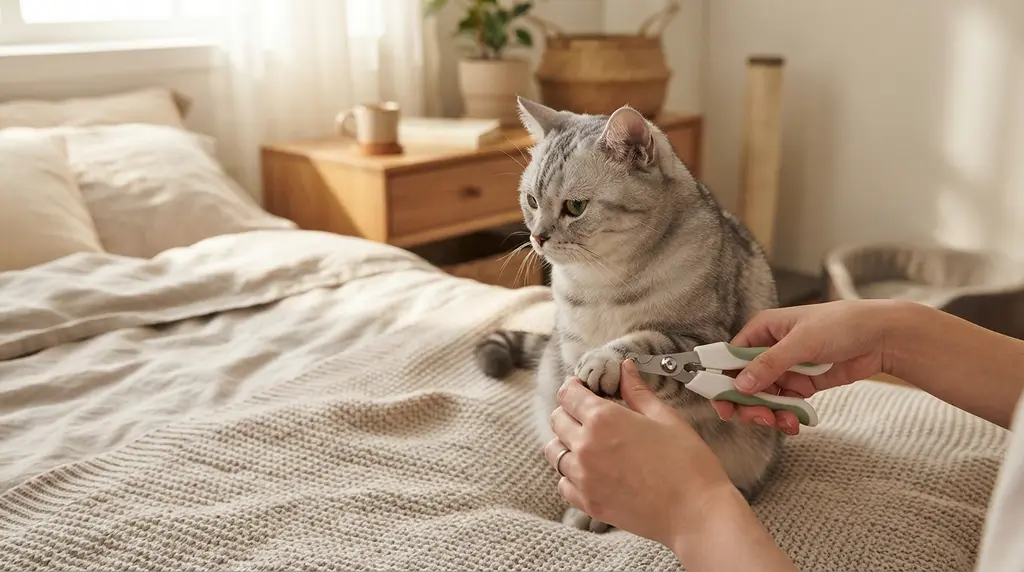
  • Indoor cats' nails grow quickly and wear down less, so trimming them every 2 to 3 weeks is common. Only trim the transparent tip, avoiding the pink quick (bloodline).
  • A small amount of earwax is normal. Clean the outer ear with a pet-specific cleaning solution when it's dirty. Do not insert cotton swabs deep into the ear canal. If there's a large amount of earwax, a foul odor, or frequent ear scratching, it could indicate ear mites or inflammation and requires veterinary attention.
  • For severely matted long-haired cats, cats that are extremely resistant and aggressive, or when procedures like shaving, medicated baths, or anal gland expression are needed, it's recommended to seek professional grooming services.

Bathing

Most indoor short-haired cats do not need frequent baths. Bathe when the coat is visibly dirty, oily, smelly, contaminated, or when a veterinarian recommends it. Long-haired cats may need more regular help, and hairless cats need a separate cleaning routine.

Nails and Ears

Indoor cats often need nail trims every 2 to 3 weeks. Cut only the clear tip and avoid the quick. Clean ears only when dirty, using pet-safe cleaner on the outer ear; never push cotton swabs deep into the ear canal.

When to See a Groomer

Seek professional grooming for severe mats, trimming around sensitive areas, bathing that must be fully dried, or cats that are too stressed or defensive at home.

What we use for this

CatGarden’s own products, shipped from Taiwan
See all products
Quick-Dry Pet TowelQuick-Dry Pet TowelFrom CA$49.35 per pieceFree shipping on multi-packs

CatGarden offers curated supplies, cat boarding, and grooming

Book services or shop online.
Back

Blog

How Often Should You Bathe a Cat? Nails, Ears, and Grooming Timing

CatGarden Editorial TeamPublished 2026/06/04Updated 2026/10/05
GroomingBathingNail trimmingHome care
How Often Should You Bathe a Cat? Nails, Ears, and Grooming Timing

Cats clean themselves every day, but self-grooming does not solve every care need. Nails grow, ears collect wax, and long coats can mat.

Key takeaways

  • Most short-haired cats don't need frequent baths; they can be bathed once every few months or only when necessary if they aren't dirty. Long-haired cats need a bath about once every 1 to 2 months, while hairless cats require more regular cleaning due to higher sebum production.
  • Bathing too often can strip the skin of protective oils, leading to dryness and itching. The right time to bathe is when there's visible dirt, grease, odor, fecal matter, or if there are medical or skin conditions requiring it.
  • Indoor cats' nails grow quickly and wear down less, so trimming them every 2 to 3 weeks is common. Only trim the transparent tip, avoiding the pink quick (bloodline).
  • A small amount of earwax is normal. Clean the outer ear with a pet-specific cleaning solution when it's dirty. Do not insert cotton swabs deep into the ear canal. If there's a large amount of earwax, a foul odor, or frequent ear scratching, it could indicate ear mites or inflammation and requires veterinary attention.
  • For severely matted long-haired cats, cats that are extremely resistant and aggressive, or when procedures like shaving, medicated baths, or anal gland expression are needed, it's recommended to seek professional grooming services.

Bathing

Most indoor short-haired cats do not need frequent baths. Bathe when the coat is visibly dirty, oily, smelly, contaminated, or when a veterinarian recommends it. Long-haired cats may need more regular help, and hairless cats need a separate cleaning routine.

Nails and Ears

Indoor cats often need nail trims every 2 to 3 weeks. Cut only the clear tip and avoid the quick. Clean ears only when dirty, using pet-safe cleaner on the outer ear; never push cotton swabs deep into the ear canal.

When to See a Groomer

Seek professional grooming for severe mats, trimming around sensitive areas, bathing that must be fully dried, or cats that are too stressed or defensive at home.

What we use for this

CatGarden’s own products, shipped from Taiwan
See all products
Quick-Dry Pet TowelQuick-Dry Pet TowelFrom CA$49.35 per pieceFree shipping on multi-packs
One email a month of cat-care tips

Hand-picked care, behavior and grooming tips once a month. Subscribe and we will send you our three most-read articles right away.

Keep reading