Long-Haired Cat Care: Daily Brushing, Mats, and Grooming Timing
Long-haired cats need regular brushing and careful mat management. Learn the tools, daily routine, and when to seek a groomer.
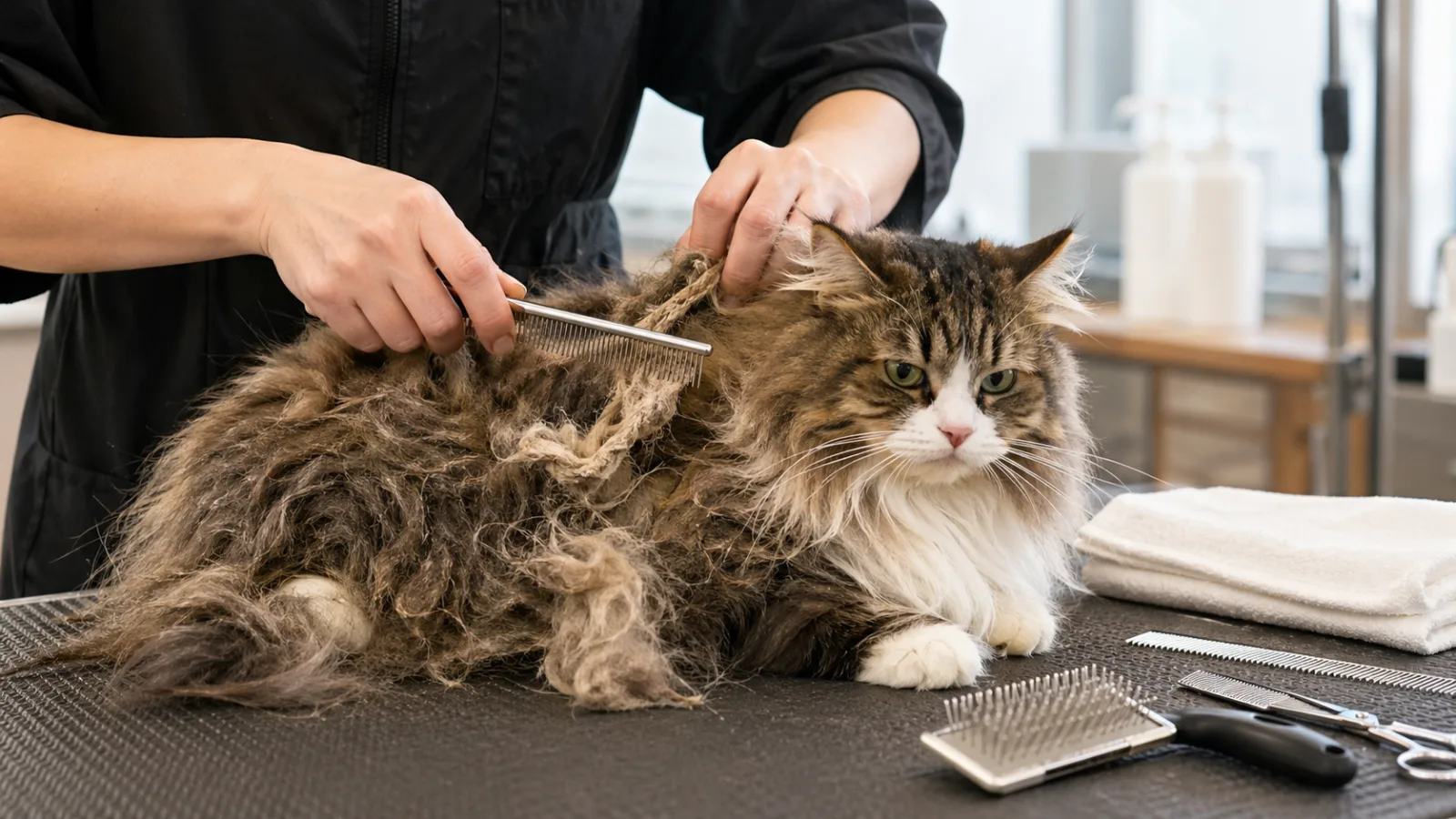
Long-haired cats are beautiful, but their coats need much more care than short coats. Loose hair can stay trapped, form mats, and increase hairballs.
Key takeaways
- Long-haired cats should be brushed daily, or at least every other day. During shedding seasons, increase the frequency to prevent mats and reduce hairballs.
- The primary grooming tool for long-haired cats is a metal comb (greyhound comb), which can reach the undercoat and detangle small knots. A slicker brush is for smoothing the top layer, and a deshedding tool removes loose undercoat during shedding season. Using only a plastic fine-tooth comb that doesn't reach the undercoat is ineffective.
- If mats have formed into hard clumps (felt) and are close to the skin, never use scissors to cut them out, as you could easily cut the skin. Large areas or skin-tight mats should be handled by a professional groomer using electric clippers.
- The hindquarters, armpits, behind the ears, and belly of long-haired cats are prone to accumulating waste and dirt. Neglecting these areas can lead to skin problems and cause the cat to ingest more hair, worsening hairball issues.
- Times when professional grooming is necessary include: large areas of skin-tight mats, needing a bath and thorough drying (difficult to dry completely at home, leading to potential fungal growth), trimming around the anus, paws, and belly, shaving a 'lion cut' for heat relief in summer, and when the cat resists brushing to the point where at-home grooming is impossible.
Daily Brushing
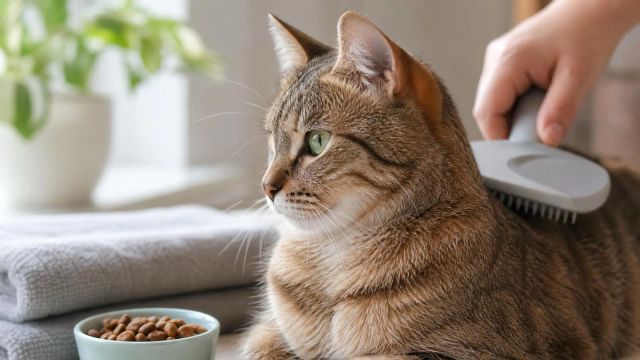
Use a metal comb to reach the undercoat, a pin brush for the surface, and a de-shedding tool during shedding season. Work in sections, follow the direction of the coat, and never pull hard on tangles.
Mats and Sensitive Areas
Small tangles can be loosened gently from the ends. Tight mats close to the skin should not be cut with scissors, because cat skin is thin and easy to injure. The belly, armpits, behind the ears, and rear area need extra attention.
Professional Help
See a professional groomer for large mats, sanitary trims, bathing that needs thorough drying, or cats that are too stressed at home. Good grooming prevents skin irritation and reduces hairball problems.
What we use for this
CatGarden’s own products, shipped from Taiwan

CatGarden offers curated supplies, cat boarding, and grooming
Book services or shop online.