How Thick Should Cat Litter Be? A Guide to Litter Types, Refilling, and Full Changes
For clumping mineral litter, aim for 5–7 cm; for tofu or corn litter, 4–6 cm; and for crystal litter, 3–5 cm. Wood pellet litter in a double-layer box only needs a thin layer of 1–2 cm. This article provides a comparison table for litter thickness, refilling amounts, and full cleaning cycles, along with monthly usage estimates for single and multiple cats.
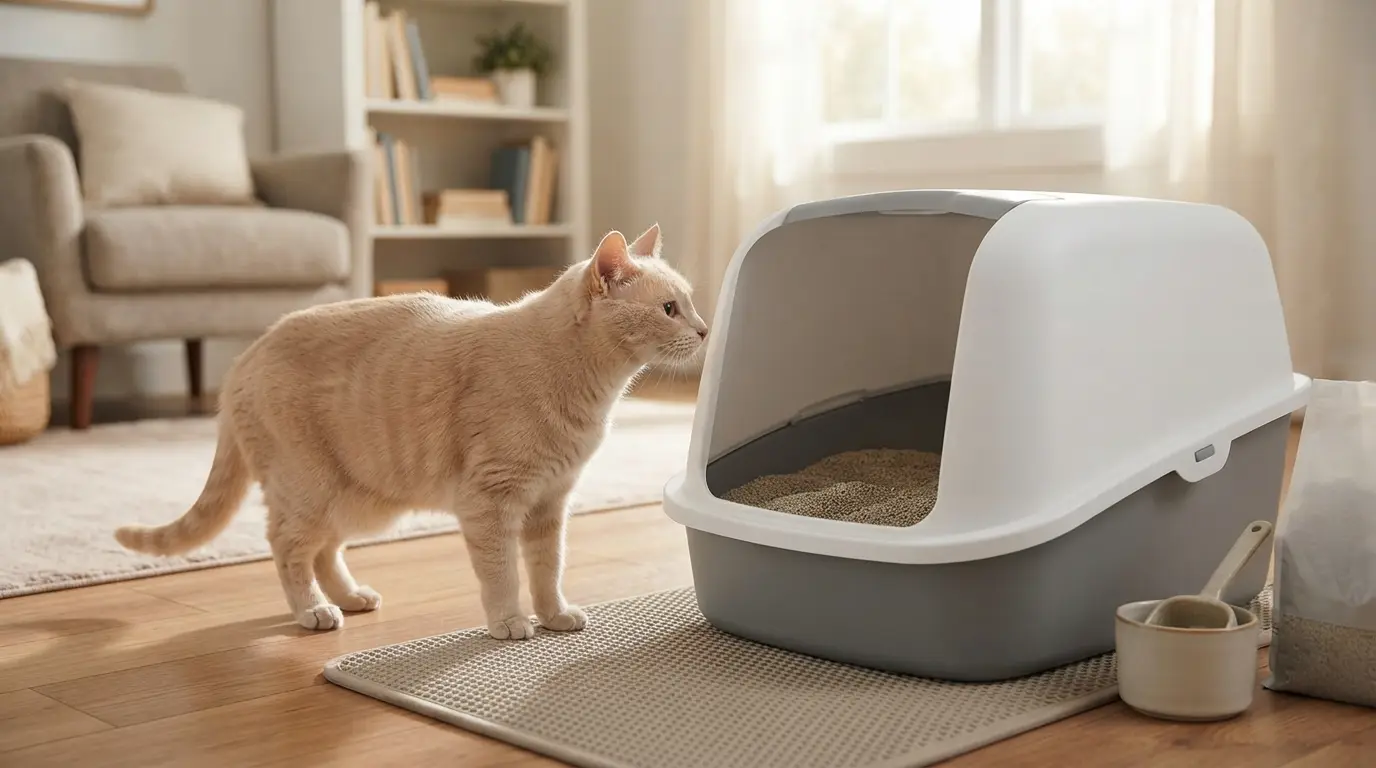
How thick should cat litter be? Generally, for clumping mineral litter, aim for 5–7 cm; for tofu/corn litter, 4–6 cm; and for crystal litter, 3–5 cm. If using a double-layer box with clumping wood pellet litter, a thin layer of 1–2 cm on top is sufficient. The simple rule is: the cat should be able to dig without reaching the bottom of the box, and urine clumps should form completely for easy scooping.
In our cattery, we manage over a dozen litter boxes daily, and the two most common issues we address are "too thin" and "too thick." Boxes that are too thin allow urine to hit the bottom, creating a sticky mess. When cats step on this wet, hard surface, they may start urinating on the edge of the box, on mats, or even on beds. Conversely, boxes that are too thick cause cats to sink in, get litter stuck between their toes, and then track it all over the floor when they leave. Below is a clear breakdown of recommended thickness, refilling amounts, and full cleaning cycles for four common types of cat litter.
Key Takeaways
- Clumping mineral litter is recommended to be 5–7 cm thick, requiring the most depth among the four types. If too thin, urine clumps will stick to the bottom and cannot be scooped whole.
- Tofu/corn litter and other plant-based clumping litters are recommended at 4–6 cm; crystal litter at 3–5 cm; and clumping wood pellet litter in a double-layer box only needs 1–2 cm on top.
- Monthly litter consumption for a single cat is approximately 8–12 kg for mineral litter and 6–9 kg for tofu litter. Add about 60–80% more for each additional cat (as shared use accelerates consumption).
- Assuming scooping 1–2 times daily, a single cat will require a full litter box change and wash approximately every 3–4 weeks for mineral litter, 2–3 weeks for tofu litter, 3–4 weeks for crystal litter, and 1–2 weeks for the top layer of wood pellet litter.
- During summer when indoor temperatures exceed 28°C and humidity is high, shorten the full change interval by about one-third. If you can still smell odors within 10 minutes after scooping, it's time for a full change.
Cat Litter Thickness & Change Cycle Comparison for Four Litter Types
| Litter Type | Recommended Thickness | Weekly Refill Amount (Single Cat) | Full Change & Wash Frequency | On-site Notes |
|---|---|---|---|---|
| Clumping Mineral Litter (Bentonite) | 5–7 cm | Approx. 1.5–2.5 liters (1.5–2 kg) | 3–4 weeks | Heaviest, best odor control and clumping; requires sufficient depth to prevent sticking |
| Tofu/Corn Litter | 4–6 cm | Approx. 1.5–2 liters | 2–3 weeks | Lightweight granules easily kicked out; thicker layers can increase tracking; can soften and emit odor in humid/hot conditions |
| Clumping Wood Pellet Litter (Double-Layer Box) | Top layer 1–2 cm (Single-layer box requires 5 cm) | Top layer replaced weekly; lower tray liner changed every 2–3 days | Top layer: 1–2 weeks; Full set: 2–4 weeks | If the top layer is too thick, pellets won't break down and fall through, leading to mold on the mesh |
| Crystal Litter (Silica Gel) | 3–5 cm | No frequent refilling needed; replace entire box when saturated | 3–4 weeks (single cat) | Hard granules; some cats dislike the texture; solid waste still needs daily scooping |
Clumping Mineral Litter: Insufficient Depth is the Culprit for "Sticking to the Bottom"
Mineral litter is our primary choice in our boarding facility. It works by urine clumping the granules into a solid ball. If the depth is less than 4 cm, urine can penetrate to the bottom of the box before forming a clump, creating a hard layer stuck to the plastic. This can only be scraped off, damaging the box's surface and making it more prone to retaining odors – a vicious cycle.
In practice, we consistently aim for a depth where "your finger can reach the bottom, and the litter surface is around your second knuckle," which translates to about 5–7 cm. For multi-cat households, larger cats (over 5 kg), or male cats who urinate while standing, we recommend aiming for the higher end, 7 cm. For combined odor control, choose formulas with strong clumping and absorption capabilities, such as our own Odor Control Mineral Litter 3.0, which, when sufficiently deep, allows urine clumps to float in the middle of the litter layer, scooping cleanly without crumbling and requiring minimal scraping of the box bottom.
Also, a note for automatic litter boxes: most models specify "clumping mineral litter, 5–8 cm." If the litter is too thin, the rake may push wet litter into a sticky mass on the drum. If it's too thick, it might exceed the weight sensor's range. Before choosing a machine, it's advisable to consult How to Choose an Automatic Cat Litter Box? Check Cat Size, Acceptance, Litter Tracking, and Safety Sensors Before Buying.
Tofu/Corn Litter: Deeper Isn't Better, It Increases Tracking
Tofu litter is much lighter than mineral litter, and cats can easily flip it over when digging. We've observed that litter boxes with over 7 cm of tofu litter significantly increase tracking, as the litter layer becomes too soft, causing paws to sink in and trapping granules between the toes, which are then carried out of the box. 4–6 cm is the sweet spot: enough to form clumps, but not so soft that paws sink in.
Granule size also affects the cat's experience. Cats with sensitive paws, or those newly transitioned from mineral litter, usually accept finer granules like those in our Ultra-Fine Tofu Litter 3.0 better than coarser pellets. The feel is closer to mineral litter, and complaints about litter getting stuck in paws are fewer. The only consideration with fine litter is to use a sufficiently deep box with a litter-trapping rim to prevent scattering.
Wood Pellet Litter: Thickness Rules Are the Opposite of Other Litters
Wood pellet litter has two common usage methods that often cause confusion:
- Double-layer urine-draining box (most common): Only a thin layer of 1–2 cm of wood pellet litter is needed on top. As the pellets absorb urine, they break down into sawdust, falling through the mesh into the lower tray where it's absorbed by a liner. If the layer is too thick, the sawdust gets stuck on the top layer and doesn't fall through, creating a moist environment that ferments and develops an odor within two days.
- Single-layer box used as regular litter: In this case, you'll need to fill it to about 5 cm, relying on digging and daily sifting out the wet sawdust.
The lower tray liner or flat pan is crucial. We recommend changing it every 2–3 days, and in our facility, we check it every morning and replace it if there's any odor.
Crystal Litter: Non-Clumping, So "Turning" is More Important Than "Scooping"
Crystal litter absorbs moisture through its pores and then allows it to evaporate. Urine doesn't form clumps, so a depth of 3–5 cm, enough to cover the bottom and allow the cat to dig, is sufficient. Filling it deeper is just a waste. The key to using crystal litter is to scoop solid waste daily and turn the litter over once, allowing the saturated granules to spread out and dry. If you don't turn it, the urine will concentrate in one area, which will quickly turn yellow, start to smell, and shorten the overall lifespan of the litter. When most granules turn yellow, become transparent, or feel sticky, it's time for a full replacement.
Too Thin vs. Too Thick: Cats React Differently
Too Thin: Accidents, Urinating on Edges, Stepping on the Bottom
- Cats dig and hit hard plastic, which feels wrong, leading them to urinate on the edge of the box or avoid it altogether.
- Urine isn't fully contained and contacts the box bottom directly, leading to accumulated urine scale and odors that persist even with daily scooping.
- Odors from feces aren't masked, and some cats may refuse to use the box because it still smells after they've finished.
If your cat has recently started urinating on bathroom mats or in corners of the sofa, the first thing to check is the litter depth. This is often more effective than any odor-eliminating spray. Of course, also rule out any urinary tract issues – frequent trips to the litter box, reduced urine volume, or blood in the urine require prompt veterinary attention and shouldn't be dismissed as behavioral problems.
Too Thick: Litter Between Paws, Tracking, Cats Refuse to Step In
- The litter layer is too soft, causing paws to sink in and trapping litter between the toes. This leads to cats shaking their paws on the floor after leaving the box, scattering litter throughout the house.
- Some cats (especially long-haired cats or those with abundant paw fur) may reduce digging, cover their waste hastily, or even start eliminating outside the box after a few experiences of litter getting stuck.
- Deep boxes with thick litter can be unstable for senior cats or those with joint issues. For cats with long paw fur that easily traps litter, consider trimming their paw fur. This is discussed in What Cat Grooming Services Are Available? From Baths and Nail Trims to Haircuts and Spot Trims, detailing which areas to trim.
Estimated Weekly Refill and Monthly Litter Consumption
The principle of refilling litter isn't about "pouring when the time comes," but rather restoring the litter to its original depth after each scooping. Removing a urine clump also removes a small amount of litter; without refilling, the depth can decrease by 1–2 cm per week.
| Number of Cats | Monthly Mineral Litter Consumption | Monthly Tofu Litter Consumption | Recommended Number of Boxes |
|---|---|---|---|
| 1 Cat | 8–12 kg | 6–9 kg | 1–2 |
| 2 Cats | 14–20 kg | 10–15 kg | 2–3 |
| 3 Cats | 20–28 kg | 15–21 kg | 3–4 |
(Based on scooping 1–2 times daily and a full change every 3–4 weeks. Cats with increased water intake due to kidney or diabetes issues may require 20–30% more litter.)
Insufficient litter boxes can drastically increase consumption in a single box and are a common cause of accidents in multi-cat households. The basic formula is "number of cats + 1," and the box size should be at least 1.5 times the cat's body length (excluding the tail). For more details, see How to Choose a Cat Litter Box? Understanding Size, Style, and Placement. New cat owners still figuring out consumption can also refer to What Should New Cat Owners Prepare? Start with These 10 Essential Items to gather the basics before adjusting litter types.
How Often Should You Fully Change and Wash the Litter Box? Plan Ahead for Summer
"Full change" means discarding all the litter, washing the box thoroughly, drying it, and then refilling it. This is different from daily scooping. Don't just rely on the calendar; look for these three signs:
1. Odor is still detectable 10 minutes after scooping: This indicates the odor has permeated the litter layer and the box itself, and refilling won't help.
2. Powdery clumps, mucus, or a slippery feel at the bottom of the box: Urine scale has adhered.
3. The cat hesitates at the edge of the box, enters and exits, or squats for a long time before urinating: These are early behavioral signals.
Baseline Frequency (Scooping 1–2 times daily)
- Mineral Litter: 3–4 weeks for a single cat; 2–3 weeks if two cats share a box.
- Tofu Litter: 2–3 weeks. Plant-based materials ferment in humid conditions and can develop a sour smell if left too long.
- Wood Pellet Litter: Top layer 1–2 weeks; lower tray liner every 2–3 days.
- Crystal Litter: 3–4 weeks for a single cat; 2–3 weeks if shared by multiple cats.
Shorten Intervals by One-Third in Summer
Taiwanese summers often bring indoor temperatures above 30°C and humidity levels of 70%, significantly accelerating the rate at which bacteria break down urea and produce ammonia. Our practice in the cattery is: when indoor temperatures exceed 28°C, we shorten the full change cycle by approximately one-third. Mineral litter goes from 4 weeks to 2–3 weeks, tofu litter from 3 weeks to 2 weeks, and the lower tray liner for wood pellet litter is checked daily.
Ensure good ventilation and cooling. Avoid placing litter boxes in sun-drenched balconies or poorly ventilated bathroom corners – these areas are not only hot but also uncomfortable for cats. You can refer to Are Cats Sensitive to Heat? Understanding Cat Heat Tolerance, Cooling Methods, and Indoor Temperatures for Air Conditioning for guidance on when to use air conditioning.
Litter Box Cleaning: Our 5-Step Cattery Process
1. Empty the entire box. Use a scraper to remove any hardened clumps stuck to the bottom and corners (avoid metal brushes, as scratches can retain odors).
2. Rinse with warm water and scrub with a mild dish soap. Focus on the four inner corners and the inside edge of the rim, as these areas accumulate urine scale most easily.
3. Avoid citrus-based cleaners, essential oils, and phenolic deodorizers, as these can be toxic or highly repellent to cats. For disinfection, use diluted bleach (approx. 1:32), let it sit for 5 minutes, and then rinse thoroughly until no residual scent remains.
4. Dry completely. Ideally, let it air dry in the sun. If you refill with litter while the box is still damp, the litter will form a hard layer at the bottom, rendering the cleaning ineffective.
5. Refill to the original thickness. Retain a small amount of old litter (about a cup) to mix with the new litter. This familiar scent helps sensitive cats accept the freshly cleaned box more readily.
The litter scoop should also be washed. We clean the scoop every time we wash the box, as residual litter in the slots is a source of odor. If you need to replenish your box, litter, and scoop all at once, you can find curated sets in our Shop.
Troubleshooting Common Issues
- Accidents despite adequate litter depth: First, rule out health problems (urinary tract issues, joint pain). Then, check if the box is too small, the location is noisy, or if the cat has been blocked by another cat. Sudden behavioral changes can also signal discomfort.
- Litter consistently on the floor: Lower the litter depth to the minimum recommended range, switch to finer granules or heavier litter, add a litter-trapping mat, and trim paw fur.
- Excessive dust, cat sneezing: Pour mineral litter slowly, close to the box surface, or switch to a low-dust formula. If sneezing or coughing persists, consult a veterinarian.
- One box isn't enough for two cats: Don't try to solve this by adding more litter; adding another box is the most effective solution.
Finally, remember that the cleanliness of the litter box is the primary factor in whether a cat will use it properly. By establishing consistent practices for litter depth, scooping frequency, and full change cycles, most "accidents" will resolve themselves. If symptoms persist, or if your cat frequently enters the box but cannot urinate, has blood in their urine, or cries out in pain, seek immediate veterinary care. This could indicate a urinary blockage, which is a medical emergency, especially for male cats.
Frequently Asked Questions
How often should cat litter be changed to prevent odor?
With daily scooping (1–2 times), mineral litter requires a full change and wash approximately every 3–4 weeks, and tofu litter every 2–3 weeks. In summer, with temperatures above 28°C, shorten this interval by one-third. The most practical indicator is: if you can still smell odors 10 minutes after scooping, it's time for a full change.
Can I wash the litter box with bleach?
Yes, but it must be diluted (approx. 1:32), left to sit for 5 minutes, and then rinsed thoroughly until completely clean and completely dry. Absolutely avoid citrus-based cleaners, essential oils, and phenolic deodorizers, as these can be toxic or cause cats to reject the box.
If I make the cat litter thicker, can I change it less often?
No. Litter depth only affects whether urine clumps form completely; it does not reduce the rate at which bacteria break down urine and produce ammonia. Too much litter can actually increase tracking, get stuck between paws, and waste litter.
Can I mix different types of cat litter?
Short-term transitions are acceptable, gradually increasing the proportion of new litter from 25% to 100% over 7–10 days. However, long-term mixing of clumping and non-clumping litters (e.g., mineral litter with crystal litter) can prevent urine clumps from forming properly and make scooping difficult, so it is not recommended.
Should I put newspaper or a liner at the bottom of the litter box?
Clumping litter does not require this; it can be torn and trap moisture. Only double-layer boxes with clumping wood pellet litter need a liner or flat tray in the lower section, which should be changed every 2–3 days.
This article was written by the CatGarden editorial team, integrating practical experience from our cattery. If your cat's toileting behavior changes suddenly or they experience difficulty urinating, please seek veterinary care promptly.
CatGarden offers curated supplies, cat boarding, and grooming
Book services or shop online.