Do Cats Get Hot? Understanding Their Heat Tolerance, Cooling Methods, and When to Turn on the AC in Taiwan
Cats do indeed get hot: they only have sweat glands on their paw pads and nose, making their cooling efficiency far less than humans. This article discusses a cat's heat tolerance and physiological cooling methods, including a temperature and humidity chart for Taiwanese apartments and differences in heat tolerance based on age, size, and breed.
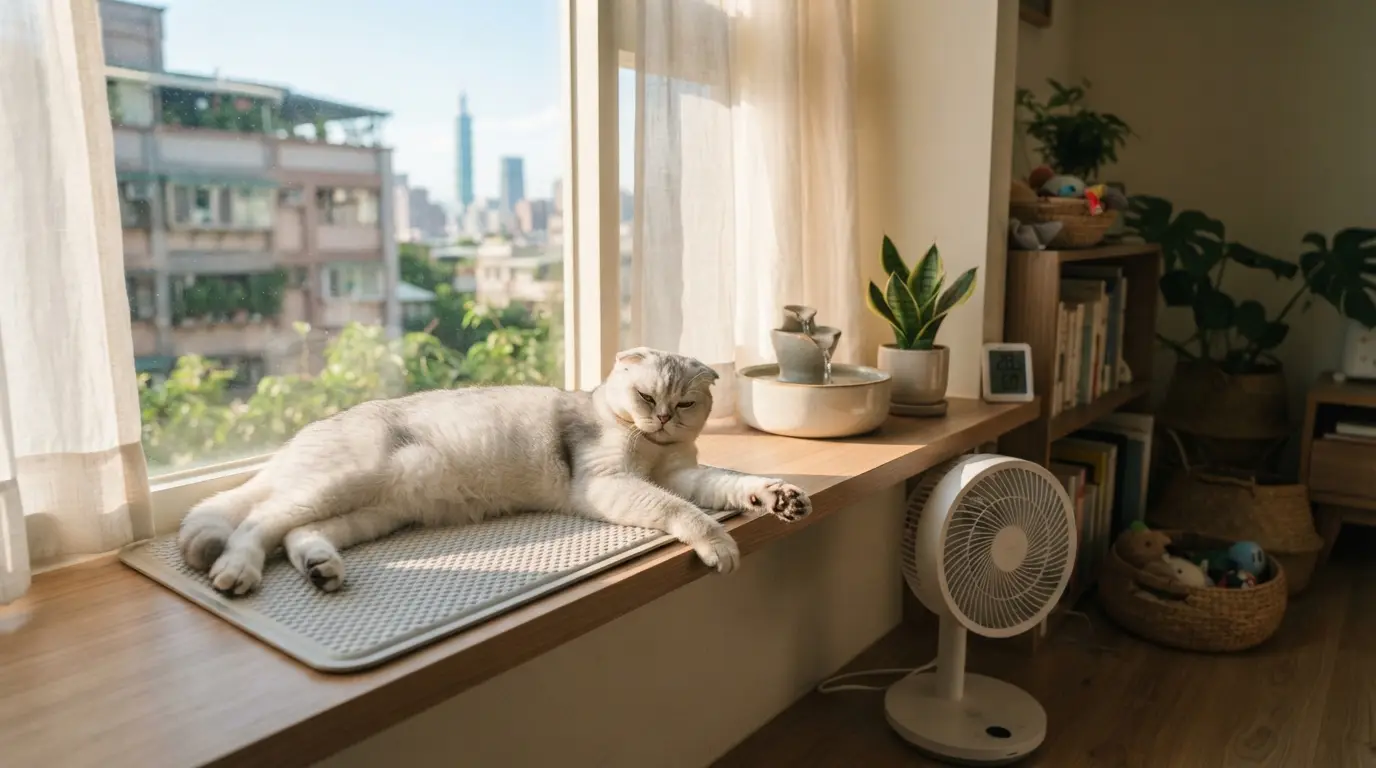
Do cats get hot? Yes, and they accumulate heat much more easily than many owners realize. Cats only have functional sweat glands on their paw pads and nose. Unlike humans, they cannot cool their entire bodies by sweating. When a cat starts panting with its mouth open, it usually means it has exhausted all other cooling methods due to being too hot. Taiwan's high humidity further exacerbates heat dissipation, making it feel hotter than the thermometer indicates. Therefore, our standard in the cattery isn't just about "degrees," but rather a combination of "degrees + % humidity."
Key Takeaways
- A cat's normal body temperature is 38.1–39.2°C (100.5–102.5°F), which is higher than humans. Their comfortable temperature range is actually higher, around 25–30°C (77–86°F). However, they will experience significant difficulty cooling down when temperatures exceed 32°C (90°F) with high humidity (above 70%).
- Cats only have sweat glands on their paw pads and nose. Their primary cooling methods are "conduction by lying on cool surfaces" + "evaporation from licking fur" + "vasodilation in ears." Panting is a last resort, not a regular occurrence.
- For Taiwanese apartments in summer, it's recommended to maintain indoor temperatures between 26–28°C (79–82°F) with relative humidity at 50–60%. If humidity exceeds 70%, using air conditioning or a dehumidifier is advised, even at 28°C.
- Kittens (under 4 months), senior cats (over 10 years), overweight cats (body condition score 7+), flat-faced breeds (Persian, Exotic Shorthair), and cats with heart or respiratory issues have significantly lower heat tolerance. It's recommended to lower the room temperature by an additional 1–2°C (2–4°F) for them.
- When resting, a cat's respiratory rate should be 20–30 breaths per minute. If they are continuously panting at over 40 breaths per minute while inactive, or panting with their mouth open for several minutes without relief, immediate cooling measures and veterinary consultation are necessary.
What is a Cat's Actual Heat Tolerance Temperature?
Let's address a common misconception first: cats naturally have a higher body temperature than humans (38.1–39.2°C or 100.5–102.5°F). Additionally, their ancestors originated from the dry regions of the Middle East, so their "thermoneutral zone" (the temperature range where they don't need to expend extra energy to maintain body temperature) is indeed higher than ours, roughly between 25–30°C (77–86°F). This is why you might feel stuffy in the summer while your cat is happily sleeping belly-up in a sunbeam by the window.
However, "withstanding heat" does not equate to "comfort," let alone "safety." Based on our extensive experience monitoring temperature and humidity in our cattery, we can categorize it as follows:
- 25–28°C (77–82°F): The comfortable range for most healthy adult cats. Activity, eating, and grooming are normal.
- 29–31°C (84–88°F): Behavioral changes may start to appear – they might seek out cool tile floors, lie stretched out, reduce activity, and have a decreased appetite. At this point, the cat is still trying to regulate itself, but it's expending energy.
- 32–35°C (90–95°F): Cooling capacity is nearing its limit. They might start exhibiting rapid, shallow breathing, groom more frequently, and increase water intake. Senior cats, overweight cats, and flat-faced breeds are at risk in this range.
- Above 35°C (95°F) (especially with high humidity and poor ventilation): The risk of heat exhaustion and heatstroke significantly increases. A cat's body temperature exceeding 40°C (104°F) is considered high fever, and above 41°C (105.8°F) can lead to organ damage.
The key issue is that in Taiwan summers, it's rarely "dry heat at 35°C" but rather "32°C with 80% humidity in a poorly ventilated apartment." When humidity is high, evaporative cooling is almost ineffective. The only option left for cats is to "find a cool place to lie down."
Cats Have Limited Cooling Methods, and They Aren't Very Strong
Understanding a cat's cooling methods will help you realize why they are so prone to heat-related problems.
1. Conduction: Lying on Cool Surfaces (Most Important)
This is the most effective and commonly used method for cats. They will seek out tile floors, bathroom tiles, marble, metal table legs, under the bed, or directly in front of a fan. They use their abdomen and the inner sides of their limbs, which have a large surface area, to transfer heat away. So, if you notice your cat moving from beside you to sleep on the hallway floor in the summer, it might not be a change in affection – this article Does My Cat Sleeping Far Away Dislike Me? Consider Trust, Temperature, and Territory First explains how temperature is often misinterpreted.
2. Sweating Through Paw Pads (Very Limited Amount)
Cats' sweat glands are concentrated on their paw pads. When it's hot or they are stressed, you might see small wet footprints on the floor or examination table. However, the amount of heat that can be dissipated through four small paw pads is very limited. The value here is more as a "signal" than for actual "cooling" – seeing wet paw prints indicates they are either hot or stressed.
3. Evaporation from Licking Fur
Cats spread saliva on their fur, and the evaporation of this moisture helps carry heat away. This is effective in dry environments, but in Taiwan's humid monsoon season or during afternoons with 80% humidity, it's almost useless. If you notice your cat grooming significantly more often in the summer and their fur consistently looks damp, they are trying hard to cool down.
4. Vasodilation in Ears and Peripheral Blood Vessels
When hot, cats will dilate the blood vessels in their inner ears and extremities. This increases blood flow closer to the body's surface to dissipate heat, making their ears and limbs feel warm to the touch. Conversely, in winter or when they are unwell, their ears might feel cool. For more information on this, refer to Are My Cat's Cold Ears Normal? Consider Circulation, Weather, and Warning Signs.
5. Panting: Not Normal, It's a Warning Sign
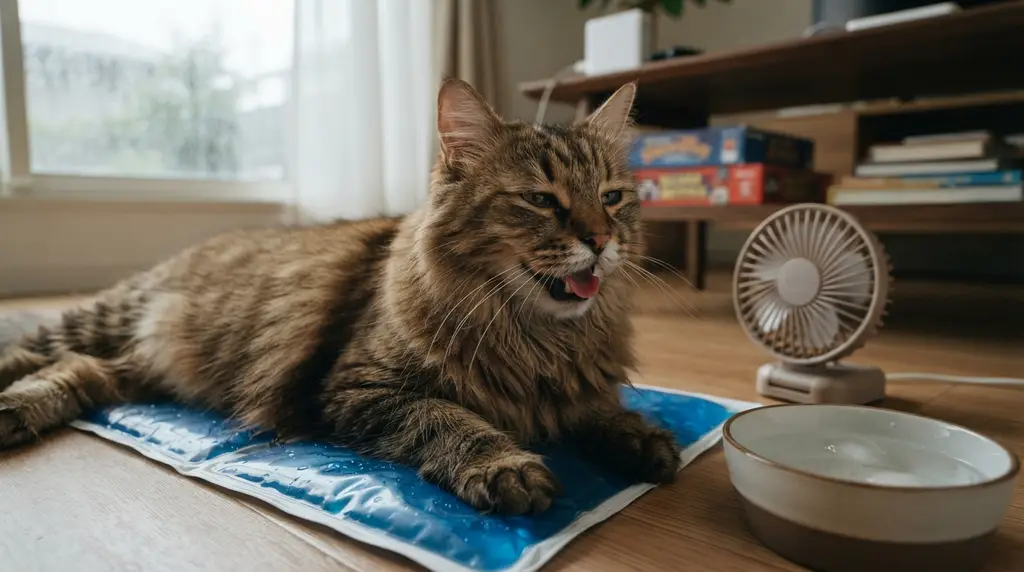
Dogs use panting as a daily cooling tool; cats do not. Healthy cats resting indoors should not be panting with their mouths open. Brief panting (within 1–2 minutes) after intense play is understandable, but continuous panting, accompanied by changes in posture or abnormal gum color, should be treated as an emergency. For detailed judgment, please refer to Is My Cat Panting with Its Tongue Out Due to Heat or Illness? Check Gum Color, Breathing Rate, and 3 Emergency Signs.
Taiwanese Apartment Temperature/Humidity Chart: When Should You Turn on the AC for Your Cat?
This chart is our practical judgment standard used in Banqiao. Common issues in Taiwanese apartments include west-facing windows, top-floor locations, and lack of cross-ventilation, with the peak heat occurring from noon to 3 PM. We recommend placing a thermometer/hygrometer in the location your cat frequents most (not high up on the wall), as the temperature near the floor where cats lie can differ by 2–3°C (4–5°F) from the ceiling.
| Room Temperature | Relative Humidity <60% | Relative Humidity 60–70% | Relative Humidity >70% |
|---|---|---|---|
| Below 26°C (79°F) | Comfortable, maintain ventilation | Comfortable, consider dehumidifier | Dehumidifier recommended |
| 27–28°C (81–82°F) | Generally okay for adult cats | Consider AC or dehumidifier | AC recommended |
| 29–30°C (84–86°F) | Sensitive cats: AC recommended | AC recommended | AC essential |
| 31–32°C (88–90°F) | AC recommended | AC essential | High risk, cool down immediately |
| Above 33°C (91°F) | AC essential | High risk | High risk, monitor closely |
A simple practical rule: **Before leaving home, glance at the thermometer/hygrometer. If the "temperature + humidity" makes you feel stuffy, turn on the air conditioner set to 26–28°C (79–82°F).** You don't need to set the AC to 22°C (72°F) and make your cat shiver; 26–28°C with dehumidification is sufficient. If you're concerned about electricity costs, you can use a timer combined with a circulation fan to keep the cool air flowing on the floor where your cat spends time. However, do not point the fan directly at the cat (cats don't rely on direct airflow for cooling, and direct blowing can make them avoid the area or cause dry eyes).
Our cattery cat rooms are maintained at a constant 25–27°C (77–81°F) with humidity controlled at 55–60%. Each room has an independent thermometer/hygrometer, with readings recorded three times daily (morning, noon, evening). The reason is simple: boarding cats are under stress, which increases their respiratory and heart rates, leading to increased heat production. Therefore, the environment needs to be more stable than at home. For owners who travel in the summer and are hesitant to run the AC all day at home, booking a boarding stay is a safer option. You can also prepare by reviewing Cat Boarding Checklist: Required Vaccinations, Health Certificates, Flea Prevention, and What to Pack.
Not All Cats Are Equally Sensitive to Heat: Differences in Heat Tolerance
Kittens (Under 4 Months)
Their thermoregulation mechanisms are still immature. Their surface area relative to their body weight is large, making them highly susceptible to environmental temperature changes. Furthermore, kittens don't proactively seek cool spots like adult cats; they often sleep in place until they're sweaty. It's recommended to control room temperature between 26–27°C (79–81°F) and ensure their sleeping area isn't in a stuffy cardboard box or a hot, enclosed corner.
Senior Cats (Over 10 Years)
Their cardiopulmonary function, kidney function, and thermoregulation are declining, and their tolerance to dehydration is low. Senior cats often show subtle signs of heat distress, such as "being less active" or "eating a bit less," which can easily be dismissed as "just old age." For cats in this age group, the room temperature should ideally be kept between 25–27°C (77–81°F), and multiple water stations should be provided.
Overweight and Obese Cats (Body Condition Score 7+)
Fat acts as an insulator, and their larger body size reduces their surface area for heat dissipation relative to their mass. They are one of the groups we most frequently see panting in the summer. To determine if your cat is truly overweight, refer to Is My Cat Gaining Weight Just Fat? Check Body Condition Score, Waistline, and 3 Warning Signs to See a Vet.
Flat-Faced and Short-Nosed Breeds (Persian, Exotic Shorthair, Himalayan)
These breeds have shorter nasal passages, often accompanied by narrowed nostrils and an elongated soft palate. Their ability to pant for cooling is inherently poor, and they are more prone to a vicious cycle due to increased airway resistance. At the same 30°C (86°F), a typical short-haired cat might just be lethargic, while a flat-faced cat could already be breathing laboriously. It's recommended to set the room temperature directly to 25–26°C (77–79°F) and avoid moving them, bathing them, or restraining them for extended periods during the hot midday hours.
Long-Haired and Double-Coated Cats (Maine Coon, Ragdoll, Thick-Coated American Shorthair)
Thick fur doesn't necessarily mean they get hotter, but matting, hairballs, and unbrushed undercoats can severely impede air circulation. This is a common issue we deal with in the summer – not shaving, but thoroughly brushing out the undercoat. Whether to shave or not should be considered after reading Does Shaving My Cat in Summer Help Them Cool Down? Consider Fur Insulation, Sunburn, and Skin Risks First. Many cats actually get sunburned or develop skin problems after shaving. If the fur is severely matted and you can't brush it out at home, seeking professional grooming services like ours book grooming is safer than pulling at it forcefully.
Cats with Pre-existing Heart or Respiratory Conditions
The line between "heat" and "illness" is most blurred for these cats. It's recommended to establish a habit of counting their respiratory rate at home (15–25 breaths per minute while sleeping is the normal range) to have a baseline for identifying abnormalities.
How to Cool Your Cat Down at Home: Our Practical Methods
1. Give Them Choices: Provide options in different rooms, at various heights, in shaded and unshaded areas. Cats will naturally choose the most comfortable spot. Avoid confining your cat to a single room (especially bathrooms, balconies, or small enclosed spaces).
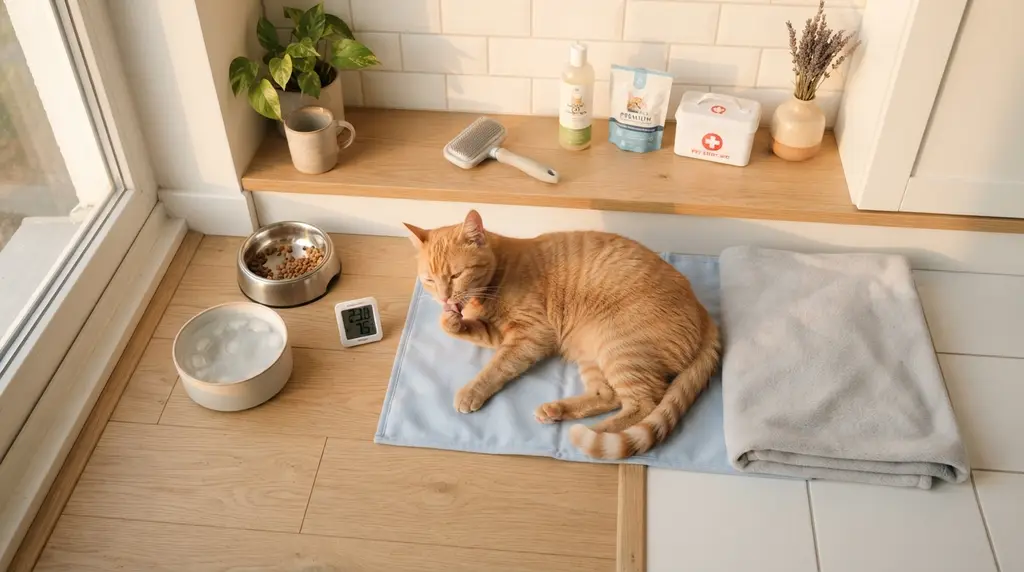
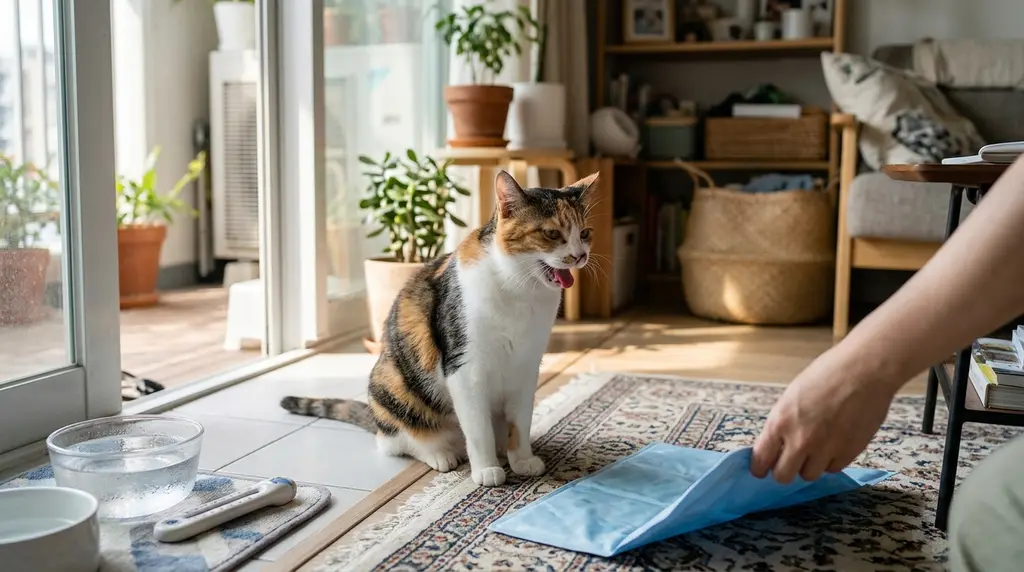
2. Place Cooling Mats Where They Usually Lie: Cats are often hesitant to use new items in new locations. Start by placing them on the tile floors where your cat normally naps.
3. Increase Water Stations and Water "Flow": In summer, we recommend at least 3 water stations, placed away from litter boxes and food bowls. Some cats aren't interested in still water. You might consider Cat Water Fountain Buying Guide: Ease of Cleaning, Water Flow, and Cat Acceptance. The key is easy cleaning, as water bowls can develop biofilm in just two days during summer.
4. Use Wet Food for Hydration: This is the most efficient way to ensure hydration. A can of wet food contains about 75–80% water, far more effective than expecting your cat to drink more plain water. In our cattery, we offer an extra portion of wet food in the summer, especially varieties like Luxury Functional Cans with plenty of broth, which cats usually consume entirely.
5. Hydration Snacks: Small portions of seedless watermelon can serve as a hydrating summer treat, but portion control is essential. Refer to How to Feed Watermelon to Cats Safely: Summer Portions, Seed Removal, and 3 Things to Watch Out For for details.
6. Check Hidden Heat Spots: Cardboard boxes, cat carriers, cat scratch houses, and areas near electronics (behind routers or TVs) can become ovens in the summer. Remember to feel these spots for temperature.
When to Act Immediately and When to Seek Veterinary Care
Cool down first, then transport to the vet – do both simultaneously. Cooling methods include wiping the abdomen, armpits, paw pads, and ears with a room-temperature (not ice-cold) damp towel, using a fan to enhance evaporation, and moving the cat to an air-conditioned room. Absolutely avoid applying ice packs directly or immersing the cat in ice water, as rapid vasoconstriction can hinder heat dissipation.
If any of the following symptoms appear, do not delay:
- Continuous open-mouth panting while resting, with no improvement after 5 minutes in a cool area.
- Gums or tongue color turning dark red, brick red, pale, or purplish.
- Excessive drooling, vomiting, or diarrhea.
- Inability to stand steadily, wobbly gait, lack of response to calls, or seizures.
- Breathing appears labored, with noticeable abdominal movement (compare with Is My Cat's Abdominal Breathing Normal? Check Respiratory Rate, Effort Location, and Warning Signs).
Detailed information on the three stages of warning signs and immediate home care measures can be found in What Are the Early Warning Signs of Cat Heatstroke? Check Gum Color, Panting, and Collapse in Three Stages – Every Second Counts. For a comprehensive guide to summer care, including cooling, hydration, outdoor safety, and choosing a cattery, read Do Cats Get Hot? Heatstroke Signs, Panting, and a Complete Summer Cooling Guide.
Disclaimer: This article shares care experience and cannot replace veterinary diagnosis. If symptoms persist, worsen rapidly, or you are unsure, please contact your veterinarian immediately.
Frequently Asked Questions
At what temperature should I turn on the air conditioning for my cat?
Given Taiwan's humidity, it's recommended to turn on the AC or use a dehumidifier when the room temperature exceeds 28°C (82°F). Setting it to 26–28°C (79–82°F) is sufficient; it doesn't need to be very cold. If you have kittens, senior cats (over 10 years), overweight cats, or flat-faced breeds, it's advisable to turn on the AC earlier, around 27°C (81°F), and maintain humidity below 60%.
Is just using a fan or dehumidifier enough?
Cats primarily rely on conduction and evaporation for cooling, benefiting less from direct airflow than humans. Therefore, relying solely on a fan in a poorly ventilated room above 30°C (86°F) is usually insufficient. A dehumidifier can effectively lower perceived temperature and improve evaporative cooling efficiency. It's a good option when the temperature is only 27–28°C (81–82°F) but humidity is high. However, once the temperature exceeds 30°C (86°F), air conditioning becomes necessary.
What temperature is considered dangerous for cats' heat tolerance?
When the ambient temperature is above 32°C (90°F) and humidity is above 70%, most cats are nearing their cooling limit. A cat's body temperature exceeding 40°C (104°F) is considered a high fever, and above 41°C (105.8°F) carries a risk of organ damage. Since measuring rectal temperature at home is inconvenient, it's better to rely on behavioral indicators: continuous panting while resting, changes in gum color, or unsteadiness require immediate intervention.
Will shaving my cat in the summer make them cooler?
Not necessarily, and it carries risks. Fur provides both insulation and sun protection. Shaving too short can lead to sunburn and skin sensitivity. Long-haired cats may also experience changes in fur quality or difficulty regrowing their coat. What's truly beneficial is thoroughly brushing out the undercoat and removing mats, with localized trimming (belly, rear, armpits) if necessary, rather than full-body shaving.
When cats are hot, they find cool places themselves; do I need to intervene?
Yes, because cats can only "choose" if you provide options. Ensure they have free access to at least two spaces with different temperatures, access to tile or cooling mats, and fresh water readily available at all times. Avoid confining cats to bathrooms, balconies, or small enclosed rooms. Senior cats and kittens have weaker self-regulation abilities and require more proactive environmental preparation.
Article by the CatGarden Editorial Team
CatGarden offers curated supplies, cat boarding, and grooming
Book services or shop online.