Is a Cat's Weight Gain Always Fat? Check Body Condition Score, Waistline, and 3 Warning Signs for Vet Visits

A rounder cat doesn't necessarily mean fat: First, distinguish between weight gain, body condition, and swelling. Many owners notice their cat's weight steadily increasing and immediately assume it's due to overeating and becoming fat. However, weight gain doesn't always equate to increased body fat; it could also be related to muscle mass, ascites, edema, or even certain diseases.
CatGarden Editorial TeamPublished 2026/06/02Updated 2026/10/06
Physiological Health Management
Is a Cat's Weight Gain Always Fat? Check Body Condition Score, Waistline, and 3 Warning Signs for Vet Visits

Key takeaways

  • A cat's weight gain doesn't always mean more fat; it could be due to increased muscle mass, fluid buildup (ascites or edema), or certain illnesses. When assessing, observe body condition alongside weight, not just the number on the scale.
  • The Body Condition Score (BCS) commonly used by veterinarians is typically a 9-point scale, with scores of 4 to 5 generally considered ideal.
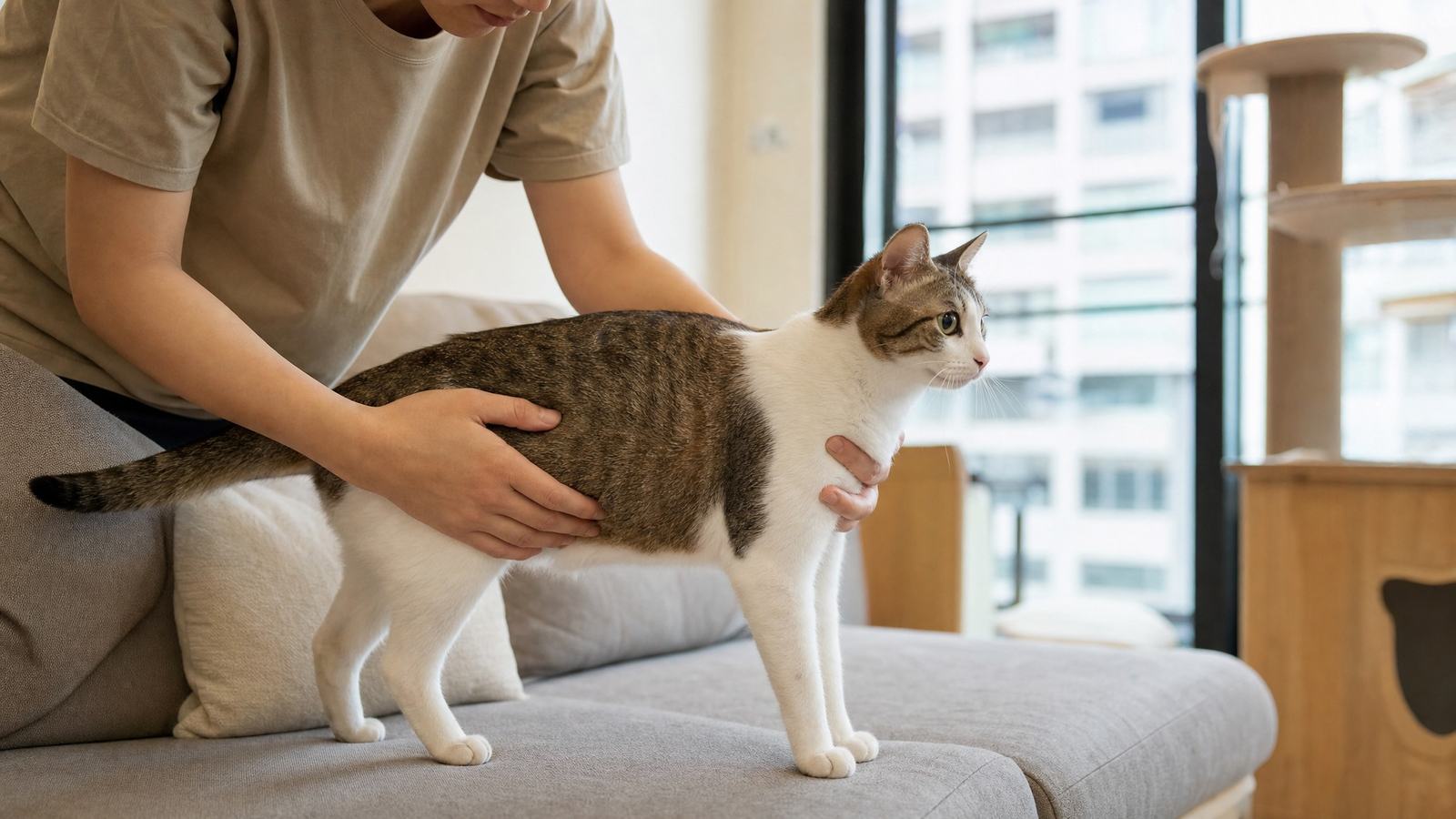
  • To determine ideal body condition: you should be able to feel the ribs with only a thin layer of fat over them, there should be a visible waist tuck when viewed from above, and the abdomen should appear slightly lifted when viewed from the side. If you have to press hard to feel the ribs, it indicates excessive fat accumulation.
  • There are 3 warning signs that require immediate veterinary attention: sudden abdominal distension that feels tight to the touch, changes in weight or appearance accompanied by lethargy (hiding, fluctuating appetite, rapid breathing), and asymmetrical swelling in the limbs, face, or specific body parts.
  • Chronic obesity in cats increases the risk of diabetes (excess body fat impairs insulin sensitivity), puts stress on joints and the spine, makes grooming difficult in the hindquarters, tail base, and lower abdomen, and can affect litter box usage and hygiene.

A Rounder Cat Doesn't Always Mean Fat: First, Distinguish Between Weight Gain, Body Condition, and Swelling

Many owners notice their cat's weight steadily increasing and immediately assume it's due to overeating and becoming fat. However, weight gain doesn't always equate to increased body fat; it could also be related to muscle mass, ascites, edema, or even certain diseases. When assessing, don't just look at the number on the scale; you also need to observe changes in your cat's body condition.

Especially for indoor cats in Taiwan's small apartments with limited activity, changes in their physique can be slow, making it difficult for owners who see them daily to notice. By the time you suddenly think, "Wow, they've gotten so big," they might have been overweight for a while. Instead of just looking at the kilograms, it's more practical to regularly feel their ribs, check their waistline, and record their food intake and bowel movements.

Weight Gain, Increased Body Fat, and Swelling Look Different

If it's simply weight gain, you'll typically see a gradual disappearance of the waistline, a sagging abdomen, and ribs that become difficult to feel. These changes usually happen progressively, with normal appetite and energy levels. In other words, the cat's body condition will appear "overall rounder."

However, if it's edema or abnormal abdominal distension, the appearance might change in a short period. It might not feel like thick fat but rather tight and bloated. If this is accompanied by shortness of breath, lethargy, decreased appetite, or unusual gait, it's not recommended to try self-imposed dieting. First, understand the cause to avoid mistaking a condition requiring veterinary attention for simple obesity.

How to Assess Your Cat's Body Condition Score? Quickly Judge Using Ribs, Waistline, and Abdominal Fat Pad

Veterinarians commonly use the Body Condition Score (BCS), which simply assesses whether a cat is underweight, ideal, or overweight based on appearance and touch. Most clinics use a 9-point scale, with 4 to 5 points typically falling within the ideal range. While owners don't need to score precisely at home, you can quickly grasp changes in your cat's body condition by focusing on a few key points.

When assessing, it's recommended to observe your cat standing and relaxed, not just when they are lying down. Long-haired cats, due to their fluffy fur, are particularly prone to misjudgment, so it's essential to feel them rather than just look. Recording once a month is more effective than waiting until they've become significantly overweight.

First, Feel the Ribs: Palpable but Not Protruding is Ideal

Gently place your hand on your cat's chest side and slowly feel the ribs. If you can feel the ribs with only a thin layer of fat covering them, it's usually considered ideal. If you have to press hard to feel them, it often indicates excessive fat accumulation, and your cat's body condition may be starting to trend towards overweight.

Conversely, if the ribs are very prominent with almost no fat coverage, or if the waist appears noticeably sunken, they might be underweight. Both underweight and overweight are not ideal. Senior cats, in particular, should be monitored for muscle loss. The key to body condition assessment isn't being thinner but maintaining balance.

Next, Look at the Waistline and Abdominal Fat Pad

Looking from above, an ideal cat should have a slight inward curve at the waist behind the ribs, not a uniform roundness like a barrel. Looking from the side, the abdomen should be slightly tucked up, not hanging down in a large mass. These are very practical ways to observe your cat's body condition.

Additionally, many owners mistake the wobbly flesh on the abdomen for definite fat. In reality, some cats naturally have an abdominal fat pad, commonly known as the primordial pouch. A normal primordial pouch doesn't indicate obesity, but if it's combined with a disappearing waistline, undetectable ribs, and overall roundness, it's more likely true overweight.

What Changes Aren't Just About Gaining Weight? 3 Warning Signs Requiring Prompt Veterinary Consultation

Some appearances that look like "weight gain" aren't actually just increased body fat. If owners only focus on reducing food intake, they might delay diagnosis. The following 3 situations, if they occur, warrant prompt discussion with your veterinarian.

Especially if your cat's body condition has been stable and suddenly changes within days or weeks, you need to be extra vigilant. True obesity usually accumulates slowly and doesn't change drastically overnight.

1. Abdomen Suddenly Swollen and Feels Tight

If the abdominal girth increases significantly, and it feels tight and bloated rather than soft and fatty, it shouldn't be treated as simple weight gain. This could be related to ascites, organ enlargement, or other internal medical issues. Especially if your cat finds it difficult even to jump onto the sofa, seek veterinary care immediately.

2. Weight Gain or Appearance Change Accompanied by Lethargy

Normally overweight cats will still eat, sleep, and seek affection. If your cat, in addition to changes in appearance, shows lethargy, hides, has fluctuating appetite, or even rapid breathing, it's not something to just observe. This situation indicates that the problem might not just be with the cat's body condition but with their overall health.

3. Swelling in Limbs, Face, or Localized Body Parts

Obesity usually results in overall roundness, not localized swelling. If you notice swelling in the cheeks, limbs, or specific body parts, and it feels strange when pressed, or is noticeably asymmetrical, it's best to consult a veterinarian directly. Localized swelling can be related to inflammation, injury, allergies, or other diseases, and is not suitable for self-diagnosis.

What Risks Does Obesity Pose for Cats? From Diabetes and Joint Issues to Grooming Difficulties

When a cat's body condition is chronically overweight or obese, it affects more than just their appearance. Excess fat increases the metabolic burden on the body, making indoor cats, who already have low activity levels, even less inclined to move. Over time, this can create a cycle of "the fatter they get, the less they move; the less they move, the fatter they get."

One of the most commonly mentioned risks is diabetes. High body fat can affect insulin sensitivity, making blood sugar regulation more challenging. This is especially true for middle-aged to senior cats who are already noticeably plump; regular health check-ups and weight monitoring are recommended.

Increased Joint Burden, Decreased Activity

Although cats are skilled at jumping, their joints and spine bear increased pressure with weight gain. Some cats aren't lazy; they avoid jumping up and down because it's uncomfortable, so they start staying in one place. Owners often mistake this for age-related decline, but it could also be related to overweight body condition.

Furthermore, very overweight cats find grooming difficult, especially in the hindquarters, base of the tail, and lower abdomen, which are the hardest areas to reach. If these areas are not cleaned properly long-term, it can lead to matting, greasy skin, increased dander, or even feces sticking to the fur. In Taiwan's humid and hot climate, skin problems can be exacerbated.

Urinary Health, Hygiene, and Quality of Life Can Also Be Affected

Overweight cats may find it difficult to get in and out of the litter box cleanly. If the litter box is too small or too high, it might even reduce their willingness to use it. Insufficient activity, low water intake, and poor metabolism can also make urinary care more critical. These issues may not appear immediately but will affect their quality of life in the long run.

Want Your Cat to Lose Weight? Don't Rush to Feed Less: How to Adjust Diet, Treats, and Activity Levels

Seeing weight gain, many people's first reaction is to cut their food portion in half. However, this isn't always safe. If a cat's calorie intake drops too quickly, it can pose health risks, especially for already overweight cats. A more stable approach is to first confirm the current cat's body condition, record their actual daily intake, and then discuss target weight with your veterinarian.

The key to weight loss isn't "starving them thin" but adjusting calorie density, eating habits, and daily energy expenditure. If multiple people in the household feed the cat, it's crucial to standardize portions first; otherwise, you might be reducing one moment and secretly adding more the next. As long as the approach is consistent, many cats can gradually return to their ideal body condition with minimal discomfort.

Weigh Food First, Don't Guess with Treats

Instead of estimating, use an electronic scale to weigh each meal's kibble. This is more accurate than using a measuring cup. Treats, pâté, and wet food additions should also be factored into the total calorie count; otherwise, even if the main food is reduced, the total intake might still be excessive. If switching to a weight-management formula, gradual transition is recommended to avoid digestive upset.

If your cat is very good at begging for food, you can divide their daily portion into multiple smaller meals or use puzzle toys and slow feeders to prolong eating time. This not only controls calories but also increases activity and stimulation. For urban indoor cats, this is a more sustainable method than simply "giving a little less."

Increase Activity, Start with What the Cat is Willing to Do

Some cats become less active after gaining weight, which doesn't mean they don't want to play; it means the play style is wrong. Wand toys, treat-dispensing toys, and well-designed cat trees can encourage them to take more steps and stretch more often. 10 to 15 minutes of interactive play daily is more beneficial than occasional long play sessions.

If you are assessing whether your cat's body condition is overweight, you can also check if the size of their bowls, toys, and litter box is appropriate. When their care items are convenient to use, owners are more likely to consistently manage their weight. To help your cat establish a more comfortable daily routine, you can start by choosing practical cat supplies, such as food measuring tools, slow feeders, interactive toys, and easy-to-clean household items, which can make care easier.

FAQ

How Much Weight Gain is Abnormal for a Cat?

If there's significant weight gain in a short period, or rapid changes in appearance, it's advisable to be vigilant. Looking at the number alone isn't always accurate; it's best to observe in conjunction with cat's body condition, appetite, energy levels, and bowel movements. If they suddenly become rounder within a few weeks, it's best to consult a veterinarian directly.

Long-haired Cats Look Fluffy, How to Tell if They're Fat?

You can't just visually assess long-haired cats; you must feel their ribs, check their waistline, and abdominal contour. Many cats with thick fur are actually of normal weight, but some are obese and it's hidden by their fur. Checking while grooming regularly is the easiest habit to form.

Does a Cat Having a Little Belly Mean They're Overweight?

Not necessarily. Some cats naturally have an abdominal fat pad, also known as a primordial pouch, which sways slightly when they walk. Whether to worry depends on the overall cat's body condition, such as whether the waistline has disappeared or the ribs are undetectable.

Can I Just Reduce My Cat's Food Intake Myself for Weight Loss?

It's not recommended to drastically reduce food intake all at once. A rapid decrease in calories can lead to health risks, especially for overweight cats. A safer approach is to first record their current intake and then discuss the rate of weight loss and dietary adjustments with your veterinarian.

How Often is it Best to Weigh My Cat?

It's generally recommended to weigh them once a month. If they are on a weight loss plan or have health issues, you can track more frequently as advised by your veterinarian. In addition to weight, also record food intake, activity levels, and cat's body condition photos to better track changes.

Further Reading

CatGarden offers curated supplies, cat boarding, and grooming

Book services or shop online.
Back

Blog

Is a Cat's Weight Gain Always Fat? Check Body Condition Score, Waistline, and 3 Warning Signs for Vet Visits

CatGarden Editorial TeamPublished 2026/06/02Updated 2026/10/06
Physiological Health Management
Is a Cat's Weight Gain Always Fat? Check Body Condition Score, Waistline, and 3 Warning Signs for Vet Visits

Key takeaways

  • A cat's weight gain doesn't always mean more fat; it could be due to increased muscle mass, fluid buildup (ascites or edema), or certain illnesses. When assessing, observe body condition alongside weight, not just the number on the scale.
  • The Body Condition Score (BCS) commonly used by veterinarians is typically a 9-point scale, with scores of 4 to 5 generally considered ideal.
  • To determine ideal body condition: you should be able to feel the ribs with only a thin layer of fat over them, there should be a visible waist tuck when viewed from above, and the abdomen should appear slightly lifted when viewed from the side. If you have to press hard to feel the ribs, it indicates excessive fat accumulation.
  • There are 3 warning signs that require immediate veterinary attention: sudden abdominal distension that feels tight to the touch, changes in weight or appearance accompanied by lethargy (hiding, fluctuating appetite, rapid breathing), and asymmetrical swelling in the limbs, face, or specific body parts.
  • Chronic obesity in cats increases the risk of diabetes (excess body fat impairs insulin sensitivity), puts stress on joints and the spine, makes grooming difficult in the hindquarters, tail base, and lower abdomen, and can affect litter box usage and hygiene.

A Rounder Cat Doesn't Always Mean Fat: First, Distinguish Between Weight Gain, Body Condition, and Swelling

Many owners notice their cat's weight steadily increasing and immediately assume it's due to overeating and becoming fat. However, weight gain doesn't always equate to increased body fat; it could also be related to muscle mass, ascites, edema, or even certain diseases. When assessing, don't just look at the number on the scale; you also need to observe changes in your cat's body condition.

Especially for indoor cats in Taiwan's small apartments with limited activity, changes in their physique can be slow, making it difficult for owners who see them daily to notice. By the time you suddenly think, "Wow, they've gotten so big," they might have been overweight for a while. Instead of just looking at the kilograms, it's more practical to regularly feel their ribs, check their waistline, and record their food intake and bowel movements.

Weight Gain, Increased Body Fat, and Swelling Look Different

If it's simply weight gain, you'll typically see a gradual disappearance of the waistline, a sagging abdomen, and ribs that become difficult to feel. These changes usually happen progressively, with normal appetite and energy levels. In other words, the cat's body condition will appear "overall rounder."

However, if it's edema or abnormal abdominal distension, the appearance might change in a short period. It might not feel like thick fat but rather tight and bloated. If this is accompanied by shortness of breath, lethargy, decreased appetite, or unusual gait, it's not recommended to try self-imposed dieting. First, understand the cause to avoid mistaking a condition requiring veterinary attention for simple obesity.

How to Assess Your Cat's Body Condition Score? Quickly Judge Using Ribs, Waistline, and Abdominal Fat Pad

Veterinarians commonly use the Body Condition Score (BCS), which simply assesses whether a cat is underweight, ideal, or overweight based on appearance and touch. Most clinics use a 9-point scale, with 4 to 5 points typically falling within the ideal range. While owners don't need to score precisely at home, you can quickly grasp changes in your cat's body condition by focusing on a few key points.

When assessing, it's recommended to observe your cat standing and relaxed, not just when they are lying down. Long-haired cats, due to their fluffy fur, are particularly prone to misjudgment, so it's essential to feel them rather than just look. Recording once a month is more effective than waiting until they've become significantly overweight.

First, Feel the Ribs: Palpable but Not Protruding is Ideal

Gently place your hand on your cat's chest side and slowly feel the ribs. If you can feel the ribs with only a thin layer of fat covering them, it's usually considered ideal. If you have to press hard to feel them, it often indicates excessive fat accumulation, and your cat's body condition may be starting to trend towards overweight.

Conversely, if the ribs are very prominent with almost no fat coverage, or if the waist appears noticeably sunken, they might be underweight. Both underweight and overweight are not ideal. Senior cats, in particular, should be monitored for muscle loss. The key to body condition assessment isn't being thinner but maintaining balance.

Next, Look at the Waistline and Abdominal Fat Pad

Looking from above, an ideal cat should have a slight inward curve at the waist behind the ribs, not a uniform roundness like a barrel. Looking from the side, the abdomen should be slightly tucked up, not hanging down in a large mass. These are very practical ways to observe your cat's body condition.

Additionally, many owners mistake the wobbly flesh on the abdomen for definite fat. In reality, some cats naturally have an abdominal fat pad, commonly known as the primordial pouch. A normal primordial pouch doesn't indicate obesity, but if it's combined with a disappearing waistline, undetectable ribs, and overall roundness, it's more likely true overweight.

What Changes Aren't Just About Gaining Weight? 3 Warning Signs Requiring Prompt Veterinary Consultation

Some appearances that look like "weight gain" aren't actually just increased body fat. If owners only focus on reducing food intake, they might delay diagnosis. The following 3 situations, if they occur, warrant prompt discussion with your veterinarian.

Especially if your cat's body condition has been stable and suddenly changes within days or weeks, you need to be extra vigilant. True obesity usually accumulates slowly and doesn't change drastically overnight.

1. Abdomen Suddenly Swollen and Feels Tight

If the abdominal girth increases significantly, and it feels tight and bloated rather than soft and fatty, it shouldn't be treated as simple weight gain. This could be related to ascites, organ enlargement, or other internal medical issues. Especially if your cat finds it difficult even to jump onto the sofa, seek veterinary care immediately.

2. Weight Gain or Appearance Change Accompanied by Lethargy

Normally overweight cats will still eat, sleep, and seek affection. If your cat, in addition to changes in appearance, shows lethargy, hides, has fluctuating appetite, or even rapid breathing, it's not something to just observe. This situation indicates that the problem might not just be with the cat's body condition but with their overall health.

3. Swelling in Limbs, Face, or Localized Body Parts

Obesity usually results in overall roundness, not localized swelling. If you notice swelling in the cheeks, limbs, or specific body parts, and it feels strange when pressed, or is noticeably asymmetrical, it's best to consult a veterinarian directly. Localized swelling can be related to inflammation, injury, allergies, or other diseases, and is not suitable for self-diagnosis.

What Risks Does Obesity Pose for Cats? From Diabetes and Joint Issues to Grooming Difficulties

When a cat's body condition is chronically overweight or obese, it affects more than just their appearance. Excess fat increases the metabolic burden on the body, making indoor cats, who already have low activity levels, even less inclined to move. Over time, this can create a cycle of "the fatter they get, the less they move; the less they move, the fatter they get."

One of the most commonly mentioned risks is diabetes. High body fat can affect insulin sensitivity, making blood sugar regulation more challenging. This is especially true for middle-aged to senior cats who are already noticeably plump; regular health check-ups and weight monitoring are recommended.

Increased Joint Burden, Decreased Activity

Although cats are skilled at jumping, their joints and spine bear increased pressure with weight gain. Some cats aren't lazy; they avoid jumping up and down because it's uncomfortable, so they start staying in one place. Owners often mistake this for age-related decline, but it could also be related to overweight body condition.

Furthermore, very overweight cats find grooming difficult, especially in the hindquarters, base of the tail, and lower abdomen, which are the hardest areas to reach. If these areas are not cleaned properly long-term, it can lead to matting, greasy skin, increased dander, or even feces sticking to the fur. In Taiwan's humid and hot climate, skin problems can be exacerbated.

Urinary Health, Hygiene, and Quality of Life Can Also Be Affected

Overweight cats may find it difficult to get in and out of the litter box cleanly. If the litter box is too small or too high, it might even reduce their willingness to use it. Insufficient activity, low water intake, and poor metabolism can also make urinary care more critical. These issues may not appear immediately but will affect their quality of life in the long run.

Want Your Cat to Lose Weight? Don't Rush to Feed Less: How to Adjust Diet, Treats, and Activity Levels

Seeing weight gain, many people's first reaction is to cut their food portion in half. However, this isn't always safe. If a cat's calorie intake drops too quickly, it can pose health risks, especially for already overweight cats. A more stable approach is to first confirm the current cat's body condition, record their actual daily intake, and then discuss target weight with your veterinarian.

The key to weight loss isn't "starving them thin" but adjusting calorie density, eating habits, and daily energy expenditure. If multiple people in the household feed the cat, it's crucial to standardize portions first; otherwise, you might be reducing one moment and secretly adding more the next. As long as the approach is consistent, many cats can gradually return to their ideal body condition with minimal discomfort.

Weigh Food First, Don't Guess with Treats

Instead of estimating, use an electronic scale to weigh each meal's kibble. This is more accurate than using a measuring cup. Treats, pâté, and wet food additions should also be factored into the total calorie count; otherwise, even if the main food is reduced, the total intake might still be excessive. If switching to a weight-management formula, gradual transition is recommended to avoid digestive upset.

If your cat is very good at begging for food, you can divide their daily portion into multiple smaller meals or use puzzle toys and slow feeders to prolong eating time. This not only controls calories but also increases activity and stimulation. For urban indoor cats, this is a more sustainable method than simply "giving a little less."

Increase Activity, Start with What the Cat is Willing to Do

Some cats become less active after gaining weight, which doesn't mean they don't want to play; it means the play style is wrong. Wand toys, treat-dispensing toys, and well-designed cat trees can encourage them to take more steps and stretch more often. 10 to 15 minutes of interactive play daily is more beneficial than occasional long play sessions.

If you are assessing whether your cat's body condition is overweight, you can also check if the size of their bowls, toys, and litter box is appropriate. When their care items are convenient to use, owners are more likely to consistently manage their weight. To help your cat establish a more comfortable daily routine, you can start by choosing practical cat supplies, such as food measuring tools, slow feeders, interactive toys, and easy-to-clean household items, which can make care easier.

FAQ

How Much Weight Gain is Abnormal for a Cat?

If there's significant weight gain in a short period, or rapid changes in appearance, it's advisable to be vigilant. Looking at the number alone isn't always accurate; it's best to observe in conjunction with cat's body condition, appetite, energy levels, and bowel movements. If they suddenly become rounder within a few weeks, it's best to consult a veterinarian directly.

Long-haired Cats Look Fluffy, How to Tell if They're Fat?

You can't just visually assess long-haired cats; you must feel their ribs, check their waistline, and abdominal contour. Many cats with thick fur are actually of normal weight, but some are obese and it's hidden by their fur. Checking while grooming regularly is the easiest habit to form.

Does a Cat Having a Little Belly Mean They're Overweight?

Not necessarily. Some cats naturally have an abdominal fat pad, also known as a primordial pouch, which sways slightly when they walk. Whether to worry depends on the overall cat's body condition, such as whether the waistline has disappeared or the ribs are undetectable.

Can I Just Reduce My Cat's Food Intake Myself for Weight Loss?

It's not recommended to drastically reduce food intake all at once. A rapid decrease in calories can lead to health risks, especially for overweight cats. A safer approach is to first record their current intake and then discuss the rate of weight loss and dietary adjustments with your veterinarian.

How Often is it Best to Weigh My Cat?

It's generally recommended to weigh them once a month. If they are on a weight loss plan or have health issues, you can track more frequently as advised by your veterinarian. In addition to weight, also record food intake, activity levels, and cat's body condition photos to better track changes.

Further Reading

One email a month of cat-care tips

Hand-picked care, behavior and grooming tips once a month. Subscribe and we will send you our three most-read articles right away.

Keep reading