Cat Panting with Tongue Out: Too Hot or Sick? Check Gum Color, Respiratory Rate, and 3 Emergency Signs
Unlike dogs, cats don't pant to cool down. Open-mouth breathing with the tongue out is usually abnormal. Learn to check gum color and respiratory rate to distinguish heatstroke, stress, or cardiopulmonary disease, and identify 3 emergency warning signs.
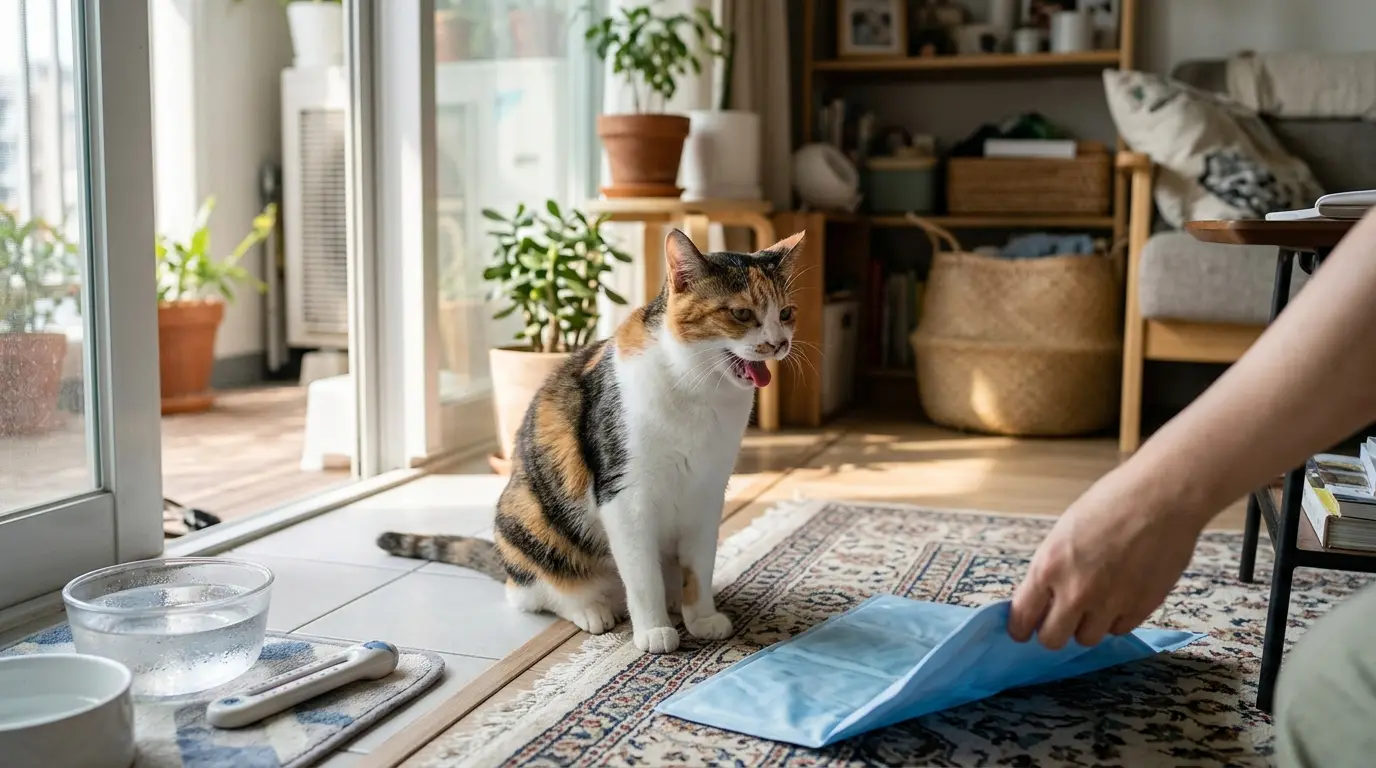
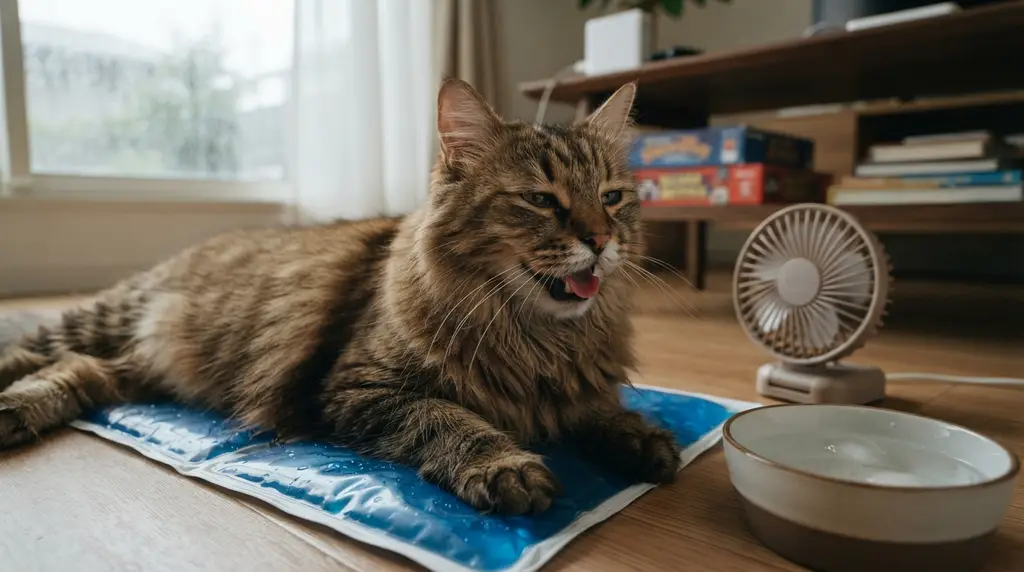
A cat panting with its tongue out is almost always an abnormal sign. Unlike dogs, cats rarely pant to cool down. Therefore, seeing your cat with its tongue out and mouth open usually indicates it's experiencing extreme heat, intense stress, or has a heart or lung issue. The first thing you should do is gently lift its lips to check its gum color and count its breaths per minute.
In this article, we'll use real-life cases from our clinic to help you determine whether your cat's panting is something you can monitor or requires an immediate trip to the emergency vet.
Key Takeaways
- Cats primarily cool down through their paw pads, skin, and grooming. They do not typically pant with their mouths open to regulate temperature like dogs. Therefore, panting with the tongue out is inherently a warning sign.
- A healthy cat at rest has a respiratory rate of about 20-30 breaths per minute. Consistently exceeding 40 breaths per minute or breathing with an open mouth is abnormal.
- Healthy gums should be a vibrant pink. Gums that are brick red, pale, or bluish-purple (cyanotic) require immediate veterinary attention.
- High-risk temperatures for heatstroke are above 30-32°C (86-90°F) in poorly ventilated areas. A cat's body temperature exceeding 40°C (104°F) indicates heatstroke, which can be fatal.
- If panting persists after 5-10 minutes of rest, is accompanied by gum discoloration, or the cat is unsteady on its feet, it's a critical emergency requiring immediate transport to a vet.
Why is Cat Panting with Tongue Out Usually Abnormal?
Many owners see their cats breathing with their mouths open and assume it's similar to dogs panting to cool off. This is a common misconception.
Cats have very different cooling mechanisms than dogs. Cats primarily cool down by sweating through their paw pads, dissipating heat through their skin, and licking their fur to allow evaporation. They don't rely on open-mouth panting. A healthy cat in a normal room temperature, even after vigorous play, will usually just have slightly faster breathing and slightly open nostrils, rarely extending its tongue to pant deeply.
Therefore, our principle at the clinic is simple: If a cat is persistently panting with its tongue out and mouth open, we treat it as an abnormality first and then investigate the cause, rather than assuming it's "just hot."
The Only Relatively "Acceptable" Brief Panting
There's one scenario that's relatively benign: after intense exercise, extreme excitement, or a vigorous chase, a cat might briefly pant with its mouth open for tens of seconds to a minute or two. The key is that they should return to breathing with their mouth closed and through their nose after a few minutes of rest. If the panting continues after resting, it's not just "tired from playing."
Step 1: Check Gum Color
The quickest and most crucial way to assess your cat's panting is by checking its gum color (oral mucous membranes). This is the first thing we do when a cat arrives at our clinic exhibiting panting.
Gently lift the upper lip and examine the gums where they meet the upper teeth:
- Healthy Pink: Indicates normal circulation and oxygenation. Proceed to observe other indicators.
- Brick Red, Deep Red: Commonly seen in heatstroke or hyperthermia, indicating vasodilation. This is dangerous.
- Pale, Whitish: May indicate anemia, shock, or low blood pressure. This is dangerous.
- Bluish-Purple, Grayish (Cyanotic): Signifies severe oxygen deprivation, usually indicative of a cardiac or pulmonary emergency. There is almost no room for observation; go directly to the emergency room.
You can also gently press on the gum. After releasing pressure, it should return to pink within 1-2 seconds (capillary refill time). If it takes longer than 2 seconds, it indicates a circulatory problem.
> Clinic Tip: When your cat is relaxed and calm, take the opportunity to note what its healthy gum color looks like. This will give you a baseline for comparison if something goes wrong.
Step 2: Count Respiratory Rate
Just observing panting isn't enough; respiratory rate is a very objective measure. The method is simple: when your cat is resting or sleeping, observe its chest or abdominal movements. One rise and fall counts as one breath. Count for 15 seconds and multiply by 4, or count for a full minute.
- Resting Respiratory Rate: 20-30 breaths/minute: Normal range.
- Consistently over 40 breaths/minute: Elevated rate, requires monitoring and recording.
- Obvious open-mouth breathing, forceful breaths, or abdominal effort: Abnormal, especially when accompanied by tongue protrusion, requiring heightened vigilance.
If you notice your cat's abdomen visibly contracting with each breath rather than its chest rising, this is called labored abdominal breathing and often indicates a problem with the respiratory tract or chest cavity. For a guide on how to accurately assess this at home, see: Is Cat Abdominal Breathing Normal? Check Respiratory Rate, Effort, and Warning Signs.
Distinguishing Three Common Causes
Cat panting with its tongue out most commonly corresponds to these three categories. Use a combination of "scenario + gum color + whether it resolves with rest" for diagnosis.
1. Heatstroke / Overheating
Most common in summer. Occurs when ambient temperatures exceed 30-32°C (86-90°F) in poorly ventilated areas (e.g., closed rooms, stuffy cars, sun-drenched balconies, or prolonged confinement in carriers). If a cat cannot dissipate heat effectively, it will begin to pant.
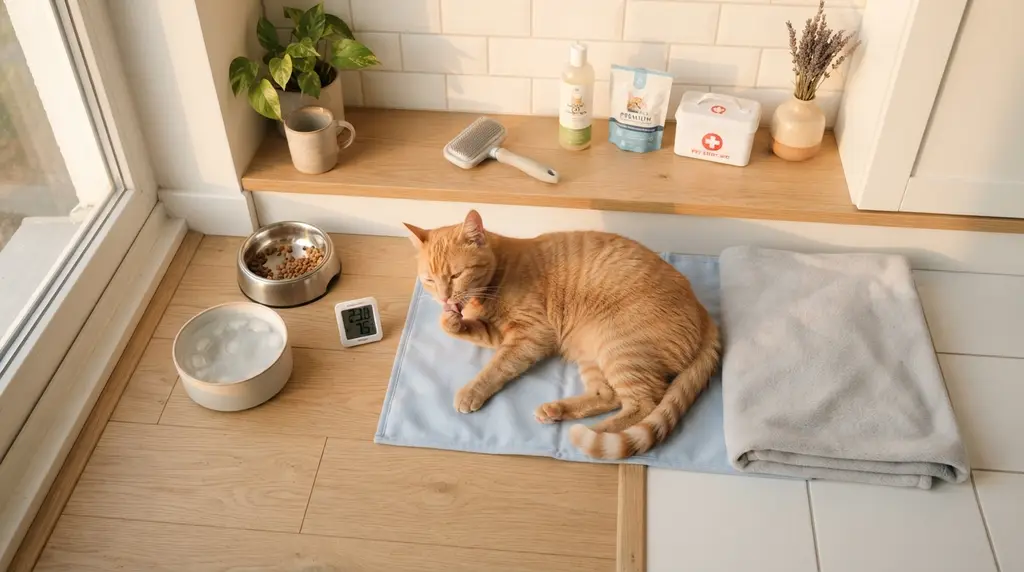
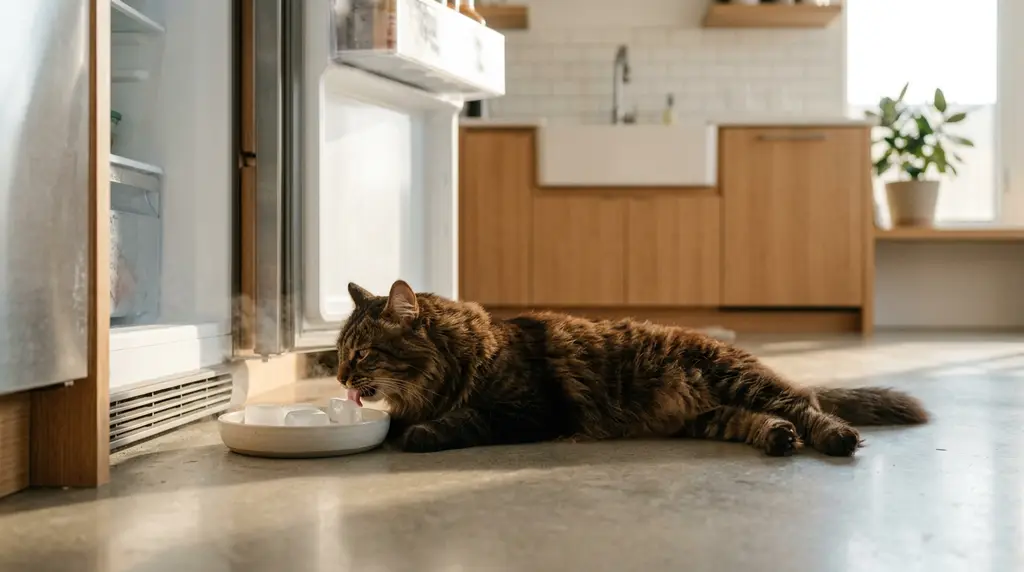
Typical signs: Brick-red gums + rapid breathing + body feels hot to the touch + possible drooling, lethargy. In this case, immediately move the cat to a cool, well-ventilated area. Use room-temperature (not ice-cold) water to dampen its paws, armpits, and groin area. Use a fan or air conditioning and seek veterinary care promptly. A cat's body temperature exceeding 40°C (104°F) indicates heatstroke, which can be fatal.
We have a comprehensive guide on the three stages of heatstroke warning signs: What Are the Early Signs of Heatstroke in Cats? Check Gum Color, Panting, and Collapse for Early Warning Signs, Time is Critical. For a complete understanding of summer cooling strategies, refer to the main article: Are Cats Sensitive to Heat? Heatstroke Signs, Panting, and a Complete Summer Cooling Guide.
(Many people believe shaving a cat in summer helps it cool down, but it's not that simple. Read Does Shaving Cats in Summer Help Them Cool Down? Understand Fur's Role in Thermoregulation, Sunburn, and Skin Risks Before Deciding before making a decision.)
2. Stress, Anxiety, or Post-Exercise
The second most common cause is situational panting. After a car ride, vet visit, moving house, during thunderstorms, or immediately after intense play – a cat might pant with its mouth open briefly.
The key diagnostic factor: Gums remain a normal pink color, and the panting significantly subsides within 5-10 minutes of resting in a quiet, cool environment, returning to normal nasal breathing. These cases usually don't require emergency care, but it's important to identify and reduce the triggers in the future.
When we receive timid cats at the clinic, panting due to confinement in a carrier combined with stress is common. Our approach is to place the carrier in a quiet, dimly lit corner, cover it with a towel to reduce visual stimuli, and allow the cat time to calm down. If your cat becomes anxious and pants during thunderstorms, consider preparing a safe hiding space, using desensitization techniques, and providing calming aids: What to Do When Your Cat is Anxious During Thunderstorms or Rain: Prepare a Safe Space, Use Sound Desensitization, and Provide Comfort Items.
3. Heart or Lung Disease (Most Critical)
This is the most easily overlooked and most dangerous category. Conditions like Hypertrophic Cardiomyopathy (HCM), heart failure, pleural effusion, or asthma can all manifest as open-mouth breathing or panting.
The frightening aspect is that it can occur without obvious triggers, even in cool weather, and when the cat isn't exercising. Some cats may show subtle signs beforehand, such as decreased activity, increased resting, or appearing more lethargic.
If you notice your cat panting or breathing laboriously while resting in a cool, quiet environment, treat it as an emergency and seek veterinary care immediately. Don't wait. To catch early signs of heart problems at home, we highly recommend reading: How to Detect Heart Disease in Cats Early: Learn to Monitor Breathing, Activity Levels, and Recognize 5 Warning Signs, and Sudden Aggression or Hiding in Cats: Don't Just Blame Temperament – It Could Be Early Signs of Pain or Illness.
3 Critical Emergency Signs Requiring Immediate Veterinary Attention
If any of the following occur, do not wait to observe; seek emergency veterinary care immediately:
1. Gum Discoloration: Brick red, pale, or bluish-purple (cyanotic) gums indicate hyperthermia, circulatory problems, or oxygen deprivation.
2. Panting Persists After 5-10 Minutes of Rest, or occurs without apparent cause during rest in a cool environment, or is accompanied by labored abdominal breathing.
3. Accompanied by Other Severe Symptoms: Unsteadiness, staggering, collapse, excessive drooling, seizures, high fever, extreme lethargy, or unresponsiveness to stimuli.
Any one of these three signs warrants "time is critical" attention. While en route to the vet, maintain a cool, ventilated environment. Place the cat in a well-ventilated carrier, avoid holding it close, and travel with air conditioning on.
How to Reduce the Risk of Panting
Our approach to caring for many cats involves simple practices:
- Temperature Control: Keep indoor temperatures around 26-28°C (79-82°F) during summer and ensure good ventilation. Never leave a cat alone in a hot, sunny space or a car.
- Ensure Adequate Hydration: Dehydration worsens heat dissipation. Provide multiple water bowls or use methods recommended in our Guide to Choosing the Best Cat Water Fountain: Consider Ease of Cleaning, Water Flow, and Cat Acceptance to encourage drinking.
- Record Baseline Values: While your cat is resting, count its breaths and note its gum color. This provides a crucial baseline for comparison if an issue arises.
- Minimize Sudden Stress: Provide hiding spaces during outings, moving, or thunderstorms. Avoid forcing interaction.
If you're going away during the summer holidays and cannot maintain air conditioning at home, it might be better to arrange for your cat to stay in a temperature-controlled professional environment rather than leaving it in a potentially hot house. Our Boarding Services are fully climate-controlled. For boarding requirements, please see our Cat Boarding Checklist: Required Vaccinations, Health Certificates, Flea Prevention, and Packing List Before Check-in.
Frequently Asked Questions
Is cat panting with its tongue out normal?
In most cases, it is not normal. Cats rarely pant to cool down. They may briefly pant with their mouths open after intense exercise or extreme stress, but they should recover within minutes of rest. If panting is persistent or accompanied by gum discoloration, seek veterinary attention immediately.
What is a normal respiratory rate for a cat?
A healthy cat at rest typically breathes 20-30 times per minute. Consistently exceeding 40 breaths per minute, or exhibiting open-mouth breathing or labored abdominal breathing, is abnormal and warrants veterinary consultation.
How can I tell if my cat is suffering from heatstroke versus heart disease?
Consider the context and gum color. Heatstroke usually occurs in hot, poorly ventilated environments, with brick-red gums and a hot body temperature. Heart disease may cause panting during rest in cool conditions, with pale or bluish gums. Both are serious, but heart and lung conditions are often more insidious.
Is it concerning if my cat pants after playing?
If it's brief panting after vigorous play, with pink gums, and resolves within 5-10 minutes of resting in a cool area, it's usually not a major concern. However, if the panting is persistent or occurs repeatedly, it's advisable to consult a veterinarian to rule out underlying heart or lung issues.
Can I observe my cat at home if it's breathing with its mouth open?
Observation at home is only appropriate if the gums are pink, the panting follows clear exertion or stress, and it resolves quickly. If gums are discolored, panting occurs without a clear cause, doesn't resolve with rest, or is accompanied by unsteadiness, do not observe – seek veterinary care immediately.
This article provides general care information and cannot replace veterinary diagnosis. If your cat exhibits persistent or severe panting, gum discoloration, or labored breathing, seek immediate veterinary attention.
Article by: CatGarden Editorial Team
CatGarden offers curated supplies, cat boarding, and grooming
Book services or shop online.