Thunderstorms and Rain Making Your Cat Nervous? Prepare Hiding Spots, Desensitization, and Comfort Items
What behaviors indicate a nervous cat during thunderstorms and rain? Taiwan's summer afternoon thunderstorms and continuous rain during the plum rain season can cause stress for cats with their sensitive hearing. When thunder suddenly booms or the sound of wind and rain persists outside, nervous cats often hide first.
Key takeaways
- Common stress signals in cats during thunderstorms and heavy rain include sudden hiding, reluctance to interact, decreased appetite, excessive grooming, panting, drooling, pacing by doors and windows, and becoming sensitive or even hissing and swatting when approached.
- Forcibly removing a scared cat from its chosen hiding spot can escalate anxiety and lead the cat to associate your presence with stress. It's better to remain quiet, move slowly, and let the cat decide when to approach you.
- The key to a good hiding spot during rain isn't size, but rather a clear entrance, dim lighting, reduced noise, and easy access for the cat. Avoid locations near windows or noisy appliances like washing machines, dehumidifiers, or air conditioner outdoor units. Ensure the space isn't completely sealed to allow for an escape route.
- Sound desensitization should be done during calm periods when the weather is stable. In the first week, play rain sounds at low volume for 1 minute, paired with treats or toys. In the second week, extend the duration to 3 minutes. In the third week, introduce very quiet thunder for short periods. Adjust gradually based on the cat's reaction; avoid significant increases daily.
- If your cat refuses to eat for multiple meals, hides for more than a day, pants noticeably, has abnormal urination, vomits frequently, or suddenly exhibits severe aggression, consult a veterinarian. Male cats experiencing constant litter box visits, inability to urinate, or crying should seek immediate veterinary attention.
What Behaviors Indicate a Nervous Cat During Thunderstorms and Rain?
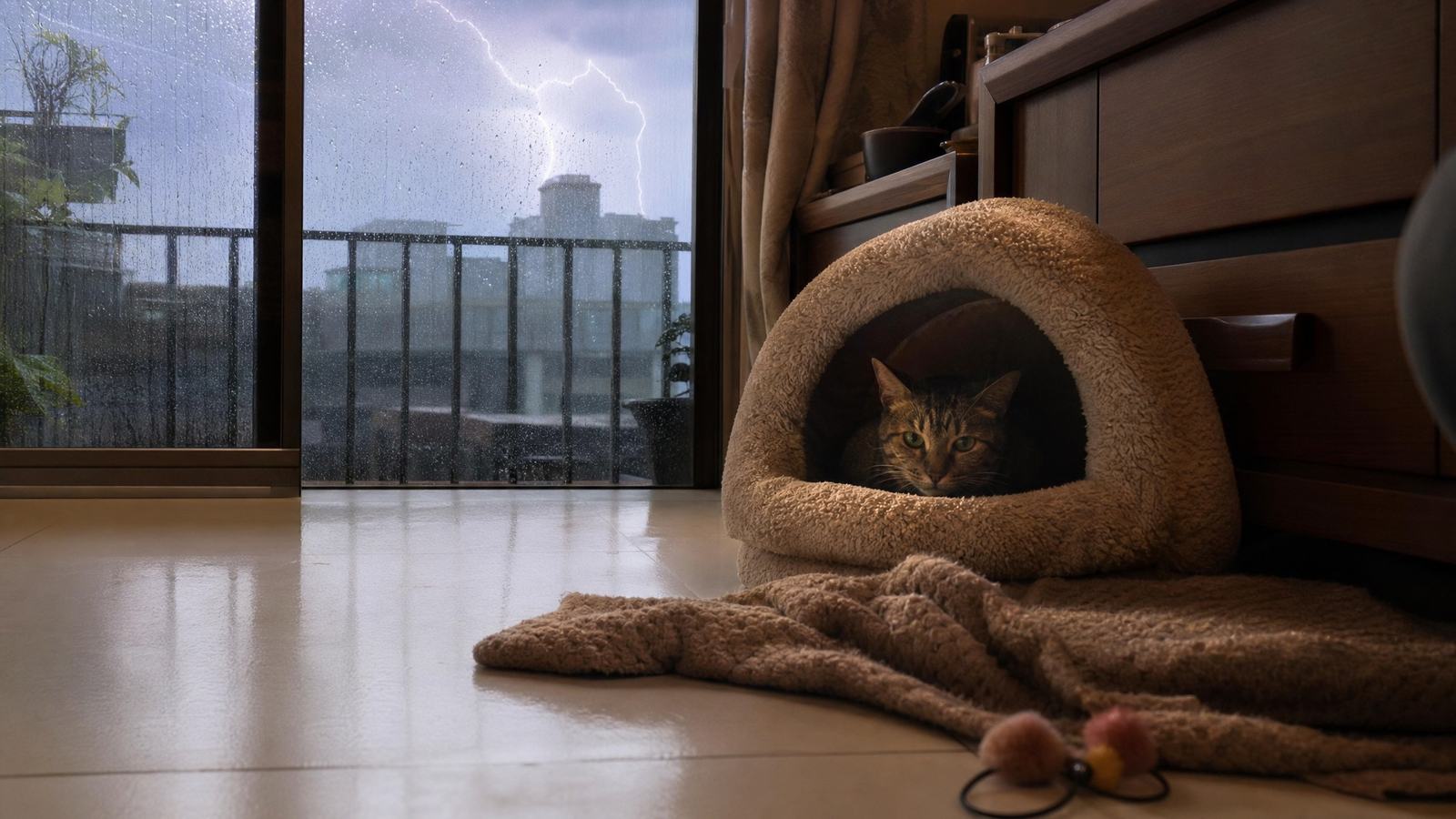
Taiwan's summer afternoon thunderstorms and continuous rain during the plum rain season can cause stress for cats with their sensitive hearing. When thunder suddenly booms or the sound of wind and rain persists outside, nervous cats often hide first, perhaps under the bed, in closets, behind the sofa, or in a corner they don't usually frequent. They aren't necessarily "acting out" but are seeking a place where they feel safe.
Some cats become unusually clingy, constantly staying close to their owners, meowing softly, or pacing around the house. Others may exhibit physical reactions like dilated pupils, flattened ears, tucked tails, and a lowered body posture. If your home is small or has poor window insulation, the direct impact of thunder and rain sounds can make your cat's nervous behaviors more pronounced than usual.
Common Signs of Stress During Rainy Weather
- Sudden hiding, reluctance to interact
- Decreased appetite, temporary refusal to eat or drink
- Excessive grooming, panting, drooling, or low growls
- Pacing near doors or windows, unable to settle
- Sensitivity to outstretched hands, even hissing or swatting
These behaviors don't necessarily indicate illness but show that your cat is experiencing stress. You can observe when these behaviors occur, how long they last, and if they only happen during thunderstorms or rain. If they repeatedly occur every time the weather turns bad, it's a good idea to establish a rain-day comfort routine in advance.
Don't Rush to Hold Them: Cats Need Security When Scared
When you see your cat hiding, many owners' first instinct is to pick them up and comfort them. However, this isn't always the best approach. When cats are scared, they need a predictable and controllable environment, not to be forced out of a place they perceive as safe. Especially when the thunder is still ongoing, forcibly picking them up can increase their anxiety and even lead them to associate your closeness with stress.
A better approach is to remain quiet, move slowly, and let your cat know they can choose to approach you. You can sit nearby and speak in a calm tone, but avoid constantly reaching out to pet them or staring at them. If your cat is willing to come out, interact in a way they are familiar with, such as calling their name softly or offering a small treat they usually enjoy.
What Can You Do to Comfort Them?
Pull the curtains closed to reduce visual stimulation from lightning and auditory stimuli from traffic and rain outside. You can play white noise, a fan, or their usual calming music at a low volume indoors to make sudden thunderclaps less jarring. If your cat has a favorite blanket, bed, or cardboard box, place it in an accessible location for them to choose.
Your own emotions can also affect your cat's response. Avoid gasping loudly, chasing them, or frequently lifting blankets to check on them while they're hiding. As long as you confirm the environment is safe and they aren't trapped or injured, give them some space; this is often more effective than immediate intervention.
How to Set Up a Hiding Space for Rainy Days? Even Small Homes Can Do It
Many urban areas in Taiwan feature small living spaces, which may not have extra rooms for cats to retreat to. However, you can still create stable hiding spots. The key isn't the size of the space but clear entry points, dim lighting, relative quiet, and the ability for the cat to enter and exit freely. Areas like the lower part of a closet, a corner by the bed, under a desk, or next to a storage cabinet can be converted into a rainy-day safe zone.
Ideally, hiding spots should not be near windows or in locations where the sounds of washing machines, dehumidifiers, or outdoor air conditioning units are prominent. You can use cardboard boxes, carriers, semi-enclosed cat beds, or thick blankets to create a sense of enclosure, but don't seal them completely. Cats are very concerned about escape routes when stressed; if they feel trapped, they may become even more anxious.
Small Home Rainy Day Safe Zone Checklist
- Place a sturdy cardboard box with a side opening, which can feel more secure than a top opening.
- Lay down a familiar-smelling blanket, mat, or old clothing.
- Place a water bowl nearby, but don't force food into the back.
- Ensure clear pathways on both sides to avoid constant foot traffic.
- If using a carrier, ensure your cat is accustomed to it normally, not just for vet visits.
If you have multiple cats, it's best to provide more than one hiding spot. Cats under stress may not be willing to share space, and even normally friendly cats might conflict over territory. Every cat should have a choice, and your home will be much quieter during thunderstorms.
How to Practice Sound Desensitization? Start with Low Volume and Short Durations
Sound desensitization isn't something to do only when a thunderstorm hits; it's best practiced gradually during calm weather. Find audio recordings of thunder and rain and play them at a very low volume for one to three minutes. The key is that the volume should be low enough for your cat to hear but still allow them to eat treats, play with a wand toy, or relax.
If your cat hides, stops eating, or shows obvious tail tension as soon as the sound plays, the stimulus is too strong. Don't push it; lower the volume further or shorten the duration to a few seconds. The principle of desensitization training for cats is to help them accumulate experiences where "the sound appears, and nothing bad happens," rather than forcing them to endure it.
Simple Desensitization Steps
- Week 1: Play rain sounds at low volume for 1 minute, paired with treats or toys.
- Week 2: Extend to 3 minutes, observing if your cat can still relax.
- Week 3: Introduce very quiet thunder sounds for short durations.
- Subsequently: Adjust volume based on your cat's reaction; don't significantly increase intensity daily.
Desensitization depends on your cat's state, not a rigid schedule. If your cat has recently moved, a new pet has joined the household, or they are unwell, postpone training. Success rates are higher when training begins after life stabilizes.
When is it More Than Just Nervousness? When to Consult a Veterinarian
Temporary fear due to thunderstorms and rain is common. However, if the reaction is severe enough to impact their health, it's more than just simple anxiety. If your cat refuses to eat for multiple meals, hides for over a day, pants noticeably, shows abnormal urination, vomits frequently, or exhibits suddenly severe aggression, it's recommended to consult a veterinarian. This is especially true for male cats who repeatedly visit the litter box, seem unable to urinate, or cry out; these symptoms should not be dismissed as mere nervousness and require prompt medical attention.
Older cats also require extra attention, as pain, thyroid issues, or cognitive decline can make them more sensitive to sounds. If your cat was previously unafraid of storms but has recently become very fearful, a health check-up is worthwhile. A veterinarian can help rule out physical causes and, if necessary, discuss behavioral adjustments, environmental management, or other calming strategies.
What to Record Before Seeking Veterinary Care?
It's advisable to note the time of the thunderstorm, your cat's reactions, how long they lasted, and whether their appetite and urination are normal. You can also record short videos to show the veterinarian the actual situation, which is clearer than a verbal description. If you are using pheromones, supplements, or calming products, mention these as well to avoid duplication or inappropriate combinations.
Do not self-medicate with human sedatives, essential oils, or internet remedies. Cats metabolize differently than humans, and some seemingly gentle substances can be risky for them. Truly stable care usually involves a combination of environmental management, behavioral training, and necessary veterinary assessment.
Rainy Day Care Summary: First, Give Your Cat a Place to Hide, Then Practice Gradually
When facing thunderstorms, your most important task as an owner isn't to make your cat "not afraid" immediately, but to let them know there are safe options in the home. Preparing a quiet hiding space, reducing environmental stimuli, and practicing low-volume sound desensitization regularly will be more stable than trying to comfort them by force during the event. When the frequency, intensity, or physical symptoms of your cat's nervousness become abnormal, veterinary assessment should be included in the plan.
If you'd like to start by adjusting your home environment, consider preparing a semi-enclosed cat bed, a sturdy carrier, a familiar-smelling sleeping mat, calming pheromones, interactive toys, and treats. CatGarden's cat supplies can help owners create rainy-day safe corners, making hiding, comforting, and daily companionship smoother. When choosing products, prioritize your cat's habits, your home's square footage, and ease of cleaning. You don't need to buy everything at once; start with the items that best enhance their sense of security.
FAQ
Q1: My cat hides during thunderstorms. Should I pick them up?
Generally not recommended. As long as you confirm they are not injured or trapped, it's better to let them stay in their chosen safe spot. You can stay nearby quietly, but don't force interaction.
Q2: My cat is too nervous to eat. How long should I be concerned?
If they only eat a little less during the thunderstorm, you can observe. However, if their appetite significantly decreases for more than a day, or if it's accompanied by lethargy, vomiting, or abnormal urination, it's recommended to consult a veterinarian promptly.
Q3: Can I use essential oils or diffusers to relax my cat?
Self-use is not recommended. Many essential oils are not safe for cats, and diffusers can irritate their respiratory tract. If you wish to use calming products, choose cat-specific ones and follow the instructions carefully.
Q4: Should I practice sound desensitization every day?
Not necessarily every day, but it should be done in short durations, with low pressure, and consistently. If your cat starts hiding, stops eating, or shows obvious tension, it means the intensity is too high, and you should revert to a lower volume or shorter duration.
Further Reading
- What to Do If Your Cat Constantly Licks One Spot? First, Distinguish Between Stress, Self-Soothing, or Skin Discomfort
- New Cat Owner: What to Do If Your Cat Bites and Scratches? First, Distinguish Between Over-Play, Fear, or Incorrect Interaction
- How to Start Clicker Training? Beginners Learn 3 Steps First to Make Your Cat More Willing to Cooperate
CatGarden offers curated supplies, cat boarding, and grooming
Book services or shop online.