How Many Litter Boxes Are Enough? Consider Cat Count, Location, and Urination Risks
How many litter boxes should you have? The most common rule is "number of cats plus one." This means at least 2 boxes for one cat, 3 for two cats, and 4 for three cats.
Key Takeaways
- The most common rule for litter box quantity is "number of cats plus one." This means at least 2 boxes for one cat, 3 for two cats, and 4 for three cats.
- Even for a single cat, it's recommended to have two litter boxes. Cats may prefer to separate urination and defecation areas, or use a second box if the primary one is dirty. Having an extra box reduces the chance of accidents.
- When the number of litter boxes is insufficient, cats may show stress signals such as frequently entering and exiting the box, lingering at the edges, producing less urine, defecating outside the box, or suddenly showing interest in a specific corner.
- The ideal litter box location is quiet, well-ventilated, and easily accessible. Avoid placing them near food and water bowls, behind doors, next to robot vacuum charging stations, or in high-traffic family pathways.
- When adding or changing litter boxes, it's not recommended to immediately remove the old ones. It's advised to scoop the litter at least 1 to 2 times daily, and more frequently during the rainy season or in summer.
How Many Litter Boxes Should You Have? Start With Cat Count
When determining the number of litter boxes, the most commonly used principle is "number of cats plus one." This means preparing at least 2 litter boxes for one cat, 3 for two cats, and 4 for three cats. This isn't about taking up space, but about giving cats choices, so they don't hold their urine because the box is dirty, blocked by another cat, or too far away.
If you live in a studio apartment or a small space, you don't necessarily need large litter boxes everywhere, but at least ensure cats can find a usable spot in different areas. Taiwan's summers are humid and the rainy season is muggy, causing litter to clump faster and odors and bacteria to multiply more quickly. While litter boxes might seem like just another item, they directly impact a cat's sense of security and elimination habits.
Does a Single Cat Need Two Litter Boxes?
Many owners feel one litter box per cat is sufficient, but cats may separate their urination and defecation areas, or choose another spot if a particular box becomes too dirty. Having an extra litter box reduces the chance of accidents, especially for kittens, senior cats, or cats that have previously urinated inappropriately. If space is limited, you can opt for one large and one small box, placed in quiet and easily accessible locations.
What Stress Signals Might a Cat Show When Litter Box Quantity Is Insufficient?
When the number of litter boxes is insufficient, cats may not immediately urinate inappropriately. Some will first exhibit stress signals. Common signs include frequently entering and exiting the litter box, lingering at the edges of the box, producing less urine, defecating outside the box, or suddenly showing particular interest in a specific corner. These behaviors are often misunderstood as naughtiness, but they might actually indicate the cat feels the litter box isn't clean enough, isn't safe enough, or they don't want to share with other cats.
If your cat has started urinating on the bed, sofa, floor mats, or by the bathroom door, don't rush to scold them. Inappropriate urination can sometimes be related to urinary tract discomfort, or it could be caused by environmental stress. It's recommended to observe urine volume, color, and frequency, and consult a veterinarian if necessary. After ruling out health issues, re-examine the number of litter boxes, their placement, the type of litter, and the cleaning frequency.
What Situations Require Special Alertness?
If a cat is constantly squatting in the litter box but unable to urinate, has blood in their urine, vocalizes more, or suddenly becomes anxious, simply adding more litter boxes won't solve the problem. Male cats, in particular, should be monitored closely for the risk of urinary blockage and require prompt veterinary attention. Environmental adjustments are important, but they cannot replace a veterinary diagnosis.
What we use for this
CatGarden’s own products, shipped from Taiwan Premium CatnipFrom CA$36.65 per jarFree shipping on multi-packs
Incorrect Placement Can Also Lead to Inappropriate Urination: 5 Common Configuration Issues in Small Taiwanese Homes
Even if the number of litter boxes is sufficient, incorrect placement can lead to cats refusing to use them. Small urban dwellings in Taiwan often mean owners tend to tuck litter boxes away in balconies, next to washing machines, in bathroom corners, or near storage cabinets. These spots might seem space-saving, but if they are too noisy, damp, stuffy, or their access is blocked, cats may seek out more secure locations.
The ideal litter box location should meet three criteria: quiet, well-ventilated, and easily accessible. Avoid placing them next to food and water bowls, behind doors, next to robot vacuum charging stations, or in pathways frequently used by family members. For cats, using the litter box is a vulnerable moment. If they feel they might be disturbed, they may start avoiding the litter box.
5 Common Issues in Small Taiwanese Homes
- Too Close to the Washing Machine: The sound and vibration of the spin cycle can make sensitive cats nervous.
- Placed in a Damp Bathroom: Litter can easily become damp and clump, and odors become more noticeable.
- Only a Single Access Route: In multi-cat households, one cat might guard the path, preventing less dominant cats from accessing it.
- Litter Box Too Close to Food: Cats generally dislike eliminating near their eating areas.
- Litter Box Too Hidden: Inside cabinets or in narrow corners may have poor ventilation and also limit escape routes.
How to Distribute Litter Boxes, Food Bowls, and Resting Areas in Multi-Cat Households
The biggest fear in multi-cat households isn't overt fighting, but resource monopolization. Even seemingly peaceful cats might exert pressure by sitting in pathways, staring intently at others, or blocking the litter box entrance. Therefore, when planning the number of litter boxes, you should not only consider the total count but also distribute them across different areas to avoid concentrating them in one corner.
Food bowls, water bowls, cat trees, and sleeping spots should also be dispersed, allowing each cat to have their own routes. The ideal scenario is for cats to be able to walk from their resting area to the litter box without having to pass through another cat's territory. If you're introducing a new cat, it's recommended to use a separate space for gradual acclimatization, providing separate litter boxes, food, and water, and then gradually exchanging scents and opening up pathways.
Don't Just Look at the "Total Number" of Litter Boxes
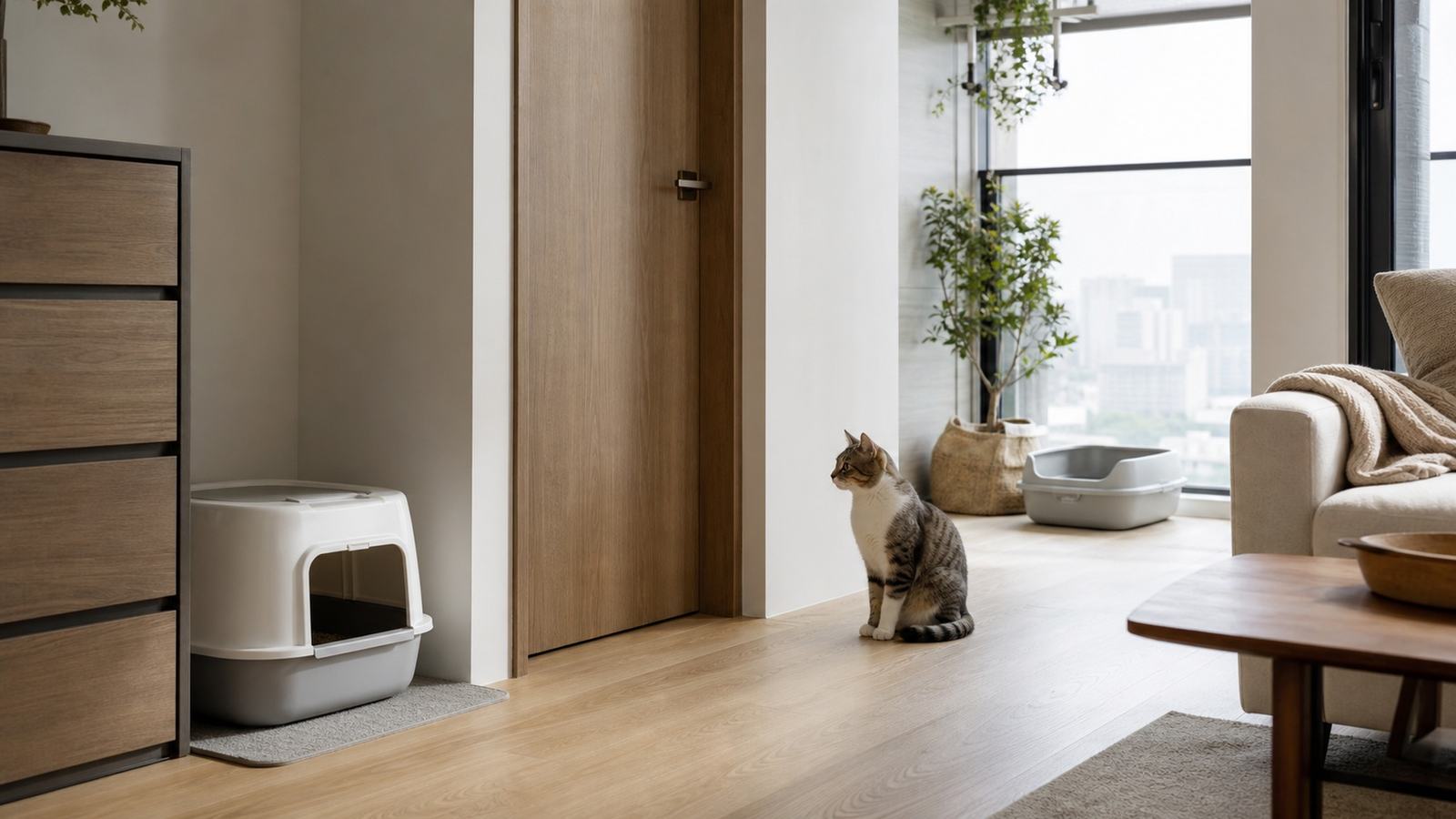
Having three litter boxes all placed on the balcony might effectively be just one area for the cats. A better approach is to place one in a corner of the living room, one outside a bedroom, and one in a quieter hallway or study. As long as ventilation and cleaning aren't compromised, dispersed placement is usually more effective at reducing conflict than concentrated placement.
How to Reduce Cat Resistance When Adding or Changing Litter Boxes
When adding litter boxes, it's not recommended to immediately remove the old ones, especially for adult cats accustomed to a specific location. You can place the new litter box in the intended spot, add a small amount of the old litter or familiar scent, and let the cat explore it on their own. If you're switching to a different height, open-top, or enclosed litter box, allow them some time to adjust.
When adjusting the number of litter boxes, ensure the cleaning frequency keeps pace. It's recommended to scoop the litter at least 1 to 2 times daily, and regularly replace and wash the entire box. You can be more diligent during the rainy season or in summer. If a cat resists a new litter box, don't force them into it; use placement, cleanliness, and familiar scents to increase acceptance.
Add New Boxes First, Then Observe Preferences
Some cats prefer open litter boxes, while others favor enclosed ones for privacy. However, enclosed boxes can become stuffy or smelly, leading to rejection. It's recommended to keep the original litter box and add new ones of different styles, observing for one to two weeks. Cats vote with their paws; the location and type of box they frequent is usually the most suitable choice for them.
FAQ
Q1: Is the "number of cats plus one" rule for litter boxes mandatory?
This is a very practical basic principle, but it still depends on the cat's personality, age, health status, and home layout. If there have been instances of inappropriate urination, tension between cats, or litter boxes are too far apart, it's advisable to adhere more closely to the "number of cats plus one" configuration.
Q2: My home is very small, what should I do if I can't fit that many litter boxes?
You can choose litter boxes of different sizes and place them separately. The key is to give the cat a second option. Dispersing them in quiet corners, outside doorways, or in well-ventilated areas is usually more effective than concentrating them all in one spot.
Q3: Enclosed litter boxes are less smelly, are they suitable for all cats?
Not necessarily. Enclosed litter boxes are more convenient for owners, but some cats may find them stuffy, smelly, or feel they have limited escape routes. If a cat dislikes using one, you can switch to an open-top model or offer both types for observation.
Q4: If a cat suddenly urinates inappropriately, is it because there aren't enough litter boxes?
It could be, but it might also be related to urinary tract issues, stress, changes in litter, or environmental shifts. It's recommended to monitor urine volume and energy levels, seek veterinary care if necessary, and then check the number of litter boxes, their placement, and cleaning frequency.
Conclusion
The appropriate number of litter boxes isn't about filling your home with them, but about ensuring cats have clean, safe, and easily accessible options when needed. By examining the number of cats, home traffic flow, litter box placement, and cleaning habits together, you can usually reduce issues with inappropriate urination and stress. If you are adjusting your cat's living environment, you can also visit CatGarden to select cat supplies suitable for Taiwanese homes, from litter and boxes to daily care items, to help make your cat's living details more comfortable.
Further Reading
- Is the Norwegian Forest Cat Suitable for Taiwan? New Owners Should Consider Space, Shedding, and Climbing Needs
- Is the Devon Rex Suitable for Beginners? Consider Their Affectionate Nature, Sensitivity to Cold, and Daily Care
- What to Do If Your Cat Wakes You Up Early Every Morning? Check if They're Hungry, Bored, or Have Developed a Routine
Frequently Asked Questions
Is the "number of cats plus one" rule for litter boxes mandatory?
This is a very practical basic principle, but it still depends on the cat's personality, age, health status, and home layout. If there have been instances of inappropriate urination, tension between cats, or litter boxes are too far apart, it's advisable to adhere more closely to the "number of cats plus one" configuration.
My home is very small, what should I do if I can't fit that many litter boxes?
You can choose litter boxes of different sizes and place them separately. The key is to give the cat a second option. Dispersing them in quiet corners, outside doorways, or in well-ventilated areas is usually more effective than concentrating them all in one spot.
Enclosed litter boxes are less smelly, are they suitable for all cats?
Not necessarily. Enclosed litter boxes are more convenient for owners, but some cats may find them stuffy, smelly, or feel they have limited escape routes. If a cat dislikes using one, you can switch to an open-top model or offer both types for observation.
If a cat suddenly urinates inappropriately, is it because there aren't enough litter boxes?
It could be, but it might also be related to urinary tract issues, stress, changes in litter, or environmental shifts. It's recommended to monitor urine volume and energy levels, seek veterinary care if necessary, and then check the number of litter boxes, their placement, and cleaning frequency.
How should litter boxes be configured for multi-cat households?
You should not only consider the total count but also distribute the litter boxes across different areas to avoid concentrating them in one corner. Having three litter boxes all placed on the balcony might effectively be just one area for the cats. Dispersed placement is usually more effective at reducing conflict than concentrated placement.
CatGarden offers curated supplies, cat boarding, and grooming
Book services or shop online.