What to Do When Your Cat Wakes You Up Early Every Morning? Check if They're Hungry, Bored, or if Their Routine Has Been Conditioned
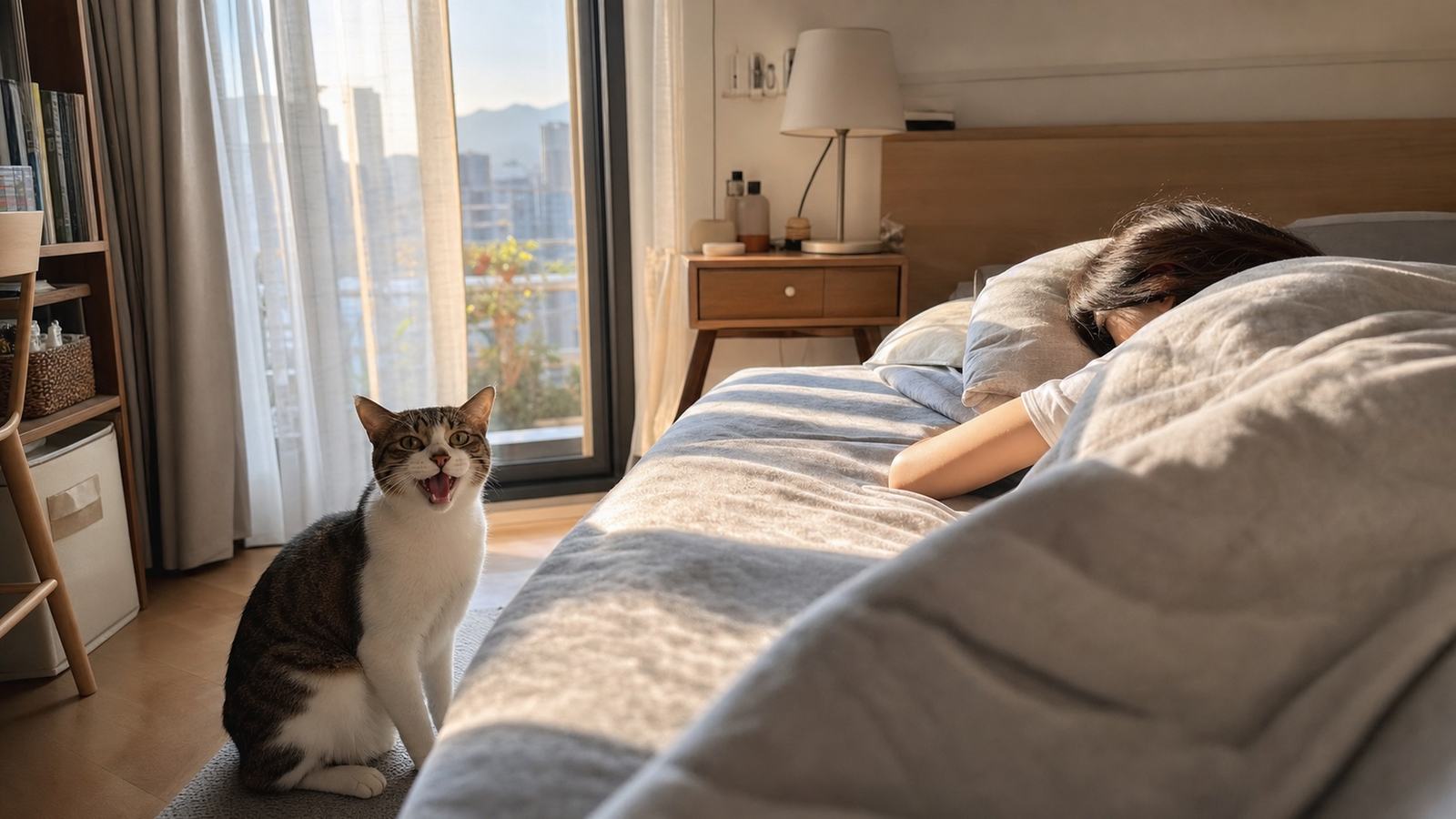
Cats waking you up early often aren't due to a single reason. Being woken by your cat every morning is a common experience for many Taiwanese owners, especially in small urban apartments where the bedroom is close to the living area.
Key Takeaways
- Cats waking you up early are usually not due to a single cause but a combination of needs, habits, and environment. The first step to improvement isn't scolding, but observing the time, method, and your subsequent reaction.
- If your cat starts meowing an hour before breakfast and rushes to their food bowl upon waking, hunger is a likely reason. If they run around, bite your feet, or paw at the covers after meowing, it's more likely boredom or a desire for interaction.
- Cats remember effective behaviors. If meowing gets them fed, petted, or the door opened, they learn that "waking you up" is a successful strategy, and the timing may become more precise, even shifting from 6 AM to 5:30 AM.
- Arranging about 10 to 15 minutes of quality playtime before bed, followed by a small meal, and using a timed feeder to release small portions of breakfast at fixed times are core practices for improving early morning wake-up calls.
- If the early morning wake-up behavior suddenly appears or significantly intensifies, especially in senior cats, cats with chronic illnesses, or those with changes in appetite, urination, weight, or activity levels, consult a veterinarian first to rule out health issues; don't just treat it as a behavioral problem.
Cats Waking You Up Early: Rarely a Single Reason
Being woken by your cat every morning is a common experience for many Taiwanese owners. Especially in small urban apartments where the bedroom is close to the living area, a cat's meow, scratching at the door, or stepping on you can easily wake you up. This behavior isn't necessarily intentional mischief; it's usually a combination of needs, habits, and environmental factors.
To improve your cat's wake-up calls, the first step isn't scolding, but observing the time, method, and your subsequent reaction. Some cats are hungry, some haven't expended enough energy, and some have discovered that "if I meow, my human will get up." If you misdiagnose the cause, your approach might inadvertently reinforce the behavior.
First, Distinguish Between Hunger, Boredom, Desire for Interaction, or Discomfort
If your cat consistently starts meowing an hour before breakfast and rushes to their food bowl as soon as you wake up, hunger is a very likely reason. Check the portion size of their dinner, the intervals between meals, and whether you need to divide their daily calorie intake into more meals. If you have multiple cats, ensure the less dominant ones are actually getting enough food.
If your cat doesn't go to eat after waking you up but instead runs around, bites your feet, or paws at the covers, it's usually closer to boredom or a desire for interaction. Indoor cats sleep a lot during the day, so they might be particularly energetic in the early morning. During hot and humid Taiwanese summers or when activity levels drop during the rainy season, they might see you as their morning entertainment source.
Observe Changes in Meows and Behavior
A normal, affectionate meow sounds different from a suddenly sharp, frequent, or anxious one. If your cat's meows are accompanied by decreased appetite, increased thirst, frequent urination, or unusual walking patterns, don't dismiss it as just a behavioral issue. Senior cats who suddenly start yowling in the middle of the night or early morning should also be monitored for pain, thyroid issues, or cognitive decline.
What we use for this
CatGarden’s own products, shipped from Taiwan Premium CatnipFrom CA$36.65 per jarFree shipping on multi-packs
Why the More You Respond, the More Precisely Your Cat Wakes You Up
Cats are excellent at remembering effective behaviors. If they meow in the early morning and you get up to feed them, pet them, or open the door, they learn that "waking you up" is a successful strategy. Over time, your cat's wake-up time may become more precise, even shifting from 6 AM to 5:30 AM.
Many owners say they just want the cat to be quiet, so they feed or pet them first. But from the cat's perspective, this is a reward, and the faster the reward comes, the deeper the memory. To adjust this, the key is to decouple food, interaction, and waking-up time, so that early morning meows don't directly lead to immediate benefits.
Don't Use Anger Instead of Rules
Loud scolding, hitting the bed, or chasing the cat usually won't help them understand your need for sleep. Some cats might even interpret these reactions as interaction or become more anxious. A more effective approach is to meet their needs during the day and before bed, and maintain a consistently low level of response in the early morning.
Pre-Sleep Play, Timed Feeding, and Adjusting Lighting
Arranging a session of quality playtime before bed is one of the core practices for improving cats waking people up. Use a feather wand to simulate chasing, hiding, and pouncing, for about 10 to 15 minutes, ending with the cat successfully catching the toy. After playing, offer a small meal or snack, aligning with the cat's natural "hunt, eat, groom, sleep" rhythm.
If the early morning meows are primarily related to hunger, consider using a timed feeder to dispense small portions of breakfast at a fixed time. This shifts the food source from you to the machine, reducing the cat's motivation to wake you up. The type of food (dry kibble, wet food, or pâté) should be adjusted based on the cat's health. If they have kidney, urinary, or weight issues, it's best to consult your vet first.
Lighting and Activity Areas Also Affect Routines
Early morning sunlight shining into the room too soon can cause cats to wake up, especially if there are birds, car sounds, or neighborly activity visible from the window. Use blackout curtains or adjust the sleeping area's position to reduce external stimuli. If your living space is small, you can also place cat trees, scratching posts, and puzzle toys in the living room to give them something to do when they wake up.
Ensure your cat has enough activity during the day; don't concentrate all interaction before bedtime. For working owners, use the 5 minutes before leaving for work and 10 minutes after returning home for short play sessions. A stable daily rhythm is more conducive to adjusting routines than one long play session occasionally.
When to See a Vet First, Not Just Treat as a Behavioral Issue
If your cat's wake-up behavior suddenly appears or significantly intensifies, it's recommended to rule out health issues first. This is especially true for senior cats, cats with chronic illnesses, or those with recent changes in appetite, urination, weight, or activity levels; these should not be treated solely with training methods. Pain, urinary discomfort, or gastrointestinal issues can make cats more restless in the early morning.
Also, pay attention to signs like nighttime disorientation, meowing at nothing, constant pacing, or disrupted sleep cycles. These behaviors might be related to stress, sensory decline, or cognitive function. Confirming there are no underlying physical problems before addressing the cat's wake-up habits will be more reassuring and effective.
- Seek immediate veterinary care if: The cat refuses to eat, urinates frequently but cannot pass urine, has blood in their urine, vomits frequently, or is very lethargic.
- Recommended check-up if: The cat suddenly becomes more vocal, drinks more water, loses weight, or shows restlessness at night.
- Observe and adjust first if: The cat's routine is stable, appetite is normal, and they only meow for food or play at a specific early morning time.
FAQ
If my cat wakes me up, can I just feed them?
It's not recommended to feed them immediately when they meow, as this reinforces the behavior of waking you up. Instead, use a timed feeder or wait until they have been quiet for a while before giving them food.
Is closing the bedroom door to keep the cat out effective?
Some cats can adapt, but they might scratch at the door or meow for longer initially. If you close the door, ensure they have access to water, a litter box, a sleeping area, toys, and space to move around during the day, and maintain consistent rules.
Does my cat meowing early in the morning mean they are very hungry?
Not necessarily. A cat waking you up could be due to hunger, but also boredom, a desire to play, interact, or they've learned that meowing gets a response. Observe what they want to do most after meowing.
How long does it take to improve the habit of being woken up early?
If it's purely a habit issue, it usually takes 2 to 4 weeks of consistent adjustment. During this period, all family members must be on the same page; no one should ignore the cat while another secretly feeds them, as this will make the cat more persistent in their attempts.
Should I get angry or scold my cat when they meow early in the morning?
It's not recommended. Loud scolding, hitting the bed, or chasing the cat usually won't help them understand your need for sleep. Some cats might interpret these as interaction or become more anxious. A more effective approach is to meet their needs during the day and before bed, and maintain a consistently low level of response in the early morning.
Ending CTA
To reduce the frequency of your cat waking you up, the key isn't just to endure it, but to arrange their feeding, playing, and sleeping schedules properly. CatGarden offers a variety of cat products suitable for homes in Taiwan, including timed feeders, puzzle toys, scratching posts, litter boxes, and daily care items, ensuring your cat has things to do when they wake up in the morning. Adjusting the living environment is usually more stable than simply trying to stop the behavior.
Further Reading
- What to Ask When Adopting a Cat? New Owners Should Prepare Questions, Observe Interactions, and Set Up an Isolation Space at Home
- Are Siberian Cats Suitable for Taiwan? Consider Personality, Shedding, and Allergy Myths First
- Should You Attend a Cat Behavior Seminar? New Owners Should Prepare Questions, Videos, and Home Environment Information
Frequently Asked Questions
If my cat wakes me up, can I just feed them?
It's not recommended to feed them immediately when they meow, as this reinforces the behavior of waking you up. Instead, use a timed feeder or wait until they have been quiet for a while before giving them food.
Is closing the bedroom door to keep the cat out effective?
Some cats can adapt, but they might scratch at the door or meow for longer initially. If you close the door, ensure they have access to water, a litter box, a sleeping area, toys, and space to move around during the day, and maintain consistent rules.
Does my cat meowing early in the morning mean they are very hungry?
Not necessarily. A cat waking you up could be due to hunger, but also boredom, a desire to play, interact, or they've learned that meowing gets a response. Observe what they want to do most after meowing.
How long does it take to improve the habit of being woken up early?
If it's purely a habit issue, it usually takes 2 to 4 weeks of consistent adjustment. During this period, all family members must be on the same page; no one should ignore the cat while another secretly feeds them, as this will make the cat more persistent in their attempts.
Should I get angry or scold my cat when they meow early in the morning?
It's not recommended. Loud scolding, hitting the bed, or chasing the cat usually won't help them understand your need for sleep. Some cats might interpret these as interaction or become more anxious. A more effective approach is to meet their needs during the day and before bed, and maintain a consistently low level of response in the early morning.
CatGarden offers curated supplies, cat boarding, and grooming
Book services or shop online.