How to Adjust Your Cat's Routine? Beginners Start with Feeding, Playtime, and Bedtime Rituals
What are the daily signs of a disrupted cat routine? A cat's routine doesn't always sync perfectly with humans, but if your cat starts consistently yowling at dawn, sprinting at midnight, being mostly inactive during the day, or biting your feet and scratching at the door as soon as you lie down, it usually means their daily rhythm needs a reset.
Key Takeaways
- Cats consistently meowing in the early morning are often trained by the "meow and get food" behavior. It's recommended to fix breakfast time after your morning routine (waking up, washing, getting ready), to prevent cats from associating "you opening your eyes" with "mealtime."
- For bedtime playtime, aim for 10 to 15 minutes, starting fast and then slowing down, allowing the cat to successfully "catch" the toy. Follow this with a small evening snack or part of their main meal, then put away high-stimulation toys and dim lights and sounds.
- An ideal playtime sequence should mimic a complete hunt: chase, capture (pounce, bite, catch), then eat, and finally groom and rest. This is more effective than simply dangling a toy around.
- When adjusting routines, it's advised to focus on only one or two key areas at a time and observe the reaction. Changes can take days to weeks; changing too much at once will increase the cat's stress.
- If the routine suddenly becomes chaotic and is accompanied by decreased appetite, weight changes, increased thirst, vomiting, diarrhea, abnormal urination, or abnormal gait, consult a veterinarian first, rather than relying solely on playtime and feeding adjustments.
What Are the Daily Signs of a Disrupted Cat Routine?
A cat's routine doesn't always align perfectly with humans, but if your cat starts consistently yowling at dawn, sprinting at midnight, being mostly inactive during the day, or biting your feet and scratching at the door as soon as you lie down, it usually means their daily rhythm needs a reset. New cat owners most commonly encounter "cats getting excited very late" or "begging for food before dawn." This isn't just about noise; it affects the cat's mood and the family's sleep quality.
Another common sign is when cats associate certain human actions with specific outcomes. For example, they get food as soon as you wake up, a treat when you enter a room, or start looking for you to play when you turn off the lights. Over time, cats will become more proactive in "reminding" you with meows, pawing at doors, or jumping on the bed. The goal of adjusting a cat's routine isn't to suppress them, but to schedule their energy for more appropriate times.
First, Distinguish: Active vs. Out of Control
Cats naturally have crepuscular tendencies (more active at dawn and dusk), so being more energetic in the evening and early morning is normal. Intervention is truly needed when it starts affecting daily life or the behavior changes dramatically. For instance, if they used to sleep through the night but are now howling continuously at midnight, frequently using the litter box, or their appetite or water intake has changed, it can't be dismissed as just a routine issue.
In common small studio apartments or flats in Taiwan, limited activity space can cause a cat's energy to concentrate and explode when the owner returns home. In such cases, don't just blame the cat for being too noisy; look back at whether they had activities during the day and if they had a complete hunting sequence before or after dinner. Adjusting a cat's routine usually requires looking at feeding, playtime, and bedtime rituals together.
What we use for this
CatGarden’s own products, shipped from Taiwan Premium CatnipFrom CA$36.65 per jarFree shipping on multi-packs
First, Check Feeding Times: Don't Let Cats Associate Yowling with Food
Many early morning yowling problems are actually trained by the "meow and get food" behavior. Suppose your cat meows at 5 AM every day, and you can't stand it and get up to feed them at 6 AM. To the cat, it's not that they meowed for an hour, but that they successfully got you up. Next time, they might start even earlier because this strategy works.
A more stable approach is to fix breakfast time after you've completed a few daily actions, such as waking up, washing, and getting yourself ready, before preparing the cat's meal. This makes it less likely for the cat to directly associate "you opening your eyes" with "mealtime." If there's a significant time difference between weekdays and weekends, a timed feeder can help maintain a basic rhythm.
Small, Frequent Meals Are Easier to Manage Than One Large Feeding
Some cats are particularly restless at night because they have dinner too early, are too hungry before bed, or eat too much during the day, leading to a lack of motivation to be active in the evening. You can divide the daily portion into early morning, evening, and a small pre-sleep meal to give the cat a natural wind-down. This doesn't mean unlimited extra meals, but rather redistributing the total amount.
If your cat is accustomed to wet food, it can spoil easily in Taiwan's humid and hot summers, making feeding times even more critical. Wet food should be put away after the cat finishes, and bowls should be cleaned to avoid hygiene risks from leaving food out "for the cat to eat anytime." A stable feeding rhythm is the most practical first step in adjusting a cat's routine.
Playtime Needs Structure: Chase, Capture, Eat, and Rest
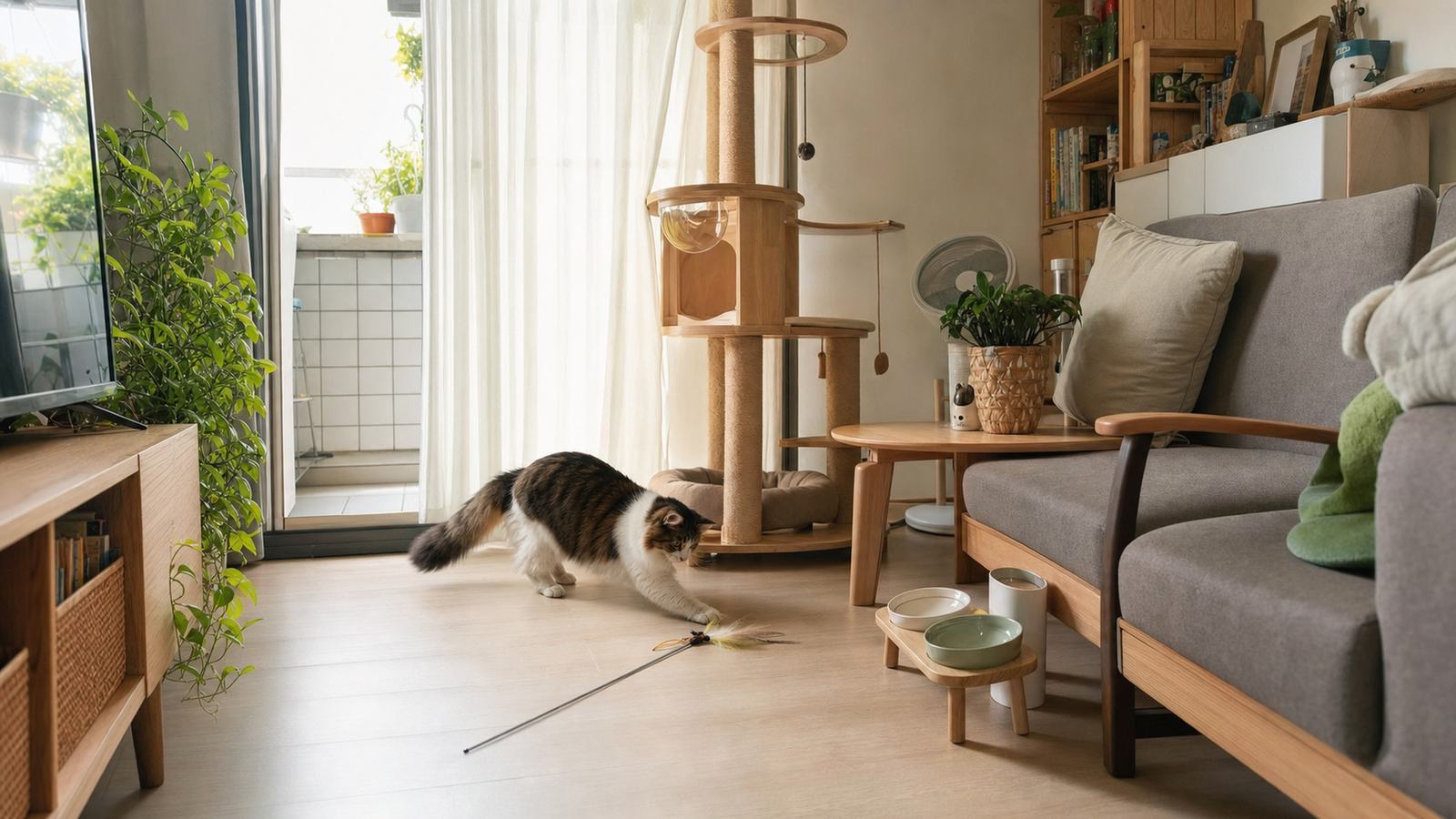
It's not enough for cats to just play until they're tired; they need a complete sequence that mimics hunting. An ideal sequence involves using a wand toy or other toy to initiate a chase, then giving the cat an opportunity to pounce, bite, or catch it, followed by their main meal or a small portion of food, and finally, grooming and rest. This sequence is more effective than simply dangling a toy around.
Many beginners try to play intensely with their cats right before bed, which only makes them more excited and less likely to sleep. The reasons are usually playing too stimulatively, not allowing the cat to successfully capture the toy, and not ending with food. To adjust a cat's routine, bedtime play should be like winding down, not a party.
Bedtime Wind-Down Should Be Consistent, and the Home Atmosphere Should Calm Down
It's recommended to have 10 to 15 minutes of playtime before bed, starting fast and then slowing down, finally allowing the cat to successfully catch the toy. Then, provide a small evening snack or part of their main meal, followed by putting away high-stimulation toys and gradually dimming lights and sounds. Ending the day with a similar routine every night helps the cat understand that it's time to rest.
If your cat wants to play in the middle of the night, try not to get up and interact immediately, otherwise, they will learn that yowling at night can also lead to entertainment. You can increase activity levels during the day and evening, while maintaining a low-key response at night. This takes days to weeks, not one day to completely change.
How to Arrange Daytime Activities and Environmental Stimulation in Small Taiwanese Homes?
Typical urban residences in Taiwan often have limited space, but this doesn't mean cats are necessarily bored. The key is to arrange vertical space, window perches, hiding spots, and pathways. Cat trees, shelves, window cushions, cardboard boxes, and scratching posts can give cats choices during the day, so they don't just sleep and wait for you to come home.
If no one is home during the day, you can arrange low-risk self-entertainment activities, such as food puzzle toys, snuffle mats, rolling ball tracks, or safe interactive feeders. Don't put all the toys out at once; rotating them provides more novelty than having them all available. These arrangements can help balance a cat's routine, preventing them from saving all their energy for late at night.
Ensure Comfort During Humid Seasons Too
During the rainy season or hot summers, cats may become lethargic, irritable, or even spend more time lying on cool floors. Dehumidification, ventilation, clean drinking water, and a fresh litter box environment directly affect whether they are willing to be active during the day. If the litter box is stuffy and smelly, cats may also express stress through inappropriate urination or frequent use.
In small living spaces, it's best not to cluster the litter box, food bowls, water bowls, and resting areas all in one corner. Separate them as much as possible to create distinct functional zones for the cat. When the environment becomes predictable, the cat's sense of security increases, and their routine becomes more stable.
When Is It Not a Routine Issue, and You Need to Consult a Vet or Behaviorist?
If a cat's routine suddenly becomes chaotic, especially accompanied by decreased appetite, weight changes, increased thirst, vomiting, diarrhea, abnormal urination, or an unusual gait, you should consult a veterinarian first. Older cats howling at night may also be related to pain, thyroid issues, blood pressure, cognitive decline, or changes in hearing or vision. These cannot be resolved solely through playtime and feeding adjustments.
Additionally, if your cat exhibits aggression towards people, severe anxiety, excessive grooming, persistent inappropriate urination, or increasing conflicts among multiple cats in the household, seeking help from a veterinarian and behavior consultant is recommended. Behavioral problems often involve simultaneous health, environmental, and interaction factors. Rule out physical conditions first before discussing lifestyle rhythms, to avoid delaying the resolution of the actual underlying cause.
Observe During Adjustments, Don't Force It
You can keep a simple weekly log of your cat's eating, defecation, active periods, meowing times, and pre-sleep interactions. This information can help you identify patterns and provide clearer background information during vet visits or consultations. Specific records are more helpful than vague statements like "they've been acting strange lately."
When adjusting your cat's routine, give them time to adapt. Don't change feeding one day, the litter box the next, and the sleeping location the day after. Too many changes will increase stress. Adjust one or two key points at a time, observe the reaction, and then make gradual corrections. This is usually more effective than making drastic changes quickly.
FAQ
Is it normal for cats to run around at night?
Occasional nighttime zoomies are normal, especially for energetic young cats. However, if it consistently disrupts the whole family's sleep every night, you need to check their daytime activity levels, dinner time, and pre-sleep playtime routine. If they suddenly start howling at night or show physical abnormalities, consult a veterinarian first.
My cat keeps waking me up early in the morning, should I respond?
If you feed them or play with them as soon as they meow, they will likely continue to wake you up early. It's recommended to separate breakfast from your waking time, feeding them only after a set routine. If necessary, use a timed feeder to reduce the cat's dependence on you.
How long should bedtime playtime be?
Most cats can start with 10 to 15 minutes, focusing on chase, capture, and a food-based conclusion. If the cat is still very energetic, increase their activity levels in the evening rather than overstimulating them before bed. After playtime, the environment should become quiet to signal that it's time to rest.
What to do if a multi-cat household's routine is disrupted?
First, ensure adequate resources, including litter boxes, food bowls, water bowls, resting spots, and hiding spaces. If one cat is frequently blocked, has their food stolen, or is chased, the routine issue might just be a manifestation of stress. In such cases, you need to adjust both the environment and the interactions between the cats.
When is it not a routine issue, and I need to find a vet or behavior consultant?
If the routine suddenly becomes chaotic and is accompanied by decreased appetite, weight changes, increased thirst, vomiting, diarrhea, abnormal urination, or an unusual gait, consult a veterinarian first. If aggression towards people, severe anxiety, excessive grooming, persistent inappropriate urination, or frequent multi-cat conflicts occur, seeking help from a veterinarian and behavior consultant is recommended.
Find Cat Supplies That Suit Your Home to Make Routine Adjustments Smoother
To stabilize your cat's routine, patience in establishing regularity is key, along with the right daily tools. Timed feeders, puzzle toys, wand toys, scratching posts, cat trees, comfortable beds, and easy-to-clean litter supplies can all help your cat direct their energy to the right times and places. CatGarden selects cat supplies commonly used by Taiwanese owners, suitable for small homes, multi-cat households, and beginners, making it easier for you to establish a long-term care rhythm from feeding and playtime to bedtime rituals.
Further Reading
- Summer Vacation Means More Time at Home, What If Your Cat's Routine Gets Disrupted? Start by Adjusting Playtime, Feeding, and Sleep | CatGarden
- New Cat Arrival: 7-Day Observation Chart - How to Read Eating, Litter Box Use, and Body Language? | CatGarden
- Is an FIV+ Cat Suitable for Adoption? First, Understand Cohabitation Risks, Isolation, and Daily Care | CatGarden
Frequently Asked Questions
Is it normal for cats to run around at night?
Occasional nighttime zoomies are normal, especially for energetic young cats. However, if it consistently disrupts the whole family's sleep every night, you need to check their daytime activity levels, dinner time, and pre-sleep playtime routine. If they suddenly start howling at night or show physical abnormalities, consult a veterinarian first.
My cat keeps waking me up early in the morning, should I respond?
If you feed them or play with them as soon as they meow, they will likely continue to wake you up early. It's recommended to separate breakfast from your waking time, feeding them only after a set routine. If necessary, use a timed feeder to reduce the cat's dependence on you.
How long should bedtime playtime be?
Most cats can start with 10 to 15 minutes, focusing on chase, capture, and a food-based conclusion. If the cat is still very energetic, increase their activity levels in the evening rather than overstimulating them before bed. After playtime, the environment should become quiet to signal that it's time to rest.
What to do if a multi-cat household's routine is disrupted?
First, ensure adequate resources, including litter boxes, food bowls, water bowls, resting spots, and hiding spaces. If one cat is frequently blocked, has their food stolen, or is chased, the routine issue might just be a manifestation of stress. In such cases, you need to adjust both the environment and the interactions between the cats.
When is it not a routine issue, and I need to find a vet or behavior consultant?
If the routine suddenly becomes chaotic and is accompanied by decreased appetite, weight changes, increased thirst, vomiting, diarrhea, abnormal urination, or an unusual gait, consult a veterinarian first. If aggression towards people, severe anxiety, excessive grooming, persistent inappropriate urination, or frequent multi-cat conflicts occur, seeking help from a veterinarian and behavior consultant is recommended.
CatGarden offers curated supplies, cat boarding, and grooming
Book services or shop online.