How to Start Clicker Training Your Cat: A 3-Step Guide for Beginners to Encourage Cooperation
Why is clicker training suitable for cats? Understanding the principle of reward association. Many believe only dogs are trainable, but cats can learn effectively too. The key is that cats generally don't respond to force, but they are highly motivated by "good things happen when I do something right."
Key takeaways
- The first step in clicker training is to establish the 'clicker sound = good things' association: click the clicker and immediately give a treat. Repeat 10 to 15 times, 2 to 3 sessions a day.
- The reward should be delivered within 1 to 2 seconds after the clicker is pressed so the cat connects the action with the reward. Give a reward for every correct instance during the initial training phase; don't switch to intermittent rewards too early.
- Each clicker training session for cats should be 1 to 3 minutes long, 2 to 4 times a day. It's better to have multiple short sessions than one long one. Sessions longer than 5 minutes often lead to distraction or boredom for the cat.
- Beginners only need 4 things for clicker training: a clicker or a consistent sound cue used by everyone in the household, high-value treats, a quiet training space, and short sessions of 1 to 3 minutes each.
- 5 common reasons clicker training might not be effective: the reward isn't appealing enough, the clicker is pressed too late, asking for too much at once, training for too long, or the cat is stressed at the moment.
Why is Clicker Training Suitable for Cats? Understanding the Principle of Reward Association
Many people assume only dogs are suitable for training, but cats can learn just as well, if not better. The key is that cats generally don't respond to coercion, but they are highly motivated by the concept of "good things happen when I do something right." The core of clicker training is to link a clear sound with a reward, helping your cat quickly understand the desired behavior.
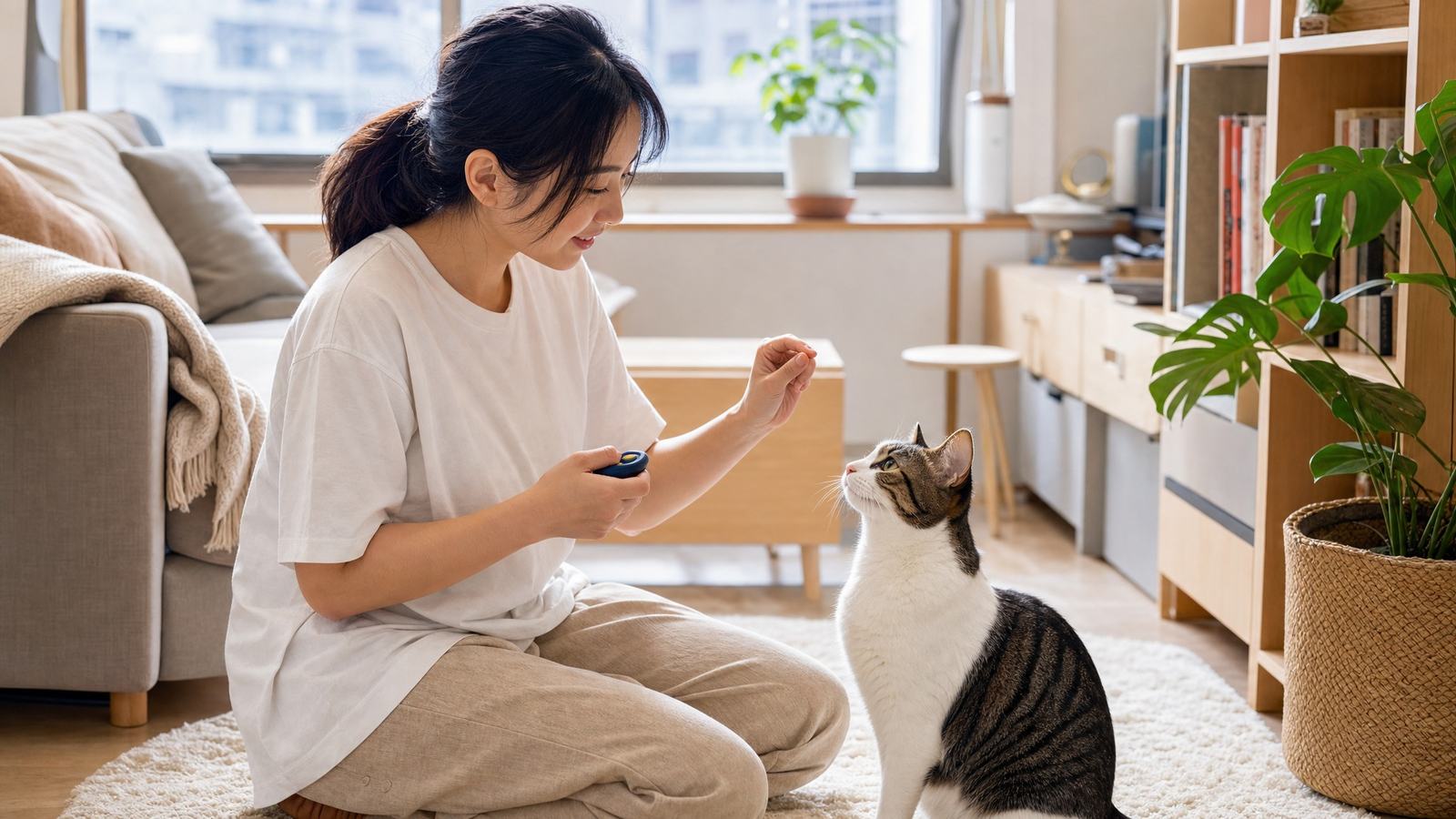
As soon as your cat performs the action you want, click the clicker and immediately give a treat. They will gradually learn that "this sound means I did it right." This method is more consistent than simply saying "good kitty" because the clicker sound is fixed, emotionless, and won't confuse your cat due to variations in tone from different people. For cats that are easily distracted or have sensitive personalities, such a clear signal is often more effective.
Furthermore, cats are naturally adept at observing their environment and establishing routines. As long as training sessions are short, consistent, and the rewards are enticing enough, they will quickly begin to participate actively. This is why many owners use clicker training to practice getting into carriers, touching paws, or using a scale, making daily care much easier.
How to Start Clicker Training Your Cat: 4 Essential Items for Beginners
You don't need to buy a lot of equipment to start. The focus should be on simple, easy-to-use items that you can use consistently. For beginners, preparing the environment and rewards is more important than rushing to teach complex behaviors. Especially in many Taiwanese homes where apartments or small spaces are common, reducing distractions and helping your cat focus is crucial.
The following 4 items are the most basic and practical. Once you have them ready, clicker training can begin smoothly:
- Clicker or Consistent Marker Sound: You can use a commercially available clicker or a consistent short sound, but ensure everyone in the household uses the same one.
- High-Value Treats: Choose small treats your cat loves and can eat quickly to avoid interrupting the rhythm.
- Quiet Training Space: Avoid noises like vacuum cleaners, outside sounds, or disturbances from other pets to help your cat concentrate.
- Short Sessions: 1 to 3 minutes per session is sufficient. It's better to have multiple short sessions per day than one long one.
Some owners overlook the size of the treats, resulting in feeding too many and the cat getting full quickly. It's recommended to cut treats into smaller pieces or use freeze-dried crumbles. This allows for more training repetitions without adding excessive calories. If your cat isn't particularly food-motivated, try training just before a meal, as they are usually more eager then.
3 Steps to Clicker Train Your Cat: Establish the Sound, Time It Right, and Reward Immediately
Step 1: Establish "Clicker Sound = Good Things Happen"
Don't rush to ask for specific behaviors at first. Simply click the clicker and immediately give a treat. Repeat this 10 to 15 times, allowing your cat to learn to anticipate a reward upon hearing the sound. This step is like laying the foundation for clicker training; a solid foundation makes learning anything later much smoother.
If you notice your cat looking at you or approaching you when they hear the sound, it usually means the association is starting to form. Don't drag this step out; 2-3 sessions per day are enough. The goal isn't more repetitions, but rather making each session easy, successful, and encouraging your cat to want more.
Step 2: Click at the Precise Moment
The true value of a clicker lies in "marking the correct behavior." For example, click the moment your cat steps into the carrier, sits down, or touches your hand. Don't wait until they complete a series of actions, or they might not know which specific behavior you are praising.
Many beginners fail not because the cat can't learn, but because they click too late. You can start with very simple actions, such as looking at you, approaching a target object, or taking one step into the carrier. The more you break down the goal, the easier it will be for your cat to understand and maintain their willingness to train.
Step 3: Reward Immediately After Clicking
After clicking, deliver the reward within 1 to 2 seconds. This helps your cat associate "that specific action just now" with a positive outcome. If you have to search for treats, unwrap them, or walk to a cabinet to get them, the effectiveness will be significantly reduced.
During the initial training phase, it's recommended to reward every correct instance, rather than starting to reward intermittently too early. Once your cat has a stable understanding of the rules, you can gradually introduce different difficulties or extend the duration of the behavior. This approach to clicker training is more likely to succeed than demanding too much from the start.
Which Daily Situations Are Best for Clicker Training? Such as Practicing Carrier Entry and Nail Trims
The most practical training isn't necessarily tricks like "shake hands" or "spin," but rather behaviors that reduce the stress of daily care. For Taiwanese owners, situations like vet visits, car rides, nail trimming, ear medication, or administering supplements can be made much easier with practice at home, saving a lot of pulling and tension later. This is where clicker training truly shines.
For example, when introducing the carrier, you can reward small steps like "looking at the carrier," "approaching the carrier," "front paws inside," and "entire body inside." Don't force your cat into the carrier from the start, as they might associate it with stress. Gradually building positive experiences will usually prevent a frantic chase when it's time to go out.
Practicing before nail trims is also highly beneficial. Start by touching their shoulders, front paws, and briefly touching their paw pads, clicking and rewarding each small step. Once your cat accepts you touching their paws, progress to showing them the nail clippers, approaching the clippers, and finally, a brief trim.
Additionally, standing on a scale, waiting on a designated mat, or accepting grooming can all be trained using the same principles. When your cat knows that cooperation leads to good things, many initially resisted routines can become predictable and acceptable.
What If Clicker Training Isn't Working? 5 Common Reasons for Failure and How to Adjust
If you feel there's been no progress after a few days of training, it might not be the method itself, but rather a snag in the details. Your cat's response to training depends heavily on their current state, including the environment, hunger level, stress, and reward attractiveness. Addressing common issues first will usually get your clicker training back on track.
- Rewards Aren't Appealing Enough: Regular kibble might not provide enough motivation for training. Try using smaller, more desirable treats.
- Clicking Too Late: Clicking several seconds after the behavior is completed makes it difficult for your cat to know what you are marking.
- Asking for Too Much at Once: Expecting them to fully enter the carrier or sit completely can lead to frustration. Break it down into smaller steps.
- Training Sessions Are Too Long: Sessions exceeding 5 minutes often lead to distraction or boredom. Short, frequent sessions are usually more effective.
- Cat is Stressed: Recent cleaning, loud noises at home, or visitors can make your cat uninterested in learning.
When adjusting, go back to a level your cat has already mastered and rebuild successful experiences. Set only one small goal per practice session, end once it's achieved, and let your cat leave with a positive impression. A stable, low-stress rhythm is key to long-term success in clicker training, rather than chasing speed.
FAQ
1. What age cat is clicker training suitable for?
Kittens to adult cats can start. Age isn't the biggest issue; what matters is whether the cat has food motivation, is relaxed at the moment, and if the training steps are broken down small enough.
2. Can I use a verbal cue instead of a clicker?
Yes, but it must be consistent, short, and the same sound used by everyone in the household. For example, consistently say "good" or "yes," avoiding variations that could confuse your cat.
3. How long should training sessions be per day to be effective?
1 to 3 minutes per session is sufficient, 2 to 4 times a day. Short sessions with a high success rate are more suitable for cats than long, infrequent ones.
4. My cat isn't interested in treats, can we still do clicker training?
You can try finding more appealing rewards, such as different flavors of freeze-dried treats or lickable pastes, or try training before meals. Some cats may respond to feather wands or petting, but food remains the most consistent reward in most cases.
5. Will clicker training make my cat too reliant on treats?
Initially, treats are needed to build the association. Once the behavior is stable, you can gradually transition to partial rewards or combine them with praise and play as feedback. As long as you manage portions and factor treats into the daily calorie intake, you generally don't need to worry too much.
If you want to establish better interactive habits with your cat, besides training methods, suitable treats, carriers, nail clippers, and daily supplies are also important. Choosing the right tools can make clicker training smoother and encourage your cat's cooperation. If you're looking to equip your feline friend with practical and easy-to-use training gear, visit CatGarden to browse a variety of cat supplies. From daily care to interactive rewards, you can gradually gather everything you need.
Further Reading
- How to Arrange Your First Week with a New Cat: Prepare Supplies, Routine, and Hiding Spots First
- Your Cat's Constant Nighttime Meowing Isn't Just to Annoy You: Distinguish Boredom, Routine Issues, or Signs of Aging
- Why Do Cats Knead? Distinguish Between Affection, Relaxation, or Self-Soothing Under Stress
CatGarden offers curated supplies, cat boarding, and grooming
Book services or shop online.