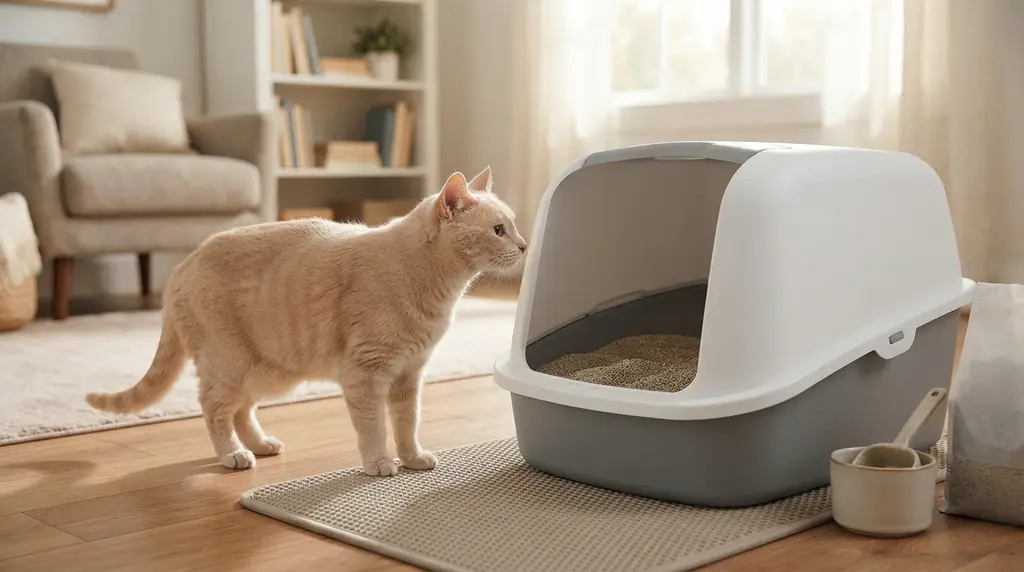
Cat Keeps Digging in Litter Box Non-Stop? First, Distinguish Between Burying Poop, Finding a Comfortable Spot, or Anxiety Behavior

Digging in the litter is a cat's natural instinct, normally lasting about 5-15 seconds. If your cat digs continuously, without urinating or defecating afterward, or repeatedly enters and exits the litter box, you need to determine if it's an issue with litter depth or type, anxiety, or a warning sign of lower urinary tract disease.
CatGarden Editorial TeamPublished 2026/08/16Updated 2026/10/05
litter boxcat behaviortoileting problemscat litterpet care knowledge
Cat Keeps Digging in Litter Box Non-Stop? First, Distinguish Between Burying Poop, Finding a Comfortable Spot, or Anxiety Behavior

Cats digging in the litter box is usually a normal covering instinct combined with "litter testing" behavior – a cat scratching for 5-15 seconds before or after eliminating is perfectly healthy. As long as they successfully use the toilet after scratching and seem relaxed when leaving, there's usually no need to intervene. What truly requires attention are three situations: prolonged digging without any output, repeatedly entering and exiting the litter box in a short period, and vocalizing while digging or excessively licking their genitals after digging – these are more likely signals of insufficient litter depth, unsuitable litter type, or lower urinary tract disease.

At CatGarden's boarding facility, we observe dozens of cats using the litter box daily. Honestly, "excessive digging" is one of the most easily overlooked yet highly effective early health indicators for owners. Below, we'll guide you through the diagnostic process used in our facility.

Key Takeaways

  • Healthy cats scratch for approximately 5-15 seconds before and after elimination. If they continue to dig vigorously for over 30 seconds without urinating or defecating, it's considered "excessive digging" requiring observation.
  • Litter depth is recommended to be 5-7 cm (about 5-6 cm for mineral litter, 6-7 cm for tofu litter). Litter that's too shallow is the most common reason for cats "digging non-stop until the litter box bottom makes noise" in our facility.
  • The litter box length should be at least 1.5 times the cat's body length (from nose tip to base of tail). Insufficient space can cause cats to "dig repeatedly" instead of turning around to find a comfortable spot.
  • Entering the litter box more than 3 times within an hour, with only a few drops of urine each time or no urine at all, should be treated as a urethral blockage emergency for male cats. Failure to urinate for over 24 hours can be fatal.
  • In a new environment (boarding, moving, new family member), empty digging or dry digging for the first 1-3 days is a common stress response, usually resolving on its own once the environment stabilizes.

First, Check the Time: Normal Digging vs. "Excessive Digging"

In the wild, cats cover their waste with soil or sand to reduce scent exposure; this behavior is ingrained in their genes, so digging itself isn't the problem. The key to judgment is the rhythm.

The Normal Version Looks Like This:

1. Enters box → Sniffs with nose, paws a few times (choosing a spot)

2. Squats to urinate or defecate

3. Stands up, turns to face the waste, digs to cover for 5-15 seconds

4. Jumps out of the box, may shake paws or lick them nearby

The Version Requiring Attention:

  • Digs for 30 seconds to over a minute, but no waste is produced (we call this "empty digging")
  • Digs, then immediately jumps back in to dig again, making three or four trips back and forth within an hour
  • Instead of digging the litter, they are digging the sides of the box, scratching the rim, or scratching the floor outside the box
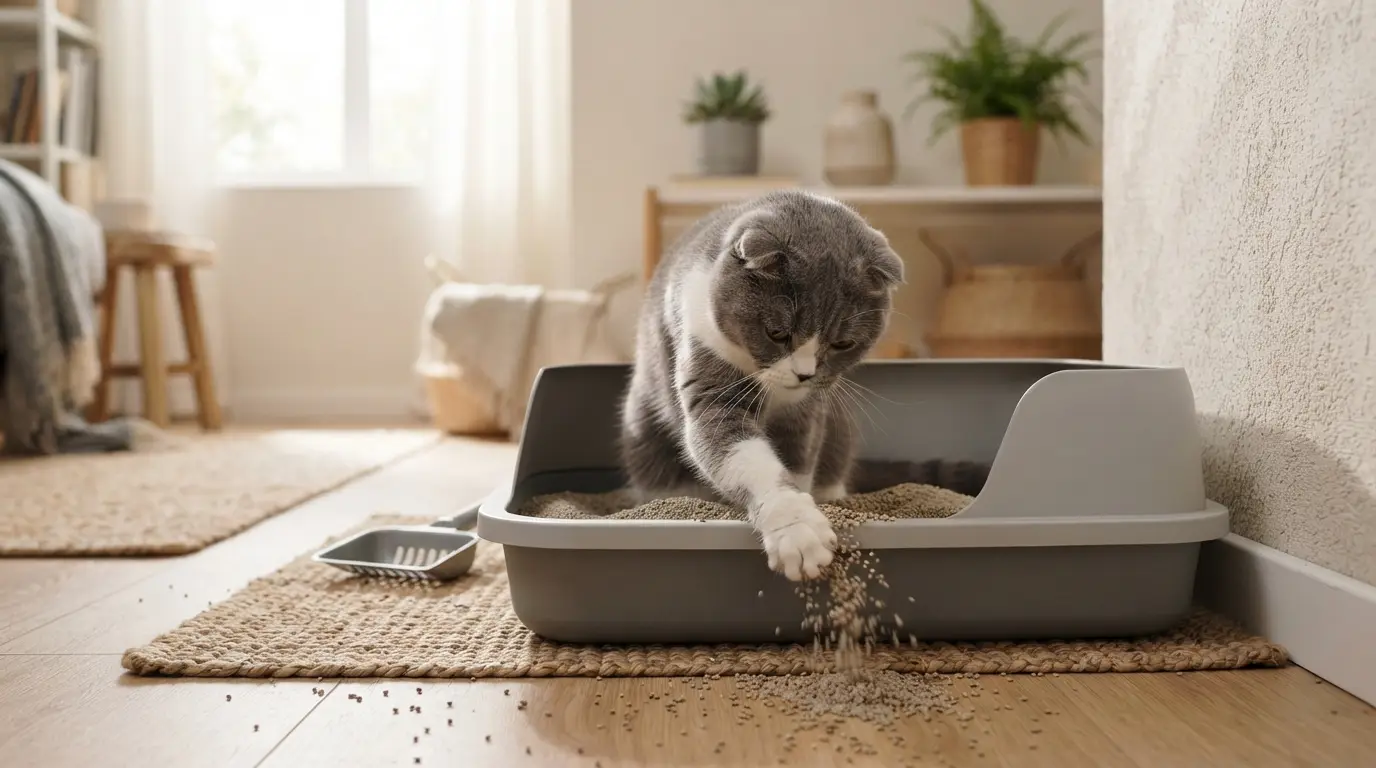
  • Continues digging until litter flies out of the box even after the waste is covered
  • Makes low meows or whimpers while digging, or frantically licks their lower abdomen immediately after digging

Just remember these four points: Time, Output, Post-Digging Actions, and Frequency. Comparing these four aspects will reveal about 80% of the reasons.

Reason 1: They Just Want to Bury Their Poop, But the "Tools Aren't Enough"

This is the most benign and common category. Cats feel they haven't sufficiently covered their scent, so they keep digging.

Litter Too Shallow, Digging for Ages with No Progress

When they dig down to the bottom of the box, making a "clinking" sound, and the litter is pushed to the corners leaving only a thin layer, cats will dig harder and longer. We uniformly fill our boarding rooms to 5-7 cm, not just for aesthetics – sufficient depth gives cats a "rewarding feeling" and satisfaction in one go. For detailed information on depth and litter change frequency, see this article: How Thick Should Cat Litter Be? Consider Litter Type, Weekly Refills, and Full Changes.

Litter Granules Too Coarse or Light, Can't Cover Properly

Coarse-grained wood or pine litter granules are large and don't interlock well, often leaving half the waste exposed after digging. Cats that prefer fine litter will almost always extend their digging time on such litter. In cases like this at our facility, switching to fine-grained, clumping litter (like Ultra-Fine Tofu Litter 3.0 or Odor Control Mineral Litter 3.0) typically reduces digging time by half within two to three days.

Box Too Small or Too Enclosed, Can't Turn Around

Cats need to "face their waste" to cover it effectively. If the box isn't long enough, they can't complete the turning motion and can only stand in place and dig the litter beside them. Enclosed litter boxes with small entrances or insufficient internal height can cause the same issue – a more comprehensive comparison can be found in Covered vs. Open Litter Box: Odor, Heat, and Acceptance. For principles on choosing a box, placement, and quantity, we recommend reading How to Choose a Litter Box: Size, Style, and Placement Explained as well.

Reason 2: They Are "Looking for an Acceptable Spot"

The second category is pickiness. Cats are far more discerning about their elimination environment than we imagine; they won't protest directly, they'll just keep "searching" with their noses and paws.

Typical signs include: digging for a long time in the box, changing spots three or four times, and only then squatting – or simply walking away to tread on the bathroom mat.

Common triggers:

  • Dirty Box: Clumps not scooped, urine clumps stuck in the corners. In a dirty box, cats will deliberately dig through the surface layer to find a clean spot, appearing to dig non-stop. Our standard is scooping twice daily; for households with one cat per litter box, at least once a day.
  • Fragrance Additives: Scented litter, deodorizing beads, air fresheners. Cats have sensitive olfactory senses, and these scents make them take longer to judge "if it's okay to go here."
  • Noisy Location, No Escape Route: Placed next to a washing machine, in a hallway, or with the litter box's exit directly facing a walkway, cats will dig while looking around warily.
  • Overlapping Scents in Multi-Cat Households: The scent of other cats in the same box will also lengthen digging time, even causing them to dig up other cats' waste. We recommend having one more litter box than the number of cats (number of cats + 1).
  • Vibrations or Sounds from Automatic Litter Boxes: Some cats will deliberately dig for a long time in an automatic box or be afraid to leave after digging. Key points for selection are summarized in How to Choose an Automatic Cat Litter Box.

Reason 3: Anxiety, Stress, and Emotional Digging

This third category is most easily mistaken for a "bad habit." Digging under stress usually has a few characteristics:

  • Dry Digging: No intention of eliminating, just digging in the litter, digging until litter sprays out.
  • Digging the Box Walls or Floor Outside the Box: This is more akin to marking territory and emotional release, not covering behavior.
  • Accompanied by other signals: Hiding, decreased appetite, excessive grooming, urinating inappropriately near doors or bags.

The most common triggers in our facility:

1. Environmental Changes: Moving house, renovations, changing litter box location, adding a new family member. Empty digging in boarding cats for the first 1-3 days is quite common. Our approach is to maintain the litter type, provide a hideaway box in the room, and reduce human noise interference. Most cats normalize by the third day. Therefore, we consistently advise owners to book boarding and bring their cat's usual litter – this alone can significantly reduce toileting anxiety.

2. Heat Cycle: Female cats in heat exhibit restlessness, rolling, excessive digging, and spraying urine. Behavioral patterns can be compared in What to Do When a Female Cat is in Heat: Symptoms, Cycle Length, Age of Onset, and Soothing Methods.

3. Tense Cat-to-Cat Relationships: Cats that have been ambushed in hallways may speed up and intensify their digging rhythm in the box, wanting to finish quickly.

4. Boredom and Attention Seeking: Some cats discover that "digging → owner rushes over," turning it into an interactive method, similar to the learning logic behind Why Does My Cat Keep Crying at Their Food Bowl? Hungry or Habit Guide. In such cases, do not react immediately; instead, substitute with regular playtime.

Reason 4: Health Issues Must Be Ruled Out First

Please do not skip this section. Lower Urinary Tract Disease (FLUTD), cystitis, urinary stones, and constipation often manifest initially as "repeatedly entering and exiting the litter box to dig."

If any of the following occur, contact your veterinarian that day:

  • Entering the litter box more than 3 times within an hour, with only a few drops of urine each time or no urine at all.
  • Urine clumps are very small and numerous, or pinkish or bloody streaks appear in the litter.
  • Vocalizing during urination, stiff posture, or frantically licking genitals immediately after digging.
  • Straining for a long time but producing only a small amount of hard stool, or no bowel movement for 2 consecutive days or more.
  • Accompanied by decreased appetite, vomiting, or hiding motionless.

Complete inability to urinate for over 24 hours in male cats is a life-threatening emergency; do not wait until the next day to observe. For gastrointestinal issues, refer to How Long Does Cat Gastroenteritis Last? Course of Illness, Feeding Recovery Sequence, and Warning Signs Requiring a Vet Visit. If dehydration is also suspected, perform the home checks in How to Tell if Your Cat is Dehydrated: Skin Elasticity, Oral Mucosa, and Water Intake – 3 Home Checks. The information above is for general care advice; seek veterinary attention promptly if symptoms persist or worsen.

3-Minute Self-Checklist

When you see your cat digging in the litter, ask yourself in order:

1. Is this digging accompanied by urination or defecation? (No → continue)

2. How many times has the cat entered the litter box today? Is it more than double the usual?

3. How does the size of the urine clumps compare to normal? Is there any blood?

4. Is the litter depth less than 5 cm? Has the bottom of the box been exposed?

5. Have there been any changes at home in the last 7 days? (Litter change, box change, move, new cat, visitors)

6. Is the cat digging the litter, or the box walls/floor?

If questions 1-3 show abnormalities → pursue veterinary care. If questions 4-6 show abnormalities → pursue environmental adjustments.

Our 7-Day Environmental Adjustment Process

If it's confirmed not to be a medical issue, we follow this step-by-step process, changing only one variable at a time to determine what's effective:

  • Day 1-2: Replenish litter to 5-7 cm, scoop twice daily, and record digging time. Many cases resolve here.
  • Day 3: Add another litter box, placed in a quiet corner with two escape routes, avoiding dead ends against walls.
  • Day 4-5: If the cat was using coarse-grained or scented litter, place fine-grained unscented litter in the new box, letting the cat choose (place them side-by-side, don't replace the old one directly).
  • Day 6: Remove additives like air fresheners and deodorizing beads; for enclosed boxes, remove the top cover for testing.
  • Day 7: Incorporate 10-15 minutes of scheduled interactive play (most effective before bedtime) to reduce stress-induced dry digging.

One easily overlooked point: underestimating the amount of litter needed can lead to chronic "insufficient refilling," where the cat is constantly digging in shallow litter. To calculate how much litter you need at home, refer to How Much Cat Litter Does One Cat Use Per Month? Litter Usage Calculation, Refilling Frequency, and Stockpile Storage Guide.

Frequently Asked Questions

My cat keeps digging in the litter box non-stop and scatters litter everywhere, what should I do?

First, ensure the litter depth is sufficient and scoop daily. Then, switch to a high-sided or anti-scatter litter box, and place a litter mat outside the box. If the cat is dry digging (no elimination intended), address the source of stress and ensure adequate playtime.

Why does my cat keep digging in the litter box but not use it?

The most common reasons are unsuitable litter type or cleanliness, or insufficient space in the box, causing the cat to "look for a spot" but never be satisfied. However, immediately rule out cystitis and urinary blockage – if the cat repeatedly enters and exits within an hour, producing only a few drops of urine or none at all, seek veterinary care that day.

My cat digs loudly in the litter box at night, can I stop it?

It's not recommended to stop or punish a cat while it's using the litter box, as this can lead to it eliminating elsewhere. The solution is to move the box away from the bedroom, switch to fine-grained litter that makes less noise, and schedule the main playtime before bedtime.

Is it normal for kittens to dig in the litter box constantly?

Kittens exhibit much more exaggerated digging and playing behaviors than adult cats; this is normal exploration during their developmental stage and usually subsides after 4-6 months. As long as they aren't eating litter and their weight and elimination are normal, maintain litter depth and cleanliness, and provide plenty of toys for digging.

In a multi-cat household, does one cat digging for a long time affect others?

Yes. Prolonged occupation of the litter box prevents other cats from using it, leading them to eliminate elsewhere. It's recommended to maintain one more litter box than the number of cats (number of cats + 1) and place them in different rooms, avoiding concentrating all boxes in one area.


Digging is one of a cat's most honest languages. They can't tell you directly when something is wrong, but their paws can. Next time you see them digging non-stop in the litter box, check the seconds, check for output, and check their post-digging actions – these three observations can help you distinguish between "instinct" and "a cry for help." If you need to adjust litter type or box configuration, feel free to browse our Shop for suitable combinations.

Article by CatGarden Editorial Team

CatGarden offers curated supplies, cat boarding, and grooming

Book services or shop online.
Back

Blog

Cat Keeps Digging in Litter Box Non-Stop? First, Distinguish Between Burying Poop, Finding a Comfortable Spot, or Anxiety Behavior

CatGarden Editorial TeamPublished 2026/08/16Updated 2026/10/05
litter boxcat behaviortoileting problemscat litterpet care knowledge
Cat Keeps Digging in Litter Box Non-Stop? First, Distinguish Between Burying Poop, Finding a Comfortable Spot, or Anxiety Behavior

Cats digging in the litter box is usually a normal covering instinct combined with "litter testing" behavior – a cat scratching for 5-15 seconds before or after eliminating is perfectly healthy. As long as they successfully use the toilet after scratching and seem relaxed when leaving, there's usually no need to intervene. What truly requires attention are three situations: prolonged digging without any output, repeatedly entering and exiting the litter box in a short period, and vocalizing while digging or excessively licking their genitals after digging – these are more likely signals of insufficient litter depth, unsuitable litter type, or lower urinary tract disease.

At CatGarden's boarding facility, we observe dozens of cats using the litter box daily. Honestly, "excessive digging" is one of the most easily overlooked yet highly effective early health indicators for owners. Below, we'll guide you through the diagnostic process used in our facility.

Key Takeaways

  • Healthy cats scratch for approximately 5-15 seconds before and after elimination. If they continue to dig vigorously for over 30 seconds without urinating or defecating, it's considered "excessive digging" requiring observation.
  • Litter depth is recommended to be 5-7 cm (about 5-6 cm for mineral litter, 6-7 cm for tofu litter). Litter that's too shallow is the most common reason for cats "digging non-stop until the litter box bottom makes noise" in our facility.
  • The litter box length should be at least 1.5 times the cat's body length (from nose tip to base of tail). Insufficient space can cause cats to "dig repeatedly" instead of turning around to find a comfortable spot.
  • Entering the litter box more than 3 times within an hour, with only a few drops of urine each time or no urine at all, should be treated as a urethral blockage emergency for male cats. Failure to urinate for over 24 hours can be fatal.
  • In a new environment (boarding, moving, new family member), empty digging or dry digging for the first 1-3 days is a common stress response, usually resolving on its own once the environment stabilizes.

First, Check the Time: Normal Digging vs. "Excessive Digging"

In the wild, cats cover their waste with soil or sand to reduce scent exposure; this behavior is ingrained in their genes, so digging itself isn't the problem. The key to judgment is the rhythm.

The Normal Version Looks Like This:

1. Enters box → Sniffs with nose, paws a few times (choosing a spot)

2. Squats to urinate or defecate

3. Stands up, turns to face the waste, digs to cover for 5-15 seconds

4. Jumps out of the box, may shake paws or lick them nearby

The Version Requiring Attention:

  • Digs for 30 seconds to over a minute, but no waste is produced (we call this "empty digging")
  • Digs, then immediately jumps back in to dig again, making three or four trips back and forth within an hour
  • Instead of digging the litter, they are digging the sides of the box, scratching the rim, or scratching the floor outside the box
  • Continues digging until litter flies out of the box even after the waste is covered
  • Makes low meows or whimpers while digging, or frantically licks their lower abdomen immediately after digging

Just remember these four points: Time, Output, Post-Digging Actions, and Frequency. Comparing these four aspects will reveal about 80% of the reasons.

Reason 1: They Just Want to Bury Their Poop, But the "Tools Aren't Enough"

This is the most benign and common category. Cats feel they haven't sufficiently covered their scent, so they keep digging.

Litter Too Shallow, Digging for Ages with No Progress

When they dig down to the bottom of the box, making a "clinking" sound, and the litter is pushed to the corners leaving only a thin layer, cats will dig harder and longer. We uniformly fill our boarding rooms to 5-7 cm, not just for aesthetics – sufficient depth gives cats a "rewarding feeling" and satisfaction in one go. For detailed information on depth and litter change frequency, see this article: How Thick Should Cat Litter Be? Consider Litter Type, Weekly Refills, and Full Changes.

Litter Granules Too Coarse or Light, Can't Cover Properly

Coarse-grained wood or pine litter granules are large and don't interlock well, often leaving half the waste exposed after digging. Cats that prefer fine litter will almost always extend their digging time on such litter. In cases like this at our facility, switching to fine-grained, clumping litter (like Ultra-Fine Tofu Litter 3.0 or Odor Control Mineral Litter 3.0) typically reduces digging time by half within two to three days.

Box Too Small or Too Enclosed, Can't Turn Around

Cats need to "face their waste" to cover it effectively. If the box isn't long enough, they can't complete the turning motion and can only stand in place and dig the litter beside them. Enclosed litter boxes with small entrances or insufficient internal height can cause the same issue – a more comprehensive comparison can be found in Covered vs. Open Litter Box: Odor, Heat, and Acceptance. For principles on choosing a box, placement, and quantity, we recommend reading How to Choose a Litter Box: Size, Style, and Placement Explained as well.

Reason 2: They Are "Looking for an Acceptable Spot"

The second category is pickiness. Cats are far more discerning about their elimination environment than we imagine; they won't protest directly, they'll just keep "searching" with their noses and paws.

Typical signs include: digging for a long time in the box, changing spots three or four times, and only then squatting – or simply walking away to tread on the bathroom mat.

Common triggers:

  • Dirty Box: Clumps not scooped, urine clumps stuck in the corners. In a dirty box, cats will deliberately dig through the surface layer to find a clean spot, appearing to dig non-stop. Our standard is scooping twice daily; for households with one cat per litter box, at least once a day.
  • Fragrance Additives: Scented litter, deodorizing beads, air fresheners. Cats have sensitive olfactory senses, and these scents make them take longer to judge "if it's okay to go here."
  • Noisy Location, No Escape Route: Placed next to a washing machine, in a hallway, or with the litter box's exit directly facing a walkway, cats will dig while looking around warily.
  • Overlapping Scents in Multi-Cat Households: The scent of other cats in the same box will also lengthen digging time, even causing them to dig up other cats' waste. We recommend having one more litter box than the number of cats (number of cats + 1).
  • Vibrations or Sounds from Automatic Litter Boxes: Some cats will deliberately dig for a long time in an automatic box or be afraid to leave after digging. Key points for selection are summarized in How to Choose an Automatic Cat Litter Box.

Reason 3: Anxiety, Stress, and Emotional Digging

This third category is most easily mistaken for a "bad habit." Digging under stress usually has a few characteristics:

  • Dry Digging: No intention of eliminating, just digging in the litter, digging until litter sprays out.
  • Digging the Box Walls or Floor Outside the Box: This is more akin to marking territory and emotional release, not covering behavior.
  • Accompanied by other signals: Hiding, decreased appetite, excessive grooming, urinating inappropriately near doors or bags.

The most common triggers in our facility:

1. Environmental Changes: Moving house, renovations, changing litter box location, adding a new family member. Empty digging in boarding cats for the first 1-3 days is quite common. Our approach is to maintain the litter type, provide a hideaway box in the room, and reduce human noise interference. Most cats normalize by the third day. Therefore, we consistently advise owners to book boarding and bring their cat's usual litter – this alone can significantly reduce toileting anxiety.

2. Heat Cycle: Female cats in heat exhibit restlessness, rolling, excessive digging, and spraying urine. Behavioral patterns can be compared in What to Do When a Female Cat is in Heat: Symptoms, Cycle Length, Age of Onset, and Soothing Methods.

3. Tense Cat-to-Cat Relationships: Cats that have been ambushed in hallways may speed up and intensify their digging rhythm in the box, wanting to finish quickly.

4. Boredom and Attention Seeking: Some cats discover that "digging → owner rushes over," turning it into an interactive method, similar to the learning logic behind Why Does My Cat Keep Crying at Their Food Bowl? Hungry or Habit Guide. In such cases, do not react immediately; instead, substitute with regular playtime.

Reason 4: Health Issues Must Be Ruled Out First

Please do not skip this section. Lower Urinary Tract Disease (FLUTD), cystitis, urinary stones, and constipation often manifest initially as "repeatedly entering and exiting the litter box to dig."

If any of the following occur, contact your veterinarian that day:

  • Entering the litter box more than 3 times within an hour, with only a few drops of urine each time or no urine at all.
  • Urine clumps are very small and numerous, or pinkish or bloody streaks appear in the litter.
  • Vocalizing during urination, stiff posture, or frantically licking genitals immediately after digging.
  • Straining for a long time but producing only a small amount of hard stool, or no bowel movement for 2 consecutive days or more.
  • Accompanied by decreased appetite, vomiting, or hiding motionless.

Complete inability to urinate for over 24 hours in male cats is a life-threatening emergency; do not wait until the next day to observe. For gastrointestinal issues, refer to How Long Does Cat Gastroenteritis Last? Course of Illness, Feeding Recovery Sequence, and Warning Signs Requiring a Vet Visit. If dehydration is also suspected, perform the home checks in How to Tell if Your Cat is Dehydrated: Skin Elasticity, Oral Mucosa, and Water Intake – 3 Home Checks. The information above is for general care advice; seek veterinary attention promptly if symptoms persist or worsen.

3-Minute Self-Checklist

When you see your cat digging in the litter, ask yourself in order:

1. Is this digging accompanied by urination or defecation? (No → continue)

2. How many times has the cat entered the litter box today? Is it more than double the usual?

3. How does the size of the urine clumps compare to normal? Is there any blood?

4. Is the litter depth less than 5 cm? Has the bottom of the box been exposed?

5. Have there been any changes at home in the last 7 days? (Litter change, box change, move, new cat, visitors)

6. Is the cat digging the litter, or the box walls/floor?

If questions 1-3 show abnormalities → pursue veterinary care. If questions 4-6 show abnormalities → pursue environmental adjustments.

Our 7-Day Environmental Adjustment Process

If it's confirmed not to be a medical issue, we follow this step-by-step process, changing only one variable at a time to determine what's effective:

  • Day 1-2: Replenish litter to 5-7 cm, scoop twice daily, and record digging time. Many cases resolve here.
  • Day 3: Add another litter box, placed in a quiet corner with two escape routes, avoiding dead ends against walls.
  • Day 4-5: If the cat was using coarse-grained or scented litter, place fine-grained unscented litter in the new box, letting the cat choose (place them side-by-side, don't replace the old one directly).
  • Day 6: Remove additives like air fresheners and deodorizing beads; for enclosed boxes, remove the top cover for testing.
  • Day 7: Incorporate 10-15 minutes of scheduled interactive play (most effective before bedtime) to reduce stress-induced dry digging.

One easily overlooked point: underestimating the amount of litter needed can lead to chronic "insufficient refilling," where the cat is constantly digging in shallow litter. To calculate how much litter you need at home, refer to How Much Cat Litter Does One Cat Use Per Month? Litter Usage Calculation, Refilling Frequency, and Stockpile Storage Guide.

Frequently Asked Questions

My cat keeps digging in the litter box non-stop and scatters litter everywhere, what should I do?

First, ensure the litter depth is sufficient and scoop daily. Then, switch to a high-sided or anti-scatter litter box, and place a litter mat outside the box. If the cat is dry digging (no elimination intended), address the source of stress and ensure adequate playtime.

Why does my cat keep digging in the litter box but not use it?

The most common reasons are unsuitable litter type or cleanliness, or insufficient space in the box, causing the cat to "look for a spot" but never be satisfied. However, immediately rule out cystitis and urinary blockage – if the cat repeatedly enters and exits within an hour, producing only a few drops of urine or none at all, seek veterinary care that day.

My cat digs loudly in the litter box at night, can I stop it?

It's not recommended to stop or punish a cat while it's using the litter box, as this can lead to it eliminating elsewhere. The solution is to move the box away from the bedroom, switch to fine-grained litter that makes less noise, and schedule the main playtime before bedtime.

Is it normal for kittens to dig in the litter box constantly?

Kittens exhibit much more exaggerated digging and playing behaviors than adult cats; this is normal exploration during their developmental stage and usually subsides after 4-6 months. As long as they aren't eating litter and their weight and elimination are normal, maintain litter depth and cleanliness, and provide plenty of toys for digging.

In a multi-cat household, does one cat digging for a long time affect others?

Yes. Prolonged occupation of the litter box prevents other cats from using it, leading them to eliminate elsewhere. It's recommended to maintain one more litter box than the number of cats (number of cats + 1) and place them in different rooms, avoiding concentrating all boxes in one area.


Digging is one of a cat's most honest languages. They can't tell you directly when something is wrong, but their paws can. Next time you see them digging non-stop in the litter box, check the seconds, check for output, and check their post-digging actions – these three observations can help you distinguish between "instinct" and "a cry for help." If you need to adjust litter type or box configuration, feel free to browse our Shop for suitable combinations.

Article by CatGarden Editorial Team

One email a month of cat-care tips

Hand-picked care, behavior and grooming tips once a month. Subscribe and we will send you our three most-read articles right away.

Keep reading