What to Do When Your Female Cat is in Heat? Symptoms, Cycle Length, Age of Onset, and Soothing Methods, All About Spaying Timing
Female cats typically go into heat for the first time between 6-10 months of age, with each heat cycle lasting about 4-10 days. If not mated, they will go into heat again every 2-3 weeks. This article organizes heat symptoms, what to do and not to do for soothing, and the optimal age for spaying.
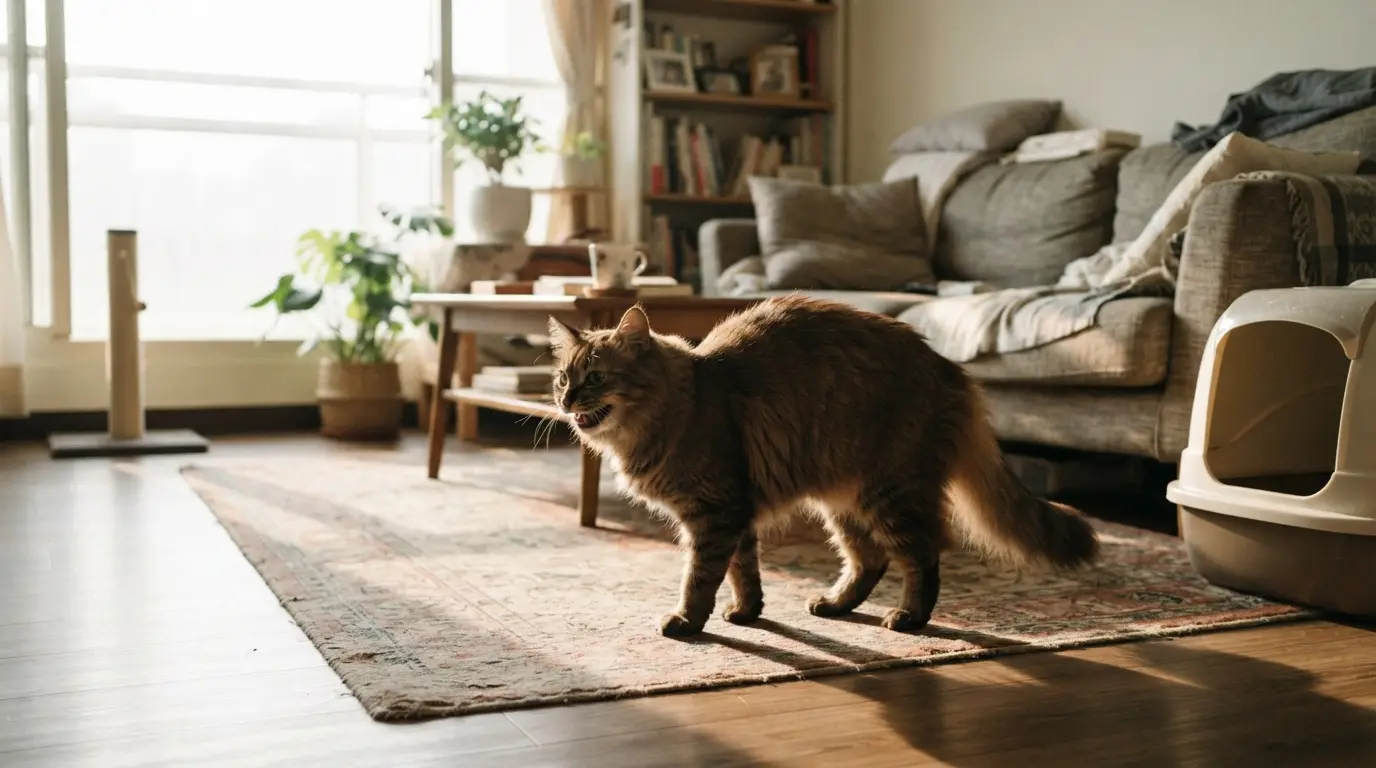
The three most typical signs of a female cat in heat are persistent, drawn-out howling (especially at night), assuming a "treading" posture with her hindquarters raised when touched, and spraying urine and rubbing against furniture or walls. A single heat cycle lasts approximately 4-10 days. If she is not mated, she will typically go into heat again every 2-3 weeks. The only true solution is spaying; other methods are merely temporary measures to "get through these few days."
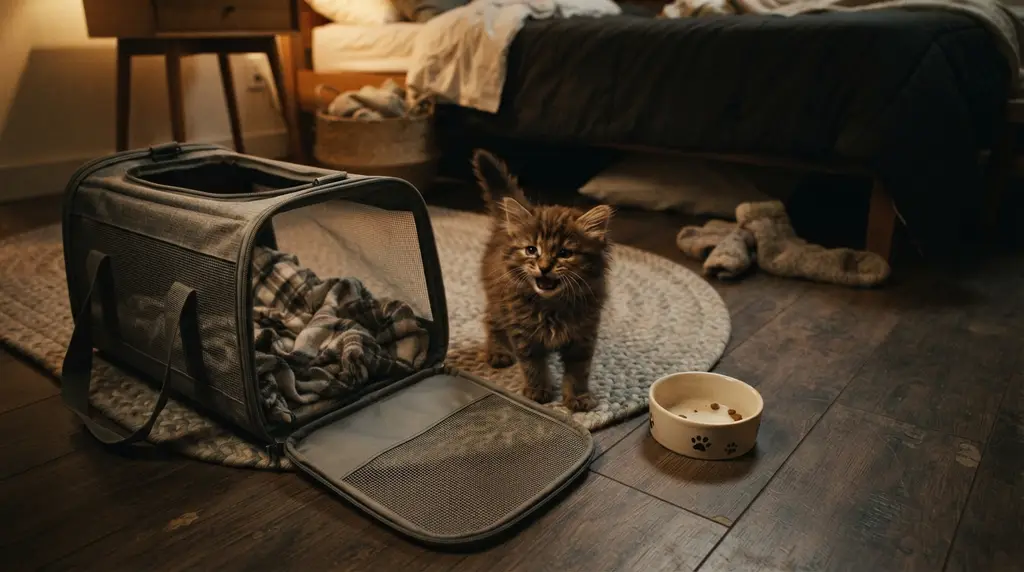
The most common situation we encounter at the cattery is owners bringing in a female cat from her carrier, crying hoarsely, and asking, "Is she in a lot of pain?" Seven or eight times out of ten, it's her first heat. This article will cover the timeline, soothing methods, and how to distinguish this from old cat yowling or pain-related vocalizations, all in one place.
Key Takeaways
- Female cats typically have their first heat between 6-10 months of age. Short-haired breeds may go into heat as early as 4-5 months, while long-haired breeds (like Persians and Himalayans) may not until after 12 months.
- A single heat cycle lasts about 4-10 days (average 7 days). Unmated female cats go into heat approximately every 2-3 weeks. Due to long indoor lighting hours and warm climates in Taiwan, they may experience heat more than 6 times a year, with virtually no distinct off-season.
- Never use a cotton swab or any object to stimulate a female cat's reproductive tract. This can lead to false pregnancy, endometritis, and pyometra, and it can reinforce the behavior, making her cry even more intensely next time.
- The recommended age for spaying is 5-6 months of age, when the cat weighs over 2-2.5 kg. Completing the procedure before the first heat significantly reduces the risk of mammary tumors (by about 90% according to literature).
- During heat, the vocalizations only turn into the "treading" posture when the hindquarters are touched. If a cat is crying while hunched over, avoids being touched anywhere, or starts yowling at night after the age of ten, it's likely not heat but rather a sign of pain or illness.
What is Heat in Female Cats? When Does it Start?
Cats are "seasonally polyestrous" animals that are "induced ovulators." In simple terms: longer daylight hours trigger estrus, and ovulation does not occur without mating, leading to repeated cycles until pregnancy or spaying.
The timing of the first heat is influenced by three factors:
- Age and Weight: Most female cats have their first heat between 6-10 months of age, when they reach about 70-80% of their adult weight.
- Breed and Coat Length: Oriental short-haired cats (Siamese, Abyssinian, etc.) often go into heat as early as 5-6 months; large, long-haired breeds tend to be later.
- Lighting: This is particularly important in Taiwan. Indoor cats exposed to lights until 11 or 12 at night are essentially experiencing "long daylight hours" year-round. This is why we still encounter female cats in heat during winter when boarding.
So, you might think, "My cat is only five months old, she shouldn't be in heat, right?" — She might be. We've seen short-haired kittens start crying at just over five months old.
Symptoms of Heat in Female Cats: 6 Behaviors Owners Most Often Misinterpret
1. Nighttime Howling, Low and Prolonged
It's not the usual "meow," but a drawn-out, undulating sound, like crying or calling for someone, often most intense between 2-5 AM. Many owners encountering this for the first time assume the cat is injured or in internal pain.
2. Hindquarters Raised and Treading When Back is Touched
This is the most distinguishing sign. Gently stroke the area between the base of the tail and the lower back, and a cat in heat will immediately lower her front end, raise her hindquarters, and tuck her tail to the side, while her hind legs perform small, rapid steps in place. Sick or painful cats do not exhibit this behavior.
3. Excessive Rubbing Against Walls, Furniture, and Your Legs
The frequency of rubbing will be much higher than usual. She may also roll on her side, rubbing her chin and cheeks on the floor. This is essentially the same system as normal scent marking, but with greatly increased intensity. You can refer to What is Your Cat Doing When It Rubs Against Walls and Furniture? A Guide to Scent Marking, Security, and Heat Signals.
4. Inappropriate Urination and Spraying on Vertical Surfaces
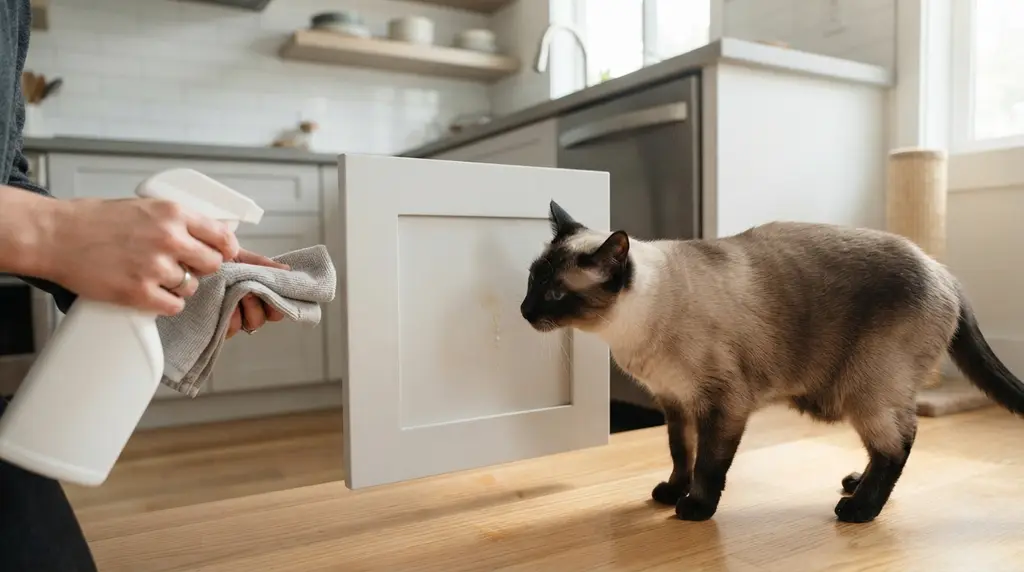
Many people think only male cats spray. Female cats in heat also spray: they stand with their tail quivering, releasing small amounts of urine on walls, doorways, or luggage. This urine has a particularly strong odor, different from the inappropriate urination caused by litter box issues. During this period, we recommend increasing litter box cleaning frequency, using a thicker layer of litter, and choosing a litter with good odor control (our own Odor Control Mineral Litter 3.0 is easier to clean up during this time) to reduce the likelihood of her urinating elsewhere due to the strong smell.
5. Decreased Appetite, Restlessness, and Constant Desire to Escape
A 30% drop in appetite during heat is common and usually returns to normal within 1-2 days. However, if your cat completely stops eating for more than 24 hours, it cannot be solely attributed to heat. Also, ensure doors and windows, including screens, are secure, as this is a peak period for lost pets.
6. Unusually Clingy or, Conversely, Irritable
Some cats become extremely affectionate and follow you everywhere, even to the bathroom; others may become aggressive when petted. Both are normal. The key is that the behavior appears and disappears quickly within a few days, rather than continuously worsening.
How Long Does a Cat's Heat Cycle Last? Complete Cycle Timeline
For an "unmated domestic cat," a cycle generally proceeds as follows:
| Stage | Duration | What You'll Observe |
|---|---|---|
| Proestrus | 1-2 days | Increased clinginess, rubbing, but still not receptive to mating posture |
| Estrus | 4-10 days, average ~7 days | Most intense howling, hindquarters raised and treading, spraying, decreased appetite |
| Interestrus | 7-14 days | Behavior returns completely to normal; many owners think it's "over" |
| Next Cycle | ~14-21 days from the start of the previous one | The same show repeats |
How Many Times a Year Does a Female Cat Go into Heat?
Theoretically, as long as daylight and physical condition permit, the cycle will continue. In a typical indoor environment in Taiwan, it's not uncommon for a cat to experience 6-10 heat cycles per year, meaning she could be in heat almost every month. This is why "waiting for her to calm down" usually doesn't work – she'll only have a two-week break before starting again.
How Long Until a Cycle "Quiets Down"?
The peak of vocalization usually occurs between days 2-5 of the estrus phase. Our observations at the cattery show a pattern: the first night is the most intense, intensity decreases by the third day, and by the fifth to seventh day, the volume generally returns to normal. If the yowling continues for more than 14 days without an intervening quiet period, it's advisable to have a veterinarian check for residual ovarian tissue or ovarian cysts (which can also occur in spayed cats).
How to Soothe a Female Cat in Heat: 5 Things You Can Do
Heat itself is not an illness and is not painful. The goal of soothing is to reduce stimulation, expend energy, and preserve your sleep.
1. Engage in High-Intensity Play Before Bed: Use a feather wand for 15-20 minutes until she's panting and exhausted, then offer a meal of wet food. This is the most effective method we use for nighttime vocalizations.
2. Shift Your Schedule Earlier and Dim Evening Lights: After 9 PM, dim the main lights to reduce the "long daylight hours" signal.
3. Provide Vertical Space and Hiding Spots: Cat trees, cardboard boxes, and cozy hiding places allow her to channel her excited energy.
4. Physical Separation in Multi-Cat Households: Unspayed male cats must be housed separately. Use draft stoppers under doors to minimize scent communication. Even if pregnancy isn't a concern, mutual stimulation will make it harder to soothe both cats.
5. Accept "Presence Without Reinforcement": Responding to her cries by getting up to feed her or open doors reinforces the behavior, training her to cry for longer. This is the same behavioral reinforcement logic discussed in Is Your Cat Crying at the Food Bowl Because It's Hungry or Out of Habit?.
4 Things You Should Absolutely NOT Do
- Do not use a cotton swab or any object to stimulate the reproductive tract. The internet myth of "helping her ovulate will calm her down" is a clinical disaster: it can cause mucosal damage, ascending bacterial infections, false pregnancy (which can last over 40 days), and even pyometra. Furthermore, it reinforces the behavior, making her cry more intensely and become more reliant on stimulation next time. This is the most crucial folk remedy we need to correct, without exception.
- Do not use human or unknown hormonal medications yourself. Medications to suppress heat carry risks of uterine disease, diabetes, and mammary tumors. They should only be used short-term under veterinary evaluation.
- Do not "let her go out and mate once." One litter typically results in 4-6 kittens, and she will continue to go into heat repeatedly, only amplifying the problem.
- Do not scold, spray with water, or confine her to the bathroom. This is not bad behavior but hormone-driven. Punishment will only damage your bond. Incidentally, a cat's clinginess or distance during heat can fluctuate; don't rush to interpret it as a change in affection. You can refer to What Does Your Cat's Sleeping Position Mean? Interpreting Sleeping Postures, Locations, and Affection for interpretation methods.
Regarding catnip during this period: our recommendation is to avoid it during the peak of heat. Wait until her emotions calm down and she enters the interestrus phase, then use it for play stimulation, such as with our Premium Catnip, to avoid adding excitement to an already excited state.
Is This Yowl Due to Heat, or a Health Problem? Key Differentiating Factors
This is something we frequently help owners clarify.
Vocalizations During Heat
- Age: Typically between 6 months and adulthood, if unspayed.
- Posture: Normal activity level, reduced but present appetite, hindquarters raised and treading when the lower back is touched.
- Timing: Continuous for several days, followed by a distinct quiet interval.
Old Cat Yowling
- Age: Most common in cats over 10 years old, and starts years after being spayed.
- Characteristics: Cries in specific locations (hallways, doorways), sounds like searching for someone, sleeps more during the day, may be accompanied by weight loss, increased thirst, hyperthyroidism, or cognitive dysfunction.
- These cases require internal medicine investigation. For details, see Your Cat's Nighttime Yowling Isn't Just to Annoy You: Distinguishing Boredom, Disrupted Sleep Schedules, or Signs of Aging.
Vocalizations Due to Pain or Emergency
- Characteristics: Short, sudden cries, cries when touched, hunched posture, hiding in dark places.
- Common Scenarios: Urinary tract obstruction (repeatedly squatting in the litter box with no urine output), abdominal pain, injuries.
- Seek immediate veterinary care if your cat experiences difficulty urinating, rapid breathing, pale or bluish gums, or refuses to eat or drink for over 24 hours. Do not wait.
Another important point: if a female cat shows lethargy, fever, increased thirst, abdominal swelling, or vaginal discharge (pus or blood) 2-8 weeks after her heat cycle ends, strongly suspect pyometra, which is a medical emergency requiring immediate treatment.
Recommended Spaying Timing: What's the Optimal Age?
General Recommendations for Pet Cats
- 5-6 months of age, weighing over 2-2.5 kg, completed before the first heat cycle. This is the current consensus among most veterinarians and international feline organizations.
- Benefits: Shorter surgical time, less blood flow and tissue engorgement, faster recovery. Literature indicates that spaying before 6 months of age can reduce the risk of mammary tumors by about 90% and virtually eliminate the risk of pyometra and ovarian tumors.
Can She Be Spayed While in Heat?
Technically, it's possible, but during heat, the reproductive tract has increased blood flow and fragile tissues, raising the risk of bleeding and surgical difficulty. Most veterinarians recommend scheduling the surgery 1-2 weeks after the heat cycle ends (i.e., during the interestrus phase). If the cat is repeatedly in heat and her condition is chaotic, let your veterinarian make an individual assessment.
Pre- and Post-Surgery Preparation
When scheduling the appointment, have her vaccination records, weight, and the start and end dates of her last heat readily available, as this will be very helpful during the visit. For post-operative care, wound management, Elizabethan collar use, and activity restrictions, we have a separate day-by-day guide: How to Care for Your Female Cat After Spaying? A Complete Timeline for Wound Care, E-Collar, Diet, and Activity Restrictions from Day 0-14.
How Long Until Behavioral Changes After Spaying?
Howling and hindquarters treading typically disappear within a few days after surgery. Spray marking usually decreases significantly, but if it has become a habit, it may take another 4-8 weeks of environmental adjustments (adding litter boxes, thoroughly cleaning old urine spots) to stop completely.
Male Cat Heat Behaviors (Good to Know for Comparison)
When you have both a male and female cat, they can influence each other, so it's helpful to compare:
- Urine Spraying: Standing posture, tail quivering, strong and pungent urine odor, often sprayed on vertical surfaces.
- Persistent Howling and Attempting to Escape: Wants to go outside to find a female cat; the risk of escaping is higher than for females.
- Increased Aggression: Becomes more prone to fighting with resident cats or the owner.
- Decreased Appetite and Weight Loss, Restlessness.
Male cats typically reach sexual maturity between 6-9 months of age. The recommended age for neutering is similar to that for females. Important Note: A male cat can be triggered by the scent of a female cat in heat nearby (even stray cats downstairs), which is why sometimes "a single male cat suddenly becomes frantic" has an answer outside the window.
What If You Need to Travel During Heat Season?
Boarding is possible in such situations, but you must inform the facility upfront when booking that your cat is "unspayed and currently in heat." At the cattery, we arrange heat-prone female cats in areas far from unspayed males, minimizing visual and scent contact, and increasing litter box cleaning frequency. We also ask owners to bring their cat's usual litter and old clothing with their scent to reduce environmental stress. If you need to arrange boarding, please review our Cat Boarding Checklist: Vaccines and Items Needed Before Check-in for vaccine and item requirements, then fill out the Boarding Reservation form with your needs.
Frequently Asked Questions
Is Heat Painful for Female Cats? Do They Need Pain Medication?
Heat itself is not painful. Her howling is a hormone-driven mating behavior, and she does not need pain medication. If a cat cries while hunched over, flinches when touched, or changes her gait, it is not heat, and you should seek veterinary attention immediately.
How Long Does a Female Cat's Heat Cycle Last? Can Anything Speed It Up?
A single cycle lasts about 4-10 days, averaging a week. There is no safe way to "speed it up." The only actions you can take are to reduce stimulation, engage in longer pre-bedtime play sessions, and dim evening lights. Unmated female cats will go into heat again approximately every 2-3 weeks. The only way to truly end it is through spaying.
Is it Really Not Okay to Use a Cotton Swab to "Help" a Female Cat?
It is truly not okay. Stimulating the reproductive tract can cause mucosal injury, ascending bacterial infections, false pregnancy, and pyometra. It also reinforces the behavior, making her harder to soothe next time, and is a high-risk folk remedy that should be completely avoided.
Is Spaying Before the First Heat Too Early and Will It Affect Development?
Spaying at 5-6 months of age, when the cat weighs over 2 kg, has not shown any adverse effects on healthy development. Instead, it significantly reduces the risk of mammary tumors and uterine diseases. Please consult your veterinarian for the specific timing based on your cat's weight and health condition.
Why Does a Spayed Female Cat Exhibit Heat Behaviors?
This could be due to ovarian remnant syndrome or hormone-related conditions. It could also be behavioral changes caused by other factors (pain, anxiety, aging). It is recommended to record the dates and frequency of the behavior and consult your veterinarian for examination and blood tests.
Ultimately, heat is not a problem of "how to soothe," but rather "when to schedule spaying." Soothing is about helping you and your cat safely get through those 7 days; spaying is what prevents her from having to repeat it every month. If you're losing sleep over nighttime yowling, first note the dates, check your doors and windows, and then call the vet to schedule an appointment – that's the most practical step. You can also gather any necessary supplies like cat litter and cleaning products from our Shop.
(This article provides general care information and cannot replace veterinary diagnosis. If your cat stops eating or drinking for over 24 hours, experiences difficulty urinating, has a fever, or shows abnormal discharge, seek immediate veterinary care.)
Article by CatGarden Editorial Team
CatGarden offers curated supplies, cat boarding, and grooming
Book services or shop online.