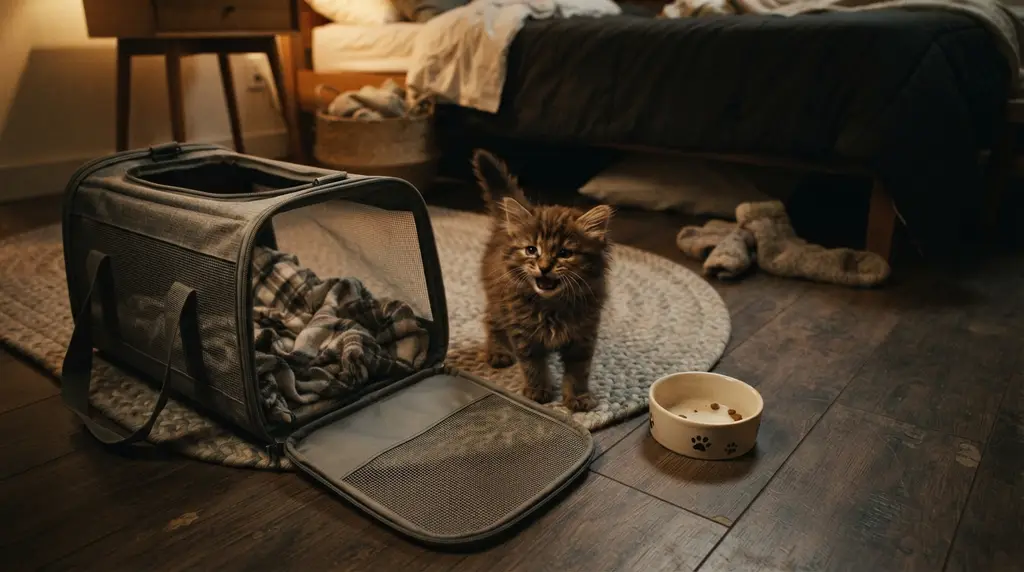
What Are the Symptoms of a Male Cat in Heat? A Guide to Soothing and Neutering for Spraying, Nocturnal Howling, and Irritability

The three most typical signs of a male cat in heat are standing to spray urine, prolonged howling, and a strong urge to escape outdoors, often starting between 5-8 months of age. This article details the symptoms, vocalization characteristics, home soothing methods, and the optimal timing for neutering, along with how long behavioral improvements take post-surgery.
CatGarden Editorial TeamPublished 2026/09/05Updated 2026/10/06
male cat heatcat behaviorneuteringsprayingcat care
What Are the Symptoms of a Male Cat in Heat? A Guide to Soothing and Neutering for Spraying, Nocturnal Howling, and Irritability

The three most obvious symptoms of a male cat in heat are: standing to spray urine on vertical surfaces, emitting a prolonged, low-pitched howl (especially severe at night), and desperately trying to escape the house. These are often accompanied by irritability, decreased appetite, and excessive licking of the genital area. Most male cats reach sexual maturity between 5-8 months of age. After this, they can be triggered by the pheromones of a female cat, and this can occur year-round. The fundamental solution is neutering; home soothing methods can only reduce the intensity, not eliminate the behavior.

Key Takeaways

  • Male cats reach sexual maturity on average between 5-8 months of age (early maturing individuals may start spraying at 4 months). Siamese and Oriental Shorthairs tend to mature earlier; Persians and Maine Coons may take until 10-12 months.
  • Male cats do not have a fixed heat cycle like females, who have a 7-10 day estrus period. Male cats are "passively triggered" by female cat pheromones and can exhibit these behaviors year-round, with increased frequency in Taiwan typically from January-March and June-August.
  • The characteristic spraying during heat involves: standing, tail held high and quivering rapidly, and spraying small amounts of urine on walls or door frames. The odor is more pungent than normal urine because it contains sulfur compounds resulting from the breakdown of felinine.
  • Neutering is recommended around 6 months of age, when the cat weighs over 2 kg. Testosterone levels take 2-6 weeks to drop to baseline after surgery. Spraying behavior significantly decreases or stops in about 80% of male cats within 1-3 months. However, adult cats with established habits may retain some marking behavior.
  • If a male cat exhibits "frequent trips to the litter box, prolonged squatting without urination, blood in urine, constant licking of the genital area, or painful vocalizations," this is not heat but an emergency sign of urinary blockage, which can be fatal within 24-48 hours and requires immediate veterinary attention.

When Do Male Cats Start Going into Heat?

One of the most frequent questions we receive when boarding cats is, "He's only six months old, why is he spraying already?" Male cats reach sexual maturity earlier than many owners realize:

  • General Domestic Cats: 5-8 months of age, around 2.5-3 kg in weight, when marking behaviors begin.
  • Early Maturing Individuals: May start lifting their tails to spray at 4-5 months, especially if there are other unneutered cats in the household or if they live in a neighborhood with many stray cats.
  • Late Maturing Individuals: Large or long-haired breeds like Persians, Maine Coons, and Ragdolls may not mature until 10-12 months.

Male Cat "Heat" is Different from Female Cats

Strictly speaking, male cats do not have a heat cycle. Female cats in heat will vocalize loudly, roll, and present their hindquarters for 7-10 consecutive days. Male cats, after reaching sexual maturity, are in a "standby state" at all times. As soon as they detect pheromones from a nearby female cat or hear her vocalizations, they may suddenly start spraying, howling, and pacing around the door. This is why many owners feel, "He was fine last month, why is he noisy all night this week?" – it's usually because a female cat in the neighborhood is in heat.

What Are the Symptoms of a Male Cat in Heat? 7 Typical Behaviors

1. Standing Urine Spraying (Marking)

This is the most troublesome behavior for owners. To distinguish "spraying" from "inappropriate urination," look for three characteristics:

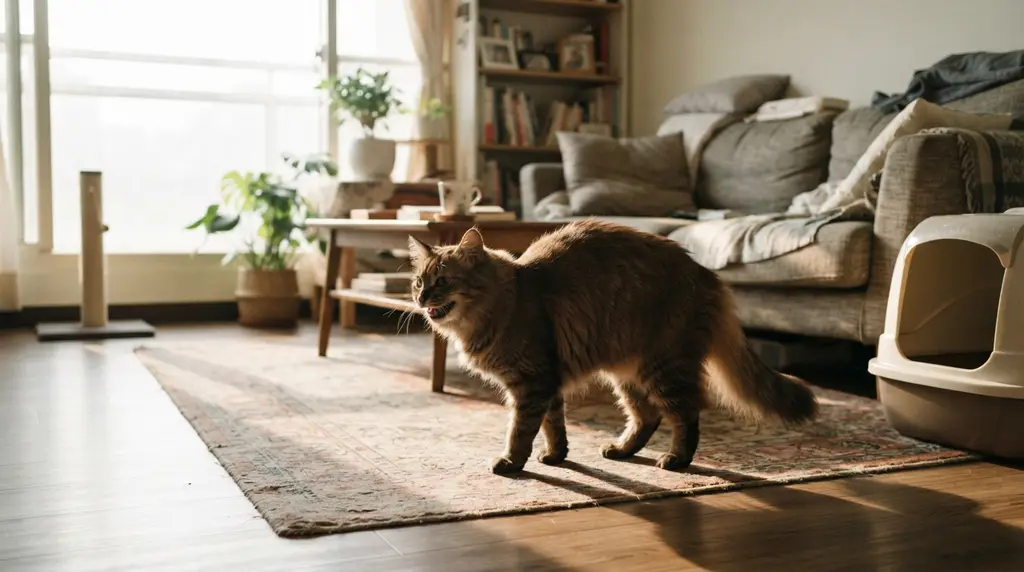
  • Posture: Standing, hind legs slightly treading, tail held vertically with the tip quivering rapidly.
  • Location: Vertical surfaces – corners of walls, door frames, curtains, sides of sofas, carriers, luggage, your shoes.
  • Volume: Only a few milliliters. After spraying, they will still use the litter box for normal urination.

The strong odor is due to the presence of felinine in male cat urine, which breaks down into sulfur compounds upon contact with air, creating that distinct "I know a cat is here" smell.

2. Prolonged Howling (Especially at Night)

The vocalizations of a male cat in heat are not their usual "meow." Instead, they are low-pitched, drawn-out, with fluctuating tones, sounding like a baby's cry or a pained groan. These can last for several minutes at a time, with the most frequent occurrences between 2-5 AM (when outdoor cats are most active). Some cats will also pace back and forth at the door and scratch at it while howling.

3. Intense Desire to Escape (Roaming)

They will bolt out the door the moment it opens, scratch at window screens, jump onto balcony railings, and stare intently out the window. This is the most dangerous symptom during heat – unneutered male cats have a significantly higher risk of getting lost, being hit by cars, or contracting FIV and other infections from fighting with other males. During this period, it is crucial to check the latches on window screens, install escape-proof netting, and use a lockable cat carrier when they need to go out.

4. Irritability and Increased Aggression

A cat that was previously cuddly may become unapproachable, turn and bite when petted on the back, or hiss and dominate other resident cats. This aggression is hormonally driven and different from the play-biting of kittens. Hard corrections are often ineffective, and pushing them away with your hands is not recommended (as you can easily be bitten through). If your cat also exhibits play-biting issues, refer to What to Do If Your Cat Bites People? Correcting Kitten Biting, Teething Biting, and Sudden Aggression for alternative strategies.

5. Mounting Behavior and Excessive Genital Licking

They may exhibit mounting behavior towards toys, blankets, or other resident cats (even neutered ones), and bite the back of the neck. They may also frequently lick their penile area. Moderate licking is normal, but if it causes hair loss, redness, or swelling, or is accompanied by abnormal urination, veterinary attention is required.

6. Decreased Appetite and Weight Loss

During heat, male cats are focused on finding mates and patrolling their territory, leading to a noticeable decrease in food intake. Losing 5-8% of body weight over two weeks is not uncommon. During this time, you can offer smaller, more frequent meals and increase the proportion of wet food to maintain calorie and water intake. If unsure about the amount to feed, use the Cat Feeding Amount Calculator (RER/DER Calorie Conversion) to establish a baseline.

7. Excessive Clinginess, Rubbing, and Furniture Scratching

Some male cats become extremely affectionate, constantly rubbing their faces and chins on door frames and your legs – this is their way of leaving scent marks from their facial glands, using the same communication logic as spraying. For a deeper understanding of how cats express relationships through scent and distance, you can read What Does Your Cat's Sleeping Position Mean? Interpreting Sleeping Postures, Positions, and Their Love for You.

What we use for this

CatGarden’s own products, shipped from Taiwan
See all products
Premium CatnipPremium CatnipFrom CA$36.65 per jarFree shipping on multi-packs

Spraying or Illness? Rule Out Urinary Issues First

This section is the most critical safety reminder in the entire article. A male cat's urethra is narrow and long; blockage is a fatal emergency.

Signs that require immediate veterinary attention (do not wait until the next day):

  • Repeatedly entering and exiting the litter box, squatting for a long time with only a few drops or no urine output.
  • Blood in the urine, appearing pink or brownish.
  • Loud vocalizations while squatting in the litter box or outside it, appearing distressed.
  • Constant licking of the genital area, tense abdomen, pain upon palpation of the lower abdomen.
  • Complete loss of appetite, vomiting, hiding and immobility.

Additionally, stress-induced inappropriate urination is often mistaken for spraying during heat. The difference is: stress-induced urination typically occurs while squatting on horizontal surfaces (beds, carpets, towels) and in larger volumes. For such situations, investigate environmental stressors and litter box conditions. Refer to What to Do About Feline Idiopathic Cystitis (FIC)? Common Causes, 5 Major Early Symptoms, and Stress Reduction Prevention Guide for Seasonal Changes and How to Choose a Litter Box for Senior Cats? Low-Entry Accessible Modifications and Troubleshooting Inappropriate Urination Guide.

Male Cat Heat Soothing: 7 Immediate Home Remedies

Let's be honest: No home remedy can replace neutering. The following methods can help reduce the intensity and manage the period while waiting for surgery.

1. Block Visual and Olfactory Stimuli: During heat, cover the lower half of windows facing streets or alleys with frosted film or draw curtains. Temporarily close off access to balconies where they can see outdoor cats. When they can't see or smell them, howling frequency usually decreases within 2-3 days.

2. High-Intensity Play 15 Minutes Before Bedtime, Twice: Use a wand toy to make them truly sprint and jump until they are slightly panting, then immediately offer a wet food meal. The "hunt -> eat -> sleep" biological rhythm is the most effective way to reduce nocturnal howling.

3. Increase Vertical Space and Patrol Routes: Cat trees, shelves, high perches by the window. Part of marking behavior stems from "territorial insecurity." Providing high vantage points for them to survey their surroundings will make them calmer than if they are confined to the ground.

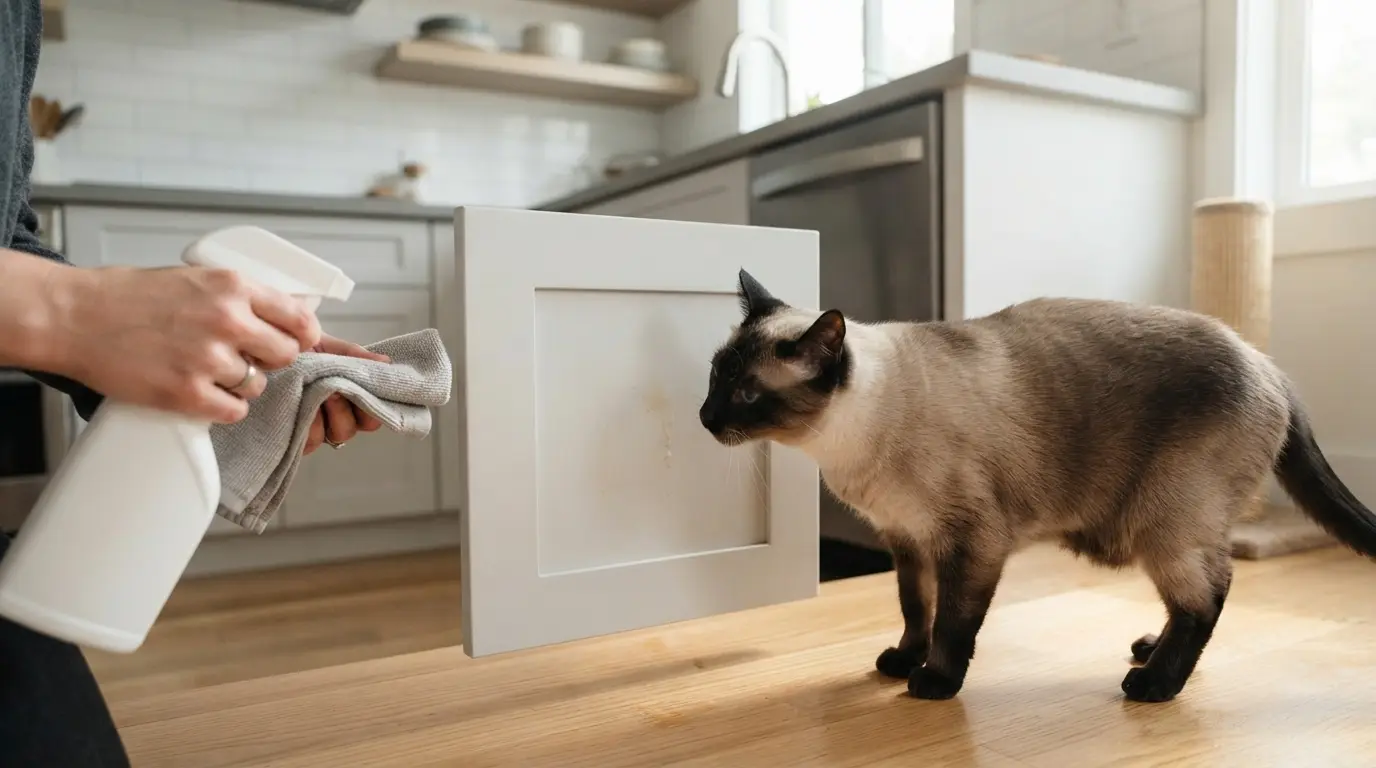
4. Use Enzyme Cleaners for Sprayed Areas: Absolutely do not use cleaners containing ammonia, as the ammonia smell is similar to urine and will encourage them to spray again. First, blot up excess urine with paper towels, then spray with an enzyme cleaner, let it sit for 10 minutes, and wipe clean. Place food bowls or beds in previously sprayed spots (cats generally won't mark their eating or sleeping areas).

5. Optimize Litter Box Conditions: Aim for one more litter box than the number of cats (n+1 rule). Use open, uncovered boxes with 5-7 cm of litter. Scoop twice daily. During heat, urine volume and odor increase. In our facility, we switch to litter with stronger clumping and deodorizing properties, such as fine-grained mineral litters like Odor Control Mineral Litter 3.0, which effectively suppresses odors and significantly improves air quality.

6. Pheromone Diffusers and Calming Distractions: Plug in a synthetic feline facial pheromone (F3) diffuser in areas where they frequently spray. It typically takes 2-4 weeks of continuous use to see results. During daytime restlessness, you can also use a bit of Premium Catnip to direct their energy towards scratching posts or toys, diverting their attention from the door.

7. Do Not Punish, Do Not Spray Water, Do Not Scold: Spraying is a hormonally driven communication behavior, not an act of "deliberate revenge." Punishment will only increase their anxiety, turning simple heat-related spraying into long-term stress-induced inappropriate urination, making it harder to manage later.

> Please also refrain from self-medicating with sedatives, sleeping pills, or "calming products" containing essential oils. Cats metabolize substances differently than humans, and many essential oils (like tea tree, eucalyptus, lavender) are toxic to cats.

When to Evaluate for Neutering

Recommended Age and Weight

  • General Recommendation: Around 6 months of age, weighing over 2 kg, and after completing the initial vaccination series.
  • Early Neutering (4-5 months): If the cat has already started spraying or if there is an unneutered female cat in the household, discuss early neutering with your veterinarian. Neutering before the spraying habit becomes "established" yields the highest rate of behavioral improvement.
  • Neutering as an Adult Cat: Can be performed at any age; the risks for healthy adult cats remain very low. For cats over 7 years old, pre-surgical blood tests and cardiac auscultation are recommended.

Surgery and Post-Operative Care

Male cat neutering is an external surgery, typically completed in 10-20 minutes. Many clinics do not require sutures or only use a single stitch. Practical considerations:

  • Fasting before surgery as per veterinary instructions (commonly 8 hours), and withholding water for 2-4 hours.
  • On the day of surgery, while still under anesthesia, they may walk unsteadily. Confine them to a single-level cage or small room, removing any climbing structures to prevent jumping.
  • Most cats regain their spirit and appetite within 24-48 hours post-surgery. Switch to dust-free wood pellet or paper litter for 3-5 days to minimize wound contamination.
  • Check the incision daily: Mild redness and swelling are normal; if there is discharge, a hard lump, fever, loss of appetite, or if the cat constantly licks the wound, return to the vet.
  • Use an Elizabethan collar (cone) or surgical suit for 7-10 days; this is much less hassle than dealing with wound infections later.

How Long Does Spraying and Howling Stop After Neutering?

  • Testosterone levels take 2-6 weeks to drop to baseline, so behaviors will not disappear overnight.
  • Howling, escape attempts, and fighting typically improve significantly within 2-4 weeks.
  • Spraying decreases or stops in about 80% of male cats within 1-3 months. For adult cats who have been spraying for a year or two, some marking habits may persist and require gradual fading with environmental adjustments.
  • Reminder: Sperm may still be viable for fertilization within 6-8 weeks post-surgery, so isolation from unneutered female cats is necessary.

Benefits and Potential Downsides of Neutering

Benefits: Significantly reduces the risk of getting lost, car accidents, fighting injuries, and FIV/FeLV transmission, and also prevents testicular tumors and some prostate issues.

Consideration: Basal metabolic rate decreases by approximately 20-30%, while appetite may increase. We often see cats gain 1 kg within 3-6 months after neutering. The solution is simple: starting one month post-surgery, reduce daily calorie intake by 10-20%, switch to portion-controlled meals, increase interactive play, and weigh them regularly (monthly; adjust if weight changes by more than 5%).

What We See at Our Boarding Facility: Unneutered Male Cats

The boarding industry has a significant experience with unneutered male cats. A cat that may only spray occasionally at home can exhibit a sudden surge in marking desire upon entering an environment with other cats' scents – spraying by doors, windows, and bedding, and howling all night at the enclosure, which can also agitate neighboring cats. Therefore, most catteries (including ours) require separate enclosures for unneutered adult cats and avoidance of female cat pathways. Some even refuse to board cats in heat.

If your unneutered male cat must be boarded, please inform us proactively when booking and prioritize facilities with solid partitions and independent ventilation. You can review How to Choose a Private Cat Boarding Room? Single Cat Enclosures, Soundproofing, Ventilation, and Multi-Cat Family Room Options, or discuss arrangements directly with us. When booking a cat hotel in Banqiao, we will adjust the room location and cleaning frequency based on his condition.

Frequently Asked Questions

How Many Days Does Male Cat Heat Last?

Male cats do not have a fixed duration for heat. After reaching sexual maturity, they can be triggered at any time by pheromones from nearby female cats. An episode typically lasts 3-10 days (following the female cat's heat cycle). Once the female cat is no longer in heat, he will calm down, only to be triggered again by the next cycle. This is why it's impossible to "cure" it without neutering.

How to Distinguish Between Heat Howling and Painful Vocalizations?

Heat howling usually occurs near doors or windows, with prolonged sounds and pacing, but the cat's appetite, urination, and mobility remain normal. If the howling is accompanied by hiding, vocalizing while in the litter box, stiff gait, or rapid breathing, consider pain or illness. For elderly cats who cry incessantly at night, rule out hyperthyroidism and cognitive dysfunction first. Refer to Why Does My Senior Cat Cry All Night? 3 Major Causes: Dementia (CDS), Hyperthyroidism, and Pain.

I Only Have One Cat and He Never Goes Outside. Does He Still Need Neutering?

Yes. Spraying, howling, attempting to escape, and aggression are all hormonally driven and are not dependent on the presence of a female cat in the home – the scent from stray cats downstairs can be enough to trigger them. Neutering also reduces the risk of getting lost and testicular tumors, making it a recommended procedure even for single-cat households.

Will My Male Cat's Personality Change After Neutering?

He will become more stable and less anxious about finding mates, but his core personality (bravery, affection level, playfulness) will not change. Clinically, most owners feel, "He's still the same cat, just no longer noisy all night, and easier to handle."

My Home Is Already Smelly from Spraying. How Can I Thoroughly Clean It?

Treat sprayed walls and door frames with enzyme cleaner (avoid ammonia-based cleaners). For washable fabrics like bedding, wash twice with enzyme detergent. For curtains that cannot be washed, consider replacing the lower hem. Simultaneously, increase the number and frequency of litter box cleaning, switch to a highly deodorizing cat litter, and convert sprayed spots into feeding or resting areas to break the "scent -> re-marking" cycle.


Finally, a reminder: The above are recommendations for behavioral care and home management and cannot replace veterinary diagnosis. If your cat experiences difficulty urinating, bloody urine, persistent lack of appetite, or significantly lethargic behavior, seek immediate veterinary attention. Male cat urinary blockage is a critical emergency where every second counts.

Article by CatGarden Editorial Team

CatGarden offers curated supplies, cat boarding, and grooming

Book services or shop online.
Back

Blog

What Are the Symptoms of a Male Cat in Heat? A Guide to Soothing and Neutering for Spraying, Nocturnal Howling, and Irritability

CatGarden Editorial TeamPublished 2026/09/05Updated 2026/10/06
male cat heatcat behaviorneuteringsprayingcat care
What Are the Symptoms of a Male Cat in Heat? A Guide to Soothing and Neutering for Spraying, Nocturnal Howling, and Irritability

The three most obvious symptoms of a male cat in heat are: standing to spray urine on vertical surfaces, emitting a prolonged, low-pitched howl (especially severe at night), and desperately trying to escape the house. These are often accompanied by irritability, decreased appetite, and excessive licking of the genital area. Most male cats reach sexual maturity between 5-8 months of age. After this, they can be triggered by the pheromones of a female cat, and this can occur year-round. The fundamental solution is neutering; home soothing methods can only reduce the intensity, not eliminate the behavior.

Key Takeaways

  • Male cats reach sexual maturity on average between 5-8 months of age (early maturing individuals may start spraying at 4 months). Siamese and Oriental Shorthairs tend to mature earlier; Persians and Maine Coons may take until 10-12 months.
  • Male cats do not have a fixed heat cycle like females, who have a 7-10 day estrus period. Male cats are "passively triggered" by female cat pheromones and can exhibit these behaviors year-round, with increased frequency in Taiwan typically from January-March and June-August.
  • The characteristic spraying during heat involves: standing, tail held high and quivering rapidly, and spraying small amounts of urine on walls or door frames. The odor is more pungent than normal urine because it contains sulfur compounds resulting from the breakdown of felinine.
  • Neutering is recommended around 6 months of age, when the cat weighs over 2 kg. Testosterone levels take 2-6 weeks to drop to baseline after surgery. Spraying behavior significantly decreases or stops in about 80% of male cats within 1-3 months. However, adult cats with established habits may retain some marking behavior.
  • If a male cat exhibits "frequent trips to the litter box, prolonged squatting without urination, blood in urine, constant licking of the genital area, or painful vocalizations," this is not heat but an emergency sign of urinary blockage, which can be fatal within 24-48 hours and requires immediate veterinary attention.

When Do Male Cats Start Going into Heat?

One of the most frequent questions we receive when boarding cats is, "He's only six months old, why is he spraying already?" Male cats reach sexual maturity earlier than many owners realize:

  • General Domestic Cats: 5-8 months of age, around 2.5-3 kg in weight, when marking behaviors begin.
  • Early Maturing Individuals: May start lifting their tails to spray at 4-5 months, especially if there are other unneutered cats in the household or if they live in a neighborhood with many stray cats.
  • Late Maturing Individuals: Large or long-haired breeds like Persians, Maine Coons, and Ragdolls may not mature until 10-12 months.

Male Cat "Heat" is Different from Female Cats

Strictly speaking, male cats do not have a heat cycle. Female cats in heat will vocalize loudly, roll, and present their hindquarters for 7-10 consecutive days. Male cats, after reaching sexual maturity, are in a "standby state" at all times. As soon as they detect pheromones from a nearby female cat or hear her vocalizations, they may suddenly start spraying, howling, and pacing around the door. This is why many owners feel, "He was fine last month, why is he noisy all night this week?" – it's usually because a female cat in the neighborhood is in heat.

What Are the Symptoms of a Male Cat in Heat? 7 Typical Behaviors

1. Standing Urine Spraying (Marking)

This is the most troublesome behavior for owners. To distinguish "spraying" from "inappropriate urination," look for three characteristics:

  • Posture: Standing, hind legs slightly treading, tail held vertically with the tip quivering rapidly.
  • Location: Vertical surfaces – corners of walls, door frames, curtains, sides of sofas, carriers, luggage, your shoes.
  • Volume: Only a few milliliters. After spraying, they will still use the litter box for normal urination.

The strong odor is due to the presence of felinine in male cat urine, which breaks down into sulfur compounds upon contact with air, creating that distinct "I know a cat is here" smell.

2. Prolonged Howling (Especially at Night)

The vocalizations of a male cat in heat are not their usual "meow." Instead, they are low-pitched, drawn-out, with fluctuating tones, sounding like a baby's cry or a pained groan. These can last for several minutes at a time, with the most frequent occurrences between 2-5 AM (when outdoor cats are most active). Some cats will also pace back and forth at the door and scratch at it while howling.

3. Intense Desire to Escape (Roaming)

They will bolt out the door the moment it opens, scratch at window screens, jump onto balcony railings, and stare intently out the window. This is the most dangerous symptom during heat – unneutered male cats have a significantly higher risk of getting lost, being hit by cars, or contracting FIV and other infections from fighting with other males. During this period, it is crucial to check the latches on window screens, install escape-proof netting, and use a lockable cat carrier when they need to go out.

4. Irritability and Increased Aggression

A cat that was previously cuddly may become unapproachable, turn and bite when petted on the back, or hiss and dominate other resident cats. This aggression is hormonally driven and different from the play-biting of kittens. Hard corrections are often ineffective, and pushing them away with your hands is not recommended (as you can easily be bitten through). If your cat also exhibits play-biting issues, refer to What to Do If Your Cat Bites People? Correcting Kitten Biting, Teething Biting, and Sudden Aggression for alternative strategies.

5. Mounting Behavior and Excessive Genital Licking

They may exhibit mounting behavior towards toys, blankets, or other resident cats (even neutered ones), and bite the back of the neck. They may also frequently lick their penile area. Moderate licking is normal, but if it causes hair loss, redness, or swelling, or is accompanied by abnormal urination, veterinary attention is required.

6. Decreased Appetite and Weight Loss

During heat, male cats are focused on finding mates and patrolling their territory, leading to a noticeable decrease in food intake. Losing 5-8% of body weight over two weeks is not uncommon. During this time, you can offer smaller, more frequent meals and increase the proportion of wet food to maintain calorie and water intake. If unsure about the amount to feed, use the Cat Feeding Amount Calculator (RER/DER Calorie Conversion) to establish a baseline.

7. Excessive Clinginess, Rubbing, and Furniture Scratching

Some male cats become extremely affectionate, constantly rubbing their faces and chins on door frames and your legs – this is their way of leaving scent marks from their facial glands, using the same communication logic as spraying. For a deeper understanding of how cats express relationships through scent and distance, you can read What Does Your Cat's Sleeping Position Mean? Interpreting Sleeping Postures, Positions, and Their Love for You.

What we use for this

CatGarden’s own products, shipped from Taiwan
See all products
Premium CatnipPremium CatnipFrom CA$36.65 per jarFree shipping on multi-packs

Spraying or Illness? Rule Out Urinary Issues First

This section is the most critical safety reminder in the entire article. A male cat's urethra is narrow and long; blockage is a fatal emergency.

Signs that require immediate veterinary attention (do not wait until the next day):

  • Repeatedly entering and exiting the litter box, squatting for a long time with only a few drops or no urine output.
  • Blood in the urine, appearing pink or brownish.
  • Loud vocalizations while squatting in the litter box or outside it, appearing distressed.
  • Constant licking of the genital area, tense abdomen, pain upon palpation of the lower abdomen.
  • Complete loss of appetite, vomiting, hiding and immobility.

Additionally, stress-induced inappropriate urination is often mistaken for spraying during heat. The difference is: stress-induced urination typically occurs while squatting on horizontal surfaces (beds, carpets, towels) and in larger volumes. For such situations, investigate environmental stressors and litter box conditions. Refer to What to Do About Feline Idiopathic Cystitis (FIC)? Common Causes, 5 Major Early Symptoms, and Stress Reduction Prevention Guide for Seasonal Changes and How to Choose a Litter Box for Senior Cats? Low-Entry Accessible Modifications and Troubleshooting Inappropriate Urination Guide.

Male Cat Heat Soothing: 7 Immediate Home Remedies

Let's be honest: No home remedy can replace neutering. The following methods can help reduce the intensity and manage the period while waiting for surgery.

1. Block Visual and Olfactory Stimuli: During heat, cover the lower half of windows facing streets or alleys with frosted film or draw curtains. Temporarily close off access to balconies where they can see outdoor cats. When they can't see or smell them, howling frequency usually decreases within 2-3 days.

2. High-Intensity Play 15 Minutes Before Bedtime, Twice: Use a wand toy to make them truly sprint and jump until they are slightly panting, then immediately offer a wet food meal. The "hunt -> eat -> sleep" biological rhythm is the most effective way to reduce nocturnal howling.

3. Increase Vertical Space and Patrol Routes: Cat trees, shelves, high perches by the window. Part of marking behavior stems from "territorial insecurity." Providing high vantage points for them to survey their surroundings will make them calmer than if they are confined to the ground.

4. Use Enzyme Cleaners for Sprayed Areas: Absolutely do not use cleaners containing ammonia, as the ammonia smell is similar to urine and will encourage them to spray again. First, blot up excess urine with paper towels, then spray with an enzyme cleaner, let it sit for 10 minutes, and wipe clean. Place food bowls or beds in previously sprayed spots (cats generally won't mark their eating or sleeping areas).

5. Optimize Litter Box Conditions: Aim for one more litter box than the number of cats (n+1 rule). Use open, uncovered boxes with 5-7 cm of litter. Scoop twice daily. During heat, urine volume and odor increase. In our facility, we switch to litter with stronger clumping and deodorizing properties, such as fine-grained mineral litters like Odor Control Mineral Litter 3.0, which effectively suppresses odors and significantly improves air quality.

6. Pheromone Diffusers and Calming Distractions: Plug in a synthetic feline facial pheromone (F3) diffuser in areas where they frequently spray. It typically takes 2-4 weeks of continuous use to see results. During daytime restlessness, you can also use a bit of Premium Catnip to direct their energy towards scratching posts or toys, diverting their attention from the door.

7. Do Not Punish, Do Not Spray Water, Do Not Scold: Spraying is a hormonally driven communication behavior, not an act of "deliberate revenge." Punishment will only increase their anxiety, turning simple heat-related spraying into long-term stress-induced inappropriate urination, making it harder to manage later.

> Please also refrain from self-medicating with sedatives, sleeping pills, or "calming products" containing essential oils. Cats metabolize substances differently than humans, and many essential oils (like tea tree, eucalyptus, lavender) are toxic to cats.

When to Evaluate for Neutering

Recommended Age and Weight

  • General Recommendation: Around 6 months of age, weighing over 2 kg, and after completing the initial vaccination series.
  • Early Neutering (4-5 months): If the cat has already started spraying or if there is an unneutered female cat in the household, discuss early neutering with your veterinarian. Neutering before the spraying habit becomes "established" yields the highest rate of behavioral improvement.
  • Neutering as an Adult Cat: Can be performed at any age; the risks for healthy adult cats remain very low. For cats over 7 years old, pre-surgical blood tests and cardiac auscultation are recommended.

Surgery and Post-Operative Care

Male cat neutering is an external surgery, typically completed in 10-20 minutes. Many clinics do not require sutures or only use a single stitch. Practical considerations:

  • Fasting before surgery as per veterinary instructions (commonly 8 hours), and withholding water for 2-4 hours.
  • On the day of surgery, while still under anesthesia, they may walk unsteadily. Confine them to a single-level cage or small room, removing any climbing structures to prevent jumping.
  • Most cats regain their spirit and appetite within 24-48 hours post-surgery. Switch to dust-free wood pellet or paper litter for 3-5 days to minimize wound contamination.
  • Check the incision daily: Mild redness and swelling are normal; if there is discharge, a hard lump, fever, loss of appetite, or if the cat constantly licks the wound, return to the vet.
  • Use an Elizabethan collar (cone) or surgical suit for 7-10 days; this is much less hassle than dealing with wound infections later.

How Long Does Spraying and Howling Stop After Neutering?

  • Testosterone levels take 2-6 weeks to drop to baseline, so behaviors will not disappear overnight.
  • Howling, escape attempts, and fighting typically improve significantly within 2-4 weeks.
  • Spraying decreases or stops in about 80% of male cats within 1-3 months. For adult cats who have been spraying for a year or two, some marking habits may persist and require gradual fading with environmental adjustments.
  • Reminder: Sperm may still be viable for fertilization within 6-8 weeks post-surgery, so isolation from unneutered female cats is necessary.

Benefits and Potential Downsides of Neutering

Benefits: Significantly reduces the risk of getting lost, car accidents, fighting injuries, and FIV/FeLV transmission, and also prevents testicular tumors and some prostate issues.

Consideration: Basal metabolic rate decreases by approximately 20-30%, while appetite may increase. We often see cats gain 1 kg within 3-6 months after neutering. The solution is simple: starting one month post-surgery, reduce daily calorie intake by 10-20%, switch to portion-controlled meals, increase interactive play, and weigh them regularly (monthly; adjust if weight changes by more than 5%).

What We See at Our Boarding Facility: Unneutered Male Cats

The boarding industry has a significant experience with unneutered male cats. A cat that may only spray occasionally at home can exhibit a sudden surge in marking desire upon entering an environment with other cats' scents – spraying by doors, windows, and bedding, and howling all night at the enclosure, which can also agitate neighboring cats. Therefore, most catteries (including ours) require separate enclosures for unneutered adult cats and avoidance of female cat pathways. Some even refuse to board cats in heat.

If your unneutered male cat must be boarded, please inform us proactively when booking and prioritize facilities with solid partitions and independent ventilation. You can review How to Choose a Private Cat Boarding Room? Single Cat Enclosures, Soundproofing, Ventilation, and Multi-Cat Family Room Options, or discuss arrangements directly with us. When booking a cat hotel in Banqiao, we will adjust the room location and cleaning frequency based on his condition.

Frequently Asked Questions

How Many Days Does Male Cat Heat Last?

Male cats do not have a fixed duration for heat. After reaching sexual maturity, they can be triggered at any time by pheromones from nearby female cats. An episode typically lasts 3-10 days (following the female cat's heat cycle). Once the female cat is no longer in heat, he will calm down, only to be triggered again by the next cycle. This is why it's impossible to "cure" it without neutering.

How to Distinguish Between Heat Howling and Painful Vocalizations?

Heat howling usually occurs near doors or windows, with prolonged sounds and pacing, but the cat's appetite, urination, and mobility remain normal. If the howling is accompanied by hiding, vocalizing while in the litter box, stiff gait, or rapid breathing, consider pain or illness. For elderly cats who cry incessantly at night, rule out hyperthyroidism and cognitive dysfunction first. Refer to Why Does My Senior Cat Cry All Night? 3 Major Causes: Dementia (CDS), Hyperthyroidism, and Pain.

I Only Have One Cat and He Never Goes Outside. Does He Still Need Neutering?

Yes. Spraying, howling, attempting to escape, and aggression are all hormonally driven and are not dependent on the presence of a female cat in the home – the scent from stray cats downstairs can be enough to trigger them. Neutering also reduces the risk of getting lost and testicular tumors, making it a recommended procedure even for single-cat households.

Will My Male Cat's Personality Change After Neutering?

He will become more stable and less anxious about finding mates, but his core personality (bravery, affection level, playfulness) will not change. Clinically, most owners feel, "He's still the same cat, just no longer noisy all night, and easier to handle."

My Home Is Already Smelly from Spraying. How Can I Thoroughly Clean It?

Treat sprayed walls and door frames with enzyme cleaner (avoid ammonia-based cleaners). For washable fabrics like bedding, wash twice with enzyme detergent. For curtains that cannot be washed, consider replacing the lower hem. Simultaneously, increase the number and frequency of litter box cleaning, switch to a highly deodorizing cat litter, and convert sprayed spots into feeding or resting areas to break the "scent -> re-marking" cycle.


Finally, a reminder: The above are recommendations for behavioral care and home management and cannot replace veterinary diagnosis. If your cat experiences difficulty urinating, bloody urine, persistent lack of appetite, or significantly lethargic behavior, seek immediate veterinary attention. Male cat urinary blockage is a critical emergency where every second counts.

Article by CatGarden Editorial Team

One email a month of cat-care tips

Hand-picked care, behavior and grooming tips once a month. Subscribe and we will send you our three most-read articles right away.

Keep reading