Cat Constantly Meowing at Food Bowl: Is It Hunger? Differentiating Demanding Behavior, Mealtime, or Learned Habit

A cat constantly meowing at its food bowl is usually due to a "demanding habit" rather than true hunger. First, confirm the feeding amount is sufficient and the cat is healthy, then use a fixed feeding schedule and the ignore method to retrain the meowing.
CatGarden Editorial TeamPublished 2026/08/05Updated 2026/10/06
Cat BehaviorCat DietCat Food DemandsFeeding Management
Cat Constantly Meowing at Food Bowl: Is It Hunger? Differentiating Demanding Behavior, Mealtime, or Learned Habit

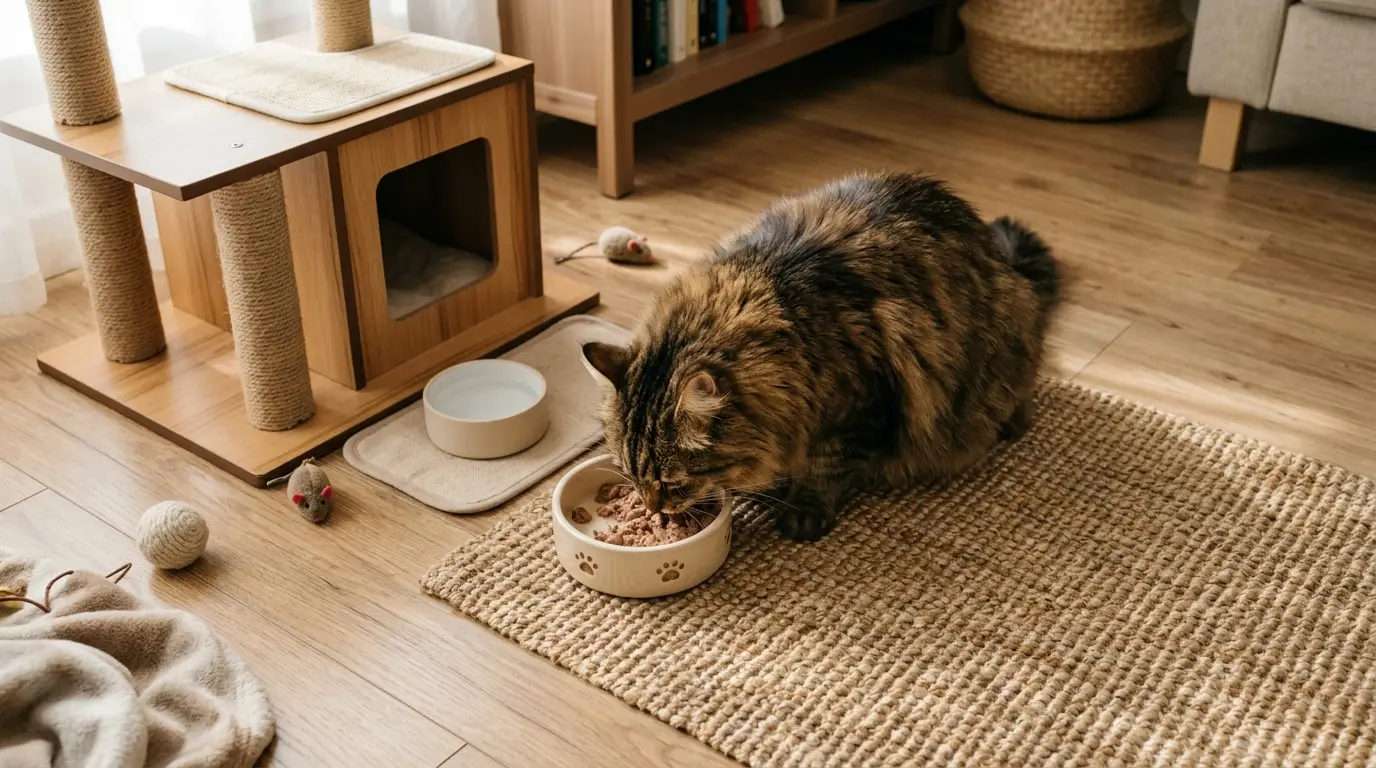
A cat constantly meowing at its food bowl is usually not because it's truly hungry, but rather because "its demanding meows have been reinforced by you, thus becoming a habit." As long as the total daily calorie intake is sufficient, the cat's body condition is normal, and its activity and elimination are regular, you are typically dealing with a "behavioral issue" rather than "hunger" – the key is the feeding schedule and your response, not adding more food.

This article specifically addresses "meowing related to food." If your cat is yowling in the middle of the night or early morning, that's a different intention; you can read about Cat Night Yowling: Causes and Checks. Here, we focus on situations like: a cat meowing at its kibble, standing by the food bowl and meowing, or rushing over and meowing intensely upon hearing you open a can.

Key Takeaways

  • Cats constantly meowing for food are likely exhibiting "habitual demanding behavior" rather than true hunger; as long as their body condition score is normal and daily intake is sufficient, an increase in food is usually unnecessary.
  • The key indicator is whether the "meowing is tied to specific times": meowing at the same time each day and stopping immediately after being fed usually indicates a learned habit.
  • For the ignore method to be effective, you must "completely ignore" the behavior for at least 7–14 consecutive days. Compromising even once will make the meowing worse.
  • Sudden, frequent, frantic demanding for food, accompanied by weight loss or eating a lot without gaining weight, could indicate hyperthyroidism or diabetes and requires veterinary attention and blood tests.
  • Small, frequent meals, automatic feeders, and slow feeder bowls are the three practical tools that most quickly reduce "demanding meows."

First, Differentiate: Three Types of Cat Demanding Meows

In our shop, we interact with many boarding cats daily. Our observations show that "meowing at the food bowl" can actually be broken down into three distinct situations. Misidentifying the type will lead to incorrect solutions.

Type 1: Truly Hungry (Physiological Need)

This is the simplest, but actually the least common among typical house cats. Characteristics include:

  • More than 8–12 hours have passed since the last meal.
  • The daily total calorie intake was insufficient to begin with (especially if only feeding dry kibble with portion control).
  • The cat is underweight, with ribs easily palpable and a visible waistline indentation.

If you're unsure whether your cat is overweight or underweight, first perform a body condition score self-check. You can refer to the rib and waistline palpation methods in Cat Weight Gain: Is It Always Obesity?. If the cat is genuinely underweight and constantly demanding food, then increasing the portion size or meal frequency should be considered.

Type 2: It's Canned Food Time (Associative Expectation)

A cat's biological clock is very precise. If you consistently open a can of food at 7 AM and 7 PM, your cat may start lingering in the kitchen around 6:30 AM, staring at you, and meowing at its food bowl. This isn't unbearable hunger, but rather "it knows the time is approaching and is reminding you."

This type of meowing usually has several clues:

  • It only occurs close to fixed feeding times.
  • It escalates into frantic meowing when the sound of opening a can, tearing a package, or opening a cabinet is heard.
  • The meowing stops immediately once food is served.

This is actually a sign of a healthy routine and doesn't require "correction," only confirmation that the amount you're providing is appropriate.

Type 3: Learned Demanding Habit (Behavioral Learning)

This is the most common and most frustrating type for owners. The cat has learned that "meowing at the food bowl results in you giving them something," so they use meowing as a remote control.

Characteristics include:

  • Meowing all day long, regardless of how recently they ate.
  • There is still kibble in the food bowl, yet they are still meowing.
  • They start performing as soon as you enter the kitchen or get up.

This situation, where "a cat meows at kibble," is fundamentally a behavioral problem; adding more food will only make it worse. The real solution is to re-establish rules.

How to Quickly Determine Which Type Your Cat Is

Our recommendation to owners is to keep a log for three consecutive days, recording the time of each meow, the state of the food bowl at the time, and your reaction. A pattern usually emerges within three days:

1. Observe the Time Distribution: Meowing concentrated at fixed times → Type 2; spread throughout the day → Type 3.

2. Observe the Food Bowl Status: Food bowl is empty and past the mealtime → possibly Type 1; food bowl has food but they are still meowing → Type 3.

3. Observe Your Reaction After Feeding: Stops immediately, eats attentively → genuine need; sniffs and walks away, meows again later → seeking petting or attention mistaken for demanding food.

Incidentally, some cats rub against you and meow, which can be a mix of seeking petting, scent marking, and demanding food. These affectionate signals can be easily confused. You can cross-reference with Cat Licking, Rubbing, and Kneading: Are They All the Same Affection? for a combined interpretation.

Dismantle Demanding Meows with a Feeding Schedule

When addressing demanding meows, the first step is always to "get the feeding structure right," not to rush into training.

Fixed Times, Fixed Portions, Small Frequent Meals

Cats are naturally small-meal eaters, consuming numerous small prey items in the wild each day. Instead of two large meals that lead to hunger-driven demanding, divide the total daily amount into 3–4 meals:

  • A small meal in the morning, noon, evening, and before bed.
  • Fixed portion size for each meal, using an electronic scale or measuring spoon; do not "pour by feel."
  • Daily total calories should be based on maintaining body condition, not increased because they are meowing.

After dividing the meals, you'll find that the cat's fasting periods become shorter, and the "desperate hunger meows" will noticeably decrease.

Utilize Automatic Feeders to Break the "Meow → Human Feeds" Link

This is one of the most frequently recommended strategies in our shop. The reason demanding meows are difficult to break is that "food comes from you." When the cat learns that "food is dispensed by a machine at fixed times, unrelated to meowing or you," its motivation to meow at you will significantly decrease.

Once the automatic feeder is set up, the act of feeding becomes "dehumanized," and you won't be held hostage by alarm-clock-like cat meows.

Slow Feeder Bowls and Puzzle Feeders Give Them Something to Do

Many demanding meows are mixed with boredom. Place some of the dry kibble into a slow feeder bowl or a treat-dispensing toy, making the cat "work for its food." This prolongs eating time and expends energy. Cats that eat slower and are more active usually don't spend all day staring at their food bowl and whining.

The Ignore Method: The Most Effective but Most Willpower-Testing Strategy

If you've confirmed it's Type 3 habitual demanding behavior, the ignore method is almost the only way to address the root cause. The principle is simple: this behavior persists because "meowing" yields a reward (food or your attention). When the reward disappears, the behavior will naturally extinguish.

Key Points for Implementation

  • Completely Ignore: Do not look, speak, pet, or scold. Even saying "no" is a form of response and thus a reward.
  • Never Feed While They Are Meowing: Wait until they are quiet (even for a few seconds), then feed according to the schedule. This teaches them that "quiet leads to food."
  • Family Consistency: If even one person relents and feeds them, all previous efforts are nullified.

Be Prepared: It Will Get Worse Before It Gets Better

This is where most people get stuck. When you first start ignoring, the cat will meow louder and for longer periods. This is called an "extinction burst" – they are testing if "meowing more intensely will work." If you compromise even once at this stage, you've essentially taught them "I need to meow this loudly for it to be effective," and the situation will become worse than before.

Typically, after enduring 7–14 consecutive days, the meowing will significantly decrease. This requires willpower, but it is truly effective.

When Should "Demanding Meows" Warrant a Vet Visit?

The vast majority of demanding meows are behavioral issues, but there are a few situations where you should be highly alert, as abnormal appetite could be caused by illness:

  • Eating a Lot but Losing Weight: Constant demanding for food, increased appetite, but weight is dropping – common in hyperthyroidism and diabetes, especially in middle-aged or senior cats.
  • Sudden Personality Change: A cat that was not previously demanding suddenly becomes anxious and meows frantically for food, or conversely, loses interest in food. Both warrant attention. Sudden behavioral changes can sometimes be signals of physical discomfort. Refer to Cat Suddenly Aggressive or Hiding: Early Signs of Pain or Illness.
  • Accompanied by Increased Thirst and Urination, Vomiting, or Lethargy: When these symptoms appear alongside abnormal appetite, seek veterinary care and blood tests promptly.

Remember: If symptoms persist or noticeably worsen, don't guess. Leave the diagnosis to a veterinarian for safety.

In-Shop Observation: Boarding Cats' Demands Are Sometimes for Security

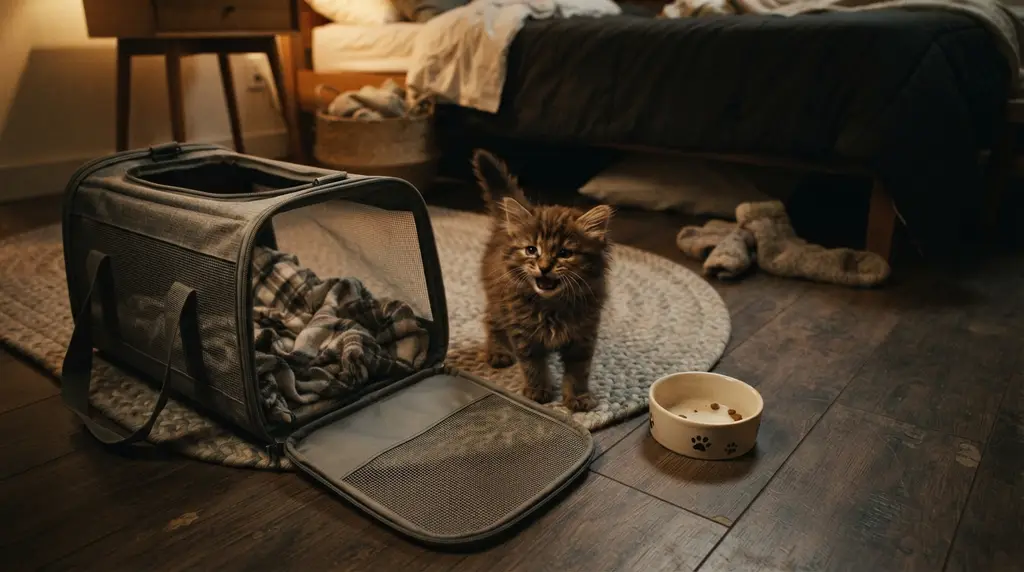
Something many people don't realize is that sometimes cats meowing at their food bowl aren't seeking food, but security. We often observe in our Cat Boarding that cats who meow excessively at their food bowl or the door during the first one or two days of settling in are often experiencing anxiety due to the unfamiliar environment, seeking comfort through "eating." Force-feeding is ineffective in this case. First, provide them with a safe hiding space and maintain their original feeding times and food brands; the meowing will often subside more quickly.

This is also why a cat's behavior must be viewed holistically: how they sleep, where they sleep, and their proximity to you all reveal their emotional state. For a more comprehensive understanding of feline behavioral language, you can read our series of articles, What Does Your Cat's Sleeping Position Mean? Decoding Sleep Postures, Locations, and Their Love for You.

If you want to give a small amount of wet food outside of regular meals to satisfy them while controlling calories, opt for high-protein, moisture-rich Luxury Functional Cans as a small, timed meal. This is less likely to lead to weight gain than constantly adding dry kibble and is closer to a cat's natural instincts.

Frequently Asked Questions

My cat keeps meowing for food, but there's still food in its bowl. Why?

If the food bowl has food and the cat is still meowing, it can almost certainly be attributed to habitual demanding or attention-seeking, not true hunger. They've learned that "meowing = you will come over, and possibly give fresh food or canned food." What needs to be done is to ignore the behavior and maintain fixed feeding times, not to add more kibble.

If I use the ignore method and don't respond, will my cat starve or hate me?

No. The ignore method is about "not responding to demanding meows," not "not feeding." You will still feed them the correct amount according to the schedule, just not when they are being disruptive. Your cat will not hate you for this; in fact, once the rules are clear, their anxiety and disruptive behavior will usually decrease.

My cat meows at its food bowl in the middle of the night and early morning. Should I use the same method?

The principle is the same (don't feed when they meow, establish a fixed routine), but night and early morning meowing can also be related to boredom, disrupted sleep schedules, or aging, making the causes more complex. It's recommended to read Cat Night Yowling: Causes and Checks for a combined approach.

How do I know if the amount I'm giving is enough and if my cat is truly hungry?

Observing body condition is the most accurate method: regularly feel the ribs and check the waistline to perform a body condition score. If the body condition remains within the ideal range and weight is stable, it means the amount is sufficient, and demanding meows are likely habitual. If the cat remains underweight or loses weight despite eating a lot, consult a veterinarian.

Can automatic feeders really improve demanding meows?

They are very effective for cats that "demand food from their owners." Because the source of food changes from "you" to "a machine dispensing food at fixed times," meowing at you will no longer result in food, naturally reducing the motivation. Setting it for small, frequent meals yields the best results.


This article was written by the CatGarden editorial team. The content is for general care and behavioral experience sharing and cannot replace veterinary diagnosis. If your cat exhibits abnormal appetite, weight changes, or lethargy, please seek veterinary care promptly.

CatGarden offers curated supplies, cat boarding, and grooming

Book services or shop online.
Back

Blog

Cat Constantly Meowing at Food Bowl: Is It Hunger? Differentiating Demanding Behavior, Mealtime, or Learned Habit

CatGarden Editorial TeamPublished 2026/08/05Updated 2026/10/06
Cat BehaviorCat DietCat Food DemandsFeeding Management
Cat Constantly Meowing at Food Bowl: Is It Hunger? Differentiating Demanding Behavior, Mealtime, or Learned Habit

A cat constantly meowing at its food bowl is usually not because it's truly hungry, but rather because "its demanding meows have been reinforced by you, thus becoming a habit." As long as the total daily calorie intake is sufficient, the cat's body condition is normal, and its activity and elimination are regular, you are typically dealing with a "behavioral issue" rather than "hunger" – the key is the feeding schedule and your response, not adding more food.

This article specifically addresses "meowing related to food." If your cat is yowling in the middle of the night or early morning, that's a different intention; you can read about Cat Night Yowling: Causes and Checks. Here, we focus on situations like: a cat meowing at its kibble, standing by the food bowl and meowing, or rushing over and meowing intensely upon hearing you open a can.

Key Takeaways

  • Cats constantly meowing for food are likely exhibiting "habitual demanding behavior" rather than true hunger; as long as their body condition score is normal and daily intake is sufficient, an increase in food is usually unnecessary.
  • The key indicator is whether the "meowing is tied to specific times": meowing at the same time each day and stopping immediately after being fed usually indicates a learned habit.
  • For the ignore method to be effective, you must "completely ignore" the behavior for at least 7–14 consecutive days. Compromising even once will make the meowing worse.
  • Sudden, frequent, frantic demanding for food, accompanied by weight loss or eating a lot without gaining weight, could indicate hyperthyroidism or diabetes and requires veterinary attention and blood tests.
  • Small, frequent meals, automatic feeders, and slow feeder bowls are the three practical tools that most quickly reduce "demanding meows."

First, Differentiate: Three Types of Cat Demanding Meows

In our shop, we interact with many boarding cats daily. Our observations show that "meowing at the food bowl" can actually be broken down into three distinct situations. Misidentifying the type will lead to incorrect solutions.

Type 1: Truly Hungry (Physiological Need)

This is the simplest, but actually the least common among typical house cats. Characteristics include:

  • More than 8–12 hours have passed since the last meal.
  • The daily total calorie intake was insufficient to begin with (especially if only feeding dry kibble with portion control).
  • The cat is underweight, with ribs easily palpable and a visible waistline indentation.

If you're unsure whether your cat is overweight or underweight, first perform a body condition score self-check. You can refer to the rib and waistline palpation methods in Cat Weight Gain: Is It Always Obesity?. If the cat is genuinely underweight and constantly demanding food, then increasing the portion size or meal frequency should be considered.

Type 2: It's Canned Food Time (Associative Expectation)

A cat's biological clock is very precise. If you consistently open a can of food at 7 AM and 7 PM, your cat may start lingering in the kitchen around 6:30 AM, staring at you, and meowing at its food bowl. This isn't unbearable hunger, but rather "it knows the time is approaching and is reminding you."

This type of meowing usually has several clues:

  • It only occurs close to fixed feeding times.
  • It escalates into frantic meowing when the sound of opening a can, tearing a package, or opening a cabinet is heard.
  • The meowing stops immediately once food is served.

This is actually a sign of a healthy routine and doesn't require "correction," only confirmation that the amount you're providing is appropriate.

Type 3: Learned Demanding Habit (Behavioral Learning)

This is the most common and most frustrating type for owners. The cat has learned that "meowing at the food bowl results in you giving them something," so they use meowing as a remote control.

Characteristics include:

  • Meowing all day long, regardless of how recently they ate.
  • There is still kibble in the food bowl, yet they are still meowing.
  • They start performing as soon as you enter the kitchen or get up.

This situation, where "a cat meows at kibble," is fundamentally a behavioral problem; adding more food will only make it worse. The real solution is to re-establish rules.

How to Quickly Determine Which Type Your Cat Is

Our recommendation to owners is to keep a log for three consecutive days, recording the time of each meow, the state of the food bowl at the time, and your reaction. A pattern usually emerges within three days:

1. Observe the Time Distribution: Meowing concentrated at fixed times → Type 2; spread throughout the day → Type 3.

2. Observe the Food Bowl Status: Food bowl is empty and past the mealtime → possibly Type 1; food bowl has food but they are still meowing → Type 3.

3. Observe Your Reaction After Feeding: Stops immediately, eats attentively → genuine need; sniffs and walks away, meows again later → seeking petting or attention mistaken for demanding food.

Incidentally, some cats rub against you and meow, which can be a mix of seeking petting, scent marking, and demanding food. These affectionate signals can be easily confused. You can cross-reference with Cat Licking, Rubbing, and Kneading: Are They All the Same Affection? for a combined interpretation.

Dismantle Demanding Meows with a Feeding Schedule

When addressing demanding meows, the first step is always to "get the feeding structure right," not to rush into training.

Fixed Times, Fixed Portions, Small Frequent Meals

Cats are naturally small-meal eaters, consuming numerous small prey items in the wild each day. Instead of two large meals that lead to hunger-driven demanding, divide the total daily amount into 3–4 meals:

  • A small meal in the morning, noon, evening, and before bed.
  • Fixed portion size for each meal, using an electronic scale or measuring spoon; do not "pour by feel."
  • Daily total calories should be based on maintaining body condition, not increased because they are meowing.

After dividing the meals, you'll find that the cat's fasting periods become shorter, and the "desperate hunger meows" will noticeably decrease.

Utilize Automatic Feeders to Break the "Meow → Human Feeds" Link

This is one of the most frequently recommended strategies in our shop. The reason demanding meows are difficult to break is that "food comes from you." When the cat learns that "food is dispensed by a machine at fixed times, unrelated to meowing or you," its motivation to meow at you will significantly decrease.

Once the automatic feeder is set up, the act of feeding becomes "dehumanized," and you won't be held hostage by alarm-clock-like cat meows.

Slow Feeder Bowls and Puzzle Feeders Give Them Something to Do

Many demanding meows are mixed with boredom. Place some of the dry kibble into a slow feeder bowl or a treat-dispensing toy, making the cat "work for its food." This prolongs eating time and expends energy. Cats that eat slower and are more active usually don't spend all day staring at their food bowl and whining.

The Ignore Method: The Most Effective but Most Willpower-Testing Strategy

If you've confirmed it's Type 3 habitual demanding behavior, the ignore method is almost the only way to address the root cause. The principle is simple: this behavior persists because "meowing" yields a reward (food or your attention). When the reward disappears, the behavior will naturally extinguish.

Key Points for Implementation

  • Completely Ignore: Do not look, speak, pet, or scold. Even saying "no" is a form of response and thus a reward.
  • Never Feed While They Are Meowing: Wait until they are quiet (even for a few seconds), then feed according to the schedule. This teaches them that "quiet leads to food."
  • Family Consistency: If even one person relents and feeds them, all previous efforts are nullified.

Be Prepared: It Will Get Worse Before It Gets Better

This is where most people get stuck. When you first start ignoring, the cat will meow louder and for longer periods. This is called an "extinction burst" – they are testing if "meowing more intensely will work." If you compromise even once at this stage, you've essentially taught them "I need to meow this loudly for it to be effective," and the situation will become worse than before.

Typically, after enduring 7–14 consecutive days, the meowing will significantly decrease. This requires willpower, but it is truly effective.

When Should "Demanding Meows" Warrant a Vet Visit?

The vast majority of demanding meows are behavioral issues, but there are a few situations where you should be highly alert, as abnormal appetite could be caused by illness:

  • Eating a Lot but Losing Weight: Constant demanding for food, increased appetite, but weight is dropping – common in hyperthyroidism and diabetes, especially in middle-aged or senior cats.
  • Sudden Personality Change: A cat that was not previously demanding suddenly becomes anxious and meows frantically for food, or conversely, loses interest in food. Both warrant attention. Sudden behavioral changes can sometimes be signals of physical discomfort. Refer to Cat Suddenly Aggressive or Hiding: Early Signs of Pain or Illness.
  • Accompanied by Increased Thirst and Urination, Vomiting, or Lethargy: When these symptoms appear alongside abnormal appetite, seek veterinary care and blood tests promptly.

Remember: If symptoms persist or noticeably worsen, don't guess. Leave the diagnosis to a veterinarian for safety.

In-Shop Observation: Boarding Cats' Demands Are Sometimes for Security

Something many people don't realize is that sometimes cats meowing at their food bowl aren't seeking food, but security. We often observe in our Cat Boarding that cats who meow excessively at their food bowl or the door during the first one or two days of settling in are often experiencing anxiety due to the unfamiliar environment, seeking comfort through "eating." Force-feeding is ineffective in this case. First, provide them with a safe hiding space and maintain their original feeding times and food brands; the meowing will often subside more quickly.

This is also why a cat's behavior must be viewed holistically: how they sleep, where they sleep, and their proximity to you all reveal their emotional state. For a more comprehensive understanding of feline behavioral language, you can read our series of articles, What Does Your Cat's Sleeping Position Mean? Decoding Sleep Postures, Locations, and Their Love for You.

If you want to give a small amount of wet food outside of regular meals to satisfy them while controlling calories, opt for high-protein, moisture-rich Luxury Functional Cans as a small, timed meal. This is less likely to lead to weight gain than constantly adding dry kibble and is closer to a cat's natural instincts.

Frequently Asked Questions

My cat keeps meowing for food, but there's still food in its bowl. Why?

If the food bowl has food and the cat is still meowing, it can almost certainly be attributed to habitual demanding or attention-seeking, not true hunger. They've learned that "meowing = you will come over, and possibly give fresh food or canned food." What needs to be done is to ignore the behavior and maintain fixed feeding times, not to add more kibble.

If I use the ignore method and don't respond, will my cat starve or hate me?

No. The ignore method is about "not responding to demanding meows," not "not feeding." You will still feed them the correct amount according to the schedule, just not when they are being disruptive. Your cat will not hate you for this; in fact, once the rules are clear, their anxiety and disruptive behavior will usually decrease.

My cat meows at its food bowl in the middle of the night and early morning. Should I use the same method?

The principle is the same (don't feed when they meow, establish a fixed routine), but night and early morning meowing can also be related to boredom, disrupted sleep schedules, or aging, making the causes more complex. It's recommended to read Cat Night Yowling: Causes and Checks for a combined approach.

How do I know if the amount I'm giving is enough and if my cat is truly hungry?

Observing body condition is the most accurate method: regularly feel the ribs and check the waistline to perform a body condition score. If the body condition remains within the ideal range and weight is stable, it means the amount is sufficient, and demanding meows are likely habitual. If the cat remains underweight or loses weight despite eating a lot, consult a veterinarian.

Can automatic feeders really improve demanding meows?

They are very effective for cats that "demand food from their owners." Because the source of food changes from "you" to "a machine dispensing food at fixed times," meowing at you will no longer result in food, naturally reducing the motivation. Setting it for small, frequent meals yields the best results.


This article was written by the CatGarden editorial team. The content is for general care and behavioral experience sharing and cannot replace veterinary diagnosis. If your cat exhibits abnormal appetite, weight changes, or lethargy, please seek veterinary care promptly.

One email a month of cat-care tips

Hand-picked care, behavior and grooming tips once a month. Subscribe and we will send you our three most-read articles right away.

Keep reading