Post-Spay Care for Female Cats: A Complete Timeline for Wound Care, E-Collars, Diet, and Activity Restrictions from Day 0 to Day 14
Spaying a female cat is an abdominal surgery, and the 14 days post-operation are critical. The focus is on preventing the cat from licking the wound, restricting jumping, checking the wound twice daily, and monitoring urination within 24 hours. This article provides a day-by-day timeline from day 0 to day 14, detailing what to do and what to look for.

The core of post-spay care for female cats boils down to three things: preventing them from licking the wound, restricting jumping and strenuous activity, and checking the wound twice daily. Endure these for 14 days post-operation, and most cats will recover smoothly. The biggest difference between female and male cats is that female spaying is abdominal surgery (an incision through the abdominal wall to access and remove the ovaries/uterus). The wound has muscle and skin layers, and if licked open or torn by jumping, the consequences are far more severe than for males, thus requiring stricter care standards.
We frequently encounter cats brought in for boarding right after spaying, and we also often receive wound photos from owners late at night. The timeline below combines veterinary instructions with the "details owners most easily overlook" that we've observed in practice.
Key Takeaways
- Female cat spaying is abdominal surgery. The wound care period is 14 days. Skin sutures are typically removed by the vet between 7-14 days post-op (most commonly days 10-14). If absorbable sutures are used, removal isn't necessary, but a follow-up visit to confirm healing is still recommended.
- No bathing or contact with water for 14 days post-op, including wiping the wound area with wet wipes. Cleaning is limited to spot-wiping areas far from the wound.
- After anesthesia, a cat's body temperature regulation is impaired. For the first night home, it's recommended to maintain room temperature at 26-28°C, avoid direct air conditioning, and provide a warming mat.
- Under normal circumstances, a cat should urinate once within 24 hours post-op. If there's no urination after 24-36 hours, or if the cat cries out, squats for a long time, or cannot urinate, seek veterinary attention immediately.
- A cat's basal metabolic rate decreases by approximately 20-30% after spaying. When normal activity levels resume, calorie intake should be reduced by 10-20%, and weight should be monitored every 2 weeks to prevent rapid weight gain within six months.
Day 0 Post-Op (Day of Surgery, Returning Home): Quiet, Warmth, Small Meals
The goal for this day isn't "care," but rather letting the anesthesia wear off quietly.
Environmental Preparation
- Prepare a single room or a large crate: No cat trees, no high perches, no tight spaces to crawl into. A cat still under the influence of anesthesia has poor balance and can injure the incision by jumping even from a low height.
- Room temperature at 26-28°C, with thick blankets. It's common for body temperature to be low for 6-12 hours post-anesthesia. Cold ears and paws are usually within the normal range, but if accompanied by extreme lethargy, contact the vet (refer to Is It Normal for a Cat's Ears to Feel Cold? Check Circulation, Cold Weather, and Signs of Weakness).
- Place the litter box within easy reach. Use a thin layer of litter (about 3 cm) to prevent deep litter from sticking to the wound. For these few days, switch to a low-dust, non-clumping litter, which also makes monitoring urine output clearer.
Eating and Drinking
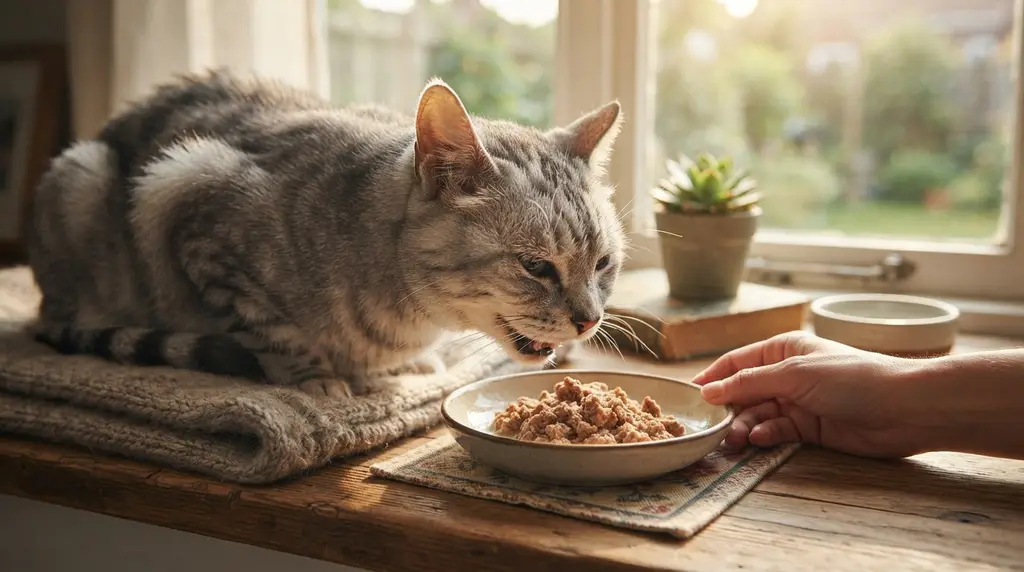
- Do not feed immediately upon returning home. Wait until the cat is stable, awake, and can stand and walk on its own (usually 4-6 hours post-op). Offer a small amount of water first.
- If there's no choking or vomiting, offer 1/3 of their usual meal portion, prioritizing wet food for easier digestion and hydration.
- It's acceptable for the cat to eat very little or nothing at all on this day; however, if they refuse to eat or drink for over 24 hours, consult the vet.
Should the E-collar Be Worn on Day 0?
Yes. The hours after anesthesia wears off are when many cats first attempt to lick their wounds.
What we use for this
CatGarden’s own products, shipped from Taiwan Quick-Dry Pet TowelFrom CA$49.35 per pieceFree shipping on multi-packs
Days 1-3 Post-Op: The Most Critical Three Days
During these three days, the wound has not yet begun to heal significantly. Swelling and pain are at their peak, making this the highest risk period for licking and biting.
Check the Wound Twice Daily, Looking for These 5 Signs
1. Color: Pink to light red is normal. Deep purple, dark black, or extensive bruising requires veterinary attention.
2. Swelling: Mild swelling and feeling a firm suture line are common suture reactions. If it swells into a noticeable lump or feels fluid-filled, seek veterinary advice.
3. Discharge: A small amount of light bloody fluid within the first 24-48 hours is acceptable. Yellow-green, cloudy, or foul-smelling discharge indicates infection.
4. Suture Integrity: Check for broken sutures, loose stitches, or any gaps in the skin closure.
5. Temperature and Pain: If the wound area is noticeably hot to the touch or the cat reacts intensely with struggling and crying when gently touched, it indicates inflammation or inadequate pain management.
Do not use wet wipes, saline solution, or iodine to clean the wound unless specifically instructed by the vet. Dry wounds heal fastest; most home "disinfection" methods can actually disrupt the scab formation.
Choosing Between an E-collar and a Surgical Suit
| Elizabethan Collar (E-collar) | Surgical Suit / Recovery Suit | |
|---|---|---|
| Anti-Licking Effect | High; prevents paw contact | Moderate; licking through fabric is possible |
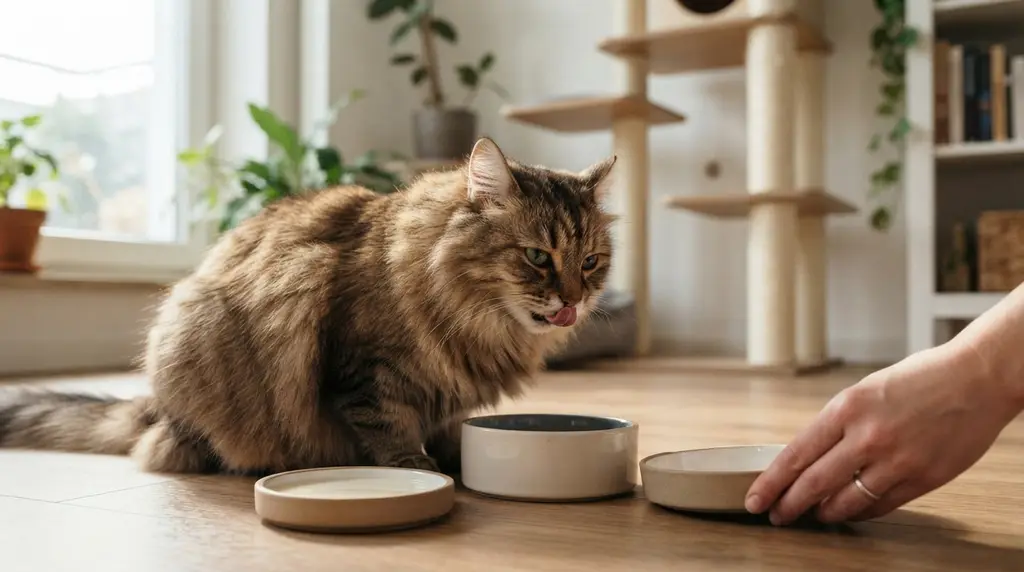
| Eating/Drinking | Can interfere; may need shallow, wide bowls | Minimal interference |
| Common Issues | Bumping into furniture, hesitant movement, hiding | Abdominal heat, chafing wound, cat removing it |
In practice, our recommendation is: Use an e-collar for the first 1-5 days when the wound condition is uncertain. Once healing is stable and the cat shows significant resistance to eating, switch to a surgical suit and increase monitoring frequency.
Key points for choosing an e-collar: The edge should extend 2-3 cm beyond the nose tip (if too short, it's ineffective). Opt for semi-transparent, soft materials to improve the cat's vision and sense of direction. For surgical suits, check daily for redness on the abdomen caused by fabric friction, and change immediately if it becomes wet or soiled with urine.
Pain and Behavioral Observation
During the first 1-3 days post-op, cats will be quieter and tend to hide, which is normal. However, if the cat exhibits immobility with a hunched back, hisses when the abdomen is touched, or completely ignores people and food, these are signs of unmanaged pain. Seek stronger pain medication rather than expecting the cat to "endure it." A cat's tolerance for pain can be mistaken for grumpiness; refer to Sudden Aggression or Hiding in Cats: Not Always Bad Temperament – Early Signs of Pain or Illness.
If infection is suspected, a temperature check can detect problems earlier than visual wound inspection. A normal cat temperature is approximately 38.1-39.2°C. Be alert if it exceeds 39.5°C. Refer to What to Do If Your Cat Has a Fever? Normal Temperature, How to Measure, and Danger Signs Explained.
Handling Method Needs Adjustment
For the next two weeks, avoid pressing your arms against the cat's abdomen when holding them. Instead, support the chest with one hand and the hindquarters with the other, keeping the body horizontal and preventing the hindquarters from dangling and struggling. Refer to How to Hold a Cat Without Them Struggling? Learn Hindquarter Support, Lifting Angle, and 3 Holding Methods They Dislike.
Days 4-7 Post-Op: Appetite Returns, But Activity Must Remain Restricted
During this phase, most female cats show significant improvement in energy and will start wanting to jump, run, and go to window sills. This is the second peak period for wound dehiscence (opening).
- The wound's external appearance should be non-swollen and non-discharging, feeling dry with a thin scab.
- Appetite should return to 80-100% of normal. Maintain the original diet; do not use this opportunity to switch foods. Post-operative gastrointestinal issues, often exacerbated by antibiotics, can lead to soft stools. If stools are consistently soft or absent for a few days, consider using Specialty Probiotics for adjustment, but consult the vet if diarrhea persists for more than 2 days.
- Activity restrictions remain unchanged: No climbing cat trees, no chasing feather wands, no high-speed play. To expend energy, opt for scent games or hide kibble in cardboard boxes for the cat to find slowly.
- If you have multiple cats, pay close attention this week to ensure other cats do not lick or put pressure on the wound. Separation may still be necessary.
Days 8-10 Post-Op: Confirm Healing, Prepare for Suture Removal
- The wound line should be fading, scabs peeling off, and the area feeling smooth.
- If a lump suddenly appears at this stage, it's likely a suture reaction, a stitch granuloma, or possibly subcutaneous fluid. A veterinary visit will resolve this; do not attempt to squeeze it yourself.
- Do not remove the e-collar yet. Many owners remove it around day 8 or 9 thinking "it looks healed," only for the cat to lick a hole in it within an afternoon. We've seen many such cases requiring a second veterinary visit.
Days 11-14 Post-Op: Suture Removal and Release
- Skin sutures are typically removed 7-14 days post-op. For female abdominal incisions, this is usually scheduled between days 10-14, depending on the veterinary clinic's suturing method and the cat's healing progress.
- If absorbable sutures (intradermal sutures) were used, removal is not necessary, but a follow-up visit to confirm complete wound closure is still recommended.
- After suture removal/vet confirmation of healing, the e-collar can be removed, and normal activity, including climbing, can resume. It's advisable to allow a gradual return to play for the first 2-3 days, rather than immediately permitting high-level jumping.
Can Female Cats Be Bathed After Spaying? When Can They Go for Grooming?
No bathing or contact with water for 14 days post-op, and avoid wiping near the wound with wet wipes. Soaking the wound significantly increases the risk of infection and poor healing. If the hindquarters or paws get dirty during this period, perform spot cleaning localized to areas far from the wound. Use a slightly damp Quick-Dry Pet Towel and immediately dry the area.
The actual time for bathing is: after suture removal, once the vet confirms complete wound healing, and then wait an additional 3-7 days, typically falling around the third week post-op. If you need to bathe for flea treatment or to address matted fur, inform the groomer of the surgery date so they can adjust handling and water temperature. When we schedule Grooming Appointments, we always confirm the post-operative days. For bathing frequency in general, refer to How Often Should You Bathe Your Cat? Consider Age, Coat Length, and Skin Condition to Determine Frequency.
What to Do If Your Female Cat Constantly Licks the Wound After Spaying?
Understand this first: licking is instinctual, not a bad habit. A cat's tongue has barbs that can open sutures within minutes. Therefore, the strategy is "physical barrier," not "training them not to lick."
Follow these steps:
1. Ensure the E-collar is long enough: The edge should extend 2-3 cm beyond the nose tip. If it's too short, the cat can still reach the wound by turning its head.
2. Check if the wound is itchy or uncomfortable: Persistent licking in one spot, accompanied by redness, swelling, heat, and pain, may indicate inflammation or a suture reaction. Seek veterinary attention rather than using a larger e-collar.
3. Use an e-collar and surgical suit together: This is for difficult cases and requires more frequent checks for abdominal heat and chafing.
4. Do not apply chili, essential oils, or ointments to the wound. These can irritate the wound and may be toxic.
If the cat refuses to eat entirely due to the e-collar, switching to a surgical suit combined with supervised feeding sessions (staying with the cat during meals and putting the suit back on immediately after) is a more practical compromise.
How to Control Increased Appetite and Rapid Weight Gain in Female Cats After Spaying?
This is a real and often overlooked long-term issue. After spaying, sex hormone levels decrease, leading to a basal metabolic rate reduction of about 20-30%. Combined with reduced activity and altered satiety signals, eating the same amount means overconsumption.
Practical steps:
- After 14 days post-op and resumption of normal activity, reduce daily calorie intake by 10-20% or switch to a spay/weight management formula.
- Switch to measured feeding rather than free-feeding (all-you-can-eat). This is especially crucial in multi-cat households to prevent overeating from others' portions.
- Weigh your cat every 2 weeks and keep a record. The six months post-spay is the period when weight gain is most likely to become uncontrolled. If weight increases by more than 10% of the original weight, adjustments are needed.
- Palpation is more accurate than visual assessment: You should be able to feel the ribs and see a waistline from above. Refer to Is Constant Weight Gain in Cats Always Obesity? Assess Body Condition Score, Waistline, and 3 Warning Signs to See a Vet.
- Persistent meowing at the food bowl doesn't necessarily mean hunger; it could be a learned behavior. Refer to Does Your Cat Constantly Crying at the Food Bowl Mean They're Hungry? Distinguish Between Begging, Mealtime, and Learned Habits.
Seek Immediate Veterinary Attention for These Situations – Do Not Wait
- Wound dehiscence (opening), exposure of subcutaneous tissue or internal organs, or significant bleeding.
- Yellow-green, cloudy, or foul-smelling discharge from the wound.
- Extensive redness and heat around the wound, with a strong reaction when touched.
- Refusal to eat or drink for over 24 hours, or persistent vomiting.
- No urination within 24-36 hours post-op, or crying out during urination, frequent trips to the litter box with no output.
- Temperature exceeding 39.5°C, or significantly below 37.5°C.
- Rapid breathing, open-mouth panting, or noticeable abdominal breathing (refer to Is Abdominal Breathing Normal in Cats?).
- Inability to stand, weakness, pale gums or tongue.
If You Need to Travel During the Two Weeks Post-Op
The 14 days post-spay are not ideal for boarding due to the stress of environmental changes and increased activity. If unavoidable, be sure to provide the surgery date, medication list, and suture removal appointment details. Choose a boarding facility that accepts cats in e-collars and can provide daily wound photos. When we accept post-op cats for Boarding, we arrange single rooms with low perches, remove climbing platforms, and record food intake and urination frequency at each feeding. Refer to Cat Boarding Checklist: What Vaccinations Are Needed Before Check-in? Health Certificates, Flea Prevention, and Packing List.
Frequently Asked Questions
How Many Days After Spaying Can Sutures Be Removed?
Skin sutures are generally removed 7-14 days post-op. For female abdominal incisions, removal is typically scheduled between days 10-14, depending on the clinic's suturing method and healing progress. If absorbable sutures were used, removal is not necessary, but a follow-up visit to confirm complete wound closure is still recommended.
Can Female Cats Be Bathed After Spaying?
No bathing or contact with water is allowed for 14 days post-op, and even wiping near the wound with wet wipes should be avoided. Wait until sutures are removed and the vet confirms wound healing, then wait an additional 3-7 days. Generally, bathing is suitable around the third week post-op.
If My Female Cat Constantly Licks the Wound After Spaying, Can I Just Use a Surgical Suit Instead of an E-collar?
This may be possible if the wound is stable and you can monitor frequently. However, for the first 5 days post-op, an e-collar is recommended, as cats may persistently lick the same spot through fabric. If the cat obsessively licks one area accompanied by redness and swelling, consult your vet first to rule out wound inflammation.
Is Increased Appetite Normal After Spaying a Female Cat?
Yes, it's a common phenomenon. After spaying, the basal metabolic rate decreases by about 20-30%, and satiety regulation changes, making them seem particularly hungry. Switch to measured feeding, reduce calorie intake by 10-20%, and monitor weight every 2 weeks to prevent significant weight gain within six months.
How Many Days After Spaying Can Female Cats Resume Normal Jumping and Play?
In principle, they should wait until 14 days post-op, after suture removal or veterinary confirmation of healing. Gradually reintroduce activity over the first 2-3 days. During days 4-7, when energy levels increase, they are most likely to jump unexpectedly, so activity restrictions must still be maintained.
While 14 days post-op may seem long, the truly demanding tasks are "prevent licking," "prevent jumping," and "check the wound twice daily." If you prepare the environment beforehand, these two weeks will be much easier than you imagine. You can also explore everyday essentials and health supplements in our Shop.
This article provides general care information and cannot replace veterinary diagnosis. If the wound is abnormal, or symptoms persist or worsen, seek veterinary care promptly and follow your veterinarian's instructions.
CatGarden Editorial Team
CatGarden offers curated supplies, cat boarding, and grooming
Book services or shop online.