How to Choose a Cat Litter Box: Check Your Cat's Size and Acceptance, Sand Clogging, Cleaning, and Safety Sensors Before You Buy
Before buying a cat litter box, complete this self-assessment checklist: Does your cat's weight trigger the sensors? What type of litter can it use? How long does monthly cleaning take? What are the backup litter box plans for power outages and malfunctions? Not every cat or household is suited for an automatic litter box.
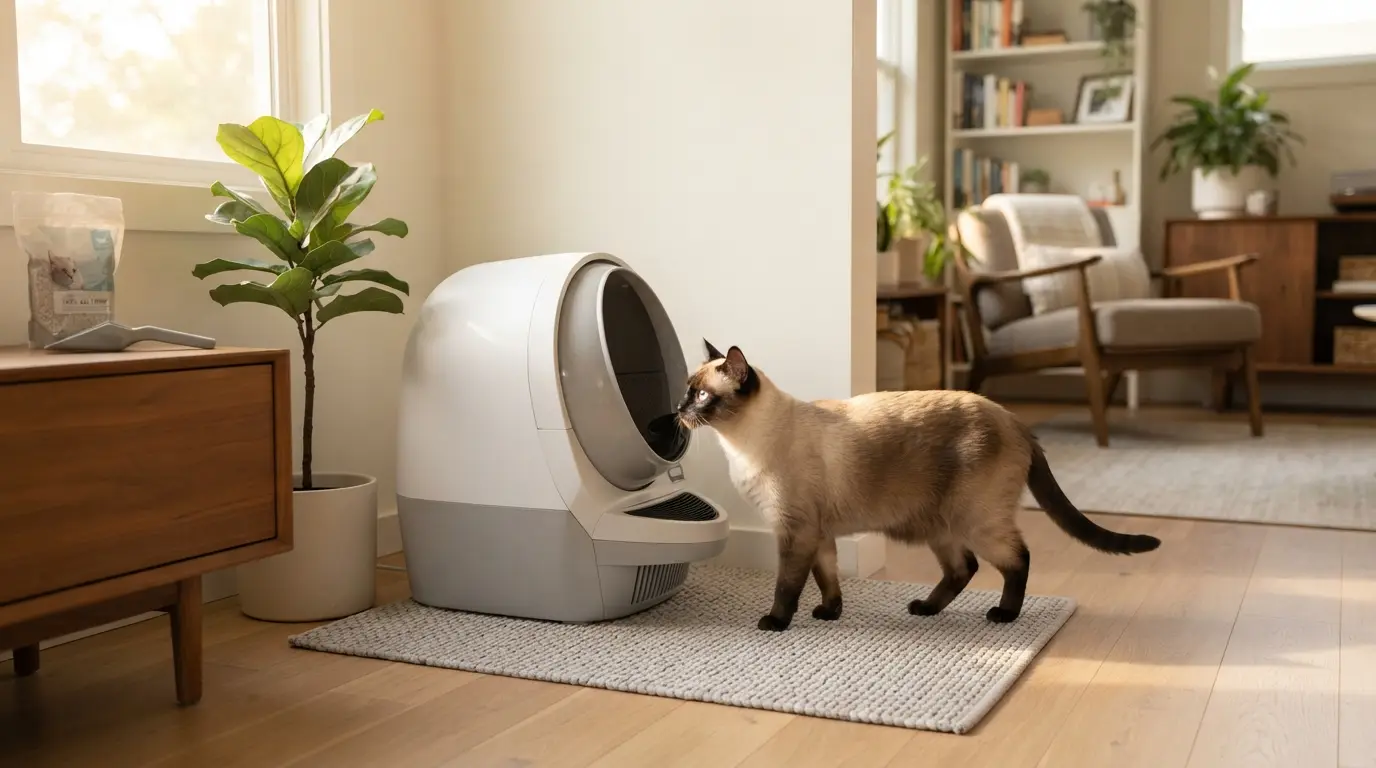
The first step in choosing a cat litter box isn't comparing prices or looking at rankings, but answering three questions: Does your cat's weight exceed the machine's sensor threshold (most are between 2.3–2.5 kg)? Can you accommodate an "unplugged" backup litter box at home? Are you willing to dismantle and clean the machine every 2–4 weeks? If you can't answer any of these questions, don't place an order yet – a cat litter box solves the problem of "not wanting to scoop daily," but it introduces new cleaning tasks, consumable costs, and cat acceptance issues.
This pre-purchase checklist, compiled from feedback from various households at our cat hotel and grooming salon, outlines the decision-making order. It's not a sponsored ranking, but focuses on what you truly need to confirm before ordering.
Key Takeaways
- Most automatic cat litter boxes have a weight sensor threshold set at 2.3–2.5 kg. Kittens or small adult cats weighing less than this may not be detected, and these are explicitly not recommended by manufacturers.
- The most stable litter type for cat litter boxes is mineral litter with 1–2mm granules and high clumping strength. Wood, paper, and crystal litters are generally not suitable. Tofu litter depends on whether the model is marked as compatible, and it's very prone to sticking to the walls when damp.
- A cat litter box does not mean no cleaning: The waste drawer liner should be changed every 3–5 days. The entire machine (drum, deodorizing filter, sensor window, waste chute crevices) should be dismantled and cleaned every 2–4 weeks, otherwise, urine scale and odors will build up intensely.
- If you have a cat litter box, you should still maintain the principle of "one litter box per cat + one extra," and keep at least one backup litter box that doesn't require electricity for power outages, malfunctions, cleaning days, and if your cat refuses to use it.
- During the transition period, it's recommended to have the new and old litter boxes coexist for 2–4 weeks. For the first few days, keep the new one turned off and use it as a regular litter box, observing if the number of urination times remains 2–4 times a day and if there are any instances of inappropriate urination.
What Does a Cat Litter Box Actually Save You, and What Does It Cost Extra?
Let's set realistic expectations. The real benefits of a cat litter box are:
- Feces and urine are enclosed and sealed in the waste drawer within 5–15 minutes, effectively reducing peak ammonia odor in the living room.
- Most models record weight and usage frequency. This is actually the most valuable feature for us – early clues for urinary tract issues, diabetes, and kidney disease are often "more frequent trips to the litter box with less output each time" or "a quiet 300g weight loss over a month." For interpretation, you can refer to Does Your Cat's Constant Weight Gain Mean They're Fat? Check Body Condition Score, Waistline, and 3 Warning Signs to See a Vet.
- You won't come home to a overflowing litter box after being away for a day or two (but this does not mean it can replace boarding or pet-sitting).
The costs involved include:
- Increased litter consumption. The machine needs a certain litter depth to clump effectively and prevent sticking, with most models requiring 4–6 liters at a time and needing refills weekly.
- Consumables: Waste bags, deodorizing filters (carbon pads).
- Cleaning labor: Shifting from "1 minute of scooping daily" to "20–40 minutes of dismantling and scrubbing every 2–4 weeks." This is where many people's frustration begins.
- Space and power outlet: Requires a flat surface, a nearby power outlet, and is not recommended for placement in damp bathrooms or next to bedroom beds (operational noise can disrupt sleep, and sensitive cats might be hesitant to use it).
Pre-Purchase Self-Assessment Checklist: Answer All Seven Questions Before Ordering
1. Can Your Cat's Weight and Size Trigger the Sensors?
This is the first hurdle. Most models use "weight change + infrared" to detect cat entry and exit, with weight thresholds often set at 2.3–2.5 kg. Cats below this weight may not be detected by the machine.
Please weigh your cat first (using a pet scale or by weighing yourself with and without your cat on a human scale) and confirm:
- Kittens under 4–6 months old, typically weighing 1.5–2.5 kg, are not recommended for use.
- Senior cats or those with chronic illnesses who have slimmed down to around 2.5 kg should also revert to traditional litter boxes.
- For large breeds (Maine Coons, Ragdolls, over 6 kg), consider the internal rotating space: The cat must be able to turn around completely inside, and their tail shouldn't hit the top cover when squatting. The opening height and pedal depth should be compared against the official dimensions and your cat's actual body length (tip of nose to base of tail) × 1.5.
2. Why Are Kittens and Senior Cats Not Recommended?
- Kittens: Insufficient weight and high curiosity, lacking awareness of "moving objects" as dangerous, are the most likely to jump in while the machine is operating. Furthermore, the kitten stage requires daily observation of stool shape and for parasites, which the machine would bury.
- Senior cats / cats with joint issues: The entrance threshold and pedal slope directly affect their willingness to use it. Cats with arthritis often don't "not know how to use it," but rather "it hurts to step over." Additionally, senior cats with cognitive decline have lower tolerance for mechanical noises and vibrations, leading them to urinate in corners instead.
- Sick or post-operative cats: Requires monitoring urine color, presence of blood, and volume. During this period, use an open litter box. If their behavior suddenly changes, don't immediately blame the machine or their temperament; first, refer to Sudden Aggression or Hiding in Cats: Early Signs of Pain or Illness?.
3. Is Your Cat Litter Box Safe? Look at the "Number of Sensors"
"Is the cat litter box safe?" is the most frequently asked question. For current mainstream models, the accident rate is not high, but known risks are concentrated under the same conditions: lightweight cats + single sensor + short delay time. When choosing, look for:
- Dual detection of weight sensors + infrared (or radar), both are essential.
- Adjustable delay start, recommended to be set at 5–15 minutes; too short can cause it to activate while the cat is still inside covering its waste.
- Automatic stop/reverse upon obstruction, this is the most critical feature; if it's not mentioned on the specifications page, skip it.
- Manual pause and child lock, especially important if you have children at home.
- Automatic power cut-off when the top cover is opened.
In practice, there's another easily overlooked factor: confirm if your cat is not the type to "urinate standing up" or "likes to squat on the edge of the litter box." These postures can cause weight distribution to be misread by the sensors.
4. What Type of Litter is Suitable for a Cat Litter Box?
This question determines whether you'll be battling sand clogging daily.
- Most stable: Medium-fine granules (approx. 1–2mm), high clumping strength mineral litter / bentonite litter. The clumps must be firm enough "not to break when scooped" for the machine to push the entire clump into the waste drawer. If the odor control and clumping are sufficient, our own long-term use Odor Control Mineral Litter 3.0 fits this specification of fine granules and strong clumping, with low tracking and less sticking to the walls.
- Depends on the model: Tofu litter / mixed litter. Some models are marked as compatible, but tofu litter softens and sticks to the inner walls of the drum after absorbing moisture, which is more pronounced in Taiwan's humid summers. If you prefer tofu litter's low dust and flushable nature, it's better to use it with a traditional litter box rather than forcing it into a machine.
- Not recommended: Wood litter, paper litter, crystal litter, coarse-grained litter. These don't clump or clump too brittlely, and will either get stuck in the sieve or be sifted out entirely.
- Maintain litter depth at the machine's indicated line (usually 5–8 cm); too shallow will cause sticking to the bottom, too deep will be too heavy and trigger false alarms.
5. Sand Clogging and Odor Dead Spots: Are You Patient Enough to Deal With Them?
The actual locations that smell and clog are not listed on the specifications:
- Crevices between the drum and the outer casing: Fine sand can get in and create dust, leading to increased motor noise over time.
- Around the waste drawer and tracks: When urine clumps break outside the bag, this is the primary source of odor.
- Sensor window / infrared emitter: If covered by dust, it will lead to misdetection. It's recommended to wipe it with a dry cloth weekly.
- Deodorizing filter: Most recommend replacement every 1–3 months. A dirty filter can become a source of odor.
Our practical routine is: Change waste bags every 3–5 days, wipe sensors and casing weekly, and thoroughly dismantle and wash every 2–4 weeks. The main unit cannot be rinsed with water during disassembly; only wipe with a damp cloth. All washable parts must be completely dry before reassembly. Residual moisture will cause the next batch of litter to clump instantly.
6. Backup Plans for Power Outages, Malfunctions, and Cleaning Days: How to Prepare
This is the step most people overlook. When the cat litter box is down, your cat won't wait for you. You must have:
- At least one traditional litter box that doesn't require electricity, placed in a fixed location and not put away just because you bought a machine. Multi-cat households should still adhere to the "one litter box per cat + one extra" rule; one machine does not equal two litter boxes.
- For a backup, choose a larger, open, and easy-to-clean model. We often recommend owners use a spacious, low-entry design like the Butter Toast Litter Box as a permanent fixture. The principles for size and placement are fully explained in How to Choose a Cat Litter Box: Size, Style, and Placement Explained. Get the basics right before considering automation.
- If you're going away for more than two days, don't leave your cat to the machine. Malfunctions, Wi-Fi outages, and cat refusal can all happen simultaneously. It's best to arrange for someone to care for them or book a boarding stay.
7. How to Test Cat Acceptance: Give Them 2–4 Weeks
Cats are very sensitive to changes in their toileting environment. Follow these steps during the transition:
1. Days 1–3: Turn off the machine. Use it as a regular covered litter box, filling it with the litter they are currently using (a mix of old and new litter is also acceptable).
2. Days 4–7: Turn on the machine but extend the delay time. Operate it only when you are present, allowing the cat to associate the "sound" with "safety."
3. Weeks 2–4: Keep both the new and old litter boxes available. Observe which one they choose. Only consider removing the old box if it's completely unused and the new machine is being used consistently.
Specific observation indicators: Adult cats typically urinate 2–4 times and defecate 1–2 times a day. If, after the transition, you notice a significant decrease in urination frequency, prolonged straining to urinate small amounts, or inappropriate urination on mats or beds, it's a sign of failed acceptance. Revert to a traditional litter box. This principle of "verifying acceptance before investing" is the same logic we apply in Cat Water Fountain Buying Guide: Check Ease of Cleaning, Water Flow, and Cat Acceptance.
Summary of Cat Litter Box Downsides: When We Directly Advise "Don't Buy Yet"
- You have cats under 6 months old or weighing less than 2.5 kg.
- Your cat is undergoing treatment for urinary tract issues, gastrointestinal problems, or is recovering from surgery, requiring daily observation of their excrement.
- You have multiple cats and only plan to buy one machine to replace all litter boxes.
- You don't have a suitable placement location (damp, uneven floor, too far from an outlet, only placeable next to a bedroom bed).
- You dislike dismantling and cleaning more than you dislike scooping – in this case, buying a cat litter box merely changes the form of your discomfort.
- Your budget is limited, and basic necessities are not yet in place: Prioritizing the correct number of litter boxes, litter type, and water sources will yield much greater benefits than a single machine. For a checklist of supplies, refer to What Do New Cat Owners Need? Start with These 10 Essentials, or get everything at once by visiting Shop.
Finally, a reminder: Cat litter boxes can record data, but they cannot diagnose health issues for you. If the data shows abnormalities, or if your cat exhibits straining to urinate with no output, frequent litter box trips, blood in urine, or decreased appetite, these are emergency-level situations. Seek veterinary care immediately; do not wait for the machine to record more data.
Frequently Asked Questions
Are Cat Litter Boxes Safe? Will They Pinch My Cat?
Choosing a model with "dual weight + infrared sensors, auto-stop/reverse on obstruction, and adjustable delay start," and ensuring your cat's weight exceeds the manufacturer's threshold (usually over 2.3 kg), makes the actual risk very low. Known accidents have almost exclusively occurred with underweight kittens or models with only a single sensor.
Can Kittens Use Automatic Litter Boxes?
Not recommended. Kittens' weight often doesn't trigger the sensors, and they lack awareness of operating machinery. Additionally, the kitten stage requires daily observation of stool shape and for parasites, making open litter boxes safer. It's generally recommended to wait until their weight is consistently over 2.5 kg and they are over 6 months old before considering one.
What Type of Litter is Suitable for Cat Litter Boxes?
The most stable is mineral litter with granules of about 1–2mm and high clumping strength. Most wood, paper, and crystal litters are not suitable. Tofu litter depends on whether the model is marked as compatible, and it tends to soften and stick to walls in humid environments.
What Happens During a Power Outage or Malfunction?
You must have at least one traditional litter box at home that doesn't require electricity, and maintain the "one litter box per cat + one extra" total number of litter boxes. During a power outage or malfunction, you can open the top cover of the machine and use it as a regular litter box, but if the litter surface is buried, you'll need to manually scoop it as soon as possible.
Will Having a Cat Litter Box Eliminate Odors?
It won't completely eliminate odors. While enclosing feces and urine reduces peak ammonia smell, the waste bags should be changed every 3–5 days, deodorizing filters replaced every 1–3 months, and the machine dismantled and washed every 2–4 weeks. If these steps are not followed, odors will concentrate in the drum crevices and waste drawer tracks, becoming harder to manage than a traditional litter box cleaned daily.
This article was written by the CatGarden editorial team. The experiences shared are based on daily observations from our cat hotel and grooming salon, intended for owner reference in purchasing and home care. If your cat exhibits significant abnormalities in toileting behavior (frequent trips, straining to urinate, blood in urine, inappropriate urination), please seek veterinary care promptly for professional evaluation.
CatGarden offers curated supplies, cat boarding, and grooming
Book services or shop online.