What Should New Cat Owners Prepare? Start with These 10 Essentials to Save Money and Avoid Mistakes

Why do new cat owners tend to buy too much? Learn to distinguish between essentials, items that can wait, and things to avoid. Many new cat parents scroll through social media and watch unboxing videos before bringing their cat home, leading to overflowing shopping carts. Everything looks cute and necessary, but the cat might not approve.
CatGarden Editorial TeamPublished 2026/06/02Updated 2026/10/06
Daily Grooming & Care
What Should New Cat Owners Prepare? Start with These 10 Essentials to Save Money and Avoid Mistakes

Key takeaways

  • New cat owners don't need to buy everything at once. It's recommended to categorize supplies into 'essential,' 'can buy later,' and 'don't buy yet.' Essentials are items needed on the first day, like a litter box, food bowls, and a carrier. Large cat trees, decorative beds, and automatic devices can be added after you better understand your cat's habits.
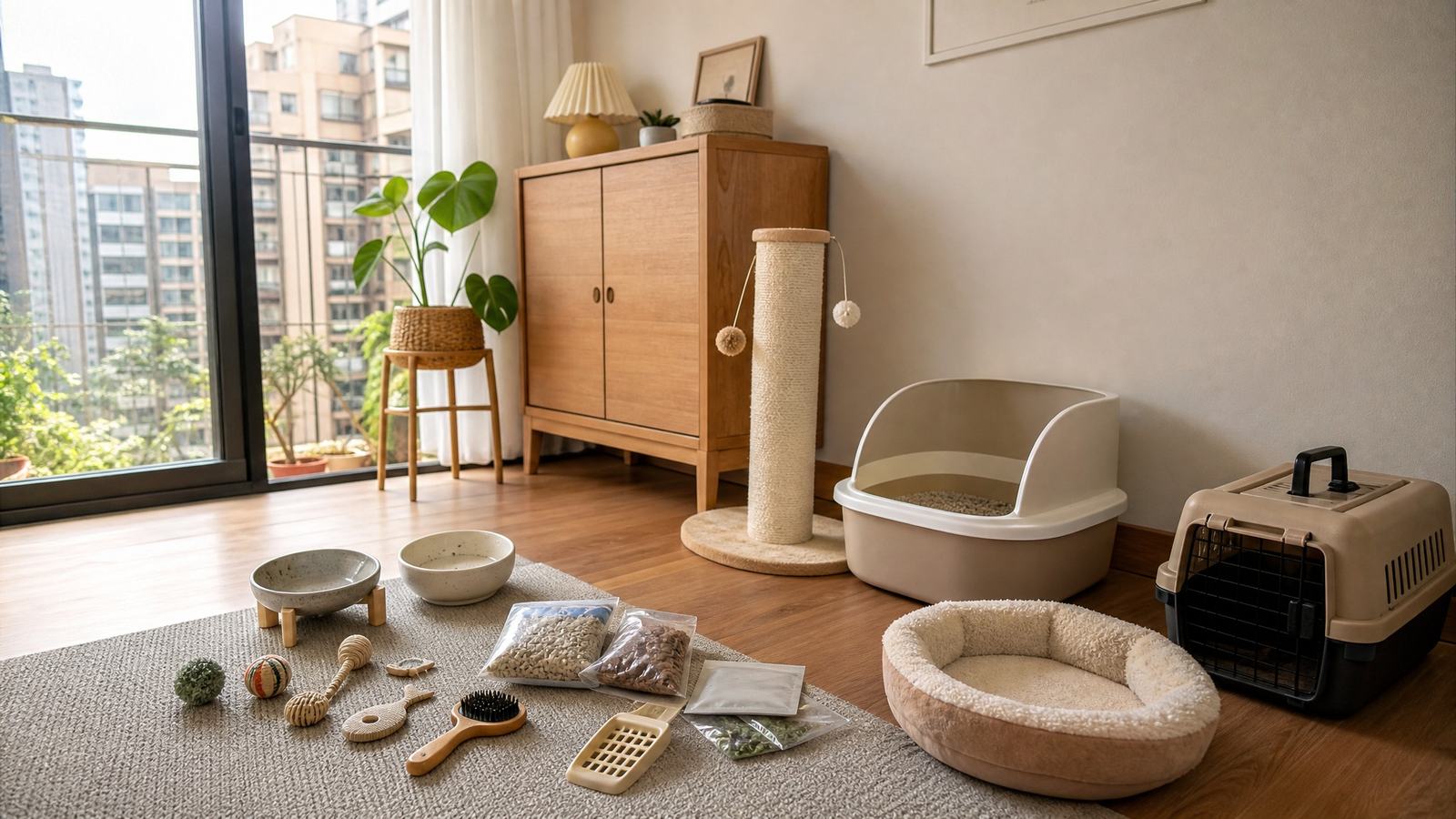
  • The core essential list for a new cat's arrival includes 10 items: litter box, cat litter, food bowl, water bowl or water fountain, main food, scratching post, sleeping mat or hiding space, teaser toy, nail clippers or basic cleaning supplies, and a carrier.
  • When changing food, start with the same brand the previous owner, breeder, or shelter was using. Gradually transition over 7 to 10 days to avoid digestive upset in a new cat already stressed by the environment.
  • The 5 most commonly mistaken purchases are: litter boxes that are too small, products with strong scents, thick fabric beds and plush mats that are difficult to clean, high-priced items like automatic feeders and self-cleaning litter boxes, and soft carriers lacking sufficient support.
  • A minimalist shopping list for a limited budget can include: 1 large litter box, 1 bag of suitable cat litter, 2 bowls, main food, 1 scratching post, 1 carrier, 1 simple sleeping mat or a cardboard box hideaway, plus a teaser wand.

Why Do New Cat Owners Buy Too Much? Distinguish Between Essentials, Items That Can Wait, and Things to Avoid

Many new cat owners scroll through social media and watch unboxing videos before bringing their cat home, resulting in overflowing shopping carts. Everything looks cute and seems necessary, but the cat might not approve once they arrive. Some items may even end up gathering dust in a corner due to incorrect sizing or unsuitable materials.

For beginners, the most practical approach isn't to buy everything at once, but to categorize items into "Essentials," "Can Wait," and "Avoid for Now." Essentials are things the new cat will need on day one, such as a litter box, food bowls, and a carrier. Items that can wait include large cat trees, fancy beds, and automated gadgets; you can purchase these later once you understand your cat's habits better, saving money and avoiding mistakes.

Especially in Taiwan's typically small urban homes, coupled with a humid climate, it's crucial to consider not only functionality but also ease of cleaning and storage. For instance, bulky fabric items that are difficult to remove and wash can easily trap fur and odors. If new cat owners plan their living space well from the start, it will help the cat adapt to the new environment more stably than impulsive purchases.

What we use for this

CatGarden’s own products, shipped from Taiwan
See all products
Quick-Dry Pet TowelQuick-Dry Pet TowelFrom CA$49.35 per pieceFree shipping on multi-packs

10 Essential Items for New Cat Owners: Choosing from Litter Boxes to Carriers

The truly essential items don't need to be numerous; the focus should be on supporting eating, drinking, toileting, resting, and basic health management. The following 10 items are the core list that most new cat owners should prepare before their new cat arrives. Get the basics right first, then gradually adjust based on your cat's personality.

1. Litter Box

It's recommended to prioritize litter boxes that are spacious and easy to clean, large enough for the cat to turn around comfortably. Kittens grow quickly, so a small box will soon need replacing. Open-top boxes are generally better for new owners to observe elimination habits and are less likely to be rejected by the cat due to trapped odors.

2. Cat Litter

Start with litter types that most cats readily accept, and avoid heavily scented products initially. In Taiwan's humid climate, odor control and clumping ability are important, but also consider the dust level. If you have limited space, choose a litter that doesn't retain odors after cleaning and is easy to scoop.

3. Food Bowls

Choose food bowls that are stable and won't tip over easily, and are made of easy-to-clean materials. The bowls shouldn't be too deep to avoid whisker fatigue, which can make eating uncomfortable for the cat. Stainless steel or ceramic are generally easier to keep clean and less likely to retain odors than plastic.

4. Water Bowl or Fountain

A cat's water intake is crucial, but not all cats initially like water fountains. For new cat owners, it's advisable to prepare one or two water bowls placed in different locations to observe drinking habits. If you later find your cat prefers running water, then consider purchasing a water fountain.

5. Cat Food

First, confirm what brand the previous owner, breeder, or rescue organization is currently feeding, before deciding whether to switch. A new cat arriving home already faces environmental stress; switching food immediately can further upset their digestive system. The safest approach is to continue with their current diet and gradually transition over 7 to 10 days.

6. Scratching Post

A scratching post is not just for protecting furniture; it's an important item for cats to release stress. It's recommended to prepare at least one flat and one vertical scratching post to observe your cat's preference. Stability, durability, and ease of replacement are more important than expensive, decorative models.

7. Sleeping Pad or Hiding Space

Many cats, upon arriving at a new home, need a sense of security the most, which doesn't necessarily mean a luxurious bed. Cardboard boxes, simple soft pads, or small hiding spaces can actually help them settle down. Especially for shy cats, having a place to hide is more important than where they sleep.

8. Cat Toys

Start by buying only 1 or 2 basic types, such as a wand toy or small balls. More toys don't necessarily mean the cat will like them; some may lose interest after the first play. New cat owners can test with a few items first to find out what truly engages the cat before deciding whether to buy more.

9. Nail Clippers or Basic Cleaning Supplies

You don't necessarily need a complete grooming kit right away, but basic nail clippers and a comb can be prepared. For long-haired cats or those with significant shedding periods, grooming frequency is even more important. In Taiwan's hot and humid environment, regular grooming also helps reduce household odors and hairball issues.

10. Carrier

A carrier is essential, not optional. It will be needed for future vet visits, moving, or emergencies, so don't wait until you need it to buy one. It's recommended to choose a carrier that is well-ventilated, has a secure latch, and is large enough for the cat to turn around comfortably. Hard-sided or structurally stable models are generally safer.

5 Items Most Likely to Be Bought Incorrectly: Consider Size, Material, Odor, and Cleanliness

The first item most commonly bought incorrectly is the litter box size. Many beginners choose a very small litter box due to limited space at home, resulting in the cat being uncomfortable and litter being easily tracked out. Instead of buying a replacement later, it's better to choose a larger, easy-to-clean model from the start.

Second are items with strong scents, including scented cat litter, scented wet wipes, or even sleeping pads with a strong plastic smell. What smells good to humans may not be liked by cats and can even cause rejection. For new cat owners, low-irritation and easy-to-clean items are usually more important than fragrance.

Third are items with difficult-to-clean materials, such as thick fabric beds, plush mats, or large fabric tunnels. These tend to absorb odors in Taiwan's humid season and can develop musty smells due to slow drying. Fourth are high-priced items like automatic feeders and self-cleaning litter boxes; if you're unsure about your cat's routine and needs, don't rush to buy them.

Fifth are incorrect choices for travel items. Soft bags lacking sufficient support are not stable enough for anxious cats and are not ideal for transport to the vet. When choosing items, new cat owners should remember to consider durability, washability, and actual usage scenarios, rather than just appearance.

How to Arrange Purchasing Order Before Your New Cat Arrives? Set Up First, Then Bring Your Cat Home for Stability

The best approach before bringing your cat home is to designate basic areas: a feeding and drinking zone, a litter box area, and a resting and hiding zone. These three areas don't need to be large, but the pathways should be clear, and they should be located away from noisy appliances or high-traffic areas. Setting up the environment first will help prevent the cat from becoming more anxious due to a chaotic space upon arrival.

The recommended purchasing order is to start with immediate necessities: carrier, litter box, cat litter, bowls, water, and main food. In the second phase, add scratching posts, toys, and grooming tools. Finally, based on your lifestyle, add cat trees, water fountains, and automated devices. This approach best meets the actual needs of new cat owners.

If you are adopting a cat from a rescue or a friend's home, don't forget to ask about the cat litter, food, and routine they were previously using. Continuing with familiar scents and items will make the transition smoother. Especially in the first 1-2 weeks after a new cat arrives home, the focus should not be on buying many things, but on providing a regular, predictable living experience.

How to Buy Smart on a Limited Budget? Simplified Purchasing Advice for New Owners

If your budget is limited, it's recommended to spend money on items that will be used daily and will impact the cat's adaptation. Items like the litter box, cat litter, main food, carrier, and scratching post are the highest priority. Getting these items right will make a significant difference in your cat's comfort and your future care.

Conversely, decorative beds, large cat trees, smart devices, and various treats can wait. It's not that you can't buy them, but it's better to choose them after you understand your cat's habits better, ensuring they are more suitable for their needs. Many new cat owners waste the most money not by buying cheap items, but by buying things they don't necessarily need too early.

A simplified shopping list could include: 1 large litter box, 1 bag of suitable cat litter, 2 bowls, main food, 1 scratching post, 1 carrier, 1 simple sleeping pad or cardboard box hiding area, and 1 wand toy. This setup is enough to give your new cat a stable start. After spending some time together, you can gradually add the cat supplies you truly need, which is smarter than buying everything at once.

FAQ

Do new cat owners absolutely need to buy an automatic litter box?

Not necessarily. For most beginners, a large, easy-to-clean litter box is more convenient for observing elimination habits and establishing a cleaning routine. Consider upgrading later once you've confirmed your space, budget, and cleaning needs.

What are the minimum essential items to prepare before a new cat arrives home?

At a minimum, you need a carrier, litter box, cat litter, food bowl, water bowl, and the main food the cat is currently eating. Adding a scratching post and a hiding space will generally improve adaptation. These form the most basic starting set.

Should cat supplies be bought all at once?

No. Start by buying essential items; other items like toys, cat trees, and water fountains can be added after observation. This not only saves budget but also prevents buying things the cat won't use.

How can beginners choose cat litter without making mistakes?

Start with highly accepted, well-clumping litter that doesn't produce too much dust, and avoid overly strong scents. In Taiwan's humid climate, odor control and scooping efficiency are also important. The most reliable method is to try small packages first before committing to long-term use.

Can a soft carrier bag replace a cat carrier?

For very short distances, some supportive carrier bags might be usable, but in most situations, a structurally stable carrier is still recommended. For vet visits, car travel, or emergencies, stability and security make a significant difference. Anxious cats, in particular, need a secure space.

If you're compiling a checklist for bringing your cat home, instead of buying everything at once, focus on choosing the cat supplies that are truly necessary. From the litter box, scratching post, and carrier to daily food and water, each item will affect your cat's adaptation to their new home. To make the new owner shopping experience easier, you can start by choosing practical, easy-to-clean cat supplies suitable for Taiwanese homes, avoiding detours and mistakes.

Further Reading

CatGarden offers curated supplies, cat boarding, and grooming

Book services or shop online.
Back

Blog

What Should New Cat Owners Prepare? Start with These 10 Essentials to Save Money and Avoid Mistakes

CatGarden Editorial TeamPublished 2026/06/02Updated 2026/10/06
Daily Grooming & Care
What Should New Cat Owners Prepare? Start with These 10 Essentials to Save Money and Avoid Mistakes

Key takeaways

  • New cat owners don't need to buy everything at once. It's recommended to categorize supplies into 'essential,' 'can buy later,' and 'don't buy yet.' Essentials are items needed on the first day, like a litter box, food bowls, and a carrier. Large cat trees, decorative beds, and automatic devices can be added after you better understand your cat's habits.
  • The core essential list for a new cat's arrival includes 10 items: litter box, cat litter, food bowl, water bowl or water fountain, main food, scratching post, sleeping mat or hiding space, teaser toy, nail clippers or basic cleaning supplies, and a carrier.
  • When changing food, start with the same brand the previous owner, breeder, or shelter was using. Gradually transition over 7 to 10 days to avoid digestive upset in a new cat already stressed by the environment.
  • The 5 most commonly mistaken purchases are: litter boxes that are too small, products with strong scents, thick fabric beds and plush mats that are difficult to clean, high-priced items like automatic feeders and self-cleaning litter boxes, and soft carriers lacking sufficient support.
  • A minimalist shopping list for a limited budget can include: 1 large litter box, 1 bag of suitable cat litter, 2 bowls, main food, 1 scratching post, 1 carrier, 1 simple sleeping mat or a cardboard box hideaway, plus a teaser wand.

Why Do New Cat Owners Buy Too Much? Distinguish Between Essentials, Items That Can Wait, and Things to Avoid

Many new cat owners scroll through social media and watch unboxing videos before bringing their cat home, resulting in overflowing shopping carts. Everything looks cute and seems necessary, but the cat might not approve once they arrive. Some items may even end up gathering dust in a corner due to incorrect sizing or unsuitable materials.

For beginners, the most practical approach isn't to buy everything at once, but to categorize items into "Essentials," "Can Wait," and "Avoid for Now." Essentials are things the new cat will need on day one, such as a litter box, food bowls, and a carrier. Items that can wait include large cat trees, fancy beds, and automated gadgets; you can purchase these later once you understand your cat's habits better, saving money and avoiding mistakes.

Especially in Taiwan's typically small urban homes, coupled with a humid climate, it's crucial to consider not only functionality but also ease of cleaning and storage. For instance, bulky fabric items that are difficult to remove and wash can easily trap fur and odors. If new cat owners plan their living space well from the start, it will help the cat adapt to the new environment more stably than impulsive purchases.

What we use for this

CatGarden’s own products, shipped from Taiwan
See all products
Quick-Dry Pet TowelQuick-Dry Pet TowelFrom CA$49.35 per pieceFree shipping on multi-packs

10 Essential Items for New Cat Owners: Choosing from Litter Boxes to Carriers

The truly essential items don't need to be numerous; the focus should be on supporting eating, drinking, toileting, resting, and basic health management. The following 10 items are the core list that most new cat owners should prepare before their new cat arrives. Get the basics right first, then gradually adjust based on your cat's personality.

1. Litter Box

It's recommended to prioritize litter boxes that are spacious and easy to clean, large enough for the cat to turn around comfortably. Kittens grow quickly, so a small box will soon need replacing. Open-top boxes are generally better for new owners to observe elimination habits and are less likely to be rejected by the cat due to trapped odors.

2. Cat Litter

Start with litter types that most cats readily accept, and avoid heavily scented products initially. In Taiwan's humid climate, odor control and clumping ability are important, but also consider the dust level. If you have limited space, choose a litter that doesn't retain odors after cleaning and is easy to scoop.

3. Food Bowls

Choose food bowls that are stable and won't tip over easily, and are made of easy-to-clean materials. The bowls shouldn't be too deep to avoid whisker fatigue, which can make eating uncomfortable for the cat. Stainless steel or ceramic are generally easier to keep clean and less likely to retain odors than plastic.

4. Water Bowl or Fountain

A cat's water intake is crucial, but not all cats initially like water fountains. For new cat owners, it's advisable to prepare one or two water bowls placed in different locations to observe drinking habits. If you later find your cat prefers running water, then consider purchasing a water fountain.

5. Cat Food

First, confirm what brand the previous owner, breeder, or rescue organization is currently feeding, before deciding whether to switch. A new cat arriving home already faces environmental stress; switching food immediately can further upset their digestive system. The safest approach is to continue with their current diet and gradually transition over 7 to 10 days.

6. Scratching Post

A scratching post is not just for protecting furniture; it's an important item for cats to release stress. It's recommended to prepare at least one flat and one vertical scratching post to observe your cat's preference. Stability, durability, and ease of replacement are more important than expensive, decorative models.

7. Sleeping Pad or Hiding Space

Many cats, upon arriving at a new home, need a sense of security the most, which doesn't necessarily mean a luxurious bed. Cardboard boxes, simple soft pads, or small hiding spaces can actually help them settle down. Especially for shy cats, having a place to hide is more important than where they sleep.

8. Cat Toys

Start by buying only 1 or 2 basic types, such as a wand toy or small balls. More toys don't necessarily mean the cat will like them; some may lose interest after the first play. New cat owners can test with a few items first to find out what truly engages the cat before deciding whether to buy more.

9. Nail Clippers or Basic Cleaning Supplies

You don't necessarily need a complete grooming kit right away, but basic nail clippers and a comb can be prepared. For long-haired cats or those with significant shedding periods, grooming frequency is even more important. In Taiwan's hot and humid environment, regular grooming also helps reduce household odors and hairball issues.

10. Carrier

A carrier is essential, not optional. It will be needed for future vet visits, moving, or emergencies, so don't wait until you need it to buy one. It's recommended to choose a carrier that is well-ventilated, has a secure latch, and is large enough for the cat to turn around comfortably. Hard-sided or structurally stable models are generally safer.

5 Items Most Likely to Be Bought Incorrectly: Consider Size, Material, Odor, and Cleanliness

The first item most commonly bought incorrectly is the litter box size. Many beginners choose a very small litter box due to limited space at home, resulting in the cat being uncomfortable and litter being easily tracked out. Instead of buying a replacement later, it's better to choose a larger, easy-to-clean model from the start.

Second are items with strong scents, including scented cat litter, scented wet wipes, or even sleeping pads with a strong plastic smell. What smells good to humans may not be liked by cats and can even cause rejection. For new cat owners, low-irritation and easy-to-clean items are usually more important than fragrance.

Third are items with difficult-to-clean materials, such as thick fabric beds, plush mats, or large fabric tunnels. These tend to absorb odors in Taiwan's humid season and can develop musty smells due to slow drying. Fourth are high-priced items like automatic feeders and self-cleaning litter boxes; if you're unsure about your cat's routine and needs, don't rush to buy them.

Fifth are incorrect choices for travel items. Soft bags lacking sufficient support are not stable enough for anxious cats and are not ideal for transport to the vet. When choosing items, new cat owners should remember to consider durability, washability, and actual usage scenarios, rather than just appearance.

How to Arrange Purchasing Order Before Your New Cat Arrives? Set Up First, Then Bring Your Cat Home for Stability

The best approach before bringing your cat home is to designate basic areas: a feeding and drinking zone, a litter box area, and a resting and hiding zone. These three areas don't need to be large, but the pathways should be clear, and they should be located away from noisy appliances or high-traffic areas. Setting up the environment first will help prevent the cat from becoming more anxious due to a chaotic space upon arrival.

The recommended purchasing order is to start with immediate necessities: carrier, litter box, cat litter, bowls, water, and main food. In the second phase, add scratching posts, toys, and grooming tools. Finally, based on your lifestyle, add cat trees, water fountains, and automated devices. This approach best meets the actual needs of new cat owners.

If you are adopting a cat from a rescue or a friend's home, don't forget to ask about the cat litter, food, and routine they were previously using. Continuing with familiar scents and items will make the transition smoother. Especially in the first 1-2 weeks after a new cat arrives home, the focus should not be on buying many things, but on providing a regular, predictable living experience.

How to Buy Smart on a Limited Budget? Simplified Purchasing Advice for New Owners

If your budget is limited, it's recommended to spend money on items that will be used daily and will impact the cat's adaptation. Items like the litter box, cat litter, main food, carrier, and scratching post are the highest priority. Getting these items right will make a significant difference in your cat's comfort and your future care.

Conversely, decorative beds, large cat trees, smart devices, and various treats can wait. It's not that you can't buy them, but it's better to choose them after you understand your cat's habits better, ensuring they are more suitable for their needs. Many new cat owners waste the most money not by buying cheap items, but by buying things they don't necessarily need too early.

A simplified shopping list could include: 1 large litter box, 1 bag of suitable cat litter, 2 bowls, main food, 1 scratching post, 1 carrier, 1 simple sleeping pad or cardboard box hiding area, and 1 wand toy. This setup is enough to give your new cat a stable start. After spending some time together, you can gradually add the cat supplies you truly need, which is smarter than buying everything at once.

FAQ

Do new cat owners absolutely need to buy an automatic litter box?

Not necessarily. For most beginners, a large, easy-to-clean litter box is more convenient for observing elimination habits and establishing a cleaning routine. Consider upgrading later once you've confirmed your space, budget, and cleaning needs.

What are the minimum essential items to prepare before a new cat arrives home?

At a minimum, you need a carrier, litter box, cat litter, food bowl, water bowl, and the main food the cat is currently eating. Adding a scratching post and a hiding space will generally improve adaptation. These form the most basic starting set.

Should cat supplies be bought all at once?

No. Start by buying essential items; other items like toys, cat trees, and water fountains can be added after observation. This not only saves budget but also prevents buying things the cat won't use.

How can beginners choose cat litter without making mistakes?

Start with highly accepted, well-clumping litter that doesn't produce too much dust, and avoid overly strong scents. In Taiwan's humid climate, odor control and scooping efficiency are also important. The most reliable method is to try small packages first before committing to long-term use.

Can a soft carrier bag replace a cat carrier?

For very short distances, some supportive carrier bags might be usable, but in most situations, a structurally stable carrier is still recommended. For vet visits, car travel, or emergencies, stability and security make a significant difference. Anxious cats, in particular, need a secure space.

If you're compiling a checklist for bringing your cat home, instead of buying everything at once, focus on choosing the cat supplies that are truly necessary. From the litter box, scratching post, and carrier to daily food and water, each item will affect your cat's adaptation to their new home. To make the new owner shopping experience easier, you can start by choosing practical, easy-to-clean cat supplies suitable for Taiwanese homes, avoiding detours and mistakes.

Further Reading

One email a month of cat-care tips

Hand-picked care, behavior and grooming tips once a month. Subscribe and we will send you our three most-read articles right away.

Keep reading