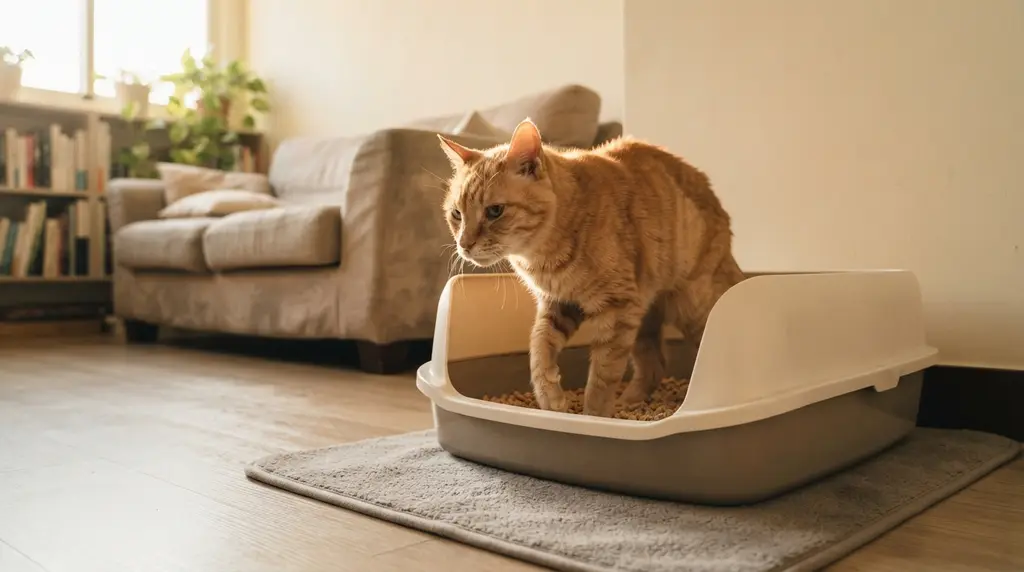
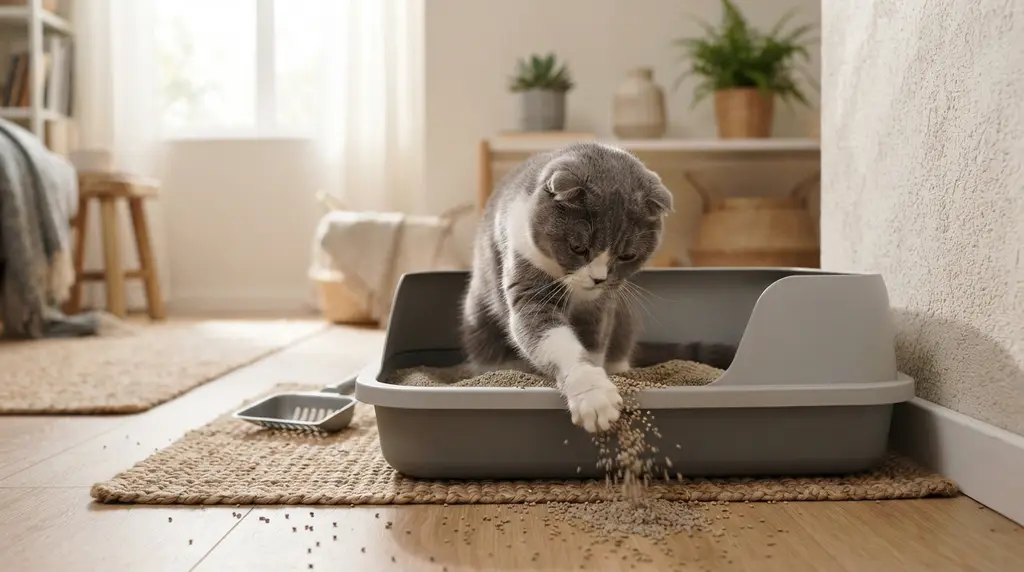
How Much Cat Litter Does One Cat Use Per Month? Calculating Litter Consumption, Refill Frequency, and Storage Tips
Based on practical experience from a cat hotel that scoops over twenty litter boxes daily, this guide teaches you how to calculate your cat's litter consumption with a simple formula: understand the difference in consumption between mineral and tofu litter, how to multiply for multi-cat households, how long a bag lasts, and how to store litter in Taiwan's humid climate.
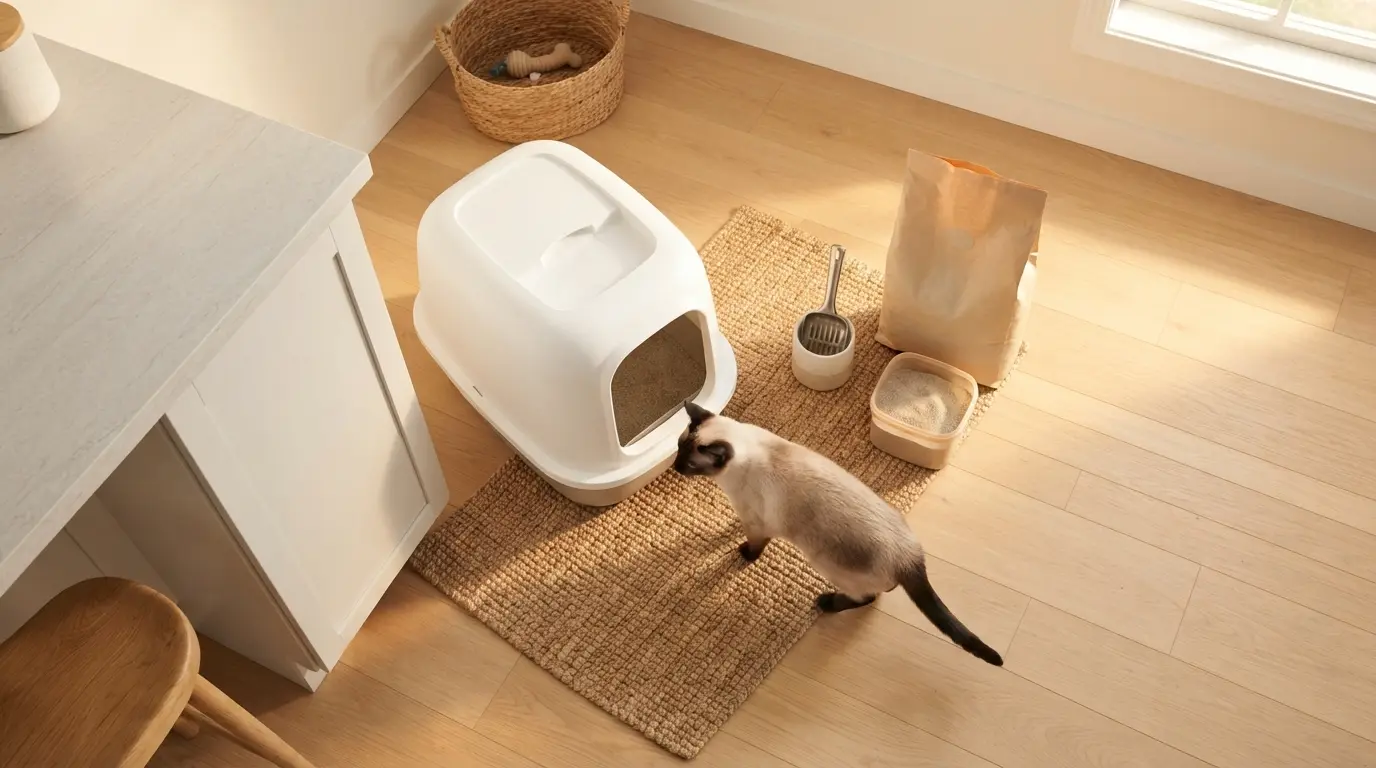
The monthly cat litter consumption for one adult cat is approximately 6–9 kilograms of mineral litter or 12–18 liters of tofu litter (about 5–7 kilograms), assuming daily scooping and a full litter box change every 3–6 weeks. In other words, a 10 kg bag of mineral litter can last a single cat about 5–6 weeks, while a 6-liter bag of tofu litter will be depleted in about 10–14 days.
At our facility, where we scoop over twenty litter boxes daily, the most frequent question from owners isn't "which litter is best," but "how many bags should I buy?" This article will clarify litter consumption, refill frequency, and storage with actual usage data, a formula, and a calculator.
Key Takeaways
- Monthly Usage for Single-Cat Households: Approximately 6–9 kg of mineral litter, or 12–18 liters (about 5–7 kg) of tofu litter, including the base layer amortization.
- Litter Consumption Formula: Monthly Usage ≈ Daily Scooped Amount × 30 + (Number of Litter Boxes × Base Litter Amount Per Box ÷ Months Between Full Changes).
- Multi-Cat Households Aren't Simple Multiples: Two cats use about 1.7–1.9 times the amount of a single cat, and three cats use about 2.5 times, as excretion increases with the number of cats, while the base litter amount increases with the number of boxes.
- Discarding and replacing all the mineral litter weekly increases consumption by 25–30 kg per month. Switching to daily scooping and a full change every 4–6 weeks can save 30–40% on litter.
- Tofu litter, made from food-grade starch, should ideally be used within 2–3 months of opening. Stock up for a maximum of 1–2 months. Mineral litter is susceptible to moisture and clumping, so store it elevated and away from walls, avoiding direct sun exposure.
How to Calculate Cat Litter Usage: Start with This Formula
Cat litter consumption is actually composed of two distinct parts. Many people only consider the first, leading to inaccurate calculations.
Part 1: Daily Scooped Amount (Actual Consumption)
A healthy adult cat typically urinates 2–4 times and defecates 1–2 times a day. A clumped urine mass with mineral litter weighs about 50–80 grams, and a feces clump weighs about 30–50 grams. This adds up to about 180–250 grams scooped daily.
Part 2: Base Litter Amortization (Amount Discarded During Full Changes)
This is the hidden cost. A standard litter box (50×38 cm) filled to a depth of 5–6 cm requires 9–11 kg of mineral litter. If you change it completely every six weeks, that's 6–7 kg amortized monthly. If you change it weekly, this part alone costs over 36 kg per month.
So, the complete formula is:
> Monthly Usage = Daily Scooped Amount × 30 + (Number of Litter Boxes × Base Litter Amount Per Box ÷ Months Between Full Changes)
Using this formula for a single cat, one box, mineral litter, changed every six weeks: 0.2 kg × 30 + 10 kg ÷ 1.4 ≈ 6 + 7 ≈ 13 kg? Wait – in practice, the daily scooped amount itself "consumes" the base litter. The litter you add is used continuously, creating overlap. Actual observations show that for a single cat, one box, daily scooping, and a full change every six weeks, the monthly consumption is around 6–9 kg. This is the figure we use at our facility to estimate supply based on cat visits.
How Much More Litter Do Cats Use with Mineral vs. Tofu Litter?
These two types of litter have completely different densities and clumping behaviors. Comparing them by "kilograms" can be misleading; it's best to consider volume.
| Item | Mineral Litter (Sodium Bentonite) | Tofu Litter |
|---|---|---|
| Daily Scooped Amount (Single Cat) | Approx. 180–250 g | Approx. 130–200 g |
| Base Litter Per Box (50×38 cm, 5–6 cm depth) | Approx. 9–11 kg | Approx. 10–12 L |
| Recommended Full Change Cycle | 4–6 Weeks | 2–3 Weeks |
| Monthly Usage Per Cat | Approx. 6–9 kg | Approx. 12–18 L (5–7 kg) |
| How Long One Bag Lasts (Single Cat) | 10 kg ≈ 5–6 Weeks | 6 L ≈ 10–14 Days |
Some practical observations:
- Mineral litter is heavy but more durable per unit volume. Fine-grained mineral litter with strong clumping ability forms tight, solid urine clumps that are easily scooped without crumbling into residue. Conversely, cheap, coarse-grained mineral litter often breaks apart easily, leading to liquid pooling at the bottom and sticking to the box, increasing actual consumption by about 20%. Our Odor Control Mineral Litter 3.0 uses fine grains and rapid clumping, preventing scooped clumps from turning into dust even with three scoops a day.
- Tofu litter is light but has a shorter full change cycle. Starch-based litters soften and break down over time, becoming prone to moisture and souring at the bottom. Therefore, a full change every 2–3 weeks is recommended, making its monthly volume consumption appear higher than mineral litter. The advantage is that it weighs only half as much as mineral litter, making it much easier to handle with less dust. Fine-grained versions like our Ultra-Fine Tofu Litter 3.0 even feel similar to mineral litter underfoot, which is why many cats transitioning from mineral litter accept it.
- Mixed litter consumption falls between the two. Using mineral litter as a base and tofu litter as the top layer is common, reducing weight while maintaining clumping ability. However, note that the breakdown rates of the two litters differ, so a middle ground (3–4 weeks) for full changes is safer.
For more detailed information on depth and full changes, refer to this comprehensive guide: How Thick Should Cat Litter Be? Consider Litter Type, Weekly Refills, and Full Change Frequency.
Multi-Cat Household Litter Usage Isn't Simply Doubled
Many people assume two cats require twice the litter, but the reality is it's "more than half, but less than double." This is because excretion increases linearly with the number of cats, while the base litter amount increases with the number of litter boxes, and the recommended number of litter boxes is "number of cats + 1."
| Number of Cats | Recommended Litter Boxes | Monthly Mineral Litter Usage | Monthly Tofu Litter Usage |
|---|---|---|---|
| 1 Cat | 1–2 Boxes | 6–9 kg | 12–18 L |
| 2 Cats | 2–3 Boxes | 11–16 kg | 22–32 L |
| 3 Cats | 3–4 Boxes | 16–22 kg | 32–45 L |
Two other often-overlooked sources of consumption in multi-cat households are:
1. "Peeing on the Edge" due to Box Competition: Cats that feel crowded may relieve themselves with half their body outside the box, causing urine to stick to the box walls or spill over. You'll need to scoop out a whole section rather than just a clump. Having enough litter boxes placed strategically actually saves litter. For placement advice, see How to Choose a Cat Litter Box: Size, Type, and Placement Guide.
2. Tracking: With more cats and frequent use, hundreds of grams of litter can be tracked out of the box and swept away monthly. Placing a litter-trapping mat can recover a significant amount.
Refilling vs. Full Changes: The Real Key to Saving Money
This is the most cost-saving section. Using a single cat, mineral litter, at a market price of approximately $300–400 NTD per 10 kg bag:
- Method A: Daily Scooping, Full Change Every 5 Weeks → Monthly consumption approx. 7 kg, monthly cost approx. 250–300 NTD.
- Method B: Discarding Entire Box and Refilling Weekly → Monthly consumption approx. 35–40 kg, monthly cost approx. 1,200–1,500 NTD.
The annual difference exceeds $10,000 NTD. Furthermore, Method B isn't necessarily better for the cat. Frequently replacing all the litter removes the familiar scent of the litter box, potentially causing sensitive cats to urinate inappropriately.
The correct maintenance rhythm is as follows:
- Scoop 1–2 times daily: Remove urine clumps whole, checking the bottom for any wet clumps stuck to the base.
- Refill after scooping: Add litter to maintain the original depth (5–7 cm for mineral litter, 4–6 cm for tofu litter). Add about one to two cups each time to maintain depth and prevent urine from seeping to the bottom.
- Scrape the box walls every 1–2 weeks: Use a scoop or scraper to remove dried residue from the sides. Doing this allows for longer intervals between full changes.
- Full Change + Washing: Every 4–6 weeks for mineral litter, every 2–3 weeks for tofu litter. Scrub with warm water and a mild detergent, then dry thoroughly before adding new litter to prevent residual moisture from causing clumping.
The trigger for a full change isn't the calendar but these three signs: inability to scoop complete clumps, a hard, wet layer at the bottom of the box, or lingering odors even after washing the empty litter box. If any of these occur, perform a full change.
If you use an automatic litter box, consumption calculations need adjustment. These machines often require a deeper litter layer for effective sifting, typically 20–30% more base litter than manual boxes. However, the full change cycle can be extended as waste is separated after each use. For selection criteria, refer to How to Choose an Automatic Cat Litter Box: A Pre-Purchase Checklist for Cat Size, Acceptance, Cleaning, and Safety Sensors.
How Much Cat Litter to Stockpile? Storage Tips for Taiwan's Humid Climate
Buying ten bags during a sale feels great, but cat litter isn't an item that lasts forever. Our recommendation is: stock 2–3 months' worth of mineral litter and 1–2 months' worth of tofu litter, aiming to use it up just before the next sale.
Mineral Litter Fears "Moisture Absorption"
Bentonite works by absorbing water, so it will slowly absorb moisture from the air in storage. Damp mineral litter will form hard clumps within the bag, reduce clumping ability, and crumble easily when scooped. This is especially noticeable during the rainy season.
- Store at least 10 cm off the ground (using pallets or shelves), not directly on floor tiles in balconies or bathrooms.
- Keep at least 5 cm away from walls to prevent moisture from the walls.
- After opening, tightly roll and clip the bag shut, or pour the entire contents into a lidded airtight container.
- Avoid storing in garages, motorcycle sheds, or west-facing balconies – large temperature fluctuations can cause condensation inside the bag.
Tofu Litter Fears "Mold and Pests"
Tofu litter is made from bean fiber and starch, essentially a food-like material. It can develop mold and attract mites or small insects if stored improperly.
- Unopened bags are typically marked with an 18–24 month shelf life, but this assumes dry, cool conditions. In Taiwan's hot, humid summers, consider it a 12-month shelf life for indoor storage.
- It's safest to use opened bags within 2–3 months. If an opened bag of tofu litter smells sour, alcoholic, or moldy, do not use it.
- Do not store it in a damp corner next to cat food or wet food; pests can spread between items.
Common Principles
- Practice "first-in, first-out" – place newly purchased items at the back.
- Don't discard the outer bag immediately; it can be used as an inner bag for disposing of old litter during full changes.
- Taiwanese summers can bring indoor temperatures above 32°C, making storage areas hotter and more humid than you might think. This environment is also unfriendly to cats themselves; refer to Are Cats Sensitive to Heat? Understanding Cat Heat Tolerance, Cooling Mechanisms, and When to Use AC Indoors in Taiwan.
If you're a new cat owner budgeting for essential supplies, the checklist in What Should New Cat Owners Prepare? Start with These 10 Essentials to Avoid Wasted Money and Mistakes includes litter, boxes, and scoops, which can help you plan your budget.
Sudden Increase in Litter Usage? Don't Blame the Cat First
This is one of the key indicators we monitor closely at our facility: for the same cat and the same litter, the number and size of urine clumps are relatively stable. Any significant change often indicates a health issue.
- Larger urine clumps, increased frequency: Increased drinking and urination are common in chronic kidney disease, diabetes, and hyperthyroidism, especially in middle-aged to senior cats.
- Smaller urine clumps but many instances per day: Frequent urination with small amounts suggests lower urinary tract issues or cystitis.
- Frequent trips to the litter box with no urine clumps found: This could be a urinary blockage, particularly risky for male cats. This is a critical emergency; seek veterinary care immediately, do not wait until the next day.
- More litter attached to feces, or loose/watery stools: Diarrhea or loose stools, pay attention to dietary changes and parasites.
Cats cannot verbally express pain; changes in behavior and elimination are their medical records. If accompanied by hiding, aggression, or decreased appetite, consider it alongside the signs in Sudden Cat Aggression or Hiding: Don't Just Assume Bad Temperament – It Could Be Early Signs of Pain or Illness. If any of the above situations persist for more than a day or two, or are severe, consult a veterinarian immediately.
Frequently Asked Questions
How long does a bag of cat litter last?
For a single-cat household, a 10 kg bag of mineral litter lasts about 5–6 weeks, and a 6 L bag of tofu litter lasts about 10–14 days. For a two-cat household, this is roughly halved (a 10 kg bag of mineral litter lasts about 3 weeks), and it will fluctuate based on your full change frequency.
How thick should cat litter be without being wasteful and still sufficient?
5–7 cm for mineral litter, 4–6 cm for tofu litter. Too thin will cause urine to reach the bottom and form hard clumps, leading to a more wasteful full change. Too thick (over 8 cm) means most of it remains unused at the bottom.
Even with daily scooping, do I still need to do a full litter box change?
Yes. A full change and cleaning of the litter box every 4–6 weeks for mineral litter and every 2–3 weeks for tofu litter is recommended. This is because powdered fine litter and residues at the bottom are the main sources of odor and bacteria, which cannot be removed by scooping.
Is mineral litter or tofu litter more cost-effective?
In terms of monthly cost, mineral litter is usually cheaper (approx. 250–350 NTD for a single cat), while tofu litter is around 400–600 NTD. Tofu litter's advantages are its light weight, low dust, and easy disposal. Whether it's "worth it" depends on whether you prioritize cost or the burden of handling and cleaning.
Can I stockpile six months' worth of cat litter during a sale?
It's recommended to stock a maximum of 2–3 months' worth of mineral litter and 1–2 months' worth of tofu litter. In Taiwan's humid climate, mineral litter can lose its clumping ability if it absorbs moisture, and tofu litter stored too long risks mold and pests. Stockpiling too much can lead to waste.
After calculating, you'll find that the real cost difference in cat litter isn't the unit price but your cleaning routine. By scooping daily, refilling to the correct depth, and only doing full changes when necessary, you can make the same litter last 30–40% longer, and your cat will be more willing to use a consistently clean litter box.
This article was written by the CatGarden editorial team, based on daily cleaning records from our cat hotel and grooming services. If your cat's litter box habits change significantly, please consult a veterinarian for diagnosis.
CatGarden offers curated supplies, cat boarding, and grooming
Book services or shop online.