Closed vs. Open Litter Boxes: Which is Better? Odor Control, Heat Risk, and Cat Acceptance Explained
A closed litter box blocks odors for humans, not the smell itself. Based on frontline experience from a cat hotel, this article reveals the truth about odor control in covered vs. open litter boxes, the risks of heat buildup in Taiwan's summers, cat acceptance, and cleaning challenges with litter box furniture, complete with a decision-making guide.
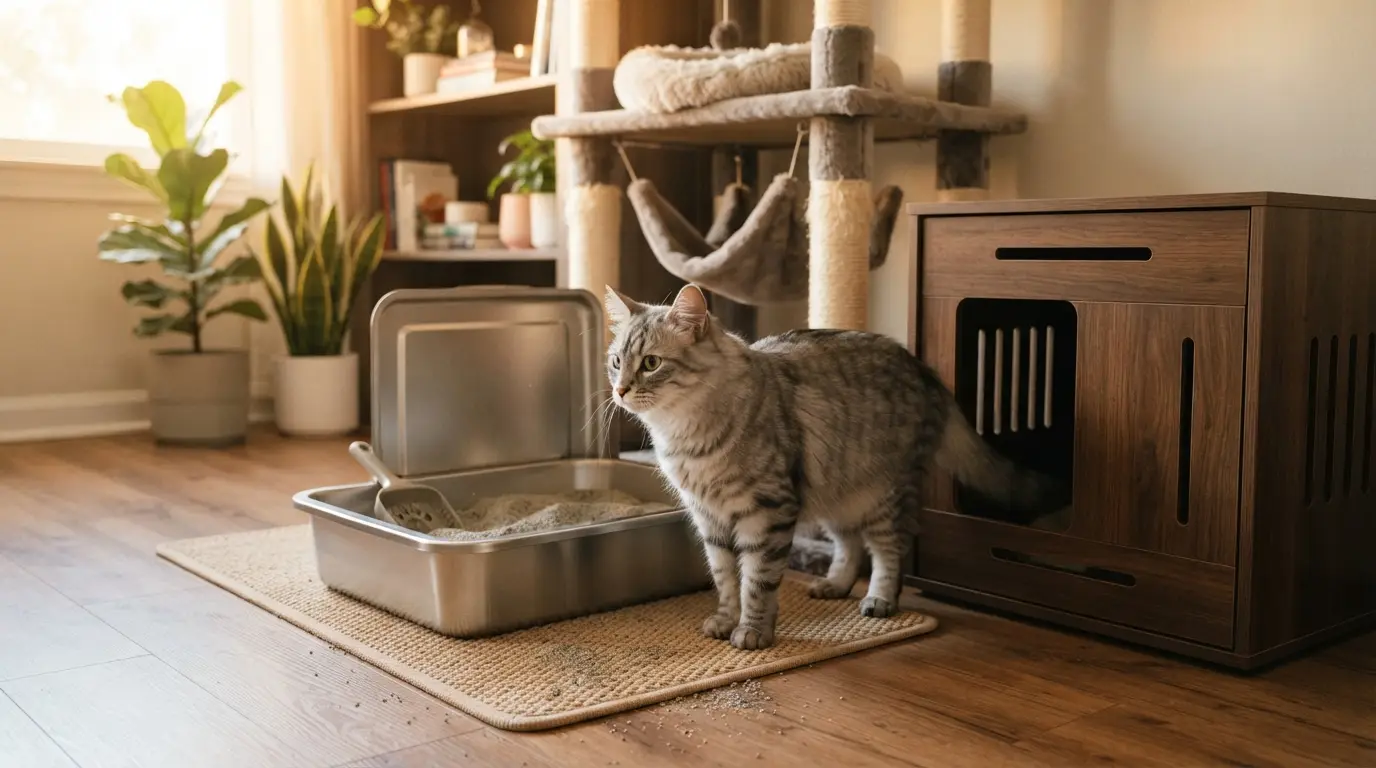
If you want a one-sentence conclusion: In Taiwan's living conditions, the combination of an "open (uncovered) large basin + strong odor-controlling litter + daily scooping" yields the highest success rate for most households. Closed litter boxes don't actually reduce odor; they merely contain it within the box, temporarily masking it from your nose. Closed litter boxes are only worthwhile if all four conditions are met: the basin is sufficiently large, placed in a well-ventilated and cool location, the cat is already accustomed to covered boxes, and you maintain daily cleaning.
We care for over a dozen litter boxes daily at our facility and frequently observe that cats who used to use litter box furniture at home transition to using large open basins at our clinic, resulting in smoother urination and more complete burying. Below, we clearly explain the differences between covered, uncovered, litter houses, and litter box furniture using actionable standards.
Key Takeaways
- Closed litter boxes do not eliminate ammonia odors; they merely trap gases inside. When ammonia concentration rises within the box, cats, with their olfactory sensitivity ten times greater than humans', will find it unpleasant sooner than you will.
- Actual measurements in Taiwan's summer show that the internal temperature of enclosed litter houses can be 2–4°C higher than the ambient room temperature, with higher humidity. Long-haired and overweight cats may only stay inside for 20 seconds before rushing out and failing to bury their waste.
- The recommended litter box length is 1.5 times the length of the cat from "nose tip to tail base." Most adult cats require 50–60cm or more. For covered boxes, pay attention to the "internal clear space," and don't be fooled by external dimensions.
- A single entrance/exit + deep-hole design equals no escape route. This is a common cause of territorial disputes, blocking, and inappropriate urination outside the box in multi-cat households.
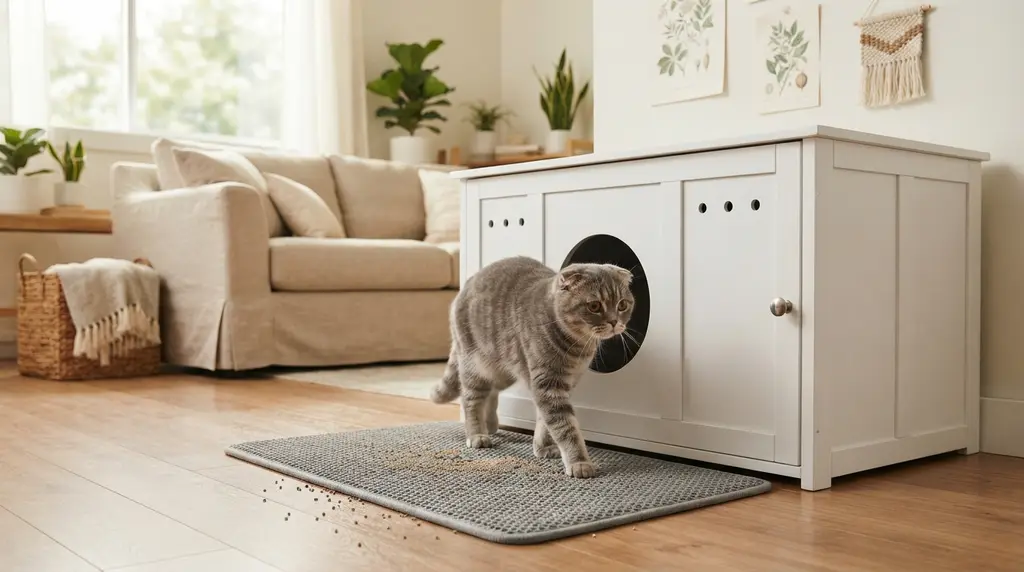
- The biggest drawback of litter box furniture (cabinet style) is the cleaning blind spots: gaps around door hinges, the four corners at the bottom of the cabinet, and the jump platforms. These are the true sources of urine stains and ammonia odors. The entire unit should be disassembled and cleaned at least every 2–4 weeks.
Understanding the Differences Between Four Types of Litter Boxes
Many people refer to "covered" as a single category, but there are at least four types on the market, each with entirely different risks:
- Open (Uncovered Basin): The simplest, offering the best ventilation and visibility. The downsides are litter being kicked out and odors dispersing directly into the space.
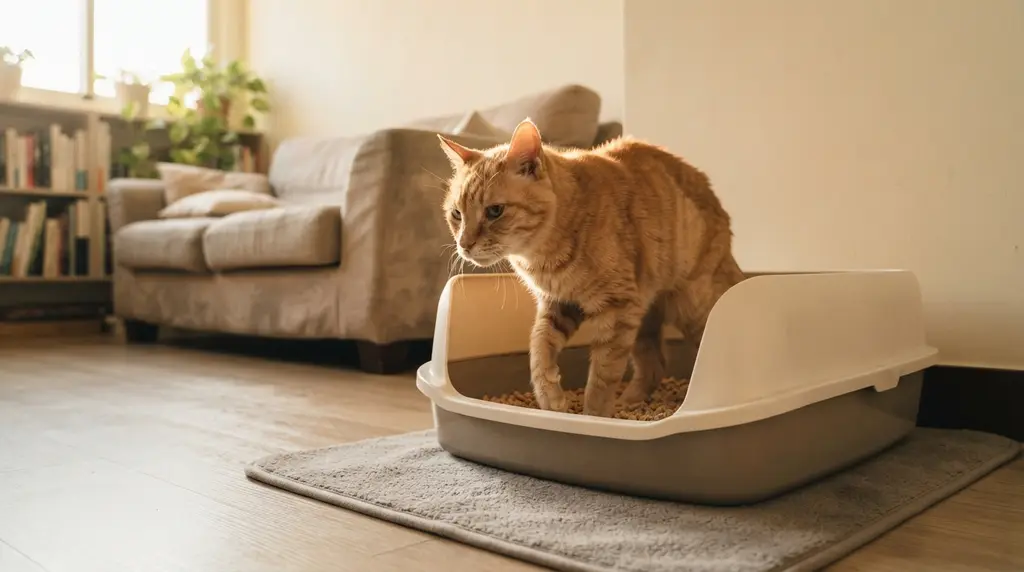
- High-Sided Open Box (Semi-Open): Sides are 25–30cm high, with a completely open top. It effectively contains litter without causing stuffiness, making it a compromise solution we often recommend.
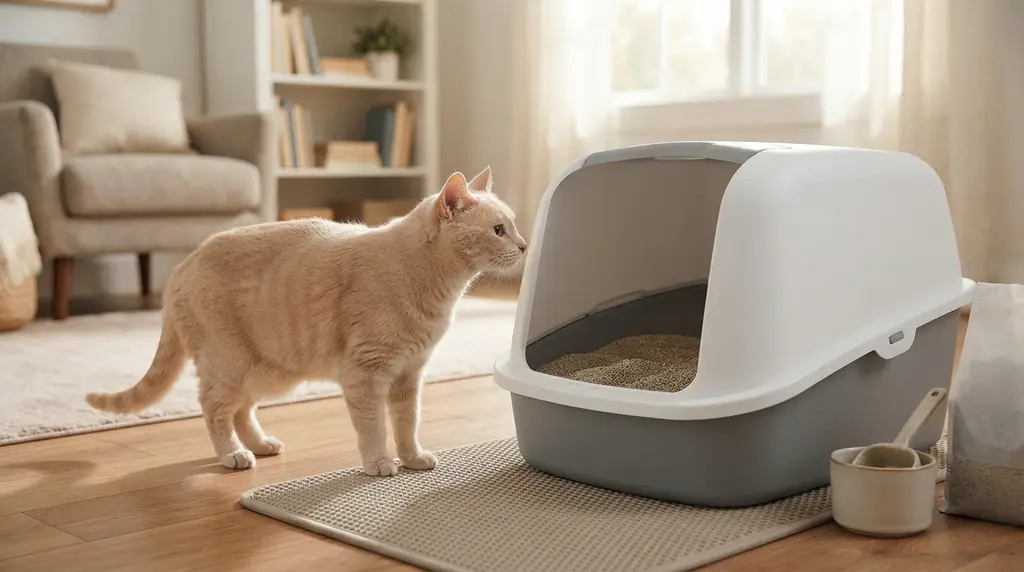
- Litter House (Covered, Flip-Top Style): Features a full top cover and a front door, with ventilation relying on a single opening. It contains odors and litter but is prone to stuffiness and requires frequent cleaning.
- Litter Box Furniture (Cabinet Storage Type): Designed to look like a side cabinet or dresser, with cats entering through a side hole or jump platform. While aesthetically pleasing, the internal space is often reduced by the wooden structure, leading to the most cleaning blind spots.
If you haven't yet decided on the size, style, or placement of the litter box, we recommend first reading our main article, How to Choose a Litter Box: Size, Style, and Placement Explained. This article specifically delves into the "covered vs. open" debate.
Odor Control: Are Closed Boxes Really Less Smelly?
Odors Don't Disappear, They Just Shift Who Smells Them
The source of odor is ammonia produced by bacteria breaking down urea in urine, along with sulfur compounds from feces. A lid's function is to delay the gas's diffusion into the living room – but the concentration inside the box actually increases. When you lift the lid to scoop, a noticeable puff of "stale air" escapes, which is the accumulated evidence.
Cats insert their entire heads into this space to breathe. Clinically, many cases of "sudden inappropriate urination" are traced back to litter boxes that are too smelly, too narrow, or too stuffy.
Three Factors That Truly Determine Odor
1. Scooping Frequency: At least once a day, ideally twice (morning and evening). This factor has a far greater impact than whether the box is covered.
2. Litter's Adsorption Capacity and Clumping Strength: If clumps break apart easily, urine residue remains at the bottom of the box to ferment. We use Odor Control Mineral Litter 3.0 long-term, focusing on being able to scoop out entire urine clumps and keep the basin clean, rather than masking odors with artificial fragrances.
3. Litter Depth: Too little litter allows urine to hit the bottom of the box, forming urine stains. We recommend 5–7cm for mineral litter and 6–8cm for tofu litter. For more details, refer to How Thick Should Cat Litter Be? Consider Litter Type, Weekly Refills, and Full Basin Changes.
The Correct Use of Fragrance and Activated Carbon Filters
Covered boxes often come with "activated carbon filters in the lid." These have some effect, but their absorption capacity is limited. We recommend replacing them every 3–4 weeks; after that, they are merely decorative. Scented litters and air fresheners are a negative for cats, and many cats will switch to urinating on bathroom floors or clothing because of them. To control odor, the correct approach is unscented, strong-clumping litter combined with frequent scooping.
The Risk of Heat Buildup in Taiwan's Summers: This is the Biggest Drawback for Covered Boxes
In New Taipei City's summers, indoor temperatures without air conditioning can reach 31–33°C in the afternoon. Enclosed litter houses, made of plastic with only one opening, lack air circulation. We've measured with a thermometer and hygrometer that the internal temperature of the box can be 2–4°C higher than the ambient room temperature, with significantly higher relative humidity.
The cat's process inside involves "entering, digging, squatting for 30–60 seconds, burying, and exiting." This process gets compressed to a hasty 20 seconds in a hot, humid, confined space. The symptoms you might observe are:
- Not burying waste and rushing out immediately after urinating.
- Pawing at the edge of the box and urinating with their hindquarters hanging out the opening (urinating on the wall).
- Defecating outside the box because squatting for too long is too hot.
Cats have a disadvantage in heat dissipation; they only have sweat glands in their paw pads and primarily rely on the environment for cooling. You can learn more about this in Are Cats Afraid of Heat? Understanding Cat Heat Tolerance, Cooling Methods, and When to Use AC Indoors in Taiwan. We strongly advise against using fully enclosed litter houses for long-haired cats (Persians, Himalayans, Maine Coons), overweight cats, brachycephalic (flat-faced) cats, senior cats, or those with heart or respiratory conditions.
Practical compromise: In the summer, remove the top cover, leaving only the lower half (many covered boxes allow this), or switch to a high-sided open box. Reattach the cover in winter if you want to contain litter. This is much more cost-effective than buying two separate boxes.
Cat Acceptance: They Care About "Escape Routes"
Cats are at their most vulnerable when using the litter box, and their natural instinct requires at least two escape routes and good visibility. Covered boxes have only one entrance/exit, effectively trapping them in a dead end.
Scenarios where problems commonly arise:
- Multi-Cat Households: One cat habitually "guards" the entrance, charging a fee. The cat being blocked may simply refuse to enter and start urinating on the doormat.
- Homes with Dogs or Young Children: You might think the cover provides privacy, but the cat feels even more vulnerable to being trapped.
- Senior Cats (10+ years): Having to lower their heads, bend down, and step over a high threshold can be uncomfortable for their joints, leading to avoidance. For senior cats, we recommend an entrance height of ≤10cm from the ground and no overhead obstruction.
- Kittens and Newly Adopted Cats: In unfamiliar environments, open boxes have a much lower learning curve.
Three observation points to assess your cat's acceptance (observe for one week):
1. After entering the box, do they hesitate for more than 3 seconds before digging, or frequently look back at the entrance?
2. Do they bury their waste completely after finishing? Hasty or no burying is a sign of discomfort.
3. Do they "spring out" of the box and run away quickly (cat zoomies style)? This indicates a desire to leave quickly, not happiness.
Testing is simple: Remove the door panel of a covered box and observe for 3 days, then remove the top cover and observe for another 3 days. Monitor if usage frequency and burying completeness improve. Your cat's behavior will be their vote.
Prerequisites for Recommending Litter Box Furniture: First, Calculate Cleaning Blind Spots
Litter box furniture (cabinet storage type) can indeed make a living room look much tidier, which is particularly appealing for renters or those with open-plan layouts. However, before purchasing, please accept its three trade-offs:
1. Insufficient Internal Clear Space
A 70cm wide external cabinet, minus the thickness of the panels and the jump platform, may leave only 45cm of actual space for the litter box. This can be difficult for an adult cat to turn around in. Before buying, you must check the internal clear dimensions; a unit that can accommodate a litter box of 55cm or more is considered acceptable.
2. Wood + Urine = Irreversible Ammonia Odor
Most litter box furniture is made of particleboard or MDF with a veneer. Once urine sprays into the hinge gaps or panel joints, moisture seeps in, absorbing odors permanently. No amount of scrubbing will eliminate the sour smell afterward. When choosing a cabinet, prioritize models with a full waterproof liner or a removable plastic tray.
3. Cleaning Blind Spot Checklist (Disassemble and Clean Every 2–4 Weeks)
- Gaps around the door hinges and the bottom edge of the door panel.
- The four corners at the bottom of the cabinet (litter can get trapped there).
- The jump platform/step below the entrance hole (litter and urine dust carried by paws accumulate here).
- The grilles of the ventilation holes.
Our method for cleaning facility equipment: Scrub with warm water and neutral detergent, rinse thoroughly, and ensure it is completely dry before refilling with litter (a damp basin bottom will cause new litter to clump and smell immediately). Do not use concentrated bleach or phenol-based cleaners, as residues pose a risk to cats.
If you want to know how much litter to prepare for a full change and how to store it, you can refer to How Much Litter Does One Cat Use Per Month? Litter Usage Calculation, Refill Frequency, and Storage Tips.
Closed vs. Open: A Decision-Making Tree
Answer the following questions, and the answer will emerge:
Q1. Is your cat long-haired, flat-faced, overweight (BCS 6 or above), over 7 years old, or has respiratory/heart issues?
→ Yes: Directly choose an open or high-sided open box. No need to proceed further.
Q2. Are there ≥2 cats in the household, with noticeable status differences or chasing behaviors?
→ Yes: Choose an open box and ensure the litter box has at least two exit directions (don't place it in a cramped corner).
Q3. Can the litter box location be maintained below 28°C and well-ventilated? (Not a west-facing sun-drenched balcony, not a stuffy corner by a door)
→ No: Choose an open box.
→ Yes: You can consider a covered box, but the cover must be removable in summer.
Q4. Is your cat already using a covered box, burying waste completely, using it multiple times a day, and not urinating inappropriately?
→ Yes: Don't change it. If it's working well, that's the best answer. Just maintain good scooping frequency.
Q5. Is your primary concern "litter being kicked out, and the hallway being covered in litter"?
→ This problem doesn't require a lid. Solve it with a high-sided large basin + a double-layer litter mat. It's safer than a closed box.
Q6. Is your primary concern "guests seeing it, and odors spreading to the living room"?
→ Prioritize improving "placement + litter + scooping frequency," then consider litter box furniture, ensuring the internal clear space is ≥55cm.
If you are also comparing automated solutions, the selection logic is similar (sense of security, litter tracking, size limitations). You can refer to How to Choose an Automatic Cat Litter Box: A Pre-Purchase Checklist for Cat Size, Acceptance, Litter Tracking, and Safety.
Where to Place the Litter Box for Minimal Odor? Location is More Important Than the Lid
Many people buy closed litter boxes to solve odor problems caused by incorrect placement. The order should be reversed:
- Ensure Ventilation, Avoid Confined Small Spaces: The worst places to put a litter box are storage rooms without external windows, next to shoe cabinets, or in stuffy, west-facing balconies.
- At least 1.5–2 meters away from food and water bowls, preferably out of sight.
- Avoid placing it next to washing machines or dehumidifiers: Sudden vibrations and noise can create negative associations with the litter box for the cat.
- Do not place it in a cramped corner with only one exit: Cats need two escape routes.
- Floors and Traffic Flow: For multi-story homes, have at least one box on each floor. Senior cats should not have to climb stairs to use the litter box.
- Quantity Formula: Number of cats + 1. For two cats, have three boxes, with at least one being open, to give the cat choices.
Tip: Place two different types of boxes side-by-side for a week and observe which one your cat chooses. This is the most honest market research.
Our Actual Setup at the Cat Hotel (For Your Reference)
Our cat hotel rooms have limited space and must be odor-free. Therefore, our choice is: large open basins + highly clumping mineral litter + scooping at least twice a day per room. When a room is vacated, the entire basin is scrubbed and dried. The reason for not using covered boxes is simple: boarding cats are already stressed. Giving them a box with only a single exit can easily lead to them not using it for the entire day and holding it until the next day to urinate.
If your home layout truly requires a sense of enclosure, we recommend a "decorative basin + high sides, open top" approach. Designs like the Butter Toast Litter Box are good for containing litter and look nice without sacrificing ventilation. If you want to get everything – litter box, litter, and accessories – at once, you can browse our shop to compare sizes.
Finally, a reminder: Changes in urination behavior (frequent entries with little urine output, urinating outside the box, blood in urine, prolonged squatting with vocalization) could indicate lower urinary tract disease or stones. Such situations cannot be resolved by changing the litter box; seek veterinary attention immediately. Do not delay if symptoms persist or worsen.
Frequently Asked Questions
Are covered litter boxes good? My cat seems perfectly used to it.
If it's working well, there's no need to change. The criteria for success are: "complete burying, normal daily usage, no defecation outside the box, and no hasty exit in summer." If all four criteria are met, maintain the status quo and focus on scooping frequency. If, after summer begins, you notice incomplete burying or inappropriate urination, try removing the top cover for three days and observe.
Can covered litter boxes really cause heatstroke in cats during summer?
Direct heatstroke within the litter box is rare because cats spend limited time inside. However, the heat buildup can cause them to shorten their littering time and avoid using the box, leading to urine retention and increasing the risk of lower urinary tract problems. Long-haired cats, flat-faced cats, overweight cats, and senior cats are at the highest risk. We recommend switching to open boxes during the summer.
How do I choose litter box furniture without regretting it?
Three essential conditions: The internal clear space must accommodate a litter box of 55cm or more, the inner walls must have a waterproof liner or a removable plastic tray, and the door panel and bottom board must be fully removable for cleaning. If any of these are missing, it will eventually become a wooden cabinet that has absorbed ammonia odors and cannot be thoroughly cleaned.
Should I use scented litter or odor-removing sprays for litter box odor control?
We do not recommend relying on fragrances. Cats' sense of smell is far more sensitive than humans', and artificial fragrances are often a reason for them to reject the litter box. The effective order is: scoop 1–2 times daily → switch to unscented, strong-clumping litter → ensure litter depth of 5–7cm → fully change and wash the basin every 2–4 weeks, allowing it to dry completely.
Where should I place the litter box to prevent the whole house from smelling?
Choose a location that is well-ventilated, has two escape routes, is at least 1.5 meters away from food bowls, and avoids confined small spaces, sun-drenched balconies, and areas near washing machines. If the location is right, an open litter box will actually have less odor than a covered box placed in a stuffy corner.
Should I bring my own litter box when boarding my cat?
Most cat hotels provide litter boxes, but if your cat is only accustomed to a specific type of litter or a particular box shape, bringing a small bag of familiar litter to mix in can significantly reduce the chance of them not using the box on their first day at the facility. You can confirm preparation details before check-in when booking your stay with us at Reservations.
Article by CatGarden Editorial Team
CatGarden offers curated supplies, cat boarding, and grooming
Book services or shop online.