What Are Cat Grooming Services? From Baths and Nail Trims to Shaving and Spot Trims, Understand the Differences for Your First Grooming Appointment

Cat grooming services are mainly divided into "basic grooming" and "add-on services." Basic services typically include bathing, drying, nail trimming, ear cleaning, and paw pad hair trimming. Shaving, degreasing, and de-matting are usually priced as add-ons depending on the situation. This article helps you determine which services your cat needs and which ones you can skip.
CatGarden Editorial TeamPublished 2026/08/08Updated 2026/10/06
cat groomingcat grooming servicescat bathingcat shavingcat care
What Are Cat Grooming Services? From Baths and Nail Trims to Shaving and Spot Trims, Understand the Differences for Your First Grooming Appointment

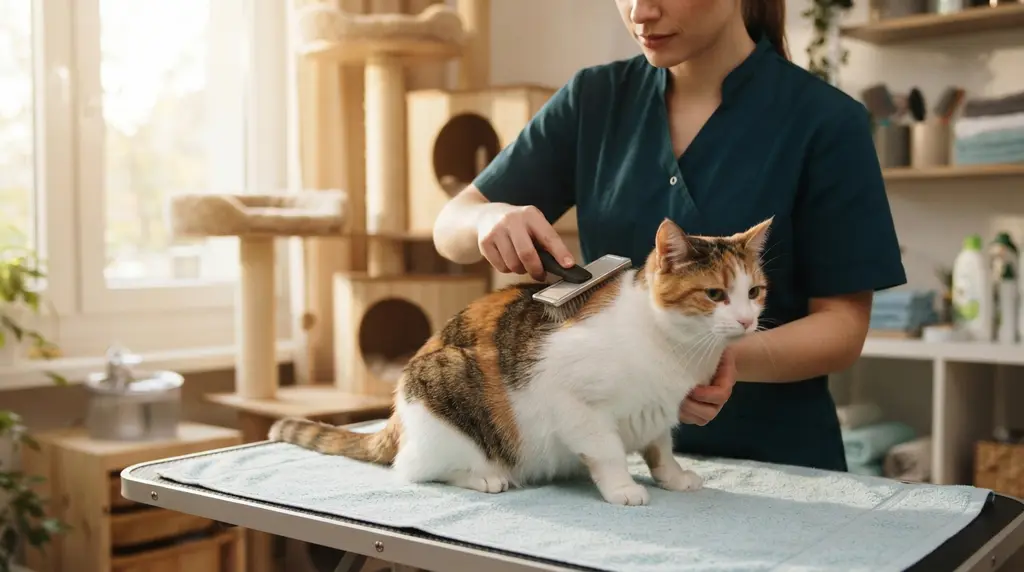
Cat grooming services are typically divided into two categories: "basic grooming," which usually includes bathing, blow-drying/towel-drying, nail trimming, ear cleaning, and paw pad hair trimming; and "add-on services," such as degreasing, de-matting, spot shaving (sanitary trim, belly trim, lion cut), and full body shaving. For the first grooming appointment, most short-haired domestic cats only need basic grooming plus a nail trim. Add-on services like shaving, medicated baths, or perfumes should only be done "if necessary," not every time.

Here's how we categorize services in our salon, helping you decide what to check and what to save on when filling out your appointment form.

Key Takeaways

  • Basic cat grooming services in Taiwan commonly range from NT$800–1,800, primarily based on coat length, size, and degree of matting. Long-haired cats usually cost NT$300–600 more than short-haired cats.
  • Basic services generally include bathing, drying, nail trimming, cleaning visible earwax, and trimming paw pad and anal area fur. Shaving, degreasing, and de-matting are usually extra add-ons.
  • Short-haired cats only need bathing 2–4 times a year. In most cases, basic grooming + nail trimming is sufficient. Long-haired cats should have mats and spot trims addressed every 4–8 weeks.
  • Nail trimming as a standalone service costs about NT$100–300 and is the most worthwhile add-on. It's recommended every 2–4 weeks.
  • Full body shaving (including lion cuts) is not a method for cooling down. It's only recommended for severe matting, skin disease treatment, pre-surgery preparation, or when elderly cats cannot groom themselves.

I. Basic Bathing and Drying: The Core of All Cat Grooming Services

Suitable for: All cats, especially those with oily fur, odor, heavy shedding during seasonal changes, or recovering from treatment.

Basic bathing is more than just "rinsing and lathering." Our standard procedure is: pre-brushing (dry brushing is essential; brushing wet fur can pull the skin) → water temperature around 38°C → selecting shampoo based on skin condition → two washes, ensuring thorough rinsing with no residue → towel-drying to remove 70% of moisture → blow-drying.

Drying is key. A cat's skin is thin, so we control the hairdryer's airflow temperature to about 38–42°C, keeping it 20–30 cm away from the fur and moving it constantly. Short-haired cats take about 15–25 minutes, while long-haired cats take 40–60 minutes. Failure to dry completely (especially in the armpits, inner thighs, and base of the tail) is the most common cause of subsequent skin problems and is the easiest step to fail when bathing at home.

If you bathe your cat at home, doing a thorough towel-drying step can cut drying time in half. We use Quick-Dry Pet Towels ourselves to remove a large amount of moisture, significantly reducing the cat's stress time. If your cat shivers after bathing, don't worry; you can refer to Is Shivering After Bathing Normal for Cats? Cold, Stress, or Discomfort Signs to determine if it's due to cold, nervousness, or discomfort.

How often should you bathe? There's no single answer; it depends on age, coat length, and skin condition. You can refer to How Often Should You Bathe Your Cat? Age, Coat, and Skin Frequency Guide.

What we use for this

CatGarden’s own products, shipped from Taiwan
See all products
Quick-Dry Pet TowelQuick-Dry Pet TowelFrom CA$49.35 per pieceFree shipping on multi-packs

II. Nail Trimming: Most Necessary, Cheapest, and Most Overlooked

Suitable for: All cats, especially elderly cats, indoor cats that don't scratch much, and households with children or elderly individuals.

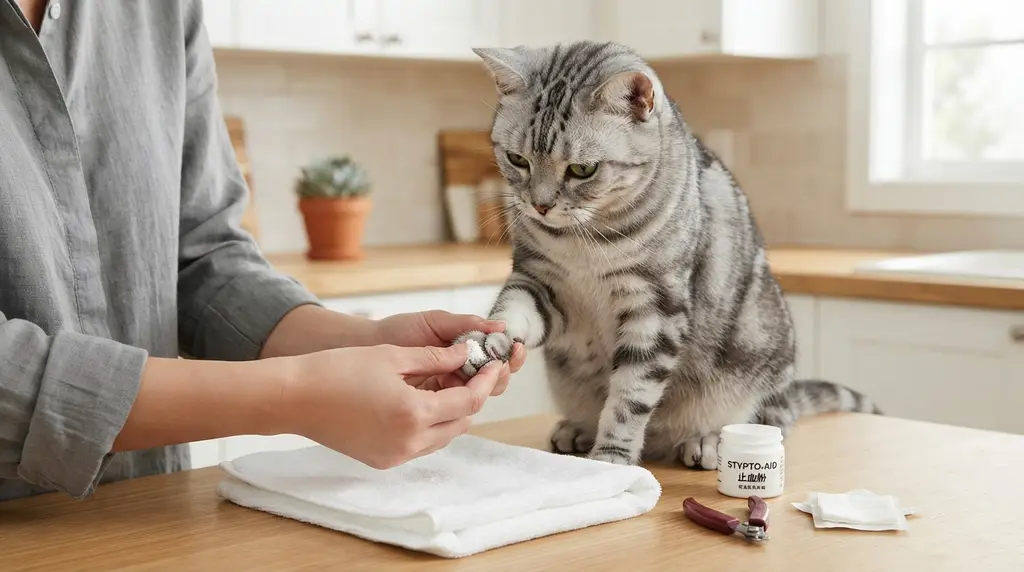
We only trim the clear part of the nail, leaving about 2 mm from the quick (the pink blood vessel in the center of the nail). This includes 5 nails on the front paws and 4 on the back, with extra checks for polydactyl cats. Elderly cats' nails can become thick and curved; if not trimmed regularly, they can grow into the paw pads. We've encountered cases of infection from this, which are ten times more painful to treat than a simple nail trim.

Frequency is recommended every 2–4 weeks. Most salons charge NT$100–300 for a standalone nail trim. Many owners assume it must be done with a bath, but you can book it separately. It's also a good way for your cat to get used to the grooming environment, serving as a gentle introduction for cats new to grooming.

III. Ear Cleaning: Not Every Cat Needs It, and Don't Clean Too Deeply

Suitable for: Breeds with visible earwax, odor, or unusual ear canal structures like hairless or folded ears.

Basic grooming usually includes "cleaning visible earwax"—meaning the ear flap and the entrance to the ear canal, wiped with a cotton pad. Do not go deep into the ear canal or use cotton swabs inside. Healthy cats' ears have a self-cleaning ability; cleaning too often can stimulate oil production in the ear canal.

If your cat's ears have a noticeable odor, large amounts of dark brown discharge, or if the cat is constantly shaking its head and scratching its ears, it's time to see a vet to determine if it's ear mites or an infection, which grooming cannot resolve. We've written a comprehensive guide on how to identify this: Cat's Ears Smell Bad, Do They Need Cleaning? Earwax, Infection, and Odor Guide

IV. Degreasing (Chin, Tail Base, Back Line)

Suitable for: Cats with blackheads on their chin (feline acne), greasy and matted fur at the tail base, unneutered males, or breeds like Persians with oily skin.

This is a frequently overlooked but very useful add-on service, costing around NT$200–500. Our method involves applying a degreasing foam locally for 5–10 minutes to soften the oil, then gently removing the grease with fingers or a fine-tooth comb, followed by a second wash if needed. The key is not to scrub forcefully, as breaking the chin skin can easily lead to bacterial infections.

The assessment is simple: feel the base of the tail with your fingertips. If the fur feels sticky and clumped together in mats, it needs degreasing.

V. De-Matting (Knot Removal): The Real Challenge for Long-Haired Cats

Suitable for: Long-haired cats, semi-long-haired cats (e.g., long-haired American Shorthairs, Ragdolls, Persians, Maine Coons), and elderly or obese cats unable to groom themselves.

Mats come in degrees. Mild mats (small balls on the surface that a comb can still pass through) can be worked out strand by strand with a de-matting comb. Moderate mats (forming patches close to the skin) require thinning with clippers. Severe mats (forming a solid felted mass where the skin underneath is irritated and red) lead us to recommend shaving, as the pain and risk of skin tearing from pulling are far greater than the benefit of "keeping the fur."

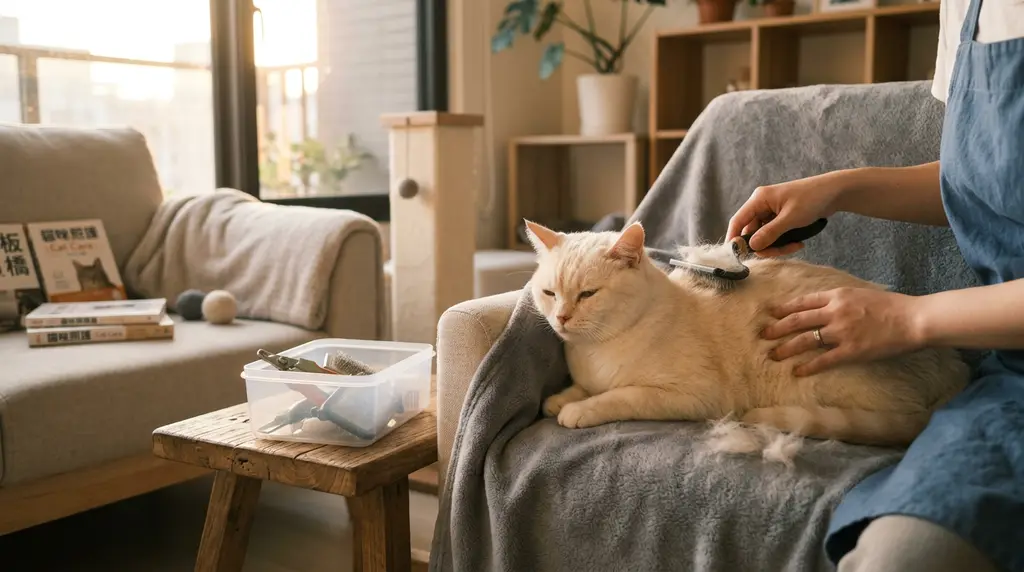
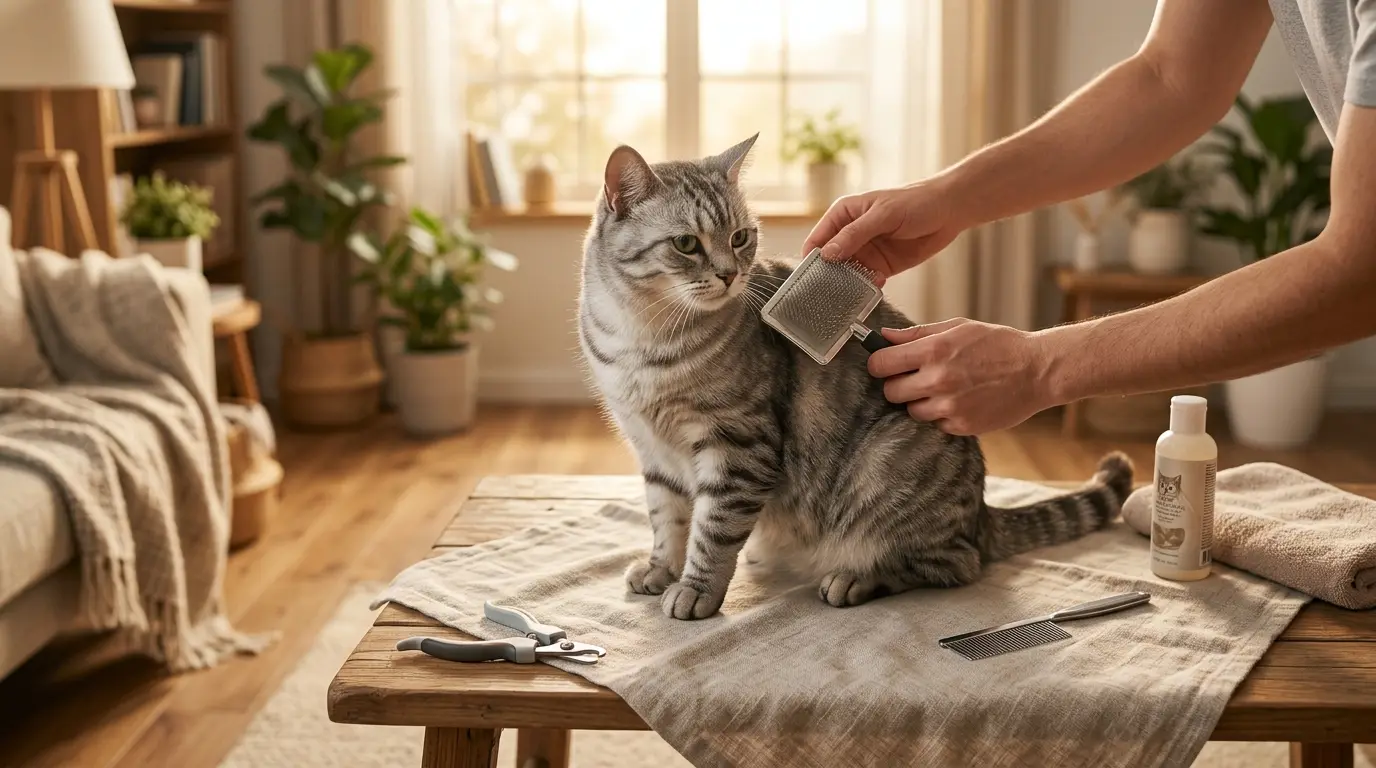
In practice, de-matting is priced by time or severity, ranging from NT$300–1,500. The price difference comes from this. The most effective way to save money is to brush your cat every 2–3 days, focusing on the armpits, inner thighs, hindquarters, and tail base—these four areas account for over 80% of the matting cases we handle. Overweight cats may have more difficulty reaching these areas. You can also check Is Constant Weight Gain in Cats Always Obesity?.

VI. Spot Shaving: More Common and Less Risky Than Full Body Shaving

Suitable for: Matting in specific areas, feces sticking to fur, skin needing medication application, or pre-surgical preparation.

Common spot shaving services include:

  • Sanitary Trim: Trimming the fur around the anus. Highly recommended for long-haired cats, cats with soft stools, and elderly cats to significantly reduce fecal matter sticking to the fur.
  • Paw Pad Hair Trim: Trimming the fur growing between the paw pads to prevent slipping on floors. This is usually included in basic grooming.
  • Belly Trim (aka "Shaving the Tummy"): Shortening the fur on the belly and inner thighs to reduce matting and hairball formation. The appearance from above is largely unchanged.
  • Spot Thinning/Feathering: Reducing fur density in areas like the back line or hindquarters without altering the overall shape.

Spot shaving typically costs NT$300–800 and is the add-on we most often recommend to first-time grooming clients—the need is clear, the cat experiences less stress, and the results are immediately visible.

VII. Full Body Shaving and Lion Cuts: Consider These Medical Options

Suitable for: Severe matting, skin disease treatment, elderly cats or those with mobility issues unable to groom themselves, or pre-surgical preparation.

Let's get straight to the point: Shaving for summer cooling is usually not cost-effective. A cat's coat provides both insulation and sun protection. Shaving too short can increase the risk of sunburn and skin damage from direct sun exposure. Furthermore, cats primarily regulate their temperature through their paw pads, panting, and environmental cooling; shaving offers limited improvement in thermal comfort. We've explained the full reasoning in Does Shaving Cats in Summer Help Them Cool Down? Sunburn and Skin Risks.

If shaving is necessary, please note: we generally leave at least 5 mm of fur (no bald shaves) and leave the head, paws, and tail tip fur intact. Avoid prolonged sun exposure near windows for 1–2 weeks after shaving. Some cats (especially long-haired ones) may experience uneven regrowth, which can take 3–6 months to recover. Prices range from NT$1,200–2,500, with higher costs for long-haired or difficult cats.

If your cat appears to be having trouble with heat dissipation—panting with its mouth open, tongue extended, rapid breathing—this is not something grooming can solve. Prioritize checking Is Open-Mouth Panting in Cats Due to Heat or Illness? Gum Color and Breathing Rate. If symptoms persist or worsen, seek immediate veterinary care.

Which Cat Grooming Services Are Actually Unnecessary Add-ons?

From our perspective, these services can be skipped:

1. Perfume/Fragrance Sprays: Cats rely on scent to identify themselves and their environment. Strong fragrances can increase anxiety and may be ingested.

2. Medicated Baths Every Time: Medicated baths are a treatment and should only be used with a diagnosis. Regular medicated baths without a skin condition can disrupt the skin's natural barrier.

3. Stylized Shaves for Short-Haired Cats: Fancy styles (hearts, clouds) for short-haired cats offer no functional benefit and only carry risks.

4. Deep Ear Cleaning for Healthy Cats: As mentioned, over-cleaning can be a source of problems.

5. High-Frequency Bathing: For short-haired domestic cats, 2–4 baths per year are usually sufficient. Bathing too often can lead to a rebound effect of increased oiliness and dandruff.

When you see prices like "Bathing starting at NT$399," remember to confirm exactly what's included and how extra charges are calculated. Use this article as a checklist: How to Evaluate Cat Grooming Deals? Check These 5 Things Before Booking Low-Price Baths.

For Your First Appointment, Select These to Save the Most

  • Short-haired domestic cat, grooms itself regularly: Basic Grooming + Nail Trim. Add degreasing if there's an odor.
  • Long-haired cat, first-time grooming: Basic Grooming + Nail Trim + De-Matting (get a quote from the groomer first) + Sanitary Trim.
  • Elderly cat (12+ years) or with chronic illness: Ask the groomer about splitting the service or shortening the process. We might opt for "Nail Trim + Spot Cleaning only" rather than a full bath.
  • Extremely anxious or aggressive cat: Book a standalone nail trim first to acclimate them to the environment, then schedule a bath for the second visit.

Feeding and motion sickness on the day of grooming are also common concerns. We recommend reading Should Cats Fast Before Grooming? Feeding and Motion Sickness Guide beforehand. For a comprehensive understanding of bathing frequency, nail trimming, ear cleaning, and when to schedule grooming, refer to our complete guide: How Often Should You Bathe Your Cat? Timing for Nail Trims, Ear Cleaning, and Grooming Appointments.

When unsure about which services to choose, the quickest method is to simply describe your cat's coat length, age, and any concerns (e.g., "tail is very greasy," "mats on hind legs") when you Book a Grooming Appointment. We will assess your cat on-site before confirming any add-on services, ensuring you're not charged unnecessarily.

Frequently Asked Questions

What does basic cat grooming include?

Most salons' basic grooming includes bathing, blow-drying, nail trimming, cleaning visible earwax, and trimming paw pad and anal area fur. Shaving, degreasing, de-matting, and medicated baths are usually extra. Always confirm the service list and pricing structure before booking.

What is the approximate cost of cat grooming?

Common basic grooming services in Taiwan range from NT$800–1,800, with long-haired cats costing more. Standalone nail trims are NT$100–300, degreasing NT$200–500, spot shaving NT$300–800, and full body shaving NT$1,200–2,500. Price variations are mainly due to coat length, size, and degree of matting.

Do cats need to be bathed? What happens if they aren't?

Healthy short-haired cats can maintain basic cleanliness through self-grooming. Not bathing usually won't cause illness, but when oil accumulates, shedding increases, or hairballs become more frequent, bathing and brushing can significantly improve the situation. Long-haired cats benefit from regular professional grooming and de-matting to prevent mats from irritating the skin.

Is full body shaving harmful to cats?

Shaving itself is not painful, but it removes insulation and sun protection, potentially leading to sunburn and skin sensitivity, as well as uneven regrowth. It's recommended only for severe matting, skin treatment, pre-surgery, or when elderly cats cannot groom themselves, and a length of at least 5 mm should be left.

How often should cat nails be trimmed? Can I do it at home?

It's recommended every 2–4 weeks. You can trim them at home, but the key is to only cut the clear part, leaving about 2 mm from the quick, and trim only one or two nails at a time without forcing it. If your cat resists intensely or the nails are already deformed and thickened, it's safer to have a groomer or veterinarian do it.


Article by the CatGarden Editorial Team. The content is for general care and service information and cannot replace veterinary diagnosis. If your cat exhibits skin redness, persistent scratching, decreased energy or appetite, or abnormal breathing, please seek veterinary attention promptly.

CatGarden offers curated supplies, cat boarding, and grooming

Book services or shop online.
Back

Blog

What Are Cat Grooming Services? From Baths and Nail Trims to Shaving and Spot Trims, Understand the Differences for Your First Grooming Appointment

CatGarden Editorial TeamPublished 2026/08/08Updated 2026/10/06
cat groomingcat grooming servicescat bathingcat shavingcat care
What Are Cat Grooming Services? From Baths and Nail Trims to Shaving and Spot Trims, Understand the Differences for Your First Grooming Appointment

Cat grooming services are typically divided into two categories: "basic grooming," which usually includes bathing, blow-drying/towel-drying, nail trimming, ear cleaning, and paw pad hair trimming; and "add-on services," such as degreasing, de-matting, spot shaving (sanitary trim, belly trim, lion cut), and full body shaving. For the first grooming appointment, most short-haired domestic cats only need basic grooming plus a nail trim. Add-on services like shaving, medicated baths, or perfumes should only be done "if necessary," not every time.

Here's how we categorize services in our salon, helping you decide what to check and what to save on when filling out your appointment form.

Key Takeaways

  • Basic cat grooming services in Taiwan commonly range from NT$800–1,800, primarily based on coat length, size, and degree of matting. Long-haired cats usually cost NT$300–600 more than short-haired cats.
  • Basic services generally include bathing, drying, nail trimming, cleaning visible earwax, and trimming paw pad and anal area fur. Shaving, degreasing, and de-matting are usually extra add-ons.
  • Short-haired cats only need bathing 2–4 times a year. In most cases, basic grooming + nail trimming is sufficient. Long-haired cats should have mats and spot trims addressed every 4–8 weeks.
  • Nail trimming as a standalone service costs about NT$100–300 and is the most worthwhile add-on. It's recommended every 2–4 weeks.
  • Full body shaving (including lion cuts) is not a method for cooling down. It's only recommended for severe matting, skin disease treatment, pre-surgery preparation, or when elderly cats cannot groom themselves.

I. Basic Bathing and Drying: The Core of All Cat Grooming Services

Suitable for: All cats, especially those with oily fur, odor, heavy shedding during seasonal changes, or recovering from treatment.

Basic bathing is more than just "rinsing and lathering." Our standard procedure is: pre-brushing (dry brushing is essential; brushing wet fur can pull the skin) → water temperature around 38°C → selecting shampoo based on skin condition → two washes, ensuring thorough rinsing with no residue → towel-drying to remove 70% of moisture → blow-drying.

Drying is key. A cat's skin is thin, so we control the hairdryer's airflow temperature to about 38–42°C, keeping it 20–30 cm away from the fur and moving it constantly. Short-haired cats take about 15–25 minutes, while long-haired cats take 40–60 minutes. Failure to dry completely (especially in the armpits, inner thighs, and base of the tail) is the most common cause of subsequent skin problems and is the easiest step to fail when bathing at home.

If you bathe your cat at home, doing a thorough towel-drying step can cut drying time in half. We use Quick-Dry Pet Towels ourselves to remove a large amount of moisture, significantly reducing the cat's stress time. If your cat shivers after bathing, don't worry; you can refer to Is Shivering After Bathing Normal for Cats? Cold, Stress, or Discomfort Signs to determine if it's due to cold, nervousness, or discomfort.

How often should you bathe? There's no single answer; it depends on age, coat length, and skin condition. You can refer to How Often Should You Bathe Your Cat? Age, Coat, and Skin Frequency Guide.

What we use for this

CatGarden’s own products, shipped from Taiwan
See all products
Quick-Dry Pet TowelQuick-Dry Pet TowelFrom CA$49.35 per pieceFree shipping on multi-packs

II. Nail Trimming: Most Necessary, Cheapest, and Most Overlooked

Suitable for: All cats, especially elderly cats, indoor cats that don't scratch much, and households with children or elderly individuals.

We only trim the clear part of the nail, leaving about 2 mm from the quick (the pink blood vessel in the center of the nail). This includes 5 nails on the front paws and 4 on the back, with extra checks for polydactyl cats. Elderly cats' nails can become thick and curved; if not trimmed regularly, they can grow into the paw pads. We've encountered cases of infection from this, which are ten times more painful to treat than a simple nail trim.

Frequency is recommended every 2–4 weeks. Most salons charge NT$100–300 for a standalone nail trim. Many owners assume it must be done with a bath, but you can book it separately. It's also a good way for your cat to get used to the grooming environment, serving as a gentle introduction for cats new to grooming.

III. Ear Cleaning: Not Every Cat Needs It, and Don't Clean Too Deeply

Suitable for: Breeds with visible earwax, odor, or unusual ear canal structures like hairless or folded ears.

Basic grooming usually includes "cleaning visible earwax"—meaning the ear flap and the entrance to the ear canal, wiped with a cotton pad. Do not go deep into the ear canal or use cotton swabs inside. Healthy cats' ears have a self-cleaning ability; cleaning too often can stimulate oil production in the ear canal.

If your cat's ears have a noticeable odor, large amounts of dark brown discharge, or if the cat is constantly shaking its head and scratching its ears, it's time to see a vet to determine if it's ear mites or an infection, which grooming cannot resolve. We've written a comprehensive guide on how to identify this: Cat's Ears Smell Bad, Do They Need Cleaning? Earwax, Infection, and Odor Guide

IV. Degreasing (Chin, Tail Base, Back Line)

Suitable for: Cats with blackheads on their chin (feline acne), greasy and matted fur at the tail base, unneutered males, or breeds like Persians with oily skin.

This is a frequently overlooked but very useful add-on service, costing around NT$200–500. Our method involves applying a degreasing foam locally for 5–10 minutes to soften the oil, then gently removing the grease with fingers or a fine-tooth comb, followed by a second wash if needed. The key is not to scrub forcefully, as breaking the chin skin can easily lead to bacterial infections.

The assessment is simple: feel the base of the tail with your fingertips. If the fur feels sticky and clumped together in mats, it needs degreasing.

V. De-Matting (Knot Removal): The Real Challenge for Long-Haired Cats

Suitable for: Long-haired cats, semi-long-haired cats (e.g., long-haired American Shorthairs, Ragdolls, Persians, Maine Coons), and elderly or obese cats unable to groom themselves.

Mats come in degrees. Mild mats (small balls on the surface that a comb can still pass through) can be worked out strand by strand with a de-matting comb. Moderate mats (forming patches close to the skin) require thinning with clippers. Severe mats (forming a solid felted mass where the skin underneath is irritated and red) lead us to recommend shaving, as the pain and risk of skin tearing from pulling are far greater than the benefit of "keeping the fur."

In practice, de-matting is priced by time or severity, ranging from NT$300–1,500. The price difference comes from this. The most effective way to save money is to brush your cat every 2–3 days, focusing on the armpits, inner thighs, hindquarters, and tail base—these four areas account for over 80% of the matting cases we handle. Overweight cats may have more difficulty reaching these areas. You can also check Is Constant Weight Gain in Cats Always Obesity?.

VI. Spot Shaving: More Common and Less Risky Than Full Body Shaving

Suitable for: Matting in specific areas, feces sticking to fur, skin needing medication application, or pre-surgical preparation.

Common spot shaving services include:

  • Sanitary Trim: Trimming the fur around the anus. Highly recommended for long-haired cats, cats with soft stools, and elderly cats to significantly reduce fecal matter sticking to the fur.
  • Paw Pad Hair Trim: Trimming the fur growing between the paw pads to prevent slipping on floors. This is usually included in basic grooming.
  • Belly Trim (aka "Shaving the Tummy"): Shortening the fur on the belly and inner thighs to reduce matting and hairball formation. The appearance from above is largely unchanged.
  • Spot Thinning/Feathering: Reducing fur density in areas like the back line or hindquarters without altering the overall shape.

Spot shaving typically costs NT$300–800 and is the add-on we most often recommend to first-time grooming clients—the need is clear, the cat experiences less stress, and the results are immediately visible.

VII. Full Body Shaving and Lion Cuts: Consider These Medical Options

Suitable for: Severe matting, skin disease treatment, elderly cats or those with mobility issues unable to groom themselves, or pre-surgical preparation.

Let's get straight to the point: Shaving for summer cooling is usually not cost-effective. A cat's coat provides both insulation and sun protection. Shaving too short can increase the risk of sunburn and skin damage from direct sun exposure. Furthermore, cats primarily regulate their temperature through their paw pads, panting, and environmental cooling; shaving offers limited improvement in thermal comfort. We've explained the full reasoning in Does Shaving Cats in Summer Help Them Cool Down? Sunburn and Skin Risks.

If shaving is necessary, please note: we generally leave at least 5 mm of fur (no bald shaves) and leave the head, paws, and tail tip fur intact. Avoid prolonged sun exposure near windows for 1–2 weeks after shaving. Some cats (especially long-haired ones) may experience uneven regrowth, which can take 3–6 months to recover. Prices range from NT$1,200–2,500, with higher costs for long-haired or difficult cats.

If your cat appears to be having trouble with heat dissipation—panting with its mouth open, tongue extended, rapid breathing—this is not something grooming can solve. Prioritize checking Is Open-Mouth Panting in Cats Due to Heat or Illness? Gum Color and Breathing Rate. If symptoms persist or worsen, seek immediate veterinary care.

Which Cat Grooming Services Are Actually Unnecessary Add-ons?

From our perspective, these services can be skipped:

1. Perfume/Fragrance Sprays: Cats rely on scent to identify themselves and their environment. Strong fragrances can increase anxiety and may be ingested.

2. Medicated Baths Every Time: Medicated baths are a treatment and should only be used with a diagnosis. Regular medicated baths without a skin condition can disrupt the skin's natural barrier.

3. Stylized Shaves for Short-Haired Cats: Fancy styles (hearts, clouds) for short-haired cats offer no functional benefit and only carry risks.

4. Deep Ear Cleaning for Healthy Cats: As mentioned, over-cleaning can be a source of problems.

5. High-Frequency Bathing: For short-haired domestic cats, 2–4 baths per year are usually sufficient. Bathing too often can lead to a rebound effect of increased oiliness and dandruff.

When you see prices like "Bathing starting at NT$399," remember to confirm exactly what's included and how extra charges are calculated. Use this article as a checklist: How to Evaluate Cat Grooming Deals? Check These 5 Things Before Booking Low-Price Baths.

For Your First Appointment, Select These to Save the Most

  • Short-haired domestic cat, grooms itself regularly: Basic Grooming + Nail Trim. Add degreasing if there's an odor.
  • Long-haired cat, first-time grooming: Basic Grooming + Nail Trim + De-Matting (get a quote from the groomer first) + Sanitary Trim.
  • Elderly cat (12+ years) or with chronic illness: Ask the groomer about splitting the service or shortening the process. We might opt for "Nail Trim + Spot Cleaning only" rather than a full bath.
  • Extremely anxious or aggressive cat: Book a standalone nail trim first to acclimate them to the environment, then schedule a bath for the second visit.

Feeding and motion sickness on the day of grooming are also common concerns. We recommend reading Should Cats Fast Before Grooming? Feeding and Motion Sickness Guide beforehand. For a comprehensive understanding of bathing frequency, nail trimming, ear cleaning, and when to schedule grooming, refer to our complete guide: How Often Should You Bathe Your Cat? Timing for Nail Trims, Ear Cleaning, and Grooming Appointments.

When unsure about which services to choose, the quickest method is to simply describe your cat's coat length, age, and any concerns (e.g., "tail is very greasy," "mats on hind legs") when you Book a Grooming Appointment. We will assess your cat on-site before confirming any add-on services, ensuring you're not charged unnecessarily.

Frequently Asked Questions

What does basic cat grooming include?

Most salons' basic grooming includes bathing, blow-drying, nail trimming, cleaning visible earwax, and trimming paw pad and anal area fur. Shaving, degreasing, de-matting, and medicated baths are usually extra. Always confirm the service list and pricing structure before booking.

What is the approximate cost of cat grooming?

Common basic grooming services in Taiwan range from NT$800–1,800, with long-haired cats costing more. Standalone nail trims are NT$100–300, degreasing NT$200–500, spot shaving NT$300–800, and full body shaving NT$1,200–2,500. Price variations are mainly due to coat length, size, and degree of matting.

Do cats need to be bathed? What happens if they aren't?

Healthy short-haired cats can maintain basic cleanliness through self-grooming. Not bathing usually won't cause illness, but when oil accumulates, shedding increases, or hairballs become more frequent, bathing and brushing can significantly improve the situation. Long-haired cats benefit from regular professional grooming and de-matting to prevent mats from irritating the skin.

Is full body shaving harmful to cats?

Shaving itself is not painful, but it removes insulation and sun protection, potentially leading to sunburn and skin sensitivity, as well as uneven regrowth. It's recommended only for severe matting, skin treatment, pre-surgery, or when elderly cats cannot groom themselves, and a length of at least 5 mm should be left.

How often should cat nails be trimmed? Can I do it at home?

It's recommended every 2–4 weeks. You can trim them at home, but the key is to only cut the clear part, leaving about 2 mm from the quick, and trim only one or two nails at a time without forcing it. If your cat resists intensely or the nails are already deformed and thickened, it's safer to have a groomer or veterinarian do it.


Article by the CatGarden Editorial Team. The content is for general care and service information and cannot replace veterinary diagnosis. If your cat exhibits skin redness, persistent scratching, decreased energy or appetite, or abnormal breathing, please seek veterinary attention promptly.

One email a month of cat-care tips

Hand-picked care, behavior and grooming tips once a month. Subscribe and we will send you our three most-read articles right away.

Keep reading