Is It Normal for Cats to Shiver After a Bath? Distinguish Between Nervousness, Cold, or Discomfort First
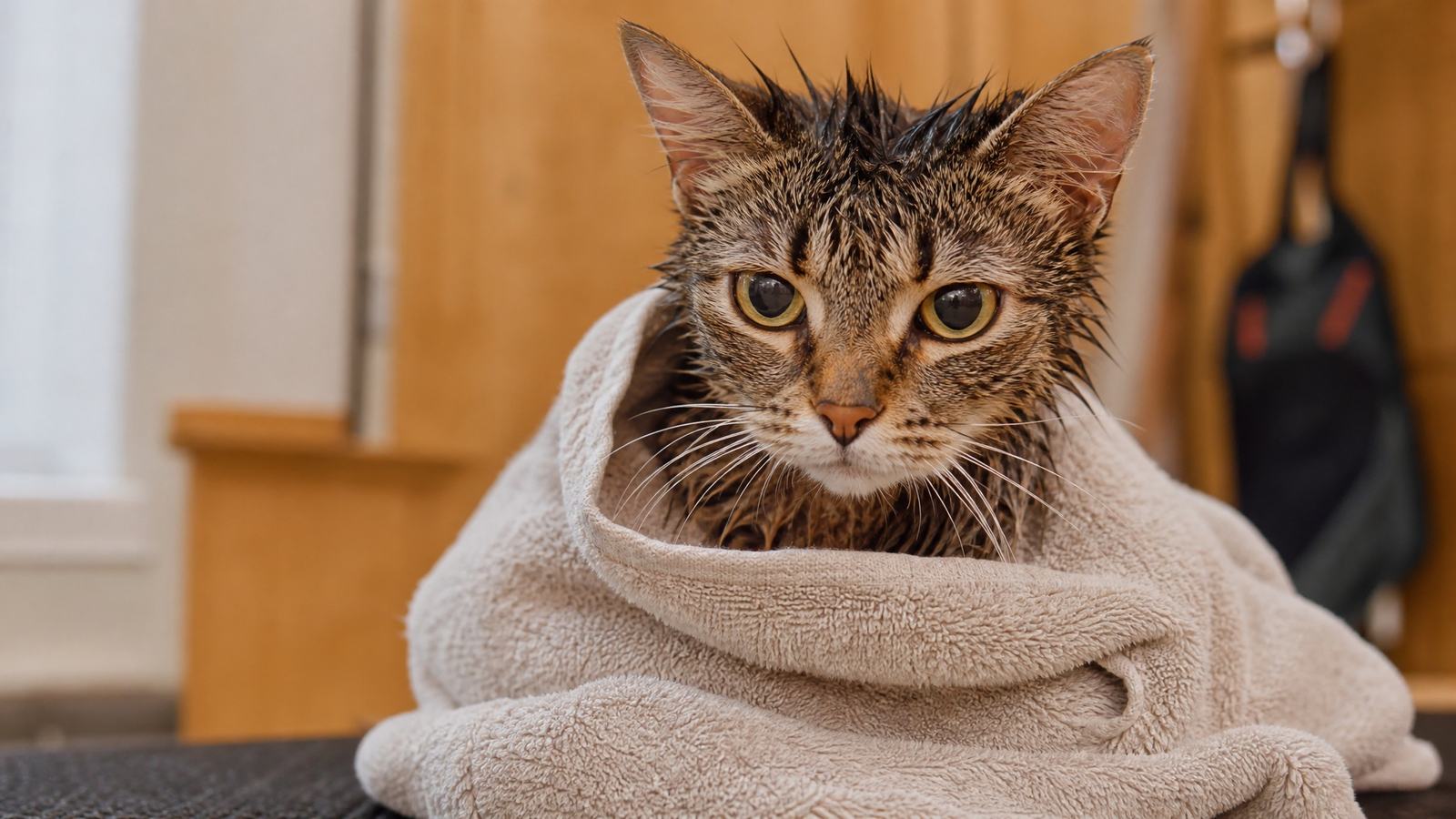
Why do cats shiver after a bath? First, determine if it's a normal reaction or a warning sign. Many owners worry if their cat shivers after a bath, thinking they might have caught a cold or that something went wrong during the bath. In reality, shivering after a bath doesn't always mean illness.
Key takeaways
- Shivering after a bath, usually due to nervousness or slight coldness, typically improves within 10 to 30 minutes after warming up and drying. If shivering persists significantly for over an hour or the cat's condition worsens, seek veterinary attention promptly.
- Four common reasons for shivering after a bath include being too cold, stress and anxiety, insufficient drying of the undercoat, and underlying health issues (such as joint pain, fever, hypoglycemia, or cardiopulmonary problems).
- If shivering is accompanied by rapid breathing or open-mouth breathing, persistent lethargy, unsteadiness when walking, vomiting, diarrhea, drooling, cold extremities (ears, paws), or abnormal gum color, do not wait. Seek veterinary evaluation immediately.
- Surface dryness does not mean the undercoat is dry. Check areas like the armpits, abdomen, inner thighs, and chest. In Taiwan's humid climate, air-drying increases the risk of hypothermia and skin problems.
- Elderly cats, kittens, cats with heart disease or chronic illnesses, highly stressed cats, and long-haired cats prone to matting are generally not suitable for at-home baths.
Why Do Cats Shiver After a Bath? First, Determine if It's a Normal Reaction or a Warning Sign
Seeing your cat shiver after a bath often makes owners immediately worry if they've caught a cold or if something went wrong during the bath. In reality, cats shivering after a bath doesn't necessarily mean they are sick. Sometimes, it's just a temporary nervous reaction or their body adjusting to being wet and cold. The key isn't whether they shiver, but how long it lasts, if their energy and appetite have decreased, and if there are other abnormal signs.
Cats are not naturally fond of bathing. Especially indoor cats common in Taiwan, who are accustomed to stable environments, can easily enter a state of alert when exposed to the sound of water, unfamiliar smells, or the noise of a hairdryer. If the shivering is brief and stops after resting and warming up, there's usually no need to be overly concerned. However, if the shivering is pronounced, or if they hide, pant, or seem lethargic, you should be more vigilant.
4 Common Reasons for Cats Shivering After a Bath: Cold, Nervousness, Incomplete Drying, or Discomfort
1. Being Cold: Fastest Body Heat Loss After Bathing
The most common reason is being cold. Once a cat's fur gets wet, its insulating effect significantly decreases. This is especially true during winter, cold snaps, the rainy season, or in air-conditioned rooms, making shivering after a bath more likely. Kittens, senior cats, and slender cats are usually more sensitive to temperature changes.
If a cat is shivering after a bath due to being cold, it typically improves gradually after being towel-dried, blow-dried, and moved to a warm space. In such cases, the cat might curl into a ball, have cool ears, and actively seek out blankets or corners to hide in. As long as their energy levels are normal after warming up, it's usually a situation that can be observed.
2. Nervousness: Not Cold, But a Stress Response
Some cats shiver after a bath even if the water temperature is normal and they aren't cold. This is often related to stress. Bathing itself is a highly stimulating event for many cats. From being picked up, getting wet, being rinsed, to being blow-dried, each step can accumulate anxiety. Cats that are already afraid of strangers, noises, or have had negative bathing experiences are more prone to this reaction.
Stress-induced shivering is often accompanied by dilated pupils, ears pinned back, a tucked tail, rapid licking, or hiding. This type of cat shivering after a bath may not stop immediately and might take time to recover once the environment is quiet and their emotions stabilize. If every bath feels like a battle, it means that simply enduring it won't help; the approach needs adjustment.
3. Incomplete Drying: Surface Dry Doesn't Mean Undercoat Dry
Many owners assume a cat is dry if its fur feels dry to the touch, but the undercoat can easily retain moisture. This is especially true for long-haired or thick-coated cats. If only the surface is towel-dried, the underlying fur remains damp, leading to continued heat loss and potentially skin discomfort. Taiwan's humid climate exacerbates this issue.
If your cat is still shivering some time after the bath, check the armpits, belly, inner thighs, and chest area. You'll often find the hair roots are still damp. Cat shivering after a bath in this situation can last longer, and the cat may appear restless. Besides keeping them warm, ensuring the undercoat is thoroughly dry is crucial for improvement.
4. Discomfort: Some Shivering Isn't Just From the Bath
In a few cases, shivering might not be due to the bath itself but because the bath exacerbates pre-existing discomfort. For example, if a cat already has joint pain, a fever, low blood sugar, heart or lung problems, or if they were overly frightened and struggled excessively during the bath, they might exhibit abnormal trembling afterward. If they weren't feeling well beforehand, close observation after the bath is necessary.
When a cat shivering after a bath is accompanied by rapid breathing, weakness, inability to stand, vomiting, or pale gums, it's not advisable to wait. This is especially true for senior cats, cats with chronic illnesses, or those recovering from illness, who may not be suitable for home baths. In such cases, seeking veterinary evaluation promptly is safer than trying to figure out the cause yourself.
What we use for this
CatGarden’s own products, shipped from Taiwan Quick-Dry Pet TowelFrom CA$49.35 per pieceFree shipping on multi-packs
When Can You Observe at Home, and When Should You Seek Veterinary Care Promptly?
If your cat is only shivering mildly after a bath and gradually stabilizes within 10 to 30 minutes of being warmed up, is still willing to eat treats, moves normally, and has normal-looking eyes, you can usually observe them at home. Move them to a quiet, dry space away from drafts and provide a towel, blanket, and water. During observation, avoid further stimulation, such as picking them up repeatedly or chasing them with a hairdryer.
Situations that can be observed at home usually share common characteristics: mild shivering, short duration, no obvious panting, and no decrease in appetite or energy. If this reaction occurs after the first bath and then returns to normal, it's often due to cold or nervousness. However, if the same situation occurs every time, it indicates that the bathing process may need adjustment.
Conversely, if a cat shivering after a bath is still pronounced after an hour, or if accompanied by the following symptoms, it is recommended to seek veterinary care promptly:
- Rapid breathing, panting, open-mouth breathing
- Persistent lethargy, inability to stand, wobbly gait
- Vomiting, diarrhea, drooling
- Cold ears and limbs, abnormal gum color
- Presence of chronic illness, heart disease, being a senior or very young cat
For owners, the simplest way to judge is: if your cat is not acting like their usual self, don't just dismiss it as a normal reaction after a bath. This is especially true for cats that are easily stressed; the bath might just be the last straw that overwhelms their system. It's better to consult your veterinarian one extra time than to delay seeking help by "waiting to see."
How to Reduce Shivering on Bath Day? From Water Temperature to Environment and Drying Process, All Organized
To reduce cat shivering after a bath, the first step isn't to bathe them quickly but to prepare thoroughly beforehand. Before the bath, have towels, a hairdryer, a brush, and shampoo ready to avoid fumbling during the bath. Adjust the room temperature beforehand; avoid bathing in drafty areas, on cold tile floors, or in excessively air-conditioned rooms.
The water temperature should be lukewarm, not too hot or too cold, and definitely not what feels hot to humans. When rinsing, start from the rear of the body and gradually let the cat adapt, avoiding direct rinsing of the head and face. The overall time should be as short as possible, but not rushed or messy; the goal is to minimize unnecessary pauses and stimulation.
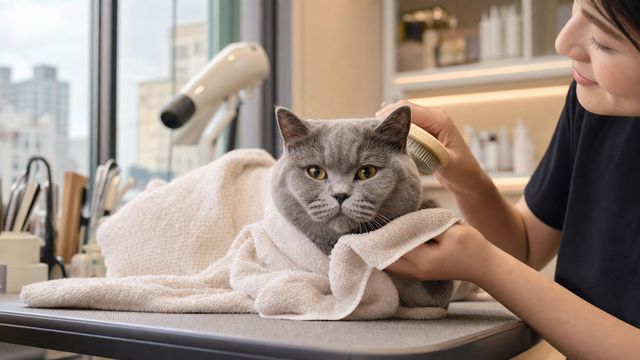
Drying is often where many owners make mistakes. First, use a highly absorbent towel to press and soak up as much water as possible, avoiding vigorous rubbing. Then, use a low to medium heat setting with low airflow to blow-dry slowly. Keep the hairdryer at a distance and don't just dry the surface; ensure the undercoat is dry in the armpits, chest, belly, and around the hindquarters.
If your cat is very afraid of the hairdryer, you can blow-dry in stages, offer treats while drying, or let them rest in a towel for a few minutes before continuing. Some owners might opt for air-drying, but in Taiwan's humid climate, this can increase the risk of heat loss and skin problems for many cats. Compared to prolonged drying, stable and thorough blow-drying is more effective in reducing shivering.
Don't Want Every Bath to Be a Battle? When It's Suitable to Leave It to Professional Cat Grooming
Not every cat is suitable for home baths, especially those that struggle violently, scratch and bite, become uncontrollably frightened, or consistently shiver for a long time after bathing. For such cats, the problem often lies not just in technique but in the overall process, equipment, and groomer's experience. If the owner is also anxious, the cat will likely become even more unsettled.
Additionally, long-haired cats, cats prone to matting, older cats, heavier cats, or those with specific skin care needs are also good candidates for professional grooming. Professional cat groomers typically prioritize a calm environment, efficient drying, and stress management for the cat, reducing common issues like prolonged bath times and incomplete drying. For owners in small urban apartments, it also prevents the home from becoming a wet mess and leaves both cat and owner exhausted.
If your cat's baths feel like a major battle every time, instead of forcing it, consider a more suitable approach. CatGarden offers cat grooming services that prioritize the cat's well-being, from washing and drying to providing comfort and observation throughout the process. We aim to reduce stress for the cat and provide peace of mind for the owner. If you are looking for a more stable and cat-friendly grooming arrangement, you can learn about suitable grooming methods and the appointment process for your cat.
FAQ
How Long Is It Normal for a Cat to Shiver After a Bath?
If it's due to nervousness or mild cold, it usually improves gradually within 10 to 30 minutes after warming and drying. If significant shivering persists for over an hour, or if their energy levels decrease, it's not advisable to just observe at home.
Does Shivering After a Bath Mean Cats Can't Be Bathed?
Not necessarily. Many situations involve unsuitable bathing methods, environmental temperatures, or drying procedures, which doesn't mean they can never be bathed. The key is to identify the cause and, if necessary, seek assistance from professional cat groomers.
Can I Let My Cat Air Dry After a Bath Instead of Blow-Drying?
Generally not recommended. Especially in Taiwan's high humidity, surface dryness doesn't mean the undercoat is dry, which can make the cat feel cold continuously and potentially increase the risk of skin discomfort. This is particularly true for long-haired cats, who need thorough blow-drying.
Should I Avoid Bathing My Cat in Winter?
Winter doesn't completely preclude bathing, but greater attention must be paid to room temperature, water temperature, and drying. If home warming conditions are insufficient, or if the cat is naturally sensitive to cold, elderly, or has chronic illnesses, careful assessment is necessary.
Which Cats Are Less Suitable for Home Baths?
Senior cats, kittens, cats with heart disease or chronic illnesses, cats that are highly anxious, and long-haired cats prone to matting are generally not recommended for home bathing. If you have concerns before bathing these types of cats, it's best to discuss them with a veterinarian or professional groomer first.
Further Reading
- Does a Cat's Loaf Position Mean They're Cold? Distinguish Between Relaxation, Warmth, or Discomfort
- What Should New Cat Owners Prepare? Start with These 10 Essentials to Avoid Wasting Money and Buying Wrong
- Does Your Cat's Ear Smell Require Cleaning? Distinguish Between Earwax, Inflammation, or Over-Cleaning
CatGarden offers curated supplies, cat boarding, and grooming
Book services or shop online.