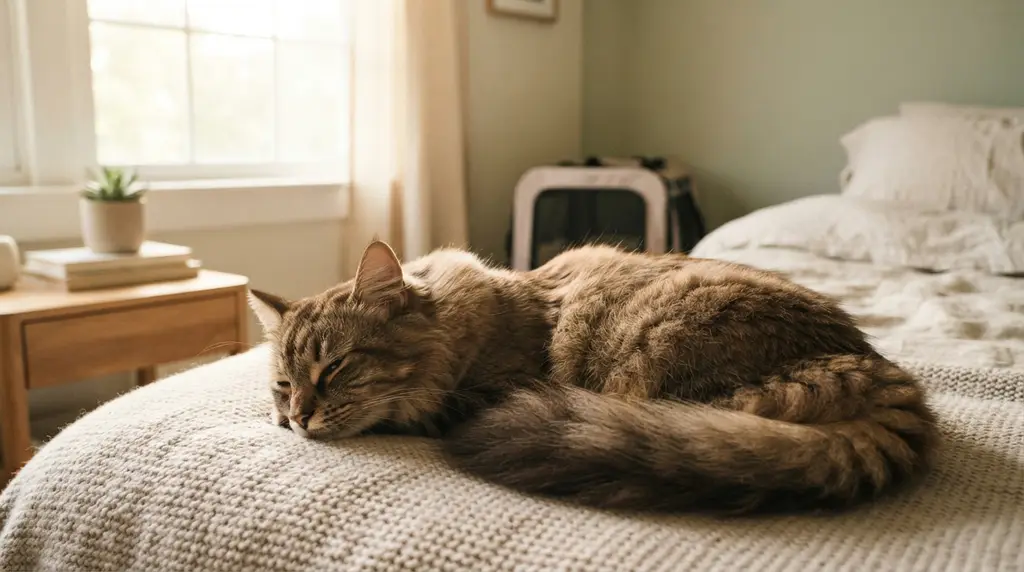
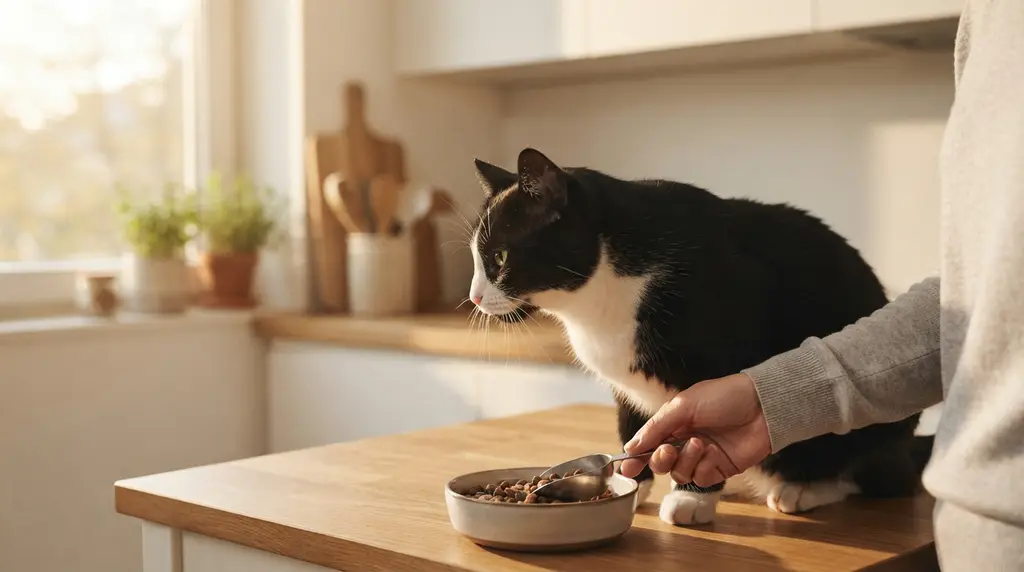
How to Arrange Your Cat During the Mid-Autumn Festival Holiday: Home Care, In-Home Visits, and Boarding Options

For a 1-day absence, leaving your cat at home is feasible. For 2-3 days, consider in-home visits. For over 3 days, or if your cat requires medication, boarding is recommended. This article compares the suitability, costs, and preparation lists for these three options based on practical experience.
CatGarden Editorial TeamPublished 2026/08/19
Mid-Autumn cat boardingcat boardingholiday careMid-Autumn Festivalcat hotel
How to Arrange Your Cat During the Mid-Autumn Festival Holiday: Home Care, In-Home Visits, and Boarding Options

How should you arrange for your cat during the Mid-Autumn Festival holiday? The simplest way to decide is by "how many days you'll be away." If you're away for 1 day (including one night), you can leave your cat at home to care for themselves. If you're away for 2-3 days, it's recommended to hire someone for in-home feeding and litter box cleaning. If you're away for over 3 days, or if you have multiple cats, your cat needs medication, or they are over 10 years old, it's safer to arrange for Mid-Autumn Festival cat boarding (cat hotel stay). The unique risks of the Mid-Autumn Festival holiday aren't just about "no one feeding them," but also BBQ ingredients, mooncakes and pomelos, incense, candles, and the sound of firecrackers during BBQs in southern Taiwan – all of which can happen when you're not home.

Here's the logic and preparation list we've compiled based on our experience answering calls, receiving cats, and handling several emergency situations at our shop every year before the Mid-Autumn Festival.

Key Takeaways

  • If you're away for more than 24 hours, it's not recommended to leave a healthy adult cat completely unattended: While cats can eat from automatic feeders, problems like an uncleaned litter box, spilled water, or unnoticed vomit can start to arise after 24 hours.
  • For cats requiring daily medication, subcutaneous fluids, or those with heart disease, kidney disease, or diabetes, boarding is prioritized over in-home visits: In-home caregivers only come once or twice a day, leaving long gaps without supervision.
  • The Mid-Autumn Festival is one of the earliest peak seasons for cat hotels to be fully booked: The Mid-Autumn Festival often coincides with typhoon season and the National Day holiday. It's recommended to book your stay 3-4 weeks before the holiday and confirm the cancellation policy.
  • The three most dangerous items at a BBQ for cats are bamboo skewers (with fat and aroma), meat seasoned with onion and garlic, and carbon monoxide from charcoal. Ingesting bamboo skewers is one of the most common reasons for emergency visits.
  • Observe your cat for 3 days after returning home: If your cat stops eating, only drinks but doesn't urinate, has bloody stool, or continuously hides within 72 hours after the holiday, report it to your caregiver and consider seeking veterinary attention.

Answer These Three Questions First, and the Solution Will Emerge

Before deciding on a plan, honestly answer these three questions. Don't skip them by thinking, "They're well-behaved at home."

1. How long will you actually be away (including travel)?

The key isn't "how many days," but the longest continuous period your cat will be unobserved. Traveling home for Mid-Autumn often means "leaving in the morning and returning the next evening," which sounds like 2 days but is actually 36 hours. Our dividing lines are:

  • Within 24 hours: Can be left at home (ensure sufficient water, litter, and environmental safety)
  • 24-72 hours: In-home care, at least once a day, preferably twice (morning and evening)
  • Over 72 hours: Boarding or twice-daily in-home visits, choose one

2. What type of cat do you have?

  • Stable type (stable appetite, hides from strangers but doesn't panic, no chronic illnesses): All three options are feasible.
  • Sensitive/Shy type (hides all day when a stranger enters, stops eating or using the litter box with environmental changes): Leaving them at home with in-home care is usually better than boarding, as the stress of a new environment is greater. If your cat falls into this category, you can read What to Do When a Shy Cat Keeps Hiding? 5 Stages and Timeline for Socializing Fearful Cats and have the caregiver meet your cat two weeks before the holiday.
  • Requires medical care (daily medication, chronic illnesses, post-surgery, kittens under 7 months, senior cats over 11 years old): Prioritize boarding, as having someone present all day is crucial.

3. Will anyone be active in the house during the holiday?

If you leave but there are still people in the house for BBQs, ancestor worship, or guests coming and going – this doesn't count as "safe home care." Instead, it's the riskiest combination: doors frequently opening, fire, food, and strangers. In this situation, we actually recommend boarding your cat, or at least confining them to a locked, safe room.

Option 1: Leaving Your Cat at Home (Self-Care or Family Assistance)

Who is it suitable for?

Single cats, adult cats, healthy cats, away for less than 24 hours; or if family members will be staying home.

What to Actually Prepare

  • At least 3 water sources, with one placed in a corner where it won't be knocked over. Use wide-mouthed ceramic or stainless steel bowls, which are more stable than plastic ones.
  • Number of litter boxes = number of cats + 1, and all should be emptied and refilled with fresh litter before you leave. A single cat will use about 0.3-0.5 kg of litter in 24 hours. We use Odor Control Mineral Litter 3.0 ourselves, as in situations like holidays when "no one can clean it immediately," clumping ability and odor control are more important than saving money.
  • Do not pre-portion wet food: It can be risky at room temperature for more than 2 hours. If you must leave wet food, use a timed feeder with an ice pack, or switch to dry food and provide extra water bowls for the holiday.
  • Turn off potential hazards: Balcony doors, screen door latches, washing machine lids, gas stoves, dryers, dangling electrical cords, and blind pull cords.
  • Keep the air conditioning on: Mid-Autumn doesn't necessarily mean cool weather; indoor temperatures in Taiwan in September afternoons often exceed 30°C. We recommend setting it to 26-28°C with fan circulation. For reasons and judgment standards, refer to Do Cats Fear Heat? First, Understand a Cat's Heat Tolerance, Cooling Methods, and Indoor Temperatures for AC in Taiwan.
  • Set up a monitoring camera, preferably pointed at the litter box and water bowl, not the sofa. You need to see "if they are using the litter box," not "how cute they are."

The Most Common Point of Failure

Power outages. If the holiday coincides with the tail end of a typhoon or a power surge, the air conditioning will stop, and the camera will go offline. Before leaving, check your electrical meter, set your air conditioner to "auto-restart upon power restoration" (supported by some models), and prepare backup methods from How to Cool Down Your Cat During a Typhoon Power Outage? Backup Checklist and Heatstroke Warning Signs Explained. Also, leave a neighbor's phone number.

Option 2: In-Home Caregiver (Sitter/Friend)

Who is it suitable for?

2-3 day holidays, cats who fear going out, multi-cat households with stable relationships, cats who don't react intensely to strangers.

Three Things Most Easily Overlooked with In-Home Care

1. Don't skimp if once a day isn't enough. For multi-cat households or cats with a history of vomiting, twice a day (morning and evening) is the minimum. Once a day means that if your cat has an issue at 10 AM, they might not be discovered for up to 22 hours in the worst-case scenario.

2. Have a "reporting format," not just a photo. We ask owners to request caregivers to report four things each visit: amount eaten (grams or percentage), number of urine clumps, stool color and consistency, and the cat's activity level. These four items are the earliest indicators of abnormalities.

3. Have backup keys and access. During the holiday, management office staffing is reduced. Confirm beforehand if the caregiver can gain access.

Handover Checklist (Recommended to Print and Post on the Fridge)

  • Cat's name, physical characteristics, usual hiding spots (it's common for caregivers to not find the cat)
  • Brand, portion size, and feeding time for each meal; can treats be given?
  • Medication: Name, dosage, time, method of administration (mixed with wet food or using a syringe)
  • Preferred litter brand and location for refilling
  • Your mobile number + a local emergency contact
  • Name, phone number, and address of your regular vet, plus emergency vet hours during the holiday (many clinics only operate half-days during Mid-Autumn)
  • Maximum authorization amount: For example, "up to NT$5,000 for a single medical expense can be handled immediately."

Option 3: Cat Hotel Boarding (Mid-Autumn Festival Cat Accommodation)

Who is it suitable for?

Away for over 3 days, requires daily medication or monitoring of food/water intake, kittens and senior cats, households with a lot of people coming and going or BBQ activities during the holiday, or owners who simply want "someone present all day."

6 Specific Criteria to Consider When Choosing Mid-Autumn Festival Cat Accommodation

1. Cat-dog separation or cat-only facility: Cats react very strongly to the stress of dog barking; a cat-only facility is best.

2. One cat per room, and no shared space between different guests: Do not accept "multi-cat cages."

3. Requirement for vaccination records (FVRCP, within the last year) and internal/external parasite treatment: Establishments that require these usually have standard hygiene management. Some facilities may also require recent absence of skin conditions.

4. Daily reporting content: Should include food intake, water consumption, urination and defecation frequency, and general demeanor, not just a photo of them sleeping.

5. Temperature control and ventilation: Indoor temperature should be maintained at 26-28°C during the day over the holiday, and confirm backup power methods for outages.

6. Medical emergency response procedure: How quickly abnormalities are detected, who is contacted, which hospital is used, and how costs are handled – these should be clearly outlined when booking.

Mid-Autumn often overlaps with typhoon season. We also advise owners to ask about "adjustments to pick-up and drop-off times if typhoon-related work/school closures are announced." If you want to see the process and room types directly, visit Book a Stay. However, the key points are the 6 criteria above, which any establishment should be able to answer.

Cat Boarding Notes: Prepare Starting 2 Weeks Before Check-in

  • Book in advance: For the Mid-Autumn Festival holiday, we recommend 3-4 weeks in advance. The closer it gets, the fewer options will be available, and they might not be your first choice.
  • Check vaccination validity: If a booster is needed, complete it at least 2 weeks prior to avoid the vaccination recovery period coinciding with check-in.
  • Bring "old items with scent": A used blanket or litter box shavings are more useful than new toys. Don't wash them; they should carry your cat's scent.
  • Bring their usual food and litter: Switching environments, food, and litter simultaneously is the most common cause of loose stools during boarding. Portion out each meal, labeling it with the date.
  • Prepare their digestive system 2-3 days in advance: If your cat tends to get loose stools when stressed, maintain their regular diet and avoid adding new treats in the days leading up to check-in.
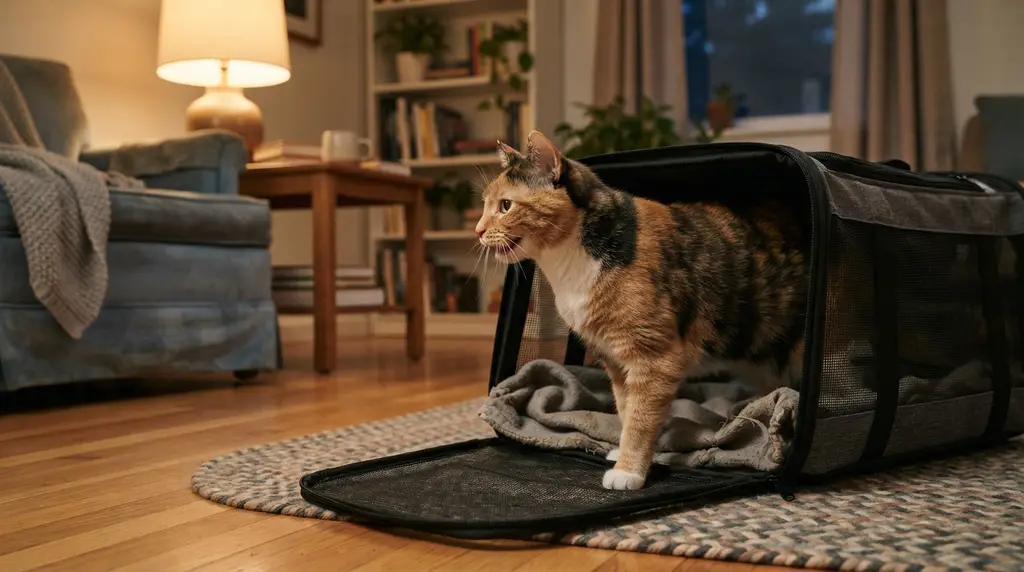
  • Familiarize your cat with the carrier 2-3 days in advance: The week before the holiday, leave the carrier open in the living room, place a blanket inside, and toss in a few treats. Don't wait until departure day to introduce it. Details on carrier selection and training are thoroughly covered in What to Do During a Typhoon Evacuation with Your Cat? Should You Evacuate, Carrier Preparation, and Emergency Kit Checklist Explained, which is useful for holidays, vet visits, and evacuations.
  • Honestly disclose medical history and personality: Including "bites," "dislikes nail trimming," "afraid of hair dryers." We prefer you tell us upfront rather than the caregiver discovering it on the first day.

Should They Get a Bath or Nail Trim Too?

Yes, but it's recommended to schedule it for the day before check-out, not the first day of check-in. On the first day, the cat is still adapting to the new environment, and added stress can easily lead to loss of appetite or anxiety. For long-haired cats, trimming paw pads and the underside before the holiday will significantly reduce matting. For details on service variations, refer to What Are the Types of Cat Grooming Services? Bathing, Nail Trimming, Shaving, and Partial Trims.

Comparison of the Three Options

Comparison ItemSelf-Care at HomeIn-Home CaregiverCat Hotel Boarding
Suitable Duration≤24 hours2-3 days3+ days
Environmental StressLowestLowModerate (environment change)
Speed of Anomaly DetectionSlow (relies on camera)Medium (during each visit)Fast (someone present)
Medication Possible?NoLimited (1-2 times/day)Yes
Power Outage/Emergency ResponseAlmost noneLimitedYes (depending on facility)
Suitable CatsHealthy, stable adult catsFearful of going out, multi-cat householdsSenior cats, kittens, chronic illnesses, sensitive to noise

Simple decision-making process: First, consider the duration → then, whether there are medical needs → finally, the cat's personality. Medical needs always take precedence over "they prefer to stay home."

5 Unique Risks of the Mid-Autumn Festival Holiday (Even if You're Home)

1. BBQ Skewers: Skewers with fat and meat aroma are a favorite for cats to chew on. Ingestion can cause intestinal perforation. Immediately after grilling, dispose of them in a covered trash can and do not leave them on the balcony.

2. Seasoned Meats, Onions, and Garlic: Sausages, BBQ sauce, and onion/garlic butter are off-limits. Mooncakes (high in fat and sugar, some contain chocolate or xylitol) and pomelo peel essential oils should also be avoided. Details are compiled in What to Watch Out for with Cat Diets During the Mid-Autumn Festival? Can Cats Eat Mooncakes, Pomelos, and BBQ Food Safety Guide.

3. Charcoal and Smoke: When barbecuing on the balcony, be sure to confine your cat to an indoor room with tightly closed doors and windows. Cats have a much lower tolerance for carbon monoxide than humans.

4. Incense, Candles, and Joss Paper: Ancestor worship is also common during Mid-Autumn. Handling fire sources and smoke can be managed using the guidelines in What Precautions Should Be Taken for Cats During Ghost Month? Home Safety Guide for Offerings, Incense, Candles, and Joss Paper.

5. Doors Opening and Escapes: Friends and family visiting, moving furniture in and out – this is a peak time for cat escapes. Before leaving, confine your cat to a room with a lockable door and ensure their collar or microchip information is up-to-date.

72-Hour Observation Focus After Returning Home

Whether returning from boarding or from being alone at home, monitor these aspects for the next three days:

  • Appetite: Eating more than 50% of their usual amount on the first day home is normal. If they completely refuse to eat for 24 consecutive hours, seek veterinary attention.
  • Urination: At least one urine clump per day. For male cats, if they haven't urinated for over 24 hours or strain to urinate only a few drops, treat it as an emergency.
  • Defecation: Loose stools for 1-2 days are common (due to environmental stress), but if there's blood, black tarry stool, or it persists for over 3 days, return to the vet.
  • Water Intake and Dehydration: Senior cats are particularly susceptible. You can check yourself using the methods in How to Check for Cat Dehydration? Skin Turgor, Oral Mucosa, and Water Intake – 3 Home Check Methods.
  • Hiding Behavior: Hiding for 1-2 days after returning home is a normal decompression process. Don't force them out for cuddles. Provide food, a litter box, and undisturbed space. They usually come out on their own by the third day.

If you've just brought a new cat home during the holiday, slow down the pace even more. For the first week's environmental arrangements and dietary transitions, follow the steps in How to Care for a New Cat in Their First Week Home? Environment, Diet, and Preparations to Make Them Feel Secure. Avoid trying to manage both "new cat adaptation" and "BBQ gatherings" amidst the holiday commotion.

If any of the above symptoms persist for over 24-48 hours, or if your cat exhibits open-mouth breathing, hind leg weakness, seizures, or inability to urinate, seek immediate veterinary care and do not wait until after the holiday.

Frequently Asked Questions

How far in advance should I book cat accommodation for the Mid-Autumn Festival holiday?

We recommend 3-4 weeks before the holiday. Mid-Autumn is one of the earliest peak seasons for bookings to fill up, especially for single-occupancy rooms and larger suites. When booking, remember to also confirm the cancellation/rescheduling policy and typhoon contingency plans.

Is a vaccination certificate required for cat boarding?

Most reputable cat hotels require proof of FVRCP vaccination within the last year and internal/external parasite treatment. This is a necessary condition to protect all resident cats. If a booster is needed, complete it at least 2 weeks before check-in to avoid overlapping vaccination recovery with boarding stress.

I'm only away for two days, can I leave my cat home alone?

For healthy adult cats, it's relatively feasible within "24 hours." However, for periods exceeding 24 hours, it's recommended to arrange at least one in-home visit. The reason isn't insufficient food, but rather that issues like vomiting, spilled water, getting stuck, or a full litter box cannot be immediately addressed.

Will my cat get sick from stress at a boarding facility?

A temporary decrease in appetite and hiding are common adaptation responses, usually improving within 1-2 days. To reduce risks, bring their usual food and litter, a blanket with their scent, familiarize them with the carrier beforehand, and choose a facility that provides daily reports on food intake and elimination.

Which is cheaper, in-home care or boarding?

Based on typical Taiwanese rates, short-term (2-3 days, once daily) in-home care is usually more cost-effective. For longer durations or when twice-daily visits are needed, the total cost often approaches or exceeds boarding, making boarding a better value due to higher care density.


Article by CatGarden Editorial Team

CatGarden offers curated supplies, cat boarding, and grooming

Book services or shop online.
Back

Blog

How to Arrange Your Cat During the Mid-Autumn Festival Holiday: Home Care, In-Home Visits, and Boarding Options

CatGarden Editorial TeamPublished 2026/08/19
Mid-Autumn cat boardingcat boardingholiday careMid-Autumn Festivalcat hotel
How to Arrange Your Cat During the Mid-Autumn Festival Holiday: Home Care, In-Home Visits, and Boarding Options

How should you arrange for your cat during the Mid-Autumn Festival holiday? The simplest way to decide is by "how many days you'll be away." If you're away for 1 day (including one night), you can leave your cat at home to care for themselves. If you're away for 2-3 days, it's recommended to hire someone for in-home feeding and litter box cleaning. If you're away for over 3 days, or if you have multiple cats, your cat needs medication, or they are over 10 years old, it's safer to arrange for Mid-Autumn Festival cat boarding (cat hotel stay). The unique risks of the Mid-Autumn Festival holiday aren't just about "no one feeding them," but also BBQ ingredients, mooncakes and pomelos, incense, candles, and the sound of firecrackers during BBQs in southern Taiwan – all of which can happen when you're not home.

Here's the logic and preparation list we've compiled based on our experience answering calls, receiving cats, and handling several emergency situations at our shop every year before the Mid-Autumn Festival.

Key Takeaways

  • If you're away for more than 24 hours, it's not recommended to leave a healthy adult cat completely unattended: While cats can eat from automatic feeders, problems like an uncleaned litter box, spilled water, or unnoticed vomit can start to arise after 24 hours.
  • For cats requiring daily medication, subcutaneous fluids, or those with heart disease, kidney disease, or diabetes, boarding is prioritized over in-home visits: In-home caregivers only come once or twice a day, leaving long gaps without supervision.
  • The Mid-Autumn Festival is one of the earliest peak seasons for cat hotels to be fully booked: The Mid-Autumn Festival often coincides with typhoon season and the National Day holiday. It's recommended to book your stay 3-4 weeks before the holiday and confirm the cancellation policy.
  • The three most dangerous items at a BBQ for cats are bamboo skewers (with fat and aroma), meat seasoned with onion and garlic, and carbon monoxide from charcoal. Ingesting bamboo skewers is one of the most common reasons for emergency visits.
  • Observe your cat for 3 days after returning home: If your cat stops eating, only drinks but doesn't urinate, has bloody stool, or continuously hides within 72 hours after the holiday, report it to your caregiver and consider seeking veterinary attention.

Answer These Three Questions First, and the Solution Will Emerge

Before deciding on a plan, honestly answer these three questions. Don't skip them by thinking, "They're well-behaved at home."

1. How long will you actually be away (including travel)?

The key isn't "how many days," but the longest continuous period your cat will be unobserved. Traveling home for Mid-Autumn often means "leaving in the morning and returning the next evening," which sounds like 2 days but is actually 36 hours. Our dividing lines are:

  • Within 24 hours: Can be left at home (ensure sufficient water, litter, and environmental safety)
  • 24-72 hours: In-home care, at least once a day, preferably twice (morning and evening)
  • Over 72 hours: Boarding or twice-daily in-home visits, choose one

2. What type of cat do you have?

  • Stable type (stable appetite, hides from strangers but doesn't panic, no chronic illnesses): All three options are feasible.
  • Sensitive/Shy type (hides all day when a stranger enters, stops eating or using the litter box with environmental changes): Leaving them at home with in-home care is usually better than boarding, as the stress of a new environment is greater. If your cat falls into this category, you can read What to Do When a Shy Cat Keeps Hiding? 5 Stages and Timeline for Socializing Fearful Cats and have the caregiver meet your cat two weeks before the holiday.
  • Requires medical care (daily medication, chronic illnesses, post-surgery, kittens under 7 months, senior cats over 11 years old): Prioritize boarding, as having someone present all day is crucial.

3. Will anyone be active in the house during the holiday?

If you leave but there are still people in the house for BBQs, ancestor worship, or guests coming and going – this doesn't count as "safe home care." Instead, it's the riskiest combination: doors frequently opening, fire, food, and strangers. In this situation, we actually recommend boarding your cat, or at least confining them to a locked, safe room.

Option 1: Leaving Your Cat at Home (Self-Care or Family Assistance)

Who is it suitable for?

Single cats, adult cats, healthy cats, away for less than 24 hours; or if family members will be staying home.

What to Actually Prepare

  • At least 3 water sources, with one placed in a corner where it won't be knocked over. Use wide-mouthed ceramic or stainless steel bowls, which are more stable than plastic ones.
  • Number of litter boxes = number of cats + 1, and all should be emptied and refilled with fresh litter before you leave. A single cat will use about 0.3-0.5 kg of litter in 24 hours. We use Odor Control Mineral Litter 3.0 ourselves, as in situations like holidays when "no one can clean it immediately," clumping ability and odor control are more important than saving money.
  • Do not pre-portion wet food: It can be risky at room temperature for more than 2 hours. If you must leave wet food, use a timed feeder with an ice pack, or switch to dry food and provide extra water bowls for the holiday.
  • Turn off potential hazards: Balcony doors, screen door latches, washing machine lids, gas stoves, dryers, dangling electrical cords, and blind pull cords.
  • Keep the air conditioning on: Mid-Autumn doesn't necessarily mean cool weather; indoor temperatures in Taiwan in September afternoons often exceed 30°C. We recommend setting it to 26-28°C with fan circulation. For reasons and judgment standards, refer to Do Cats Fear Heat? First, Understand a Cat's Heat Tolerance, Cooling Methods, and Indoor Temperatures for AC in Taiwan.
  • Set up a monitoring camera, preferably pointed at the litter box and water bowl, not the sofa. You need to see "if they are using the litter box," not "how cute they are."

The Most Common Point of Failure

Power outages. If the holiday coincides with the tail end of a typhoon or a power surge, the air conditioning will stop, and the camera will go offline. Before leaving, check your electrical meter, set your air conditioner to "auto-restart upon power restoration" (supported by some models), and prepare backup methods from How to Cool Down Your Cat During a Typhoon Power Outage? Backup Checklist and Heatstroke Warning Signs Explained. Also, leave a neighbor's phone number.

Option 2: In-Home Caregiver (Sitter/Friend)

Who is it suitable for?

2-3 day holidays, cats who fear going out, multi-cat households with stable relationships, cats who don't react intensely to strangers.

Three Things Most Easily Overlooked with In-Home Care

1. Don't skimp if once a day isn't enough. For multi-cat households or cats with a history of vomiting, twice a day (morning and evening) is the minimum. Once a day means that if your cat has an issue at 10 AM, they might not be discovered for up to 22 hours in the worst-case scenario.

2. Have a "reporting format," not just a photo. We ask owners to request caregivers to report four things each visit: amount eaten (grams or percentage), number of urine clumps, stool color and consistency, and the cat's activity level. These four items are the earliest indicators of abnormalities.

3. Have backup keys and access. During the holiday, management office staffing is reduced. Confirm beforehand if the caregiver can gain access.

Handover Checklist (Recommended to Print and Post on the Fridge)

  • Cat's name, physical characteristics, usual hiding spots (it's common for caregivers to not find the cat)
  • Brand, portion size, and feeding time for each meal; can treats be given?
  • Medication: Name, dosage, time, method of administration (mixed with wet food or using a syringe)
  • Preferred litter brand and location for refilling
  • Your mobile number + a local emergency contact
  • Name, phone number, and address of your regular vet, plus emergency vet hours during the holiday (many clinics only operate half-days during Mid-Autumn)
  • Maximum authorization amount: For example, "up to NT$5,000 for a single medical expense can be handled immediately."

Option 3: Cat Hotel Boarding (Mid-Autumn Festival Cat Accommodation)

Who is it suitable for?

Away for over 3 days, requires daily medication or monitoring of food/water intake, kittens and senior cats, households with a lot of people coming and going or BBQ activities during the holiday, or owners who simply want "someone present all day."

6 Specific Criteria to Consider When Choosing Mid-Autumn Festival Cat Accommodation

1. Cat-dog separation or cat-only facility: Cats react very strongly to the stress of dog barking; a cat-only facility is best.

2. One cat per room, and no shared space between different guests: Do not accept "multi-cat cages."

3. Requirement for vaccination records (FVRCP, within the last year) and internal/external parasite treatment: Establishments that require these usually have standard hygiene management. Some facilities may also require recent absence of skin conditions.

4. Daily reporting content: Should include food intake, water consumption, urination and defecation frequency, and general demeanor, not just a photo of them sleeping.

5. Temperature control and ventilation: Indoor temperature should be maintained at 26-28°C during the day over the holiday, and confirm backup power methods for outages.

6. Medical emergency response procedure: How quickly abnormalities are detected, who is contacted, which hospital is used, and how costs are handled – these should be clearly outlined when booking.

Mid-Autumn often overlaps with typhoon season. We also advise owners to ask about "adjustments to pick-up and drop-off times if typhoon-related work/school closures are announced." If you want to see the process and room types directly, visit Book a Stay. However, the key points are the 6 criteria above, which any establishment should be able to answer.

Cat Boarding Notes: Prepare Starting 2 Weeks Before Check-in

  • Book in advance: For the Mid-Autumn Festival holiday, we recommend 3-4 weeks in advance. The closer it gets, the fewer options will be available, and they might not be your first choice.
  • Check vaccination validity: If a booster is needed, complete it at least 2 weeks prior to avoid the vaccination recovery period coinciding with check-in.
  • Bring "old items with scent": A used blanket or litter box shavings are more useful than new toys. Don't wash them; they should carry your cat's scent.
  • Bring their usual food and litter: Switching environments, food, and litter simultaneously is the most common cause of loose stools during boarding. Portion out each meal, labeling it with the date.
  • Prepare their digestive system 2-3 days in advance: If your cat tends to get loose stools when stressed, maintain their regular diet and avoid adding new treats in the days leading up to check-in.
  • Familiarize your cat with the carrier 2-3 days in advance: The week before the holiday, leave the carrier open in the living room, place a blanket inside, and toss in a few treats. Don't wait until departure day to introduce it. Details on carrier selection and training are thoroughly covered in What to Do During a Typhoon Evacuation with Your Cat? Should You Evacuate, Carrier Preparation, and Emergency Kit Checklist Explained, which is useful for holidays, vet visits, and evacuations.
  • Honestly disclose medical history and personality: Including "bites," "dislikes nail trimming," "afraid of hair dryers." We prefer you tell us upfront rather than the caregiver discovering it on the first day.

Should They Get a Bath or Nail Trim Too?

Yes, but it's recommended to schedule it for the day before check-out, not the first day of check-in. On the first day, the cat is still adapting to the new environment, and added stress can easily lead to loss of appetite or anxiety. For long-haired cats, trimming paw pads and the underside before the holiday will significantly reduce matting. For details on service variations, refer to What Are the Types of Cat Grooming Services? Bathing, Nail Trimming, Shaving, and Partial Trims.

Comparison of the Three Options

Comparison ItemSelf-Care at HomeIn-Home CaregiverCat Hotel Boarding
Suitable Duration≤24 hours2-3 days3+ days
Environmental StressLowestLowModerate (environment change)
Speed of Anomaly DetectionSlow (relies on camera)Medium (during each visit)Fast (someone present)
Medication Possible?NoLimited (1-2 times/day)Yes
Power Outage/Emergency ResponseAlmost noneLimitedYes (depending on facility)
Suitable CatsHealthy, stable adult catsFearful of going out, multi-cat householdsSenior cats, kittens, chronic illnesses, sensitive to noise

Simple decision-making process: First, consider the duration → then, whether there are medical needs → finally, the cat's personality. Medical needs always take precedence over "they prefer to stay home."

5 Unique Risks of the Mid-Autumn Festival Holiday (Even if You're Home)

1. BBQ Skewers: Skewers with fat and meat aroma are a favorite for cats to chew on. Ingestion can cause intestinal perforation. Immediately after grilling, dispose of them in a covered trash can and do not leave them on the balcony.

2. Seasoned Meats, Onions, and Garlic: Sausages, BBQ sauce, and onion/garlic butter are off-limits. Mooncakes (high in fat and sugar, some contain chocolate or xylitol) and pomelo peel essential oils should also be avoided. Details are compiled in What to Watch Out for with Cat Diets During the Mid-Autumn Festival? Can Cats Eat Mooncakes, Pomelos, and BBQ Food Safety Guide.

3. Charcoal and Smoke: When barbecuing on the balcony, be sure to confine your cat to an indoor room with tightly closed doors and windows. Cats have a much lower tolerance for carbon monoxide than humans.

4. Incense, Candles, and Joss Paper: Ancestor worship is also common during Mid-Autumn. Handling fire sources and smoke can be managed using the guidelines in What Precautions Should Be Taken for Cats During Ghost Month? Home Safety Guide for Offerings, Incense, Candles, and Joss Paper.

5. Doors Opening and Escapes: Friends and family visiting, moving furniture in and out – this is a peak time for cat escapes. Before leaving, confine your cat to a room with a lockable door and ensure their collar or microchip information is up-to-date.

72-Hour Observation Focus After Returning Home

Whether returning from boarding or from being alone at home, monitor these aspects for the next three days:

  • Appetite: Eating more than 50% of their usual amount on the first day home is normal. If they completely refuse to eat for 24 consecutive hours, seek veterinary attention.
  • Urination: At least one urine clump per day. For male cats, if they haven't urinated for over 24 hours or strain to urinate only a few drops, treat it as an emergency.
  • Defecation: Loose stools for 1-2 days are common (due to environmental stress), but if there's blood, black tarry stool, or it persists for over 3 days, return to the vet.
  • Water Intake and Dehydration: Senior cats are particularly susceptible. You can check yourself using the methods in How to Check for Cat Dehydration? Skin Turgor, Oral Mucosa, and Water Intake – 3 Home Check Methods.
  • Hiding Behavior: Hiding for 1-2 days after returning home is a normal decompression process. Don't force them out for cuddles. Provide food, a litter box, and undisturbed space. They usually come out on their own by the third day.

If you've just brought a new cat home during the holiday, slow down the pace even more. For the first week's environmental arrangements and dietary transitions, follow the steps in How to Care for a New Cat in Their First Week Home? Environment, Diet, and Preparations to Make Them Feel Secure. Avoid trying to manage both "new cat adaptation" and "BBQ gatherings" amidst the holiday commotion.

If any of the above symptoms persist for over 24-48 hours, or if your cat exhibits open-mouth breathing, hind leg weakness, seizures, or inability to urinate, seek immediate veterinary care and do not wait until after the holiday.

Frequently Asked Questions

How far in advance should I book cat accommodation for the Mid-Autumn Festival holiday?

We recommend 3-4 weeks before the holiday. Mid-Autumn is one of the earliest peak seasons for bookings to fill up, especially for single-occupancy rooms and larger suites. When booking, remember to also confirm the cancellation/rescheduling policy and typhoon contingency plans.

Is a vaccination certificate required for cat boarding?

Most reputable cat hotels require proof of FVRCP vaccination within the last year and internal/external parasite treatment. This is a necessary condition to protect all resident cats. If a booster is needed, complete it at least 2 weeks before check-in to avoid overlapping vaccination recovery with boarding stress.

I'm only away for two days, can I leave my cat home alone?

For healthy adult cats, it's relatively feasible within "24 hours." However, for periods exceeding 24 hours, it's recommended to arrange at least one in-home visit. The reason isn't insufficient food, but rather that issues like vomiting, spilled water, getting stuck, or a full litter box cannot be immediately addressed.

Will my cat get sick from stress at a boarding facility?

A temporary decrease in appetite and hiding are common adaptation responses, usually improving within 1-2 days. To reduce risks, bring their usual food and litter, a blanket with their scent, familiarize them with the carrier beforehand, and choose a facility that provides daily reports on food intake and elimination.

Which is cheaper, in-home care or boarding?

Based on typical Taiwanese rates, short-term (2-3 days, once daily) in-home care is usually more cost-effective. For longer durations or when twice-daily visits are needed, the total cost often approaches or exceeds boarding, making boarding a better value due to higher care density.


Article by CatGarden Editorial Team

One email a month of cat-care tips

Hand-picked care, behavior and grooming tips once a month. Subscribe and we will send you our three most-read articles right away.

Keep reading