What to Watch Out For With Your Cat's Diet During the Mid-Autumn Festival? Can Cats Eat Mooncakes, Pomelos, and BBQ Ingredients? A Safety Guide
Cats cannot eat mooncakes, and while small amounts of pomelo flesh are not recommended, pomelo peels must be kept out of reach. The most common dangerous ingredients during Mid-Autumn BBQs are onions, garlic, BBQ sauce, and skewers. This article covers high-risk ingredients for cats in a festive context, outlines what to do in case of accidental ingestion, and highlights warning signs that require veterinary attention.
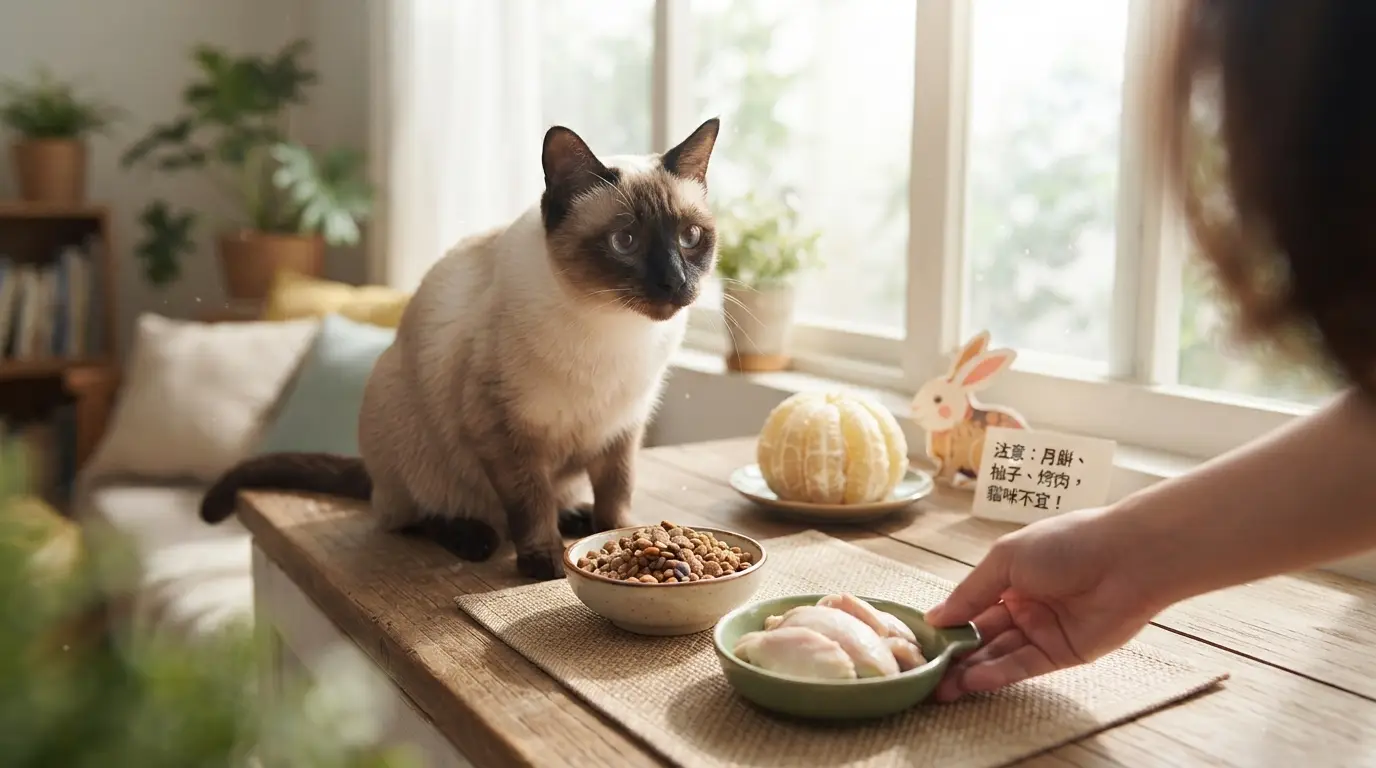
Cats absolutely cannot eat mooncakes. The high sugar, high fat, egg yolk, and bean paste fillings in mooncakes place too much burden on a cat's pancreas and digestive system. If the mooncake contains chocolate, coffee, matcha, raisins, or xylitol, it poses a direct poisoning risk. While a small lick of pomelo flesh might not cause acute poisoning, pomelo peels, pomelo essential oils, and those "pomelo hats" are what you truly need to guard against. In fact, the most common reason for emergency vet visits after the Mid-Autumn Festival isn't mooncakes, but rather onion and garlic seasonings in BBQ marinades, BBQ sauce, and licked skewers.
Every year, within two to three days after the Mid-Autumn Festival, we hear similar stories from owners of boarding and grooming cats: soft stools, vomiting, midnight meowing, and decreased appetite. Upon further questioning, it's almost always because "they seem to have snuck a bite of BBQ" or "the mooncake was left on the table and they chewed it open." This article will cover mooncakes, pomelos, and BBQ in the order they appear during the festival, along with what to do within 30 minutes of accidental ingestion.
Key Takeaways
- Cats cannot eat mooncakes: A single traditional Cantonese mooncake can contain 600-800 calories, equivalent to 2-3 days' worth of energy for a 4kg adult cat. The high fat and sugar content can easily induce vomiting, diarrhea, and pancreatitis.
- Alliums (onions, garlic, chives, onion powder) in BBQ marinades are the most dangerous: Literature suggests as little as 5 grams per kilogram of body weight can cause red blood cell destruction in cats (Heinz body anemia). For a 4kg cat, this is about 20 grams, less than half a small onion.
- Keep pomelo peels and citrus essential oils away: Pomelo peels contain higher concentrations of limonene and other volatile compounds than the flesh. Cats have weaker glucuronidation capacity in their livers, making them slower to metabolize these components. Contact or ingestion can lead to drooling, vomiting, and skin redness.
- Never induce vomiting for swallowed skewers or chicken bones: Sharp objects pose a high risk of re-injury to the esophagus. Contact a veterinarian immediately. Using human hydrogen peroxide for emesis can cause severe damage to a cat's esophageal and stomach lining.
- The critical observation window for Mid-Autumn ingestions is 24-72 hours: Symptoms of allium poisoning, such as anemia, often appear 1-3 days later. Not showing symptoms on the same day does not mean they are safe.
Can Cats Eat Mooncakes? Breaking Down the Filling Risks
The answer is no, and it's not a case of "a little bit is okay" – it depends on the filling.
1. Crust and Fat/Sugar Content: Common Triggers for Pancreatitis and Gastroenteritis
Cats are obligate carnivores with poor tolerance for high carbohydrates and fats. Mooncake crusts are very high in powdered sugar, invert sugar syrup, and lard/vegetable oil. Even a small piece can cause vomiting that night or large amounts of soft stool the next day. We've had owners feed their cats "a tiny corner of lotus seed paste mooncake," and the next day the cat had three bouts of mushy diarrhea and was visibly lethargic. If you want to understand the natural course of gastrointestinal upset and the feeding progression for recovery, you can read How Long Does Cat Gastroenteritis Last? From Day 1 to Day 7, Course and Warning Signs to See a Vet.
2. Salted Egg Yolk: A Double Burden of Sodium and Fat
A single salted egg yolk can contain 200-400 mg of sodium, far exceeding a 4kg adult cat's daily requirement. Cats with heart or kidney issues should avoid it completely. Additionally, the high fat content in egg yolk is a common cause of vomiting.
3. Chocolate, Coffee, and Matcha Flavors: Clear Poisoning Risks
Cats metabolize theobromine and caffeine in chocolate much slower than humans. Theobromine can cause symptoms (vomiting, rapid heart rate, restlessness) at doses as low as 20 mg per kilogram of body weight, and high doses can lead to seizures and arrhythmias. Dark chocolate and cocoa powder have the highest concentrations. Coffee-flavored mooncakes containing caffeine and strong matcha fillings pose similar risks.
4. Raisin, Fig, and Nut Fillings
Grapes and raisins are known to be nephrotoxic to dogs. While there are fewer reported cases in cats, the mechanism is unclear, and the risk cannot be ruled out; therefore, they should always be avoided. Nuts like macadamia nuts are high in fat and pose a choking hazard, making them unsuitable.
5. Xylitol in Sugar-Free Mooncakes
Xylitol causes acute hypoglycemia in dogs. While data on cats is limited, it's something cats should not consume under any circumstances. Mooncakes labeled "sugar-free" or "low-sugar" require even more caution.
Practical Advice: Store mooncakes in airtight containers or cabinets, not on dining tables or coffee tables. Cats are often more interested in the cardboard boxes and plastic wrappers than the mooncakes themselves. We hear reports every year of cats swallowing plastic along with the mooncake after chewing through the packaging. For a more comprehensive list, consider reading our related article What Can't Cats Eat? Common Dangerous Foods and Poisoning Signs at Home.
Can Cats Eat Pomelos? Flesh, Peel, and Oil Must Be Considered Separately
Pomelo Flesh: Not Recommended, but Small Licks Are Usually Not an Emergency
Pomelo flesh is primarily water, sugar, and organic acids. A small amount (like licking a tiny bit of juice) typically won't cause acute poisoning. However, the acidity of citrus can irritate a cat's stomach, and cats don't need the sugar from fruit anyway, so there's no practical reason to feed it to them. If you want to offer fruit-based treats, watermelon is relatively safe in summer, but portion control and seed removal are still important. You can refer to How to Feed Watermelon to Cats Correctly.
Pomelo Peel and White Membrane: Significantly Higher Risk Than Flesh
Pomelo peel is rich in volatile compounds like limonene and linalool, at much higher concentrations than the flesh. Cats have relatively insufficient glucuronidation capacity in their livers, making these compounds slow to metabolize. Chewing or extensive contact can lead to drooling, vomiting, diarrhea, and skin redness, or even lethargy. Piles of peeled pomelo skins left on tables or the floor are the most common source of accidental ingestion during the Mid-Autumn Festival.
The "Pomelo Hat" Photo Op: We Sincerely Advise Skipping It
Putting a hollowed-out pomelo peel on a cat's head for photos combines three problems: direct contact of essential oils with skin and eyes, the stress of being held down, and the cat ingesting the oils later by grooming. We've seen cats at the grooming salon develop itchy rashes on their faces after wearing pomelo hats. If you really want festive photos, use prop hats or clean cardboard creations, not real peels.
A Quick Reminder: Citrus-Flavored Candles and Diffusers Are Also Risky
Around the Mid-Autumn Festival, many people light citrus-scented candles or use diffusers. Essential oils containing citrus, tea tree, or pine can be hepatotoxic to cats. The fine particles from diffusers can settle on their fur and be ingested through grooming. The principles for home safety in this regard are the same as those outlined in our article What to Watch Out For During the Ghost Festival? Home Safety Guide for Incense, Candles, and Joss Paper: In spaces where cats are present, anything that burns or volatilizes should be considered a risk.
Mid-Autumn BBQ: The Real Danger Zone
The BBQ table is the area requiring the most vigilance during the Mid-Autumn Festival because food is at floor level, doors are often opened frequently due to guests, and people's attention is divided.
Ingredients and Seasonings to Absolutely Avoid
- Onions, garlic, chives, leeks, onion powder/garlic powder: All alliums can destroy a cat's red blood cells. As little as 5 grams per kilogram can cause problems, and BBQ marinades, satay sauce, and BBQ sauce almost always contain garlic and onion powder. This is why "don't share BBQ with your cat" is more practical than "pick out a piece without sauce for them."
- BBQ sauce, satay sauce, seasoned salt powders: High in sodium and fat. A single piece of meat dipped in sauce can exceed a cat's daily sodium requirement.
- Sausages, bacon, hot dogs, meatballs: Contain nitrites, high sodium, and high fat, common culprits for pancreatitis and vomiting.
- Chicken bones, fish bones, shrimp shells: Cooked bones can splinter into sharp fragments, posing a risk of perforation and obstruction.
- Enoki mushrooms, corn kernels, rice cakes: Difficult to digest and can form clumps, posing a risk of intestinal obstruction in smaller cats.
- Alcohol, sugary drinks, caffeinated beverages: Cats are extremely sensitive to alcohol; even a few milliliters can cause central nervous system depression.
- Grapes, longans, lychees: Always avoid.
Can Plain Boiled Meat Without Seasoning Be Given?
If you truly want your cat to participate in the festivities, the safest approach is: Before any sauces are added, take a small piece of completely unseasoned, fully cooked chicken breast or fish, let it cool, remove bones and skin, and cut it into 1cm pieces. Give no more than 10-15 grams (about the size of a knuckle). This amount is less than 5% of the daily calories for a 4kg adult cat and won't disrupt their regular meals. Instead of risking sharing BBQ food, we often advise owners to simply open a can of their cat's favorite premium wet food as a "Mid-Autumn treat for the cat" – humans eat human food, cats eat cat food; it's the simplest solution.
Beyond Ingredients, These 5 Things Can Also Cause Problems
1. Skewers and aluminum foil: Skewers with meat juices are a favorite for cats. Swallowing them can perforate the intestines. Dispose of them immediately in a lidded trash can.
2. Charcoal and burns: Curious cats may approach the grill. Brushing against it with their tail or jumping on the table can cause paw burns. The safest option is to confine your cat to a room with water, a litter box, and a cooling mat while grilling.
3. Carbon monoxide and smoke: When grilling on balconies or in semi-enclosed spaces, smoke and fumes can severely irritate a cat's respiratory tract, especially for brachycephalic breeds (Persians, Himalayans). If your cat starts panting with its mouth open or breathing rapidly, refer to Is Your Cat Panting with an Open Mouth Due to Heat or Illness? Gum Color, Breathing Rate, and When to Seek Veterinary Care.
4. Mosquito coils and liquid repellents: Essential for outdoor BBQs, but pyrethroids are highly toxic to cats. Liquid repellents are even more dangerous if spilled and licked. Place them in areas inaccessible to cats and ensure good ventilation.
5. Escaping: Frequent comings and goings of guests are peak times for escapes. Ensure collar and microchip information is up-to-date, and implement a "second door" protocol at the entrance.
What to Do If Your Cat Accidentally Eats BBQ Ingredients: Golden 30-Minute SOP
First and most importantly: Do not induce vomiting yourself. Human hydrogen peroxide (double oxygen water) causes severe damage to a cat's esophageal and stomach lining, and salt water emesis can lead to sodium poisoning. Inducing vomiting for sharp objects (skewers, bones) can cause secondary esophageal tears.
Follow these steps:
1. Remove the source: Take the cat away from the food area and remove remaining food and packaging to prevent further ingestion.
2. Identify "What was eaten, how much, and at what time": These three pieces of information will guide the veterinarian's treatment. Keep packaging or take photos; information about sauces containing garlic or onion powder is especially important.
3. Call the veterinary hospital: Clearly explain the information gathered above. If the cat ingested chocolate, alliums, alcohol, skewers, or chicken bones, do not wait for symptoms to appear. Many toxicities have a delayed onset of 1-3 days.
4. Check the mouth and gum color: Healthy gums are pink. Pale, yellowish, or purplish gums are emergency indicators.
5. Record the timeline of symptoms: Number of vomiting episodes, content of vomit, presence of bowel movements, energy level, and appetite. This record will be very helpful at the clinic.
6. Ensure water is available, but do not force-feed: If foreign body ingestion or persistent vomiting is suspected, withhold food and water and consult your veterinarian.
Emergency Veterinary Warning Signs
- Vomiting more than 3 times or complete refusal to eat for 2 consecutive meals.
- Pale, yellowish gums, inner ears, or nose (indicating anemia or liver damage).
- Rapid breathing (over 40 breaths per minute at rest), panting with mouth open.
- Dark urine color (tea-colored, reddish-brown).
- Unsteady gait, tremors, seizures, abnormal pupil dilation.
- Repeated dry heaving without producing anything, rigid abdomen (suspected obstruction).
If vomiting or diarrhea persists for more than half a day, dehydration risk must be considered. For home assessment, refer to How to Check for Cat Dehydration: 3 Home Checks for Skin Turgor, Oral Mucosa, and Water Intake. If symptoms persist for over 24 hours, or if any of the above warning signs appear initially, seek immediate veterinary care and do not observe at home.
For Owners Traveling During the Holidays: 4 Preparations Before the Mid-Autumn Break
1. Maintain the same diet: Do not switch food or suddenly introduce new treats before or during the holiday. For cats with sensitive stomachs, we usually recommend starting specialty probiotics 5-7 days in advance to stabilize their gut, rather than waiting until they have diarrhea.
2. "Festive" items at home should be put away: Mooncakes, pomelo peels, skewers, BBQ sauce, mosquito coils, alcohol bottles – all should be stored in cabinets inaccessible to cats.
3. Arrange care if traveling or visiting family: The Mid-Autumn Festival is one of our busiest periods of the year; we are typically fully booked 3-4 weeks in advance. If you plan to be away, the earlier you book boarding, the more options you'll have. Leaving your cat alone for more than 2 days without someone visiting daily carries risks that are higher than most people realize.
4. Locate emergency vet information beforehand: Save the phone numbers and addresses of 24-hour animal hospitals near your home in your phone. Daytime clinics are often closed during holidays.
Festivities should be lively for humans, but your cat's routine should remain calm – this is what we most want to tell owners this time of year. Mooncakes, pomelos, and BBQ – the human Mid-Autumn trifecta – are unnecessary for cats. Providing them with a quiet room, ensuring fresh water and a clean litter box, and adding a portion of their familiar wet food is the best way to celebrate.
Frequently Asked Questions
My cat snuck a tiny bite of mooncake, do I need to go to the vet immediately?
If it was pure bean paste, lotus seed paste, or date paste, and only the size of a fingernail, you can usually observe at home for 24-48 hours, monitoring for vomiting, diarrhea, and appetite changes. However, if the filling contained chocolate, coffee, raisins, xylitol, or nuts, or if your cat weighs less than 3kg, contact a veterinarian immediately and bring the packaging.
Can cats eat pomelos? Do I need to do anything if they lick some juice?
Feeding pomelos is not recommended. Licking a small amount of flesh or juice generally won't cause acute poisoning; just observe for drooling or vomiting. However, if they chew on the peel or if their skin comes into contact with a large amount of pomelo peel juice, wipe the affected area with warm water to prevent them from grooming it off, and monitor their energy levels.
My cat accidentally ate meat coated in BBQ sauce. How long until symptoms appear?
Vomiting and diarrhea caused by high fat and sodium usually appear within 2-12 hours. If the sauce contained onion or garlic powder, anemia symptoms (pale gums, weakness, dark urine color) due to red blood cell destruction may be delayed for 1-3 days. Therefore, even if they seem fine on the day, observation for a full 72 hours is necessary.
My cat swallowed a BBQ skewer. Can I induce vomiting?
Absolutely do not induce vomiting. Sharp foreign objects can cause secondary tearing injuries during regurgitation. Immediately withhold food and water and go directly to the veterinary hospital. X-rays or endoscopy are usually required for assessment.
Is it really not okay to take photos of cats wearing pomelo hats?
We advise against it. The essential oil components in pomelo peels can irritate the skin and eye area. Afterward, cats may ingest them by grooming, in addition to the stress of being held down for photos. Using fabric or cardboard prop hats achieves the same cute effect without the risks.
Article by CatGarden Editorial Team
CatGarden offers curated supplies, cat boarding, and grooming
Book services or shop online.