What to Watch Out For With Cats During the Ghost Festival? A Home Safety Guide to Offerings, Incense, Candles, and Spirit Money
The three most common accidents involving cats during the Ghost Festival are accidental ingestion of offerings, inhalation of incense and spirit money smoke, and intestinal blockage from tearing and eating spirit money. Drawing from frontline experience at a cat hotel, this article provides a direct checklist for the day of worship and warning signs that require veterinary attention.
During the Ghost Festival, cats are most susceptible to three main dangers: accidentally ingesting offerings (such as cooked meats, braised dishes, cookies, grapes, and lychees), inhaling smoke from incense and burning spirit money, and suffering intestinal blockages from tearing and eating spirit money. The most practical approach is to completely separate the worship area from your cat—close doors or use a cat carrier to isolate the space where the offering table is located. Ensure incense burners and candles are placed at heights your cat cannot reach, and immediately after the ceremony, collect all spirit money into a covered container. Throughout the process, "just watching" is not enough.
Here are the details we remind boarding pet owners of every year during the seventh lunar month, based on our experience. Following these steps can significantly minimize risks.
Key Takeaways
- The most dangerous offerings for cats during the Ghost Festival include braised dishes and broths containing onions, garlic, or chives (which can cause hemolytic anemia), grapes and dishes containing alcohol, and cooked chicken or fish bones (which can splinter and injure the digestive tract).
- A 4kg adult cat that sneaks just a few bites of fried chicken or heavily salted braised food may experience vomiting, diarrhea, and increased thirst. If vomiting occurs more than 3 times or the cat refuses to eat for over 12 hours, veterinary attention is necessary.
- Cats' respiratory systems are more sensitive to airborne particles than humans'. The smoke from burning spirit money and incense consists of fine particulate matter (PM2.5), which can trigger coughing and open-mouth breathing, especially in brachycephalic cats, kittens, elderly cats, and those with a history of asthma.
- The paper fibers and gold foil film in spirit money are indigestible. Ingesting a small corner usually results in it being passed in the stool within 24–48 hours. However, swallowing an entire sheet, persistent vomiting, or inability to defecate are urgent signs of intestinal blockage.
- If your cat ingests something, do not induce vomiting yourself, and do not feed salt water or milk. Contacting a veterinarian directly with packaging or photos of the offerings is more time-efficient than observing at home.
Why is the Ghost Festival Particularly Dangerous for Cats?
The seventh lunar month (often falling around August in the Gregorian calendar) is a time when Taiwanese households conduct the most worship ceremonies. During this period, three unusual events occur simultaneously in homes:
1. A large amount of food suddenly appears on the floor or low tables, left unattended for hours.
2. Open flames and continuous smoke appear indoors (from incense, candles, and spirit money).
3. Doors are frequently left open as family members move offerings or go outside to burn spirit money, significantly increasing the risk of escape.
Adding to this, August is typically the hottest month. Doors and windows are opened for ventilation, and air conditioning is turned off, exposing cats to both heat and smoke irritation. We receive inquiries every year about "cats vomiting multiple times" or "cats constantly coughing," almost all related to the Ghost Festival.
I. Can Cats Eat Ghost Festival Offerings? Let's Categorize Them First.
The answer is straightforward: Almost none of the Ghost Festival offerings are suitable for cats. This isn't because "items that have been offered cannot be eaten," but rather because the seasonings and ingredients themselves are unsuitable for felines.
Absolutely Forbidden (Risk of Poisoning or Emergency)
- Braised dishes, chicken soup, or oily rice containing onions, chives, garlic, or leeks: These can destroy red blood cells, causing hemolytic anemia. Symptoms may be delayed by 1–3 days (poor appetite, pale gums, dark urine).
- Grapes, longans, and lychees: Grapes have a clear risk of kidney toxicity in cats; the pits and skins of longans and lychees also pose a foreign body risk.
- Dishes containing alcohol and ceremonial rice wine: Cats are extremely sensitive to alcohol; even small amounts can lead to hypoglycemia and confusion.
- Chocolate, caffeinated beverages (coffee, tea, cola): These are often found in snack bags during the Ghost Festival.
- Cooked chicken, fish, or duck bones: When heated, they become brittle and splinter easily, potentially piercing the mouth and digestive tract.
For a more comprehensive list and signs of poisoning, we recommend saving this article: What Foods Are Toxic to Cats? Common Household Dangers and Poisoning Symptoms. Spending five minutes reviewing it the night before the festival is more helpful than panicking afterward.
Causes Gastroenteritis But Not Poisoning
- Fried chicken, sausages, braised pork, canned meat pastes: High in oil and salt, these can overwhelm a cat's pancreas and digestive system.
- Cookies, mochi, pineapple cakes, candies: High in sugar and oil. Mochi-type foods also pose a choking and esophageal adhesion risk.
- Milk, Yakult, yogurt drinks: Most adult cats are lactose intolerant and will experience soft stools.
If your cat does sneak a few bites and develops soft stools or vomiting, refer to How Long Does Cat Gastroenteritis Last? Timeline from Day 1 to Day 7, Feeding Recovery, and Warning Signs for the course of illness and when to seek veterinary care. Do not fast your cat for three days based on your own judgment.
Seemingly Harmless, But Most Easily Overlooked
- Toothpicks, plastic forks, sealing films, cake paper liners: Mixed in with offerings, a cat might swallow one as a linear foreign body.
- Strings from zongzi (rice dumplings) and cotton threads: Cats are particularly fascinated by linear objects, and linear foreign bodies have a higher rate of requiring surgery than other types.
- Fresh flowers on the offering table: Lilies are toxic to cats and can cause kidney damage; even licking pollen can be dangerous. All offering flowers should be placed in areas inaccessible to cats.
> Our practice at the hotel: On the day of worship, we prepare a special "portion" for the cats. Instead of letting them stare at the offering table, we give them their favorite Luxury Functional Canned Food in another room. Once they've eaten and fallen asleep, you can worship with peace of mind.
II. Dangers of Incense and Candles for Cats: Smoke, Fire, and Burns
Smoke Irritation to the Respiratory System
The fine particulate matter and carbon monoxide produced by burning incense and spirit money can rapidly increase in concentration in poorly ventilated indoor spaces. Cats, being small and having faster breathing rates than humans (20–30 breaths per minute at rest), inhale a higher volume per unit of body weight. Common reactions include:
- Dry cough, sneezing, watery eyes, damp nose tip
- Shallow, rapid breathing; starting to breathe through the mouth
- Hiding in cooler areas like bathrooms or under beds
Cats do not normally pant with their mouths open. If you observe open-mouth panting, refer to Cat Panting with Mouth Open: Heat or Illness? Check Gums, Breathing Rate, and 3 Warning Signs and watch for abdominal breathing (noticeable abdominal effort during breathing). If these occur together, seek immediate veterinary care.
Practical Ventilation Arrangements
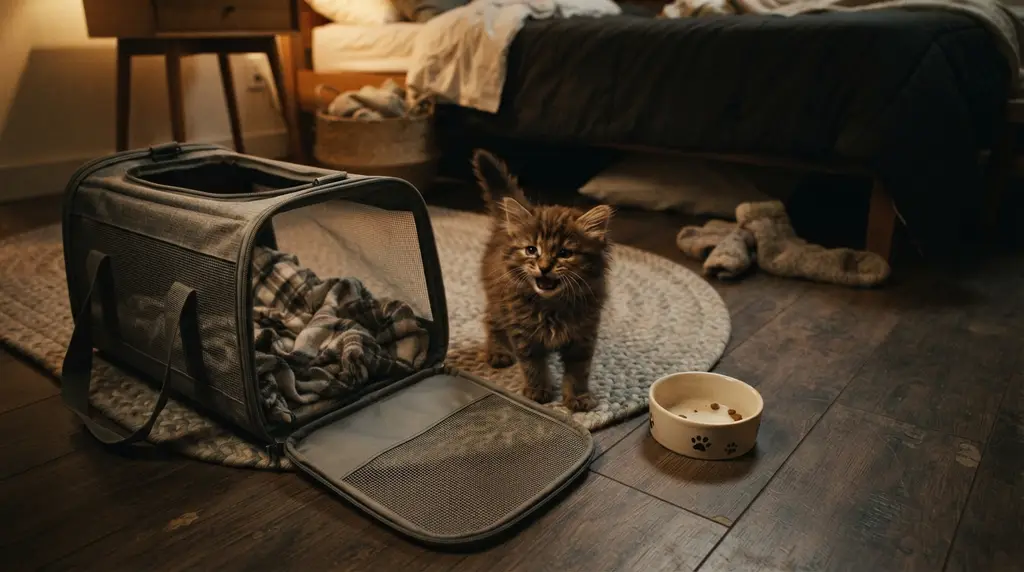
- Before worship, move your cat to the farthest room with a closable door. Set the air conditioning or fan. Use a towel to block smoke from seeping under the door.
- Open a window and use an exhaust fan on the side of the offering table to direct smoke outwards. Avoid creating whole-house ventilation, as this will simply push smoke into the cat's room.
- After worship, ventilate for at least 30–60 minutes and ensure all ashes are completely cool before allowing the cat back out.
- For cats with asthma, chronic rhinitis, or brachycephalic breeds (Persians, Himalayans, Exotic Shorthairs), it is advisable to keep them away from areas with burning incense for the entire day.
Fire and Burns
Cats may jump onto offering tables or be attracted to flickering candlelight, reaching out to bat at it. The burn cases we've handled almost always occur when owners leave the room "just for a moment."
- Place incense burners and candles where your cat absolutely cannot reach them, or use electronic candles and incense instead.
- The tail is most likely to brush against the incense stick, burning the fur and causing a burnt smell; long-haired cats are particularly at risk.
- Do not bring spirit money burners directly indoors from the balcony; residual embers can burn paw pads.
III. What to Do If Your Cat Ingests Spirit Money?
Spirit money has two appealing aspects for cats: the satisfaction of tearing paper fibers and the crinkling, reflective sound of the gold foil film. Many cats don't intend to eat it but end up swallowing it during play.
Quantity Dictates the Course of Action
- Licking or biting off a small corner (fingernail size): Most of the time, this will be passed in the stool within 24–48 hours. During these two days, ensure your cat is eating and defecating normally. Seeing paper shreds in the stool is a good sign.
- Swallowing a large piece or an entire sheet, including the gold foil film: The paper will expand in the intestines upon absorbing water, posing a risk of blockage. It is recommended to seek veterinary evaluation immediately.
- If any of the following occur, seek immediate veterinary care: Repeated dry heaving or vomiting, refusal to eat for over 12 hours, no bowel movement for over 24 hours or only passing small amounts of bloody mucus, abdominal tensing upon touch, or significant lethargy.
Three Things NOT to Do
1. Do not induce vomiting (especially at home with salt water or hydrogen peroxide). The paper can become lodged in the esophagus during regurgitation.
2. Do not feed large amounts of oil or milk to "lubricate"; this will only increase vomiting and diarrhea.
3. Do not wait to "see how it goes tomorrow." The critical window for treating foreign body ingestion is within the first 24–48 hours.
Dehydration is often overlooked after vomiting and diarrhea. Upon returning home, check for dehydration using How to Check for Cat Dehydration: Skin Elasticity, Oral Mucous Membranes, and Water Intake (3 Home Methods). If the gums feel sticky and dry, or the skin retracts slowly when pinched, do not delay seeking veterinary care.
Ash and Soot Also Count
If a cat steps on ash and then licks its paws, it can cause irritation to the mouth and digestive tract. Immediately cover spirit money burners after use, and wipe up any ash on the floor with a damp cloth (do not sweep, as this will create dust).
IV. Day-of-Worship Safety Checklist
The Day Before
- Check the cat room: Ensure water bowls are full, litter boxes are clean and accessible (your cat will definitely use them during the hours the door is closed).
- Store offerings in airtight containers or the refrigerator. Do not place them on the dining table prematurely for the cat to investigate.
- Save the phone number and address of your nearest emergency veterinary hospital.
30 Minutes Before Worship
- Move the cat to its room and confirm the door is securely closed (some cats can open push doors; use a door stopper).
- Set the air conditioning to 26–27°C. In the August heat, a closed room can become very warm.
- Put away toothpicks, strings, plastic bags, and lighters.
During Worship and Spirit Money Burning
- Ensure someone is present at the offering table at all times; avoid leaving it unattended.
- Install a door stopper or screen door to prevent escape. Remind family members "there's a cat" when entering or exiting.
- Burn spirit money outdoors if possible, and avoid locations on the balcony directly facing the cat's room window.
After Worship
- Collect offerings immediately. Clean up any food scraps or candy wrappers that have fallen on the floor.
- Ventilate for 30–60 minutes, wipe down the floor, then allow the cat back out.
- Observe for the next 24 hours: appetite, energy level, defecation, and any coughing.
If you will be away for ancestral worship during the entire seventh lunar month, or if your home will be continuously used for worship, it might be less stressful to board your cat in a temperature-controlled environment with a private space, rather than leaving it in an environment with smoke and unfamiliar visitors. Before you leave, review Cat Boarding Checklist: Vaccinations Required Before Check-in?. If needed, you can also book boarding directly.
V. Cats Requiring Special Attention
- Kittens (under 6 months): They tend to chew on everything, making spirit money and strings particularly risky. They also dehydrate quickly.
- Elderly cats (over 7 years): Many have underlying chronic kidney disease, making them more susceptible to the effects of high-salt offerings.
- Brachycephalic breeds: Their nasal passages are naturally narrow, making them more prone to respiratory distress when exposed to smoke.
- Cats with a history of vomiting or pancreatitis: Even a small piece of braised meat can trigger a relapse. It's best to communicate this clearly to family members who might "spoil" the cat with food.
The most challenging aspect is often not the cat, but well-meaning elders. Our suggestion: Prepare small boxes of the cat's treats and place them near the offering table beforehand. Tell family members, "If you want to feed them, feed them this." This is often more effective than constantly saying "Don't feed them."
Frequently Asked Questions
Is it okay to give a small piece of chicken or pork from the offerings to my cat?
If it's plain boiled meat with no seasoning, braising, or added ingredients like onion and garlic, and it's deboned and skinless, a small piece (about the size of a knuckle) is usually fine. However, the three-sacrifice meats are typically braised or cooked with broths containing onions and garlic, so these should always be avoided.
My cat keeps sneezing and coughing from the incense at home. Should I see a vet?
If symptoms subside within 1–2 hours after ventilation, and the cat's energy and appetite are normal, you can observe. However, if the coughing persists for more than a day, if the cat starts breathing with its mouth open, or if breathing exceeds 40 breaths per minute or involves abdominal effort, seek immediate veterinary care.
My cat ate spirit money and passed paper shreds in its stool. Do I still need to go to the vet?
Seeing paper shreds passed is usually a good sign, indicating it hasn't caused a blockage. Continue to monitor for 48 hours, ensuring normal appetite and stool volume. If dry heaving or lack of defecation occurs later, veterinary consultation is still recommended.
Can electronic candles and incense truly be substitutes?
In terms of safety, they are the most recommended alternative for households with cats, as they eliminate the risks of open flames, burns, and smoke simultaneously. If tradition requires using real incense, shorten the burning time and enhance ventilation.
Can I leave Ghost Festival offerings on the balcony to keep them away from my cat?
This is not recommended. Balconies are areas cats love to patrol, and there's also the risk of falling. Furthermore, offerings can spoil quickly in high temperatures, and a cat eating spoiled food can cause more problems than eating fresh offerings. The safest approach remains "keeping the cat and the offering table in separate spaces."
The key during the Ghost Festival is not to prohibit worship, but to separate "food, open flames, smoke, and doors" from your cat. Taking ten minutes each year to implement these separation measures can prevent a midnight emergency trip to the vet. If you need to restock on cat litter or alternative treats, feel free to browse our shop.
If your cat experiences persistent vomiting, difficulty breathing, refuses to eat for over 24 hours, or cannot defecate, seek immediate veterinary attention. The information in this article cannot replace a veterinarian's diagnosis.
— CatGarden Editorial Team
CatGarden offers curated supplies, cat boarding, and grooming
Book services or shop online.