Foods Cats Must Not Eat: Common Household Dangers and Poisoning Signs

Onion, garlic, chocolate, lilies, grapes, alcohol, and some human foods can be dangerous for cats. Learn what to avoid and what to do.
CatGarden Editorial TeamPublished 2026/06/04Updated 2026/10/06
Dangerous foodsAccidental ingestionPoisoningHome care
Foods Cats Must Not Eat: Common Household Dangers and Poisoning Signs

Some foods that are normal for people can be dangerous or even life-threatening for cats. Cats metabolize many substances differently, so even small amounts can matter.

Key takeaways

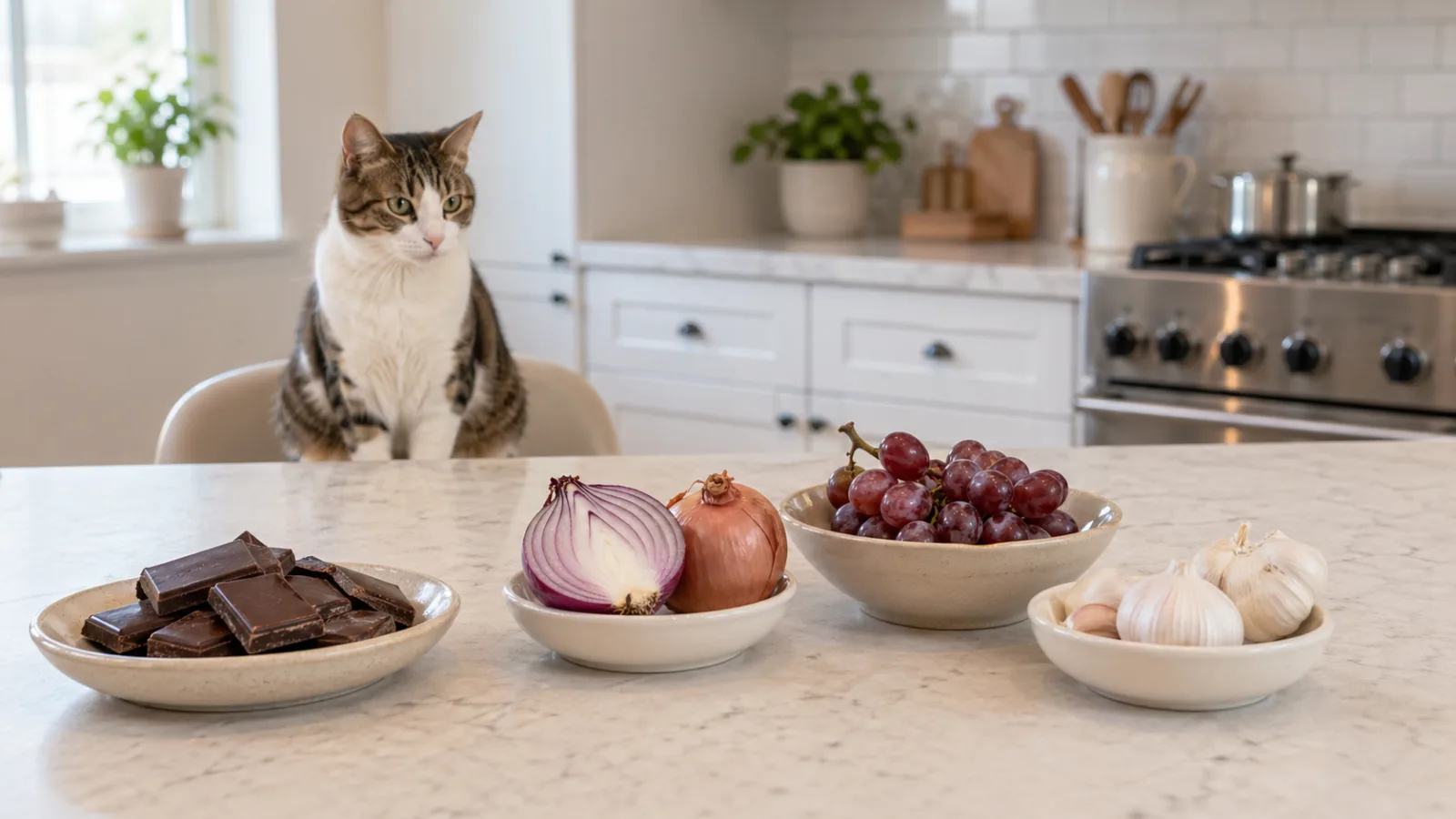
  • Alliums like onions, garlic, chives, and leeks can destroy a cat's red blood cells, leading to hemolytic anemia. Both raw and cooked forms are equally dangerous and are commonly found in human foods such as broths, stir-fries, and meat sauces.
  • Theobromine in chocolate, and caffeine in coffee and tea, cannot be effectively metabolized by cats and can cause rapid heart rate and seizures. Dark chocolate is the most toxic. Grapes and raisins, even in small amounts, can cause acute kidney failure.
  • Lilies are highly toxic to cats. Ingesting the flower, leaves, pollen, or even the water from a vase can lead to fatal kidney failure. It's recommended to avoid having lilies in homes with cats. Pothos, poinsettias, and tulips are also irritating.
  • Symptoms of poisoning in cats may not appear immediately; some toxins can take hours to a couple of days to manifest. Potential signs include vomiting, diarrhea, drooling, weakness and hiding, rapid breathing, pale or purplish gums, unsteadiness, and seizures.
  • In case of ingestion, the steps are: remove any remaining food, note what was eaten, the approximate amount, and when it was consumed. Immediately contact your veterinarian and follow their instructions. Do not induce vomiting yourself, as it can be more dangerous in some situations.

Foods and Items to Avoid

Keep cats away from onion, garlic, scallion, chives, chocolate, caffeine, grapes, raisins, alcohol, raw yeast dough, xylitol, human pain medicines, and toxic plants such as lilies. Also avoid salty, oily, seasoned leftovers as daily treats.

Possible Poisoning Signs

Watch for vomiting, diarrhea, drooling, weakness, poor appetite, pale gums, fast breathing, shaking, unsteady walking, seizures, or sudden changes in drinking and urination. Some toxins take hours or days to show symptoms.

What to Do

Remove the item, note what was eaten, how much, and when, then contact a veterinarian or poison hotline immediately. Do not induce vomiting unless a professional tells you to do so.

CatGarden offers curated supplies, cat boarding, and grooming

Book services or shop online.
Back

Blog

Foods Cats Must Not Eat: Common Household Dangers and Poisoning Signs

CatGarden Editorial TeamPublished 2026/06/04Updated 2026/10/06
Dangerous foodsAccidental ingestionPoisoningHome care
Foods Cats Must Not Eat: Common Household Dangers and Poisoning Signs

Some foods that are normal for people can be dangerous or even life-threatening for cats. Cats metabolize many substances differently, so even small amounts can matter.

Key takeaways

  • Alliums like onions, garlic, chives, and leeks can destroy a cat's red blood cells, leading to hemolytic anemia. Both raw and cooked forms are equally dangerous and are commonly found in human foods such as broths, stir-fries, and meat sauces.
  • Theobromine in chocolate, and caffeine in coffee and tea, cannot be effectively metabolized by cats and can cause rapid heart rate and seizures. Dark chocolate is the most toxic. Grapes and raisins, even in small amounts, can cause acute kidney failure.
  • Lilies are highly toxic to cats. Ingesting the flower, leaves, pollen, or even the water from a vase can lead to fatal kidney failure. It's recommended to avoid having lilies in homes with cats. Pothos, poinsettias, and tulips are also irritating.
  • Symptoms of poisoning in cats may not appear immediately; some toxins can take hours to a couple of days to manifest. Potential signs include vomiting, diarrhea, drooling, weakness and hiding, rapid breathing, pale or purplish gums, unsteadiness, and seizures.
  • In case of ingestion, the steps are: remove any remaining food, note what was eaten, the approximate amount, and when it was consumed. Immediately contact your veterinarian and follow their instructions. Do not induce vomiting yourself, as it can be more dangerous in some situations.

Foods and Items to Avoid

Keep cats away from onion, garlic, scallion, chives, chocolate, caffeine, grapes, raisins, alcohol, raw yeast dough, xylitol, human pain medicines, and toxic plants such as lilies. Also avoid salty, oily, seasoned leftovers as daily treats.

Possible Poisoning Signs

Watch for vomiting, diarrhea, drooling, weakness, poor appetite, pale gums, fast breathing, shaking, unsteady walking, seizures, or sudden changes in drinking and urination. Some toxins take hours or days to show symptoms.

What to Do

Remove the item, note what was eaten, how much, and when, then contact a veterinarian or poison hotline immediately. Do not induce vomiting unless a professional tells you to do so.

One email a month of cat-care tips

Hand-picked care, behavior and grooming tips once a month. Subscribe and we will send you our three most-read articles right away.

Keep reading