What Does a Silent Meow Mean? 3 Reasons Your Cat Opens Its Mouth But Makes No Sound
When a cat opens its mouth to meow but no sound comes out, it's usually a normal, affectionate "meow" with insufficient airflow and a high frequency. However, if the sound suddenly changes from audible to silent, becomes hoarse for more than three days, or is accompanied by coughing or difficulty breathing, it should be treated as a warning sign for the throat and respiratory tract.
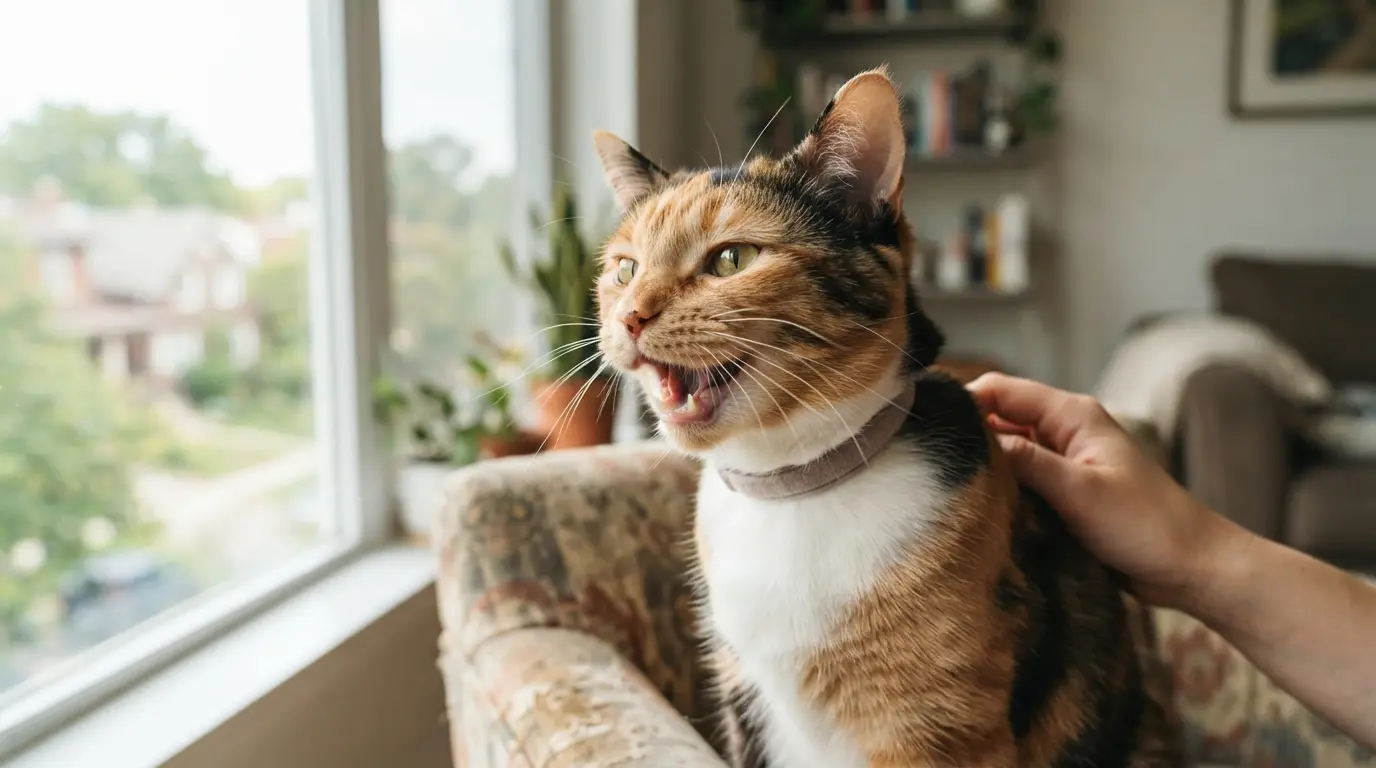
When your cat opens its mouth wide at you, forming a "meow" shape, but no sound emerges, over 90% of the time it's perfectly normal: This is a "low-intensity, close-range" communication method where the cat deliberately uses very little airflow to vocalize, making the sound too quiet for human ears to detect or at a frequency beyond our hearing range. However, if a cat that used to vocalize suddenly starts meowing silently, its voice becomes hoarse for more than 3 days, or it also exhibits coughing, difficulty swallowing, or labored breathing, it should be treated as a warning sign for the throat/respiratory tract, and a veterinary visit should be scheduled.
This article will start by explaining the mechanics of feline vocalization and guide you in distinguishing whether your cat's "silent meow" is a sign of affection or a cry for help.
Key Takeaways
- A cat's meow requires three conditions: "airflow from the lungs → vocal cord vibration → mouth shape adjustment." A silent meow usually means the first step, airflow, is intentionally minimized, resulting in vocal cord vibrations too weak to produce an audible sound.
- Human hearing limit is around 20,000 Hz, while cats can hear approximately 48,000–85,000 Hz. For individuals over 40, the upper hearing limit often drops to 12,000–15,000 Hz, so a "silent meow" might simply be a sound you can't hear.
- Silent meows are most common in situations involving "close proximity + eye contact" (asking for food, greeting you, being petted), serving as a low-intensity call to trusted individuals.
- Pathological voice changes (laryngitis, upper respiratory infections, nasopharyngeal polyps, laryngeal tumors) are almost always accompanied by other symptoms: increased snoring, dry cough, drooling, neck retraction during swallowing, decreased appetite, or weight loss.
- A cat's normal resting respiratory rate is 20–30 breaths per minute (15–30 while sleeping). If it exceeds 40 breaths per minute while at rest and is accompanied by silent mouth opening, it's an emergency requiring immediate veterinary attention.
How Do Cats Meow? Understanding "Airflow" First
To understand silent meows, let's first look at how cats vocalize. A cat's vocalization requires three things to happen simultaneously:
1. The lungs push air out (providing the motive force for airflow)
2. Air passes through the throat, causing the vocal cords (vocal folds) to vibrate (producing sound)
3. The shape of the mouth, tongue, and pharynx is adjusted (determining if it sounds like a "meow," "purr," or "hiss")
Academics often categorize feline vocalizations into three main types:
- Closed-mouth sounds: Purrs, trills. The mouth doesn't open, often used between mothers and kittens or in close interactions.
- Open-then-close sounds: The typical "meow," where the mouth opens and then closes, creating that characteristic falling intonation.
- Sustained open-mouth sounds: Hisses, growls, yowls during heat. The mouth remains open.
Silent meows fall into the second category—the mouth shape is complete, but the airflow and vibration from steps 1 and 2 are minimized. What you see is a "complete action with zero volume." This is why many owners describe it as "silent mode" or "mouth-syncing."
Cats Often "Talk" in Frequencies You Can't Hear
Cats' hearing range is approximately 48 kHz to 85 kHz, far exceeding the human upper limit of 20 kHz. The distress calls of kittens in their nest to their mother, for instance, have some energy in the ultrasonic range. Furthermore, human high-frequency hearing declines with age (after 40, it's often only 12–15 kHz). Therefore, some of your cat's "silent meows" actually have sound, but your ears can't pick it up.
We have a very useful verification method at our facility: Record a video with your phone, then listen back with headphones at a high volume. Phone microphones can often pick up very faint airy sounds or high-frequency tails—this indicates they are genuinely vocalizing, just very quietly.
What we use for this
CatGarden’s own products, shipped from Taiwan Premium CatnipFrom CA$36.65 per jarFree shipping on multi-packs
Reason 1: It's Their "Quiet Talk" to You — Most Common and Completely Normal
A cat's meow directed at humans is an acquired communication tool (adult cats rarely meow at each other). The volume is adjusted based on "distance" and "recipient":
- Close proximity: Cats don't need to be loud. You're right there; they only need to form the mouth shape and make eye contact, and you'll respond—they've learned "this is enough."
- Recipient is a trusted person: Silent meows are almost never used with strangers. At our facility, cats boarding for the first time are often silent and observant or might give a low growl. Only after they've settled in for a couple of days will they exhibit that silent mouth opening near their cage door. This is a clear signal of "I consider you family."
- They've been rewarded for it: If you've ever given them a treat, petted them, or spoken to them when they silent meowed, this behavior gets reinforced. Frankly, many cats' silent meows are trained by us.
If you want to better understand your cat's signals of intimacy, you can also read this article: What Does Your Cat's Sleeping Position Mean? Decoding Sleep Postures, Locations, and Their Love for You—Sleeping positions, like silent meows, are behaviors "reserved only for trusted individuals."
4 Characteristics of a Normal Silent Meow
- Only occurs in specific situations (before meals, when you just got home, when you're petting them, when they see you through a door).
- The cat's body is relaxed when it happens: ears forward, tail upright or gently swaying, possibly accompanied by purring.
- They still have the ability to vocalize loudly (e.g., they will still meow normally when put in a carrier or bathed).
- This habit has been ongoing for a long time and is not a recent development.
Reason 2: Breed, Personality, and Temporary Hoarseness from "Vocal Overload"
Some cats aren't unwilling to meow, but are structurally or situationally unable to vocalize properly.
Brachycephalic Breeds: Short-nosed breeds like Persians, Himalayans, and Exotic Shorthairs have shorter and more compressed nasal and pharyngeal passages, leading to inherently poorer airflow efficiency. Many individuals naturally have "airy meows." This is a physical trait, not an illness, but it means their upper respiratory tract has less tolerance, making them more prone to nasal sounds and panting during seasonal changes or stress.
Quiet Personalities: Among mixed breeds, British Shorthairs, and Ragdolls, there are individuals who are naturally soft-spoken. The determining factor is "consistency"—if they've always been this way since kittenhood, there's usually no cause for concern.
Temporary Hoarseness from Excessive Vocalization: This is very common at our facility. Some cats, during their first boarding stay, will cry all night in their cage and wake up with a hoarse, airy voice or even a completely silent meow the next morning. Similar situations occur after:
- A long car ride with continuous vocalization.
- An unspayed female cat in heat crying for several days.
- 1–3 days post-anesthesia with an endotracheal tube.
This type of hoarseness usually recovers gradually within 2–5 days. The approach is to provide a quiet environment, ensure adequate hydration, feed palatable wet food (canned or rehydrated kibble) to reduce throat irritation, and avoid provoking them to vocalize. If it doesn't improve after a week, a vet visit is necessary.
Reason 3: Pathological Issues of the Throat and Respiratory Tract — This Is What to Watch For
What truly warrants concern is a "change in voice" rather than a "quiet voice." In veterinary clinical practice, abnormal vocalization is termed dysphonia, with common causes including:
Upper Respiratory Tract Infections (Commonly Known as Cat Flu)
Infections like Feline Herpesvirus (FHV-1) and Feline Calicivirus can cause inflammation and swelling of the larynx and pharynx, leading to a rough, hoarse, or completely silent voice. Symptoms also include sneezing, nasal discharge, eye discharge, and decreased energy and appetite. Multi-cat households or cats recently adopted from shelters are at the highest risk.
During recovery, it's important to reduce stress, keep the nasal passages clear (thoroughly drying the cat after a bath is crucial), and some owners, under veterinary guidance, may use Lysine supplements as part of daily care. However, it must be stated that the evidence for lysine's effectiveness in research remains debated; it cannot replace medication, and acute episodes require veterinary treatment.
Laryngitis, Foreign Objects in the Larynx, and Trauma
Swallowing fish bones, partially ingesting string toys, or strangulation by a collar can cause laryngeal swelling. The characteristic symptom is a sudden onset: the cat was vocalizing an hour ago, and now only exhibits silent mouth opening, possibly accompanied by frequent dry swallowing, drooling, or pawing at the mouth. Such cases require immediate veterinary attention.
Nasopharyngeal Polyps, Tumors
Nasopharyngeal polyps are more common in young cats, while older cats (especially over 10 years old) may develop laryngeal or pharyngeal tumors (such as squamous cell carcinoma or lymphoma). The characteristic is a progressive decline: the voice changes over weeks from normal to hoarse to silent, accompanied by increasingly loud snoring and gradual weight loss with neck retraction during swallowing.
Other Causes
Thyroid dysfunction, rabies (still present in wildlife in Taiwan; unvaccinated cats with outdoor access should be considered), and very rarely, laryngeal paralysis can also alter vocalization.
3 Steps for Home Assessment: Normal Affection vs. Needing Veterinary Care
Step 1: Confirm "Can They Still Vocalize?"
Find a situation where your cat would normally vocalize (e.g., opening a can of food, putting them in a carrier, calling them from another room). If they can still vocalize loudly in other contexts, but only exhibit silent meows at close range, it's generally a communication habit.
Step 2: Count Respiratory Rate
With the cat completely relaxed and not panting, observe their chest and abdominal movements. Count for 15 seconds and multiply by 4.
- 20–30 breaths/minute: Normal
- 30–40 breaths/minute: Monitor, re-measure after 30 minutes
- Over 40 breaths/minute: Abnormal
If the silent mouth opening is actually panting, it's not a meow. Refer to these articles for more information: Is Your Cat Panting with Its Tongue Out Due to Heat or Illness? Check Gum Color, Breathing Rate, and 3 Warning Signs to Seek Veterinary Care, Is Your Cat's Abdominal Breathing Normal? Check Respiratory Rate, Effort, and Warning Signs.
Step 3: Check for "Accompanying Symptoms"
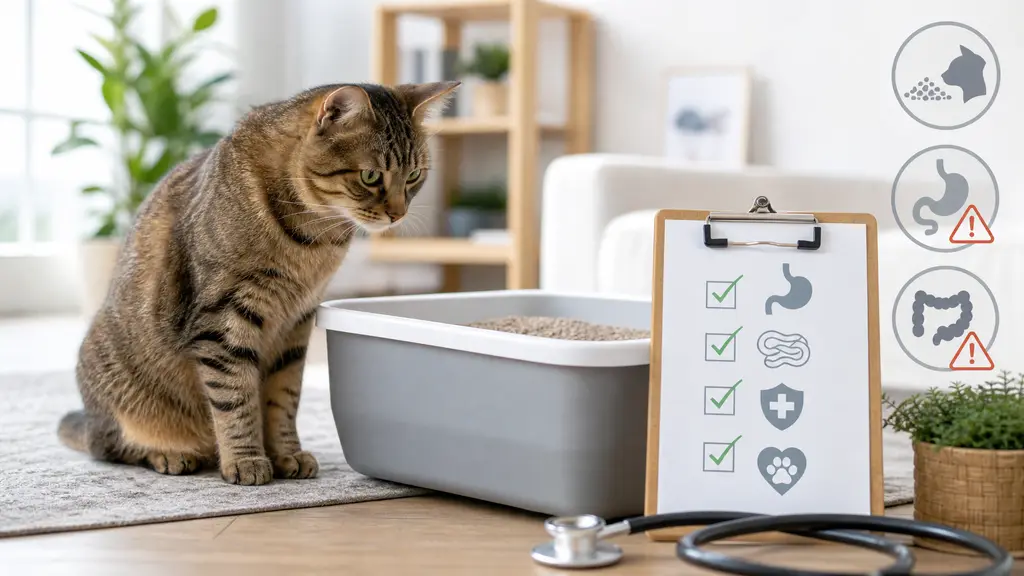
Go through the following checklist. If any item is ticked, stop observing and seek veterinary advice:
- Dry cough, throat-clearing motions, noticeable neck retraction during swallowing.
- Drooling, increased bad breath, reluctance to eat hard kibble.
- Snoring much louder than usual, abnormal breathing sounds.
- Nasal discharge, eye discharge, sneezing.
- Decreased appetite or weight loss exceeding 5% in one month.
- Open-mouth breathing, pale or purplish gums (immediate emergency).
How We Document "Vocalization" at Our Facility
In our cat boarding records, we specifically note each cat's "vocalization baseline": whether they are loud, have an airy voice, or are completely silent. The reason is simple: changes in vocalization are early health indicators, but they are only meaningful when you know what the original sound was like.
Here's a practical tip: Record a 10-second video now of your cat vocalizing normally. Save it in your phone's gallery and label it with the date. If you later suspect a change in their voice, you'll have an objective comparison, and you can play it directly for the veterinarian during a consultation, which is far more useful than a verbal description.
Additionally, if you're going away, we recommend proactively informing the staff when booking accommodation: "My cat usually has a silent meow / has a naturally quiet voice." This is crucial for caregivers to determine if the cat is unwell—otherwise, we might assume they've lost their voice from distress.
Frequently Asked Questions
Does a cat's silent meow mean it's angry?
Almost never. Angry cats use hisses or growls, which are "sustained open-mouth sounds," and are accompanied by flattened ears, dilated pupils, and a stiff body. Silent meows are usually associated with relaxed body language and are requests or greetings, not threats.
Why do cats have silent meows? Is there a problem with their vocal cords?
Most cats with silent meows have perfectly normal vocal cords; they simply intentionally reduce airflow and volume below your hearing threshold. True vocal cord or laryngeal issues would manifest as a cat that "used to vocalize but suddenly can't," accompanied by coughing, difficulty swallowing, or increased snoring.
Does a cat opening its mouth without sound require a vet visit?
If it's a long-standing habit, they can still vocalize in other situations, and their energy and appetite are normal, then no. However, if it's a new change that persists for over 3 days, or if there are any signs of labored breathing, drooling, or weight loss, a veterinary visit is recommended. If they exhibit open-mouth breathing or have pale or purplish gums, seek emergency care immediately.
Is it normal for kittens to constantly make silent mouth-opening sounds?
Kitten vocalizations have some frequencies above the human hearing limit, so appearing silent is common. However, kittens are also a high-risk group for upper respiratory infections. Please also check for nasal discharge, eye discharge, decreased appetite, and ensure they are gaining weight steadily.
How should I care for a cat that has become hoarse?
Provide a quiet environment where they can hide, and minimize situations that provoke them to vocalize. Switch to high-moisture wet food to make eating smoother and ensure adequate hydration. Recovery typically takes 2–5 days; if hoarseness or silence persists for over a week, a veterinary check-up is needed.
Finally, a reminder: This article provides guidance for home observation and assessment and cannot replace veterinary diagnosis. If symptoms persist, worsen, or you simply feel "something is off with my cat today," take them to the vet immediately—the progression of respiratory issues in cats is often faster than we imagine.
Article by CatGarden Editorial Team
CatGarden offers curated supplies, cat boarding, and grooming
Book services or shop online.