Choosing Boarding for Multi-Cat Households: Evaluating Shared Large Suites vs. Separate Rooms, Additional Cat Fees, and Stress Prevention Strategies

Boarding multiple cats isn't as simple as assuming they'll get along just because they live together. This article breaks down the evaluation criteria for shared large suites versus separate rooms, the space and resource allocation for multi-cat suites, three common fee structures for additional cats, and strategies for preventing fights and stress before and after boarding.
CatGarden Editorial TeamPublished 2026/09/06
multi-cat boardingcat hotel large suitemulti-cat boarding costcat boardingchoosing a cat hotel
Choosing Boarding for Multi-Cat Households: Evaluating Shared Large Suites vs. Separate Rooms, Additional Cat Fees, and Stress Prevention Strategies

The principle for choosing boarding for multi-cat households is simple: Cats that normally sleep together, eat together, and groom each other are suitable for sharing a large suite; cats that merely tolerate each other should be boarded separately when away from home. In terms of cost, most cat hotels in Taiwan adopt one of two pricing models: "a large suite fee includes 2 cats, with an additional charge for the 3rd cat" or "individual room price multiplied by the number of cats, with a discount for additional cats." Sharing a room is usually 20-35% cheaper than separate rooms, but the savings shouldn't come at the risk of fights.

The most common multi-cat boarding issue we encounter at our facility each year is, "My two cats get along great, can they share a room?" In reality, household peace is often maintained by "sufficient space and the ability to retreat at any time." Once in an unfamiliar environment with reduced space, a cat's tolerance level significantly drops. This article will clarify the evaluation, space requirements, pricing, and stress prevention based on our practical experience.

Key Takeaways

  • The determining factor is "do they groom each other and share the same bed?" Only cats that sleep together and groom each other (allogrooming) have a high success rate in sharing a large suite; cats that merely "don't fight" have a significantly increased chance of conflict in an unfamiliar environment.
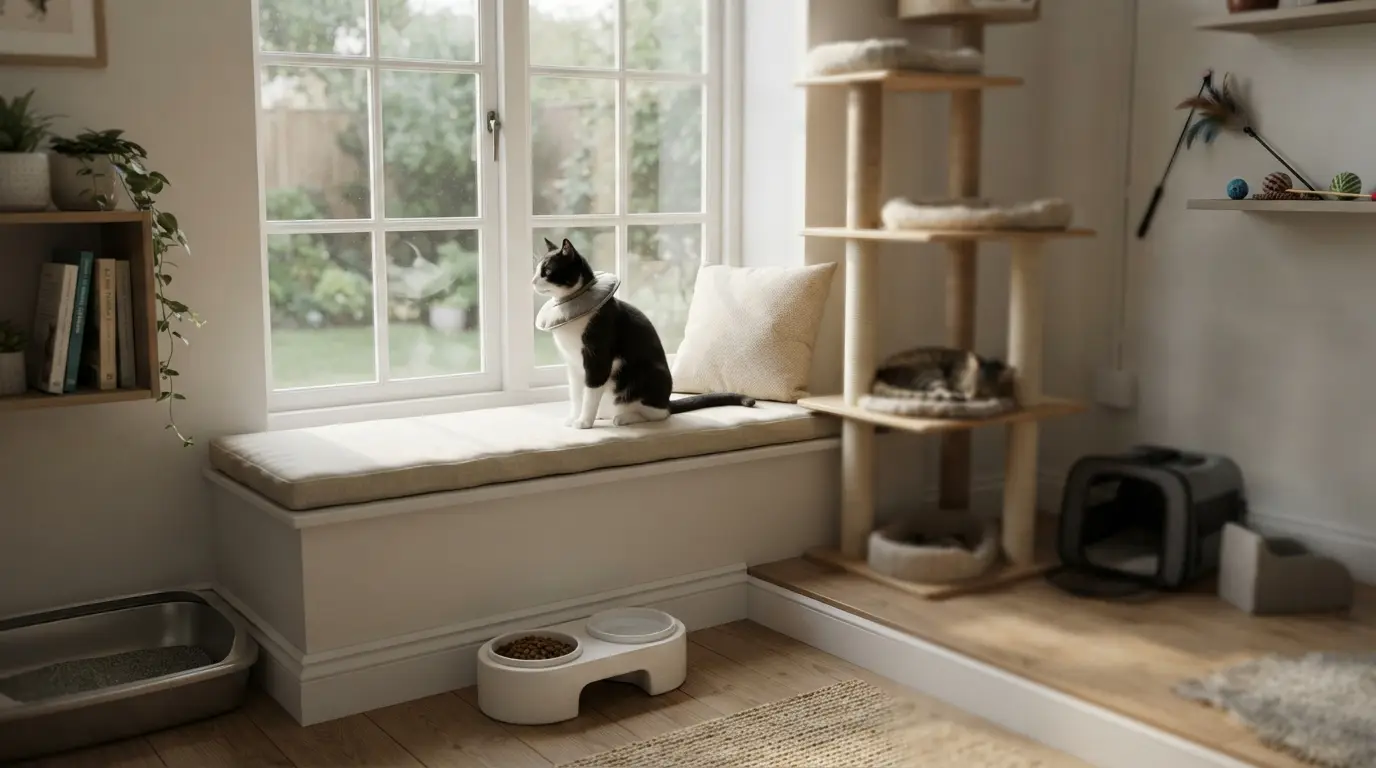
  • Minimum space requirements for multi-cat suites: For 2 cats, a minimum of 3 square meters (approx. 0.9 ping) of floor space is recommended, with at least 2 litter boxes, 2 sets of water bowls, and more than 2 fully enclosed hiding spots. There should also be at least 3 levels of vertical space.
  • Multi-cat boarding costs: Daily rates for single cat rooms in the New Taipei City area typically range from NT$450-800, while large multi-cat suites range from NT$700-1,400 (often including 2 cats). Additional cats usually incur a charge of approximately NT$200-350 per day. Longer stays (7 days or more) often come with a 5-10% discount.
  • The first 24 hours after check-in are critical for observation: Normal cats should start eating and produce at least one urine clump within 24 hours. If a cat doesn't eat or urinate for over 24 hours, immediate intervention is required (separate rooms, change of food, contact owner).
  • For households with all male cats, one cat over 8 years old, or a history of bladder issues, separate rooms are recommended: Separate rooms don't mean isolation; adjacent rooms still allow for scent and visual contact.

Understanding: Cat "Social Tolerance" Decreases in Boarding Environments

Peace among multiple cats at home is usually built on three things: ample space, dispersed resources (litter boxes, water bowls, beds in various locations), and the ability to retreat at any time.

No matter how large a cat hotel suite is, it's still smaller than an entire house. When the distance to escape shortens, tensions that were previously resolved by "distance" must now be handled by "assertiveness"—low growls, hisses, territorial blocking, or guarding litter boxes. This isn't the cat being "bad"; it's a change in resource density.

Therefore, the key evaluation isn't "do they fight normally," but rather "are they still willing to be near each other under stress and in confined spaces?"

Three Practical Evaluation Dimensions

1. Intimate Behavior (Most Important)

  • Licking each other's heads and ears → Highly affectionate, high success rate for sharing a room.
  • Sleeping close together, sharing a cat bed → Suitable for sharing.
  • Merely sleeping in different corners of the same room, without interfering with each other → Separate rooms recommended.
  • Touching noses, wrapping tails → Bonus points.

2. Resource Sharing Behavior

Has there ever been a situation at home where "one cat approaches another while it's eating and gets glared at"? Or has one cat consistently only used a specific litter box, or guarded the entrance to one? These are signs of hidden resource competition that will be amplified in a smaller space.

3. Past Separation/Veterinary Visit Experiences

The best predictive data is their behavior "during the last joint vet visit." If they hissed at each other in the same carrier at the clinic, or if one trembled and clung to the other, it's a preview of conflict under stress. Some cats may exhibit "non-recognition aggression" upon returning home—transferring clinic stress onto their housemates.

Shared Large Suites vs. Separate Rooms: A Comprehensive Comparison of Pros and Cons

ItemShared Large SuiteSeparate Rooms
CostMore economical, usually 20-35% cheaper than separate roomsHigher, typically the price of a single room per cat (some offer discounts for additional cats)
Comfort EffectCompanionship and familiar scents can help timid cats settleIndividual privacy, but adjacent rooms allow for continued scent and visual contact
Conflict RiskModerate to High (depends on relationship quality)Extremely Low
Food Intake MonitoringDifficult (hard to distinguish who ate how much)Precise, individual records can be kept
Waste MonitoringDifficult (hard to attribute urine clumps or soft stools)Precise, abnormalities can be caught immediately
Medication/Special DietRisk of being stolen, inaccurate dosageCan be administered completely and accurately
Suitable ForIntimate pairs that groom and sleep togetherCats requiring medication, chronic illness, seniors, or cats with only casual relationships

In practice, we tell owners: Sharing saves money, while separate rooms save risk, and the cost of risk is usually higher. An emergency visit for stress-induced cystitis often exceeds the price difference for boarding.

6 Situations Where We Recommend "Directly Separate Rooms"

1. One cat requires medication, subcutaneous fluids, or a prescription diet (including cats with kidney or diabetic conditions).

2. Both cats are unneutered males, or one is in heat.

3. Significant age difference (e.g., a 1-year-old kitten + a 12-year-old senior cat) with different activity levels and sleep needs.

4. One cat has a history of Feline Idiopathic Cystitis (FIC) or stress-induced soft stools.

5. A new cat introduction was completed within the last three months, and their relationship is still developing.

6. One cat has chronic upper respiratory symptoms (sneezing, watery eyes) that could be exacerbated by cross-stimulation.

For senior cat households, also consider their jumping ability and ease of toileting. You can refer to the assessment table in Can Senior Cats Stay in Cat Hotels? A Guide to Assessing Care, Health Checks, and Medication for Elderly Cats.

How Large Should a Multi-Cat Suite Be? Space and Configuration Standards

Many people ask, "How many ping should a multi-cat suite be?" but ping is only half the story. Vertical space and resource configuration are the key determinants of conflict rates.

Recommended Space Guidelines (Practical Minimums)

  • For 2 cats sharing: Minimum floor space ≥ 3 square meters (approx. 0.9 ping), height ≥ 150 cm, including at least 3 levels of platforms or shelves.
  • For 3 cats sharing: Minimum floor space ≥ 4.5 square meters (approx. 1.4 ping), with at least two "mutually non-visible" resting areas.
  • For 4+ cats: Honestly, we generally don't recommend all sharing. We would split them into adjacent rooms, such as 2+2.

The assessment is straightforward: Stand at the doorway and see if two cats can "be in the room simultaneously but not see each other." If not, the space is insufficient.

Essential Resource Configuration Checklist

  • Litter box quantity = Number of cats (at least 2 for shared suites), placed in two different corners of the room, not side-by-side. Two boxes placed next to each other are perceived as one by the cat.
  • Separate water and food bowls. Food bowls should be at least 50 cm apart. Ideally, use a visual barrier during feeding.
  • Hiding spots ≥ Number of cats, with at least one being a "fully enclosed box with a single entrance" like a cardboard box or a cat cave. Open hammocks do not count as hiding spots.
  • Vertical space: Resting spots on the floor, middle levels, and high levels. A cat's first choice to resolve tension is to "go up" or "go deeper," not to confront directly.
  • Visual barriers: Offset or staggered shelves to prevent a completely transparent structure where everything is visible at a glance.

During an in-person visit, these details are more important than aesthetics. You can use the What to Look for When Visiting a Cat Hotel? 6 Key Details to Check During Your On-Site Visit checklist to confirm them one by one. For structural differences between single cat rooms and multi-cat suites, How to Choose a Private Room for Cat Boarding? A Guide to Single Cat Rooms, Soundproofing, Ventilation, and Multi-Cat Family Suites offers a more detailed comparison.

How Are Multi-Cat Boarding Fees Calculated? Three Common Additional Cat Fee Structures

The reason it's hard to compare multi-cat boarding fees is that each facility has a different pricing logic. Here are three common structures in Taiwan:

1. Suite Pricing System (Fixed Fee for N Cats)

Most common in cat hotels with physical partitioned rooms. For example, "Family Suite NT$1,100/day, includes 2 cats, additional NT$250/day for the 3rd cat." The advantage is predictable budgeting and clear room types; the disadvantage is you pay the full suite price even if you only bring one cat.

2. Single Cat Room Price × Number of Cats + Additional Cat Discount

For example, a single cat room is NT$600/day, the second cat is 80% off (NT$480), and the third cat is 70% off. This structure minimizes the cost difference between "sharing" and "separate rooms," suitable for owners who want separate rooms but are concerned about cost.

3. Fixed Price Per Cat (No Discount)

Common in cage-based or single-cat cubicle facilities. 2 cats = double the price. The pricing is transparent, but the total cost for multi-cat families tends to be higher.

Sample Calculation for a 5-Day Stay for 2 Cats

Estimating based on mid-range prices in New Taipei City:

  • Shared Large Suite: NT$1,000/day × 5 days = NT$5,000
  • Separate Rooms (80% discount for 2nd cat): (NT$600 + NT$480) × 5 = NT$5,400
  • Separate Rooms (No discount): NT$600 × 2 × 5 = NT$6,000

This means the price difference between sharing and separate rooms for 2 cats staying for 5 days is approximately NT$400–1,000. This amount is usually less than the cost of a single emergency visit, so we recommend: If their relationship isn't close enough, opt for separate rooms; don't take risks for a few hundred dollars.

Don't Forget to Ask About These Additional Charges

  • Medication/Eye Drops: Commonly NT$50–150 per administration or NT$100–200 per day.
  • Heating/Serving Owner-Provided Wet Food: Some facilities charge extra for more than 3 meals.
  • Daily Grooming/Spot Cleaning for Long-Haired Cats: NT$100–300 per session.
  • Bathing Before Check-out: Priced separately, usually NT$800–1,600.
  • Peak Seasons (Holidays/Lunar New Year): Often an additional 10-30% charge, and rooms fill up 1-2 months in advance.
  • Transportation: Varies by distance. A common rate for single trips within Banqiao City is NT$200–400.

For a complete breakdown of room types and additional fees, refer to How Are Cat Hotel Fees Calculated in Banqiao? A Comprehensive Estimate of Single Cat Rooms, Multi-Cat Family Suites, and 5 Major Additional Charges. To compare prices and selection criteria in different administrative districts, we recommend reading New Taipei City Cat Hotel Recommendations: How to Choose in Banqiao, Sanchong, Xinzhuang? A Complete Guide to Pricing and 6 Selection Points.

Fight and Stress Prevention: From 2 Weeks Before Check-in to 3 Days After Check-out

The success or failure of multi-cat boarding is largely determined before check-in.

2 Weeks Before Check-in: Build a "Familiar Object Library"

  • Prepare 2 separate old blankets or clothes: Let each cat sleep on one for a few days separately, then bring them to the boarding facility. Do not share one; sharing can confuse scents and increase tension.
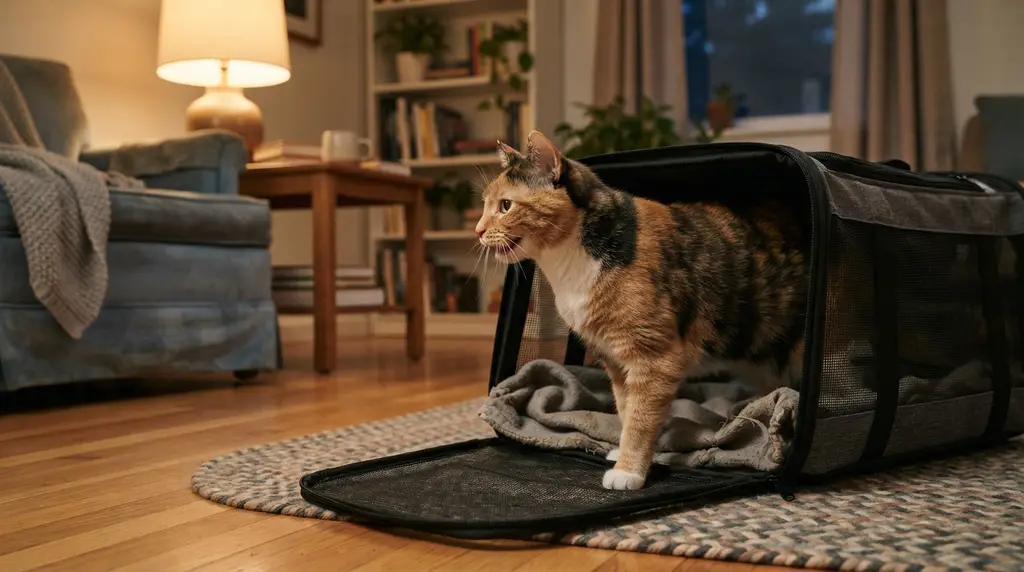
  • One carrier per cat: Cramming two cats into one carrier is a common mistake we've seen. Stress during travel can easily escalate into conflict in a confined space.
  • Maintain the same litter brand: Changing environment and litter simultaneously is a double blow that can cause cats to hold their urine. For multi-cat households, it's best to bring a pre-portioned bag of their usual litter. If they use fine tofu litter, bring their usual Ultra-Fine Tofu Litter 3.0 with consistent particle size and texture to minimize hesitation with toileting on the first day.
  • Start probiotic supplements 7-10 days in advance: Stress-induced soft stools are particularly common in multi-cat households (as one cat's discomfort can affect the other's appetite). Use Pro-Probiotics to build a baseline defense; don't wait until arrival.
  • Confirm vaccinations and deworming: Especially crucial for shared suites. Most facilities require core vaccinations to be up-to-date.

On the Day of Check-in: Staggered Placement, Don't Release Simultaneously

Our standard procedure at the facility is: Place the more timid cat first, allowing it to choose its preferred spot and hiding place, then release the second cat 20-30 minutes later. The first cat to enter establishes a sense of security, and the second cat will naturally accept the existing layout, reducing the chance of conflict compared to "opening both carriers at once."

First 24 Hours After Check-in: These 5 Indicators Must Be Recorded

1. Eating: Have they started eating within 24 hours? For shared suites, pay special attention to whether "one cat eats both portions."

2. Urination: At least one urine clump within 24 hours. Failure to urinate for over 24 hours requires intervention.

3. Stool Consistency: Record any soft stools or mucus.

4. Litter Box Behavior: Spending a long time squatting but only producing a few drops, or urinating outside the box (potential signs of stress-induced cystitis).

5. Interaction Quality: Is one cat persistently guarding the litter box or food bowl, not moving away? This is resource guarding, not resting.

If These Behaviors Occur, Separate Them on the Same Day

  • Persistent low growls or hisses lasting over 10 seconds and occurring repeatedly.
  • Chasing that doesn't end within seconds, involving pinning, wrestling, or neck biting.
  • One cat hiding in the same corner for over 12 hours without eating.
  • One cat starts blocking the litter box, causing the other to noticeably hold their urine.
  • Visible fur clumps, scratches, or urinary incontinence.

Separation isn't a failure; it's timely damage control. We reserve adjacent rooms to maintain scent and some visual contact. Most cats resume eating within 6-12 hours after being separated.

1-3 Days After Returning Home: Watch Out for "Fights After Returning Home"

Many owners think the ordeal is over once they get home, but the 48 hours after returning home are the peak conflict period. This is because they carry unfamiliar scents and haven't fully recovered from stress, leading to hissing and not recognizing each other.

Procedure:

  • After returning home, separate the two cats for 2-4 hours to allow them to calm down in familiar rooms.
  • Gently rub each cat with their original blankets from home to re-establish familiar scents.
  • Temporarily add an extra litter box (N+1) to reduce toileting competition.
  • Monitor urine output and appetite for the first 3 days, especially for cats with a history of FIC.
  • If persistent hissing lasts over 3 days, or if a cat starts urinating inappropriately or refusing to eat, consult a veterinarian.

If you're still deciding between boarding or in-home pet sitting, Who's Better for Cat Care When You Travel? A Comprehensive Comparison of Boarding and In-Home Sitting offers an analysis for multi-cat households. For multi-cat families wanting to view rooms in person and discuss sharing or separate room arrangements, you can book a visit to our Banqiao cat hotel to evaluate together using videos of your cats' interactions. We will provide recommendations based on their relationship quality, not just push for a large suite.

> Health Alert: If your cat(s) refuse to eat for over 24 hours, haven't urinated for 24 hours, repeatedly enter and exit the litter box only to produce a few drops of urine, vomit more than 3 times, or show significant lethargy during boarding or after returning home, seek veterinary care immediately. Do not wait to "observe." Stress-induced urinary issues in male cats carry a risk of blockage, which is an emergency.

Frequently Asked Questions

If two cats get along very well, do they absolutely have to share a room?

Not necessarily. Getting along well is a prerequisite for "sharing," but not the optimal solution. If one cat requires medication, controlled feeding, or has a chronic illness, separate rooms are safer. You can choose adjacent rooms to maintain scent and some visual contact.

How much more expensive is multi-cat boarding compared to single-cat boarding?

Based on New Taipei City pricing, large shared suites typically range from NT$700–1,400/day (including 2 cats), with an additional NT$200–350/day for the 3rd cat. Separate rooms are usually the price of a single cat room (NT$450–800) multiplied by the number of cats, with some facilities offering a 70-80% discount for the second cat. For 2 cats staying 5 days, the total price difference between sharing and separate rooms is usually between NT$400–1,000.

How large should a multi-cat hotel suite be for 3 cats?

A minimum floor space of 4.5 square meters (approx. 1.4 ping) is recommended, with a height of over 150 cm, at least 3 levels of vertical space, and 3 scattered litter boxes and more than 3 separate hiding spots. The assessment is: can two cats be in the room simultaneously without seeing each other?

What happens if the cats fight during boarding?

A reputable cat hotel should immediately separate the cats into different rooms on the same day and notify the owner upon discovering persistent growling, pinning and biting, or if a cat hasn't eaten for 12 hours. Before booking, it's advisable to ask about their "conflict resolution procedures" and "whether they have spare rooms for immediate separation." This is more important than how beautiful the room is.

Our two cats are hissing at each other after returning home. Was one bullied?

This is usually a temporary recognition issue caused by scent changes, which is normal and typically resolves within 1-3 days. The procedure is to separate them for a few hours, unify scents using original home blankets, and temporarily add an extra litter box. If hissing continues for over 3 days or if a cat starts urinating inappropriately or refusing to eat, consult a veterinarian or a behaviorist.


Article by CatGarden Editorial Team

CatGarden offers curated supplies, cat boarding, and grooming

Book services or shop online.
Back

Blog

Choosing Boarding for Multi-Cat Households: Evaluating Shared Large Suites vs. Separate Rooms, Additional Cat Fees, and Stress Prevention Strategies

CatGarden Editorial TeamPublished 2026/09/06
multi-cat boardingcat hotel large suitemulti-cat boarding costcat boardingchoosing a cat hotel
Choosing Boarding for Multi-Cat Households: Evaluating Shared Large Suites vs. Separate Rooms, Additional Cat Fees, and Stress Prevention Strategies

The principle for choosing boarding for multi-cat households is simple: Cats that normally sleep together, eat together, and groom each other are suitable for sharing a large suite; cats that merely tolerate each other should be boarded separately when away from home. In terms of cost, most cat hotels in Taiwan adopt one of two pricing models: "a large suite fee includes 2 cats, with an additional charge for the 3rd cat" or "individual room price multiplied by the number of cats, with a discount for additional cats." Sharing a room is usually 20-35% cheaper than separate rooms, but the savings shouldn't come at the risk of fights.

The most common multi-cat boarding issue we encounter at our facility each year is, "My two cats get along great, can they share a room?" In reality, household peace is often maintained by "sufficient space and the ability to retreat at any time." Once in an unfamiliar environment with reduced space, a cat's tolerance level significantly drops. This article will clarify the evaluation, space requirements, pricing, and stress prevention based on our practical experience.

Key Takeaways

  • The determining factor is "do they groom each other and share the same bed?" Only cats that sleep together and groom each other (allogrooming) have a high success rate in sharing a large suite; cats that merely "don't fight" have a significantly increased chance of conflict in an unfamiliar environment.
  • Minimum space requirements for multi-cat suites: For 2 cats, a minimum of 3 square meters (approx. 0.9 ping) of floor space is recommended, with at least 2 litter boxes, 2 sets of water bowls, and more than 2 fully enclosed hiding spots. There should also be at least 3 levels of vertical space.
  • Multi-cat boarding costs: Daily rates for single cat rooms in the New Taipei City area typically range from NT$450-800, while large multi-cat suites range from NT$700-1,400 (often including 2 cats). Additional cats usually incur a charge of approximately NT$200-350 per day. Longer stays (7 days or more) often come with a 5-10% discount.
  • The first 24 hours after check-in are critical for observation: Normal cats should start eating and produce at least one urine clump within 24 hours. If a cat doesn't eat or urinate for over 24 hours, immediate intervention is required (separate rooms, change of food, contact owner).
  • For households with all male cats, one cat over 8 years old, or a history of bladder issues, separate rooms are recommended: Separate rooms don't mean isolation; adjacent rooms still allow for scent and visual contact.

Understanding: Cat "Social Tolerance" Decreases in Boarding Environments

Peace among multiple cats at home is usually built on three things: ample space, dispersed resources (litter boxes, water bowls, beds in various locations), and the ability to retreat at any time.

No matter how large a cat hotel suite is, it's still smaller than an entire house. When the distance to escape shortens, tensions that were previously resolved by "distance" must now be handled by "assertiveness"—low growls, hisses, territorial blocking, or guarding litter boxes. This isn't the cat being "bad"; it's a change in resource density.

Therefore, the key evaluation isn't "do they fight normally," but rather "are they still willing to be near each other under stress and in confined spaces?"

Three Practical Evaluation Dimensions

1. Intimate Behavior (Most Important)

  • Licking each other's heads and ears → Highly affectionate, high success rate for sharing a room.
  • Sleeping close together, sharing a cat bed → Suitable for sharing.
  • Merely sleeping in different corners of the same room, without interfering with each other → Separate rooms recommended.
  • Touching noses, wrapping tails → Bonus points.

2. Resource Sharing Behavior

Has there ever been a situation at home where "one cat approaches another while it's eating and gets glared at"? Or has one cat consistently only used a specific litter box, or guarded the entrance to one? These are signs of hidden resource competition that will be amplified in a smaller space.

3. Past Separation/Veterinary Visit Experiences

The best predictive data is their behavior "during the last joint vet visit." If they hissed at each other in the same carrier at the clinic, or if one trembled and clung to the other, it's a preview of conflict under stress. Some cats may exhibit "non-recognition aggression" upon returning home—transferring clinic stress onto their housemates.

Shared Large Suites vs. Separate Rooms: A Comprehensive Comparison of Pros and Cons

ItemShared Large SuiteSeparate Rooms
CostMore economical, usually 20-35% cheaper than separate roomsHigher, typically the price of a single room per cat (some offer discounts for additional cats)
Comfort EffectCompanionship and familiar scents can help timid cats settleIndividual privacy, but adjacent rooms allow for continued scent and visual contact
Conflict RiskModerate to High (depends on relationship quality)Extremely Low
Food Intake MonitoringDifficult (hard to distinguish who ate how much)Precise, individual records can be kept
Waste MonitoringDifficult (hard to attribute urine clumps or soft stools)Precise, abnormalities can be caught immediately
Medication/Special DietRisk of being stolen, inaccurate dosageCan be administered completely and accurately
Suitable ForIntimate pairs that groom and sleep togetherCats requiring medication, chronic illness, seniors, or cats with only casual relationships

In practice, we tell owners: Sharing saves money, while separate rooms save risk, and the cost of risk is usually higher. An emergency visit for stress-induced cystitis often exceeds the price difference for boarding.

6 Situations Where We Recommend "Directly Separate Rooms"

1. One cat requires medication, subcutaneous fluids, or a prescription diet (including cats with kidney or diabetic conditions).

2. Both cats are unneutered males, or one is in heat.

3. Significant age difference (e.g., a 1-year-old kitten + a 12-year-old senior cat) with different activity levels and sleep needs.

4. One cat has a history of Feline Idiopathic Cystitis (FIC) or stress-induced soft stools.

5. A new cat introduction was completed within the last three months, and their relationship is still developing.

6. One cat has chronic upper respiratory symptoms (sneezing, watery eyes) that could be exacerbated by cross-stimulation.

For senior cat households, also consider their jumping ability and ease of toileting. You can refer to the assessment table in Can Senior Cats Stay in Cat Hotels? A Guide to Assessing Care, Health Checks, and Medication for Elderly Cats.

How Large Should a Multi-Cat Suite Be? Space and Configuration Standards

Many people ask, "How many ping should a multi-cat suite be?" but ping is only half the story. Vertical space and resource configuration are the key determinants of conflict rates.

Recommended Space Guidelines (Practical Minimums)

  • For 2 cats sharing: Minimum floor space ≥ 3 square meters (approx. 0.9 ping), height ≥ 150 cm, including at least 3 levels of platforms or shelves.
  • For 3 cats sharing: Minimum floor space ≥ 4.5 square meters (approx. 1.4 ping), with at least two "mutually non-visible" resting areas.
  • For 4+ cats: Honestly, we generally don't recommend all sharing. We would split them into adjacent rooms, such as 2+2.

The assessment is straightforward: Stand at the doorway and see if two cats can "be in the room simultaneously but not see each other." If not, the space is insufficient.

Essential Resource Configuration Checklist

  • Litter box quantity = Number of cats (at least 2 for shared suites), placed in two different corners of the room, not side-by-side. Two boxes placed next to each other are perceived as one by the cat.
  • Separate water and food bowls. Food bowls should be at least 50 cm apart. Ideally, use a visual barrier during feeding.
  • Hiding spots ≥ Number of cats, with at least one being a "fully enclosed box with a single entrance" like a cardboard box or a cat cave. Open hammocks do not count as hiding spots.
  • Vertical space: Resting spots on the floor, middle levels, and high levels. A cat's first choice to resolve tension is to "go up" or "go deeper," not to confront directly.
  • Visual barriers: Offset or staggered shelves to prevent a completely transparent structure where everything is visible at a glance.

During an in-person visit, these details are more important than aesthetics. You can use the What to Look for When Visiting a Cat Hotel? 6 Key Details to Check During Your On-Site Visit checklist to confirm them one by one. For structural differences between single cat rooms and multi-cat suites, How to Choose a Private Room for Cat Boarding? A Guide to Single Cat Rooms, Soundproofing, Ventilation, and Multi-Cat Family Suites offers a more detailed comparison.

How Are Multi-Cat Boarding Fees Calculated? Three Common Additional Cat Fee Structures

The reason it's hard to compare multi-cat boarding fees is that each facility has a different pricing logic. Here are three common structures in Taiwan:

1. Suite Pricing System (Fixed Fee for N Cats)

Most common in cat hotels with physical partitioned rooms. For example, "Family Suite NT$1,100/day, includes 2 cats, additional NT$250/day for the 3rd cat." The advantage is predictable budgeting and clear room types; the disadvantage is you pay the full suite price even if you only bring one cat.

2. Single Cat Room Price × Number of Cats + Additional Cat Discount

For example, a single cat room is NT$600/day, the second cat is 80% off (NT$480), and the third cat is 70% off. This structure minimizes the cost difference between "sharing" and "separate rooms," suitable for owners who want separate rooms but are concerned about cost.

3. Fixed Price Per Cat (No Discount)

Common in cage-based or single-cat cubicle facilities. 2 cats = double the price. The pricing is transparent, but the total cost for multi-cat families tends to be higher.

Sample Calculation for a 5-Day Stay for 2 Cats

Estimating based on mid-range prices in New Taipei City:

  • Shared Large Suite: NT$1,000/day × 5 days = NT$5,000
  • Separate Rooms (80% discount for 2nd cat): (NT$600 + NT$480) × 5 = NT$5,400
  • Separate Rooms (No discount): NT$600 × 2 × 5 = NT$6,000

This means the price difference between sharing and separate rooms for 2 cats staying for 5 days is approximately NT$400–1,000. This amount is usually less than the cost of a single emergency visit, so we recommend: If their relationship isn't close enough, opt for separate rooms; don't take risks for a few hundred dollars.

Don't Forget to Ask About These Additional Charges

  • Medication/Eye Drops: Commonly NT$50–150 per administration or NT$100–200 per day.
  • Heating/Serving Owner-Provided Wet Food: Some facilities charge extra for more than 3 meals.
  • Daily Grooming/Spot Cleaning for Long-Haired Cats: NT$100–300 per session.
  • Bathing Before Check-out: Priced separately, usually NT$800–1,600.
  • Peak Seasons (Holidays/Lunar New Year): Often an additional 10-30% charge, and rooms fill up 1-2 months in advance.
  • Transportation: Varies by distance. A common rate for single trips within Banqiao City is NT$200–400.

For a complete breakdown of room types and additional fees, refer to How Are Cat Hotel Fees Calculated in Banqiao? A Comprehensive Estimate of Single Cat Rooms, Multi-Cat Family Suites, and 5 Major Additional Charges. To compare prices and selection criteria in different administrative districts, we recommend reading New Taipei City Cat Hotel Recommendations: How to Choose in Banqiao, Sanchong, Xinzhuang? A Complete Guide to Pricing and 6 Selection Points.

Fight and Stress Prevention: From 2 Weeks Before Check-in to 3 Days After Check-out

The success or failure of multi-cat boarding is largely determined before check-in.

2 Weeks Before Check-in: Build a "Familiar Object Library"

  • Prepare 2 separate old blankets or clothes: Let each cat sleep on one for a few days separately, then bring them to the boarding facility. Do not share one; sharing can confuse scents and increase tension.
  • One carrier per cat: Cramming two cats into one carrier is a common mistake we've seen. Stress during travel can easily escalate into conflict in a confined space.
  • Maintain the same litter brand: Changing environment and litter simultaneously is a double blow that can cause cats to hold their urine. For multi-cat households, it's best to bring a pre-portioned bag of their usual litter. If they use fine tofu litter, bring their usual Ultra-Fine Tofu Litter 3.0 with consistent particle size and texture to minimize hesitation with toileting on the first day.
  • Start probiotic supplements 7-10 days in advance: Stress-induced soft stools are particularly common in multi-cat households (as one cat's discomfort can affect the other's appetite). Use Pro-Probiotics to build a baseline defense; don't wait until arrival.
  • Confirm vaccinations and deworming: Especially crucial for shared suites. Most facilities require core vaccinations to be up-to-date.

On the Day of Check-in: Staggered Placement, Don't Release Simultaneously

Our standard procedure at the facility is: Place the more timid cat first, allowing it to choose its preferred spot and hiding place, then release the second cat 20-30 minutes later. The first cat to enter establishes a sense of security, and the second cat will naturally accept the existing layout, reducing the chance of conflict compared to "opening both carriers at once."

First 24 Hours After Check-in: These 5 Indicators Must Be Recorded

1. Eating: Have they started eating within 24 hours? For shared suites, pay special attention to whether "one cat eats both portions."

2. Urination: At least one urine clump within 24 hours. Failure to urinate for over 24 hours requires intervention.

3. Stool Consistency: Record any soft stools or mucus.

4. Litter Box Behavior: Spending a long time squatting but only producing a few drops, or urinating outside the box (potential signs of stress-induced cystitis).

5. Interaction Quality: Is one cat persistently guarding the litter box or food bowl, not moving away? This is resource guarding, not resting.

If These Behaviors Occur, Separate Them on the Same Day

  • Persistent low growls or hisses lasting over 10 seconds and occurring repeatedly.
  • Chasing that doesn't end within seconds, involving pinning, wrestling, or neck biting.
  • One cat hiding in the same corner for over 12 hours without eating.
  • One cat starts blocking the litter box, causing the other to noticeably hold their urine.
  • Visible fur clumps, scratches, or urinary incontinence.

Separation isn't a failure; it's timely damage control. We reserve adjacent rooms to maintain scent and some visual contact. Most cats resume eating within 6-12 hours after being separated.

1-3 Days After Returning Home: Watch Out for "Fights After Returning Home"

Many owners think the ordeal is over once they get home, but the 48 hours after returning home are the peak conflict period. This is because they carry unfamiliar scents and haven't fully recovered from stress, leading to hissing and not recognizing each other.

Procedure:

  • After returning home, separate the two cats for 2-4 hours to allow them to calm down in familiar rooms.
  • Gently rub each cat with their original blankets from home to re-establish familiar scents.
  • Temporarily add an extra litter box (N+1) to reduce toileting competition.
  • Monitor urine output and appetite for the first 3 days, especially for cats with a history of FIC.
  • If persistent hissing lasts over 3 days, or if a cat starts urinating inappropriately or refusing to eat, consult a veterinarian.

If you're still deciding between boarding or in-home pet sitting, Who's Better for Cat Care When You Travel? A Comprehensive Comparison of Boarding and In-Home Sitting offers an analysis for multi-cat households. For multi-cat families wanting to view rooms in person and discuss sharing or separate room arrangements, you can book a visit to our Banqiao cat hotel to evaluate together using videos of your cats' interactions. We will provide recommendations based on their relationship quality, not just push for a large suite.

> Health Alert: If your cat(s) refuse to eat for over 24 hours, haven't urinated for 24 hours, repeatedly enter and exit the litter box only to produce a few drops of urine, vomit more than 3 times, or show significant lethargy during boarding or after returning home, seek veterinary care immediately. Do not wait to "observe." Stress-induced urinary issues in male cats carry a risk of blockage, which is an emergency.

Frequently Asked Questions

If two cats get along very well, do they absolutely have to share a room?

Not necessarily. Getting along well is a prerequisite for "sharing," but not the optimal solution. If one cat requires medication, controlled feeding, or has a chronic illness, separate rooms are safer. You can choose adjacent rooms to maintain scent and some visual contact.

How much more expensive is multi-cat boarding compared to single-cat boarding?

Based on New Taipei City pricing, large shared suites typically range from NT$700–1,400/day (including 2 cats), with an additional NT$200–350/day for the 3rd cat. Separate rooms are usually the price of a single cat room (NT$450–800) multiplied by the number of cats, with some facilities offering a 70-80% discount for the second cat. For 2 cats staying 5 days, the total price difference between sharing and separate rooms is usually between NT$400–1,000.

How large should a multi-cat hotel suite be for 3 cats?

A minimum floor space of 4.5 square meters (approx. 1.4 ping) is recommended, with a height of over 150 cm, at least 3 levels of vertical space, and 3 scattered litter boxes and more than 3 separate hiding spots. The assessment is: can two cats be in the room simultaneously without seeing each other?

What happens if the cats fight during boarding?

A reputable cat hotel should immediately separate the cats into different rooms on the same day and notify the owner upon discovering persistent growling, pinning and biting, or if a cat hasn't eaten for 12 hours. Before booking, it's advisable to ask about their "conflict resolution procedures" and "whether they have spare rooms for immediate separation." This is more important than how beautiful the room is.

Our two cats are hissing at each other after returning home. Was one bullied?

This is usually a temporary recognition issue caused by scent changes, which is normal and typically resolves within 1-3 days. The procedure is to separate them for a few hours, unify scents using original home blankets, and temporarily add an extra litter box. If hissing continues for over 3 days or if a cat starts urinating inappropriately or refusing to eat, consult a veterinarian or a behaviorist.


Article by CatGarden Editorial Team

One email a month of cat-care tips

Hand-picked care, behavior and grooming tips once a month. Subscribe and we will send you our three most-read articles right away.

Keep reading