What to Do with Your Cat During a Typhoon: Evacuation, Carriers, and Emergency Kits
Should you evacuate with your cat during a typhoon? For most households, staying put is safer. However, if you live in an area prone to flooding or landslides, early evacuation is necessary. This article provides criteria for evacuation decisions, tips for preparing a carrier, and a complete 72-hour emergency kit checklist.
Should you evacuate with your cat during a typhoon? For most residents in apartments and high-rise buildings in Taiwan, "sheltering in place at home" is safer than moving with your cat in the storm. However, if you live in a low-lying area prone to flooding, a landslide warning zone, an old building, or a corrugated metal extension, you must evacuate with your cat before the weather worsens, rather than waiting until the water reaches your doorstep.
This is a practical guide for decision-making: first, we'll help you decide whether to evacuate or stay, then discuss how to choose a carrier, what to pack in an emergency kit, and how to prepare your home if you stay. Every typhoon season, we receive calls for emergency boarding and inquiries at our store. The most common mistakes aren't insufficient supplies, but rather deciding too late, being unable to catch the cat, or the carrier being too small.
Key Takeaways
- Most apartment dwellers are suited for "sheltering in place" during typhoons. If your home is safe from flooding, landslides, structural issues, or falling debris, staying in a familiar environment minimizes stress for your cat.
- Evacuate early if any of the following apply: you are in a landslide/flood warning zone, live on the first floor or in a semi-basement that has flooded before, your home is old brick or a metal extension, you have a cat with chronic illness requiring ongoing medical care, or you have received an evacuation notice from local authorities.
- The golden window for evacuation is 12-24 hours before landfall, or the first full day after the land warning is issued. Moving once the winds and rain intensify is dangerous.
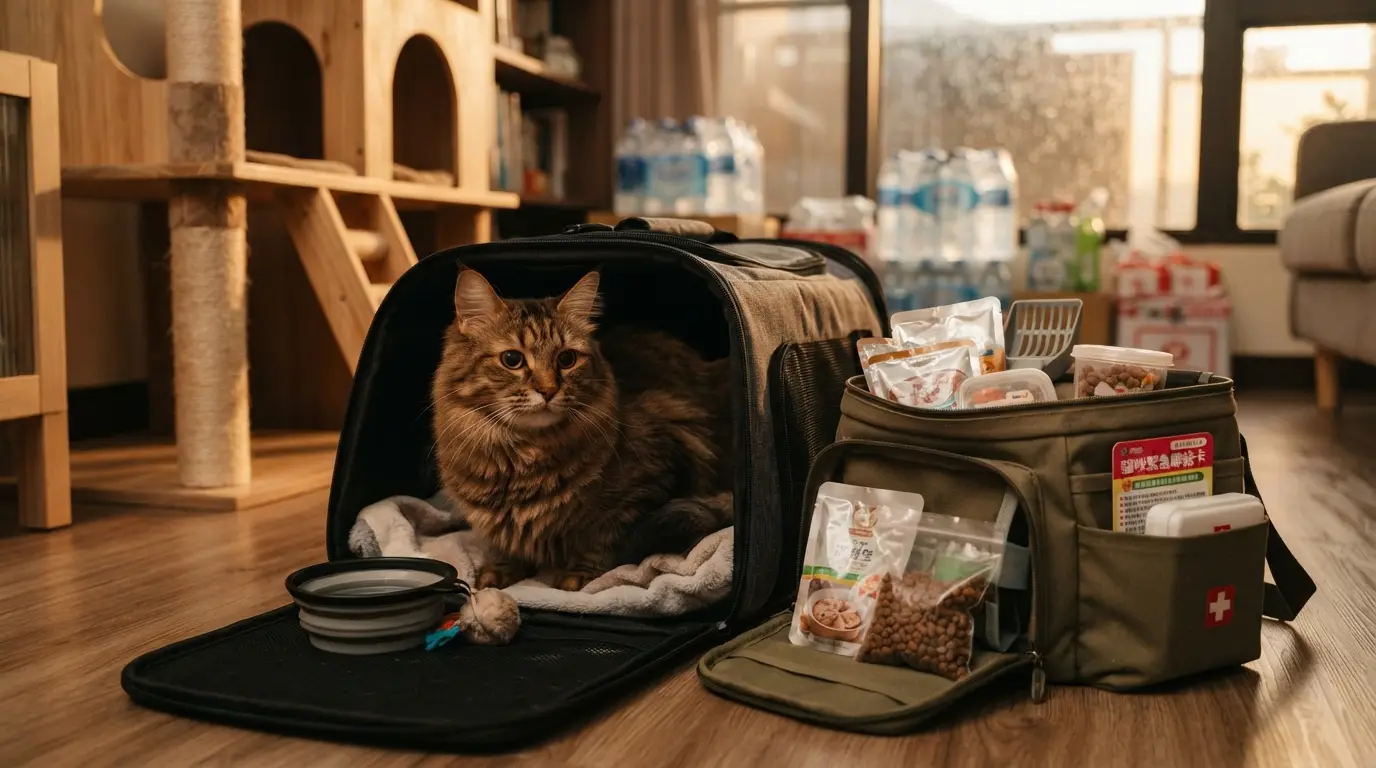
- A cat emergency kit should be based on a "72-hour supply": approximately 200-250ml of drinking water per cat per day, 3 days' worth of their usual dry food and wet food, 3-4 liters of their preferred cat litter, and a collapsible litter box.
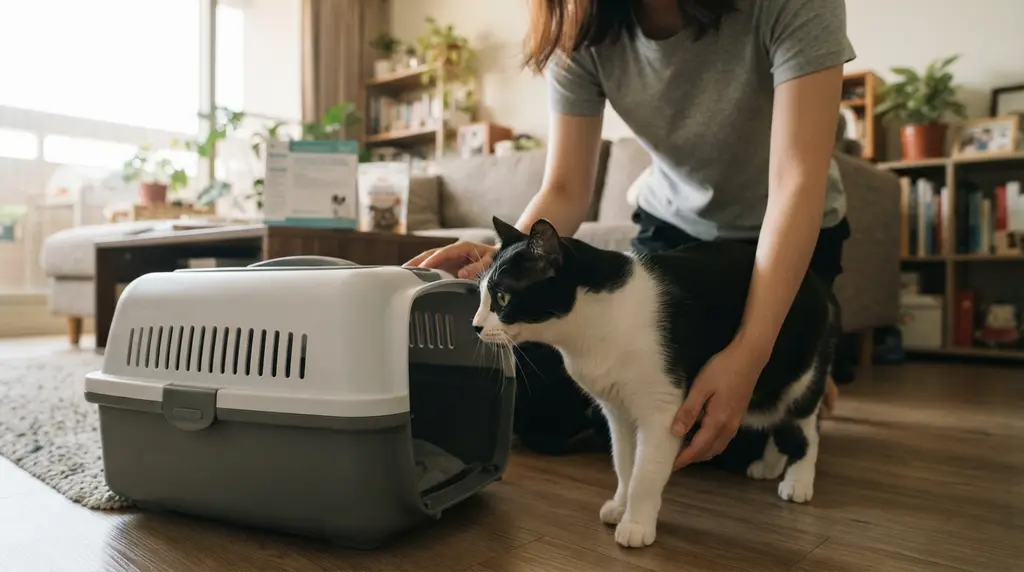
- Choose a hard-sided, top-opening carrier (or one that separates into top and bottom) large enough for your cat to stand and turn around. Train your cat to use it as a resting spot in your home regularly; cats are often too stressed to enter a carrier only brought out during emergencies.
I. Make the Decision: Evacuate or Shelter in Place?
Evacuate if You Meet Any of These 5 Conditions
1. Your residence is within a potential landslide stream or flood warning area (check your address on the disaster prevention information platform) or has flooded due to typhoons in the past three years.
2. You live on the first floor, in a semi-basement, underground parking level, or your doorway is below street level.
3. The building structure is questionable: old brick construction, metal extensions, rusted roofs, falling exterior tiles, large windows without protection.
4. You have a cat requiring ongoing medical care: daily insulin injections for diabetes, subcutaneous fluids for kidney disease, post-surgery recovery, or respiratory conditions needing oxygen. Power outages or road closures could interrupt treatment.
5. Local authorities, community leaders, or building management have issued an evacuation notice – there is no room for discussion on this; comply.
Staying Put is Usually Safer If:
- You live in a mid-to-high-rise reinforced concrete building with intact windows and typhoon-proofing measures.
- You have backup water, backup power (power banks, UPS), and controllable ventilation.
- Your cat is extremely timid, has severe phobia of carriers, or has a heart condition where the stress of moving itself is a risk.
Sheltering in place does not mean doing nothing. It means transforming your home into a safe room and being prepared for power outages, water shortages, and being unable to go out for supplies for 48 hours. High temperatures after a power outage are the most immediate threat during Taiwan's typhoon season. We have a separate, comprehensive guide on How to Cool Down Your Cat During a Typhoon Power Outage? Pre-outage Backup Checklist and Heatstroke Warning Signs, which we recommend reading alongside this one.
Can't Decide? Use the "Two-Hour Rule"
Ask yourself: "If the power went out right now, the water rose to my knees, and the roads were closed for two days, could my cat and I manage at home?" If you hesitate, prepare as if you are evacuating. Have supplies ready; if the worst doesn't happen, they won't go to waste.
II. Typhoon Cat Carrier Preparation: Specifications, Training, and Emergency Measures
Four Essential Carrier Requirements
- Hard-sided, top-opening (or separable top/bottom): Soft carriers will collapse and get soaked in the rain, and it's difficult to get an uncooperative cat inside. A top-opening allows you to "place" the cat in rather than "pushing" it, which makes a big difference in a panic.
- Large enough for the cat to stand, turn around, and lie down: For an average adult cat, an internal length of at least 45-50 cm is recommended. Too small will increase anxiety and panting.
- Secure latches, with secondary reinforcement using clips or zip ties: A frightened cat can push open plastic clips, which is a primary reason for escapes.
- Has a top handle and a flat bottom: Carry it horizontally as much as possible, rather than swinging it with one hand.
Three Steps for Regular Training
1. Remove the door and place the carrier in the living room as furniture. Line it with your cat's usual bedding, encouraging them to sleep inside. Maintain this for at least two weeks.
2. Offer treats and small rewards (other than premium catnip) inside the carrier to build a positive association ("good things happen when I go in").
3. Practice "closing the door for 3 minutes" once a month, gradually increasing the time to 10 minutes and taking it for a short walk around the house.
What If My Cat Hides Before Evacuation?
This is a common scenario. Changes in barometric pressure and wind noise can cause cats to hide under beds or sofas. Here's what to do:
- While the wind and rain are still light, guide your cat into a small room (bathroom, study) and close the door. Don't wait until you're about to leave to search the whole house.
- When catching your cat, don't chase them head-on. Gently cover their shoulders and back with a large bath towel from above, support their hindquarters, and then place them in the top-opening carrier. For detailed carrying techniques, refer to How to Hold a Cat Without Struggling: Learn Hindquarter Support and Lifting Angles.
- Emergency Alternatives if You Don't Have a Carrier: A sturdy cardboard box sealed with tape, with a top opening covered by mesh, can serve as a temporary solution for a short trip. Avoid laundry baskets turned upside down or backpack carriers; the former are prone to escape, and the latter have insufficient ventilation.
For Multi-Cat Households: One Carrier Per Cat
Even the best-bonded cats can become aggressive or stressed towards each other during extreme anxiety. Cramming two cats into one carrier is a common cause of injury. If you don't have enough carriers, prioritize giving the larger or more dominant cat their own space.
III. Cat Emergency Kit Checklist (72-Hour Basis)
Gather the following items in a waterproof storage box or large backpack and keep it near the entrance. Don't put it back in storage once the typhoon season begins.
Must-Haves (Missing Any Could Be Critical)
- 3 Days' Supply of Drinking Water: Approximately 200-250ml per cat per day; having extra is never a bad idea. Include a collapsible bowl.
- 3-5 Days' Supply of Their Usual Dry and Wet Food: Do not switch to new food during an emergency; changing diets can cause diarrhea. Portion dry food into small, sealed bags to prevent moisture.
- 3-4 Liters of Their Preferred Cat Litter + Collapsible/Disposable Litter Box: Toilets are scarce in emergency shelters. Lightweight litters like tofu litter can be flushed and are easier to pack than clay litter. We use fine-grained types like Ultra-Fine Tofu Litter 3.0 for our own travel, as cats tend to accept them better.
- 7 Days' Supply of Medications and Chronic Condition Meds + photos of the medications (to help explain to other vets).
- Carrier, Leash + Harness: A leash provides an extra layer of security the moment the carrier door opens.
- Clear Front-Facing Photo of Your Cat + A Photo of You Together (save on your phone and print a copy), microchip number, vaccination and medical records.
- ID Tag or Collar with Your Phone Number.
Highly Recommended Items
- Old towel or bed with your and your cat's scent (more calming than any toy).
- 5-10 absorbent pads, resealable bags, trash bags, wet wipes.
- Large bath towel or Quick-Dry Pet Towel: useful for drying after rain, as a cover, or for warmth.
- Dark cloth to cover the carrier (reduces visual stimuli, making the cat calmer).
- Flashlight, power bank, small fan.
- Probiotics or other digestive supplements (environmental stress often causes loose stools).
- E-collar (for post-surgery cats), nail clippers.
Not Necessary, Don't Waste Space
Scratching posts, large toys, automatic feeders, automatic litter boxes. The principle of an emergency kit is "maintaining basic survival and hygiene," not moving house.
IV. Sheltering in Place: Turning Your Home into a Cat's Safe Haven
1. Designate a "Safe Room"
Choose a room without large windows, not facing an exterior wall, and with a door (a bathroom, walk-in closet, or interior bedroom will work). Place water, food, a litter box, and a sleeping area inside. Keep the carrier open in a corner. During strong winds, let your cat stay here to prevent injury or escape from broken glass or water intrusion.
2. Windows and Balconies
- Check that window screens are secure and balcony doors won't be blown open – most cats lost during typhoons escape through wind-blown screens.
- Apply shatter-resistant tape to sliding glass doors or use curtains to reduce the risk of flying glass.
- Bring in balcony furniture, plant pots, and brooms indoors beforehand.
3. Power Outages + Heat are the Real Invisible Killers
Typhoons often occur in August and September. When the power goes out and windows can't be opened, indoor temperatures can rise rapidly within an hour or two. Cats have no sweat glands and rely on panting and paw pads for cooling; in hot environments, they can quickly start open-mouth breathing. For assessment criteria and first aid, see Do Cats Get Hot? Signs of Heatstroke, Open-Mouth Panting, and Summer Cooling Guide, and Is Your Cat Panting with Its Mouth Open Due to Heat or Illness? Check Gum Color, Breathing Rate, and 3 Warning Signs for the Vet.
Practically, a few small actions are very effective: freeze water bottles beforehand, store water in bathtubs and buckets (for flushing toilets and personal hygiene after water outages), and temporarily switch from enclosed litter boxes to open ones or remove the lids to prevent stuffiness and odor buildup.
4. Stressed Cats May Refuse to Eat or Drink
This is often overlooked. There are cases where cats are found significantly dehydrated several days after a typhoon. Record the water level in the bowl and the number of urine clumps in the litter box daily. If your cat hasn't urinated for over 24 hours or their water intake has dropped by more than half, take action. For assessment methods, refer to How to Check for Cat Dehydration: Skin Elasticity, Oral Mucosa, and Water Intake (3 Home Checks). During stressful periods, offer more high-moisture wet food and place water bowls in their hiding spots.
V. Deciding to Evacuate: Timeline and Post-Arrival Procedures
48 Hours Before the Typhoon
- Confirm your destination (friend's house, hotel, pet-friendly shelter) and call ahead to confirm if pets are allowed. Public shelters don't always accept pets and often require them to be in carriers.
- Inspect the carrier, replenish the emergency kit, and gather medications.
- If you must go to work or your evacuation location doesn't allow pets, arrange for boarding at a facility with typhoon backup measures in advance. Our cat boarding services are usually fully booked a week before the typhoon season begins; last-minute calls are often too late.
12-24 Hours Before the Typhoon (Optimal Departure Time)
- Travel during the day when the wind and rain are still manageable. Do not travel at night or when the eyewall is already overhead.
- Avoid feeding a large meal 2-3 hours before departure to reduce motion sickness and vomiting; water can be given normally.
- Cover the carrier with a dark cloth once your cat is inside, and avoid directing car air conditioning directly onto the carrier.
30 Minutes Before Arriving at Your Shelter Location
1. Ensure doors and windows are secured before opening the carrier.
2. Treat the carrier as your cat's "room." Leave the door open and let them decide when to come out; don't force them.
3. Immediately set up the litter box and water, placed away from food.
4. It's common for cats not to eat for the first 24 hours. If their energy and breathing are normal, observe them. If they completely refuse to eat for over 36-48 hours, or exhibit open-mouth breathing, pale or purplish gums, or persistent vomiting, contact a veterinarian immediately.
VI. Post-Typhoon Inspection
- Before opening windows, confirm your cat's location and check for any tears in the screens.
- Inspect the floor for glass shards, fallen furniture, or wet electrical wires.
- Thoroughly clean any flooded floors; cats can ingest bacteria and chemicals from contaminated water by licking their paws.
- Observe their appetite, urination, defecation, and breathing for 3-5 days. Stress-induced cystitis or loose stools often appear two to three days after the typhoon.
Also, a reminder: typhoon season often overlaps with the seventh lunar month. If your household has a tradition of burning incense or candles, the risk of fire and smoke inhalation is higher indoors with closed windows and doors. Refer to What to Watch Out For with Cats During Ghost Month? Home Safety Guide for Offerings, Incense, Candles, and Joss Paper.
Frequently Asked Questions
Does my cat have to evacuate with me during a typhoon?
Not necessarily. If your home is structurally sound and not at risk of flooding or landslides, leaving your cat at home in a familiar environment with a prepared safe room and backup supplies is usually safer than moving them in the storm. However, if authorities issue an evacuation order, or if you will be away for more than 24 hours, you should take your cat with you or arrange for boarding.
How many cat carriers should I prepare for a typhoon?
The principle is one carrier per cat. Stressed cats may attack each other, and sharing a carrier can lead to injury or overheating. Choose hard-sided, top-opening carriers with an internal length of at least 45 cm, and use secondary latches for security.
How many days' worth of supplies should be in a cat emergency kit?
A 72-hour supply is most practical: approximately 200-250ml of drinking water per cat per day, 3 days' worth of their usual food and wet food, 3-4 liters of their preferred cat litter, and a collapsible litter box. For chronic conditions, aim for 7 days of medication. During emergencies, avoid switching to new food to prevent digestive upset.
Is it normal for my cat to hide and refuse to eat or drink during a typhoon?
Wind noise and pressure changes can cause cats to hide for 12-24 hours. As long as their breathing is stable and they are urinating, observe them. However, if they completely refuse to eat or drink for over 36-48 hours, or exhibit open-mouth panting, changes in gum color (pale or purplish), or significantly decreased skin elasticity, seek veterinary care promptly.
What if I can't find emergency boarding at the last minute before a typhoon?
Cat hotels are often fully booked before the warning is issued. It's recommended to book in advance and inquire about backup power measures (generators, backup air conditioning, water storage) as soon as a typhoon forms, even before a land warning is issued. If you truly cannot find boarding, switch to the "shelter in place" mode and ensure your safe room and backup supplies are adequate.
During typhoon season, the most crucial element isn't extensive gear, but making the decision one day in advance. Before this year's typhoon season begins, spend 30 minutes placing the carrier in the living room and packing the emergency kit by the entrance. The rest is simply waiting to see if it's needed. If any symptoms persist or worsen, always follow your veterinarian's diagnosis and do not attempt to manage it yourself.
By the CatGarden Editorial Team
CatGarden offers curated supplies, cat boarding, and grooming
Book services or shop online.