What's Causing Your Cat's Red, Hot Ears? Distinguishing Heatstroke, Inflammation, and Sunburn
A cat's ears are natural heat regulators, so feeling warm isn't always a cause for concern. However, if the ears are red and hot, swollen on one side, frequently scratched, or accompanied by open-mouth panting, it's crucial to differentiate between heatstroke, inflammation/infection, and sunburn. This article provides practical steps for home assessment and identifies when veterinary care is essential.
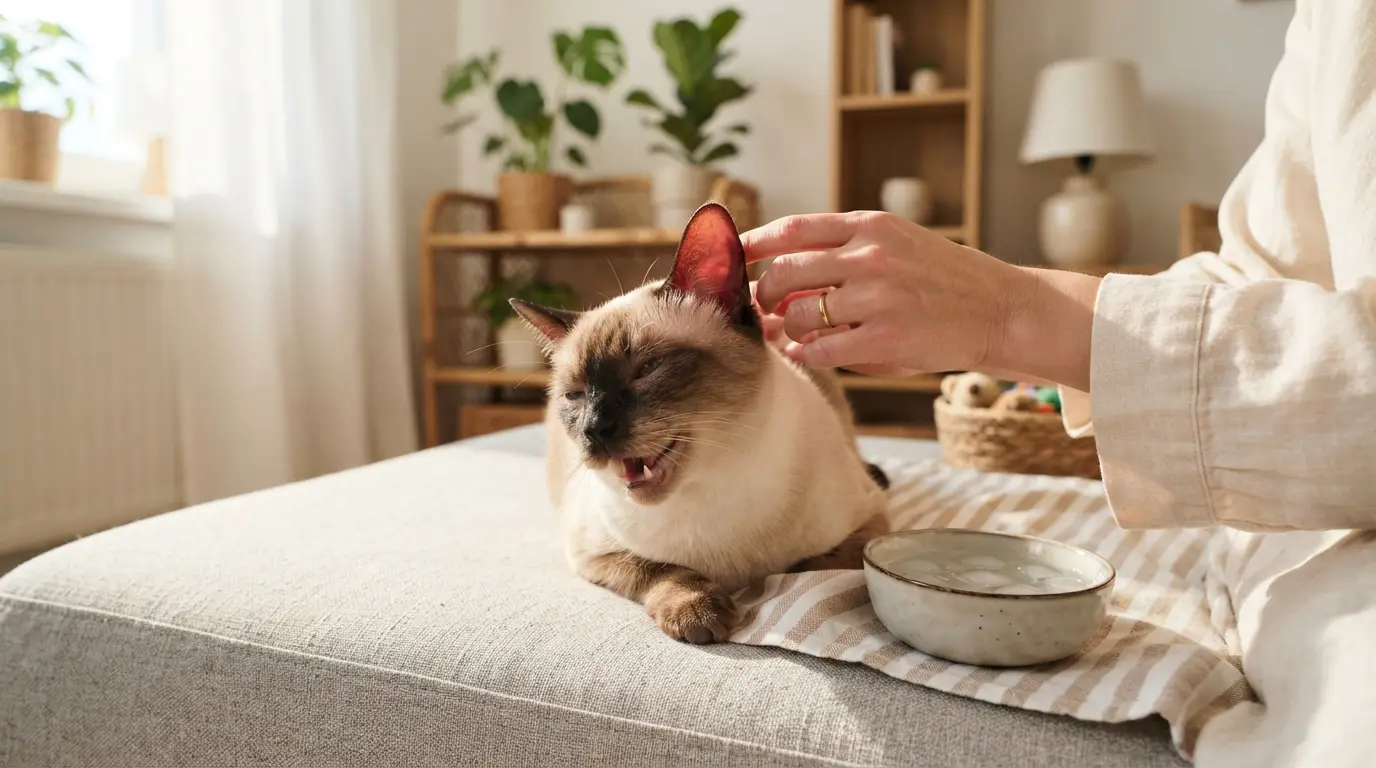
A cat's ears being red and hot most commonly indicates normal heat dissipation—cat ear flaps have dense blood vessels and very little insulating fur, making them a crucial heat-releasing window for the entire body. When the ambient temperature is high, or after waking up, playing intensely, or sunbathing, it's reasonable for both ears to feel hot and look red. What truly requires attention is "heat + redness" combined with a third signal: one ear is hot, the ear is swollen or has an odor, the cat frequently shakes its head and scratches its ears, or it pants with its mouth open. These three scenarios correspond to heatstroke, inflammation/infection, and sunburn, respectively, and require entirely different approaches.
Key Takeaways
- A cat's ear flaps are a primary heat-releasing area. When the room temperature exceeds 28°C (82°F), simultaneous heat and redness in both ears are usually normal physiological heat dissipation, not a fever.
- A cat's normal body temperature (rectal) is approximately 38.0–39.2°C (100.4–102.6°F). Simply touching the ears cannot determine a fever; temperature must be measured.
- Both ears hot together → Tendency towards systemic issues (environmental overheating, heatstroke, fever); One ear hot, red, swollen → Tendency towards local inflammation/infection (otitis externa, ear mites, aural hematoma).
- The critical warning sign for heatstroke is not the ears, but a resting respiratory rate exceeding 40 breaths/minute, open-mouth panting, brick-red or pale gums—this is an emergency.
- White cats, cats with sparse ear fur, or those recently shaved, may develop crusting or ulcers on their ear tips after sunburn that don't heal for over 2-3 weeks. This requires veterinary attention to rule out squamous cell carcinoma (SCC).
First, Understand: Cat Ears "Are Naturally Warm"
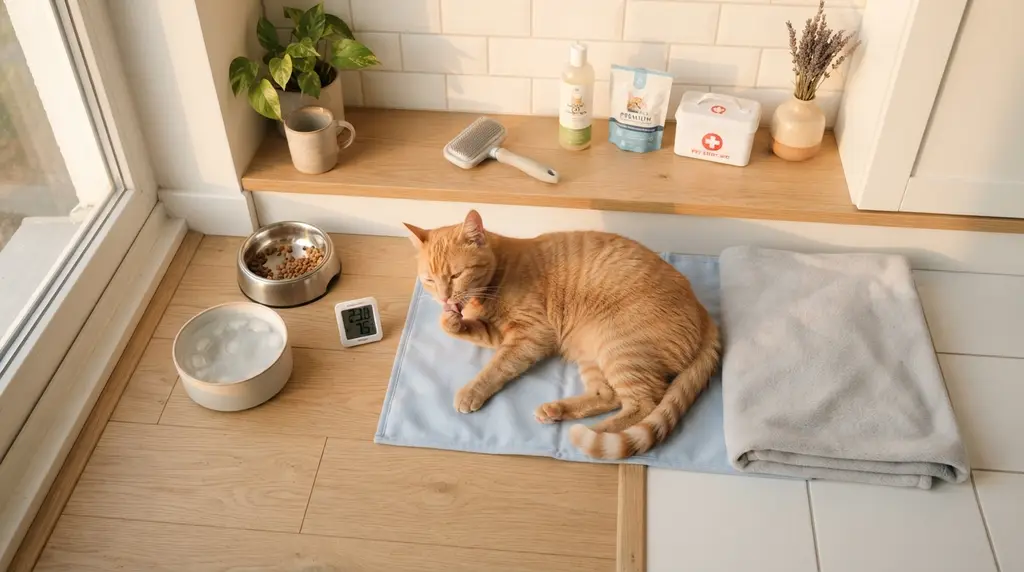
The cat ears we touch daily at our facility vary significantly in temperature. Cats boarding with us in the summer, upon emerging from their carriers, often have hot ears with visibly red blood vessels on the inner ear flap—this is the result of their efforts to dissipate heat in a stuffy carrier. After resting in a 26°C (79°F) environment for 20-30 minutes, this will subside.
Cats lack widespread sweat glands and dissipate heat primarily through three mechanisms: vasodilation in the ear flaps and paw pads, minimal sweating from the paw pads, and licking fur to facilitate evaporation. When they feel hot, the blood vessels in their ears dilate to carry heat away. Therefore, "red and hot ears" are physiologically a signal that heat dissipation is in progress, which is not a bad thing. For more on a cat's heat tolerance and ideal indoor temperatures in Taiwan, refer to our other article Do Cats Fear Heat? Understanding Their Heat Tolerance, Cooling Methods, and Ideal Indoor AC Temperatures in Taiwan.
The key is: Ear temperature is just a clue, not a diagnosis. The following three causes can be differentiated by consulting the table below.
How to Differentiate Between Three Causes? A Table for Initial Assessment
| Assessment Point | Heatstroke / Environmental Overheating | Inflammation / Infection (Otitis Externa, Ear Mites) | Sunburn / Solar Dermatitis |
|---|---|---|---|
| One or Both Ears | Almost always both ears | Often one ear, or different degrees in both | Primarily the "ear tips" of both ears |
| Feel | Entire ear flap is hot, paw pads also warm | Ear base/ear canal opening is warmer, swollen | Surface is dry, slightly warm; cat avoids touch |
| Redness Location | Inner ear flap is diffusely red, blood vessels prominent | Ear canal opening and inner ear flap are red, possibly moist and sticky | Ear tip edges are red, peeling, crusting |
| Cat's Behavior | Seeks cool places to lie down, pants, lethargic | Scratches ears intensely, shakes head, tilts head | Avoids ear touching, doesn't scratch much |
| Other Clues | Open-mouth breathing, drooling, poor appetite | Excessive ear wax, odor, brown/black discharge | White cats / recently shaved cats / loves sunbathing by the window |
| After 30 Min in Cool Room | Significant improvement | No improvement | No improvement |
The most practical tip: Bring the cat into a room set at 26-27°C (79-81°F) for quiet rest for 30 minutes, then touch the ears again. If the heat subsides, it's likely environmental overheating. If it doesn't subside, or if redness, swelling, or persistent scratching continues, investigate infection or skin issues.
Cause 1: Heatstroke and Environmental Overheating (Both Ears Hot, Most Urgent)
How to Diagnose
- Both ears are simultaneously hot, with visible blood vessels in the ear flaps. Paw pads are also warm and slightly moist to the touch.
- Increased respiratory rate when resting or sleeping. A normal cat at rest breathes about 15-30 times/minute; more than 40 times/minute warrants vigilance.
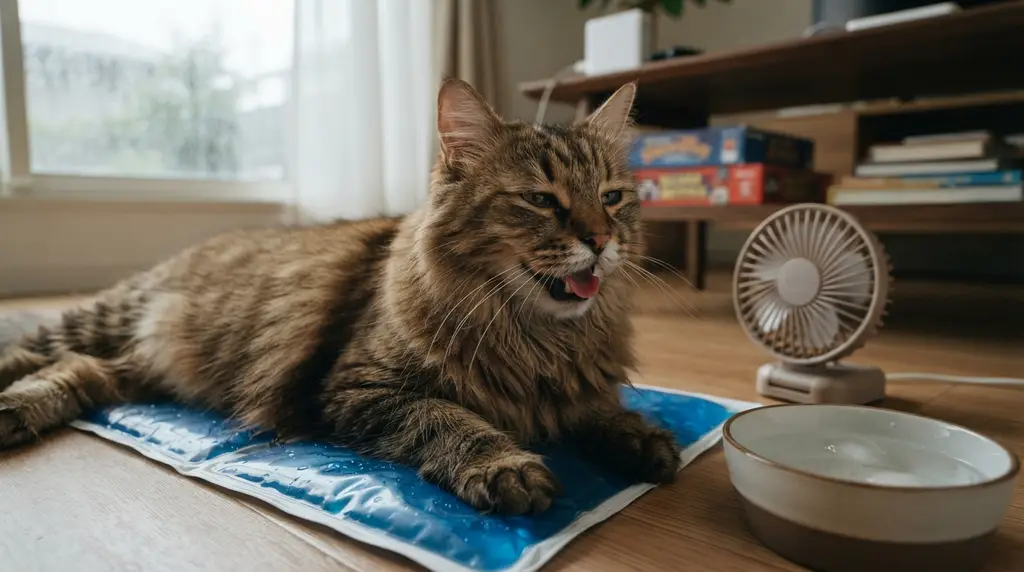
- Begins to pant with mouth open, tongue extended. A healthy cat should rarely pant indoors; this sign alone is abnormal. For detailed interpretation, see Cat Panting with Tongue Out: Too Hot or Sick? Check Gum Color, Respiratory Rate, and 3 Emergency Signs.
- Lift the lips to check the gums: Brick red, dark red, or pale white are all abnormal.
- Wobbly gait, unresponsive, vomiting, or diarrhea → Seek immediate veterinary care.
Initial Home Care
1. Move the cat to a cool, shaded area. Set the air conditioning to 26-27°C (79-81°F) and use a fan for air circulation (but do not blow directly on the cat's head).
2. Use a towel dampened with room-temperature or slightly cool water to wipe the outer ear flaps, paw pads, groin, and armpits. Do not use ice, ice water, or alcohol—rapid vasoconstriction can prevent core heat from escaping.
3. Offer room-temperature drinking water; do not force-feed.
4. Reassess breathing and gum color after 15 minutes. If there's no improvement, proceed to the veterinary clinic.
If you suspect it's more than just "heat" and the core body temperature has actually risen, refer to the main article What to Do If Your Cat Has a Fever? Normal Temperature, How to Measure, and Danger Signs Explained—the key point is that ear temperature does not reliably correlate with core body temperature; measurement is essential. In summer, if there's a power outage or the air conditioning fails, refer to How to Cool Down Your Cat During a Typhoon or Power Outage? Pre-Outage Checklist and Heatstroke Signs for backup measures.
Cause 2: Inflammation and Infection (One Ear Most Typical, Itchy)
This is a common condition we encounter during grooming. Owners might initially notice "slightly red and hot ears," but upon examining the ear flap, the ear canal opening already shows discharge.
Common Types
- Otitis Externa (Bacterial/Yeast): Redness and swelling at the ear canal opening, warm to the touch, possibly with yellowish-brown, moist discharge and a distinct odor. Taiwan's humid summers and inadequate ear drying after baths are common triggers.
- Ear Mites: Discharge is dry, dark brown, resembling coffee grounds, causing intense itching. The cat may scratch its ears to the point of hair loss and crusting. Common in multi-cat households and newly adopted kittens/foster cats; they are contagious.
- Allergic Dermatitis: Diffuse redness inside the ear flap, often accompanied by itching on the chin, neck, or abdomen.
- Aural Hematoma: Excessive scratching/shaking leads to bleeding within the ear flap, feeling like a thick, soft cushion, warm and swollen. Requires veterinary treatment; left untreated, it can cause deformation.
- Foreign Body or Polyp: Sudden, intense head shaking or tilting of one ear.
What You Can and Cannot Do at Home
Can Do:
- Take photos in good lighting with the ear flap opened, documenting both ears for comparison and veterinary reference.
- Record "number of scratches per day" and "if the head is tilted."
Do Not Do:
- Insert cotton swabs deep into the ear canal—a cat's ear canal is L-shaped, and this will only push debris further in.
- Use hydrogen peroxide, alcohol, diluted vinegar, essential oils, or talcum powder. These can irritate already inflamed skin and worsen redness and swelling.
- Use leftover ear medication. If the eardrum is perforated, some drops can cause hearing damage; medications for bacterial infections and ear mites are also different.
If there's an odor, purulent discharge, head tilting, or a staggering gait, see a veterinarian immediately for an otoscopic examination and cytology. This is beyond the scope of home cleaning. For cats with mild ear wax buildup or prone to damp ears, daily maintenance can be handled during grooming. When booking grooming appointments](/grooming/), inform us about the ear condition, and we will examine it before deciding on cleaning. After bathing, ensure the area around the ears is dried thoroughly with a Quick-Dry Pet Towel to prevent moisture from lingering at the ear base.
Cause 3: Sunburn and Solar Dermatitis (Primarily Ear Tips, Easily Overlooked)
This cause is significantly underestimated in Taiwan. Cats love to bask in sunbeams by the window, and the ear tips are the areas with the thinnest fur and least pigment, allowing UV rays to directly reach the skin.
High-Risk Groups
- White cats, cats with pink or light-colored ears.
- Short-haired cats with sparse ear fur, elderly cats.
- Cats that have recently been shaved—this is one reason we advise against shaving cats in summer for cooling; see Does Shaving Cats in Summer Help Them Cool Down? Understand Fur's Role in Heat Regulation, Sunburn, and Skin Risks Before Deciding.
- Cats with balconies or semi-outdoor access.
Typical Appearance
Initial stage: Redness along the ear tip edges, dry to the touch. The cat may flinch when the ear tip is touched but won't scratch excessively.
After repeated sunburn: Peeling, hard crusting, edges may look "bitten off," wounds repeatedly heal and then reopen.
Please remember this: If ulcers appear on the ear tips that do not heal for over 2-3 weeks, bleed, or gradually enlarge, especially in white cats, veterinary attention is needed to rule out squamous cell carcinoma (SCC). Early treatment makes a significant difference compared to late-stage intervention; do not treat this as a "minor wound" and delay.
Prevention
- During peak sun hours (10:00 AM - 3:00 PM), use sheer curtains or apply UV-blocking window film to your cat's favorite window sills—you don't need to block the entire window, just the direct sunlight.
- Provide an alternative cool, shaded resting spot (cooling mat, tile floor, cardboard box); the cat will naturally seek it out.
- Do not apply human sunscreen. Cats groom themselves, and ingesting ingredients (like certain salicylates or zinc oxide) can be risky. If sunscreen is deemed necessary, consult your veterinarian for a pet-safe product.
5 Steps for Home Assessment (Follow These to Differentiate)
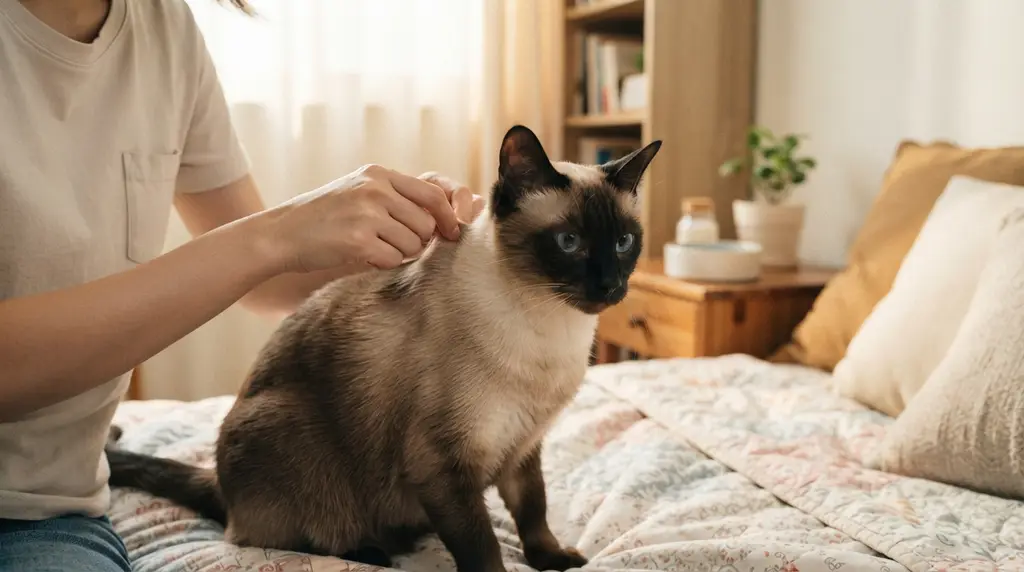
1. Touch Both Ears: Is only one side hot? If unilateral → Consider local inflammation.
2. Touch Other Areas: Are the paw pads, armpits, and groin also hot? If all are hot → Consider systemic overheating/fever.
3. Look Inside: Check the color of the inner ear flap and for discharge at the ear canal opening; smell for any odor.
4. Observe Behavior: Is the cat scratching its ears, shaking its head, or tilting its head? Itching → Infection or allergy; No itching but dry, cracked ear tips → Sunburn.
5. Count Respiration: Count chest/abdominal movements while the cat is resting quietly (1 movement = 1 breath). Count for 30 seconds and multiply by 2. If over 40 breaths/minute, or if panting with mouth open, cool down immediately and prepare to go to the vet.
Also, pay attention to changes in urination, defecation, and water intake. Dehydration is common in cats during summer; refer to How to Check for Cat Dehydration? 3 Home Checks: Skin Elasticity, Oral Mucosa, and Water Intake.
Situations Requiring Immediate Veterinary Attention (Do Not Wait)
- Open-mouth panting, rapid breathing, abnormal gum color (brick red/pale white/purplish).
- Wobbly gait, disorientation, seizures, vomiting, or diarrhea.
- Purulent discharge or significant odor from the ears, head tilting, rapid eye movements (nystagmus).
- Swollen ear resembling a cushion (suspected aural hematoma).
- Ear tip ulcers that do not heal for over 2-3 weeks and are gradually enlarging.
- Measured body temperature ≥ 39.5°C (103.1°F) or ≤ 37.5°C (99.5°F) (hypothermia is also dangerous).
If symptoms persist or worsen, seek veterinary care. This article provides guidance for home assessment and initial management; it cannot replace a veterinarian's examination and diagnosis.
Frequently Asked Questions
Does a cat's hot ears mean it has a fever?
No. Ear temperature is greatly influenced by the environment, posture, and recent activity, and does not reliably correlate with core body temperature. To confirm a fever, rectal temperature or a pet-specific ear thermometer must be used. The normal range is approximately 38.0–39.2°C (100.4–102.6°F).
Why do my cat's ears feel hot after waking up?
When sleeping, cats often rest their ears against their bodies or bedding. Combined with accumulated metabolic heat, it's common for ears to feel warm and the ear flaps to look red upon waking. After moving to a cooler area and being active for 20-30 minutes, they should return to normal; this is a normal phenomenon.
My cat's ears are red and it keeps scratching them. Can I use over-the-counter ear drops?
Not recommended. Medications for bacterial otitis externa, yeast infections, and ear mites are entirely different. If the eardrum is perforated, some drops can damage hearing. Have a veterinarian use an otoscope and cytology to confirm the cause before administering medication.
Only one ear is red and hot. What is the likely problem?
Unilateral ear abnormalities are almost always local issues. The most common causes are otitis externa, ear mites, foreign bodies, or aural hematoma. You can take photos to document the difference between the ears. If there is an odor, swelling, or head tilting, seek veterinary care promptly.
White cats' ears get red easily. Do they need sun protection?
Yes. White cats have less pigment and thinner fur on their ear tips, making them prone to solar dermatitis with prolonged sun exposure, and increasing the risk of squamous cell carcinoma. The most practical preventive measures are blocking direct sunlight from window sills and providing alternative shaded resting spots. Do not apply human sunscreen yourself.
CatGarden Editorial Team
CatGarden offers curated supplies, cat boarding, and grooming
Book services or shop online.