Kitten Diarrhea But Good Energy: Is It Normal? Observe 3 Key Indicators Before Deciding to See a Vet

Kitten diarrhea with good energy is usually not an emergency, but kittens dehydrate much faster than adult cats. By observing appetite, energy levels/hydration, and stool consistency, you can determine whether to monitor at home or seek immediate veterinary care.
CatGarden Editorial TeamPublished 2026/08/25Updated 2026/10/06
Kitten CareCat DiarrheaCat Health SignsKitten FeedingCat Vet Decision
Kitten Diarrhea But Good Energy: Is It Normal? Observe 3 Key Indicators Before Deciding to See a Vet

Kitten diarrhea with good energy is often "not an emergency," but it absolutely shouldn't be ignored. The correct approach is to first observe appetite and water intake, energy levels and hydration, and stool consistency – these three indicators. Limit your observation period to 12-24 hours (adult cats can be observed for 24-48 hours, but kittens have less body weight and lower fluid reserves, so their condition can deteriorate much faster).

If all three indicators are normal and the stool is just soft, the most common causes are too rapid a diet change, overfeeding, environmental stress, or parasites. However, if any of the following occur: "bloody diarrhea, persistent vomiting, pale gums, sudden decline in energy, or abnormal body temperature," do not delay; schedule a vet appointment that day.

Key Takeaways

  • For kittens with diarrhea but good energy, the recommended home observation limit is 12-24 hours. Kittens not yet fully vaccinated or under 8 weeks old should be seen by a vet the same day.
  • Kittens often weigh only 0.5-2 kg. Watery diarrhea for 24 hours can lead to significant dehydration. The key isn't "how many times they pooped" but "are they still drinking water, and has their skin elasticity decreased?"
  • Use a 1-7 stool scoring system: Ideal is 2-3 (formed, can be picked up intact). Scores of 4-5 indicate soft stool and can be monitored; scores of 6-7 (mushy, watery) occurring more than twice warrant a vet visit.
  • The three most common causes of kitten diarrhea are: too rapid diet changes, parasites (coccidia, Giardia, roundworms), and environmental stress. Lactose intolerance from milk is also common.
  • Kittens should not be fasted for extended periods. Fasting for over 12 hours carries a risk of hypoglycemia. Instead, opt for small, frequent meals rather than stopping food altogether.

Why is "Kitten Diarrhea With Normal Energy" Common?

A kitten's gut microbiome is not yet stable, and their digestive enzyme activity is lower than in adult cats. Any slight change can be reflected in their stool. At our boarding facility, a high percentage of kittens develop soft stools on their first day, but most stabilize on their own within 24-48 hours, provided: the food hasn't changed, they have a quiet space, and they are drinking enough water.

Common causes generally fall into these categories:

1. Diet Change Too Rapid

This is the number one reason. Switching food immediately after bringing a kitten home from a breeder or rescue, or changing food because "they don't seem to like this one," prevents the gut from adapting. The correct method is a 7-day gradual transition: Old food:New food = 3:1 → 1:1 → 1:3 → 100% New food. Spend about 2 days at each stage. If soft stools occur, stay at the current ratio for an additional 1-2 days.

2. Overfeeding, Too Few Meals

Kittens have small stomachs. Eating too much at once can lead to incomplete digestion. For feeding frequency and portion sizes based on age, refer to our guide How Many Meals a Day for Kittens? Feeding Frequency, Portions, and Transition Timing by Age. Dividing the total daily amount into more frequent meals can resolve mild soft stools.

3. Parasites (A Crucial Factor to Rule Out in Kittens)

Coccidia, Giardia, and roundworms are very common in kittens, especially those rescued from the streets, from multi-cat environments like catteries, or those not yet fully dewormed. Typical symptoms of this type of diarrhea are "good energy and appetite, but persistently soft stools with a particularly strong odor, sometimes with mucus." Observation alone won't resolve this; a stool sample analysis is needed.

4. Given Milk or Human Food

The lactose in commercially available milk is too high for cats. Many owners try to "give the kitten a boost" but end up causing diarrhea. For details, see Can Cats Drink Milk? Symptoms of Lactose Intolerance and Safe Alternative Drinks Guide.

5. Environmental Stress

Moving to a new home, a house move, visitors, changing cat litter, or introducing a new cat – stress-induced diarrhea is typical in kittens. It's often accompanied by hiding, but appetite remains normal.

6. Temporary Reaction After Vaccination or Deworming

Soft stools or increased defecation frequency within 1-2 days after vaccination or deworming, if energy and appetite are normal, is usually temporary. If it doesn't improve after 48 hours, report it to your veterinarian.

What we use for this

CatGarden’s own products, shipped from Taiwan
See all products
Pro ProbioticsPro ProbioticsFrom CA$26.60 per boxFree shipping on multi-packs

Observation Indicator 1: Appetite and Water Intake

"Still eating and drinking" is the most important safety indicator for kittens.

  • ✅ Observe: Eats all or most of each meal, rushes to food, drinks water proactively.
  • ⚠️ Raise Alert: Eating half of usual amount, eats only wet food but not dry, vomits after eating.
  • 🚨 Immediate Vet Visit: Two consecutive meals completely refused, or no food intake for over 12 hours.

Kittens lack the fat and glycogen reserves of adult cats; the consequences of not eating are more severe than the diarrhea itself. It's important to note: the common online advice to "fast for 12-24 hours for diarrhea" is an old recommendation for adult cats. Do not fast kittens. Instead, switch to "small, frequent, easily digestible meals."

If your cat has reached the stage of "not eating or drinking, sleeping constantly," the assessment logic is entirely different. Please refer directly to Kitten Not Eating, Drinking, or Sleeping All Day: Normal Lethargy or Warning Sign? Golden 24-Hour Observation and Vet Visit Guide.

Observation Indicator 2: Energy and Hydration (Don't Just Look for "Playfulness")

Many owners say "good energy" when they see their cat still playing with a feather wand. However, for a kitten with diarrhea, the key is to monitor hydration, which changes before playfulness does. At our facility, we perform three 10-second checks:

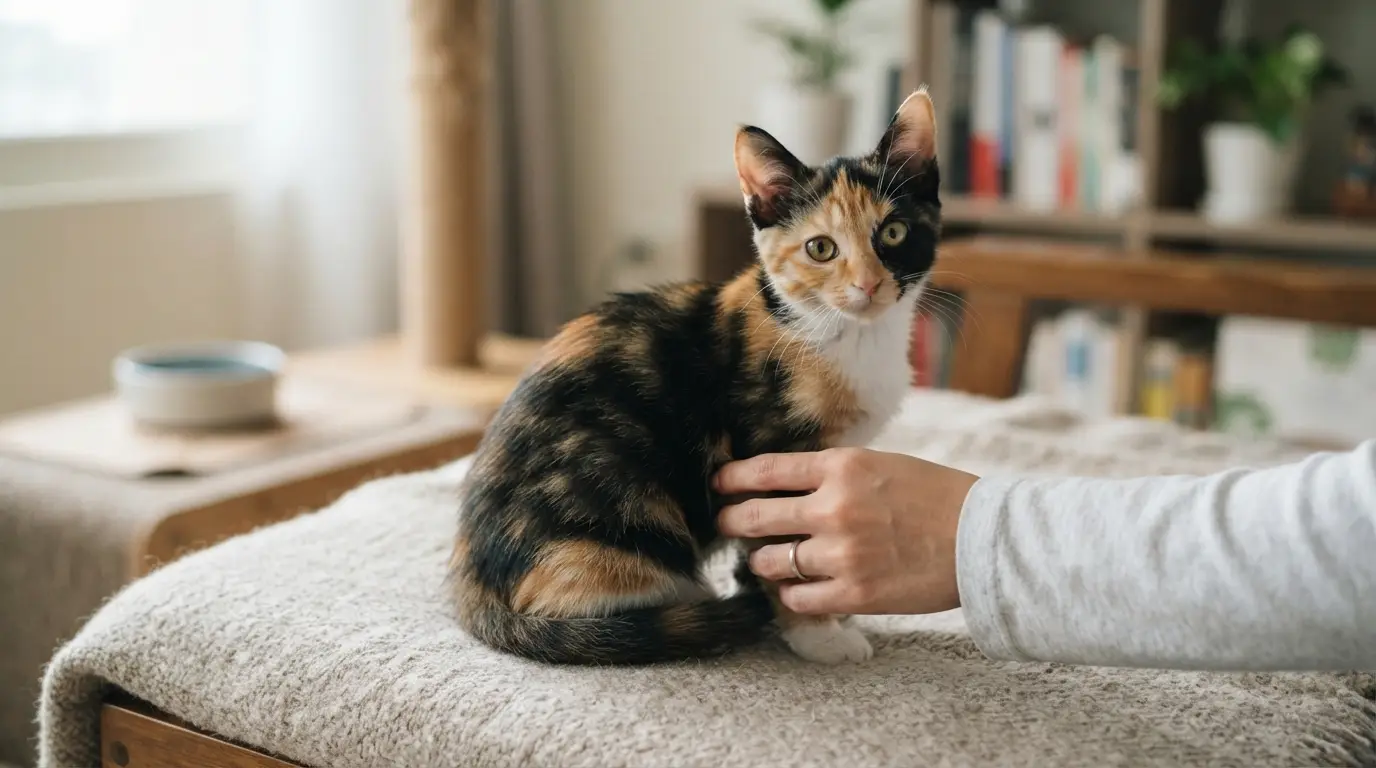
1. Skin Turgor: Gently pinch the skin on the back of the neck and release. It should snap back within 1-2 seconds. If it remains tented for over 3 seconds, it indicates dehydration.

2. Gums and Mouth: Lift the lips to check the gums. They should be pink and moist. Dry, sticky, or pale/bluish gums require immediate veterinary attention.

3. Ear and Paw Temperature: Noticeably cold ears indicate poor circulation, a danger sign. Conversely, if the ears are hot and the cat is lethargic, consider fever. For methods to take temperature and dangerous temperature ranges, refer to What to Do If Your Cat Has a Fever? Normal Temperature, How to Take It, and Danger Signs Explained.

Additionally, weigh your kitten daily at a fixed time using a kitchen scale and record the weight (daily weighing is recommended for kittens). Healthy kittens between 2-6 months old should gain weight steadily each week. If the weight plateaus or drops, even if their energy seems normal, it indicates a problem with nutrient absorption and requires veterinary attention.

Observation Indicator 3: Stool Consistency, Frequency, and Color

Don't just note "diarrhea." Record these four things, as it will greatly help your veterinarian.

Consistency (1-7 Point Scale)

  • 1 point: Dry, hard pellets (constipation)
  • 2-3 points: Formed, moist, can be picked up intact ← Ideal
  • 4 points: Formed but very soft, leaves an imprint when picked up
  • 5 points: Mushy, pile-like, no distinct shape
  • 6 points: Runny mush, splatters
  • 7 points: Watery ← If a kitten has this, shorten the observation time immediately

For scores of 4-5 with other indicators normal, you can observe at home for 12-24 hours. For scores of 6-7 occurring more than twice, a vet visit is recommended that day.

Frequency

Kittens normally defecate 1-3 times a day. A sudden increase to more than 5 times a day, or small amounts each time with frequent trips to the litter box, or straining (which could indicate large bowel diarrhea or tenesmus), should be recorded. Incidentally, if your cat's litter box behavior has significantly increased recently, you can also refer to Cat Constantly Digging in Litter Box: Is It Burying Poop, Seeking Comfort, or Anxiety? to first rule out behavioral causes.

Color and Abnormal Contents

  • Bright red streaks (small amounts on the surface): Common with large bowel inflammation. Can be recorded; see a vet if not improved within 24 hours.
  • Black, tarry stool: May indicate upper gastrointestinal bleeding. Seek immediate veterinary care.
  • Large amounts of bloody fluid, strong foul odor: In unvaccinated kittens, be highly alert for Feline Panleukopenia (feline distemper). Emergency vet visit required.
  • Mucus-covered, jelly-like consistency: Common with protozoal infections; requires stool testing.
  • White rice grains or thin thread-like worms visible: Parasites. Bring a sample to the vet.

Red Flags: When to Seek Immediate Veterinary Care

If any of the following apply, do not wait:

  • Watery stools in kittens not fully vaccinated or under 8 weeks old.
  • Large amounts of bloody stool, black tarry stool.
  • Diarrhea accompanied by repeated vomiting (unable to keep even water down).
  • Refusal of two consecutive meals, or no food intake for 12 hours.
  • Skin pinch remains tented for 3 seconds, or gums are dry/sticky or pale.
  • Significantly abnormal body temperature (too high or too low), cold ears or paws.
  • Abdominal bloating, flinching or crying when touched.
  • Weight loss exceeding 5% in one day.
  • Sudden decline in energy from "very good" to "unresponsive, hiding in a corner."

If All Three Indicators Are Normal: Home Care Plan (48 Hours)

1. Diet Stability, Smaller Portions: Maintain the current food. Divide the total daily amount into 4-6 meals. If feeding dry food, you can soften it with warm water to increase hydration.

2. Prioritize Hydration: Place 1-2 extra water bowls in the cat's activity areas. Increasing wet food intake is the most effective way to ensure hydration. Highly palatable wet food options like Luxury Functional Cans with high moisture content can be used as a temporary hydration aid.

3. Warmth: Kittens with diarrhea can easily lose body heat. Maintain the environment around 26-28°C (79-82°F) and provide a soft, warm place to rest.

4. Probiotics: When the gut microbiome is disrupted, feline-specific probiotics can be helpful. Kittens at our facility often receive a small packet of Specialist Probiotics mixed with wet food during their transition period, usually for 5-7 consecutive days. Note: Probiotics are supportive and cannot replace stool testing and treatment.

5. Record Keeping: Photograph each stool sample (using your phone is fastest), note the time and consistency score, and record daily food intake and weight.

6. Isolation: In multi-cat households, separate litter boxes and food bowls to prevent the spread of infectious pathogens. This also helps identify which cat is experiencing diarrhea.

How to Correctly Collect a Stool Sample for Testing

This is why many people make unnecessary trips to the vet. To test for parasites/protozoa, bring a fresh, soft stool sample:

  • Place it in a resealable bag or clean airtight container. The amount should be at least the size of a peanut.
  • Deliver it to the clinic within 6-12 hours if possible. If not, refrigerate it (4°C / 39°F); do not freeze it.
  • Try to collect a sample that is not heavily contaminated with litter. If you use fine-grained litter, you can place a small piece of clean litter or paper towel in a corner of the litter box to facilitate collection.

When Does It Become a Situation Requiring Hospitalization?

The biggest concern with kitten diarrhea isn't the diarrhea itself, but the combination of dehydration, hypoglycemia, and electrolyte imbalance. We've had owners say, "He's always had good energy," only for the kitten to require IV fluids and hospitalization upon arrival. The difference lies in not weighing the kitten or checking its gums in the first 24 hours. Therefore, treat the three indicators mentioned above as daily routine checks, rather than waiting until the cat appears very weak.

Additionally, two specific times warrant extra caution: before and after vaccinations, and before an upcoming extended boarding stay. If a kitten is experiencing diarrhea, address the gastrointestinal issue first. When we board kittens, we ask owners to bring their usual food and to inform us about recent bowel movements. If you plan to book Boarding in Banqiao, it's recommended to allow at least 3-5 days for the stools to return to a 2-3 score before check-in, which significantly reduces stress for the cat.

Frequently Asked Questions

Kitten has diarrhea but good energy, how many days can I observe at home?

The recommended limit is 12-24 hours; do not extend it to "several days." If soft or watery stools persist after 24 hours, even with normal energy and appetite, you should bring a fresh stool sample for parasite testing, as coccidia and Giardia will not resolve on their own.

Can kittens with diarrhea be fasted like adult cats?

Not recommended. Kittens have low energy reserves, and fasting for over 12 hours carries a risk of hypoglycemia. The correct approach is to maintain their usual food but switch to small, frequent meals (4-6 times a day), ensuring adequate water intake.

Cat has soft stools but normal appetite, should I stop treats?

Yes. During diarrhea, stop all treats, extra food beyond their regular meals, milk, and human food. Stick only to their primary diet. This will help determine if the issue is food-related or a health problem. Differences are usually noticeable within 2-3 days.

Can changing cat litter cause diarrhea in kittens?

Cat litter itself doesn't directly cause diarrhea, but the stress of a litter change might make a kitten anxious and lead to soft stools. Also, if a kitten ingests a large amount of litter, it can cause gastrointestinal upset. It's advisable to avoid litter with large granules or strong fragrances for kittens under 4 months old.

How long does it take for a kitten's stool to return to normal after diarrhea?

Diarrhea solely due to diet change or stress, after adjustments, usually returns to a 2-3 score within 24-72 hours. If treating parasites, significant improvement is typically seen within 3-7 days after medication, and repeat stool tests are often needed to confirm clearance.


This article is a general care experience sharing and cannot replace veterinary diagnosis. If diarrhea persists for more than 24 hours, or if there is bloody stool, vomiting, dehydration, or a significant decline in energy, please take your cat to a veterinarian as soon as possible.

Article by CatGarden Editorial Team

CatGarden offers curated supplies, cat boarding, and grooming

Book services or shop online.
Back

Blog

Kitten Diarrhea But Good Energy: Is It Normal? Observe 3 Key Indicators Before Deciding to See a Vet

CatGarden Editorial TeamPublished 2026/08/25Updated 2026/10/06
Kitten CareCat DiarrheaCat Health SignsKitten FeedingCat Vet Decision
Kitten Diarrhea But Good Energy: Is It Normal? Observe 3 Key Indicators Before Deciding to See a Vet

Kitten diarrhea with good energy is often "not an emergency," but it absolutely shouldn't be ignored. The correct approach is to first observe appetite and water intake, energy levels and hydration, and stool consistency – these three indicators. Limit your observation period to 12-24 hours (adult cats can be observed for 24-48 hours, but kittens have less body weight and lower fluid reserves, so their condition can deteriorate much faster).

If all three indicators are normal and the stool is just soft, the most common causes are too rapid a diet change, overfeeding, environmental stress, or parasites. However, if any of the following occur: "bloody diarrhea, persistent vomiting, pale gums, sudden decline in energy, or abnormal body temperature," do not delay; schedule a vet appointment that day.

Key Takeaways

  • For kittens with diarrhea but good energy, the recommended home observation limit is 12-24 hours. Kittens not yet fully vaccinated or under 8 weeks old should be seen by a vet the same day.
  • Kittens often weigh only 0.5-2 kg. Watery diarrhea for 24 hours can lead to significant dehydration. The key isn't "how many times they pooped" but "are they still drinking water, and has their skin elasticity decreased?"
  • Use a 1-7 stool scoring system: Ideal is 2-3 (formed, can be picked up intact). Scores of 4-5 indicate soft stool and can be monitored; scores of 6-7 (mushy, watery) occurring more than twice warrant a vet visit.
  • The three most common causes of kitten diarrhea are: too rapid diet changes, parasites (coccidia, Giardia, roundworms), and environmental stress. Lactose intolerance from milk is also common.
  • Kittens should not be fasted for extended periods. Fasting for over 12 hours carries a risk of hypoglycemia. Instead, opt for small, frequent meals rather than stopping food altogether.

Why is "Kitten Diarrhea With Normal Energy" Common?

A kitten's gut microbiome is not yet stable, and their digestive enzyme activity is lower than in adult cats. Any slight change can be reflected in their stool. At our boarding facility, a high percentage of kittens develop soft stools on their first day, but most stabilize on their own within 24-48 hours, provided: the food hasn't changed, they have a quiet space, and they are drinking enough water.

Common causes generally fall into these categories:

1. Diet Change Too Rapid

This is the number one reason. Switching food immediately after bringing a kitten home from a breeder or rescue, or changing food because "they don't seem to like this one," prevents the gut from adapting. The correct method is a 7-day gradual transition: Old food:New food = 3:1 → 1:1 → 1:3 → 100% New food. Spend about 2 days at each stage. If soft stools occur, stay at the current ratio for an additional 1-2 days.

2. Overfeeding, Too Few Meals

Kittens have small stomachs. Eating too much at once can lead to incomplete digestion. For feeding frequency and portion sizes based on age, refer to our guide How Many Meals a Day for Kittens? Feeding Frequency, Portions, and Transition Timing by Age. Dividing the total daily amount into more frequent meals can resolve mild soft stools.

3. Parasites (A Crucial Factor to Rule Out in Kittens)

Coccidia, Giardia, and roundworms are very common in kittens, especially those rescued from the streets, from multi-cat environments like catteries, or those not yet fully dewormed. Typical symptoms of this type of diarrhea are "good energy and appetite, but persistently soft stools with a particularly strong odor, sometimes with mucus." Observation alone won't resolve this; a stool sample analysis is needed.

4. Given Milk or Human Food

The lactose in commercially available milk is too high for cats. Many owners try to "give the kitten a boost" but end up causing diarrhea. For details, see Can Cats Drink Milk? Symptoms of Lactose Intolerance and Safe Alternative Drinks Guide.

5. Environmental Stress

Moving to a new home, a house move, visitors, changing cat litter, or introducing a new cat – stress-induced diarrhea is typical in kittens. It's often accompanied by hiding, but appetite remains normal.

6. Temporary Reaction After Vaccination or Deworming

Soft stools or increased defecation frequency within 1-2 days after vaccination or deworming, if energy and appetite are normal, is usually temporary. If it doesn't improve after 48 hours, report it to your veterinarian.

What we use for this

CatGarden’s own products, shipped from Taiwan
See all products
Pro ProbioticsPro ProbioticsFrom CA$26.60 per boxFree shipping on multi-packs

Observation Indicator 1: Appetite and Water Intake

"Still eating and drinking" is the most important safety indicator for kittens.

  • ✅ Observe: Eats all or most of each meal, rushes to food, drinks water proactively.
  • ⚠️ Raise Alert: Eating half of usual amount, eats only wet food but not dry, vomits after eating.
  • 🚨 Immediate Vet Visit: Two consecutive meals completely refused, or no food intake for over 12 hours.

Kittens lack the fat and glycogen reserves of adult cats; the consequences of not eating are more severe than the diarrhea itself. It's important to note: the common online advice to "fast for 12-24 hours for diarrhea" is an old recommendation for adult cats. Do not fast kittens. Instead, switch to "small, frequent, easily digestible meals."

If your cat has reached the stage of "not eating or drinking, sleeping constantly," the assessment logic is entirely different. Please refer directly to Kitten Not Eating, Drinking, or Sleeping All Day: Normal Lethargy or Warning Sign? Golden 24-Hour Observation and Vet Visit Guide.

Observation Indicator 2: Energy and Hydration (Don't Just Look for "Playfulness")

Many owners say "good energy" when they see their cat still playing with a feather wand. However, for a kitten with diarrhea, the key is to monitor hydration, which changes before playfulness does. At our facility, we perform three 10-second checks:

1. Skin Turgor: Gently pinch the skin on the back of the neck and release. It should snap back within 1-2 seconds. If it remains tented for over 3 seconds, it indicates dehydration.

2. Gums and Mouth: Lift the lips to check the gums. They should be pink and moist. Dry, sticky, or pale/bluish gums require immediate veterinary attention.

3. Ear and Paw Temperature: Noticeably cold ears indicate poor circulation, a danger sign. Conversely, if the ears are hot and the cat is lethargic, consider fever. For methods to take temperature and dangerous temperature ranges, refer to What to Do If Your Cat Has a Fever? Normal Temperature, How to Take It, and Danger Signs Explained.

Additionally, weigh your kitten daily at a fixed time using a kitchen scale and record the weight (daily weighing is recommended for kittens). Healthy kittens between 2-6 months old should gain weight steadily each week. If the weight plateaus or drops, even if their energy seems normal, it indicates a problem with nutrient absorption and requires veterinary attention.

Observation Indicator 3: Stool Consistency, Frequency, and Color

Don't just note "diarrhea." Record these four things, as it will greatly help your veterinarian.

Consistency (1-7 Point Scale)

  • 1 point: Dry, hard pellets (constipation)
  • 2-3 points: Formed, moist, can be picked up intact ← Ideal
  • 4 points: Formed but very soft, leaves an imprint when picked up
  • 5 points: Mushy, pile-like, no distinct shape
  • 6 points: Runny mush, splatters
  • 7 points: Watery ← If a kitten has this, shorten the observation time immediately

For scores of 4-5 with other indicators normal, you can observe at home for 12-24 hours. For scores of 6-7 occurring more than twice, a vet visit is recommended that day.

Frequency

Kittens normally defecate 1-3 times a day. A sudden increase to more than 5 times a day, or small amounts each time with frequent trips to the litter box, or straining (which could indicate large bowel diarrhea or tenesmus), should be recorded. Incidentally, if your cat's litter box behavior has significantly increased recently, you can also refer to Cat Constantly Digging in Litter Box: Is It Burying Poop, Seeking Comfort, or Anxiety? to first rule out behavioral causes.

Color and Abnormal Contents

  • Bright red streaks (small amounts on the surface): Common with large bowel inflammation. Can be recorded; see a vet if not improved within 24 hours.
  • Black, tarry stool: May indicate upper gastrointestinal bleeding. Seek immediate veterinary care.
  • Large amounts of bloody fluid, strong foul odor: In unvaccinated kittens, be highly alert for Feline Panleukopenia (feline distemper). Emergency vet visit required.
  • Mucus-covered, jelly-like consistency: Common with protozoal infections; requires stool testing.
  • White rice grains or thin thread-like worms visible: Parasites. Bring a sample to the vet.

Red Flags: When to Seek Immediate Veterinary Care

If any of the following apply, do not wait:

  • Watery stools in kittens not fully vaccinated or under 8 weeks old.
  • Large amounts of bloody stool, black tarry stool.
  • Diarrhea accompanied by repeated vomiting (unable to keep even water down).
  • Refusal of two consecutive meals, or no food intake for 12 hours.
  • Skin pinch remains tented for 3 seconds, or gums are dry/sticky or pale.
  • Significantly abnormal body temperature (too high or too low), cold ears or paws.
  • Abdominal bloating, flinching or crying when touched.
  • Weight loss exceeding 5% in one day.
  • Sudden decline in energy from "very good" to "unresponsive, hiding in a corner."

If All Three Indicators Are Normal: Home Care Plan (48 Hours)

1. Diet Stability, Smaller Portions: Maintain the current food. Divide the total daily amount into 4-6 meals. If feeding dry food, you can soften it with warm water to increase hydration.

2. Prioritize Hydration: Place 1-2 extra water bowls in the cat's activity areas. Increasing wet food intake is the most effective way to ensure hydration. Highly palatable wet food options like Luxury Functional Cans with high moisture content can be used as a temporary hydration aid.

3. Warmth: Kittens with diarrhea can easily lose body heat. Maintain the environment around 26-28°C (79-82°F) and provide a soft, warm place to rest.

4. Probiotics: When the gut microbiome is disrupted, feline-specific probiotics can be helpful. Kittens at our facility often receive a small packet of Specialist Probiotics mixed with wet food during their transition period, usually for 5-7 consecutive days. Note: Probiotics are supportive and cannot replace stool testing and treatment.

5. Record Keeping: Photograph each stool sample (using your phone is fastest), note the time and consistency score, and record daily food intake and weight.

6. Isolation: In multi-cat households, separate litter boxes and food bowls to prevent the spread of infectious pathogens. This also helps identify which cat is experiencing diarrhea.

How to Correctly Collect a Stool Sample for Testing

This is why many people make unnecessary trips to the vet. To test for parasites/protozoa, bring a fresh, soft stool sample:

  • Place it in a resealable bag or clean airtight container. The amount should be at least the size of a peanut.
  • Deliver it to the clinic within 6-12 hours if possible. If not, refrigerate it (4°C / 39°F); do not freeze it.
  • Try to collect a sample that is not heavily contaminated with litter. If you use fine-grained litter, you can place a small piece of clean litter or paper towel in a corner of the litter box to facilitate collection.

When Does It Become a Situation Requiring Hospitalization?

The biggest concern with kitten diarrhea isn't the diarrhea itself, but the combination of dehydration, hypoglycemia, and electrolyte imbalance. We've had owners say, "He's always had good energy," only for the kitten to require IV fluids and hospitalization upon arrival. The difference lies in not weighing the kitten or checking its gums in the first 24 hours. Therefore, treat the three indicators mentioned above as daily routine checks, rather than waiting until the cat appears very weak.

Additionally, two specific times warrant extra caution: before and after vaccinations, and before an upcoming extended boarding stay. If a kitten is experiencing diarrhea, address the gastrointestinal issue first. When we board kittens, we ask owners to bring their usual food and to inform us about recent bowel movements. If you plan to book Boarding in Banqiao, it's recommended to allow at least 3-5 days for the stools to return to a 2-3 score before check-in, which significantly reduces stress for the cat.

Frequently Asked Questions

Kitten has diarrhea but good energy, how many days can I observe at home?

The recommended limit is 12-24 hours; do not extend it to "several days." If soft or watery stools persist after 24 hours, even with normal energy and appetite, you should bring a fresh stool sample for parasite testing, as coccidia and Giardia will not resolve on their own.

Can kittens with diarrhea be fasted like adult cats?

Not recommended. Kittens have low energy reserves, and fasting for over 12 hours carries a risk of hypoglycemia. The correct approach is to maintain their usual food but switch to small, frequent meals (4-6 times a day), ensuring adequate water intake.

Cat has soft stools but normal appetite, should I stop treats?

Yes. During diarrhea, stop all treats, extra food beyond their regular meals, milk, and human food. Stick only to their primary diet. This will help determine if the issue is food-related or a health problem. Differences are usually noticeable within 2-3 days.

Can changing cat litter cause diarrhea in kittens?

Cat litter itself doesn't directly cause diarrhea, but the stress of a litter change might make a kitten anxious and lead to soft stools. Also, if a kitten ingests a large amount of litter, it can cause gastrointestinal upset. It's advisable to avoid litter with large granules or strong fragrances for kittens under 4 months old.

How long does it take for a kitten's stool to return to normal after diarrhea?

Diarrhea solely due to diet change or stress, after adjustments, usually returns to a 2-3 score within 24-72 hours. If treating parasites, significant improvement is typically seen within 3-7 days after medication, and repeat stool tests are often needed to confirm clearance.


This article is a general care experience sharing and cannot replace veterinary diagnosis. If diarrhea persists for more than 24 hours, or if there is bloody stool, vomiting, dehydration, or a significant decline in energy, please take your cat to a veterinarian as soon as possible.

Article by CatGarden Editorial Team

One email a month of cat-care tips

Hand-picked care, behavior and grooming tips once a month. Subscribe and we will send you our three most-read articles right away.

Keep reading