Kitten Food Recommendations: How to Choose, Protein, Calcium-Phosphorus Ratio, and Soaking Methods Explained

Choosing kitten dry food is simple when you understand four key numbers: crude protein over 36% (dry matter), fat 18-22%, calcium-phosphorus ratio of 1.1-1.4:1, and kibble size of 6-8mm. This article includes steps for soaking food, age-specific feeding amounts, and a complete schedule for transitioning to adult cat food between 8-12 months.
CatGarden Editorial TeamPublished 2026/08/12Updated 2026/10/06
kitten foodkitten carecat nutritionfood selectiontransition feeding
Kitten Food Recommendations: How to Choose, Protein, Calcium-Phosphorus Ratio, and Soaking Methods Explained

When choosing kitten dry food, four numbers are all you need: crude protein over 36% (dry matter), fat 18-22%, a calcium-phosphorus ratio of 1.1-1.4:1, and kibble diameter of 6-8mm. The packaging should state "suitable for growth (growth) or all life stages." As for when to switch to adult cat food, short-haired domestic cats generally transition at 12 months, while large long-haired breeds (Maine Coon, Ragdoll) can wait until 15-18 months, completing the transition gradually over 7-10 days.

This guide is based on observing thousands of cats eating at our cattery. We aim to teach you how to read ingredient labels yourself, rather than recommending specific brands, because every kitten's digestive system is different.

Key Takeaways

  • Kitten dry food should have over 36% crude protein on a dry matter basis (AAFCO minimum for growth is 30%) and 18-22% fat to meet kittens' high energy needs of 200-250 kcal per kg of body weight.
  • A calcium-phosphorus ratio of 1.1-1.4:1 is recommended, with calcium making up 1.0-1.8% of the dry matter. An imbalanced ratio directly affects skeletal development and you should not supplement calcium yourself.
  • Kitten dry food kibble with a diameter of 6-8mm and a thin profile, in a ring or triangle shape, is easiest to chew. Kittens under 6 months struggle with thick kibble over 10mm.
  • For soaking, use 40-45°C warm water with a 1:1 to 1:2 ratio of kibble to water, soaking for 5-10 minutes. Water over 60°C destroys probiotics and some vitamins. Soaked food left at room temperature for over 30 minutes should be discarded.
  • The transition from kitten food to adult cat food should be evaluated starting at 8 months and completed by 12 months (15-18 months for large breeds), using a gradual increase of 25% new food every 2-3 days.

Why Can't Kittens Eat Adult Cat Food Directly?

Many owners ask, "Can my kitten just eat the adult cat's food?" While it might not cause immediate issues, there are three key differences.

First is calorie density. Kittens aged 2-4 months need about 200-250 kcal per kg of body weight daily, more than three times the requirement for adult cats (60-80 kcal/kg). However, their stomachs are tiny. Adult cat food is lower in calories and larger in volume, meaning a kitten might "eat until full but still not get enough."

Second are the essential nutrient ratios. Kittens have higher requirements for lysine, arginine, taurine, and DHA than adult cats. DHA is crucial for retinal and brain development, and AAFCO has specific requirements for growing animals, which adult cat food typically doesn't prioritize.

Third are calcium and phosphorus levels. The skeleton is formed within the first 12 months, and an imbalanced calcium-phosphorus ratio during this period is irreversible.

When boarding cats at our facility, we often see three-month-old kittens eating the same adult food as the rest of the family. They tend to feel bony with dull coats. Switching back to kitten food for just two to three weeks makes a noticeable difference in their coat quality.

How to Choose Kitten Food: 5 Numbers to Check on the Ingredient Label

1. Crude Protein: Over 36% Dry Matter

The "Crude Protein 34% min" on the packaging cannot be directly compared to wet food due to different moisture content. You need to calculate the dry matter content:

> Dry Matter % = Stated % ÷ (100 - Moisture %) × 100

Dry food typically has 10% moisture. So, 34% ÷ (100 - 10) × 100 ≈ 37.8% dry matter. This meets the requirement for kitten food. Conversely, if the label shows only 28%, the dry matter content is about 31%, which is barely acceptable and not ideal.

Next, look at the position of protein sources. At least one of the first three ingredients should be a specific meat source (e.g., chicken, deboned chicken, salmon, chicken meal), not vague terms like "meat meal" or "animal by-products." If the first three ingredients are corn, wheat, or corn gluten meal, a significant portion of the protein may come from plants, which kittens utilize less effectively.

2. Fat: 18-22%, and Consider the Protein-to-Fat Ratio

Kittens need fat for energy and essential fatty acids. A dry matter fat content of 18-22% is the sweet spot. Below 15% is common in "all-life-stages" formulas and may not be sufficient for kittens. Above 24% can lead to soft stools in sensitive kittens.

In practice, we calculate a rough protein-to-fat ratio: a ratio between 1.6 and 2.2 is usually indicative of a balanced formula that is less likely to cause digestive upset.

3. Calcium-Phosphorus Ratio: 1.1-1.4:1, Calcium 1.0-1.8%

This is often overlooked but is critically important. Reputable kitten foods will list calcium and phosphorus levels (sometimes only available on the website or by contacting customer service).

  • Calcium (dry matter): 1.0-1.8%
  • Phosphorus (dry matter): 0.8-1.6%
  • Calcium-Phosphorus Ratio: 1.1:1 to 1.4:1 (ratios over 1.5:1 or below 1:1 are not recommended)

Never add calcium powder or milk replacer yourself to "strengthen bones." Kitten food with a complete formula already contains adequate calcium. Adding extra calcium disrupts the balance and is a common cause of skeletal problems in kittens.

4. Check for DHA and Taurine

Look towards the end of the ingredient list for these terms: DHA (or fish oil, algae source), taurine, and lysine. Formulas that clearly state DHA content usually indicate that the manufacturer has specifically designed the product for growth, rather than simply repackaging adult food. For dry food, taurine should be at least 0.1% on a dry matter basis.

5. Kibble Size: 6-8mm, Thin Shape

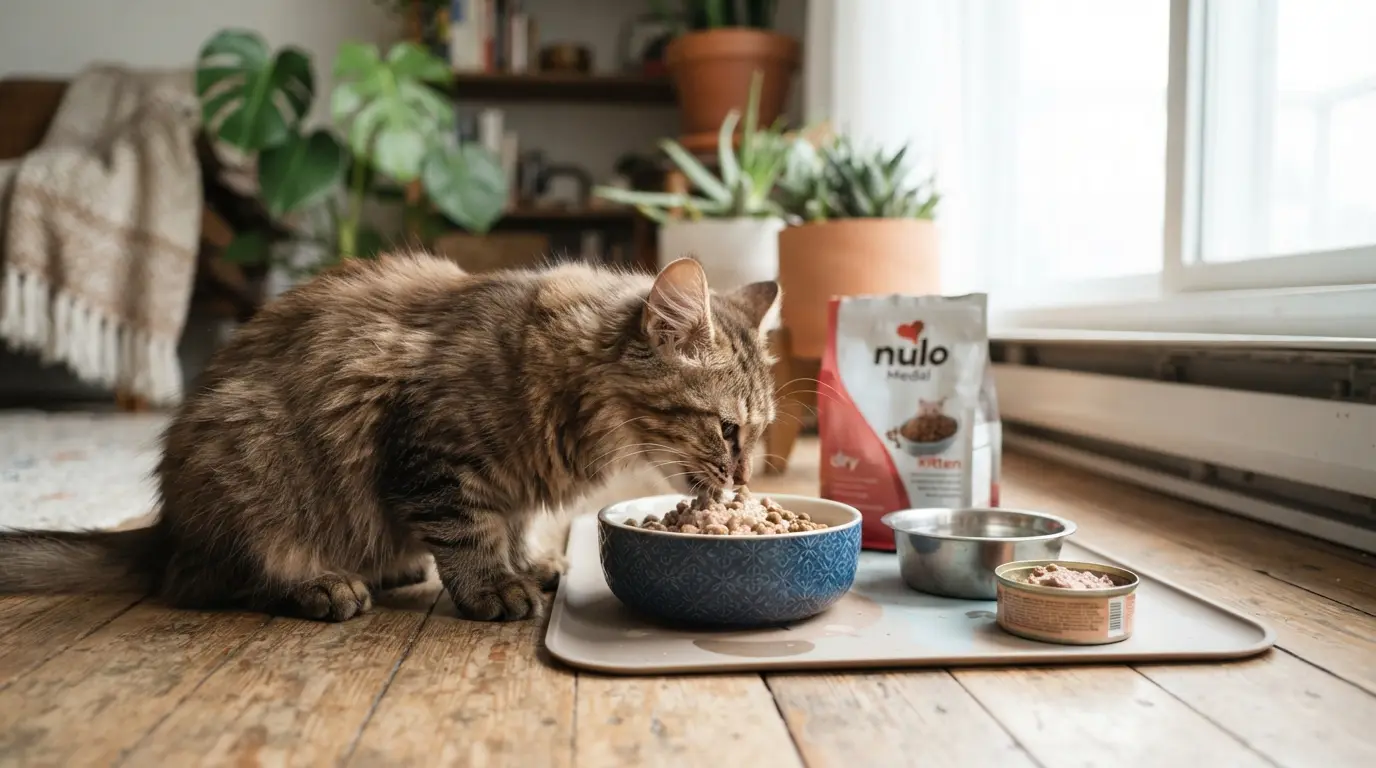
This is something you'll only truly appreciate by watching a kitten eat. Kittens under 6 months have small baby teeth and weak chewing power. If they encounter thick, round kibble over 10mm, they might pick it up, lick it, and then abandon it.

Ideal kitten dry food kibble: Diameter 6-8mm, thickness 3-4mm, ring-shaped (like a donut) or triangular, designed to break easily when bitten. Before buying, check official website photos or customer reviews with a scale for reference. If the kibble is unsuitable, soak it until the kitten is 5-6 months old before switching.

How to Soak Kitten Kibble: Step-by-Step Guide

Soaking is essential for kittens during the weaning period (3-8 weeks) and those with newly erupted teeth. Here's how we do it at our facility:

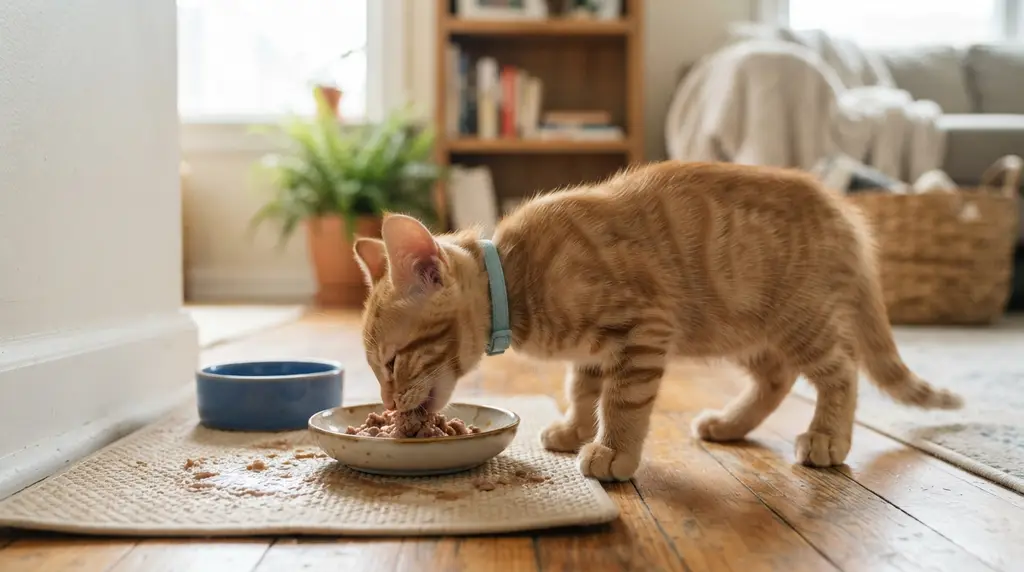
1. Measure the dry food and place it in a shallow dish or small bowl (avoid deep bowls, as they can be awkward for kittens).

2. Add warm water at 40-45°C. The ratio of kibble to water should be about 1:1 to 1:2. Test the temperature on your wrist; it should feel warm but not hot. Do not use boiling water, as temperatures over 60°C can destroy probiotics, B vitamins, and some vitamins. Do not use cow's milk, as lactose intolerance can cause diarrhea.

3. Cover and let it steep for 5-10 minutes. Press the kibble with a fork once in the middle to ensure it absorbs water evenly.

4. Before serving, ensure the temperature has cooled to 38-40°C (close to body temperature, which is most appealing).

5. Discard any uneaten food within 20-30 minutes. In Taiwan's warm climate, soaked food can become a breeding ground for bacteria, posing a risk after half an hour.

Soaking Transition Schedule

Age (Weeks/Months)TextureMethod
3-5 WeeksMushySoak until it can be mashed with a fork; 1:2 water ratio
5-7 WeeksSoft KibbleReduce water to 1:1, maintaining kibble shape
7-9 WeeksSemi-SoftHalve the water, soak for 3-5 minutes
2-3 MonthsMixedHalf soaked kibble, half dry kibble, served in the same bowl
3+ MonthsAll Dry KibbleEnsure ample fresh water is always available

After transitioning to dry food, water intake is crucial for urinary tract health. Many kittens don't drink still water, so consider our Cat Water Fountain Buying Guide or at least provide multiple water bowls and change the water daily. Incorporating wet food is also beneficial; our Luxury Functional Cans are often mixed with kibble by owners to increase hydration and palatability.

How Many Meals a Day? Age-Specific Feeding Amounts and Weight Chart

Kittens have small stomachs and fast metabolisms, requiring frequent meals. Here's a typical feeding schedule:

Age (Months)Approximate WeightMeals/DayCalorie Needs
2 Months0.8-1.0 kg4-5 MealsApprox. 200-250 kcal/kg
3 Months1.2-1.5 kg4 MealsApprox. 200 kcal/kg
4 Months1.8-2.2 kg3-4 MealsApprox. 180 kcal/kg
6 Months2.5-3.5 kg3 MealsApprox. 130 kcal/kg
8-12 Months3.0-4.5 kg2-3 MealsApprox. 100 kcal/kg

Practical tips:

  • Weigh your kitten at the same time and on the same scale every week, noting it in your phone's memo. Kittens aged 2-6 months should gain a stable 80-120g per week; monitor if there's no weight gain for two consecutive weeks.
  • The feeding recommendations on the packaging are averages. Adjust based on whether you can feel the ribs but they aren't protruding, and if the kitten has a visible waist from above.
  • A kitten constantly meowing doesn't always mean it's hungry, especially if it's a learned behavior. Refer to our guide on Is Your Cat Crying at the Food Bowl Because They're Hungry or Is It Habit? to differentiate.

Transitioning from Kitten Food to Adult Cat Food: 8-12 Month Schedule

There isn't a single fixed age for this transition; it depends on body size and sterilization.

  • 8 Months: Begin observation. Weight gain typically slows down. If the cat has been spayed/neutered, its metabolic needs decrease by about 20-25%. At this point, reduce the portion size but don't switch food yet.
  • 10-12 Months: Short-haired domestic cats, mixed breeds, and most purebreds can start transitioning to adult cat food. The indicator is if the weight has remained almost unchanged for 3-4 consecutive weeks.
  • 12-18 Months: Large long-haired breeds like Maine Coons, Ragdolls, and Norwegian Forest Cats are still developing their skeletal structure. It's recommended to delay the switch until 15-18 months or use a formula specifically for large breeds.
  • Neutered female cats that are gaining weight: Can transition to adult or neutered cat food as early as 10 months to prevent excessive calorie intake.

Transition Method: 7-10 Days, Four Stages

1. Days 1-2: 25% New Food + 75% Old Food

2. Days 3-4: 50% New Food + 50% Old Food

3. Days 5-6: 75% New Food + 25% Old Food

4. Days 7-10: 100% New Food

During the transition, monitor three things: stool consistency (should be formed and not stick to the litter box), appetite, and any vomiting. If soft stools appear, revert to the previous stage for 3 days before moving forward. For cats with sensitive stomachs, consider adding Specialty Probiotics during the transition. If soft stools persist for over 3 days, accompanied by lethargy or vomiting, it may indicate more than just a transition reaction. Refer to Cat Gastroenteritis: Recovery Timeline, Feeding, and Warning Signs and seek veterinary care if the condition worsens or persists.

5 Common Mistakes We See

1. Buying large bags and storing them in resealable bags: Kittens eat little, and a 3kg bag can last two months. Fat oxidation happens faster than you think, especially in Taiwan's summer heat. It's recommended to buy 1-1.5kg bags that can be consumed within a month. For storage tips, see How Long Can Cat Food Be Stored After Opening? Humidity Control and Food Container Selection.

2. Switching food and environment simultaneously: For the first 7-10 days after a new kitten arrives, continue feeding their original food. Let them adjust to the new environment before considering a food change.

3. Using human food as rewards: Kittens have sensitive noses and may refuse their original dry food after tasting seasoned human food. Also, some common human foods are toxic to cats. Be sure to read What Foods Are Toxic to Cats? Common Household Dangers and Poisoning Symptoms.

4. Feeding only dry food without adequate water: Establishing a habit of eating wet food during kittenhood is ten times easier than teaching it later.

5. Adding calcium, milk replacer, or raw meat yourself: Complete formulas are already balanced. Extra additions usually detract from the overall nutrition.

For Boarding, Bring Your Kitten's Own Food

If your kitten needs to be boarded during its developmental stage, always bring their usual food, pre-portioned into single meals. Sudden food changes for kittens almost invariably lead to soft stools, and they may refuse to eat due to stress in an unfamiliar environment. When we accept Boarding Reservations, we ask owners to provide details on meal frequency, portion size, and whether the food is soaked. The more detailed the information, the smoother the feeding process for the kitten.

Frequently Asked Questions

What is the best food for kittens? Do I have to buy expensive food?

There isn't one single "best" brand, but there are objective criteria: the packaging should state suitability for growth, with over 36% crude protein (dry matter), 18-22% fat, a calcium-phosphorus ratio of 1.1-1.4:1, and kibble size of 6-8mm. Mid-priced foods that meet these criteria and that your cat eats well, producing formed stools, are more suitable than expensive foods they refuse.

Does kitten dry food need to be soaked?

Soaking is highly beneficial for kittens under 8 weeks old, those with newly erupted teeth (around 3-4 months), or if you notice them picking up kibble and licking it. Kittens over 3 months with fully developed teeth don't need long-term soaking; a diet solely of soft food can be detrimental to dental health and gum stimulation.

Can the transition from kitten food to adult cat food be done earlier?

If the cat has been spayed/neutered and is significantly overweight, you can start transitioning at 10 months. However, it's not recommended to switch to adult food before 8 months, as bones and muscles are still developing. Conversely, delaying the switch until 15-18 months is safer for large long-haired breeds.

Can kitten food be mixed with canned food?

Yes, and we highly recommend it. Dry food provides convenience and calorie density, while canned food ensures adequate hydration. When mixing, calculate the total calories from both sources and avoid overfeeding. If mixing in the same bowl, it's best not to let the dry kibble sit in the canned food gravy for too long; remove any uneaten food within 20-30 minutes.

If my kitten has persistent soft stools, is it the food?

First, rule out rapid food transitions, overfeeding, or feeding too large a quantity at once. If soft stools persist for over 3 days despite adjustments, or if accompanied by vomiting, lethargy, or lack of weight gain, take your kitten to the vet to check for parasites and infections. Don't keep switching foods indefinitely.

To get all the essentials for your kitten, including bowls, litter boxes, and supplements, check out our curated sets in the Shop.


Article by CatGarden Editorial Team

CatGarden offers curated supplies, cat boarding, and grooming

Book services or shop online.
Back

Blog

Kitten Food Recommendations: How to Choose, Protein, Calcium-Phosphorus Ratio, and Soaking Methods Explained

CatGarden Editorial TeamPublished 2026/08/12Updated 2026/10/06
kitten foodkitten carecat nutritionfood selectiontransition feeding
Kitten Food Recommendations: How to Choose, Protein, Calcium-Phosphorus Ratio, and Soaking Methods Explained

When choosing kitten dry food, four numbers are all you need: crude protein over 36% (dry matter), fat 18-22%, a calcium-phosphorus ratio of 1.1-1.4:1, and kibble diameter of 6-8mm. The packaging should state "suitable for growth (growth) or all life stages." As for when to switch to adult cat food, short-haired domestic cats generally transition at 12 months, while large long-haired breeds (Maine Coon, Ragdoll) can wait until 15-18 months, completing the transition gradually over 7-10 days.

This guide is based on observing thousands of cats eating at our cattery. We aim to teach you how to read ingredient labels yourself, rather than recommending specific brands, because every kitten's digestive system is different.

Key Takeaways

  • Kitten dry food should have over 36% crude protein on a dry matter basis (AAFCO minimum for growth is 30%) and 18-22% fat to meet kittens' high energy needs of 200-250 kcal per kg of body weight.
  • A calcium-phosphorus ratio of 1.1-1.4:1 is recommended, with calcium making up 1.0-1.8% of the dry matter. An imbalanced ratio directly affects skeletal development and you should not supplement calcium yourself.
  • Kitten dry food kibble with a diameter of 6-8mm and a thin profile, in a ring or triangle shape, is easiest to chew. Kittens under 6 months struggle with thick kibble over 10mm.
  • For soaking, use 40-45°C warm water with a 1:1 to 1:2 ratio of kibble to water, soaking for 5-10 minutes. Water over 60°C destroys probiotics and some vitamins. Soaked food left at room temperature for over 30 minutes should be discarded.
  • The transition from kitten food to adult cat food should be evaluated starting at 8 months and completed by 12 months (15-18 months for large breeds), using a gradual increase of 25% new food every 2-3 days.

Why Can't Kittens Eat Adult Cat Food Directly?

Many owners ask, "Can my kitten just eat the adult cat's food?" While it might not cause immediate issues, there are three key differences.

First is calorie density. Kittens aged 2-4 months need about 200-250 kcal per kg of body weight daily, more than three times the requirement for adult cats (60-80 kcal/kg). However, their stomachs are tiny. Adult cat food is lower in calories and larger in volume, meaning a kitten might "eat until full but still not get enough."

Second are the essential nutrient ratios. Kittens have higher requirements for lysine, arginine, taurine, and DHA than adult cats. DHA is crucial for retinal and brain development, and AAFCO has specific requirements for growing animals, which adult cat food typically doesn't prioritize.

Third are calcium and phosphorus levels. The skeleton is formed within the first 12 months, and an imbalanced calcium-phosphorus ratio during this period is irreversible.

When boarding cats at our facility, we often see three-month-old kittens eating the same adult food as the rest of the family. They tend to feel bony with dull coats. Switching back to kitten food for just two to three weeks makes a noticeable difference in their coat quality.

How to Choose Kitten Food: 5 Numbers to Check on the Ingredient Label

1. Crude Protein: Over 36% Dry Matter

The "Crude Protein 34% min" on the packaging cannot be directly compared to wet food due to different moisture content. You need to calculate the dry matter content:

> Dry Matter % = Stated % ÷ (100 - Moisture %) × 100

Dry food typically has 10% moisture. So, 34% ÷ (100 - 10) × 100 ≈ 37.8% dry matter. This meets the requirement for kitten food. Conversely, if the label shows only 28%, the dry matter content is about 31%, which is barely acceptable and not ideal.

Next, look at the position of protein sources. At least one of the first three ingredients should be a specific meat source (e.g., chicken, deboned chicken, salmon, chicken meal), not vague terms like "meat meal" or "animal by-products." If the first three ingredients are corn, wheat, or corn gluten meal, a significant portion of the protein may come from plants, which kittens utilize less effectively.

2. Fat: 18-22%, and Consider the Protein-to-Fat Ratio

Kittens need fat for energy and essential fatty acids. A dry matter fat content of 18-22% is the sweet spot. Below 15% is common in "all-life-stages" formulas and may not be sufficient for kittens. Above 24% can lead to soft stools in sensitive kittens.

In practice, we calculate a rough protein-to-fat ratio: a ratio between 1.6 and 2.2 is usually indicative of a balanced formula that is less likely to cause digestive upset.

3. Calcium-Phosphorus Ratio: 1.1-1.4:1, Calcium 1.0-1.8%

This is often overlooked but is critically important. Reputable kitten foods will list calcium and phosphorus levels (sometimes only available on the website or by contacting customer service).

  • Calcium (dry matter): 1.0-1.8%
  • Phosphorus (dry matter): 0.8-1.6%
  • Calcium-Phosphorus Ratio: 1.1:1 to 1.4:1 (ratios over 1.5:1 or below 1:1 are not recommended)

Never add calcium powder or milk replacer yourself to "strengthen bones." Kitten food with a complete formula already contains adequate calcium. Adding extra calcium disrupts the balance and is a common cause of skeletal problems in kittens.

4. Check for DHA and Taurine

Look towards the end of the ingredient list for these terms: DHA (or fish oil, algae source), taurine, and lysine. Formulas that clearly state DHA content usually indicate that the manufacturer has specifically designed the product for growth, rather than simply repackaging adult food. For dry food, taurine should be at least 0.1% on a dry matter basis.

5. Kibble Size: 6-8mm, Thin Shape

This is something you'll only truly appreciate by watching a kitten eat. Kittens under 6 months have small baby teeth and weak chewing power. If they encounter thick, round kibble over 10mm, they might pick it up, lick it, and then abandon it.

Ideal kitten dry food kibble: Diameter 6-8mm, thickness 3-4mm, ring-shaped (like a donut) or triangular, designed to break easily when bitten. Before buying, check official website photos or customer reviews with a scale for reference. If the kibble is unsuitable, soak it until the kitten is 5-6 months old before switching.

How to Soak Kitten Kibble: Step-by-Step Guide

Soaking is essential for kittens during the weaning period (3-8 weeks) and those with newly erupted teeth. Here's how we do it at our facility:

1. Measure the dry food and place it in a shallow dish or small bowl (avoid deep bowls, as they can be awkward for kittens).

2. Add warm water at 40-45°C. The ratio of kibble to water should be about 1:1 to 1:2. Test the temperature on your wrist; it should feel warm but not hot. Do not use boiling water, as temperatures over 60°C can destroy probiotics, B vitamins, and some vitamins. Do not use cow's milk, as lactose intolerance can cause diarrhea.

3. Cover and let it steep for 5-10 minutes. Press the kibble with a fork once in the middle to ensure it absorbs water evenly.

4. Before serving, ensure the temperature has cooled to 38-40°C (close to body temperature, which is most appealing).

5. Discard any uneaten food within 20-30 minutes. In Taiwan's warm climate, soaked food can become a breeding ground for bacteria, posing a risk after half an hour.

Soaking Transition Schedule

Age (Weeks/Months)TextureMethod
3-5 WeeksMushySoak until it can be mashed with a fork; 1:2 water ratio
5-7 WeeksSoft KibbleReduce water to 1:1, maintaining kibble shape
7-9 WeeksSemi-SoftHalve the water, soak for 3-5 minutes
2-3 MonthsMixedHalf soaked kibble, half dry kibble, served in the same bowl
3+ MonthsAll Dry KibbleEnsure ample fresh water is always available

After transitioning to dry food, water intake is crucial for urinary tract health. Many kittens don't drink still water, so consider our Cat Water Fountain Buying Guide or at least provide multiple water bowls and change the water daily. Incorporating wet food is also beneficial; our Luxury Functional Cans are often mixed with kibble by owners to increase hydration and palatability.

How Many Meals a Day? Age-Specific Feeding Amounts and Weight Chart

Kittens have small stomachs and fast metabolisms, requiring frequent meals. Here's a typical feeding schedule:

Age (Months)Approximate WeightMeals/DayCalorie Needs
2 Months0.8-1.0 kg4-5 MealsApprox. 200-250 kcal/kg
3 Months1.2-1.5 kg4 MealsApprox. 200 kcal/kg
4 Months1.8-2.2 kg3-4 MealsApprox. 180 kcal/kg
6 Months2.5-3.5 kg3 MealsApprox. 130 kcal/kg
8-12 Months3.0-4.5 kg2-3 MealsApprox. 100 kcal/kg

Practical tips:

  • Weigh your kitten at the same time and on the same scale every week, noting it in your phone's memo. Kittens aged 2-6 months should gain a stable 80-120g per week; monitor if there's no weight gain for two consecutive weeks.
  • The feeding recommendations on the packaging are averages. Adjust based on whether you can feel the ribs but they aren't protruding, and if the kitten has a visible waist from above.
  • A kitten constantly meowing doesn't always mean it's hungry, especially if it's a learned behavior. Refer to our guide on Is Your Cat Crying at the Food Bowl Because They're Hungry or Is It Habit? to differentiate.

Transitioning from Kitten Food to Adult Cat Food: 8-12 Month Schedule

There isn't a single fixed age for this transition; it depends on body size and sterilization.

  • 8 Months: Begin observation. Weight gain typically slows down. If the cat has been spayed/neutered, its metabolic needs decrease by about 20-25%. At this point, reduce the portion size but don't switch food yet.
  • 10-12 Months: Short-haired domestic cats, mixed breeds, and most purebreds can start transitioning to adult cat food. The indicator is if the weight has remained almost unchanged for 3-4 consecutive weeks.
  • 12-18 Months: Large long-haired breeds like Maine Coons, Ragdolls, and Norwegian Forest Cats are still developing their skeletal structure. It's recommended to delay the switch until 15-18 months or use a formula specifically for large breeds.
  • Neutered female cats that are gaining weight: Can transition to adult or neutered cat food as early as 10 months to prevent excessive calorie intake.

Transition Method: 7-10 Days, Four Stages

1. Days 1-2: 25% New Food + 75% Old Food

2. Days 3-4: 50% New Food + 50% Old Food

3. Days 5-6: 75% New Food + 25% Old Food

4. Days 7-10: 100% New Food

During the transition, monitor three things: stool consistency (should be formed and not stick to the litter box), appetite, and any vomiting. If soft stools appear, revert to the previous stage for 3 days before moving forward. For cats with sensitive stomachs, consider adding Specialty Probiotics during the transition. If soft stools persist for over 3 days, accompanied by lethargy or vomiting, it may indicate more than just a transition reaction. Refer to Cat Gastroenteritis: Recovery Timeline, Feeding, and Warning Signs and seek veterinary care if the condition worsens or persists.

5 Common Mistakes We See

1. Buying large bags and storing them in resealable bags: Kittens eat little, and a 3kg bag can last two months. Fat oxidation happens faster than you think, especially in Taiwan's summer heat. It's recommended to buy 1-1.5kg bags that can be consumed within a month. For storage tips, see How Long Can Cat Food Be Stored After Opening? Humidity Control and Food Container Selection.

2. Switching food and environment simultaneously: For the first 7-10 days after a new kitten arrives, continue feeding their original food. Let them adjust to the new environment before considering a food change.

3. Using human food as rewards: Kittens have sensitive noses and may refuse their original dry food after tasting seasoned human food. Also, some common human foods are toxic to cats. Be sure to read What Foods Are Toxic to Cats? Common Household Dangers and Poisoning Symptoms.

4. Feeding only dry food without adequate water: Establishing a habit of eating wet food during kittenhood is ten times easier than teaching it later.

5. Adding calcium, milk replacer, or raw meat yourself: Complete formulas are already balanced. Extra additions usually detract from the overall nutrition.

For Boarding, Bring Your Kitten's Own Food

If your kitten needs to be boarded during its developmental stage, always bring their usual food, pre-portioned into single meals. Sudden food changes for kittens almost invariably lead to soft stools, and they may refuse to eat due to stress in an unfamiliar environment. When we accept Boarding Reservations, we ask owners to provide details on meal frequency, portion size, and whether the food is soaked. The more detailed the information, the smoother the feeding process for the kitten.

Frequently Asked Questions

What is the best food for kittens? Do I have to buy expensive food?

There isn't one single "best" brand, but there are objective criteria: the packaging should state suitability for growth, with over 36% crude protein (dry matter), 18-22% fat, a calcium-phosphorus ratio of 1.1-1.4:1, and kibble size of 6-8mm. Mid-priced foods that meet these criteria and that your cat eats well, producing formed stools, are more suitable than expensive foods they refuse.

Does kitten dry food need to be soaked?

Soaking is highly beneficial for kittens under 8 weeks old, those with newly erupted teeth (around 3-4 months), or if you notice them picking up kibble and licking it. Kittens over 3 months with fully developed teeth don't need long-term soaking; a diet solely of soft food can be detrimental to dental health and gum stimulation.

Can the transition from kitten food to adult cat food be done earlier?

If the cat has been spayed/neutered and is significantly overweight, you can start transitioning at 10 months. However, it's not recommended to switch to adult food before 8 months, as bones and muscles are still developing. Conversely, delaying the switch until 15-18 months is safer for large long-haired breeds.

Can kitten food be mixed with canned food?

Yes, and we highly recommend it. Dry food provides convenience and calorie density, while canned food ensures adequate hydration. When mixing, calculate the total calories from both sources and avoid overfeeding. If mixing in the same bowl, it's best not to let the dry kibble sit in the canned food gravy for too long; remove any uneaten food within 20-30 minutes.

If my kitten has persistent soft stools, is it the food?

First, rule out rapid food transitions, overfeeding, or feeding too large a quantity at once. If soft stools persist for over 3 days despite adjustments, or if accompanied by vomiting, lethargy, or lack of weight gain, take your kitten to the vet to check for parasites and infections. Don't keep switching foods indefinitely.

To get all the essentials for your kitten, including bowls, litter boxes, and supplements, check out our curated sets in the Shop.


Article by CatGarden Editorial Team

One email a month of cat-care tips

Hand-picked care, behavior and grooming tips once a month. Subscribe and we will send you our three most-read articles right away.

Keep reading