How Much Should a Cat Eat? Dry Food, Wet Food, and Water Basics
Daily feeding depends on calories, body condition, life stage, and activity. Learn how to balance dry food, wet food, and hydration.

There is no single feeding amount that fits every cat. The right amount depends on weight, age, activity level, neuter status, and body condition.
Key takeaways
- A cat's daily food intake should be determined by its caloric needs, which vary based on weight, age, activity level, and whether it's neutered; there's no single standard. The practical approach is to use the recommended feeding amount on the food packaging as a starting point, then fine-tune based on body condition score—ideally, you should be able to feel the ribs and see a waistline.
- Dry food is convenient, easy to store, and cost-effective, but low in moisture. Wet food (canned food, pouches) contains over 70% moisture, is highly palatable, and helps with hydration. Many owners opt for a mix of dry and wet food as a compromise.
- Cats naturally dislike drinking water, and chronic dehydration can strain their kidneys and urinary tract. Increasing the proportion of wet food is the most direct and effective way to ensure adequate hydration. Additionally, place multiple water bowls around, use a water fountain, and keep water bowls separate from food bowls and litter boxes.
- Feeding adult cats two to three meals a day is common, while kittens require smaller, more frequent meals. The key is regular, portion-controlled feeding to prevent obesity from free-feeding all day and to easily monitor appetite changes.
- Sudden food changes can cause soft stools or diarrhea. It's recommended to use a 7-day transition method: Days 1-2, use about 1/4 new food; Days 3-4, mix new and old food 50/50; Days 5-6, use about 3/4 new food; Day 7, switch completely to new food. Monitor their stools throughout the process; if issues arise, slow down the transition.
Start with Calories
Use the feeding guide on the food package as a starting point, then adjust by body shape and weight trend. You should be able to feel the ribs with light pressure and see a waist from above.
Dry Food and Wet Food
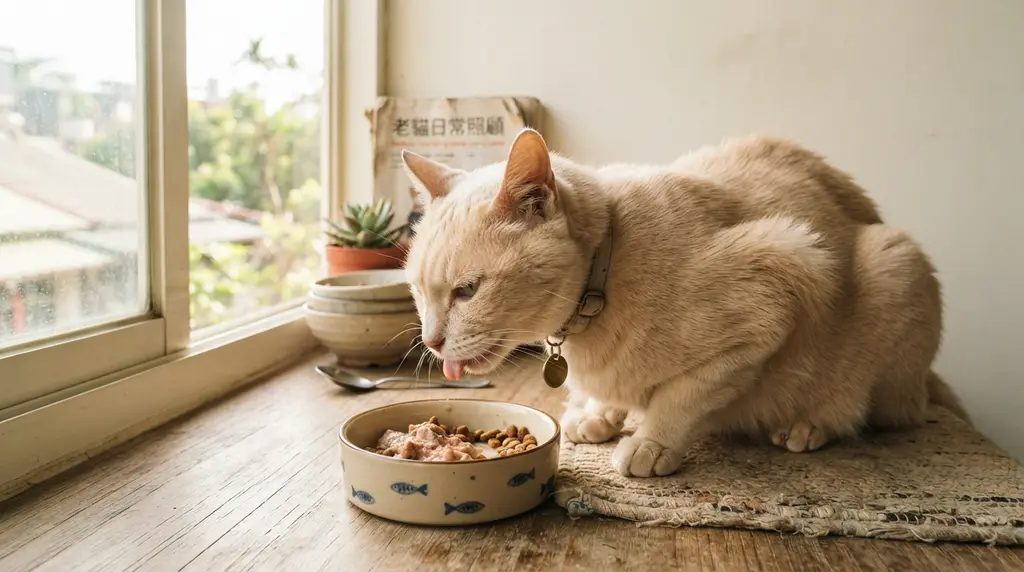
Dry food is convenient and stores well, but it is low in moisture. Wet food provides much more water and can support urinary and kidney health. Many families use a mixed routine: measured dry food plus wet meals.
Water and Routine
Cats often drink less than they need. Add water bowls in several locations, try a fountain, and increase wet food if appropriate. Feed measured meals instead of unlimited grazing when weight control or appetite monitoring matters. Change food gradually over about 7 days.
CatGarden offers curated supplies, cat boarding, and grooming
Book services or shop online.