How Much Cat Treats Per Day? A Feeding Ratio Guide for Churu, Freeze-Dried Food, and Dental Treats
Cat treats aren't forbidden, but the real key lies in "portion size" and "frequency." If you frequently use churu to soothe your cat, add freeze-dried bits to their meals, and supplement with dental treats, the total calorie intake can easily exceed the limit without you realizing it.

Cat treats aren't forbidden, but the real key lies in "portion size" and "frequency." If you frequently use churu to soothe your cat, add freeze-dried bits to their meals, and supplement with dental treats, the total calorie intake can easily exceed the limit without you realizing it.
This article provides a feeding ratio guide for churu, freeze-dried treats, dental treats, and catnip-based snacks from a daily care perspective, helping you establish simple and actionable treat rules. If your cat has a history of kidney disease, diabetes, obesity, urinary tract issues, or is on a special prescription diet, consult your veterinarian before adjusting their treat intake.
Key takeaways
- For most healthy adult cats, treat calories should be kept within 10% of their total daily caloric intake (e.g., for a cat needing 200 calories daily, treats should be under 20 calories). For cats on a weight loss plan, this is recommended to be around 5%.
- For general healthy adult cats with normal main meals, the daily limit for pureed treats is recommended to be half to one tube. If freeze-dried treats or dental chews are given on the same day, the portion size should be reduced.
- It is recommended to give 2 to 5 small freeze-dried treats daily as rewards. Due to their high protein and calorie density after dehydration, cats with kidney disease, pancreatitis, or other conditions requiring protein and phosphorus restriction should not supplement large amounts on their own.
- Dental chews can only serve as an auxiliary tool to reduce tartar and cannot replace brushing or treat periodontal disease. Their calories must be included in the daily treat allowance.
How Many Cat Treats Per Day? Remember the 10% Rule
For most healthy adult cats, a simple principle applies: the calories from treats should ideally be kept within 10% of their total daily caloric intake. This means treats are for rewards and supplements, not a replacement for complete nutrition from main meals like wet food, dry kibble, or home-cooked meals.
For example, if an adult cat needs about 200 kcal per day, treats should be limited to around 20 kcal. The calorie content varies significantly between different brands of churu, freeze-dried food, and dental treats, so the most reliable method is to check the calorie information per pack, per tube, or per piece on the packaging.
- Healthy Adult Cats: Aim for treats to be within 10% of total daily calories.
- Cats on Weight Loss: It's recommended to reduce this to about 5% and prioritize playtime over treats as rewards.
- Kittens and Senior Cats: Ensure their main meals provide sufficient nutrition first, then offer treats in small amounts.
- Cats with Chronic Illnesses: Choose low-phosphorus, low-sodium, or prescription-compatible options as advised by your veterinarian.
What we use for this
CatGarden’s own products, shipped from Taiwan Quick-Dry Pet TowelFrom CA$49.35 per pieceFree shipping on multi-packs
How Many Churu Tubes Per Day? Don't Ignore Sodium and Moisture
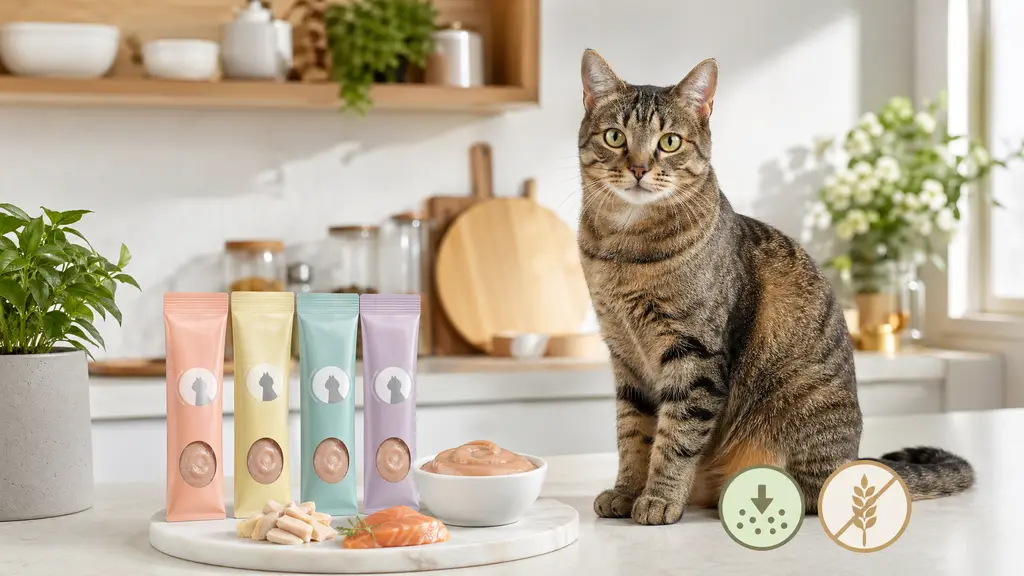
Churu has high palatability and is a favorite treat for many cats. Its advantages include high moisture content, ease of administering medication, and suitability for training and interaction. The downside is that frequent consumption can make cats pickier or even refuse their regular food.
For a generally healthy adult cat with a normal diet, it's recommended to limit churu to half to one tube per day. This ultimately depends on the calories and sodium content per tube. If your cat has already had freeze-dried treats or dental chews that day, reduce the churu portion accordingly; don't give every type of treat as usual.
3 Key Points When Choosing Churu
- Sodium Content: Prioritize low-sodium formulas to avoid rewarding your cat with high salt daily.
- Ingredient List: Look for clear meat sources and minimize artificial colors and excessive thickeners.
- Purpose: If used for medication or hydration, divide it into multiple small servings rather than dispensing the entire tube at once.
How to Give Freeze-Dried Treats? High Protein Also Counts Towards Calories
Freeze-dried treats are often considered more "natural" snacks, as their ingredients might consist solely of chicken, fish, or organs. However, after removing moisture, freeze-dried food becomes denser in calories and protein per unit weight. Small pieces can add up quickly.
For small freeze-dried pieces, you can give 2 to 5 pieces daily as interactive rewards. For larger pieces or organ-based treats, it's recommended to break them into smaller bits. Cats with kidney disease, pancreatitis, or those requiring protein and phosphorus restriction are not suitable for large amounts of freeze-dried treats.
Freeze-Dried Treats Are Better Used This Way
- Crumble them over the main meal to stimulate appetite in cats with temporary poor eating habits.
- Hide them in snuffle mats or puzzle toys to prolong eating time.
- Use them as high-value rewards during nail trimming, carrier training, or grooming sessions.
Can Dental Treats Replace Brushing? The Answer is No
Dental treats are designed to create friction during chewing, helping to reduce plaque buildup. However, they cannot replace brushing and do not treat periodontal disease. If your cat has bad breath, drools excessively, has red gums, or experiences pain while eating, they should undergo a veterinary dental examination.
Dental treats are often not low in calories. It's recommended to give them at a reduced amount compared to the package's suggested serving and count them towards the daily treat allowance. Don't give extra treats just because they are labeled as "dental."
Are Catnip and Silvervine Treats? More Like Interactive Aids
Catnip and silvervine are typically not intended for calorie supplementation; they are more like environmental enrichment tools. They can be used to encourage cats to play with toys, use scratching posts, get comfortable in new beds, or reduce boredom.
However, more is not always better. Using them 2 to 3 times a week is usually sufficient. If your cat becomes overly excited, aggressive, or experiences gastrointestinal upset after use, reduce the frequency or discontinue use.
4 Feeding Habits That Most Easily Make Cats Picky Eaters
- Immediately giving churu when they refuse their main meal: Cats learn that refusing food leads to more appealing options.
- Adding freeze-dried treats to every meal: Over time, they might only pick out the additions and refuse their main food.
- No fixed treat allowance: Different family members feeding them can lead to uncontrolled total intake.
- Using treats to calm them down before bed: This can reinforce nighttime begging behavior.
Practical Household Example: A Sample Daily Treat Schedule
If your cat is healthy and maintains a stable weight, you can schedule treats as "small portions, multiple uses." For instance, give a few bites of churu after nail trimming or grooming in the morning, and a small amount of freeze-dried food after playtime in the evening. Dental treats don't need to be given daily; schedule them based on packaging recommendations and dental health.
- Morning: 1/3 to 1/2 tube of churu, combined with grooming or medication administration.
- Evening: 2 to 3 small pieces of freeze-dried food, paired with play and training.
- Weekly: Catnip or silvervine 2 to 3 times, used with toys and scratching posts.
If multiple caregivers are in the household, it's recommended to attach a small note to the treat bag stating, "Amount given today." This small action is more important than buying expensive treats, as many obesity and picky eating problems start with family members repeatedly feeding the cat.
Safety Checklist for Choosing Cat Treats
- Check the applicable age range; kittens, adult cats, and senior cats have different needs.
- Avoid products with unclear ingredients, excessive artificial flavors, or ambiguous sourcing.
- Pay attention to sodium, phosphorus, fat, and total calories, especially for senior cats and those with chronic illnesses.
- For new treats, offer a small amount for 2 to 3 days and observe for vomiting, soft stools, or itching.
- Use treats as training tools, not as unlimited daily snacks.
When Should You Stop Giving Treats?
If your cat experiences continuous vomiting, diarrhea, itchy skin, a significant decrease in appetite, rapid weight gain, or abnormal drinking and urination patterns, stop new treats immediately and record the brand, flavor, and feeding amount. If necessary, bring the packaging to your veterinarian for assessment; this is more helpful than simply saying "they ate treats."
Frequently Asked Questions (FAQ)
Can cats eat treats every day?
Healthy cats can eat small amounts daily, but it's recommended to keep it within 10% of their total daily caloric intake. If your cat is on a weight loss plan or has a chronic illness, consult your veterinarian first.
Is one tube of churu per day too much for a cat?
Not necessarily. It depends on the churu's calories, sodium content, and other treats the cat consumes that day. If their main meals are normal and their weight is stable, one tube might be acceptable. However, if they also have freeze-dried treats and dental chews, the amount should be reduced.
Can freeze-dried food be a main meal?
Generally, treat-type freeze-dried food is not recommended as a main meal because it may not provide complete and balanced nutrition. If you intend to use it as a long-term main meal, choose products specifically labeled as complete meal formulas and ensure adequate hydration.
What should I do if my cat stops eating their food after eating treats?
First, stop giving treats for 3 to 5 days. Maintain regular meal times and avoid compensating for refusal to eat with churu. If their appetite is significantly abnormal for more than a day, or if accompanied by lethargy, seek veterinary attention promptly.
Do I still need to brush my cat's teeth if they eat dental treats daily?
No. Dental treats can only serve as a supplement and cannot replace brushing and dental check-ups. If your cat already has tartar buildup, swollen gums, or bad breath, they need a veterinary assessment.
CatGarden | Pure Cat Hotel in Banqiao, offering boarding and grooming services.
Further Reading
- How to Choose Cat Churu in 2026: A Guide to Low-Sodium, Grain-Free, and Senior Cat Treats
- What to Do About a Picky Cat? 6 Essential Improvement Methods and Transition Techniques for Owners in 2026
- What to Do If Your Cat Isn't Drinking Enough Water? 7 Ways to Increase Water Intake and Key Urinary Tract Prevention Tips in 2026
- Comprehensive Guide to Cat Health Checkups in 2026: Examination Items, Frequency, and Preparations
In conclusion, the answer to how many cat treats per day isn't a fixed number of tubes or pieces, but rather depends on calories, ingredients, and the cat's health status. By controlling treats within a reasonable proportion and using them for training, hydration, interaction, and care, you can ensure your cat enjoys treats without compromising their long-term health. For more reassuring complementary foods and treats for your cat, you can explore suitable daily options in the CatGarden product section. New customers can also receive a shopping voucher by joining our LINE.
→ Learn about CatGarden Pure Cat Grooming Services
FAQ
How should the daily caloric proportion of cat treats be managed?
Treat calories for healthy adult cats should be kept within 10% of their total daily caloric intake, and for cats on a weight loss plan, it's recommended to reduce it to around 5%. Treats should not replace the complete nutrition of main meals.
Can dental chews replace daily brushing?
No. Dental chews can only help reduce tartar through friction during chewing; they cannot replace brushing and cannot treat periodontal disease.
Can freeze-dried treats be fed as a main meal?
General snack-type freeze-dried foods may not have complete and balanced nutrition, so they are not recommended as a main meal. Only products labeled as complete main meal formulas can be used as such, and extra attention should be paid to hydration.
What should be done if a cat refuses its main meal after eating treats?
You should temporarily stop giving treats for 3 to 5 days and maintain regular meal times. Do not immediately compensate with pureed treats if the cat refuses its main meal. If the appetite is significantly abnormal for more than a day and the cat's energy level decreases, seek veterinary attention as soon as possible.
CatGarden offers curated supplies, cat boarding, and grooming
Book services or shop online.