What to Do About a Picky Cat? 6 Essential Methods and Transition Techniques for Owners
A picky cat isn't necessarily "difficult." Picky eating is one of the most frustrating dietary issues for cat owners: they sniff a newly bought wet food and walk away, only eat a specific brand of dry food, develop soft stools when transitioning, or even just lick the gravy and leave the meat. Many people assume their cat is
Key takeaways
- If a cat completely stops eating for over 24 hours, it can lead to hepatic lipidosis (fatty liver). If accompanied by symptoms like vomiting, drooling, bad breath, or chewing on one side, seek veterinary attention immediately rather than just trying a new flavor.
- To address picky eating, stop free-feeding. Instead, establish a feeding schedule of 2-4 meals per day, removing food after 20-30 minutes per meal to regulate appetite.
- When changing food, gradually transition over 7-10 days (progressing from 75% old/25% new, to 50/50, then 25% old/75% new, to fully new). For cats with sensitive stomachs or picky eaters, this transition can be extended to 2-4 weeks.
- To enhance the aroma of wet food, warm it gently by placing the bowl in warm water or adding a small amount of warm water until it's close to body temperature. Never use a microwave, as it can create hot spots.
A Picky Cat Isn't Necessarily "Difficult"
Picky eating in cats is one of the most frustrating dietary issues for owners: they sniff a newly bought wet food and walk away, only eat a specific brand of dry food, develop soft stools when transitioning, or even just lick the gravy and leave the meat. Many people assume their cat is being temperamental, but pickiness can stem from food scent, texture memory, environmental stress, feeding habits, or even oral or gastrointestinal discomfort. Understanding the cause before intervening will prevent the problem from worsening with excessive coaxing.
If your cat completely refuses to eat for over 24 hours, or if this is accompanied by lethargy, vomiting, drooling, weight loss, bad breath, or only chewing on one side of the mouth, seek veterinary attention first. Prolonged food refusal in cats can lead to hepatic lipidosis (fatty liver disease), so don't wait too long just by changing flavors.
Common Reasons for Pickiness: Identify the Type First
- Food-Related: Dry food has become stale, wet food is too cold, the scent isn't appealing enough, kibble pieces are too large, or they dislike the texture of the meat.
- Habit-Related: Free-feeding for too long, too many treats, leading the cat to believe better-tasting options are always available.
- Environment-Related: Food bowl is too close to the litter box, being stared at by other cats during meals, excessive noise at home, or a recent move.
- Health-Related: Gum pain, gastrointestinal upset, constipation, hairballs, or chronic illnesses causing a decrease in appetite.
Truly effective improvement doesn't come from constantly buying new flavors, but from establishing a stable, safe, and predictable feeding routine.
6 Methods to Improve Picky Eating in Cats
1. Establish Fixed Meal Times, Stop Free-Feeding
Free-feeding keeps cats in a state of "always having food available, even when not hungry," and food can easily oxidize and lose its appeal. It's recommended to switch to 2-4 meals per day, offering food for 20-30 minutes per meal before removing it, allowing the cat to re-establish a natural appetite rhythm.
2. Warm Wet Food to Near Body Temperature
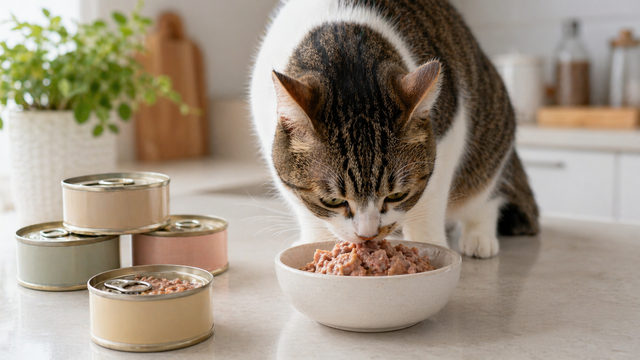
Cats rely on their sense of smell to assess food. Canned food taken directly from the refrigerator has a weaker aroma and may deter them from eating. You can warm it gently in a bowl of warm water or add a small amount of warm water to release the aroma; avoid microwaving to the point of localized overheating.
3. Reduce Treats and Human Food Interference
Giving too many treats, purees, or human-grade chicken can teach cats that refusing their main meal leads to tastier alternatives. During the improvement period, minimize treats to the lowest possible amount, using them only sparingly for training or rewards.
4. Change Bowls and Locations to Create a Safe Dining Area
Use shallow or wide-mouthed bowls to avoid whisker fatigue; place food bowls away from water bowls and litter boxes, and avoid areas near washing machines, high-traffic hallways, or where other cats might compete for food. For multi-cat households, consider feeding in separate rooms or at a distance.
5. Transition Food Gradually, Don't Switch Abruptly
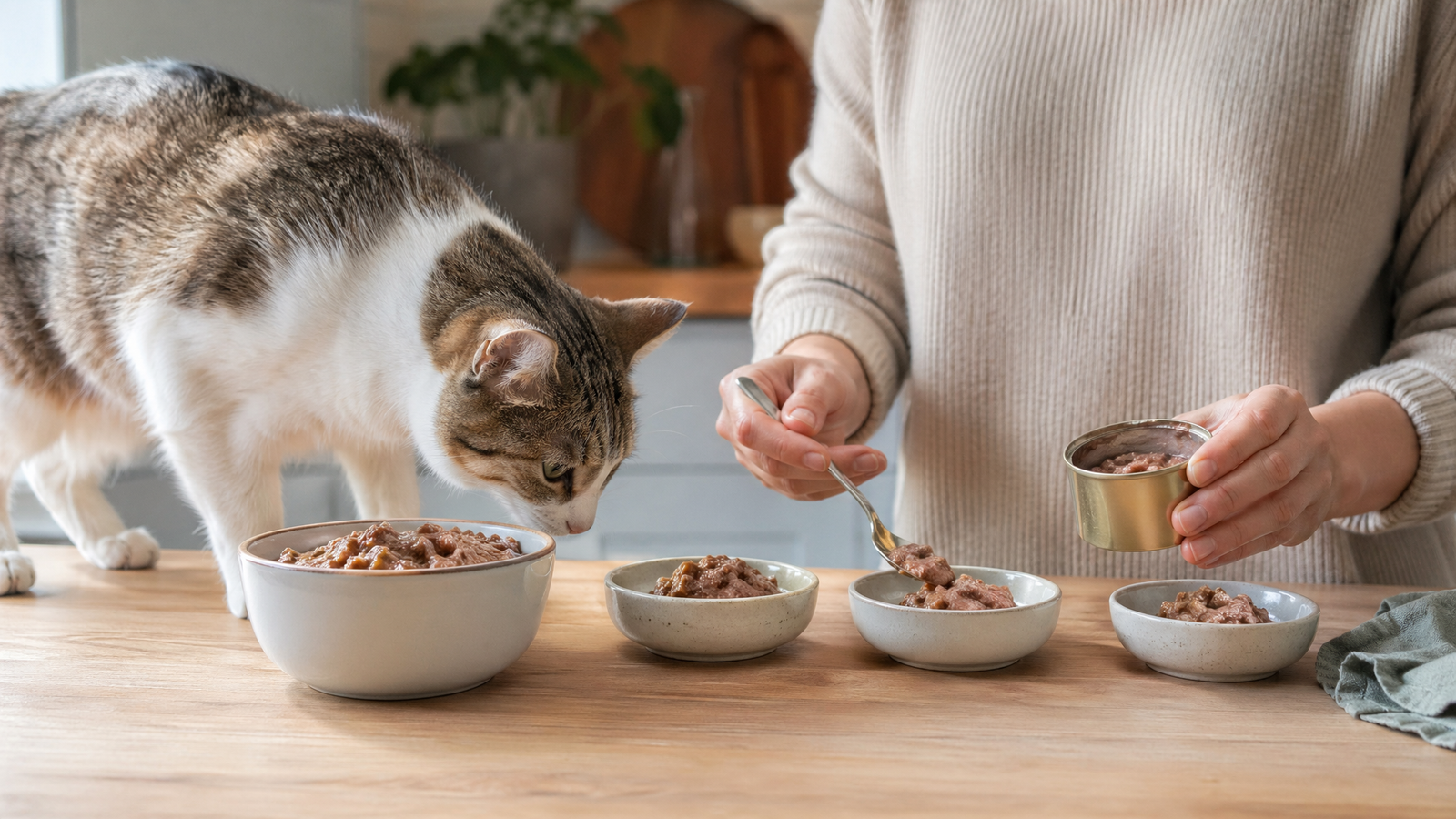
Sudden food changes can lead to refusal or gastrointestinal upset. Use a 7-10 day transition method: for the first two days, mix 75% old food with 25% new food, then move to a 50/50 ratio, followed by 25% old and 75% new, and finally, transition completely to the new food. If soft stools or vomiting occur, revert to the previous stage.
6. Choose Highly Palatable Yet Simple Ingredient Foods
Picky eaters need food that is "willingly eaten" and "doesn't cause burden" simultaneously. Wet foods primarily composed of meat, with a natural aroma and stable texture, are usually more successful than constantly changing complex flavors. CatGarden's Luxury Functional Cans can be used as an appealing option for hydration and taste, especially suitable for gradual introduction to cats who only eat dry food or get bored easily.
Food Transition Techniques: Don't Turn Mealtime into a Tug-of-War
The biggest pitfall in improving pickiness is owner anxiety. When a cat sniffs and walks away, many owners immediately switch to another flavor, add more treats, or try to hand-feed, teaching the cat that "refusing food leads to better options." The correct approach is to maintain consistency: prepare the meal, place it down quietly, and remove it after the allotted time. Offer the same meal strategy at the next feeding, without scolding or staring at the cat while they eat.
If your cat only licks the gravy, try mashing the meat into smaller pieces and mixing with a little warm water to create a paste; if your cat prefers crunchiness, use a small amount of their original dry food as a surface topper. The key is to gradually encourage the cat to accept new textures, rather than forcing them to change all their habits at once.
When to See a Veterinarian?
Pay special attention if your cat normally isn't picky but suddenly loses their appetite. Oral pain, gastrointestinal issues, kidney disease, pancreatitis, or stress-related illnesses can all manifest initially as "lack of appetite." If you observe continuous food refusal, weight loss, lethargy, vomiting, diarrhea, noticeable bad breath, or drooling, do not simply treat it as pickiness.
For daily improvement, you can incorporate CatGarden's Luxury Functional Cans to enhance palatability. If your cat's digestive system is sensitive during food transitions, consider specialized probiotics for gut health support; however, no supplements can replace a medical examination.
Frequently Asked Questions FAQ
Is it okay to starve a picky cat?
Prolonged starvation is not recommended. You can establish regular feeding times and portions, but if your cat completely refuses food for over 24 hours, or if kittens, overweight cats, or sick cats refuse to eat, seek veterinary attention promptly.
My cat only eats dry food and refuses wet food. What should I do?
Start by mixing a very small amount of wet food into their current food, or use warm water to enhance the aroma. Avoid abruptly removing the dry food, as this can lead to a strong refusal reaction.
How long does a food transition typically take to succeed?
Most cats need 7-10 days. Some picky eaters or cats with sensitive stomachs may require 2-4 weeks. Stability is more important than speed.
My cat gets bored with the same food. Should I constantly change flavors?
Rotation is possible, but random, irregular changes are not recommended. It's best to establish 2-3 flavors that are consistently accepted and switch between them gradually.
CatGarden|Banqiao Villa-Style Pure Cat Hotel, Offering Boarding and Grooming Services.
Further Reading
- The Savior for Picky Eaters! Review of 3 Canned Foods That Even the Fussiest Cats Devour
- 【Cat Food Transition Guide】7-Day Painless Transition Method! Vet Teaches You How to Switch Food Correctly
- Cat Has Poor Appetite But Good Energy? Vet Analyzes 3 Major Reasons
To help your picky cat establish a more stable feeding rhythm, you can start with a small trial of CatGarden's Luxury Functional Cans, combined with regular feeding times, warming the food to release aroma, and gradual transitions. This will encourage your feline friend to eat and reduce your anxiety.
→ Learn about the full range of CatGarden's own brand products
FAQ
Can I use prolonged starvation to address a cat's picky eating?
Prolonged starvation is not recommended. While you can establish a regular feeding schedule, if your cat completely refuses food for over 24 hours, or if it's a kitten, overweight cat, or sick cat refusing to eat, seek veterinary care promptly to prevent hepatic lipidosis.
My cat only eats dry food and refuses wet food. What should I do?
Try mixing a very small amount of wet food into their usual dry food, or warm it with water to enhance its aroma and encourage them to try it. Do not suddenly remove all dry food, as this can lead to a stronger refusal to eat.
How long does it typically take to switch a cat's food?
Most cats require 7-10 days for a food transition. Some picky eaters or cats with sensitive stomachs may need 2-4 weeks. The focus should be on a stable adaptation process.
My cat gets bored with the same food. Do I need to constantly switch to new flavors?
You can rotate flavors but avoid random switching. It's recommended to identify 2-3 flavors your cat consistently accepts and switch between them gradually.
CatGarden offers curated supplies, cat boarding, and grooming
Book services or shop online.