Picky Eater Cat Food Recommendations: 3 High Palatability Canned Foods Reviewed, Even Picky Eaters Will Eat Them
Picky Eater Cat Food Recommendations: 3 High Palatability Canned Foods Reviewed, Even Picky Eaters Will Eat Them Does the sight of your cat turning its nose up at a can of food after just five minutes, then walking away with its backside to you, sound familiar? You excitedly bought a "highly-rated canned food"
Picky Eater Cat Food Recommendations: 3 High Palatability Canned Foods Reviewed, Even Picky Eaters Will Eat Them
Does the sight of your cat turning its nose up at a can of food after just five minutes, then walking away with its backside to you, sound familiar? You excitedly bought a "highly-rated canned food," only for your feline overlord to not even sniff it, leaving you to sadly pour it down the drain. Don't worry, you're not the only frustrated cat parent.
Picky eating is actually a natural feline behavior. In the wild, cats use scent to determine if food is safe and fresh, and this instinct still operates at home. Furthermore, each cat has different preferences for texture, temperature, and smell, so finding "the right one" does require some effort. This time, we actually tested three popular "high palatability" canned foods on the market, enlisting the help of the pickiest cats we know, and the results were truly surprising.
Next, we'll analyze them one by one from the perspectives of ingredient quality, palatability performance, and nutritional value. We'll also share some practical tips to help your picky eater fall in love with food again, saving you detours and wasted money.
Key takeaways
- In a real-world test with six picky cats, the mousse-textured wet food achieved the highest palatability, with all six cats finishing within approximately three minutes and none refusing it.
- Canned food taken from the refrigerator needs to be warmed to room temperature (around 25-28 degrees Celsius) or slightly warm before feeding. Increased temperature can activate aroma molecules and prevent cold food from irritating the stomach and intestines.
- When switching to a new canned food, a gradual approach should be taken. On the first day, the new food should constitute 20% of the diet, increasing the proportion daily. The transition should take about five to seven days.
- For adult cats weighing 4 to 5 kilograms on a fully wet food diet, approximately 200 to 250 grams of wet food should be consumed daily.
- Unfinished canned food after opening must be sealed and refrigerated, and can be stored for a maximum of 48 hours to prevent bacterial growth.
Why Is Your Cat So Picky? Understand the Cause Before You Treat It
Before rushing to switch cat food, it's crucial to clarify the reasons behind your cat's picky eating. Some pickiness is behavioral, while other times it could be a health warning sign. Common reasons for picky eating include: food being too cold (canned food straight from the fridge doesn't release its aroma, so naturally, cats lose interest), unclean bowls with residual old smells, environmental stress leading to decreased appetite, and the most easily overlooked reason – gastrointestinal discomfort.
If your cat suddenly starts being picky after eating well previously, and is accompanied by lethargy, vomiting, or weight loss, please take them to the vet first. After ruling out health issues, we can then conquer your cat's taste buds with the "right food." Additionally, for cats with long-term sensitive stomachs, consider supplementing with probiotics to regulate digestive function. When their stomachs feel better, their willingness to eat will naturally increase.
Another common situation is "too many choices lead to no choice." Some cat parents, trying to please their pets, open three or four types of canned food for the cat to choose from, inadvertently cultivating the habit of the cat "licking twice from this, sniffing that, and walking away." Moderately reducing options can actually help cats focus more on eating.
Explanation of Review Standards: How We Chose and Tested
This review wasn't just a casual opening of cans and taking photos. We set three core indicators to ensure fairness and objectivity as much as possible. First is Ingredient Quality: What is the primary protein source? Are there unnecessary additives? Is the meat content high? Second is Palatability Performance: We recruited six cats widely recognized as picky eaters (including two "dry food party" members who had only eaten dry food long-term) and observed their initial reactions and consumption amounts. Third is Nutritional Balance: Do the protein, fat, and moisture ratios meet a cat's daily needs, and can it be fed as a long-term staple food?
During testing, all canned foods were warmed to near room temperature (about 25-28 degrees Celsius), served in the same type of clean ceramic bowls, to eliminate interference factors from bowls and temperature. Each canned food was tested for three days, and the average performance was used for scoring.
3 Canned Foods Put to the Test: Results Revealed
First: High Meat Content Fresh Meat Staple Food Can (Broth Type)
The characteristic of this type of canned food is visible meat shreds and rich broth, with a distinct aroma upon opening. The one we tested uses chicken as the primary protein source, with a small amount of pumpkin puree to aid digestion, and a labeled meat content of over 90%. Five out of the six test cats approached the bowl within 30 seconds of it being placed down. Among them, the two "dry food party" members initially only licked the broth, but by the second day, they started eating the meat as well.
The advantages are excellent palatability and sufficient moisture replenishment, especially suitable for cats that don't like to drink water. The disadvantage is that the protein density of broth-type cans is relatively low. If fed as the sole staple food, a larger quantity is needed to meet daily nutritional requirements, which can lead to higher food costs in the long run.
Second: Mousse Texture Functional Staple Food Can
Mousse-textured canned food blends all ingredients into a fine paste, making it particularly friendly for senior cats with dental issues or cats that dislike biting into meat chunks. The one we tested is fortified with essential nutrients like Vitamin E and taurine, with simple ingredients and no grain fillers. CatGarden's Luxury Functional Can is a representative example of this type, using tuna with scallops and added Vitamin E, balancing palatability with functional supplementation.
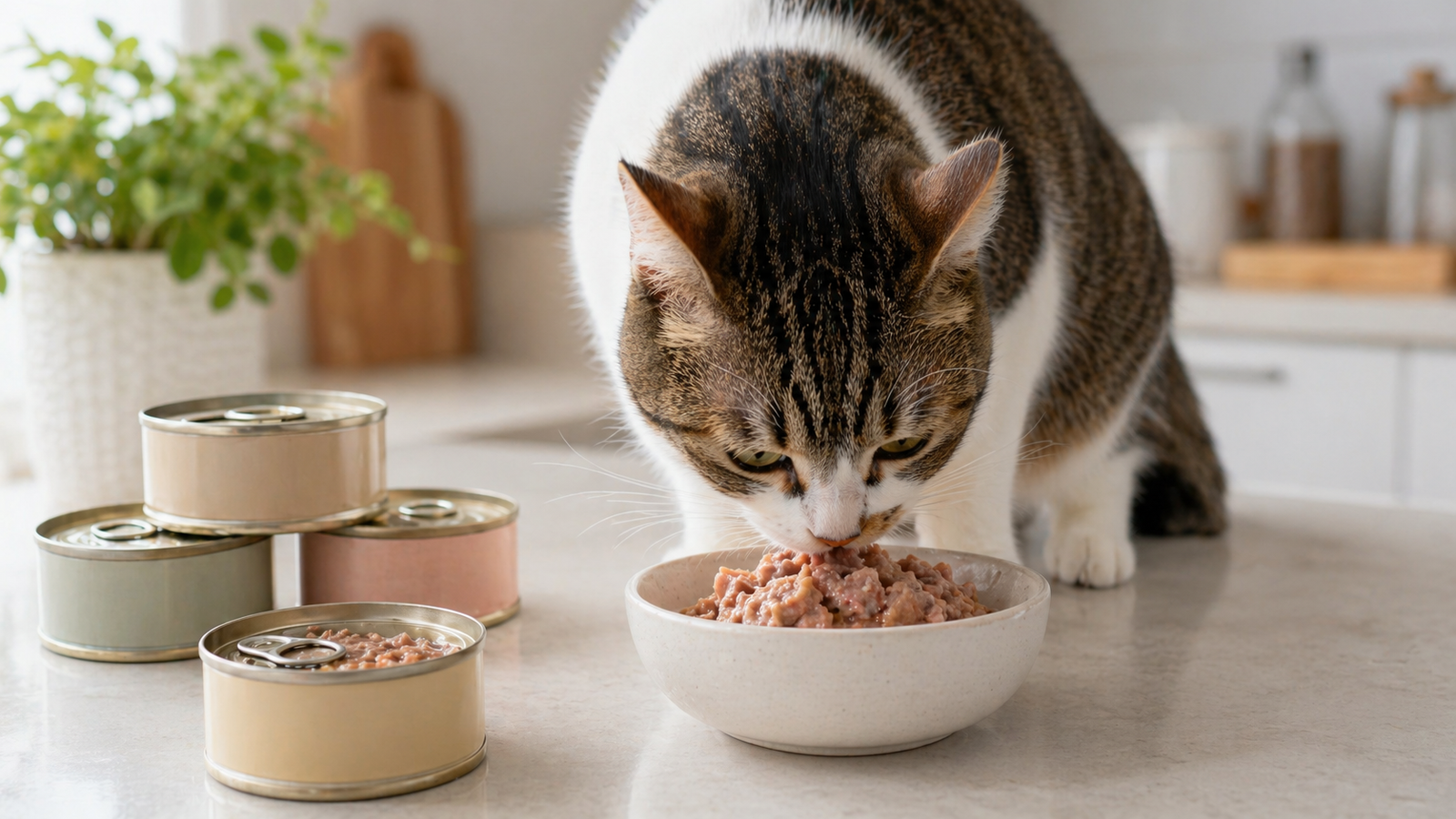
Test results showed that all six cats were willing to eat it, and they had the fastest average eating speed – finishing an 80g can in about three minutes. This is thanks to the mousse texture requiring no chewing, making it effortless for cats to eat. It's particularly worth mentioning that the two stubborn dry food eaters finished the entire can on the first day, with no hesitation period at all.
The downside is that some cat parents report a stronger smell from mousse cans after opening (to humans), and because the texture is too smooth, some cats eat too quickly and vomit. It's recommended to use a slow feeder bowl or feed in portions.
Third: Meat Chunks with Rich Broth Texture Complementary Food Can
This one follows the route of "large chunks of fresh meat soaked in rich broth," visually resembling human food the most. The protein source is a mix of salmon and chicken, with a distinct fish aroma. Palatability performance was above average; four out of the six cats ate enthusiastically, but two seemed to have an issue with the size of the meat chunks, only drinking the broth and leaving the meat in the bowl.
This type is more suitable as a complementary food to be mixed with dry food, as the label indicates it's for "nutritional supplementation" rather than a complete staple food formula. The advantages are a rich flavor and a relatively affordable price; the disadvantage is a slightly higher sodium content, making it not recommended for daily sole feeding, and cats with weaker kidney or intestinal function should pay extra attention.
5 Practical Tips to Get Picky Cats to Eat Well
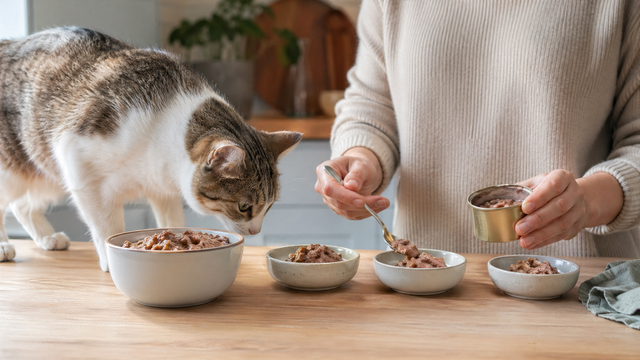
Tip 1: Warming is Key. Canned food from the refrigerator should be at least brought to room temperature, or gently warmed in a bowl of warm water to lukewarm (around body temperature). As the temperature rises, the food's aroma molecules become more active, acting like a "fragrance amplifier" for cats, instantly doubling its appeal.
Tip 2: Small Portions, Frequent Meals Instead of Filling the Bowl. Picky eaters are usually "freshness fanatics"; cats consider food left out for over 30 minutes to be stale. Instead of pouring a whole can at once and watching the cat eat two bites and leave, divide it into three to four portions, serving small amounts each time to maintain freshness.
Tip 3: Transition Food Gradually. Suddenly switching to a brand new canned food will cause many cats to refuse it because they "don't recognize the taste." The correct method is to mix the new and old food, with the new food making up 20% on the first day, gradually increasing the proportion each day, completing the transition in about five to seven days. Impatient cat parents often fail at this step.
Tip 4: Sprinkle a "Cheat Item" on the Food. A small amount of bonito flakes, nutritional yeast powder, or crushed freeze-dried treats sprinkled on top of the canned food can effectively increase its appeal. This trick is especially useful for cats transitioning from dry to wet food. Once the cat gets used to the texture of wet food, gradually reduce the "toppings."
Tip 5: Fixed Meal Times, Cultivate Hunger. Leaving dry food out all day for cats to eat anytime (free-feeding) is a major cause of picky eating. Switch to scheduled, portion-controlled feeding. Leave the food out for 15-20 minutes per meal, and then put it away. After a few days, cats will learn that "if I don't eat now, it's gone," and their eagerness to eat will significantly increase.
Three Golden Principles for Choosing Canned Food
First, look at the first three ingredients. Canned food ingredients are listed in order of quantity. The first three should ideally be specific meats (like chicken breast, tuna, salmon), not vague terms like "meat by-products" or "animal protein." The more transparent the ingredients, the more assured the quality usually is.
Second, confirm if it's a staple food can or a complementary food can. Staple food cans have a complete nutritional formula and can be fed as daily meals; complementary food cans are usually for supplemental purposes with incomplete nutrition, requiring pairing with other foods. If your cat eats a completely wet food diet, you must choose staple food cans, otherwise, long-term nutritional imbalance may occur.
Third, avoid unnecessary additives. Carrageenan, artificial colors, excessive salt, and sugar are all demerits. Cats don't need food to "look pretty"; they care about smell and texture. Simpler ingredients place less burden on the cat's body, especially for cats with sensitive stomachs.
Frequently Asked Questions
My cat only eats dry food and won't touch canned food, what should I do?
This is a common problem for many cat parents. Cats who have only eaten dry food since kittenhood may not even consider wet food as "food." It's recommended to start with mousse-textured canned food, as it has the smoothest texture and the highest acceptance rate. Initially, you can spread a thin layer of canned food paste on their dry food to let them get used to the taste, then gradually increase the proportion of wet food. The entire process may take two to four weeks, so please be patient.
How much canned food should a picky eater eat per day?
For an average adult cat weighing 4-5 kg, if eating only wet food, they need about 200-250 grams of staple food can per day (depending on the calorie density of the can). If mixing dry and wet food, increase the amount of canned food according to the reduction ratio of dry food. It's recommended to refer to the feeding guidelines on the can packaging and adjust based on the cat's body condition and activity level. Any continued weight loss or gain should prompt a reassessment of the portion size.
How long can opened canned food be stored?
After opening, if there's leftover canned food, seal it with a lid and store it in the refrigerator. It can be kept for a maximum of 48 hours. It's recommended to discard it after this time, as wet food is highly susceptible to bacterial growth. Remember to warm it up before feeding after taking it out of the refrigerator. Cold food not only affects palatability but can also irritate the cat's stomach, leading to vomiting or soft stools.
My cat suddenly went from loving food to being picky, is the canned food the problem?
Not necessarily. A cat's sudden pickiness can be related to seasonal changes, stress, dental pain, gastrointestinal discomfort, and other factors. If you've ruled out food spoilage and the pickiness persists for more than two days, accompanied by other abnormal symptoms (lethargy, vomiting, not drinking water), please seek veterinary attention promptly. Simple "food fatigue" is also possible; rotating different flavors periodically can maintain freshness.
Can kittens eat these canned foods too?
It depends on the age indicated on the can. Some staple food cans are formulated for all life stages (all life stages), and kittens can eat them safely; however, some are designed specifically for adult cats, and their nutritional ratios may not meet the high calorie and protein needs of kittens. Kittens should prioritize products labeled "suitable for kittens" or "all life stages" to ensure they receive adequate nutrients for growth.
Conclusion: Find the Right Canned Food, and Even Picky Eaters Can Become Enthusiastic Eaters
After this review, the mousse-textured functional staple food can scored the highest in palatability, with an impressive "zero refusal rate." Broth-type cans are a great helper for hydration, suitable for cats that don't like to drink water. While complementary food cans are enticing in flavor, their nutritional completeness is insufficient, making them more suitable as a "side dish" to meals rather than the main course.
Most importantly, solving picky eating isn't just about changing canned food. Warming, small portions, frequent meals, and gradual transitions – getting these daily details right often yields more significant results than buying the most expensive canned food. Every cat's preference is unique. Try more, observe more, and you'll surely find the one that makes your feline ruler willingly bury their head and finish every last bit. We wish all cat parents a swift end to the daily frustration of "being rejected after opening a can"!
References
CatGarden | A luxury cat-only hotel in Banqiao, offering boarding and grooming services.
Further Reading
- 【2026 Staple Food Can Selection Guide】Staple Food vs. Complementary Food: Understand Ingredients in 3 Steps
- Is It Better for Cats to Eat Dry Food or Staple Food Cans? Nutritional Pros and Cons, How to Feed
- Is Wet Food Good for Cats? 4 Major Benefits + Staple Food Can Selection + Full Transition Guide
CatGarden offers curated supplies, cat boarding, and grooming
Book services or shop online.