What to Do When Your Cat's Routine is Disrupted During Summer Break? Adjust Playtime, Feeding, and Sleep First
Why does your cat's routine get disrupted when you're home more during summer break? With more activity at home during the day and later bedtimes for humans, cats may find their established sleep, patrol, and feeding schedules interrupted.
Key Takeaways
- Cats are crepuscular, meaning they are most active at dawn and dusk. They need long rest periods midday and late at night. During summer break, family members staying up late, children running around, and prolonged TV use can disrupt a cat's sleep, leading to poor daytime rest and increased nighttime activity.
- If the disruption is solely due to changes in the family's schedule, a consistent adjustment of the cat's routine typically shows improvement within one to two weeks, not overnight.
- It's recommended to schedule main play sessions in the evening before dinner, mimicking the natural "hunt, eat, groom, rest" cycle. Use a consistent opening routine and end play with the cat successfully "catching" its prey, followed by a small meal or treat.
- Feeding should be consistent: breakfast, dinner, and a small bedtime snack. If you offer treats in the middle of the night, your cat will learn that meowing to wake you up results in food, so avoid responding to nighttime vocalizations with treats.
- If your cat suddenly yowls at night, exhibits abnormal activity levels, has a significantly increased or decreased appetite, experiences weight changes, or drinks and urinates frequently, it could be related to pain, urinary tract issues, thyroid problems, or gastrointestinal issues. It's advisable to schedule a veterinary check-up, especially for senior cats.
Why Does Your Cat's Routine Get Disrupted When You're Home More During Summer Break?
Summer break often means more activity at home during the day and later bedtimes for humans. For cats, this doesn't necessarily translate to "happy to have company"; it can disrupt their established schedule for sleeping, patrolling, and eating. Especially in Taiwan's hot and humid summers, the opening and closing of air conditioners, frequent door traffic, and the sounds of family activities can make a cat's routine unstable.
Cats are naturally crepuscular, meaning they are most active at dawn and dusk, and require long periods of rest during the day and late at night. If children are running around the house during summer break, the living room TV is on for extended periods, and everyone stays up late, cats may be forced to stay awake. Over time, this can lead to poor daytime sleep, increased nighttime restlessness, and even demands for play or food in the middle of the night.
First, Differentiate: Is it Boredom, Disturbance, or Increased Stress?
Before adjusting your cat's routine, observe its disruptive behavior. If your cat is simply energetic in the evening, chasing your feet, or playing with toys, it's likely due to insufficient daytime stimulation or inconsistent playtime. This situation can be gradually corrected through regular play, environmental enrichment, and structured feeding.
However, if your cat starts hiding, hisses frequently, has a decreased appetite, over-grooms, urinates inappropriately, or becomes noticeably tense when approached by family members, it's more than just boredom. Increased household members, more visitors, construction noise, or frequent transitions between air-conditioned rooms and hot spaces during summer break can elevate stress levels. In such cases, avoid scolding or forcing interaction; reducing the sources of disturbance is more important.
Simple Checks You Can Do First
- Has someone recently moved in, is someone home for an extended period during summer break, or are friends and relatives visiting frequently?
- Have the locations of the litter box, food bowls, or water bowls become noisier or more frequently disturbed?
- Is your cat only restless during specific times, or does it seem anxious all day?
- Have there been any significant changes in appetite, urination, defecation, or activity levels?
What we use for this
CatGarden’s own products, shipped from Taiwan Premium CatnipFrom CA$36.65 per jarFree shipping on multi-packs
How to Schedule Playtime? Stabilize the Rhythm with Consistent Openings and Closings
To stabilize your cat's routine, playtime shouldn't just depend on human availability; it should be scheduled at consistent times. It's recommended to arrange the main play sessions in the evening, before dinner, to mimic the natural "hunt, eat, groom, rest" cycle. The duration doesn't have to be long each day, but consistency is more important than exhausting play sessions.
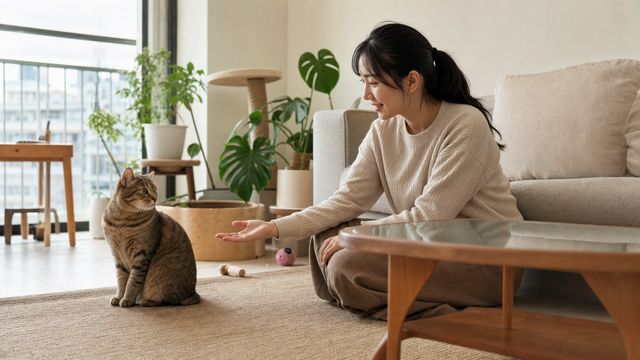
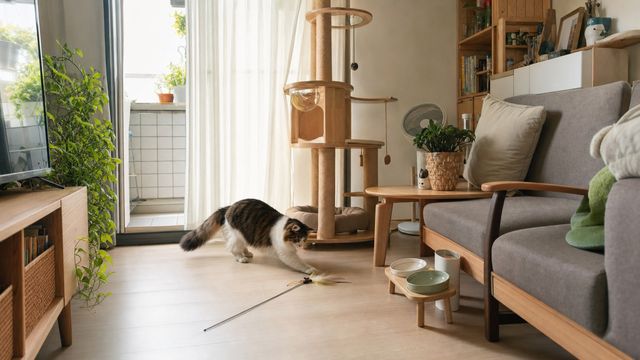
Playtime can begin with a consistent opening, such as taking out the same feather wand, moving to the same play area, or using a similar tone of voice. During play, make the toy hide, pause, and escape like prey, rather than constantly darting around in front of the cat. End the session with the cat successfully "catching" the prey, followed by a small meal or treat. This helps the cat understand that playtime is over and makes it more willing to rest at night.
Playtime Arrangements Suitable for Families During Summer Break
If you have children at home, it's advisable to establish "playtime" and "do not disturb" periods. Do not chase, poke, or pick up your cat while it's sleeping, as this can lead it to associate people being home with stress. Children can be responsible for tossing safe treat balls, refilling water, and tidying toys, but interactive play with feather wands should be supervised by adults to avoid excessive pulling or the cat ingesting string.
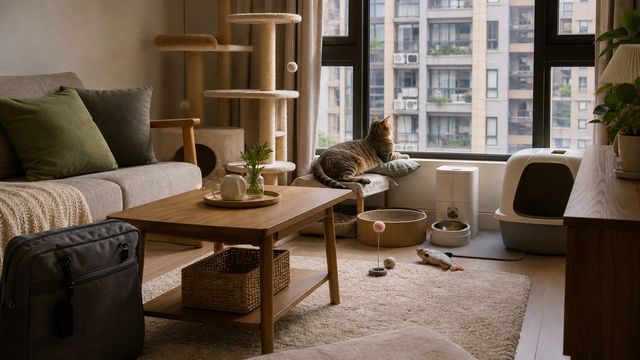
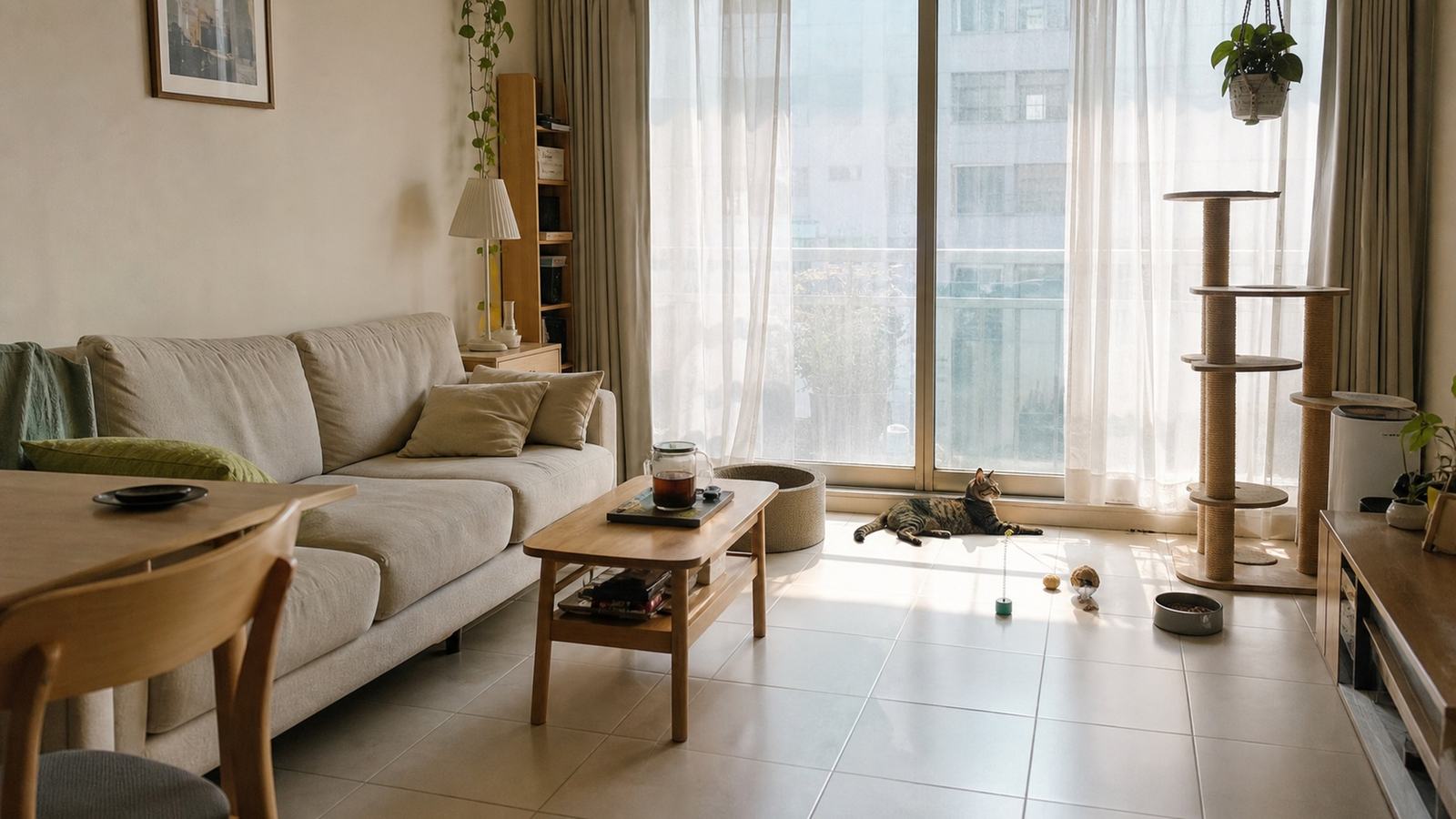
For small urban apartments, even limited space can be used to design a routine. Distribute scratching posts, shelves, cardboard boxes, and scratching pads in different corners to create routes for the cat to observe, hide, and move around. When the environment itself offers more to do, the cat's routine won't solely depend on human play for maintenance.
How to Adjust Feeding, Sleep, and Air-Conditioned Environments Together?
Feeding times directly impact a cat's routine. If everyone stays up late during summer break and you offer treats in the middle of the night, your cat will quickly learn that meowing to wake you up results in food. A better approach is to have fixed times for breakfast, dinner, and a small bedtime snack. The bedtime snack should be offered after playtime and should not be too large, but it signals to the cat that it's time to rest after eating.
Food preservation is also important during the summer. Wet food should not be left at room temperature for too long, especially during the rainy season or in rooms without air conditioning, as it can spoil more easily. If your cat's appetite decreases during the day, it may not just be picky eating; it could also be related to heat, low activity levels, or stress. Increase the number of drinking stations, use a circulating water fountain or multiple water bowls, and ensure water bowls are not placed next to the litter box.
Sleep areas should be quiet and offer an escape route
Cats need safe, undisturbed sleep areas, especially when there is more activity at home during summer break. A sleeping spot doesn't need to be luxurious, but it should be away from high-traffic areas, the TV, doorways, and places where children frequently play. If your cat likes high places, provide a stable cat tree or a cushioned shelf where it can survey its surroundings without being disturbed.
The air-conditioned environment should also be considered based on the cat's reaction; colder is not always better. The temperature difference between indoors and outdoors in Taiwan's summer is significant. Some cats will avoid direct airflow, while others will stay in cool areas all day. It's recommended to allow your cat the freedom to choose between air-conditioned rooms, shady corners, and warmer resting spots. Avoid directing airflow directly onto their sleeping area, as this is more effective in stabilizing their routine than simply lowering the temperature.
In What Situations Is It Not Just a Routine Problem, and You Need to Consult a Veterinarian or Behavior Specialist First?
If your cat suddenly yowls at night, exhibits abnormal activity levels, has a significantly increased or decreased appetite, experiences weight changes, or drinks and urinates frequently, don't just dismiss it as a disrupted routine. These symptoms could be related to pain, urinary tract issues, thyroid problems, gastrointestinal discomfort, or other health problems. Changes in sleep patterns and vocalizations, especially in senior cats, warrant a veterinary check-up.
Behavioral issues also require assessment based on severity. If your cat exhibits aggression, persistent inappropriate urination, compulsive licking, continuous hiding, or if household members' differing care approaches increase its stress, seek help from a veterinary behaviorist or a professional behavior consultant. Ruling out medical conditions first and then adjusting the environment and interactions is usually much more effective than relying solely on punishment or confinement.
Do Not Use Punishment for Nighttime Vocalizations
Spraying water, hitting, or confining your cat will likely only increase its anxiety and can damage its trust in you. If your cat vocalizes at night, ensure it gets enough activity during the day, maintain a consistent evening playtime and feeding schedule, and avoid rewarding nighttime meowing with treats. Unless it's a medical emergency, adjusting a cat's routine takes one to several weeks and won't change overnight.
You can also create simple household rules, such as "Do not pet the cat while it's sleeping," "No treats after 10 PM," or "Put away the feather wand after use." When the entire family follows the same approach, the signals your cat receives will be clear. Summer break is a temporary change in lifestyle, but a stable routine can provide your cat with a sense of security.
FAQ
How Long Does It Take for a Cat's Routine Disruption to Recover?
If the disruption is solely due to changes in the family's schedule during summer break, a consistent adjustment typically shows improvement within one to two weeks. The key is to maintain a fixed schedule for playtime, feeding, and sleep environment daily; don't be very diligent one day and completely different the next. If there are simultaneous issues with appetite or elimination, don't just wait for it to resolve on its own.
Is it Normal for a Cat to Sleep All Day and Be Hyperactive at Night?
It's normal for cats to be more active at dawn and dusk. However, if nighttime hyperactivity disrupts the entire household's sleep, it usually indicates insufficient daytime stimulation or a lack of a proper wind-down routine in the evening. You can schedule the main play sessions around dinner time, followed by a small bedtime meal. Avoid rewarding noisy behavior with toys or treats in the middle of the night.
Does Running the Air Conditioner Affect a Cat's Routine?
Yes, especially the temperature differences, airflow, and room transitions can affect a cat's rest quality. It's recommended to provide multiple temperature options, avoid blowing cold air directly onto sleeping areas, and not confine cats to air-conditioned rooms they cannot leave. Observing where they frequently rest is usually a more accurate indicator than just looking at a thermometer.
My Kids Are Home for Summer Break, How Can I Prevent My Cat from Getting Too Stressed?
Establish simple rules: Do not disturb the cat while it's sleeping, do not force interaction when it's hiding, and have adults supervise toy use. Also, designate a quiet, exclusive area for the cat where it can retreat from people. When a cat knows it has an escape route, it's less likely to become anxious due to an increase in household members.
Do I Need to Buy a Lot of Things to Adjust the Routine?
Not necessarily. The most important thing is a consistent rhythm and proper use of existing space. However, suitable scratching posts, feather wands, sleeping beds, water fountains, food bowls, or puzzle feeders can make the adjustment smoother. When selecting items, consider the cat's age, activity level, and living space; you don't need to replace everything at once.
Conclusion: Supplies are Just Aids; the Real Key is a Stable Rhythm
Having more time at home during summer break doesn't necessarily mean your cat will be happier; what it needs is predictable playtime, feeding, rest, and personal space. By establishing a consistent daily routine and supplementing it with appropriate cat supplies, such as feather wands, scratching posts, sleeping beds, water fountains, and puzzle feeders, you can more easily bring your cat's routine back to a stable state. When choosing products, prioritize safety, durability, and ease of cleaning, ensuring your cat can live comfortably even during Taiwan's hot and humid summers.
Further Reading
- Should You Seek Cat Behavior Consultation? First, Check Which Situations of Inappropriate Urination, Aggression, and Anxiety Require Professional Help
- How Do a Cat's Five Senses Affect Daily Life? Start by Checking Stress Levels Through Scent, Sound, and Touch Boundaries
- Is a Cat Behavior Course Necessary? Beginners Should First Understand Problem Types, Self-Learning Boundaries, and Home Adjustments
Frequently Asked Questions
How Long Does It Take for a Cat's Routine Disruption to Recover?
If the disruption is solely due to changes in the family's schedule during summer break, a consistent adjustment typically shows improvement within one to two weeks. The key is to maintain a fixed schedule for playtime, feeding, and sleep environment daily. If there are simultaneous issues with appetite or elimination, don't just wait for it to resolve on its own.
Is it Normal for a Cat to Sleep All Day and Be Hyperactive at Night?
It's normal for cats to be more active at dawn and dusk. However, if nighttime hyperactivity disrupts the entire household's sleep, it usually indicates insufficient daytime stimulation or a lack of a proper wind-down routine in the evening. You can schedule the main play sessions around dinner time, followed by a small bedtime meal. Avoid rewarding noisy behavior with toys or treats in the middle of the night.
Does Running the Air Conditioner Affect a Cat's Routine?
Yes, especially the temperature differences, airflow, and room transitions can affect a cat's rest quality. It's recommended to provide multiple temperature options, avoid blowing cold air directly onto sleeping areas, and not confine cats to air-conditioned rooms they cannot leave. Observing where they frequently rest is usually a more accurate indicator than just looking at a thermometer.
My Kids Are Home for Summer Break, How Can I Prevent My Cat from Getting Too Stressed?
Establish simple rules: Do not disturb the cat while it's sleeping, do not force interaction when it's hiding, and have adults supervise toy use. Also, designate a quiet, exclusive area for the cat where it can retreat from people. When a cat knows it has an escape route, it's less likely to become anxious due to an increase in household members.
Do I Need to Buy a Lot of Things to Adjust the Routine?
Not necessarily. The most important thing is a consistent rhythm and proper use of existing space. However, suitable scratching posts, feather wands, sleeping beds, water fountains, food bowls, or puzzle feeders can make the adjustment smoother. When selecting items, consider the cat's age, activity level, and living space; you don't need to replace everything at once.
CatGarden offers curated supplies, cat boarding, and grooming
Book services or shop online.