Should You Seek Cat Behavior Consultation? Assess Urination, Aggression, and Anxiety Issues First
What's the difference between cat behavior consultation and cat behavior classes? When owners encounter issues like inappropriate urination, biting, or midnight howling, their first instinct is often to search for "cat behavior consultation." However, terms like "cat behavior class" are also frequently seen. Simply put, cat behavior classes are more preventative.
Key Takeaways
- Cat behavior classes focus on preventative learning, covering common principles like litter box setup, vertical space, and play rhythm. Cat behavior consultations are case-specific, considering the cat's age, medical history, home layout, cohabitants (human and animal), and the frequency of the problem.
- For sudden inappropriate urination, frequent litter box visits, reduced urine output, blood in urine, or vocalization during urination, it's recommended to consult a veterinarian first to rule out urinary tract infections, stones, kidney issues, or pain.
- The recommended number of litter boxes is at least one more than the number of cats, placed in a quiet, well-ventilated area with an easily accessible exit.
- When cleaning areas of inappropriate urination, use cleaners that break down urine odor, not just air fresheners that mask the smell. Lingering odors can cause cats to repeatedly use the same spot as a toilet.
- Excessive grooming should not be immediately treated as anxiety. First, rule out allergies, parasites, fungal infections, or skin inflammation. Pay special attention if grooming leads to hair loss, redness, or scabs.
What's the Difference Between Cat Behavior Consultation and Cat Behavior Class?
When owners encounter issues like inappropriate urination, biting, or midnight howling, their first instinct is often to search for "cat behavior consultation." However, terms like "cat behavior class" are also frequently seen. Simply put, cat behavior classes are more preventative. They are suitable for owners who want to understand feline behavior, create a cat-friendly environment, or are new to cat ownership. These classes typically cover common principles such as litter box setup, vertical space, play rhythm, and stress signals.
Cat behavior consultations, on the other hand, are more focused on individual case problems. They take into account information like the cat's age, medical history, home layout, cohabitants (human and animal), and the frequency of the problem. When a behavior starts to significantly impact daily life—such as daily inappropriate urination, aggression towards family members, long-term hiding, or excessive grooming—it's more than just a matter of "learning a bit more." At this point, professional assistance is needed to break down the causes and identify a sequence of actionable adjustments.
When Should You Consult a Veterinarian First to Rule Out Medical Conditions?
Behavioral problems are not always solely psychological or environmental. Many situations that appear as bad temper or deliberate misbehavior might actually be related to physical discomfort. This is especially true for sudden inappropriate urination, frequent litter box visits, reduced urine output, blood in urine, or vocalization during urination. In these cases, it's recommended to consult a veterinarian first. Urinary tract infections, stones, kidney problems, or pain can cause cats to associate the litter box with discomfort.
Aggression is similar. If a previously affectionate cat suddenly becomes resistant to petting, bites when picked up, or avoids certain areas or reacts defensively when touched, pain, dental issues, degenerative joint disease, or skin discomfort should be ruled out first. Excessive grooming might be related to allergies, parasites, fungal infections, or skin inflammation and shouldn't be immediately treated as anxiety. A veterinary examination isn't to dismiss the need for behavior consultation; rather, it ensures more accurate assessments later and prevents medical issues from being mistaken for purely behavioral ones.
What we use for this
CatGarden’s own products, shipped from Taiwan Premium CatnipFrom CA$36.65 per jarFree shipping on multi-packs
Inappropriate Urination, Aggression, Excessive Grooming: When is Professional Intervention Needed?
The most common indicators for inappropriate urination are frequency, location, and whether the problem is worsening. If a cat occasionally has accidents outside the litter box, it might be due to a dirty litter box, an unsuitable location, or lingering odors from humidity during the rainy season. Adjusting the environment might help. However, if the cat consistently urinates on the bed, sofa, or near doorways, or if the problem persists after cleaning, it's advisable to arrange a cat behavior consultation. This is because underlying issues like territorial stress, insecurity, or resource competition among multiple cats might be involved.
Aggression needs to be assessed based on the severity of harm and the triggering context. Biting hands during play or becoming aggressive after prolonged petting is different from suddenly chasing and attacking family members, attacking another cat, or lunging at guests as soon as they enter. If it has resulted in bleeding, family members are becoming fearful of interaction, or the cat is in a prolonged state of tension, professional intervention is more suitable than scolding, confinement, or spraying water.
Excessive grooming is often overlooked, as many owners assume their cat is simply being clean. However, if grooming leads to hair loss, redness, or scabs, or is concentrated on the abdomen, inner thighs, or base of the tail, it warrants attention. After ruling out skin and pain issues, if stress, boredom, or environmental changes are suspected, a cat behavior consultation can help identify the sources of stress and develop a plan for alternative behaviors and environmental adjustments.
What Records, Videos, and Home Layout Information Should Be Prepared Before Consultation?
The more thorough the preparation before a consultation, the more efficient the assessment usually is. It's recommended to record the time, location, frequency of the problem, what was happening in the household at the time, and the cat's body language before and after. For example, knowing whether the inappropriate urination occurred at night, after leaving the house, after guests arrived, or before and after scooping the litter box provides crucial clues. Instead of just saying "The cat has been acting strange lately," try to describe the situation with facts.
Videos can also be very helpful, especially for capturing pre-aggression signals like tail, ear, and pupil dilation, or body stiffness, which are often more accurate than post-event descriptions. When recording, don't intentionally provoke the cat to recreate the problem, nor should you make the cat more anxious just to get a video. Using everyday surveillance cameras or recording remotely with a phone, capturing a few minutes before and after the event, allows the consultant to see the full context.
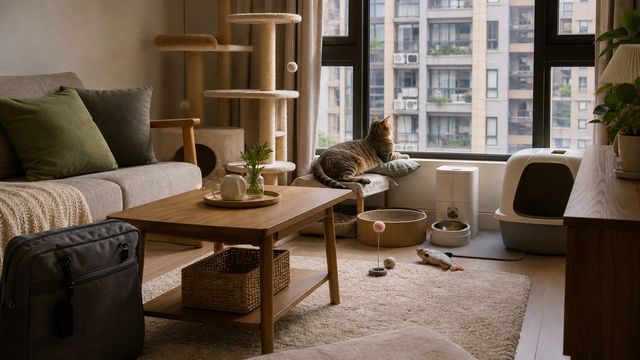
Information about the home layout includes the locations of litter boxes, food and water bowls, sleeping areas, windowsills, cat trees, scratching posts, doorways, and frequently used human pathways. A common issue in small urban homes is limited space, but all resources are clustered in one area, forcing cats into direct encounters with humans or other pets. For multi-cat households, also mark the areas where each cat frequently stays, as unequal resource distribution is often a source of conflict.
Environmental Adjustments and Product Checks You Can Do at Home
Before booking a cat behavior consultation, owners can make a few low-risk adjustments. The recommended number of litter boxes is at least one more than the number of cats, placed in a quiet, well-ventilated area with an easily accessible exit. Litter boxes that are too small, have high sides, are covered and stuffy, or contain heavily scented litter might deter cats from using them, especially during Taiwan's humid summers when odors can accumulate more noticeably.
When cleaning areas of inappropriate urination, it's recommended to use cleaning products specifically designed to break down urine odors, rather than just masking them with air fresheners. What seems clean to humans might still be detectable by cats. If the urine odor remains, cats may repeatedly use the same spot as a toilet, leading to recurring problems.
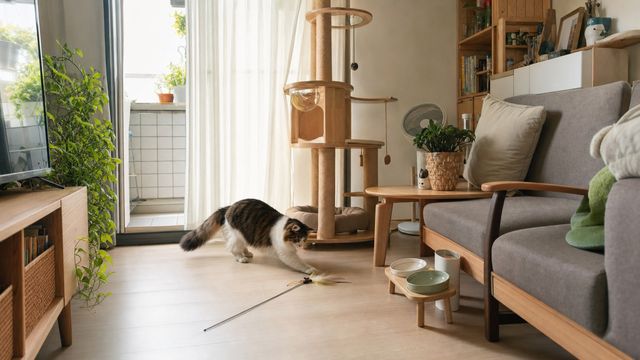
Aggression and anxiety issues can also be addressed by adjusting daily routines. Schedule short interactive play sessions daily, using a wand toy to simulate hunting, and allow the cat to successfully catch the toy before feeding or offering a treat. This aligns better with a cat's predatory cycle than simply expending energy. You can also increase vertical space, hiding spots, scratching posts, and window perches in your home, giving cats more options rather than forcing them to hide under the bed or guard doorways.
FAQ
Does inappropriate urination always require a cat behavior consultation?
Not necessarily. If the issue is simply a dirty litter box or a sudden change in litter, adjusting supplies and cleaning habits might resolve it. However, if the inappropriate urination persists for more than one to two weeks, consistently occurs on the bed or sofa, or is accompanied by abnormal urination, it's recommended to consult a veterinarian first before considering a cat behavior consultation.
If a cat suddenly attacks, does it mean it has become aggressive?
Not necessarily. Sudden attacks can be related to pain, fear, stress, incorrect play methods, or being touched in an uncomfortable area. If attacks become frequent or cause injury, punishment is not recommended, as it can make the cat more anxious.
Will one consultation lead to improvement?
Some issues improve quickly after adjusting litter boxes, pathways, or interaction methods. However, long-term anxiety, multi-cat conflicts, or severe aggression usually require ongoing observation and phased adjustments. Cat behavior consultation is more about establishing direction and a plan, not a guarantee of solving all problems in one session.
Can anxiety be improved even in a small home?
Yes. The key is to provide cats with safe pathways, hiding spots, elevated levels for climbing, and dispersed resource points. Smaller spaces require careful arrangement of litter boxes, food and water bowls, and resting areas to prevent cats from being forced onto stressful pathways.
Conclusion
Cat behavioral issues are rarely caused by a single factor. Inappropriate urination, aggression, anxiety, and excessive grooming often involve a combination of physical health, environmental stress, and unsuitable products. When you have ruled out medical conditions, made basic adjustments, and the problem still persists, a cat behavior consultation is a worthwhile next step. You can also start by checking litter boxes, cleaning supplies, scratching posts, toys, sleeping areas, and vertical spaces to ensure your cat's supplies truly meet its needs. When selecting everyday items at CatGarden, you can choose configurations that better suit your home's specific issues, laying a solid foundation for the environment, which can help alleviate many behavioral concerns.
Further Reading
- How Do a Cat's Five Senses Affect Daily Life? Start by Checking Stress Levels Through Scent, Sound, and Touch Boundaries
- Is a Cat Behavior Course Necessary? Beginners Should First Understand Problem Types, Self-Study Boundaries, and Home Adjustments
- Is It Better for New Cat Owners to Adopt a Kitten or an Adult Cat? Consider Spaying/Neutering, Routine, and Adaptation Costs First
Frequently Asked Questions
Does inappropriate urination always require a cat behavior consultation?
Not necessarily. If the issue is simply a dirty litter box or a sudden change in litter, adjusting supplies and cleaning habits might resolve it. However, if the inappropriate urination persists for more than one to two weeks, consistently occurs on the bed or sofa, or is accompanied by abnormal urination, it's recommended to consult a veterinarian first before considering a cat behavior consultation.
If a cat suddenly attacks, does it mean it has become aggressive?
Not necessarily. Sudden attacks can be related to pain, fear, stress, incorrect play methods, or being touched in an uncomfortable area. If attacks become frequent or cause injury, punishment is not recommended, as it can make the cat more anxious.
Will one consultation lead to improvement?
Some issues improve quickly after adjusting litter boxes, pathways, or interaction methods. However, long-term anxiety, multi-cat conflicts, or severe aggression usually require ongoing observation and phased adjustments. Cat behavior consultation is more about establishing direction and a plan, not a guarantee of solving all problems in one session.
Can anxiety be improved even in a small home?
Yes. The key is to provide cats with safe pathways, hiding spots, elevated levels for climbing, and dispersed resource points. Smaller spaces require careful arrangement of litter boxes, food and water bowls, and resting areas to prevent cats from being forced onto stressful pathways.
What information should be prepared before consultation?
It's recommended to record the time, location, frequency of the problem, and what was happening in the household at the time, describing the situation with facts. Prepare videos of pre-aggression body language such as tail, ear, and pupil dilation. Organize information about the home layout, including litter box, food and water bowl, sleeping area, cat tree, and doorway locations.
CatGarden offers curated supplies, cat boarding, and grooming
Book services or shop online.