Cat Toys Bought in Bulk Still Boring? Check Your Playtime, Methods, and Endings First
Why do cats seem bored even with many toys? Many owners find that despite buying wands, balls, tunnels, and scratchers, their cats still lie around listlessly or prefer playing with cardboard boxes. This doesn't necessarily mean the toys are bad, but rather...
Key takeaways
- For adult cats, a good starting point for playtime is 2-3 sessions per day, each lasting 10-15 minutes. Kittens and younger cats generally need more frequent play, while older cats require adjustments based on their energy levels and joint health.
- Effective play sessions mimic the four stages of a cat's natural hunting sequence: discover, stalk, pounce, and finish. Conclude the final successful 'catch' with a treat or meal to complete the 'catch prey, eat food' cycle.
- Sudden bursts of energy at night, biting hands and feet, rummaging through trash, or overexcitement at the window aren't necessarily bad habits. Sometimes, it's simply a lack of an outlet for their energy, indicating insufficient playtime.
- Instead of buying many similar toys at once, it's more effective to have 2-3 different types of toys that encourage varied movement, rotating them for use. Storing some toys away and rotating them every few days can help maintain your cat's interest.
- A cat walking away mid-play doesn't always mean they dislike it. If their ears are normal, eyes are still focused on the toy, and their tail is moving slightly, they might still want to play. If they start panting, lie down, flatten their ears, or wag their tail vigorously, it's time to stop.
Why Do Cats Seem Bored Even With Many Toys?
Many owners find that despite buying wands, balls, tunnels, and scratchers, their cats still lie around listlessly or prefer playing with cardboard boxes. This doesn't necessarily mean the toys are bad, but rather that cats don't need "lots of things"; they need a game process that is varied, interactive, and simulates hunting. For cats living in small urban homes in Taiwan, limited activity space makes daily playtime crucial for stimulation.
Cats are short-burst hunters, unlike dogs who can chase for extended periods. If toys are always in the same place and played with in the same way every day, cats quickly become accustomed to them, and the stimulation decreases. Truly effective playtime involves making toys appear, hide, and flee like prey, rather than constantly dangling them in front of the cat.
What we use for this
CatGarden’s own products, shipped from Taiwan Premium CatnipFrom CA$36.65 per jarFree shipping on multi-packs
How Much Daily Playtime is Enough? Consider Age, Activity Level, and Routine
For average adult cats, start by observing 2 to 3 sessions daily, each lasting 10 to 15 minutes. Kittens and young cats usually need more frequent play, while older cats require adjustments based on their energy and joint health. Instead of one long session, shorter interactive periods in the morning and evening are often more effective. Especially during Taiwan's humid summers, cats may have low activity during the day and be more willing to play in the evening or in air-conditioned rooms.
To determine if playtime is sufficient, observe if your cat exhibits midnight zoomies, bites at hands and feet, constantly rummages through trash, or becomes overly agitated looking out the window. These behaviors aren't necessarily bad habits; sometimes, they're just a lack of an outlet for energy. Consistent playtime helps cats establish expectations and reduces their need to vocalize or act out to signal "I'm bored."
Playtime Isn't Just Doting: 4 Rhythms to Simulate Hunting
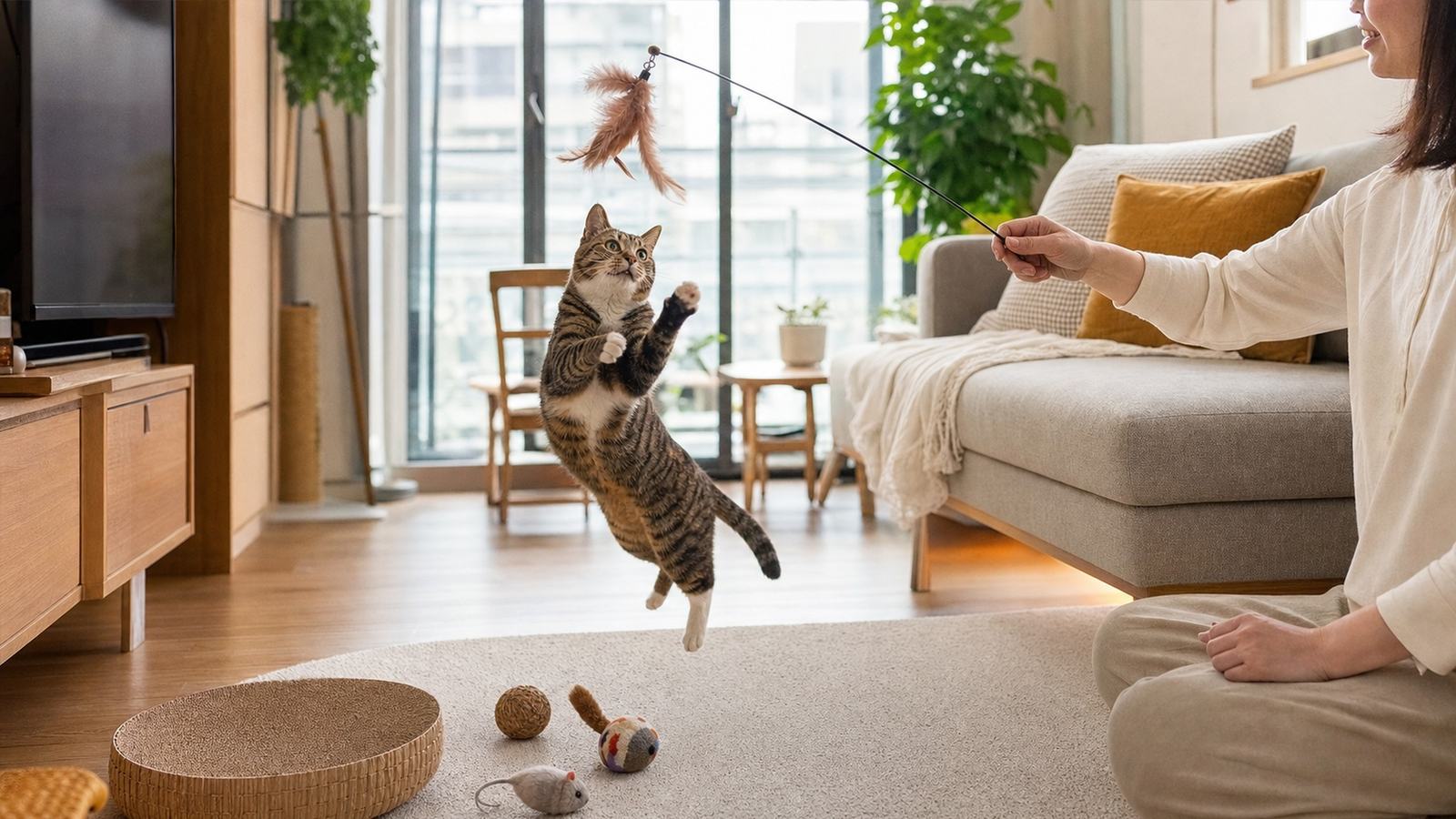
Effective playtime should mimic a cat's natural hunting process: discovery, stalking, pouncing, and ending. The first step is to make the toy briefly appear from behind furniture, boxes, or door cracks to capture the cat's attention. Don't shove the wand directly in their face at the start; it's too direct and feels like pressure, not prey.
The second step is to make the toy move like a small animal, varying its speed, pausing occasionally, and then darting into a corner. The third step is to let the cat successfully pounce a few times; don't make it impossible to catch, as this can lead to frustration. The fourth step is the ending: after a final successful capture, offer a small treat or their regular meal to complete the "catch prey, eat food" cycle.
Rhythm 1: First, Grab Attention
Cats are usually more interested in things that "appear and disappear" than things that are constantly visible. You can gently drag the feather of a wand along the edge of the sofa, then pause for a few seconds. When the cat's pupils dilate, their body lowers, and their tail twitches slightly, it's a signal they're entering play mode.
Rhythm 2: Make the Prey Flee
The toy should move away from the cat, not constantly charge towards them. Real prey typically flees, hides, and stops suddenly; these variations will make the cat more engaged. During playtime, don't maintain a consistent speed; slowing down occasionally can actually inspire them to sprint.
Rhythm 3: Let the Cat Catch It Successfully
If you never let the cat catch the toy, they might lose interest or even walk away. Allow them to bite or hold the toy every few chases to provide a sense of accomplishment in their hunt. If using string-like toys, put them away after playtime to prevent accidental ingestion or entanglement.
Rhythm 4: End with Food
Following playtime with a small treat or their regular meal makes the entire process more aligned with the cat's instincts. It also helps the cat gradually calm down from an excited state, preventing them from becoming overly stimulated. Arranging a play session before bedtime, followed by dinner, often helps improve nighttime restlessness.
Cat Walks Away Mid-Play: Dislike or Tired?
If a cat walks away mid-play, it doesn't necessarily mean they dislike you or the toy. They might just need a break, to observe, or feel the movement wasn't realistic enough. Some cats will pretend to leave, hiding behind a door or table leg to set up an ambush again; this is actually part of hunting.
Observe their body language. If their ears are normal, their eyes are still fixed on the toy, and their tail is moving slightly, it means they might still want to play but are waiting for an opportunity. If they start panting, lie down motionless, flatten their ears, or swish their tail vigorously, it's time to pause. Playtime isn't about exhausting the cat, but about providing just the right amount of chasing, pouncing, and satisfaction.
How to Choose Toys Without Wasting Money? From Wands to Treat-Dispensing Toys
Before choosing toys, consider what type of prey your cat prefers. Some cats love airborne feathers, others prefer ground-crawling strings, and some only react to rolling balls. Instead of buying many similar toys at once, prepare 2 to 3 types with different movement patterns and rotate them.
Wand toys are great for interactive play, but ensure the string is secure and parts are not easily detached. Ball toys are suitable for self-chasing, but if you have limited floor space, choose quieter, softer options to avoid noisy midnight rolling. Treat-dispensing toys are ideal for letting cats use their sense of smell, manipulation, and problem-solving to earn food; they are very practical for cats who eat too quickly or get bored easily.
- Wand Toys: Suitable for building interaction; the method of operation is key, not how flashy it is.
- Ball Toys: Suitable for cats who love to chase; choose lightweight, low-noise materials.
- Tunnels & Cardboard Boxes: Suitable for use with wand toys to create hiding and ambushing opportunities.
- Treat-Dispensing Toys: Suitable for prolonging meal times and increasing daily stimulation.
- Scratching Posts: While not chasing toys, they provide stretching, claw-sharpening, and emotional outlets.
Toys also need rotation; don't leave all of them out all the time. Put some toys away and swap them out every few days to keep things fresh for your cat. If your home is humid, pay attention to mold and odors in fabric, feather, or rope toys. Regular cleaning or replacement is important for the Taiwanese environment.
Conclusion: More Toys Aren't Always Better; Quality Playtime is Key
When cats are bored, the problem often isn't a lack of toys, but a lack of suitable play rhythms. Daily consistent playtime, observing whether your cat prefers chasing, pouncing, hiding, or sniffing, combined with appropriate toys, is usually more effective than blind purchasing. When cats can complete the hunting, pouncing, and ending cycle at home, their emotions will be more stable.
If you're organizing daily necessities for your cat, start by choosing wand toys, durable scratching posts, treat-dispensing toys, and safe small balls. CatGarden's cat supplies are designed to be practical, easy to clean, and suitable for the Taiwanese home environment, catering to owners who want to improve their cat's quality of life. Start with a period of high-quality daily interaction, then supplement with appropriate supplies for activity, claw maintenance, and relaxation, allowing your cat to play safely and contentedly at home.
FAQ
Q1: Is Daily Playtime with My Cat Necessary?
Short interactive sessions are recommended daily, especially for indoor cats. Although cats appear independent, they still need hunting stimulation and emotional outlets. Daily playtime doesn't need to be long; the focus is on consistency, attention, and a proper ending.
Q2: What If My Cat Doesn't Play with the Wand Toy?
Try changing the movement style first, rather than immediately switching toys. Dragging the wand along the floor, hiding it behind furniture, or moving it slowly is often more effective than just waving it around in the air. If there's still no interest, try ball toys, tunnels, or treat-dispensing toys.
Q3: Does Pre-Bedtime Play Really Reduce Midnight Zoomies?
It helps many cats, especially young cats or energetic adults. Playing for 10 to 15 minutes before bed, followed by dinner or a small treat, helps the cat settle into a post-meal rest routine. However, if there's a sudden increase in unusual nighttime vocalizations, also consider health or stress factors.
Q4: Is It Normal for My Cat to Pant After Playing?
Cats may get tired after short bursts of intense activity, but noticeable open-mouth panting should not be ignored. If your cat frequently pants, coughs, or becomes lethargic after playing, stop the game and consult a veterinarian. Playtime should help cats happily expend energy, not force them into excessive exercise.
Further Reading
- Multi-Cat Households Always Fighting or Urinating Inappropriately? Check Litter Boxes, Food Bowls, and Resting Routes First
- What to Do If Your Cat Keeps Knocking Over Water Bowls? Distinguish Between Playing, Wrong Placement, or Stress
- Why Do Cats Love Sitting on Your Things? Understand Scent, Security, and Attention Seeking
CatGarden offers curated supplies, cat boarding, and grooming
Book services or shop online.